

LAST QUARTER 2017
Field Blewit
Lepista Saeva

A fairly unmistakeable grassland autumn mushroom that has a buff or pale-brown cap and a thick purplish stipe.
#
Charcoal Burner
Russula cyanoxantha

Although a member of the Russula family that are known as 'Brittlegills', this species is unusual because its gills are flexible and not brittle at all. Associated with Beech woodland.
#
Common Earthball
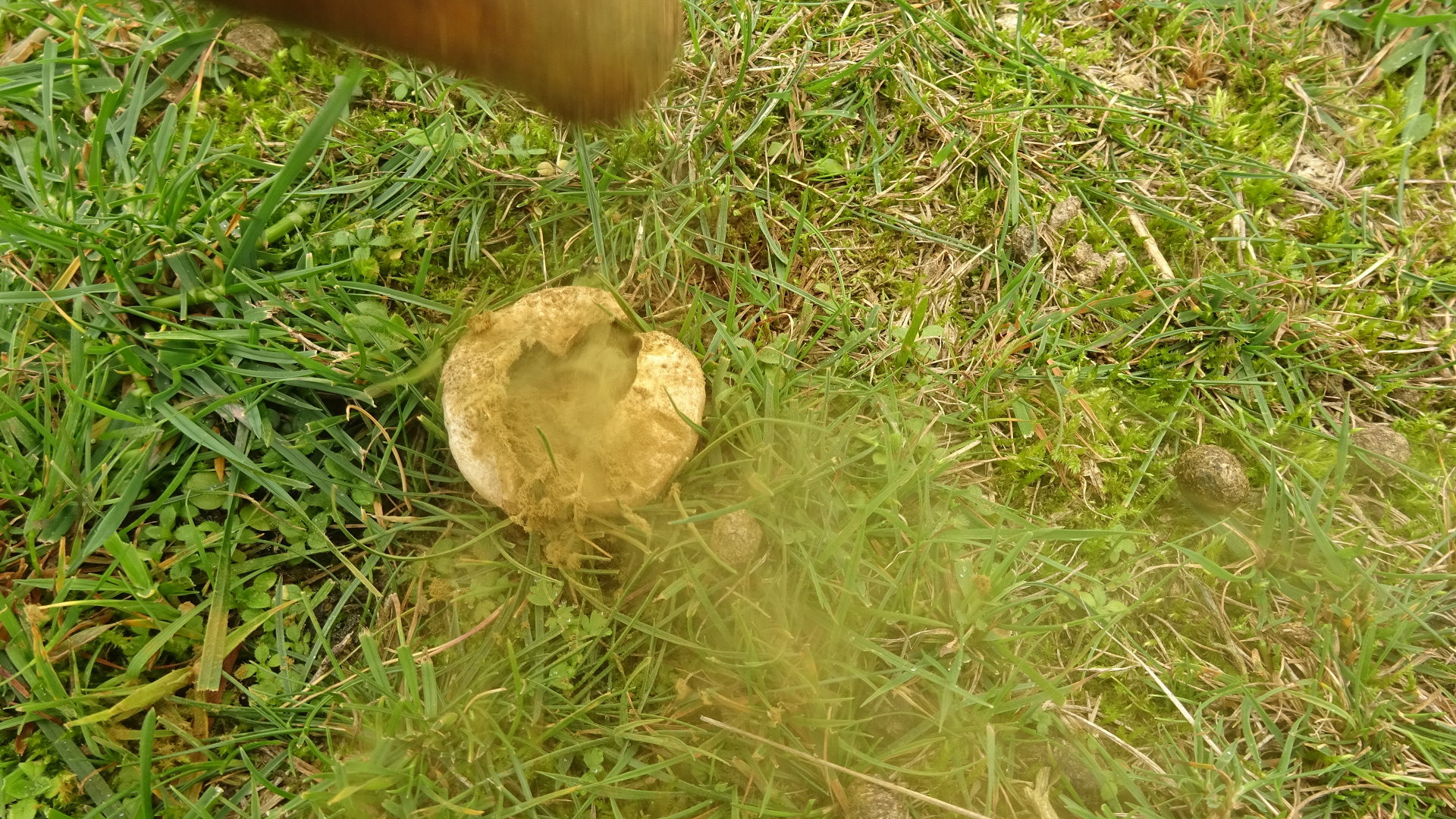
Scleroderma citrinum
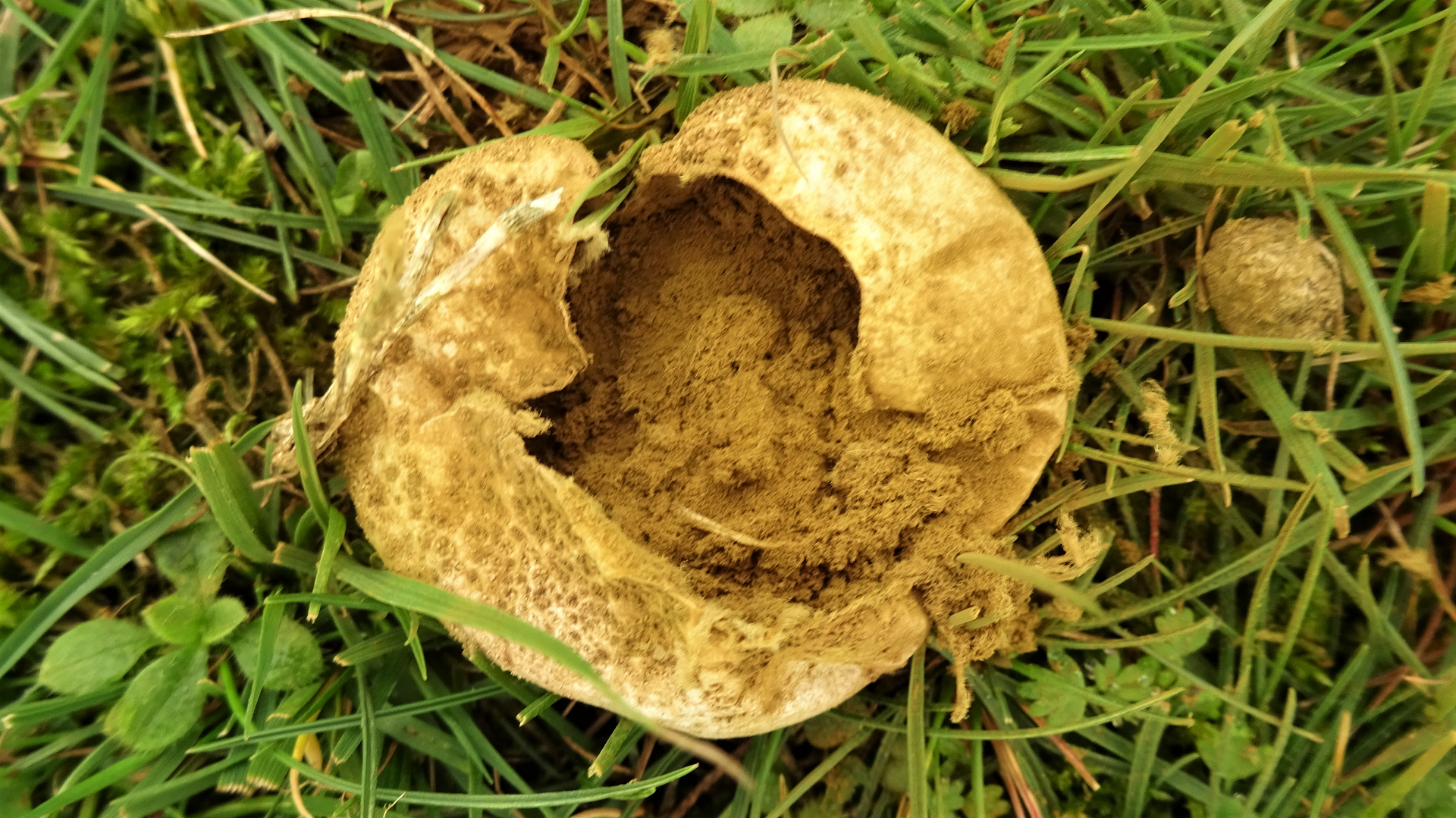
The Common Earthball splits open to release sand-coloured spores. When conditions are poor spores are able to remain dormant for a long time. Spores spread by wind form part of the reproduction process. In this case spores were dispersed when Brian Ecott tapped the Earthball with his walking stick.
#
Warlock's Butter
Exidia nigricans
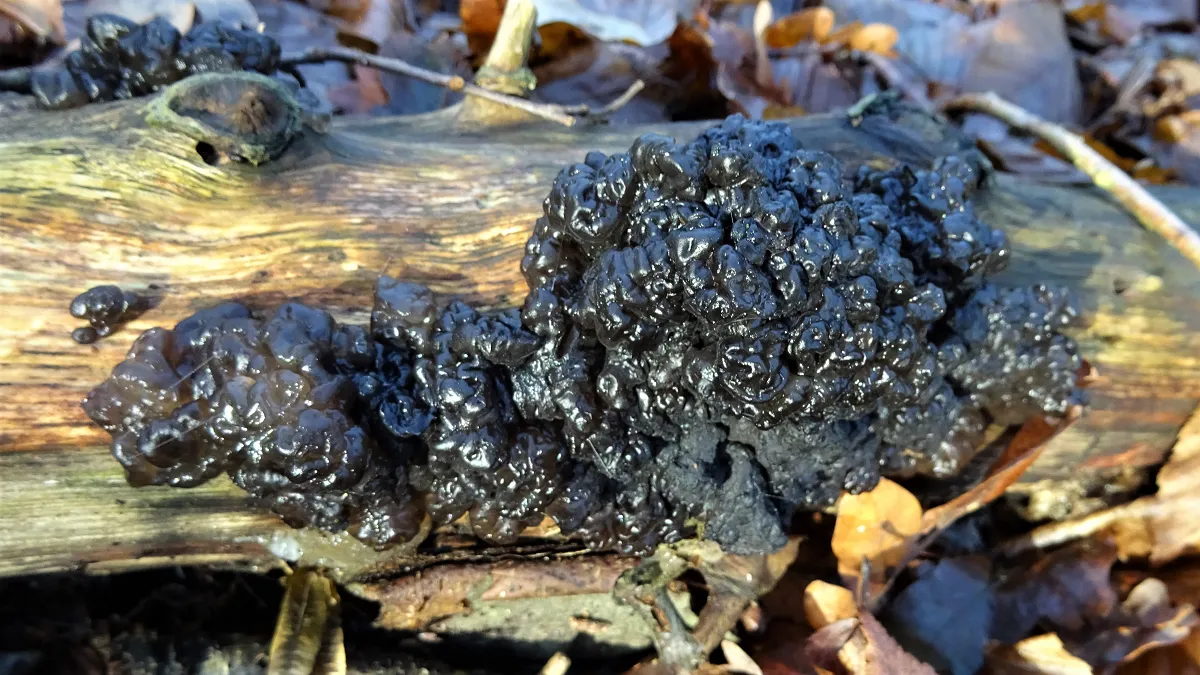
This fungus is occasionally confused with
Exidia glandulosa; however, it features brain-like folds rather than being made up of blocks with flat sides. It can be found on various deciduous trees, including Ash, Beech, and Hazel, although it is less commonly seen on Oak. It was formerly referred to as
Exidia plana.
#
Poplar Bell
Schizophyllum amplum
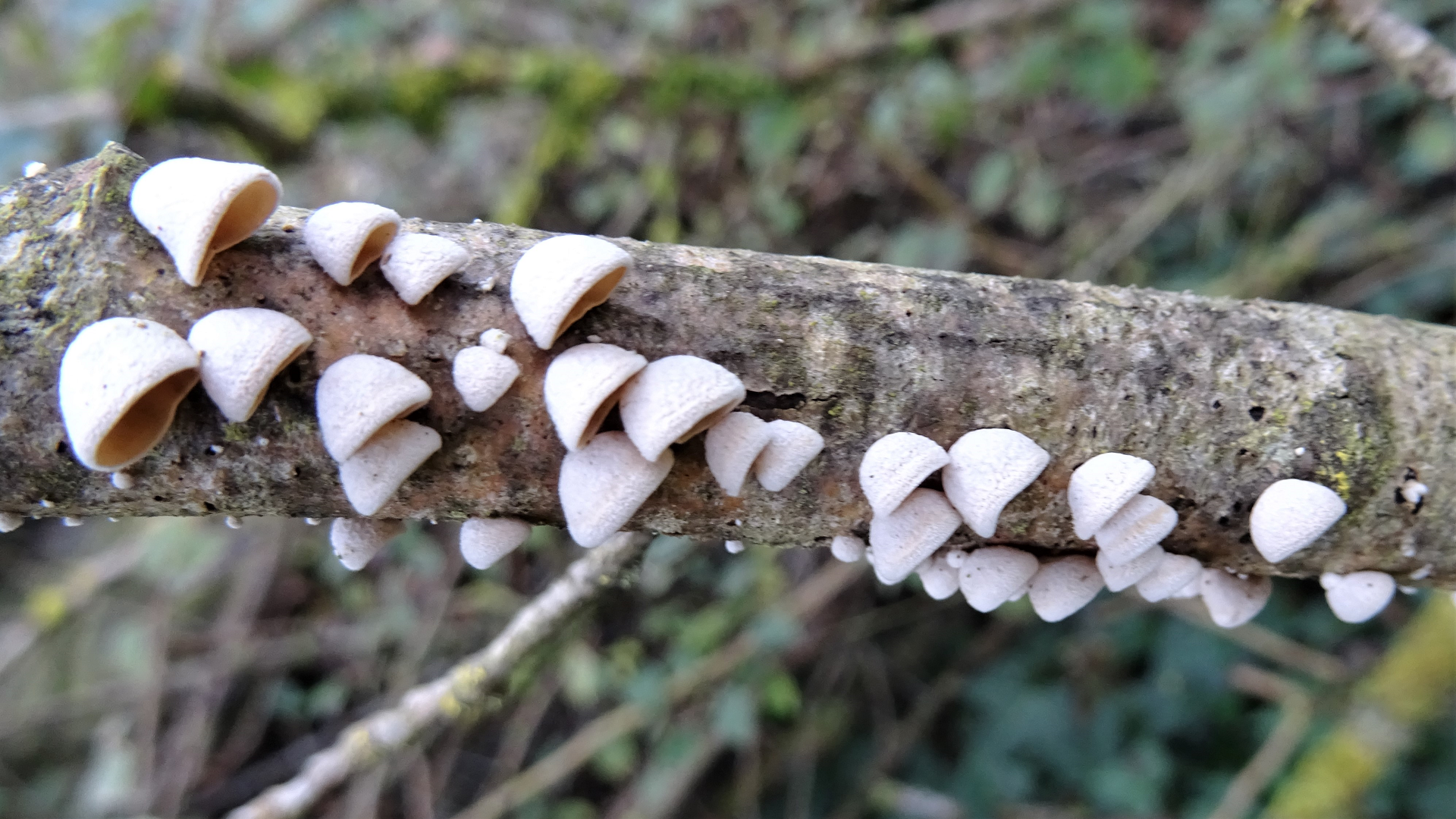
This fungus is mostly associated with growing on Poplar trees during wet spells, often seen after high winds when small branches have fallen from trees. It has no gills and dehydrates quickly and can vanish quite fast.
#
Clouded Agaric
Clitocybe nebularis
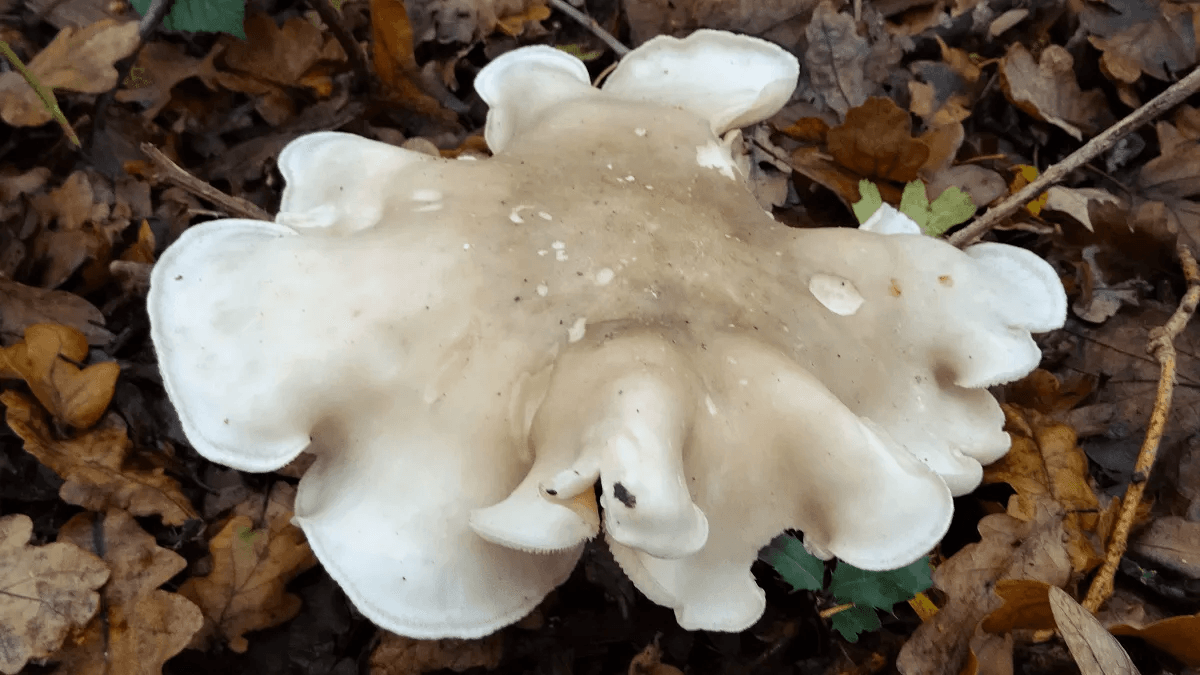
This autumnal woodland species has a cap that is initially convex or conical, before flattening out and often becoming slightly funnel-shaped with a wavy edge. 60-200mm diameter.
#
Snowy Waxcap
Cuphophyllus virgineus

The shiny caps of the Snowy Waxcap measure 20-50mm across. Initially convex, then flattening and finally concave. Smooth and dry, turning slimy to the touch in wet weather. The stipes taper towards the base.
#
Giant Funnel
Leucopaxillus giganteus

A rare sighting in Hainault Forest. Giant Funnels can grow up to 45cm across. This one measured 25cm.
#
Turkeytail
Trametes versicolor
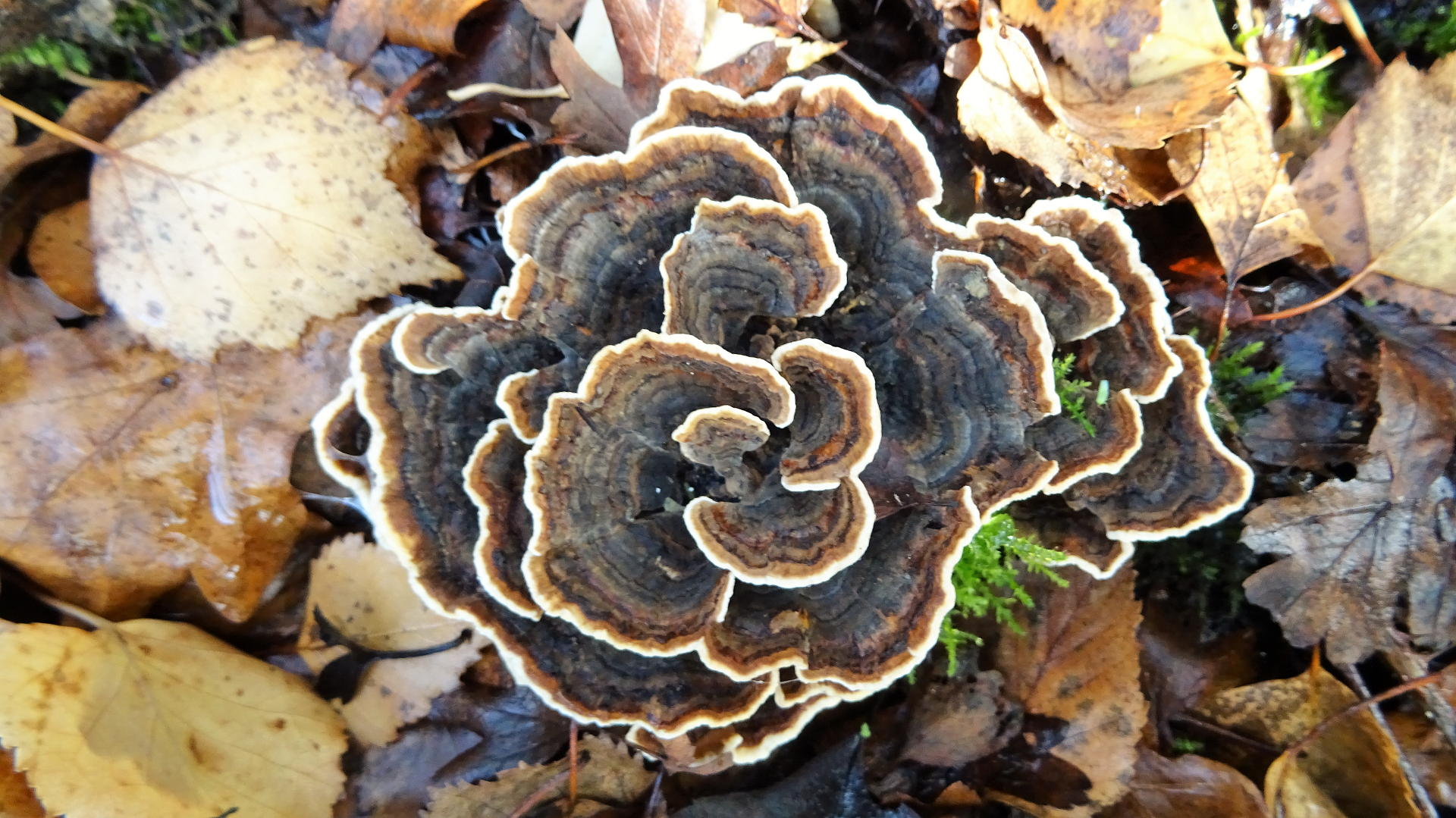
This fungus usually occurs in large, tiered groups on hardwood throughout the year. Fan-like with variable coloured concentric rings, the thin, wavy, edge is always white or creamy. The brackets measure 4-10cm across.
#
Birch Polypore
Piptoporus betulinus
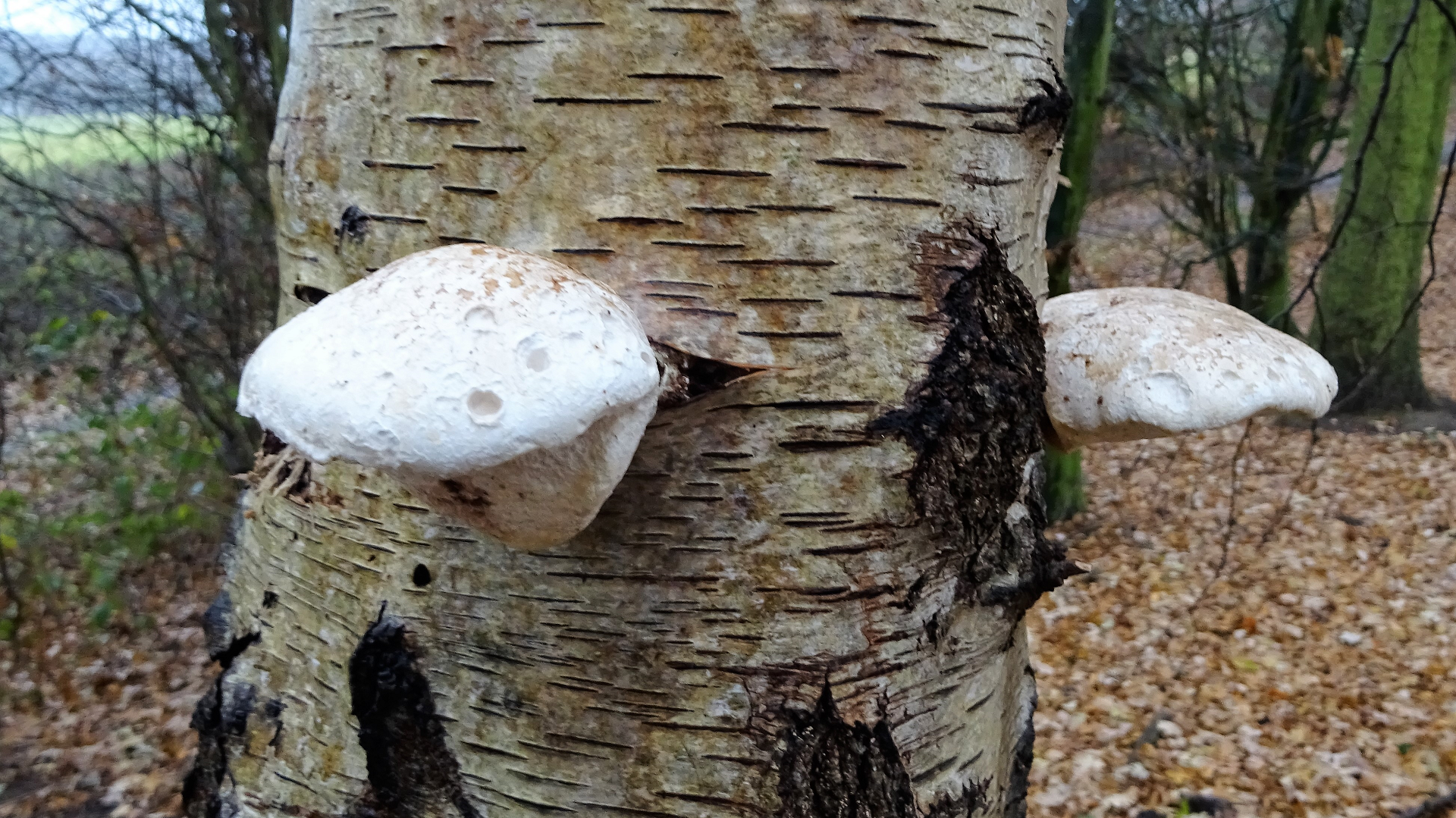
A bracket fungus that exclusively develops on Birch trees. It has a whitish-brown cap that can reach up to 20 cm in diameter.
#
Fly Agaric
Amanita muscaria

The Fly agaric mushroom is associated with Silver Birch roots which radiate from the tree. There is a beneficial relationship between the fungal threads (mycorrhiza) and tree roots called symbiosis. The fungi provide the tree roots with water, essential nutrients and chemicals. The tree supplies carbohydrates to the fungi, which, lacking chlorophyll cannot make their own sugar.
#
Common Stork's-bill
Erodium cicutarium
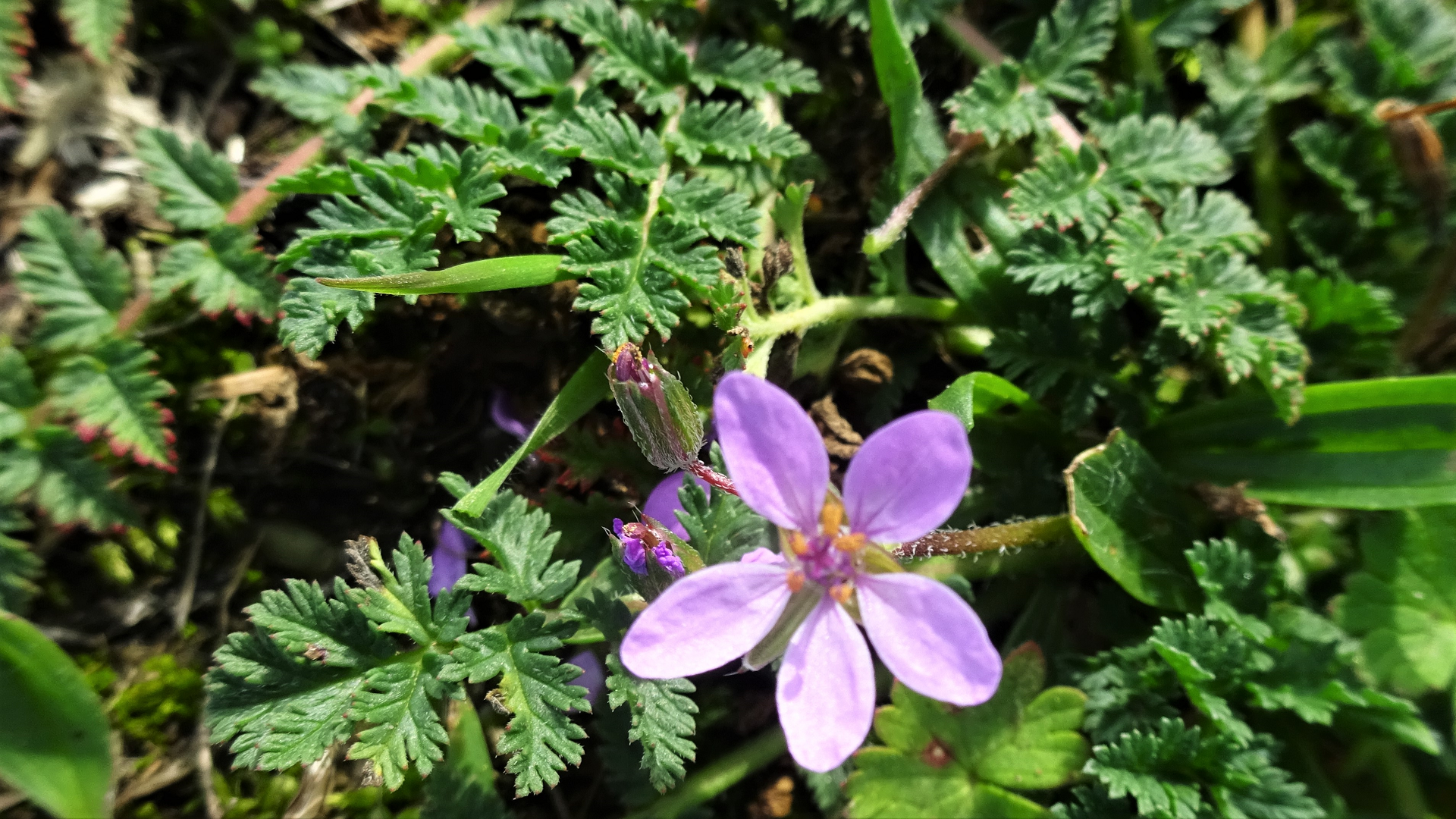
A sprawling plant found on grassland, which has hairy leaves that are finely divided, and groups of pinkish, five-petalled flowers.
#
Holly
Ilex aquifolium
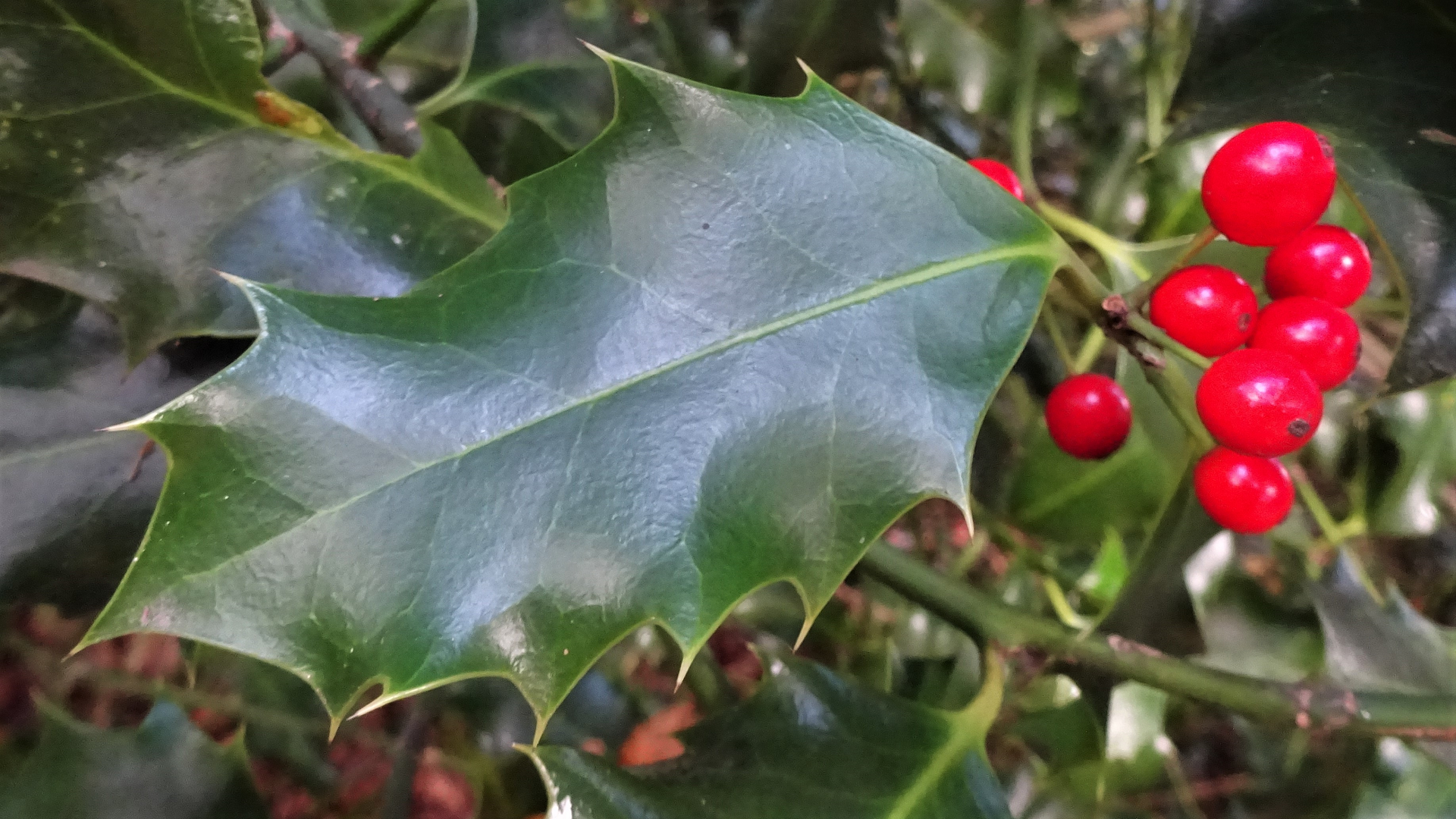
As winter approaches Mistle Thrushes pair off and seek holly bushes ladened with berries. They don't eat the berries immediately but guard the bush against other birds. This means that if other food sources disappear in the cold weather they still have a full larder to turn to. By Christmas if a holly bush is still full of berries it is likely that a Mistle Thrush is nearby preventing berries being pinched by hungry neighbours.
#
Wood Bristle-moss
Orthotrichum affine
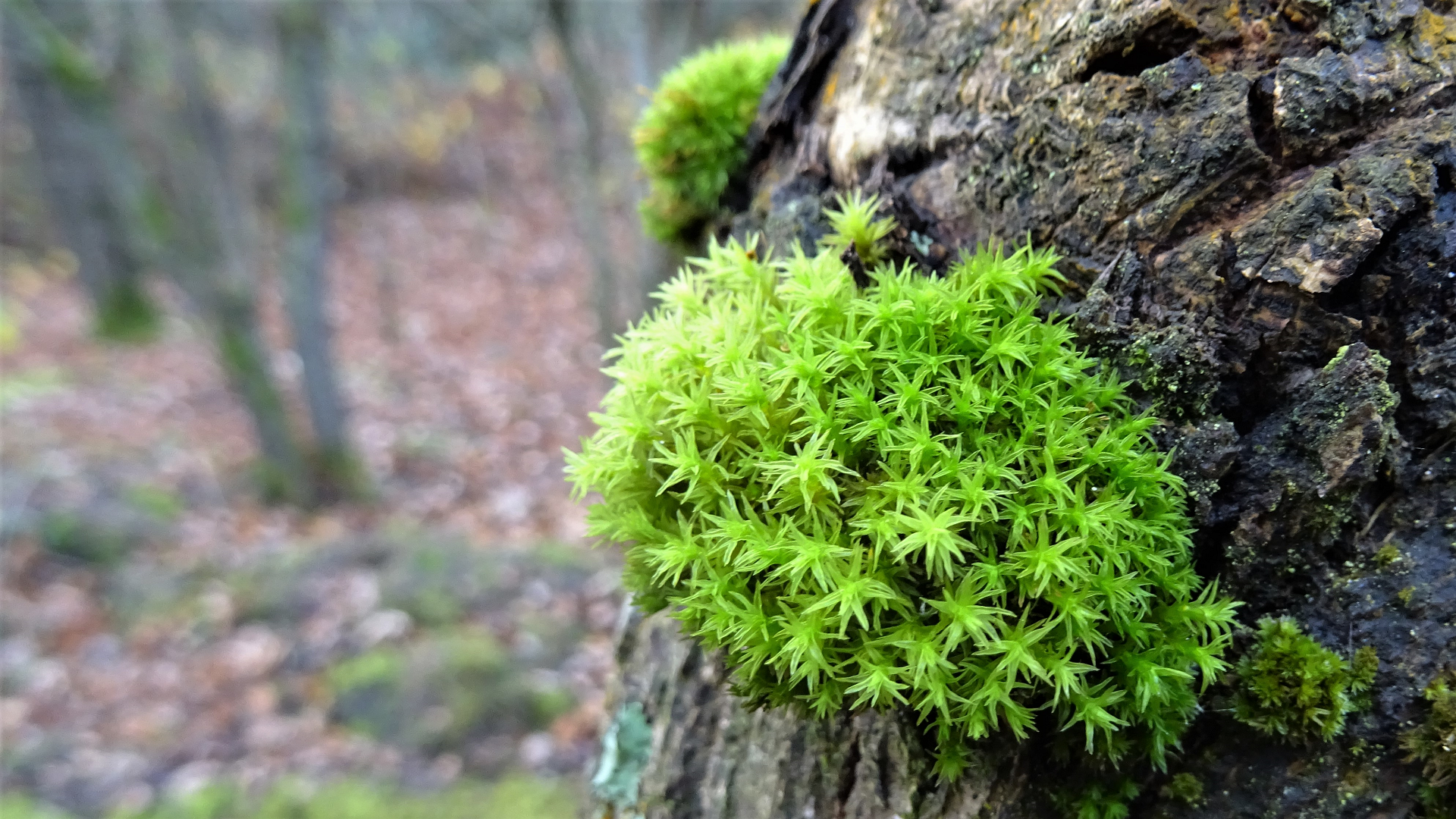
This moss is found on trees, especially Ash. It has a preference for shaded locations with clean air. It develops loose, slightly branched, green tufts, up to 35mm tall.
#
Herb Bennet Gall
Cecidophyes nudus
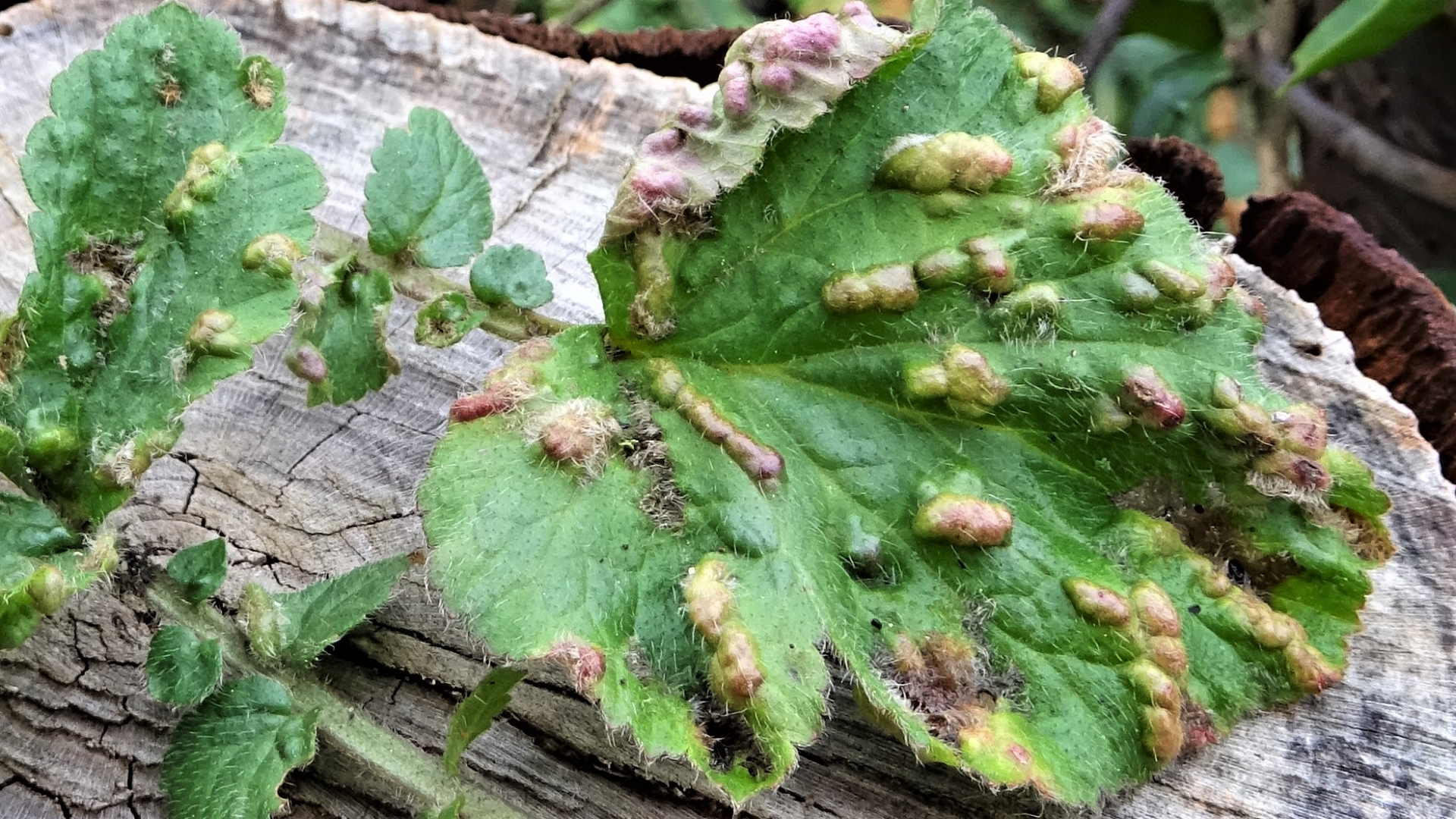
These bulges on the upper side of Herb Bennet Geum urbanum leaves are caused by white mites throughout the year. The mites live on leaf undersides in abnormal growths of hair-like structures (erineum) which they cause. The mites become dormant during winter. Thank you to Enid Barrie for assisting with the identification.
#
Lucombe Oak
Quercus cerris x suber

There is a Lucombe Oak at the edge of Hainault Lodge Local Nature Reserve. The tree retains its leaves in the winter. Leaf lengths vary from 35mm to 75mm.
#
Chigwell Row
The Heathland

Chigwell Row Heathland has received a makeover, and been cleared of bramble, leaving the European gorse, Dwarf gorse, Broom and Heather. The Petty whin is still hanging on, but will need good management if it is to survive. The site is unique together with a patch in the Chigwell Recreation Ground across the road. Sandy soil dumped here at the last glaciation represents the most southerly extent in this part of Essex.
#
Hainault Lake
Autumnal Colours

When the wildlife starts slowing down in autumn the vibrant changing colours of the leaves act as a reminder of nature's beauty.

#
Autumnal View
Peter's Gate
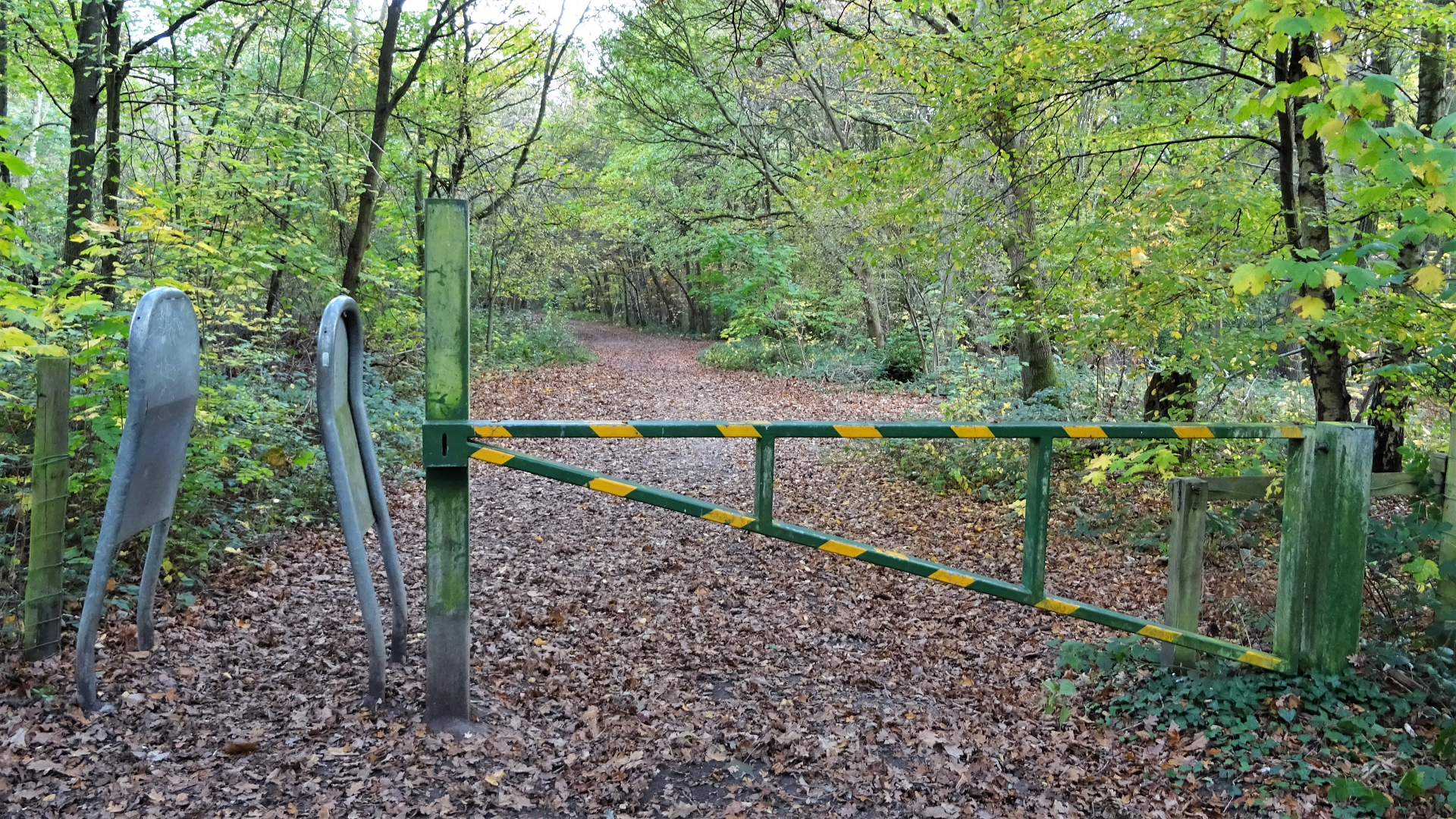
Peter's Gate is a mobility gate at the beginning of a path that leads towards Hainault Lake's inflow stream.
#
Woodhenge
Modern Sculpture
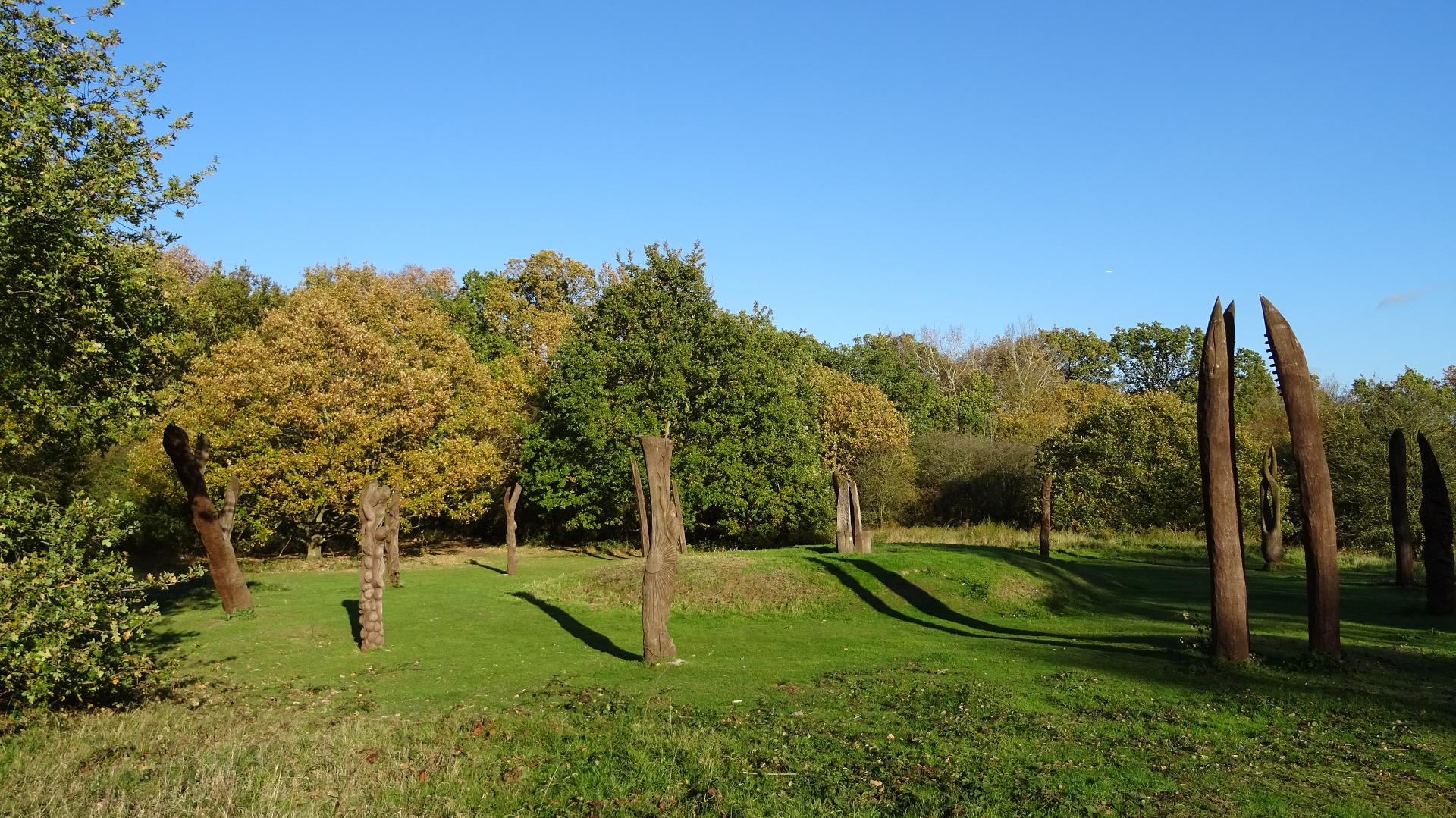
This circle of sculptures known as 'Woodhenge' was officially opened twelve years ago. The project was conceived by sculptor Jeff Higley and planned with Country Park manager Paul Browne.
#
Cabin Hill
Autumnal View

An autumnal view of Cabin Hill.
#
Hog Hill
View of Central London

With a good pair of binoculars and a clear day views from Hog Hill are excellent. The London Eye on the South Bank of the River Thames is clearly visible. When opened to celebrate the Millennium in 2000 it was the tallest 'wheel' in the world. Many newspapers moaned about the cost of building the London Eye and Millennium Dome(not shown). Ironically, both turned out to be very successful attractions and it is newspapers that have declined in popularity!
#
Foxburrow Farm
Visitor Centre

The building on the right once used to be a Visitor Centre providing information, but is no longer open to the public. Plans are in motion for an upgraded Centre by 2020. Static bat detectors were set up in old farm buildings and there has been a thrilling discovery. Barbastelle bats now extinct in some countries and not recorded in London since the late 1950s still exist in Hainault Forest. Bats emit sounds at different frequencies and a sonagraph sound spectrum has recorded this rare species. This is one of the UK's rarest bats and a very important find because their habitat will be considered a Site of Special Scientific Interest. Seventeen type of bats live in the UK and this latest discovery makes a total of 11 resident species in London.
#
Car Park
Just the Ticket!

Roy Meekings used cash, but soon a new system called Ringo will be installed that requires mobile phones to pay for parking. No other payment methods will be available. There has been a theft of a cash machine in the past so maybe it is not surprising that the Council decided on a different payment method. Forest and cafe staff will no doubt take the brunt of complaints for the new system even though it is beyond their control. Please don't moan at them!
#
Thank you to everyone who has contributed to this Journal.
© hainaultforest.net. All rights reserved.
This website uses necessary cookies.