

LAST QUARTER 2019
Dog Vomit Slime Mould
Mucilago crustacea
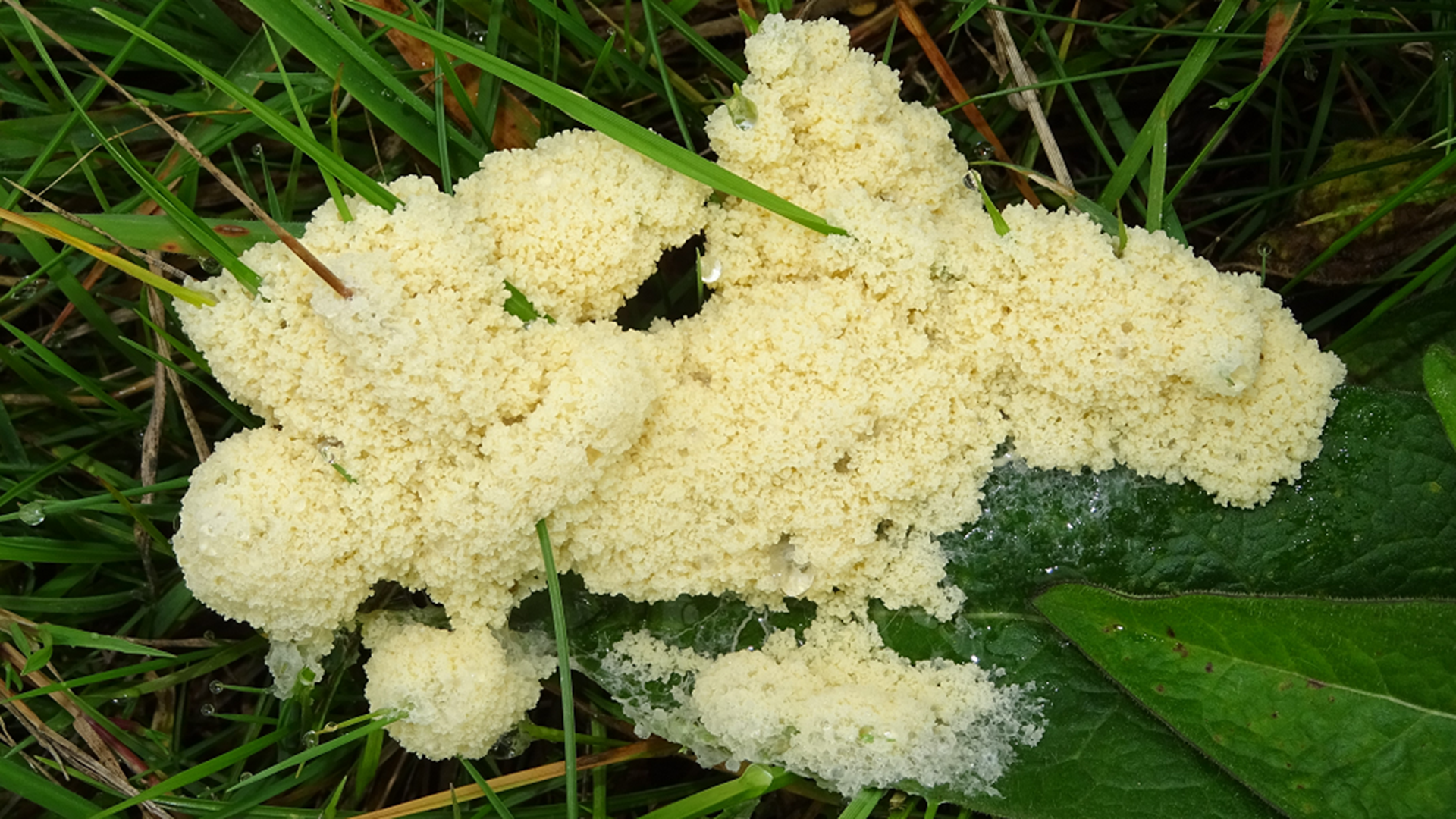
Hundreds of small patches of
Mucilago crustacea slime mould emerged on the grass of Lesser Cabin Hill during October. It is commonly referred to as 'Dog Vomit' due to its appearance.
#
Slime Mould
Dictydiaethalium plumbeum
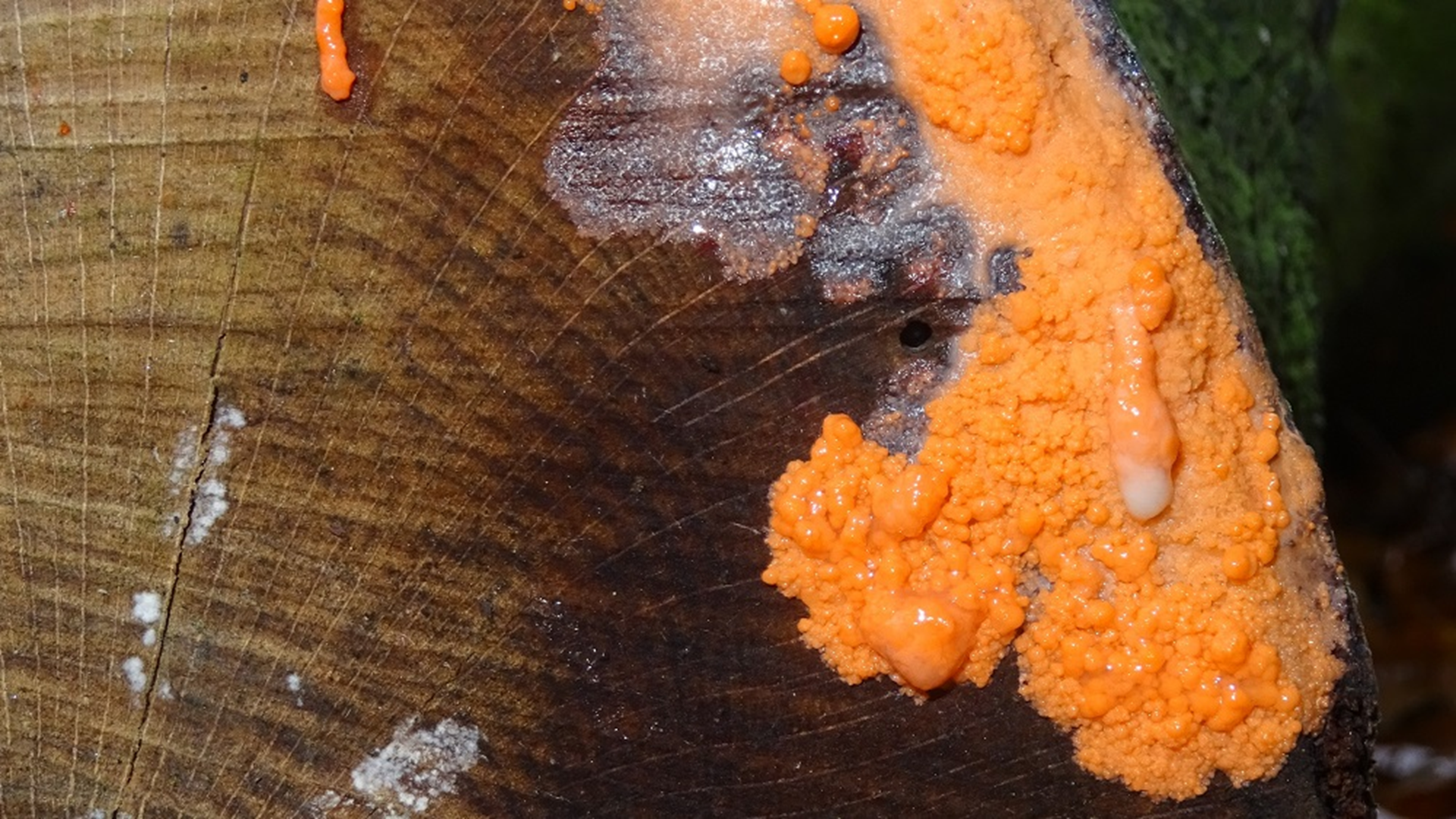
Plasmodium of the slime mould
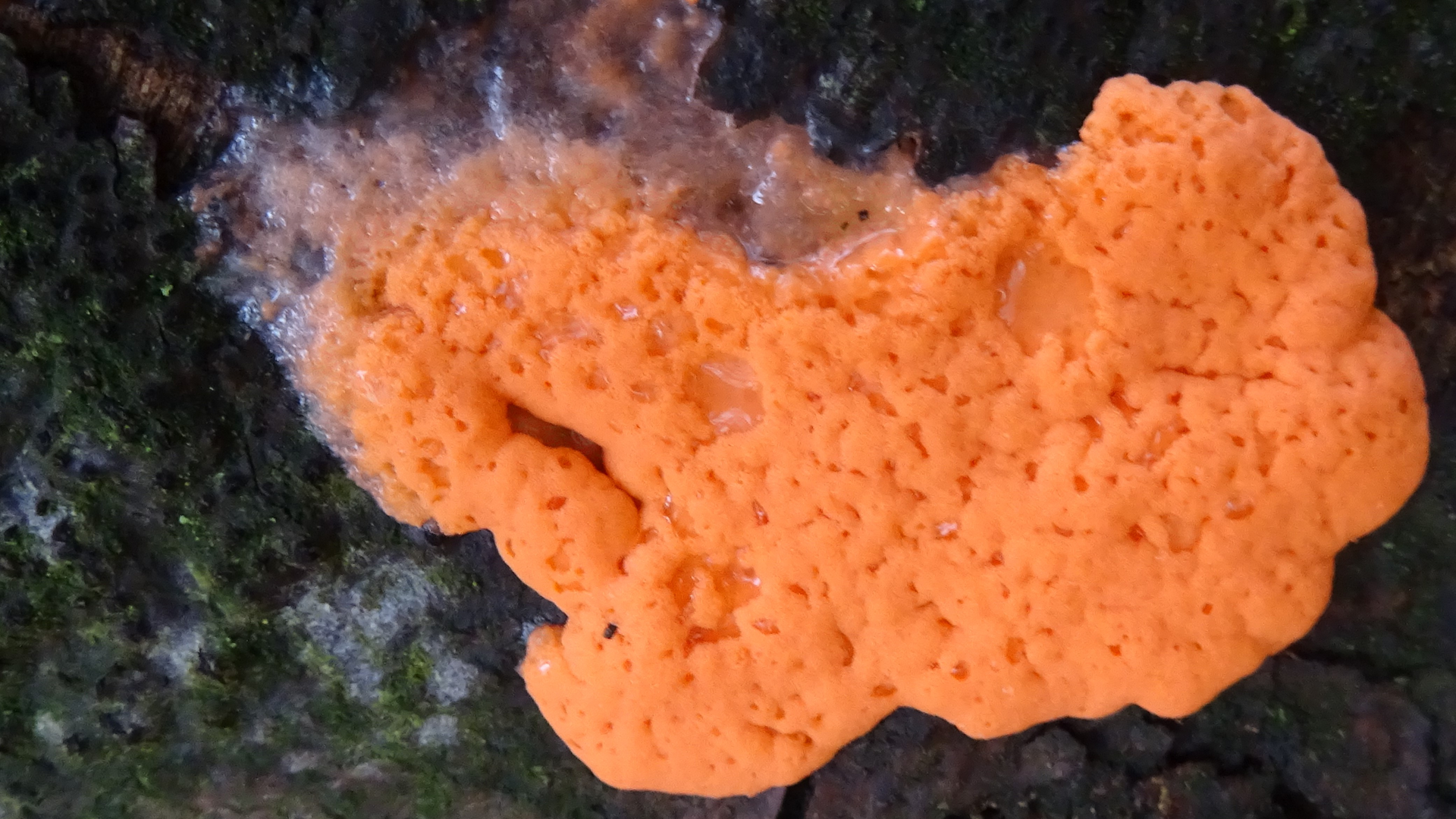
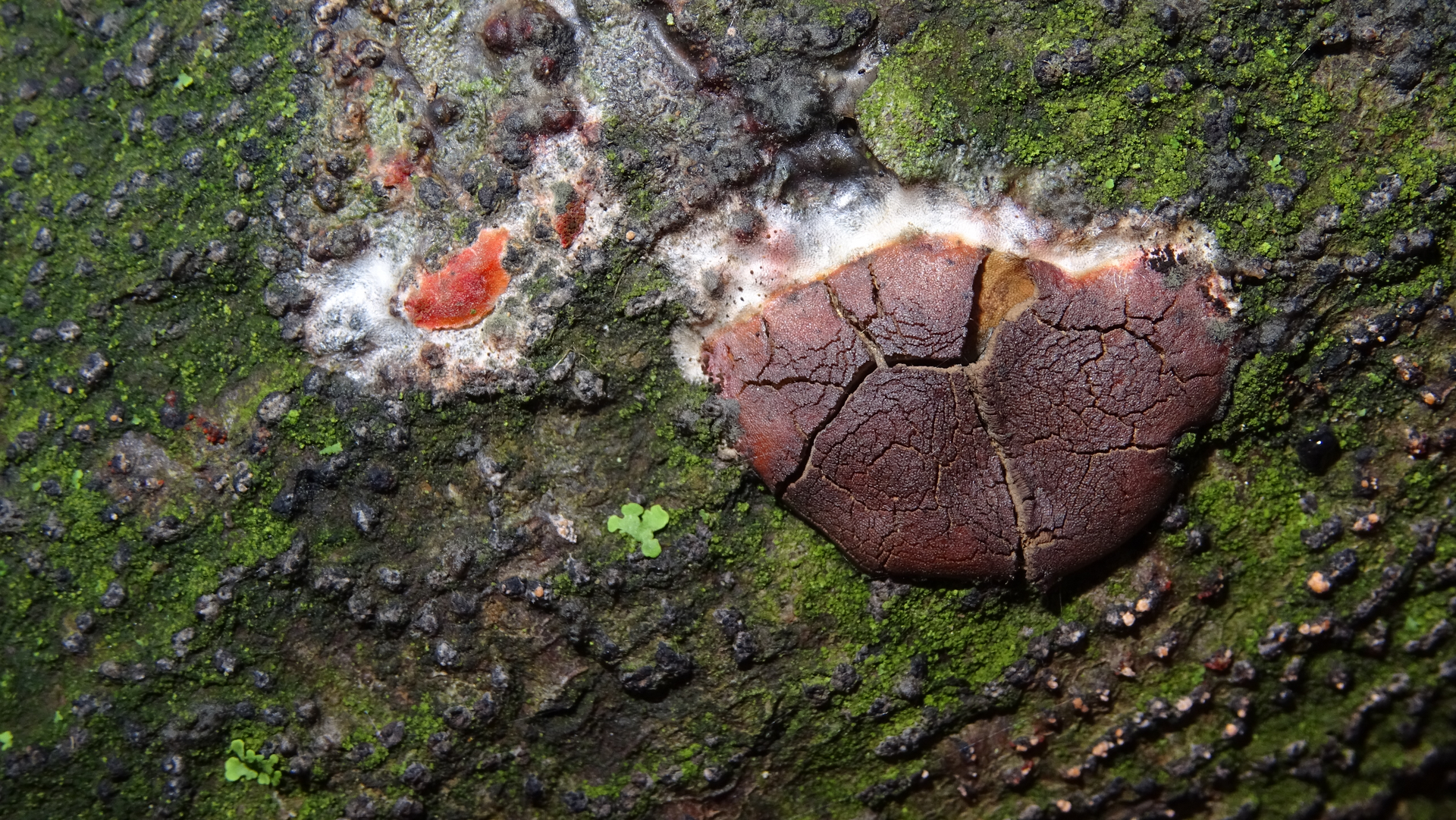
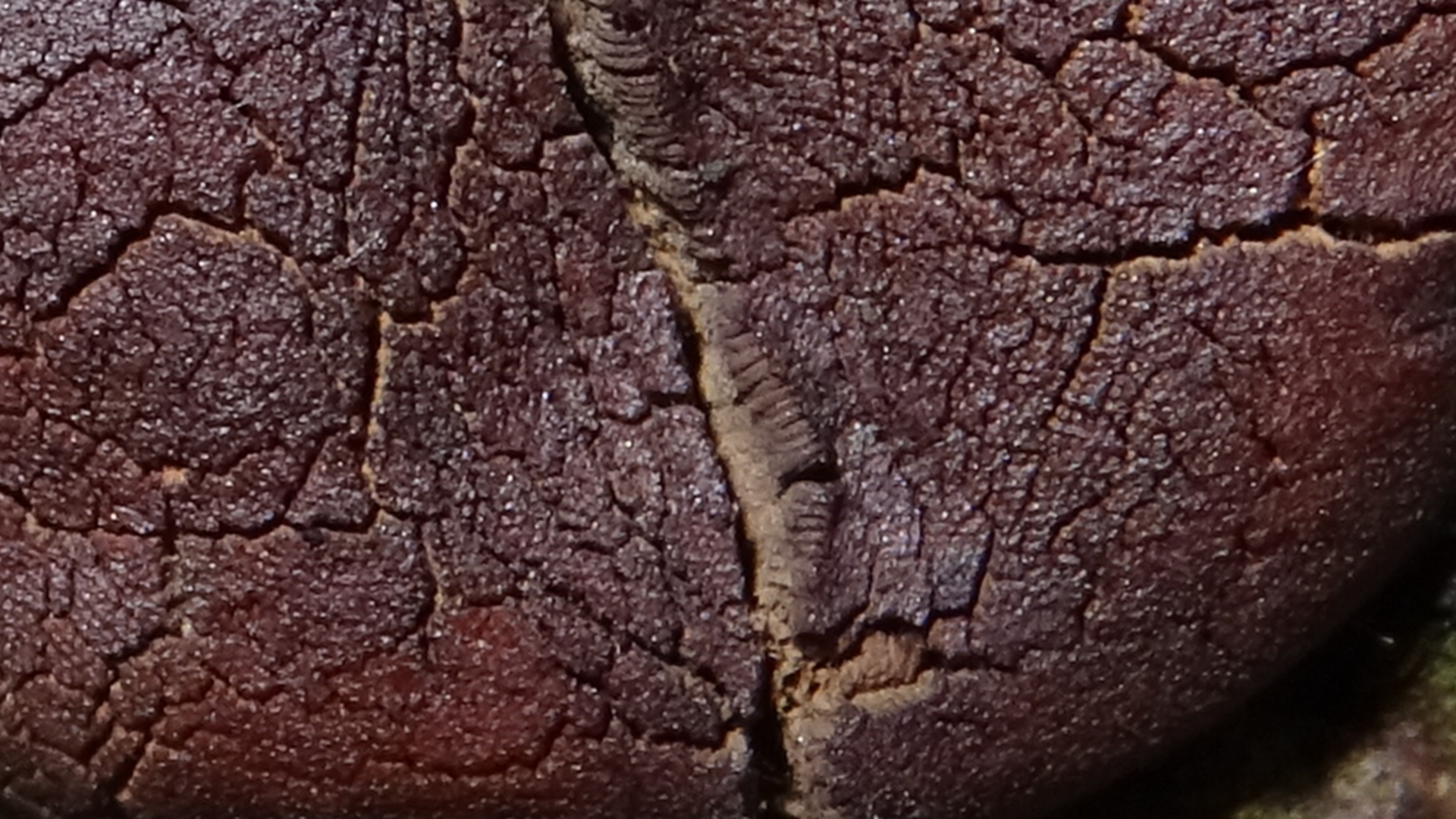
Dictydiaethalium plumbeum was observed on several beech logs. Observations suggested that the rose red or orange plasmodium tends to move beneath the bark before emerging from areas where the bark is absent. The term aethalium in its Latin name refers to the flat, encrusted sessile fruiting body. It is characterised as a large, cushion-like sporangium that produces spore-bearing structures. The aethalium of this species displays vertical rows of compressed sporangia that are visible when cracks appear.
#
Slime Mould
Comatrichia nigra
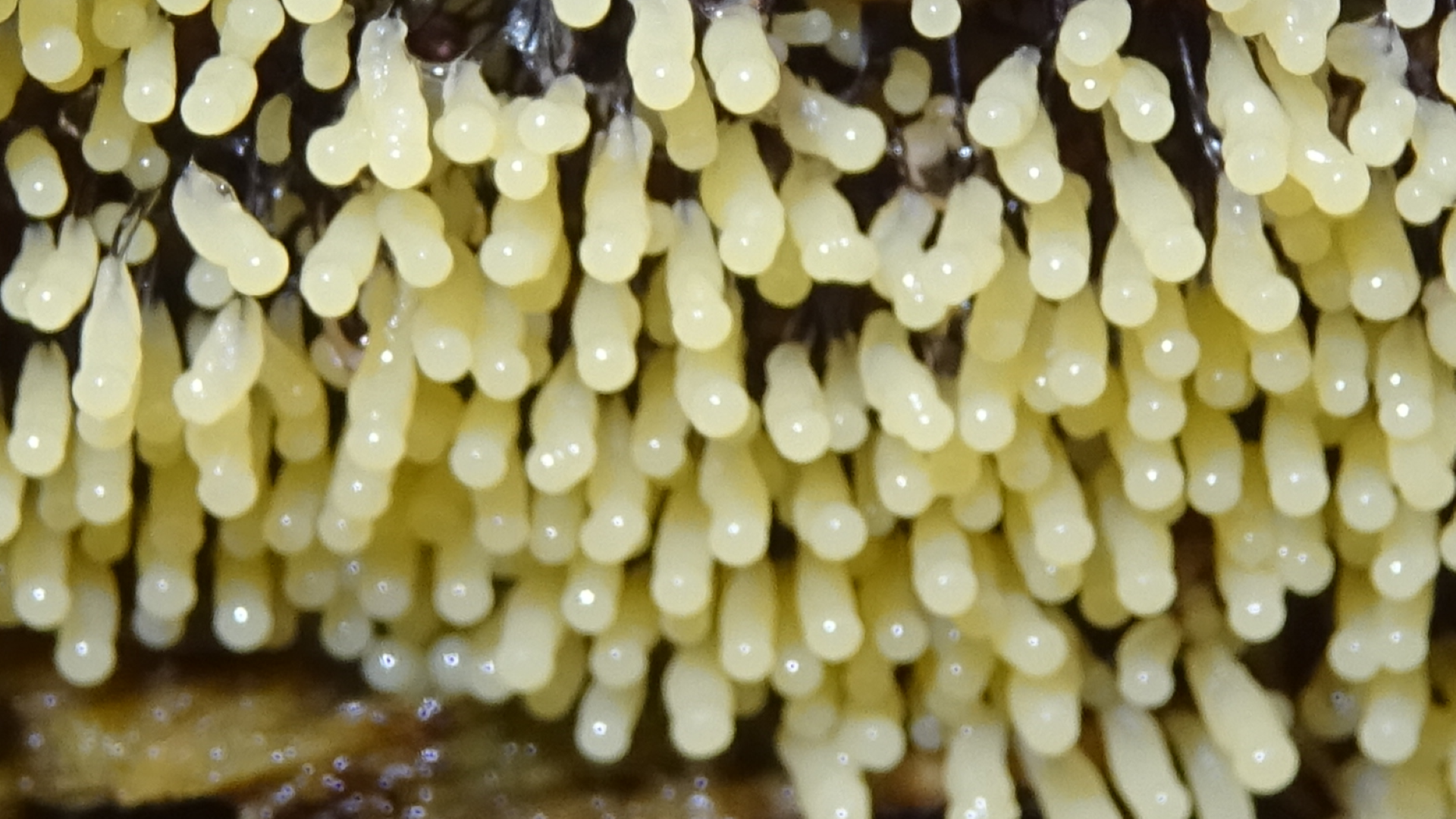
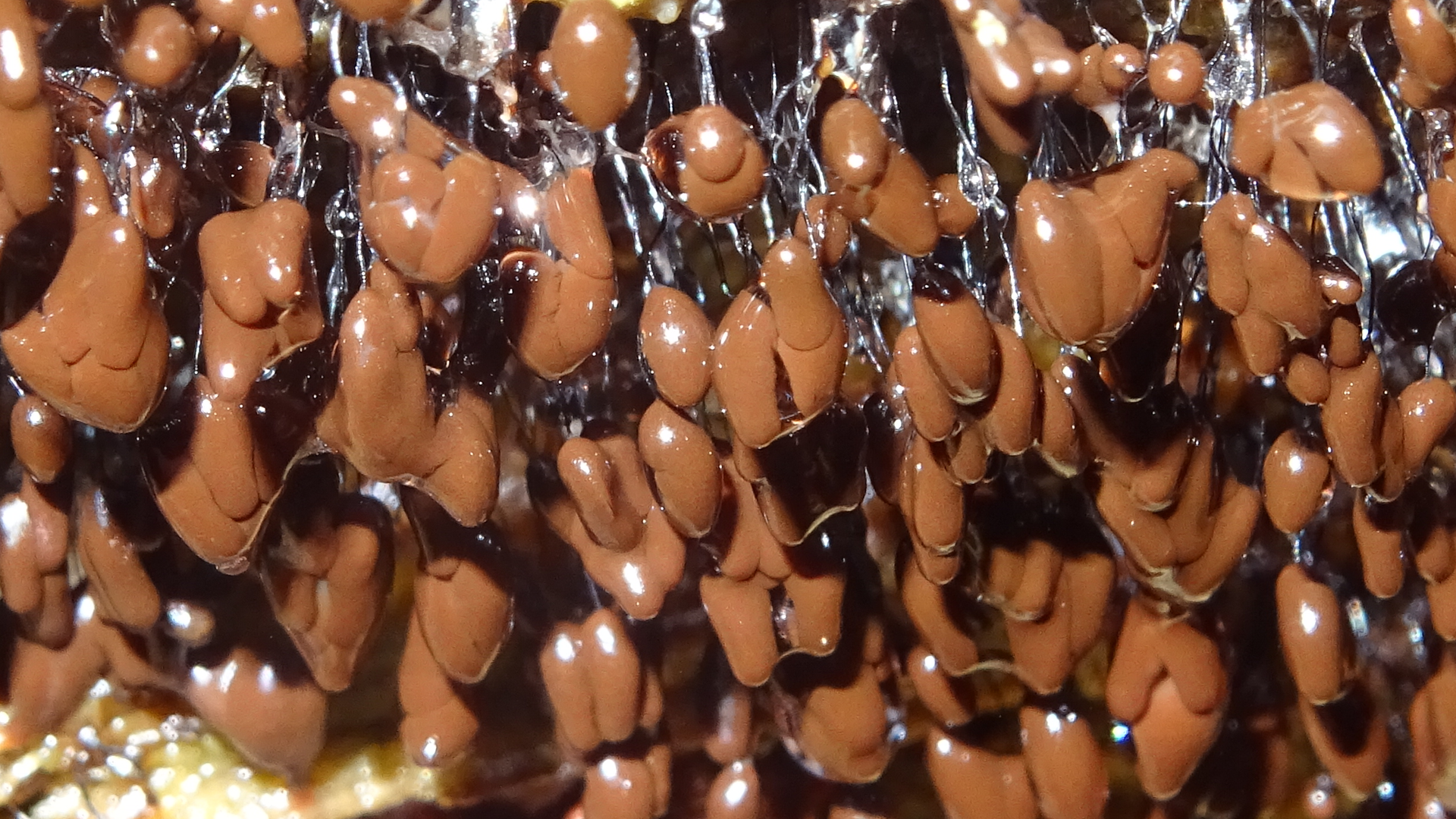
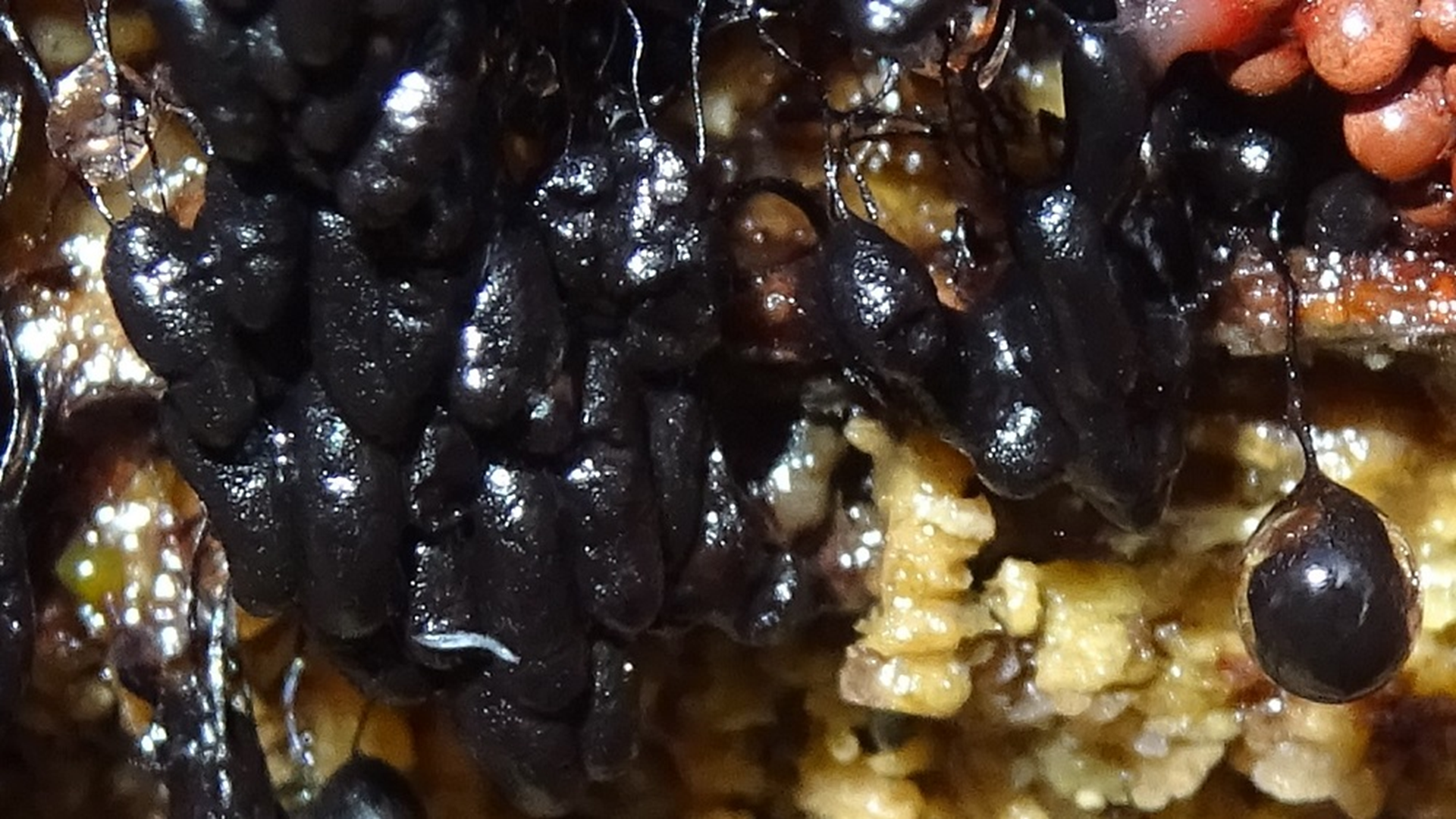
Comatrichia nigra forms lemon-yellow sporocarps from gelatinous plasmodium, they reach approximately 9mm in height. The surface colour transitions to chocolate brown and then to black. Over time, the surface becomes progressively rougher before breaking apart to release spores.
#
Slime Mould
Physarum nutans
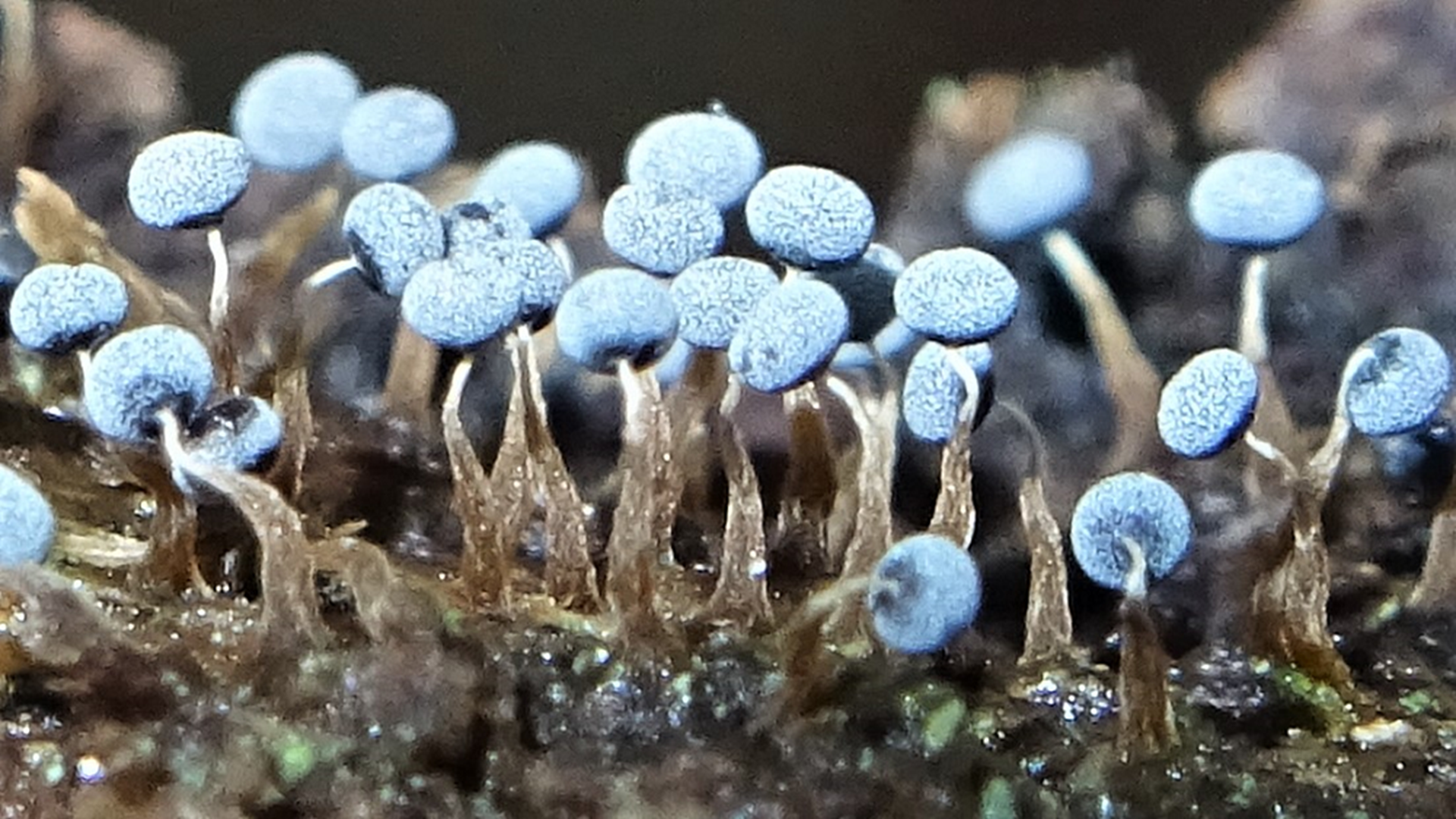
This tiny slime mould with blue-grey stalked nodding sporocarps was identified without microscopic inspection by Brian Ecott as
Physarum nutans which occurs on dead wood. The stalk is wide and dark at the base, tapering to a whiter top.
#
Ash Key Gall
Aceria fraxinivorus

Brown hard growths on ash tree keys are galls resulting from the mite
Aceria fraxinivorus.
#
Spiral Gall
Pemphigus spyrothecae
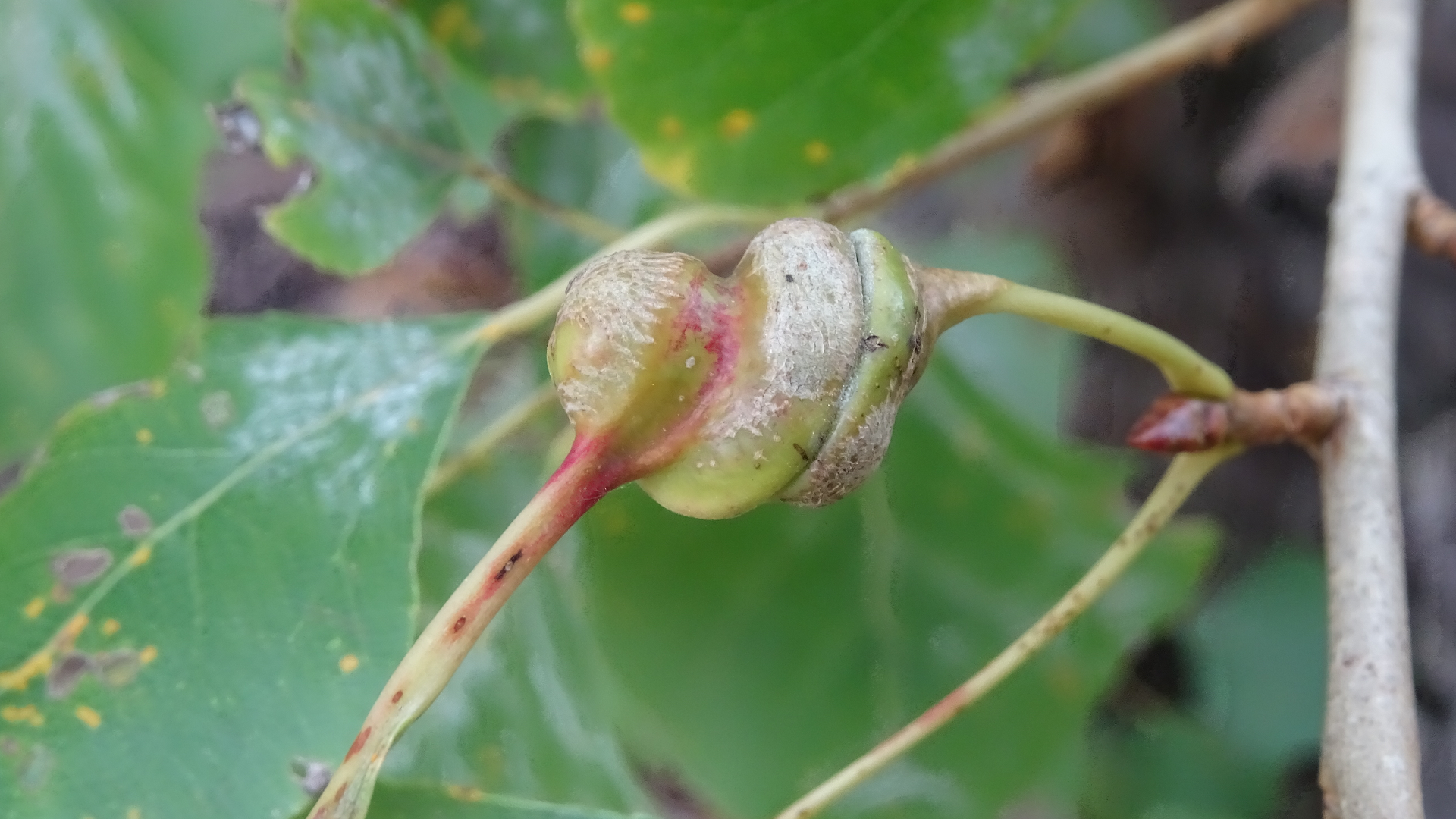
Spiral galls on the leaf stems of black poplar are produced by the aphid
Pemphigus spyrothecae.
#
Ivy Leaf Spot
Colletotrichum trichellum
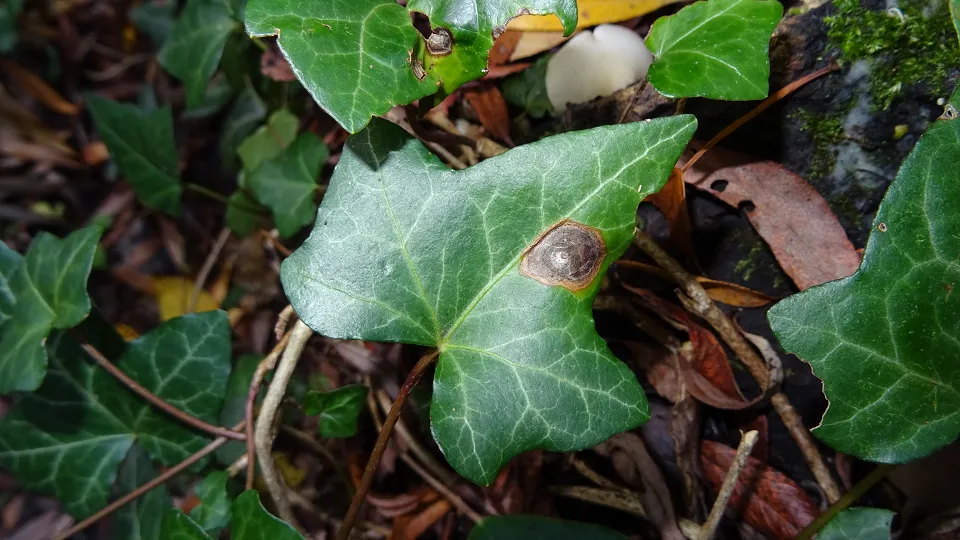
Ivy Leaf Spot is caused by the fungus
Colletotrichum trichellum
affecting Ivy leaves. The infection leads to the appearance of large dark spots on the leaves, which can result in defoliation. The spots have an obvious border which are not normally as bright as those caused by bacterial infections. Infected leaves normally shrivel and die.
#
Rose Bud Gall
Andricus gemmeus
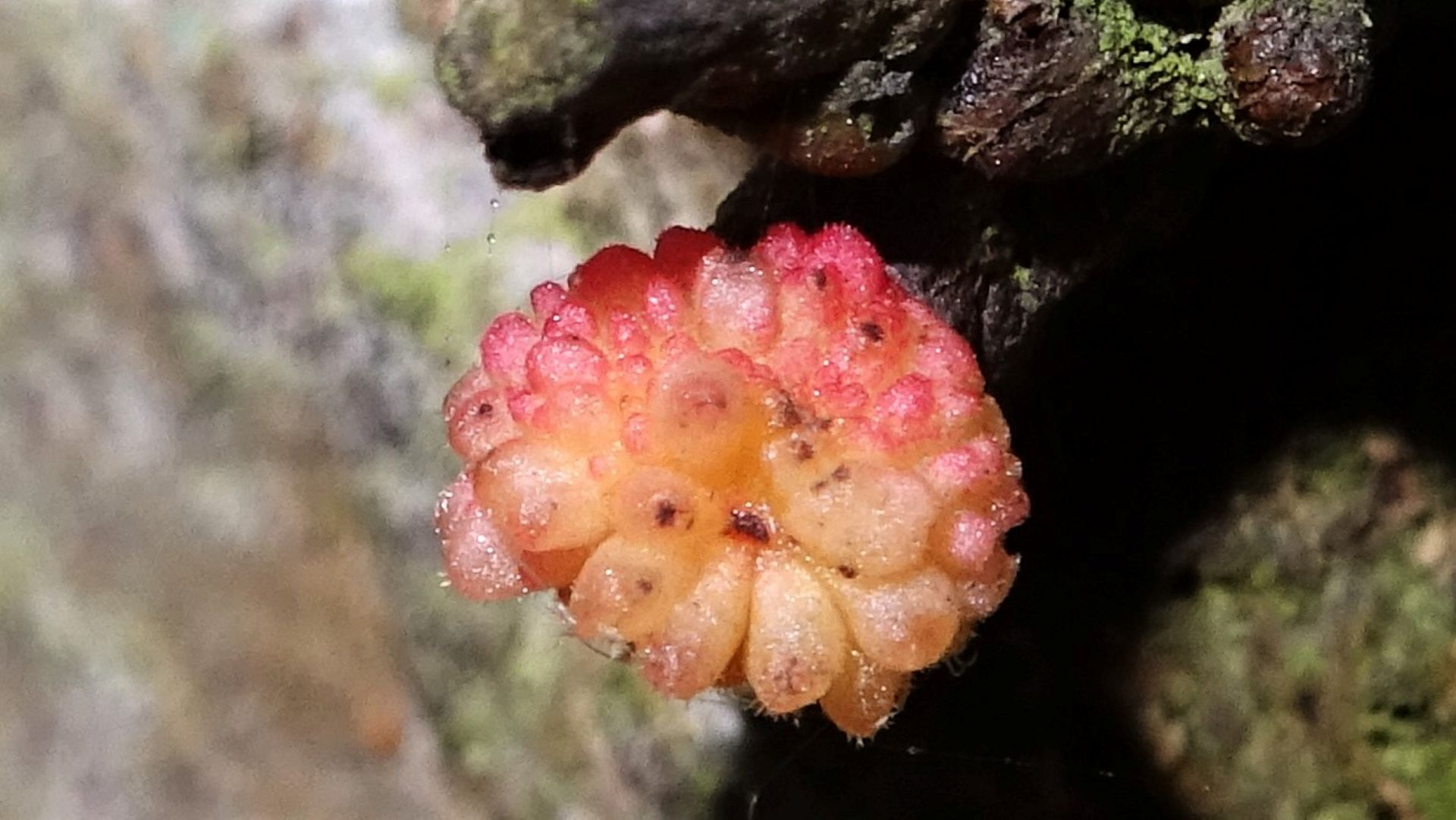
The Rose Bud gall, measuring approximately 3-4mm in diameter, forms on oak bark. This gall, caused by the gall wasp Andricus gemmeus, often appears in clusters arising from dormant buds. The surface features cone-shaped protrusions, many of which are covered in short hairs. Initially yellowish-green, the galls transition to red and then brown as they mature.
#
Crown Gall
Rhizobium radiobacter
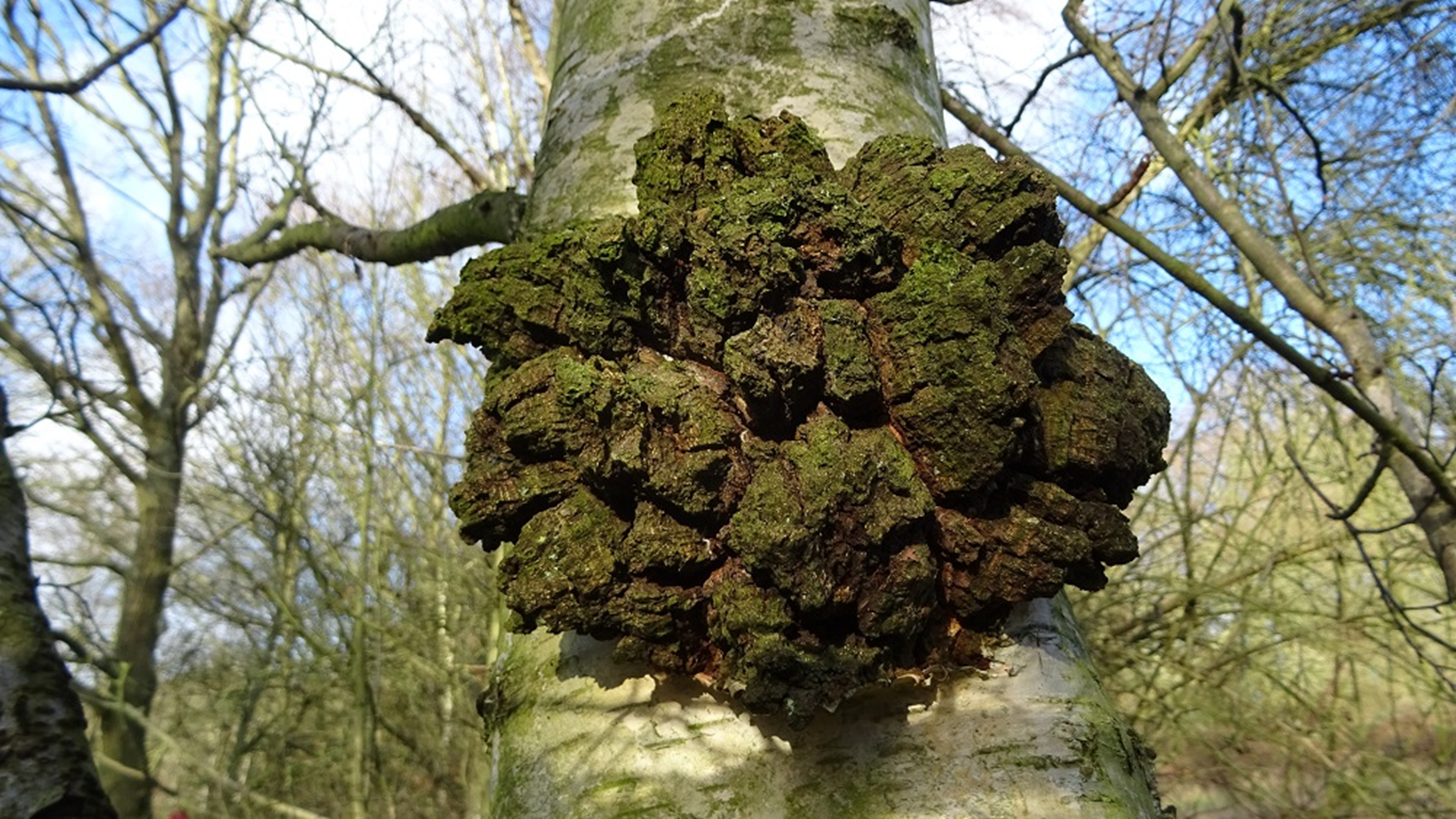
The Crown gall is an abnornal growth on silver birch trees caused by the bacterium
Rhizobium radiobacter. These galls are present year-round.
#
Robin's Pincushion
Diplolepis rosae
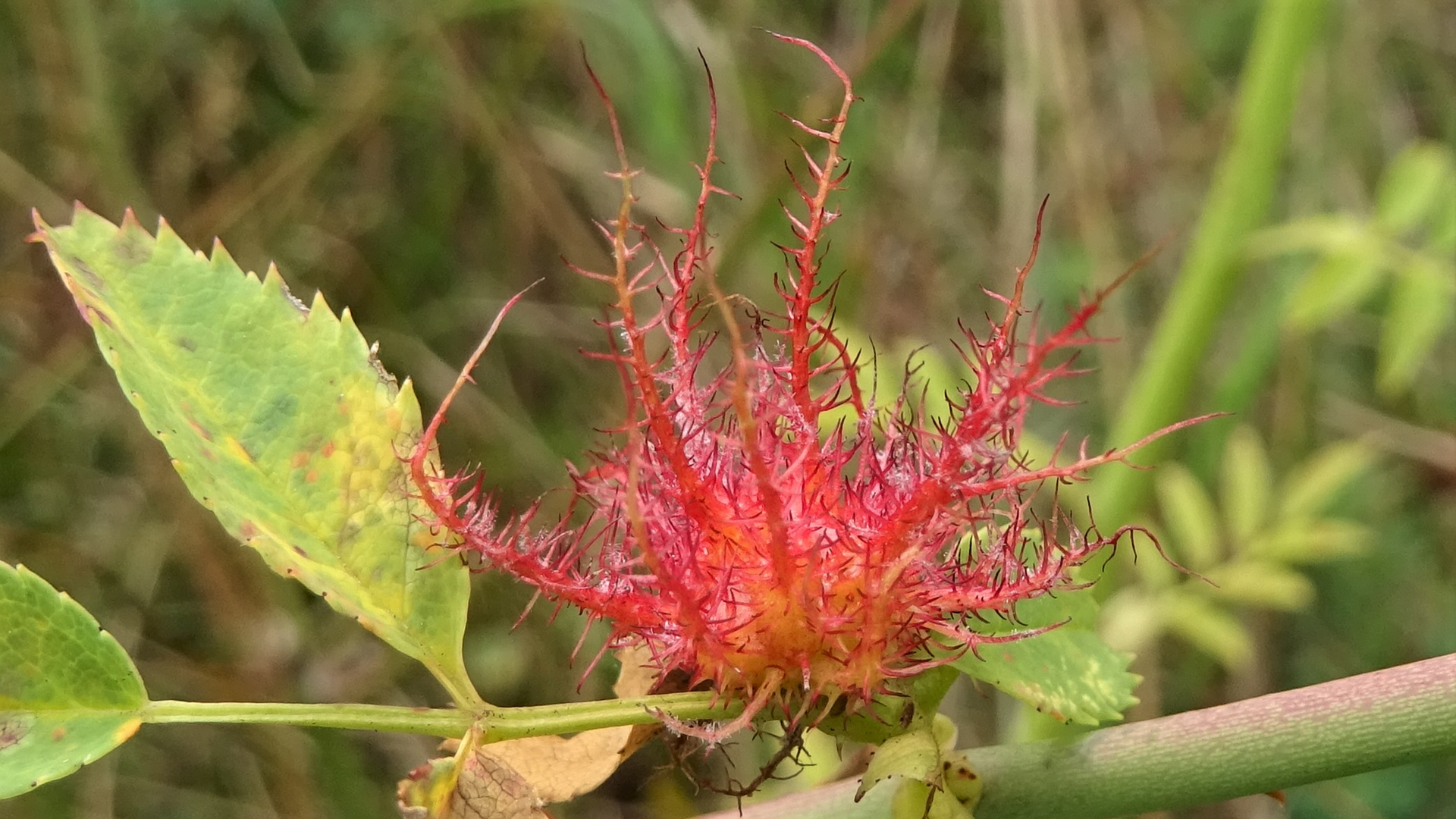
Bright red, hairy and unmistakeable, this is a gall found on dog-rose bushes. It is caused by tiny Bedeguar gall wasp larvae that feed on the host plant. The larvae overwinter in the gall emerging as adult wasps during spring. The adult wasps do not need males to reproduce.
#
Bramble
Rubus fruticosus agg.
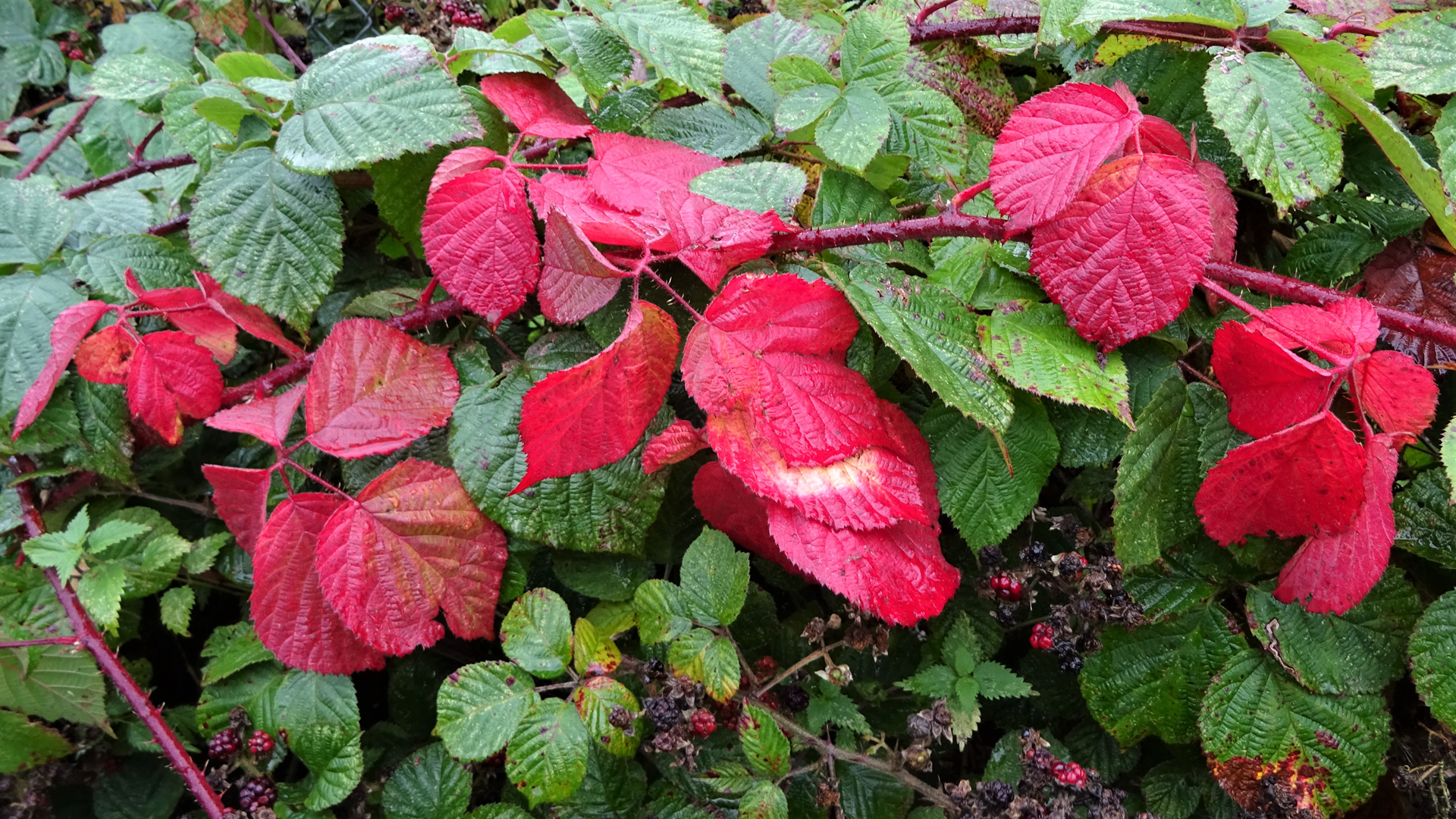
Bramble leaves turning an attractive shade of reddish-pink signals autumn is here.
#
Red Clover
Trifolium pratense
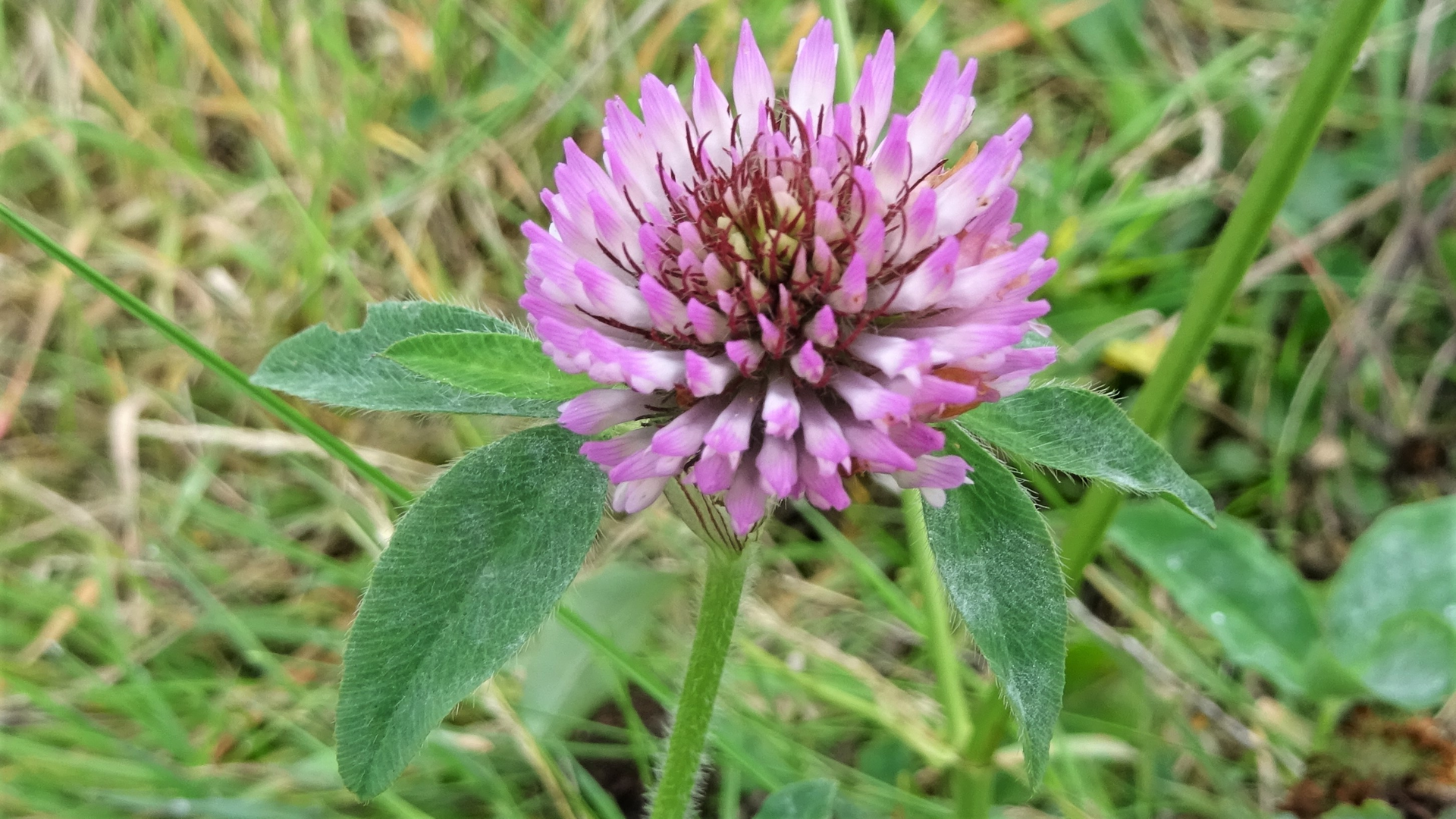
Red Clover belongs to the pea family. It has pinkish-purple flowers that are 14-18mm in size which can be observed from May to October. The leaflets usually display a pale, crescent-shaped mark, but the marks are not very clear in this picture.
#
Swan's Neck Thyme Moss
Mnium hornum
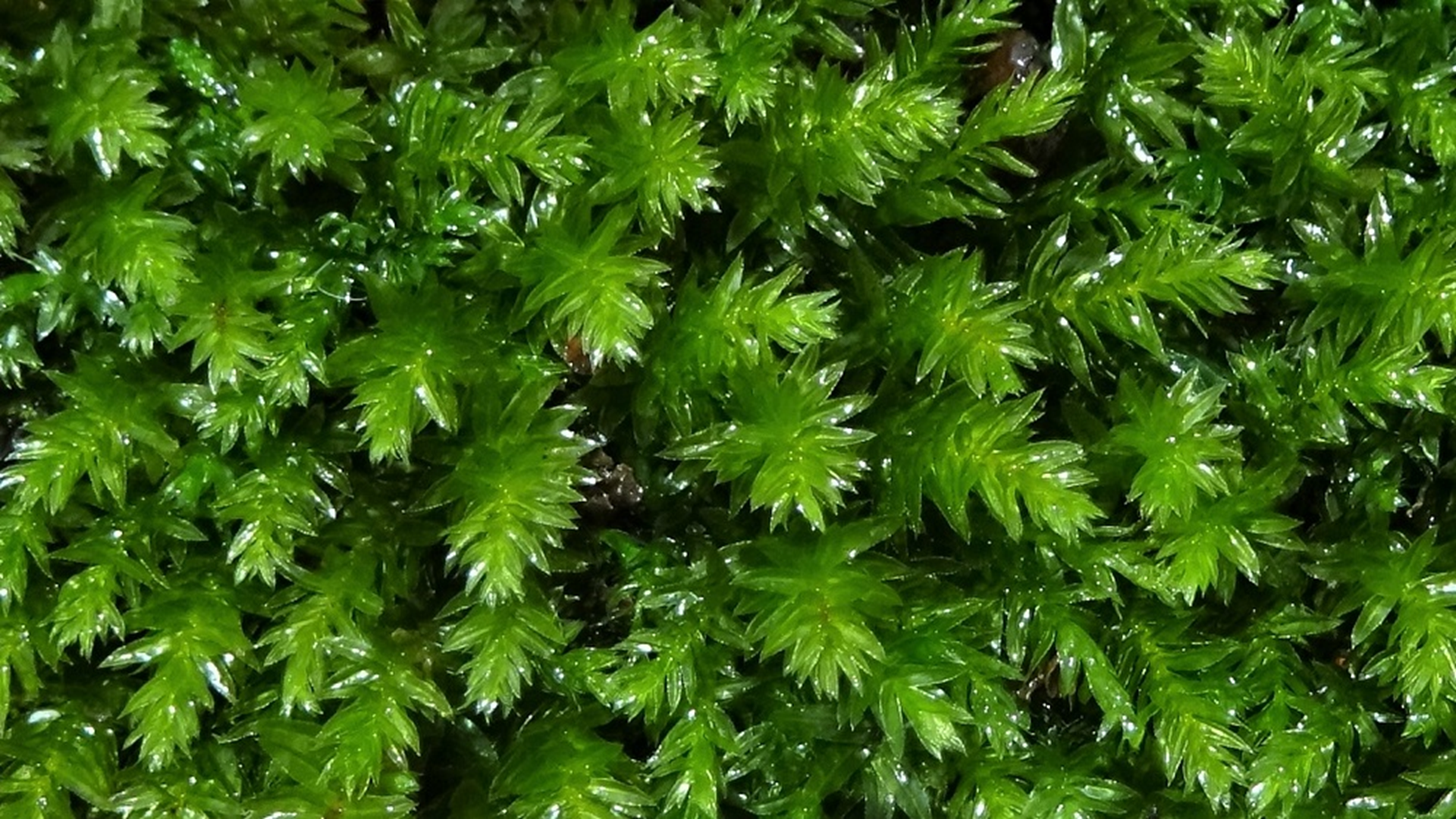
Swan's Neck Thyme Moss is one of the more common mosses in Britain. It typically thrives in woodland areas, covering leaf litter, branches, and tree bases, favouring shaded habitats.
#
Horse Chestnut
Conkers
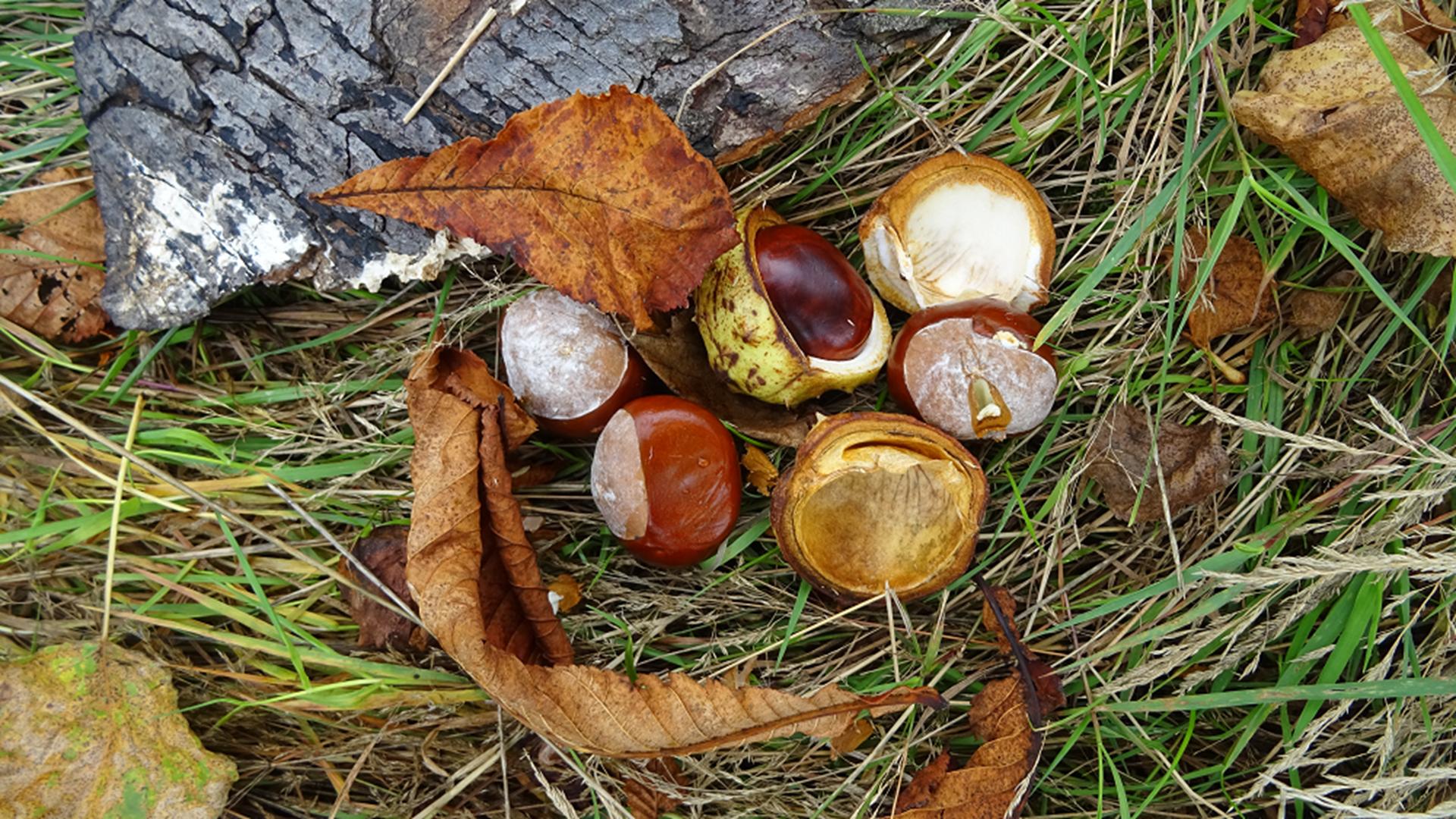
Conkers are fruits of horse-chestnut trees. They grow enclosed in a spiny cases which break open after falling from trees in autumn. Once gathered for a children's game, but not so much these days.
#
S
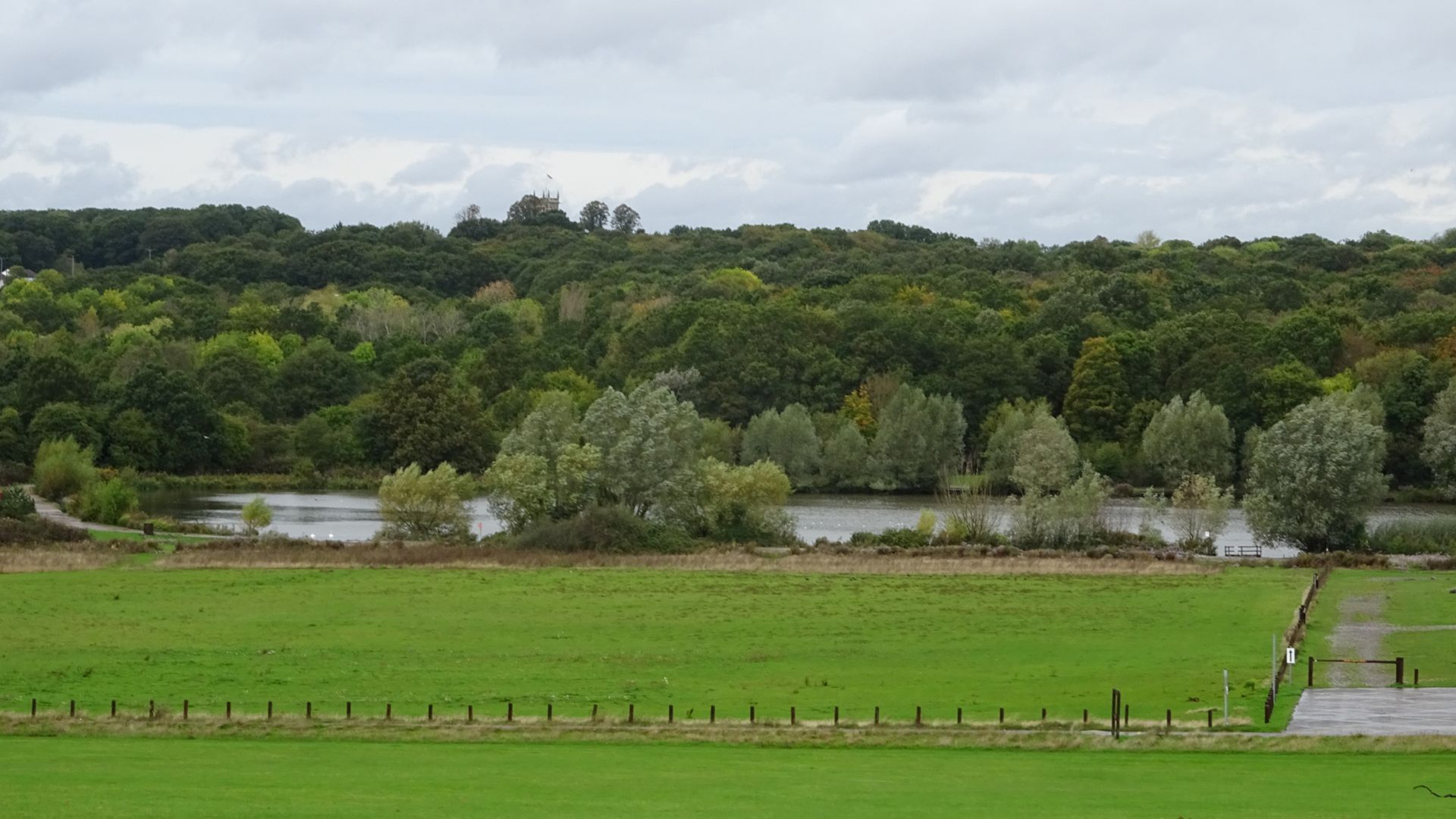
Most trees around the lake are willow which established themselves after stakes used to stop the bank falling into the water started growing.
#
Sheepwater
Chigwell Row
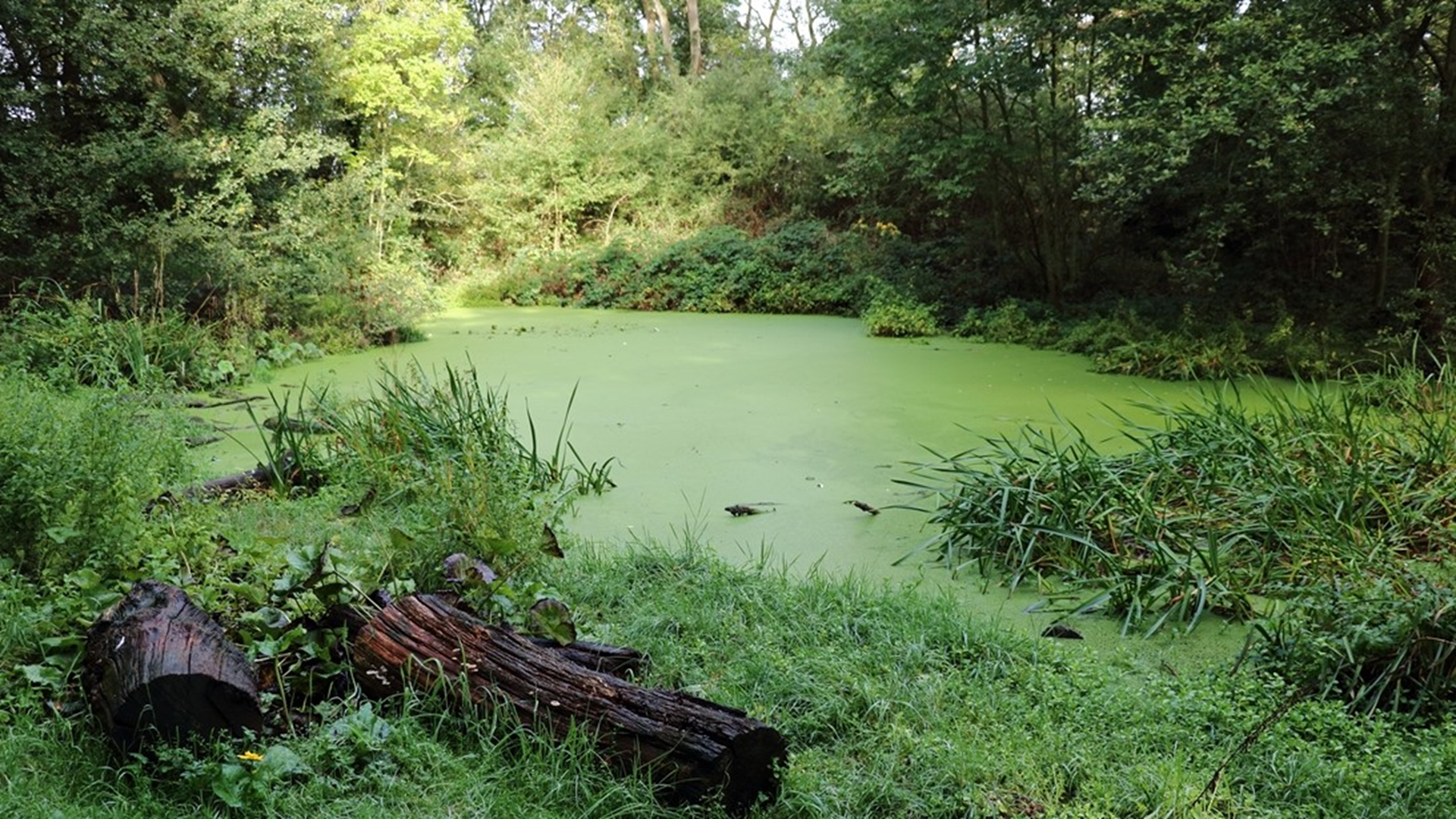
Sheepwater was once used as a watering hole for local sheep.
#
Lost and Found
Milk Bottles
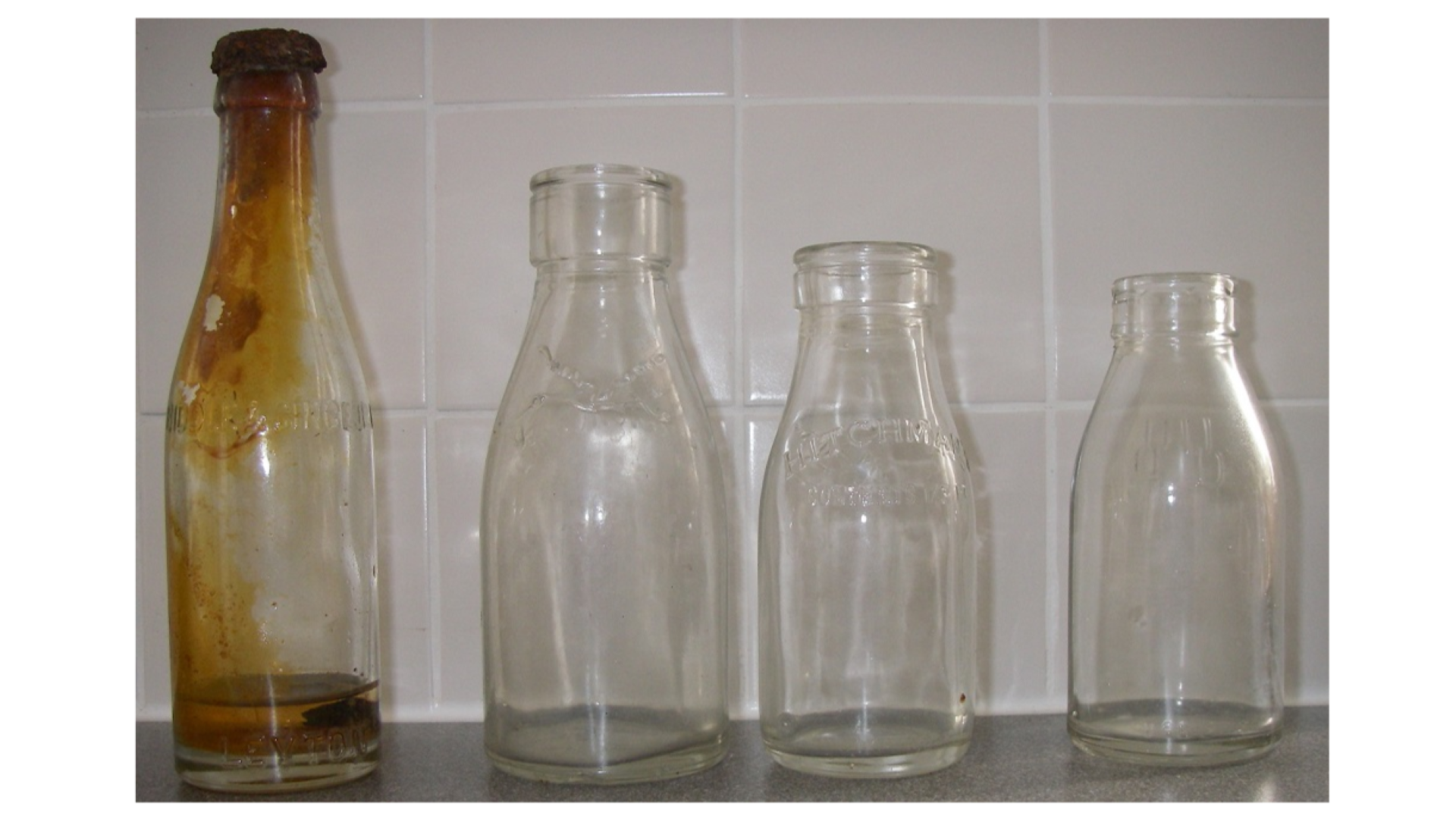
Sarah White contacted the website: "I thought you might be interested in these bottles picked up in the forest recently, photos not great because of glass. Bottles are one third pint from UD (United Dairies), one third and one half pint bottles from Hitchman's Dairy, Walthamstow which have a lovely stork carrying a baby cast in the glass and a bottle from Biddle & Gingell Ltd. Leyton which I can't find anything about."
Biddle & Gingell Ltd operated a Ginger Beer Factory at Clyde Place in Leyton, which was demolished in the 1950s. The company delivered drinks door to door across East London using a horse-drawn cart. Jars were provided to customers with the expectation that they would be returned when empty, and some featured a warning about potential prosecution for unauthorized use. The company later relocated to Tottenham and employed Dave Clark as a driver; he eventually gained fame as a member of the pop group Dave Clark 5. Biddle & Gingell is no longer in business.
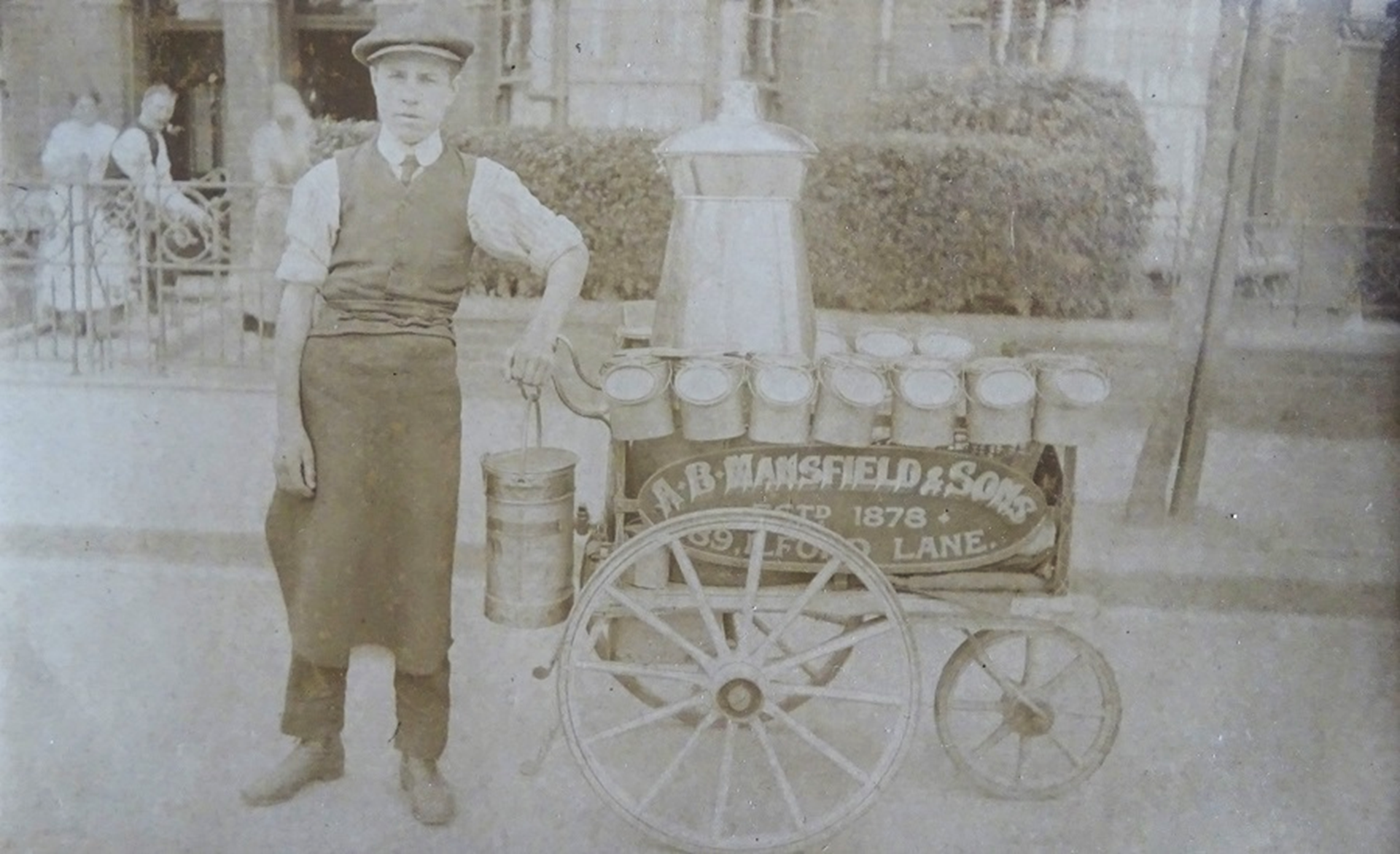
John Hitchman from Walthamstow started selling milk in the 1880s. He soon realised more profit could be gained by selling direct to the public, rather than going through a third party, so he employed milkmen to push churn-carrying carts. The milkman's cry had housewives and servants dashing out to the street to fill jugs.
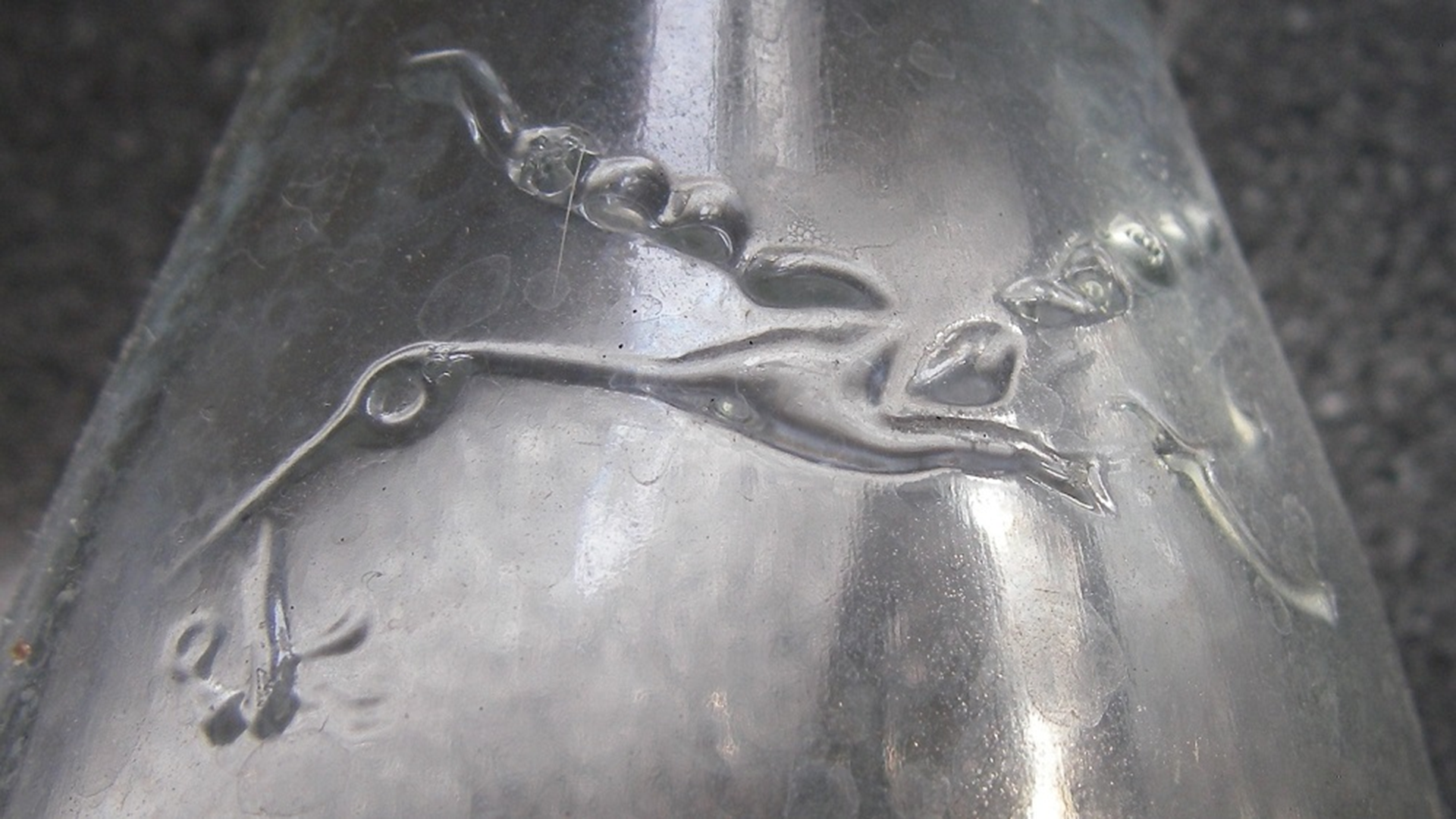
The meaning of the embossed stork carrying a baby is not known, but it may have been used to promote the nutritional value of milk for children. One-third pint bottles were used to supply children with school milk after the Second World War.
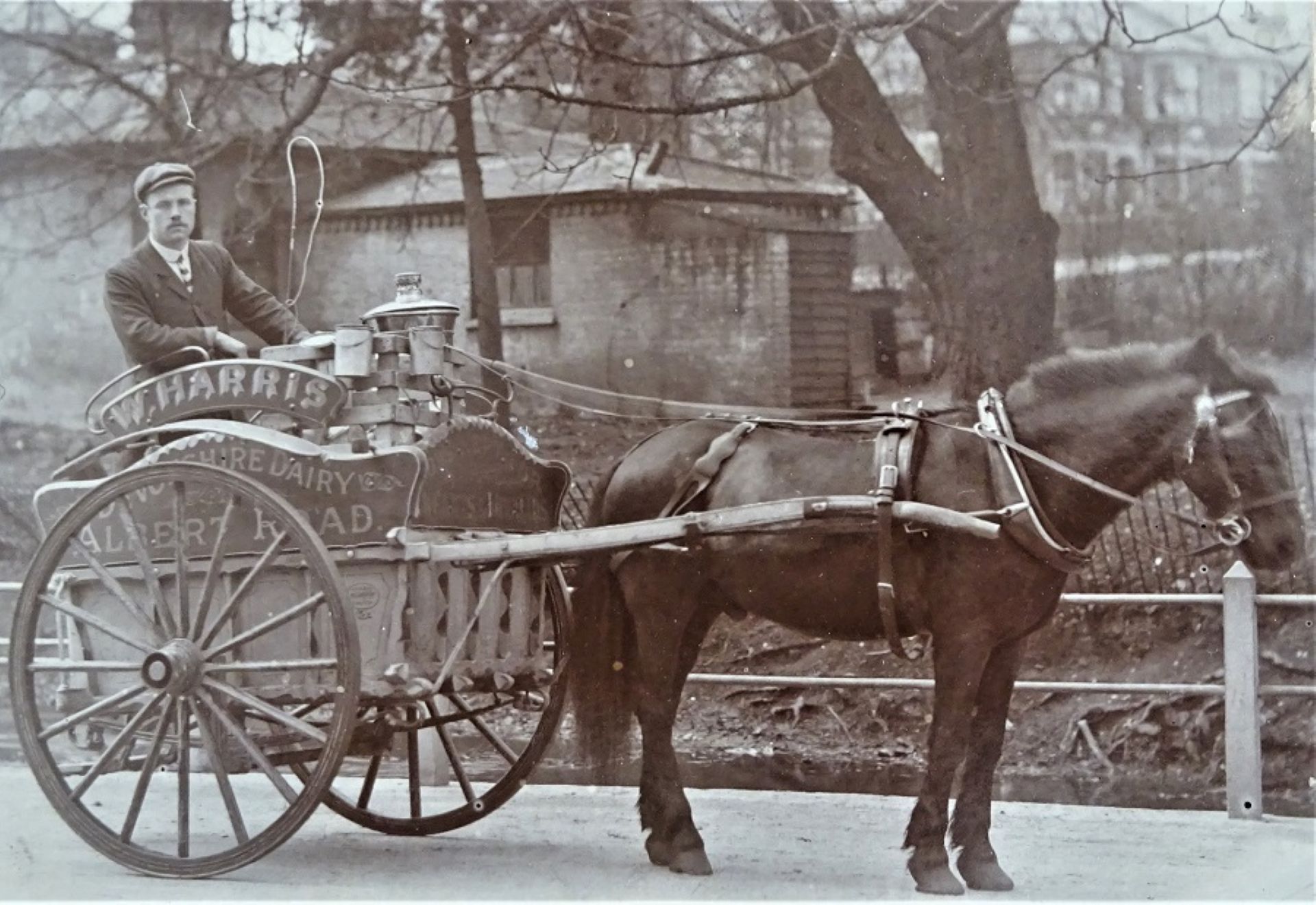
This photograph from 1906 features 'Fred Rees the Milkman' on his cart at The Wash, Cranbrook Road, Ilford. At that time, horse and carts were commonly used for daily milk deliveries to homes in the town until electric milk floats were introduced. The advent of online supermarket shopping marked the decline of the traditional milk round.
#
Shetland Pony
Foxburrow Farm
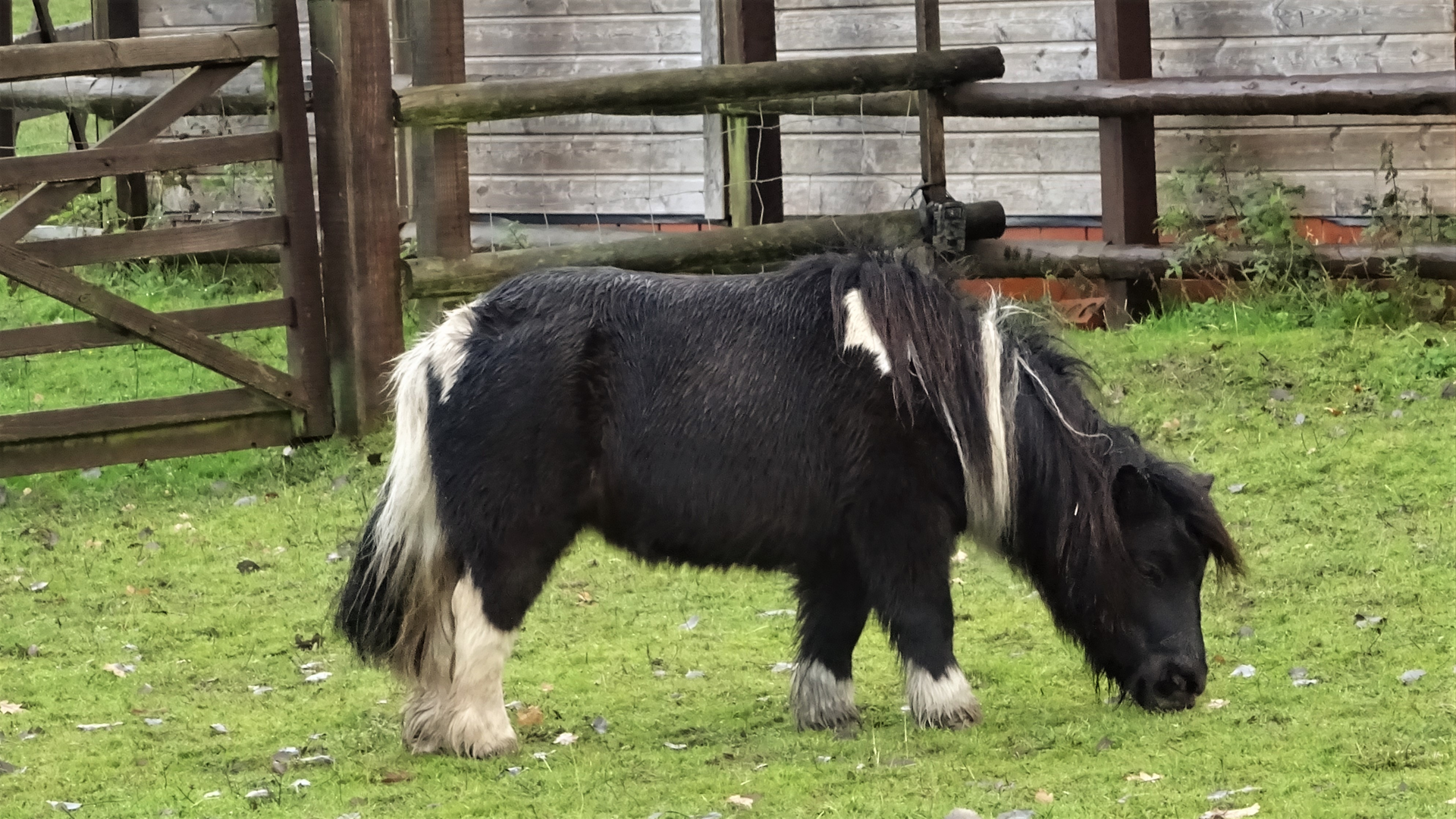
Jasmine the Shetland pony at Foxburrow Farm.
#
Heavy December Rain
Flooding
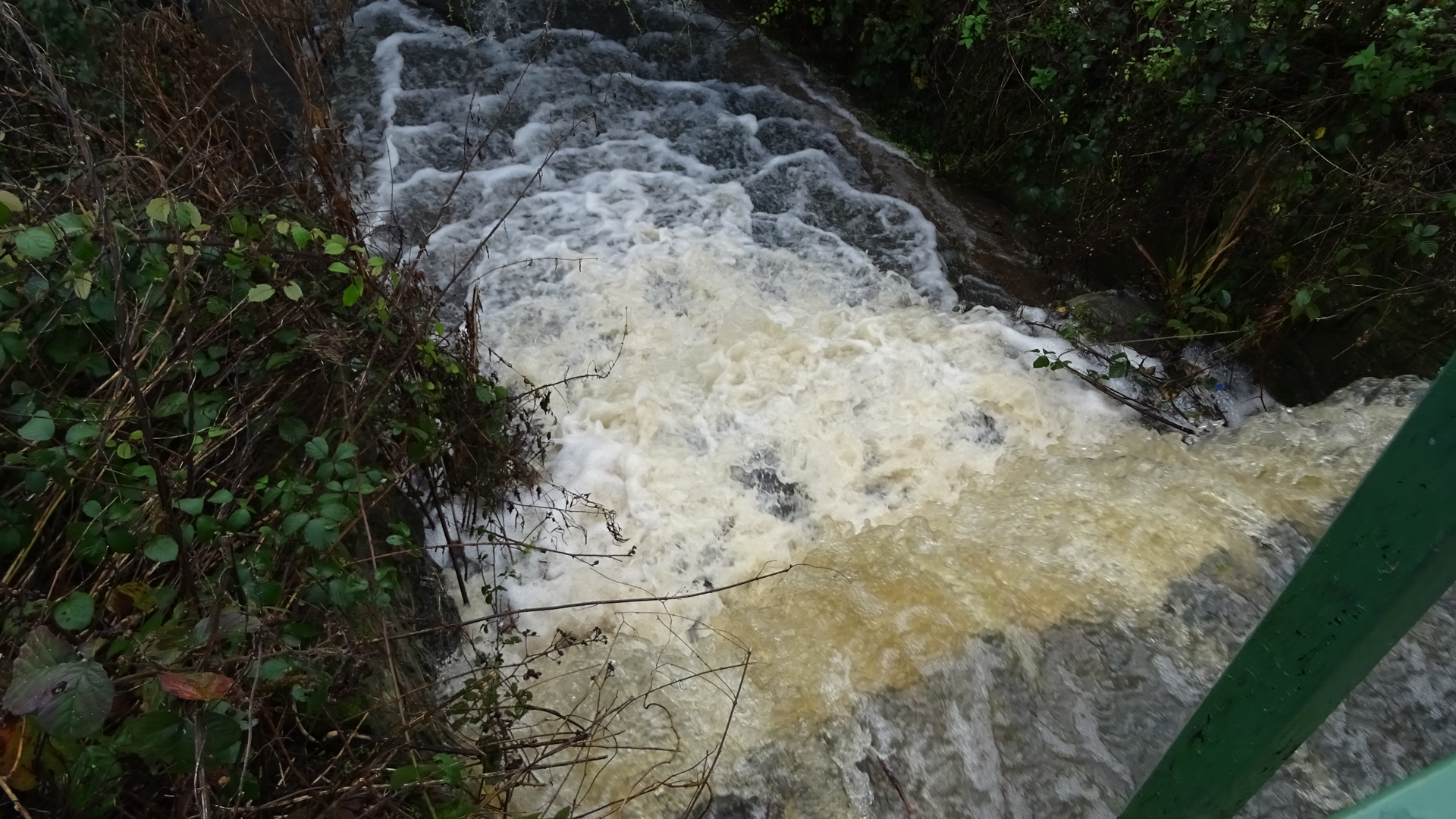
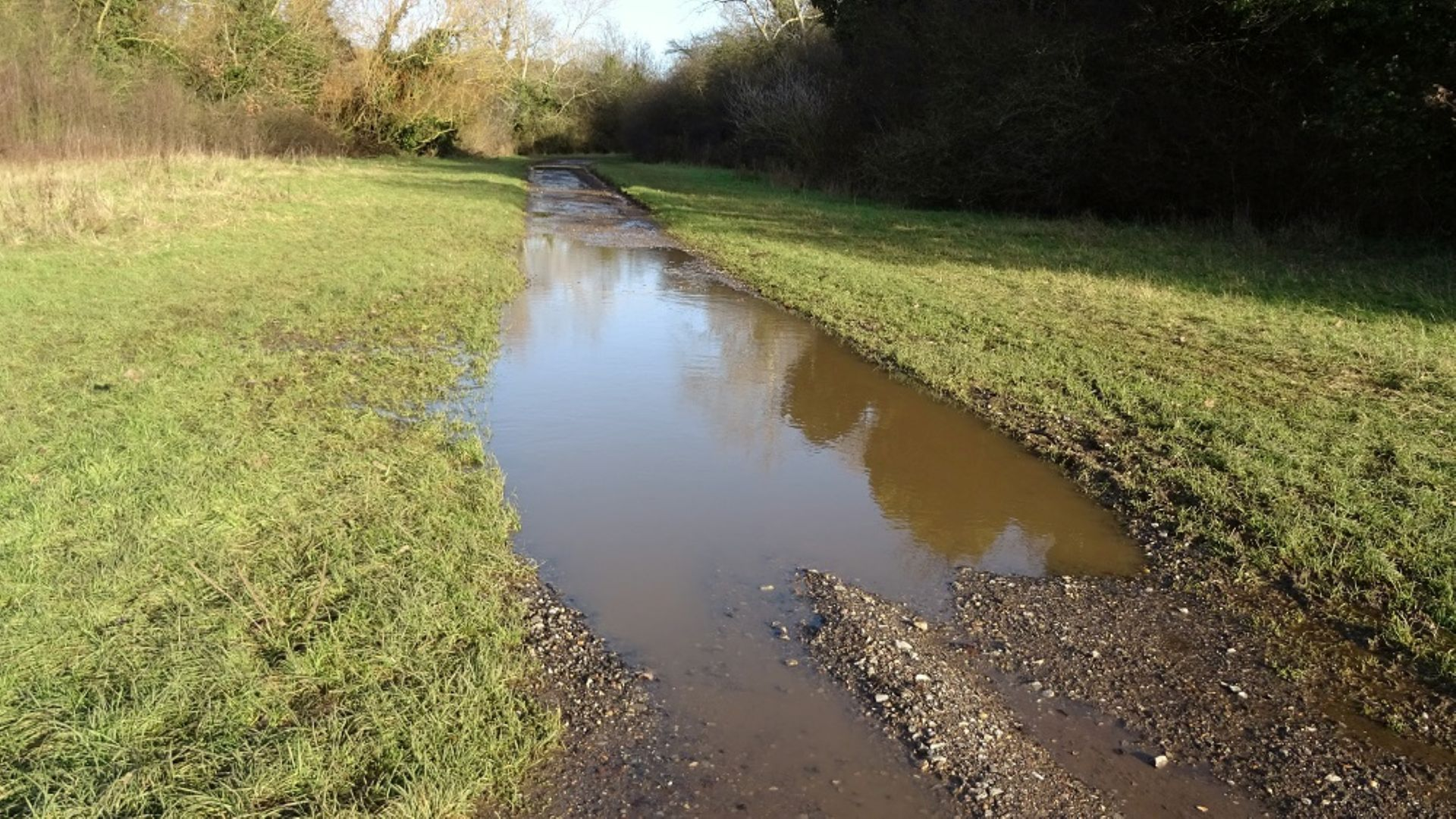
In December, significant rainfall resulted in water flowing rapidly from the outflow at Hainault Lake. Some pathways became waterlogged. There are plans to enhance the paths and drainage systems soon, which may reduce the likelihood of flooding occurring in the future.
#
Thank you to everyone that have contributed to this Journal.
© hainaultforest.net. All rights reserved.
This website uses necessary cookies. It does not use targeting or advertising cookies.