

SECOND QUARTER 2024
This Journal covers the last quarter of 2024 from April to June.
Grass Vetchling
Lathyrus nissolia
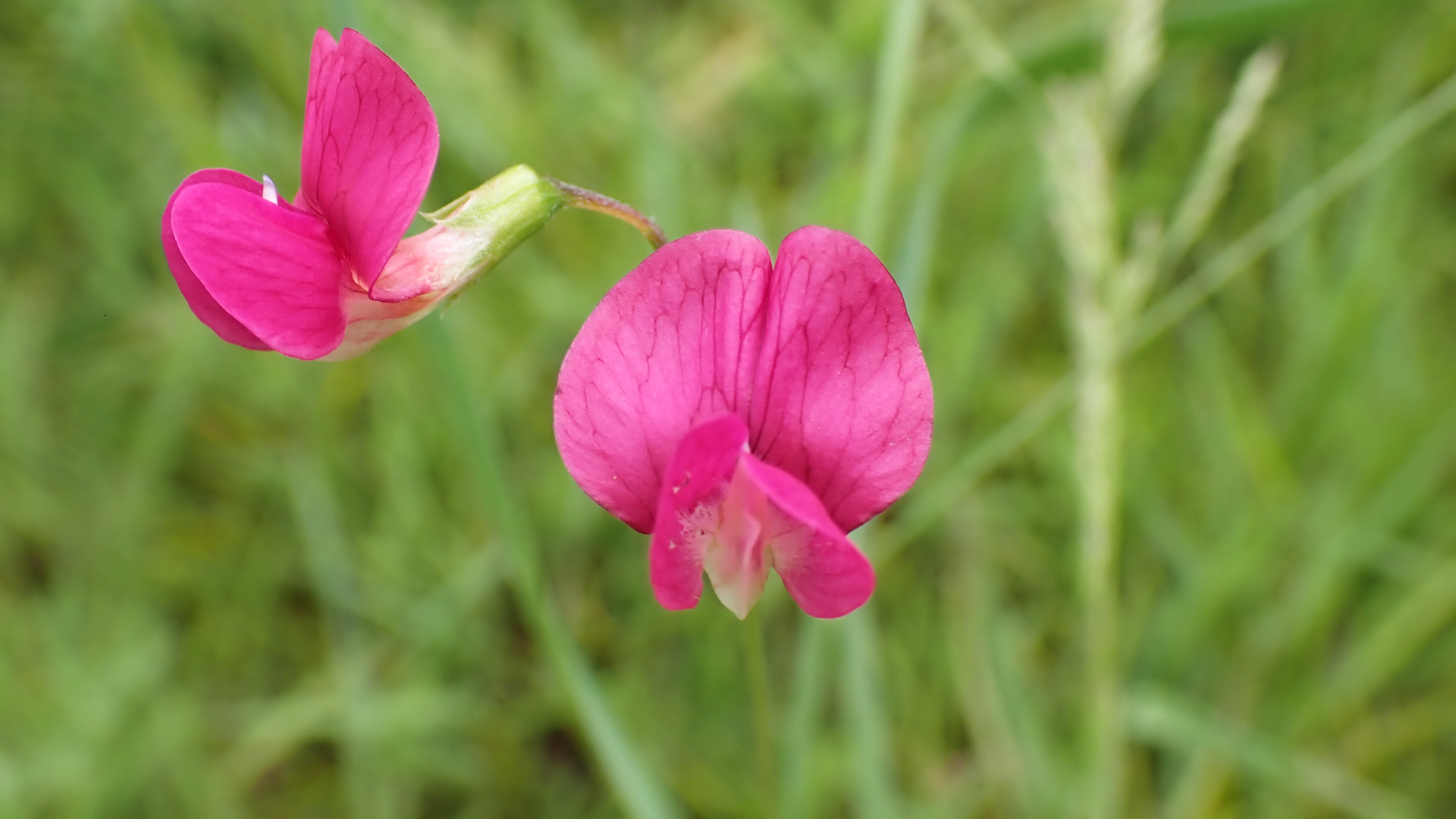
This delicate member of the Pea family is an annual. It has small crimson flowers, 8-18mm across, and grass-like leaves. The flowers appear either singly or in pairs on a long slender stalk. This plant can often be found in the wildflower meadow from May until July.
#
Bird's-foot Trefoil
Lotus corniculatus
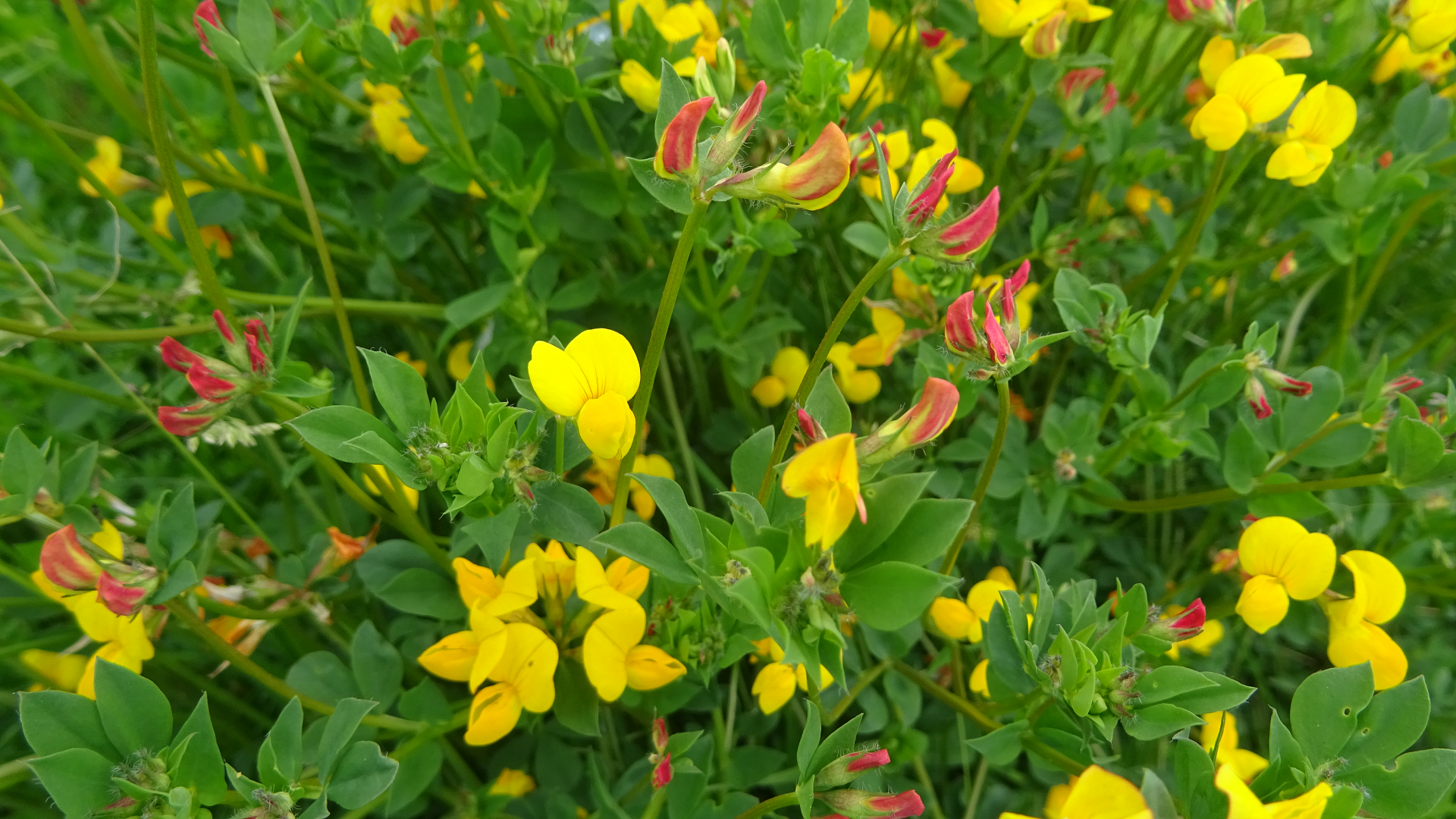
Bird's-foot trefoil is a perennial in the pea family that appears from May until September in grassland habitats. Its yellow flowers are sometimes tinged with red, These sprawling plants usually grow 10-20cm in height. The stem base is woody. Its seed pods look like bird's feet or claws, hence the common name. The leaves have five leaflets and are downy.
#
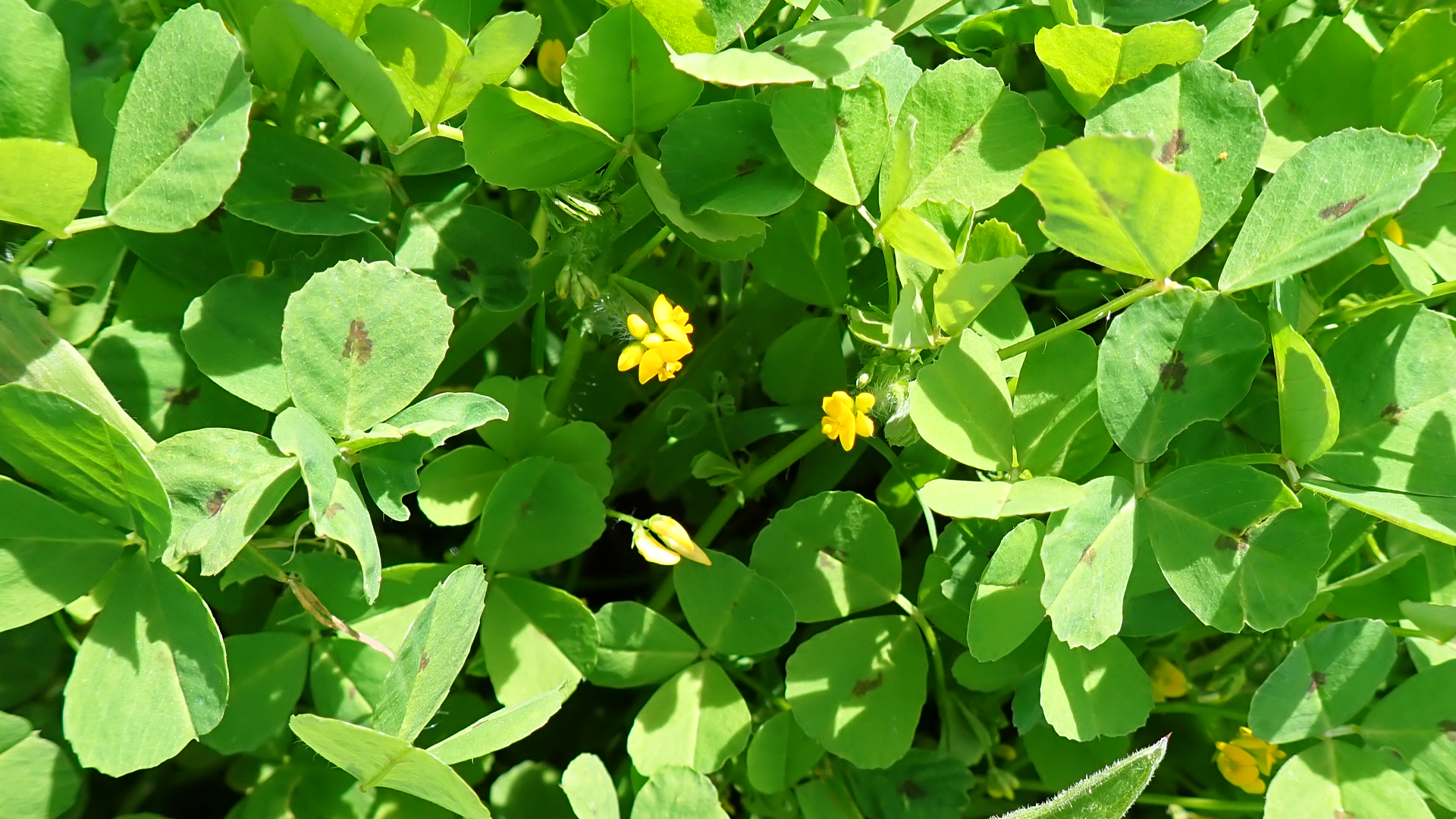
Spotted Medick
Medicago arabica
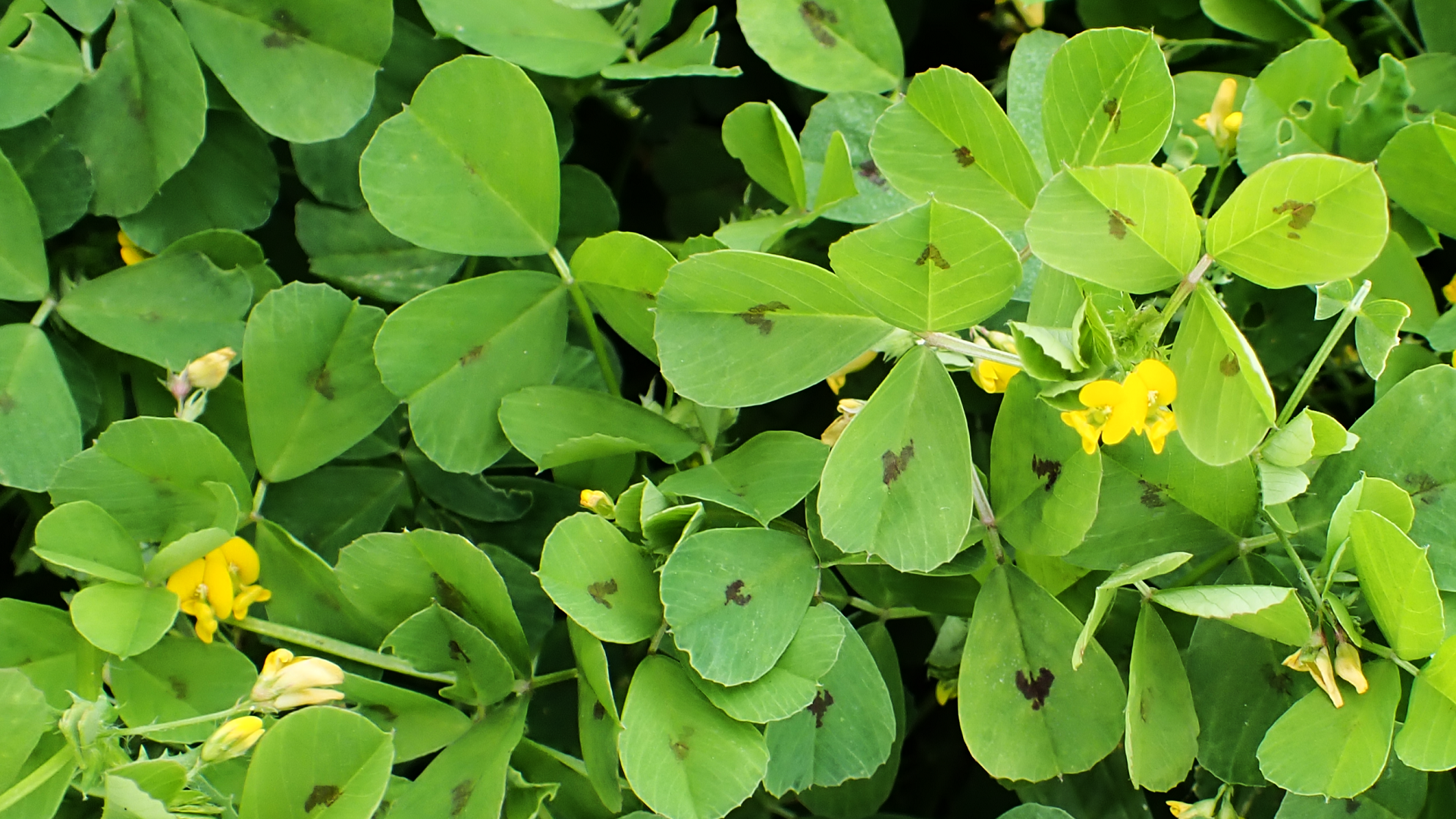
A member of the Pea family which has dark spotted trefoil leaves. Occasionally there may be a lack of spots in which case other details have to be examined. The leaflets are heart-shaped with a tiny point near the apex. Yellow flowers measure 5-7mm across and may be solitary, or several may be together. The pod is spiralled with 4-7 turns.
#
White Clover
Trifolium repens
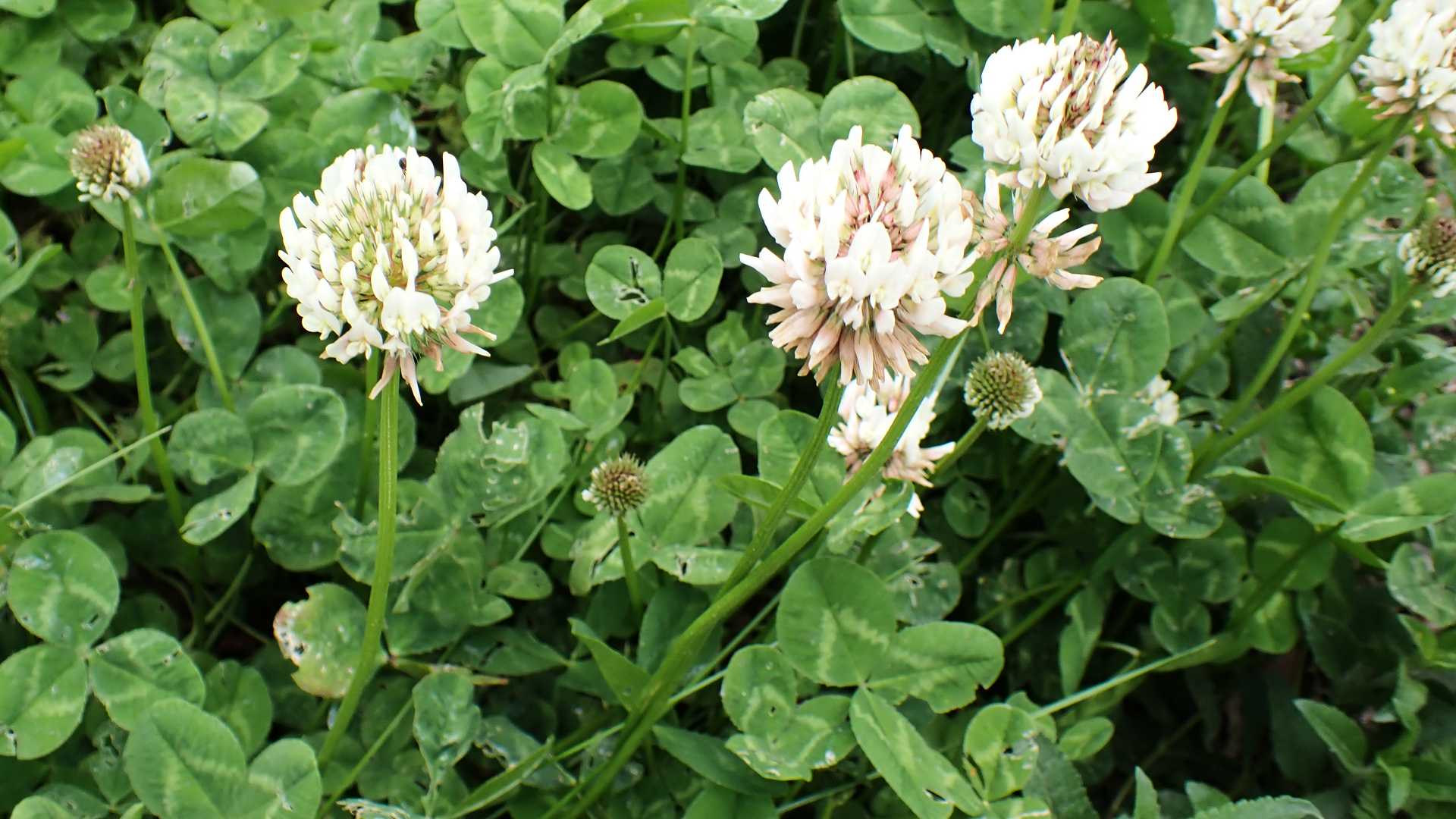
Low-growing creeping perennial that almost always has trifoliolate leaves; the shape characterised by the leaf being divided into three leaflets, however occasionally there may be four or more. Tri in Latin means 'three' and folium means 'leaf'. The species name repens is Latin for 'creeping'. The whitish flower-heads, usually 15-20mm across, often develop a pinkish or creamy tinge with age. The stems operate as stolons so the plant often forms mats with the stems creeping as much as 18cm each year and rooting at the nodes.
#
Common Vetch
Vicia sativa
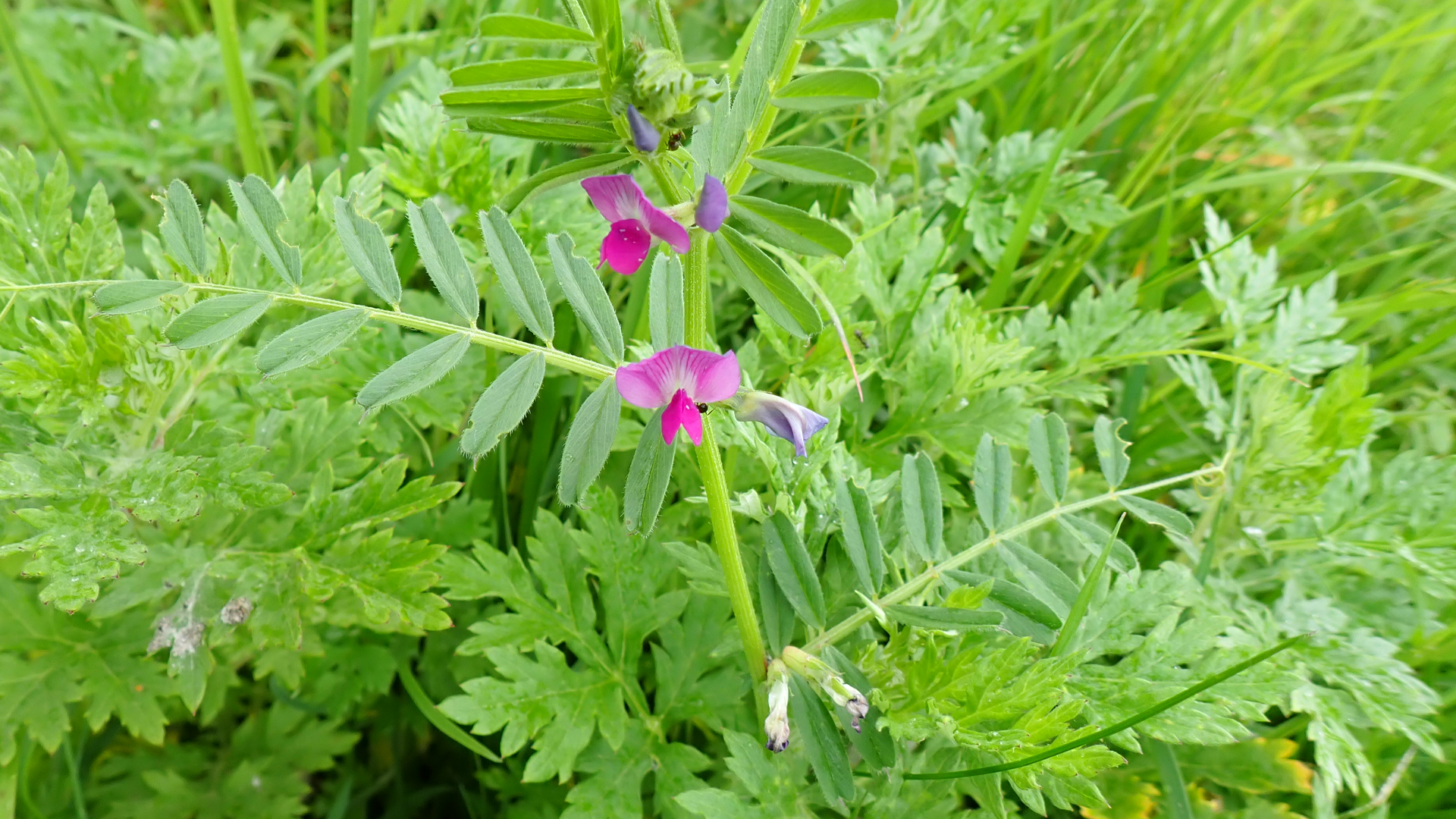
Sprawling plant with pinkish-purple flowers and long stems that have curly tendrils on the ends. Its opposite leaves growing along the stems are oval-shaped with a fold in the centre.
#
Foxglove
Digitalis purpurea
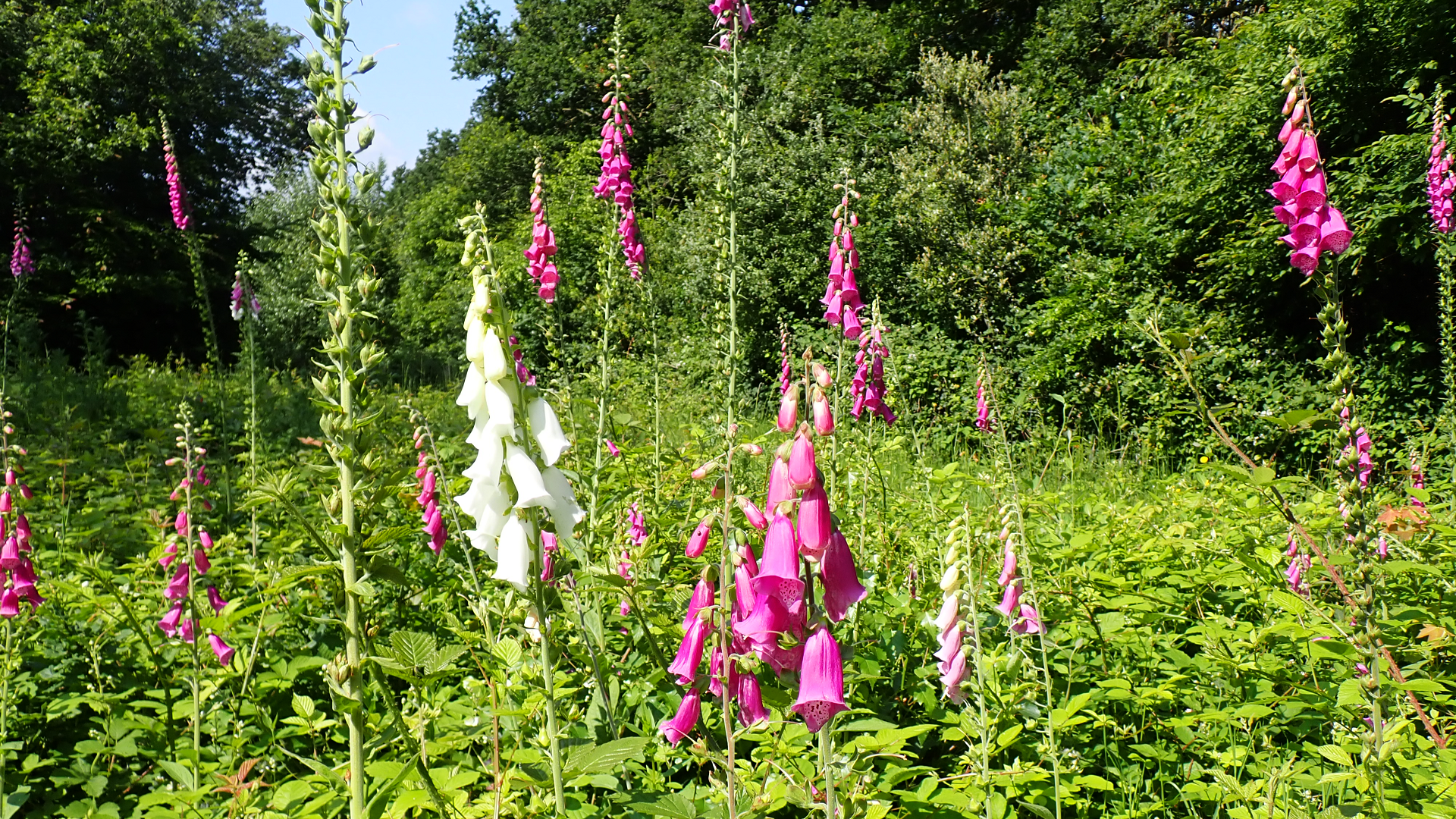
Foxglove has tube-shaped, magenta or white flowers around the stem which open in sequence from the bottom up. Flat leaves form at the base and the upright spikes grow up to 1.5m tall. This woodland plant is a favourite of bees and moths, however it is deadly poisonous to humans if ingested.
#
Cuckoopint
Arum maculatum
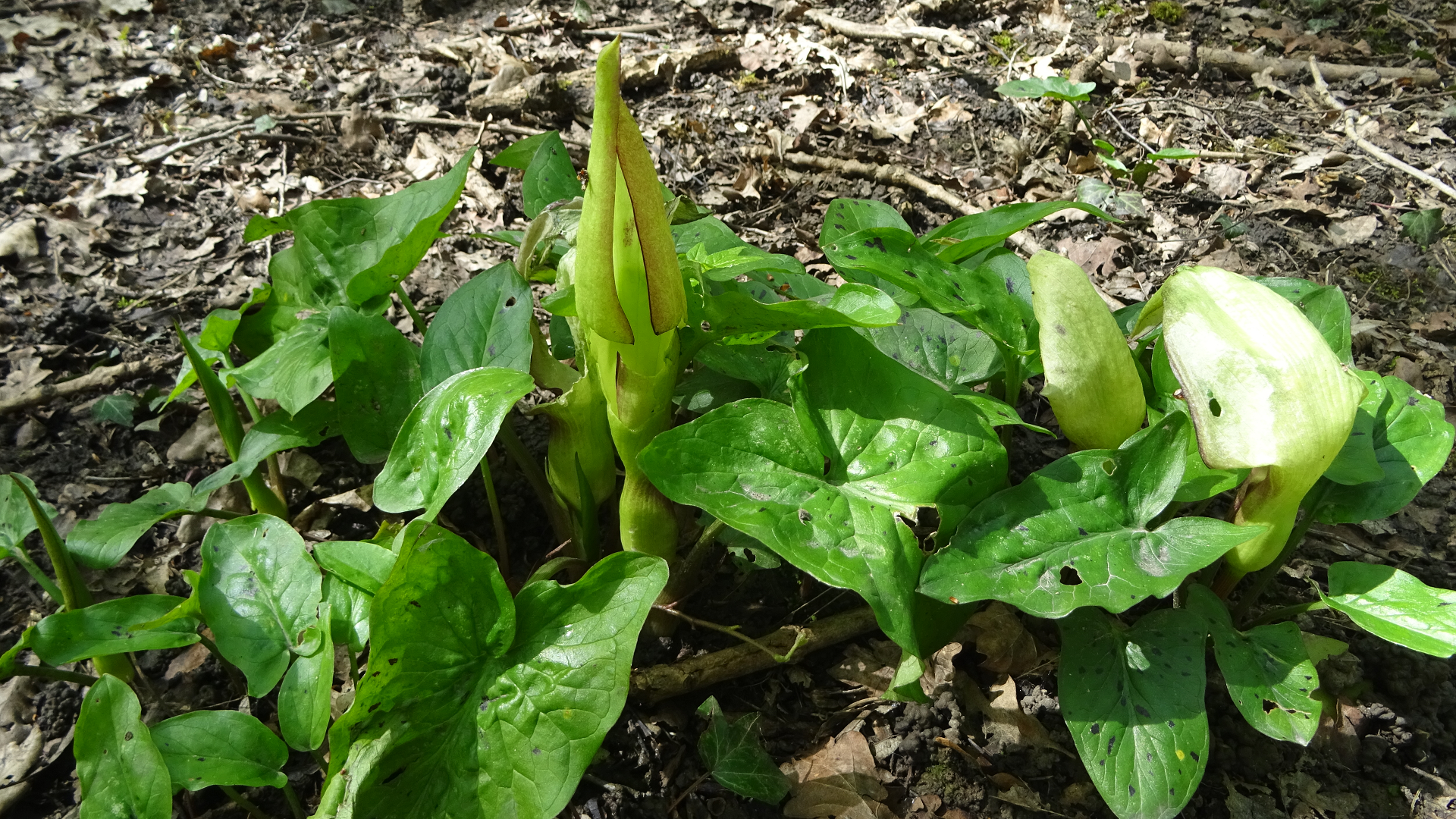
Woodland flowering plant that appears during April and May. The plant has many common names which normally have risque meanings. However, it is possible that "Lords and Ladies" is a reference to this plant being used for starching ruffs worn around gentry necks during the 16th century. The roots were once a traditional source of starch used for stiffening clothes.
#
Ox-eye Daisy
Leucanthemum vulgare
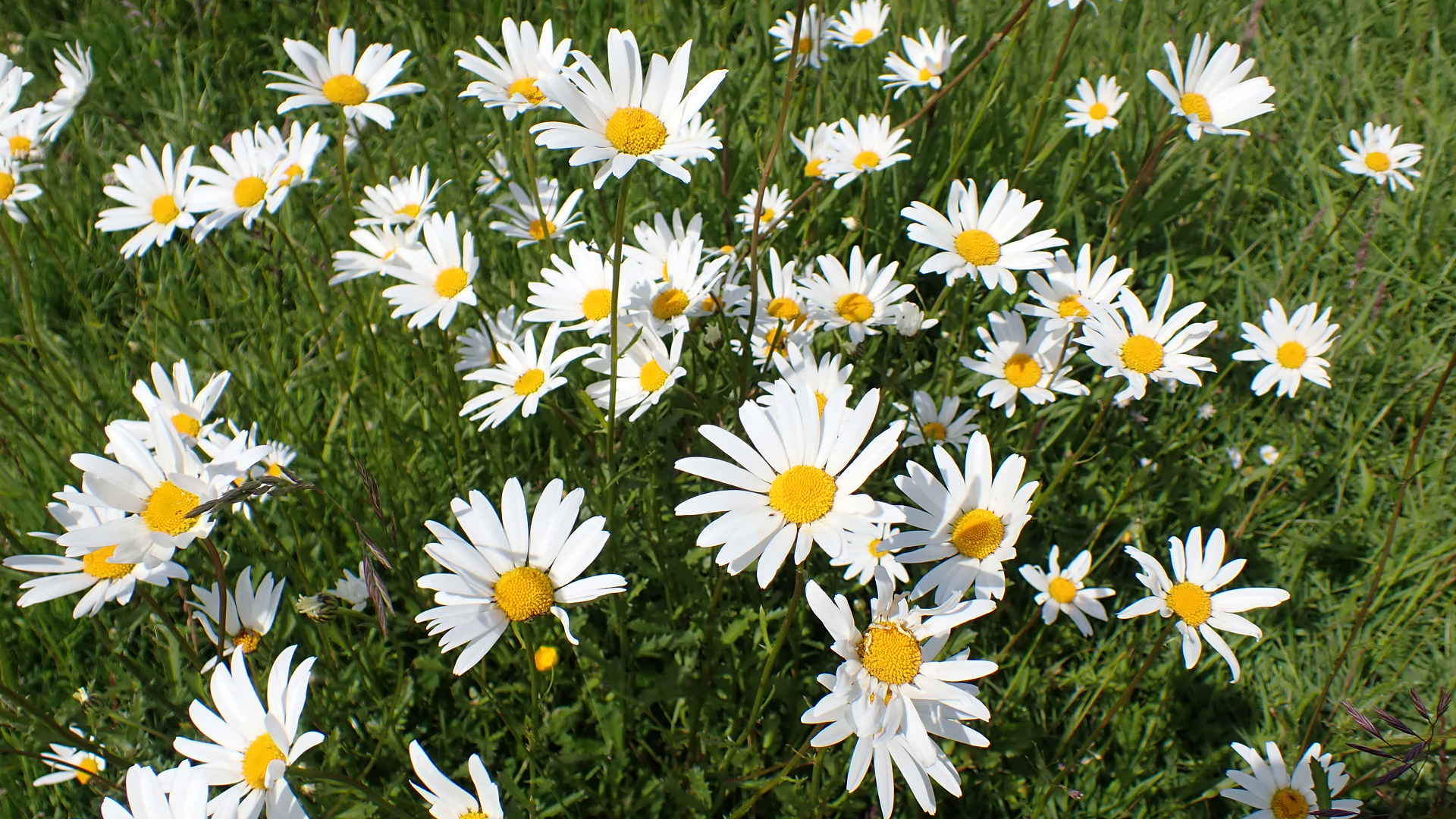
Ox-eye daisy has round flower-heads that appear on single stems that grow up to 60cm tall. The basal leaves are spoon-shaped and those along the stem are thin and jagged. This plant is very common in the wildflower meadows from June until September.
#
Lesser Stitchwort
Stellaria graminea
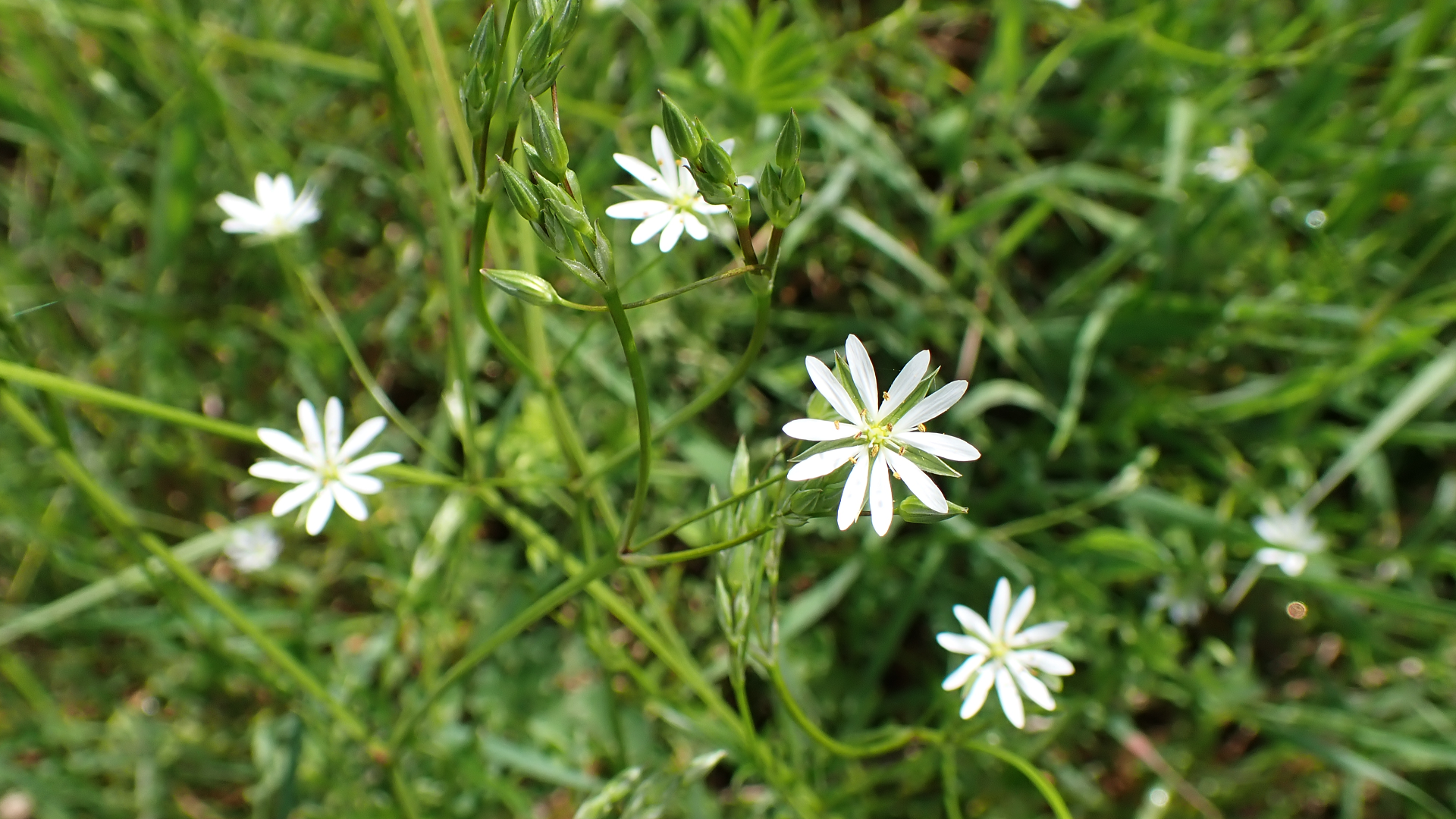
Creeping perennial found in grassland from May until September, it bears small, white flowers bearing five deeply notched petals. The leaves are narrow and grass-like.
#
Black Knapweed
Centaurea nigra
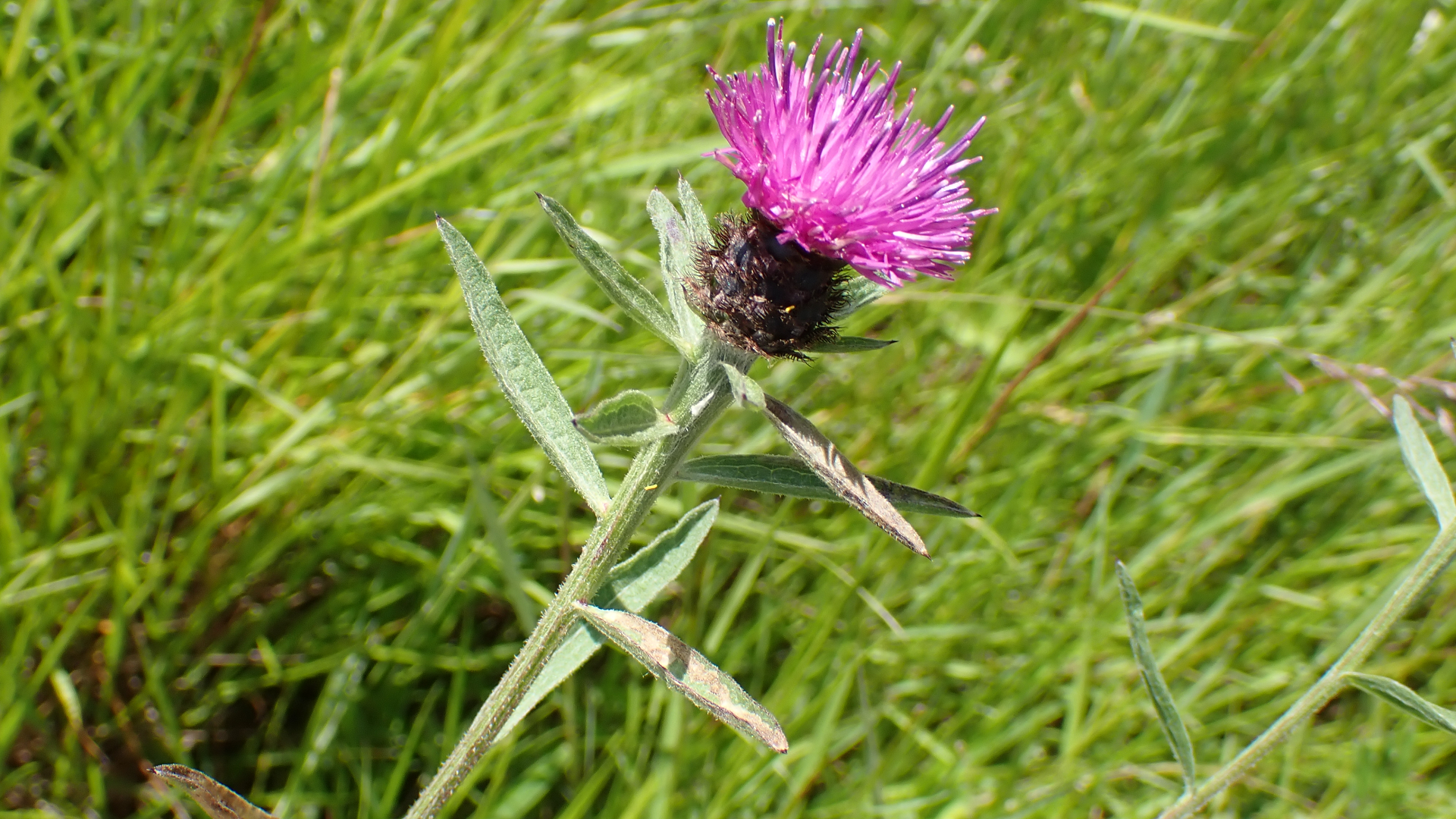
Thistle-like plant that appears in the meadows from June until September. The purple composite flower heads are comprised of many small florets (tiny flowers), surrounded by long, ragged, pink bracts. The oblong leaves are deeply divided. Also known as Common knapweed.
#
Ransoms
Allium ursinum
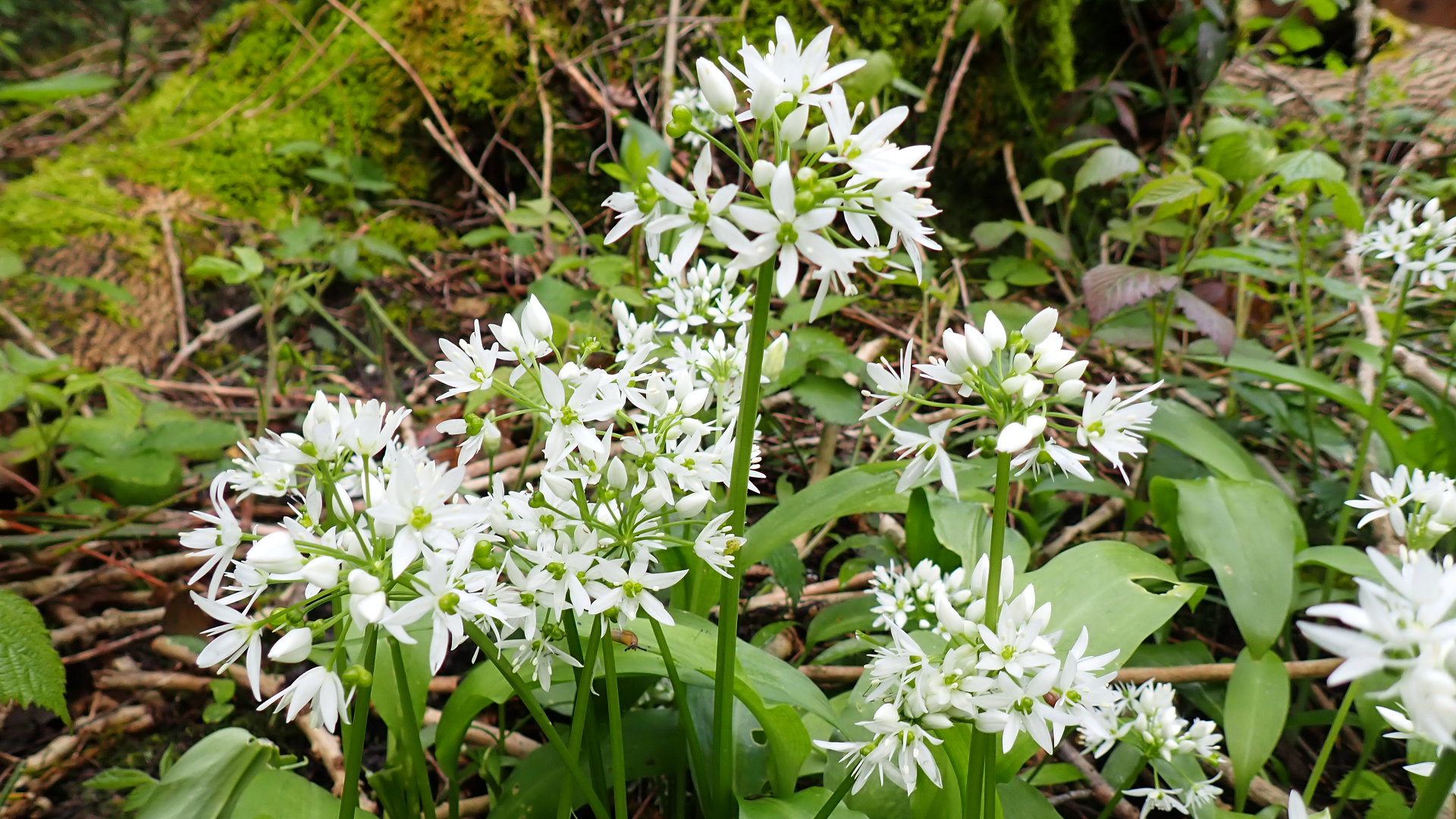
Ransoms, also known as 'Wild Garlic', appears in ancient woodlands during April and May. It has a preference for shaded damp places. Most of the year it exists as a bulb underground only emerging in spring to flower. Rounded clusters of white flowers grow on long narrow stalks. The star-like flowers have six long narrow petals that taper to a point and six stamens bearing white anthers and white pollen. In the middle is a green three-lobed ovary. Narrow oval leaves form around the base of the stem.
#
Bramble
Rubus agg.
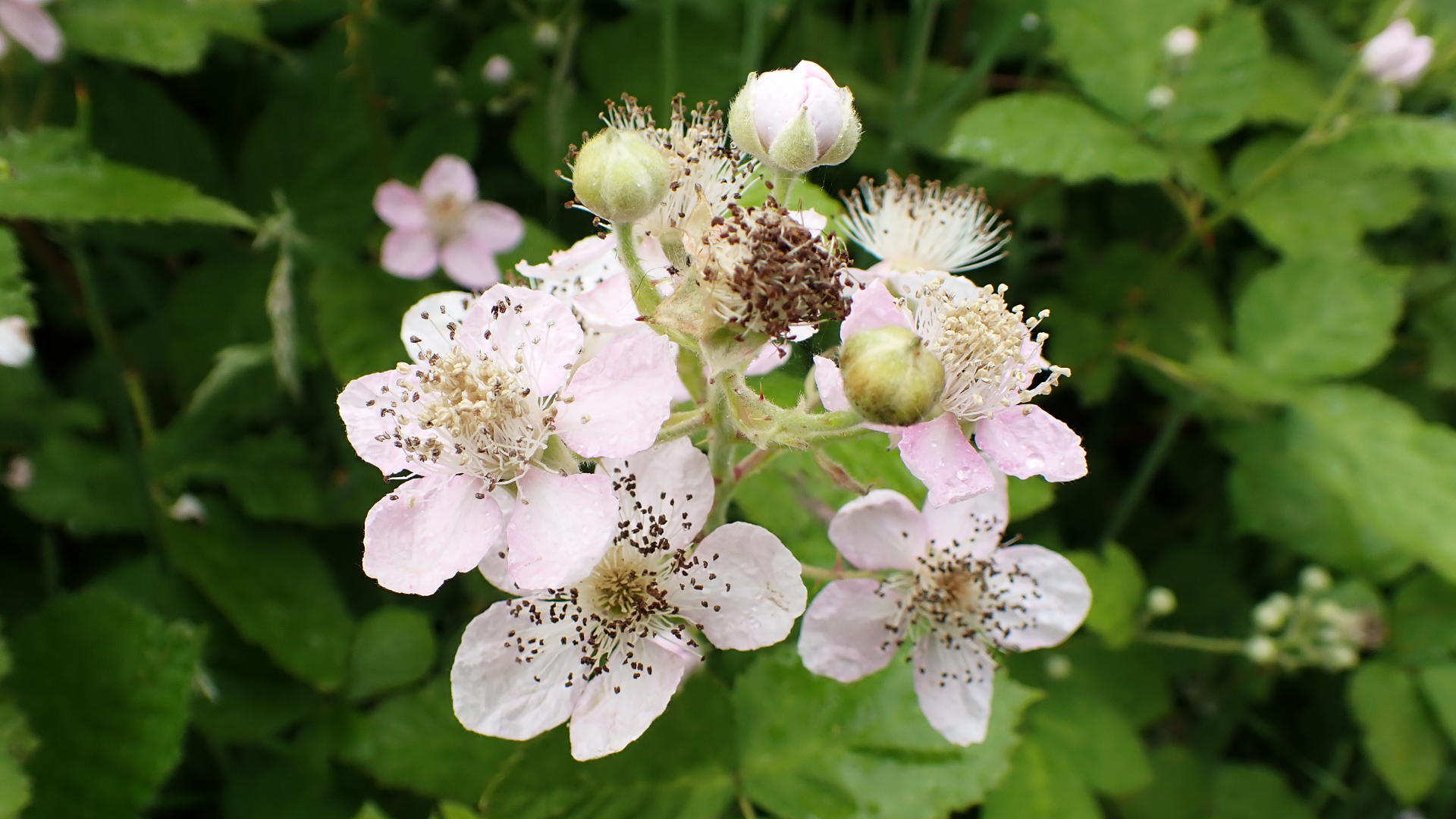
In Britain there are several hundred species of bramble that thrive in a range of habitats. Most are self-fertile, others are pollinated by insects visiting for nectar and pollen.
#
Herb-robert
Geranium robertianum
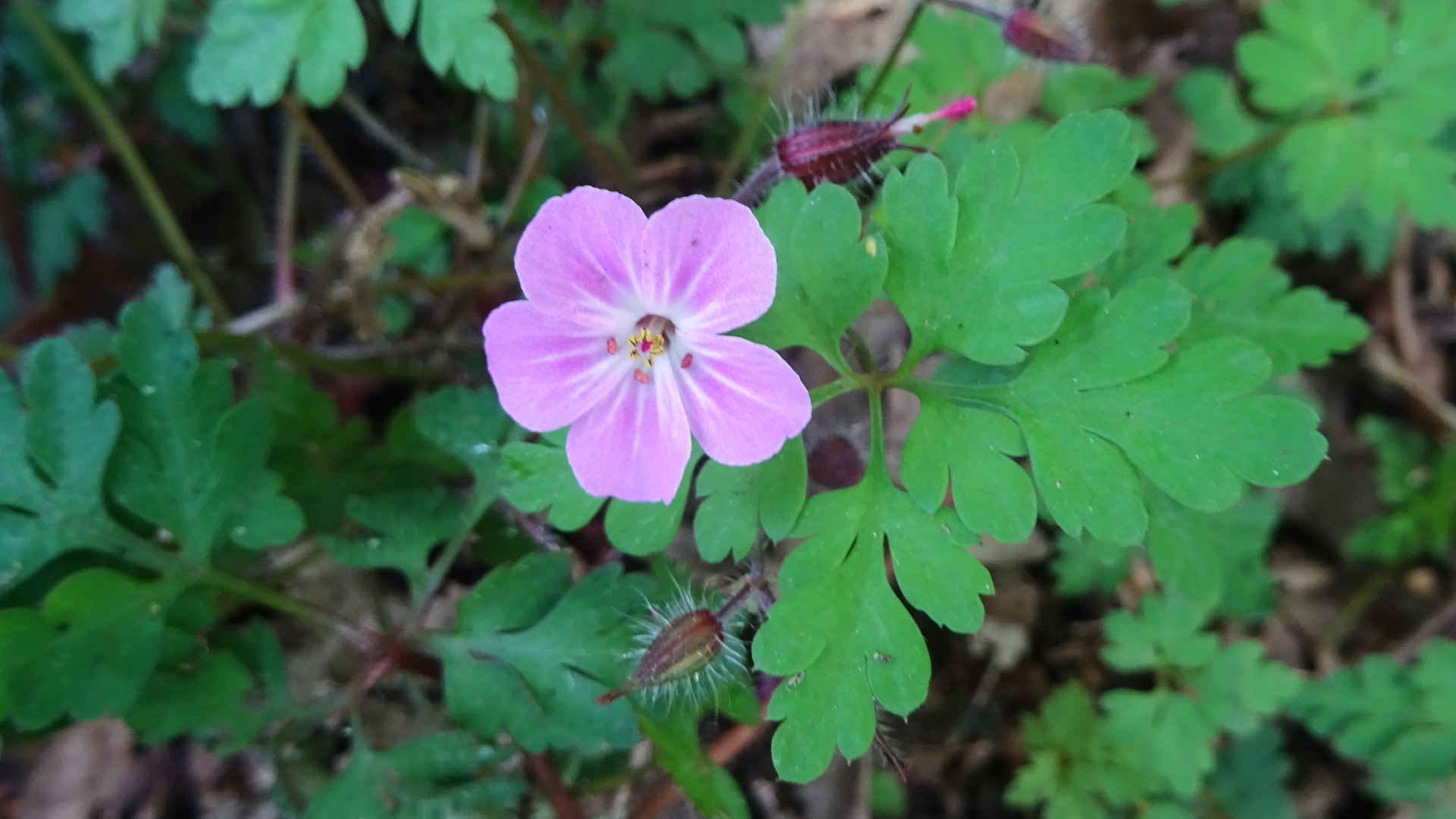
Low-growing woodland plant that flowers from April to September. It has small, pink, five-petalled flowers and reddish stems. The leaves have deeply divided lobed leaves often tinged with red.
#
Germander Speedwell
Veronica chamaedrys
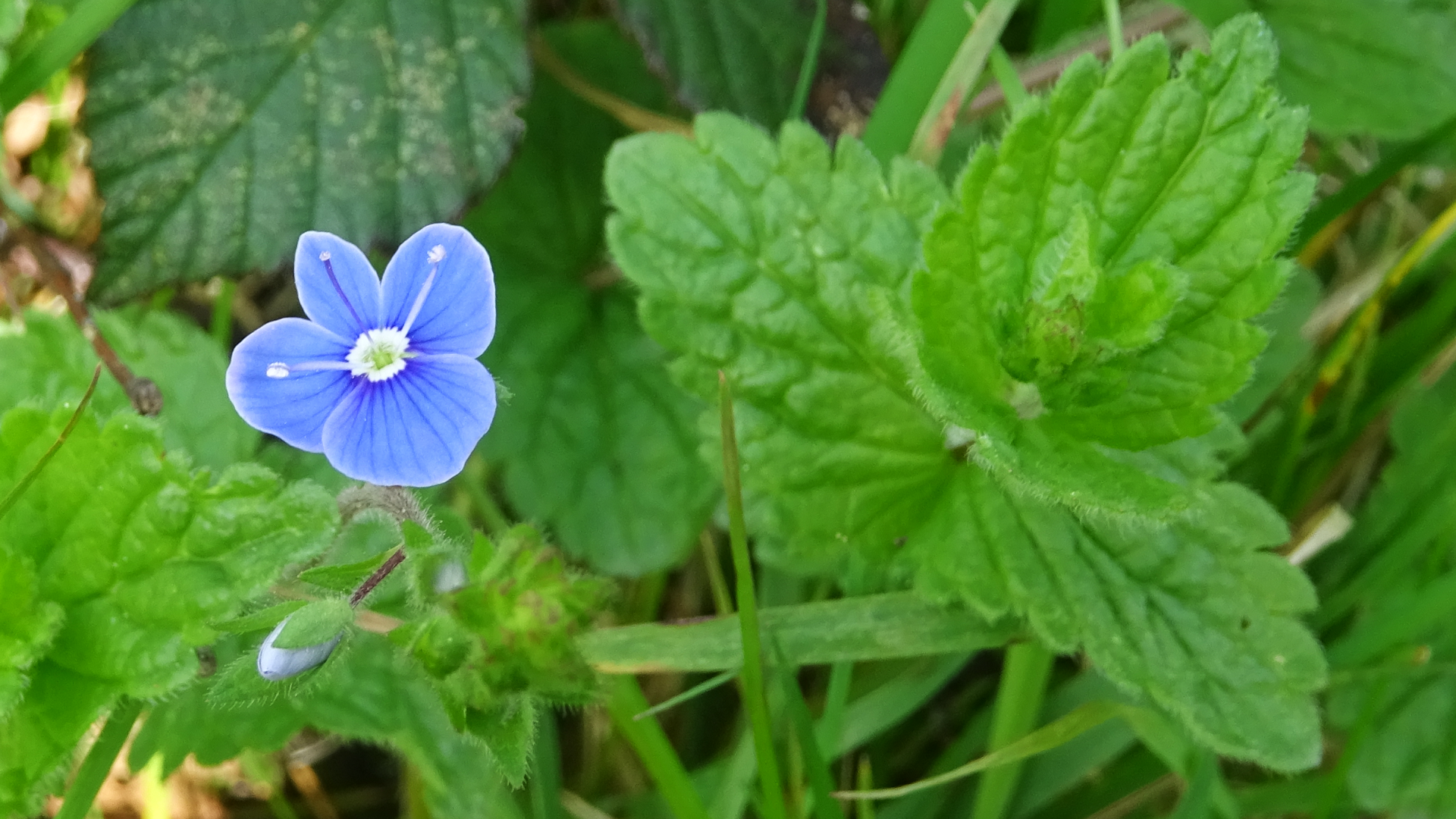
A low-growing plant producing upright spikes holding bright blue four-petalled flowers with white centres. It has two rows of long white hairs on opposite sites of its stems.
#
Cuckooflower
Cardamine pratensis
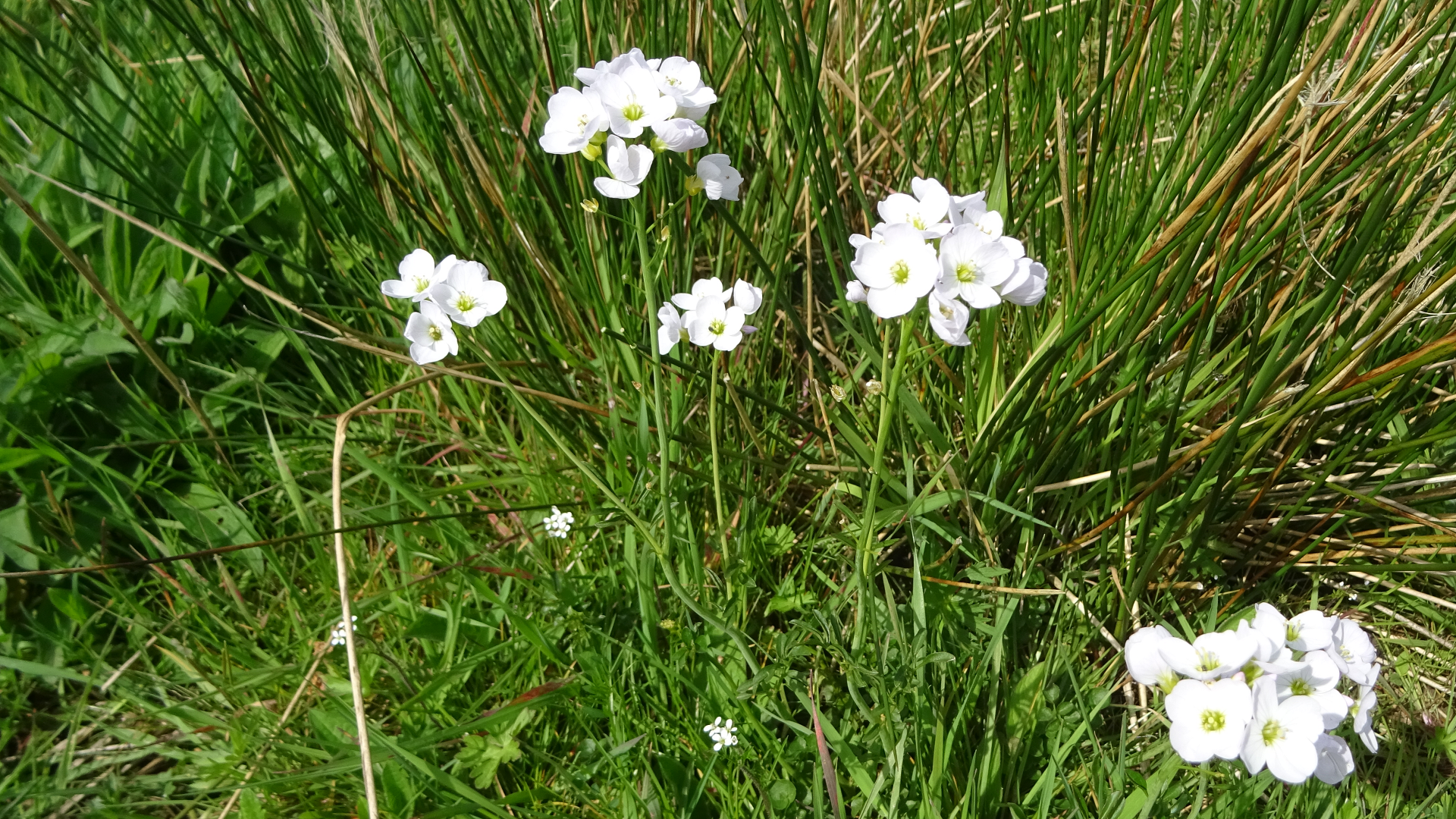
Appears in damp meadows during spring. It has an upright stem, a rosette of leaves at the base. and small, pale pink. four-petalled flowers that appear in clusters at the top of the stem. Also known as Lady's Smock.
#
Grape Hyacinth
Muscari

An invasive garden plant which spreads easily. It grows in well-drained soils and can be particularly vigorous in sunny locations. Despite the common name this species is not related to hyacinths, but it is now considered to be part of the Asparagaceae family. It is occasionally seen in grassy areas of Hainault Forest, but is not a natural woodland plant.
#
Marsh Marigold
Caltha palustris
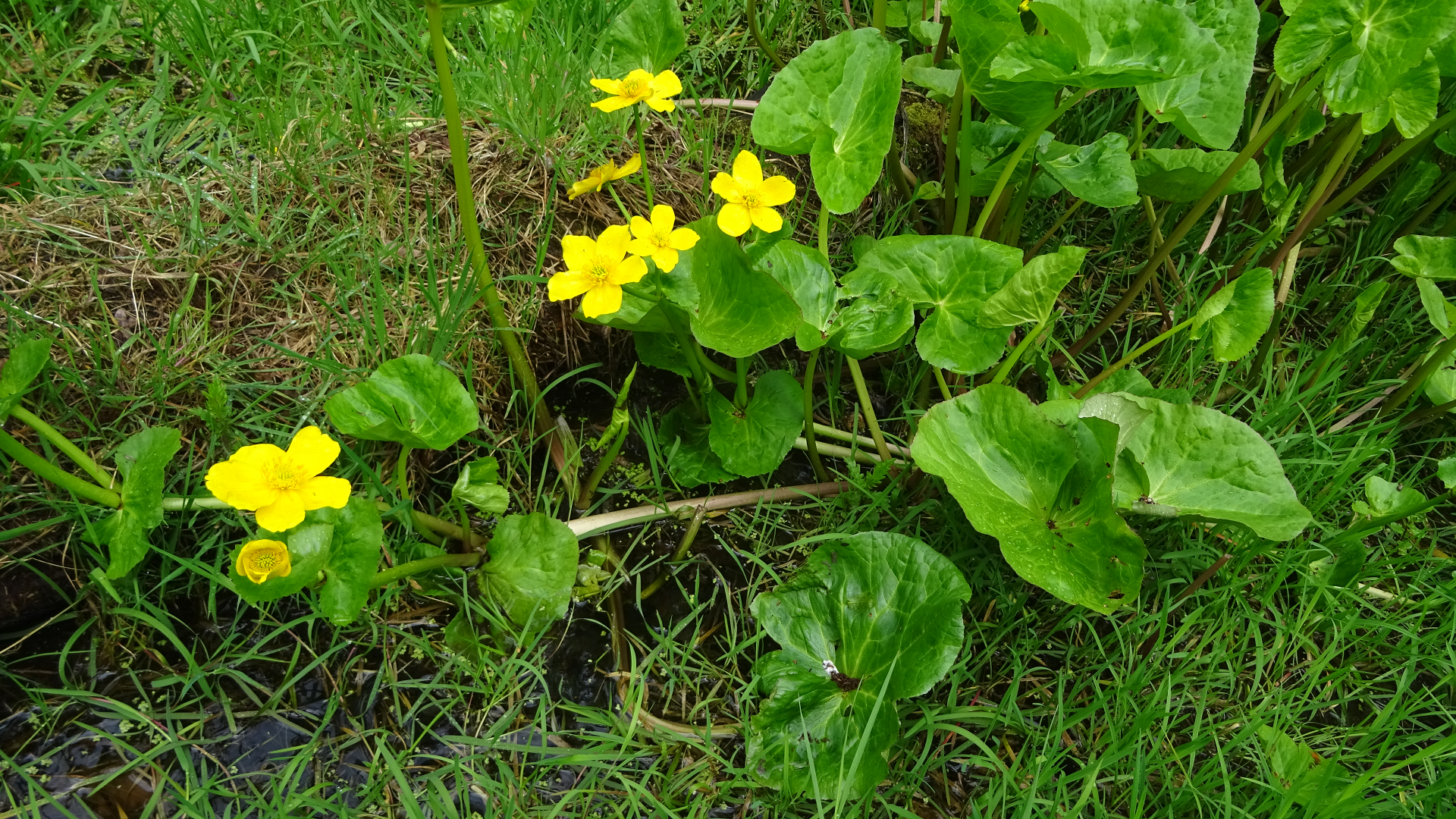
Marsh Marigold is a member of the Buttercup family with a preference for wet locations and is often found around ponds. It is a low, thick-stemmed perennial with shiny dark-green kidney-shaped leaves. The flowers do not have petals, instead there are five yellow sepals. Appearing from March to July, the plant is sometimes called 'King Cup' because the large flowers were thought to resemble goblets. The plants provide an early source of nectar for insects and the large rounded leaves offer a place for frogs to shelter.
#
Meadow Buttercup
Ranunculus acrisis
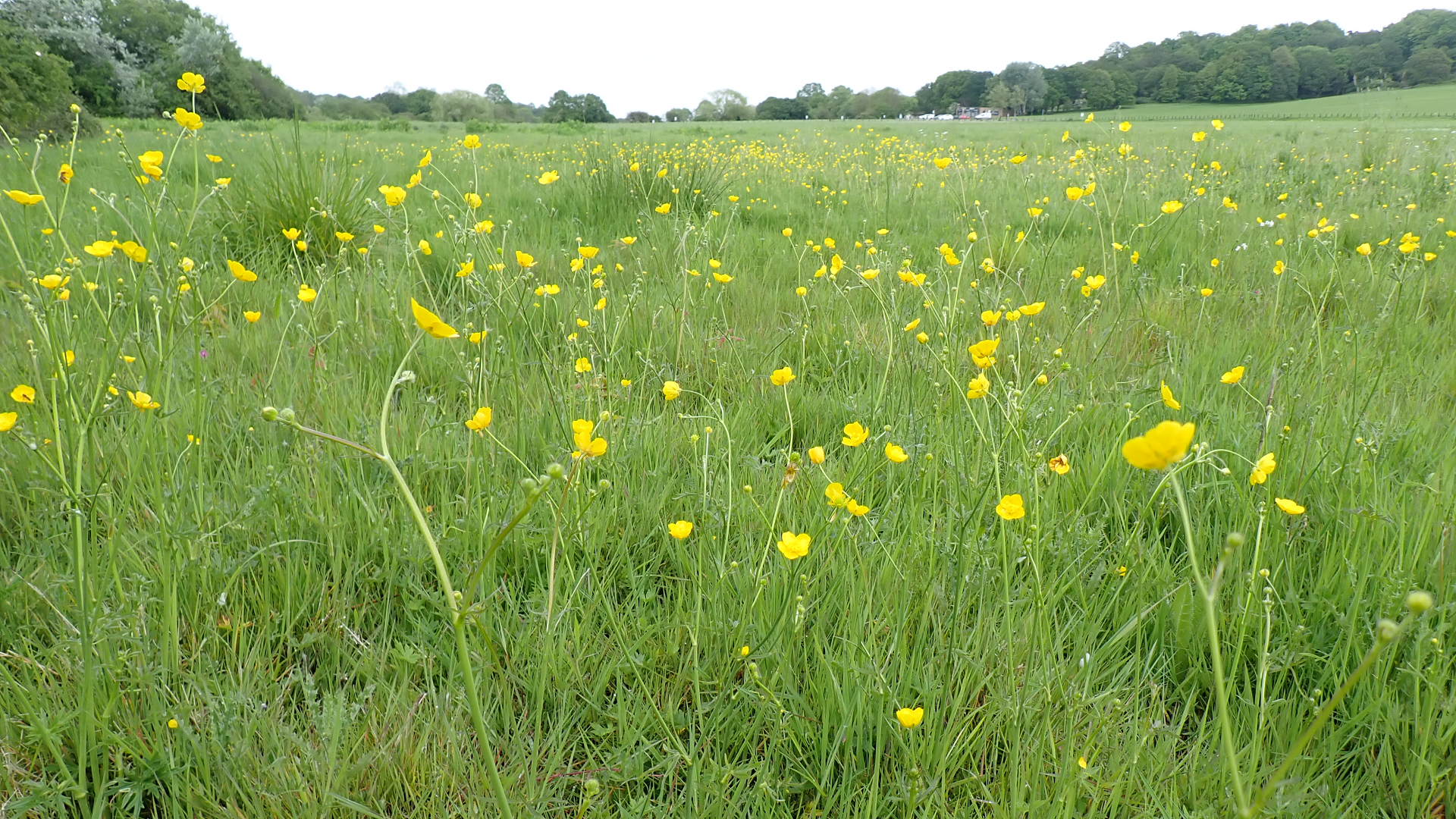
A common tall plant in damp meadows from spring until autumn. It grows up to one metre high and has five-petalled shiny yellow flowers measuring about 2cm across. The rounded leaves are divided into 3-7 lobes.
#
Elder
Sambucus nigra
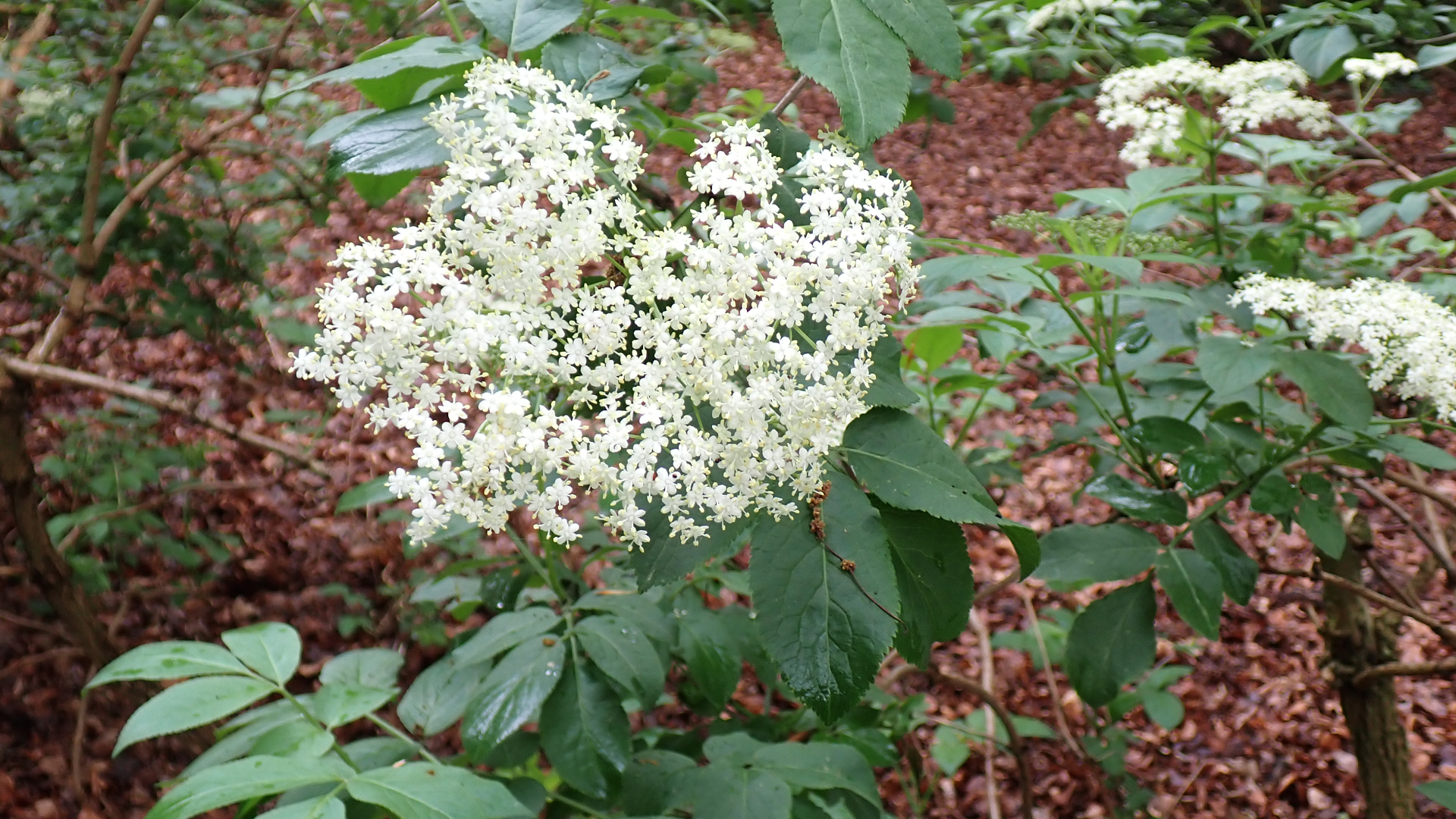
White flowers appear in umbrella-like clusters (umbels). Its compound leaves are divided into 5-7 leaflets. The plant produces blackish-purple berries during autumn.
#
Cow Parsley
Anthriscus sylvestris
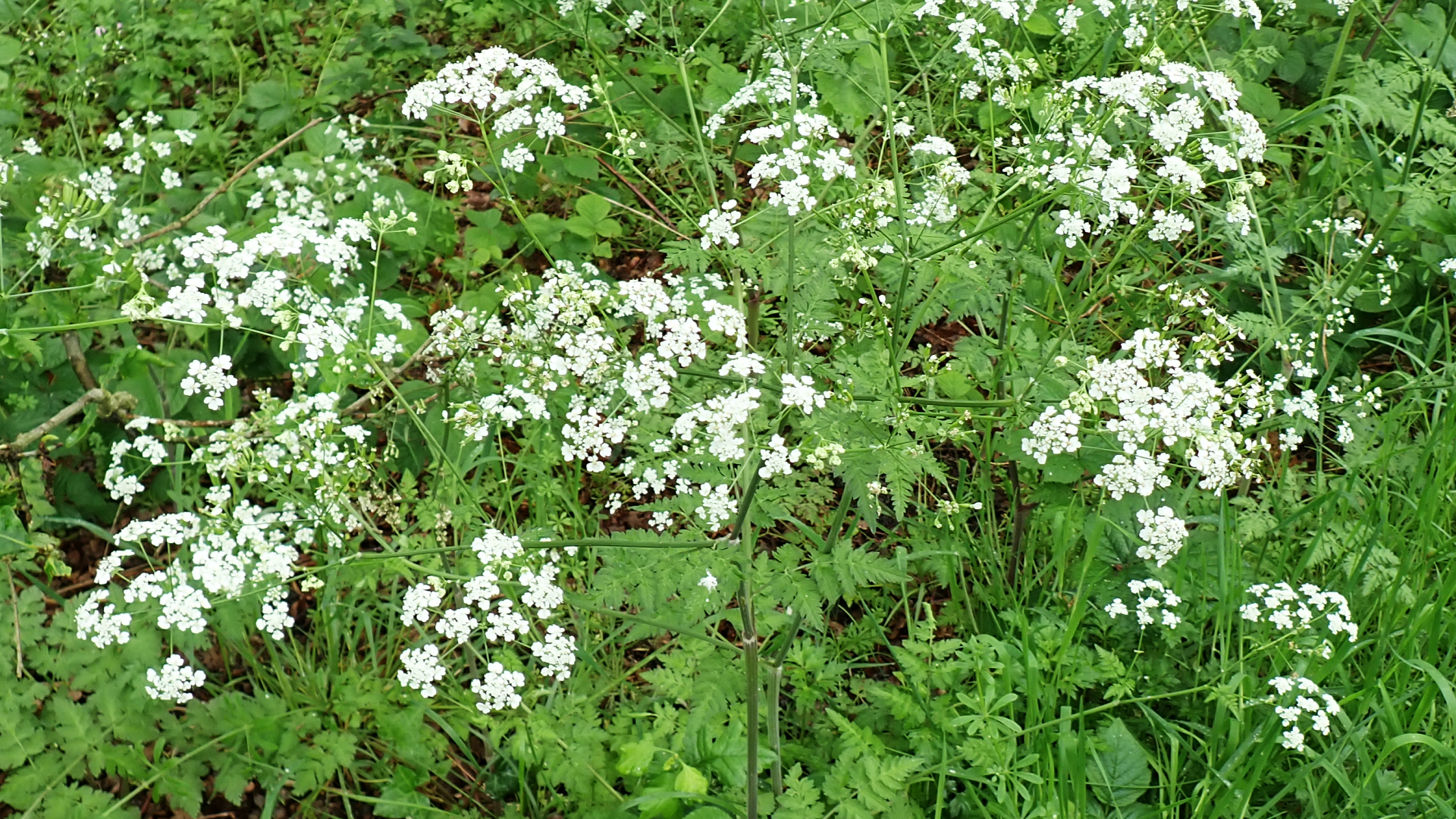
A common member of the Carrot family. It appears in spring and is the earliest-flowering of the umbellifers. It has flat umbrellas of small white flowers and fern-like leaves.
#
Himalayan Balsam
Impatiens glandulifera
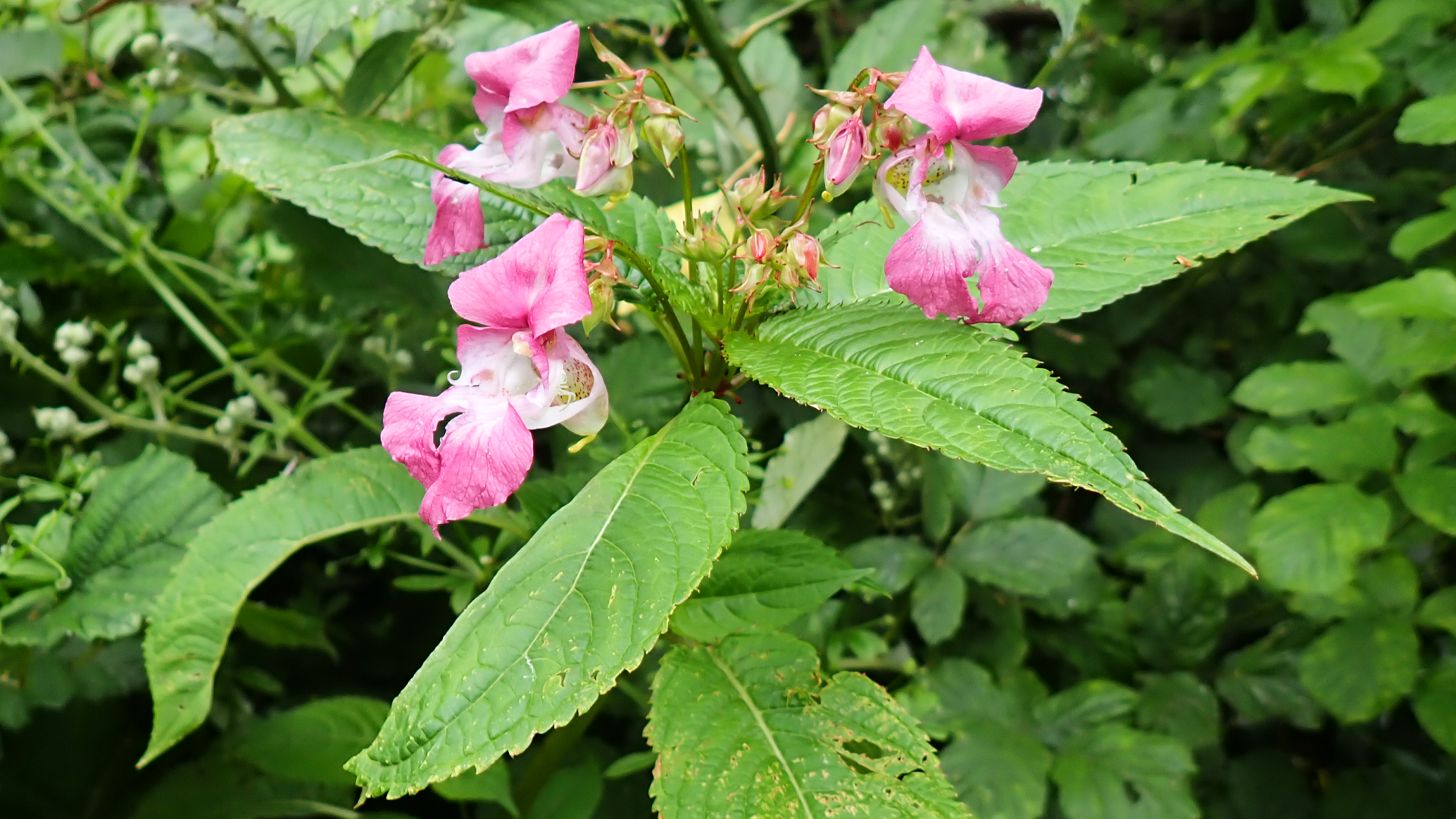
Invasive plant often found near inland water. It was introduced to Britain in 1839 by Victorian plant hunters who liked its beautiful pink flowers and exploding seed pods.
#
Sticky Mouse-ear
Cerastium glomeratum
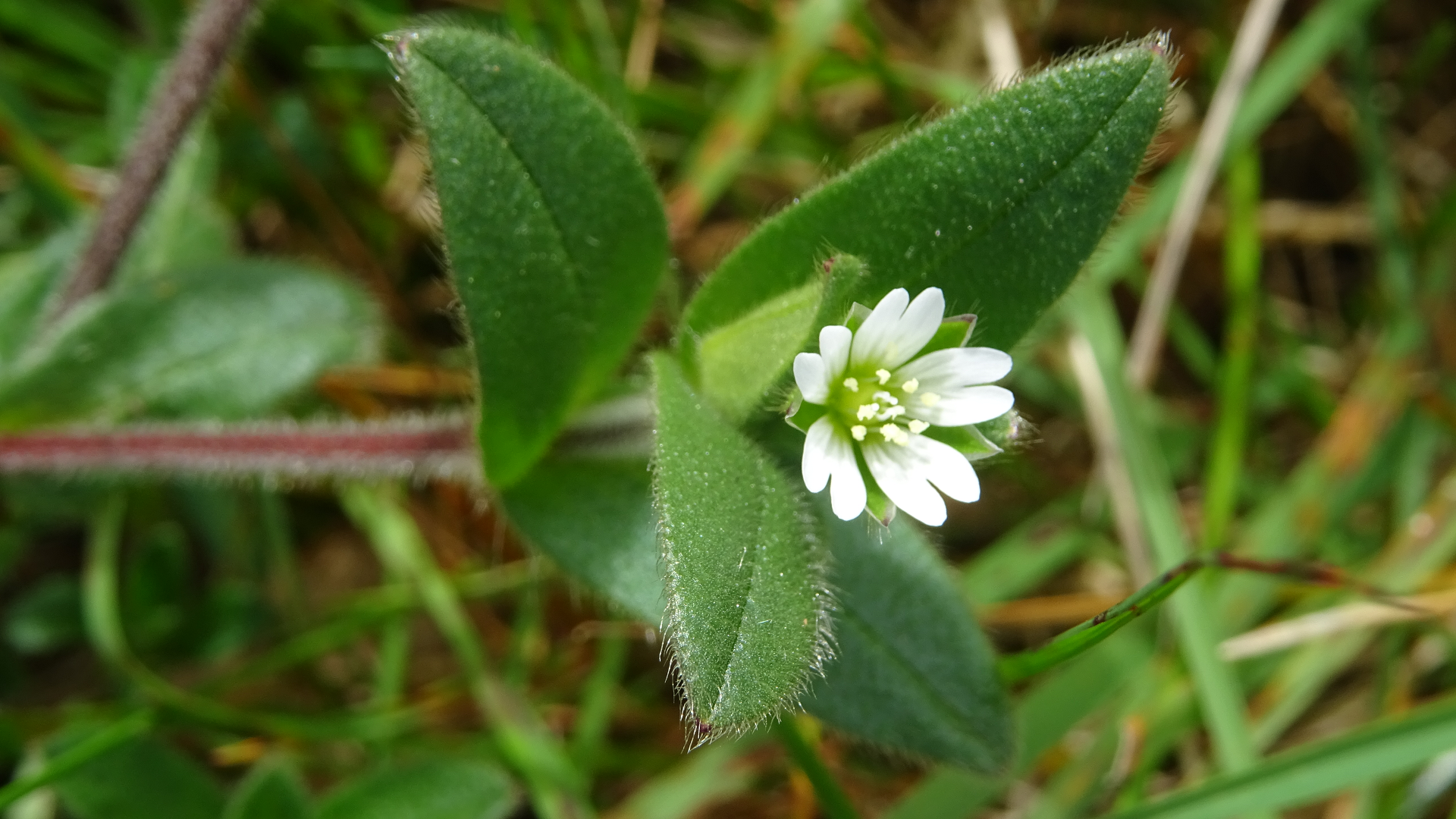
A short hairy annual that appears from April until October. The white flowers, measuring 5-8mm across, have petals that are as long as sepals and five styles. The petals are shallowly notched and leaves are oval to elliptical.
#
Mallard
Anas platyrhynchos
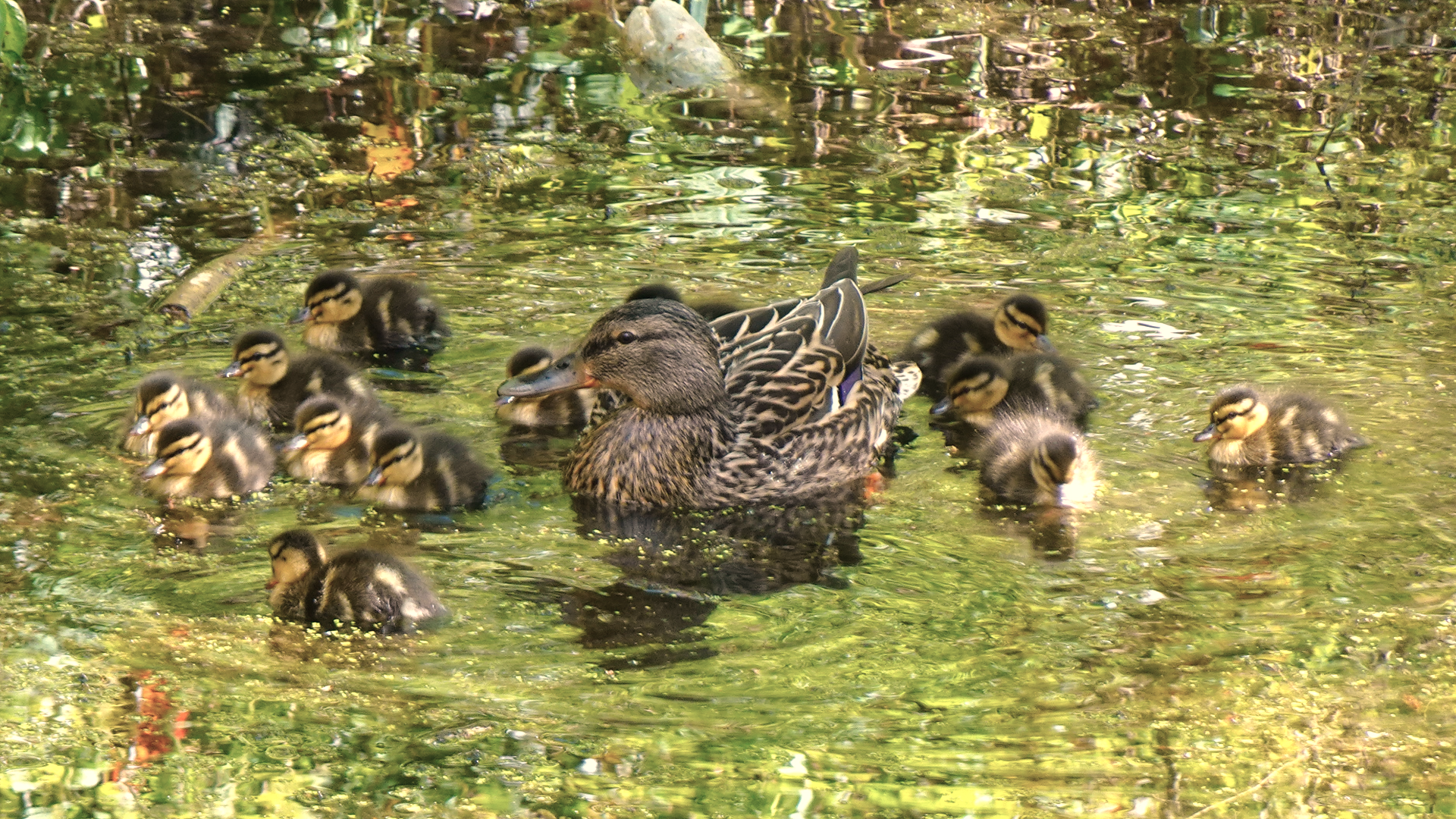
Towards the end of the month a female Mallard appeared with 13 ducklings on Roe's Well.
#
Jackdaw
Protecting its territory
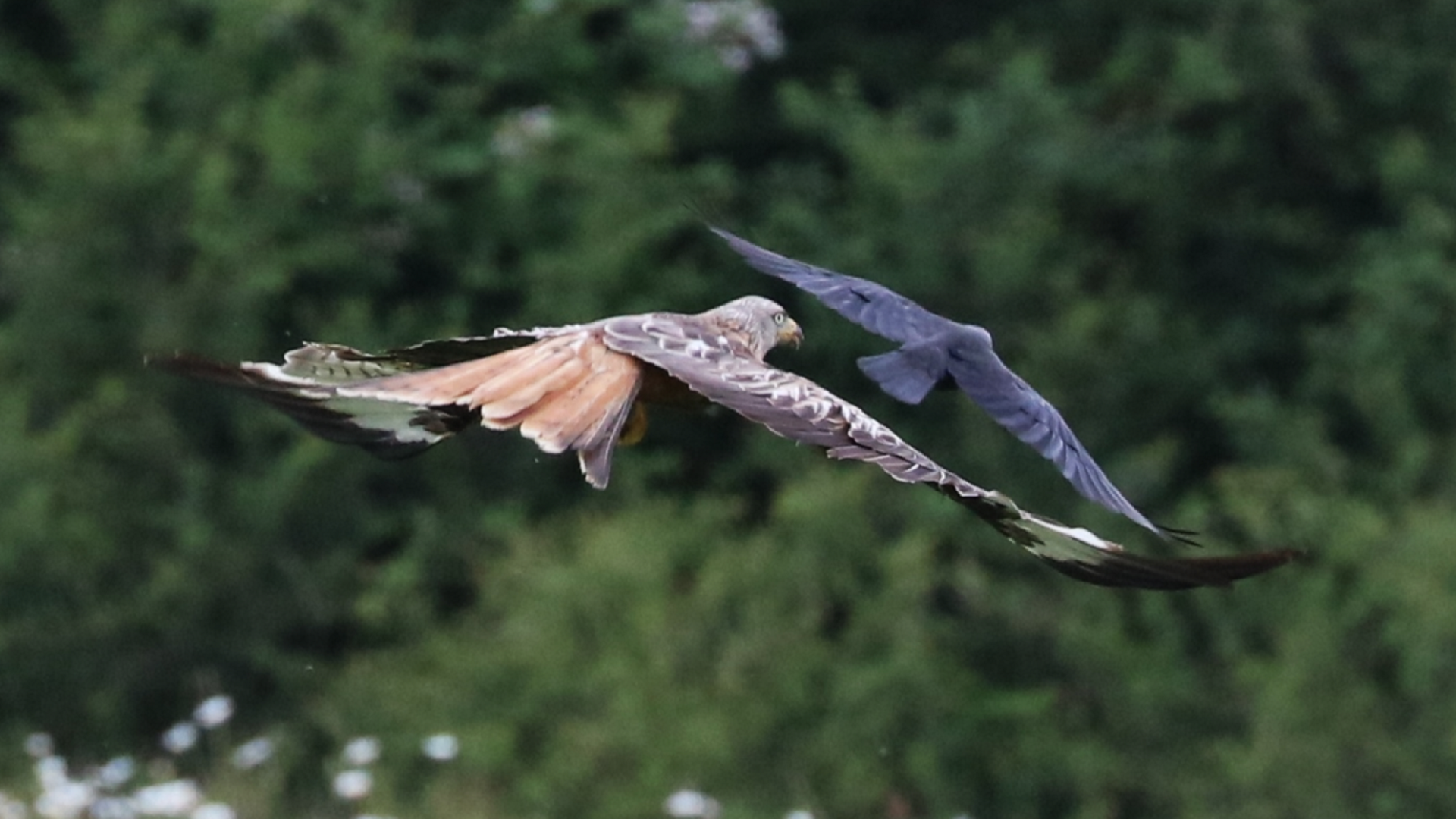
A solitary Jackdaw seeing off a Red Kite on a hunting mission in its territory.
#
Magpie
Pica pica
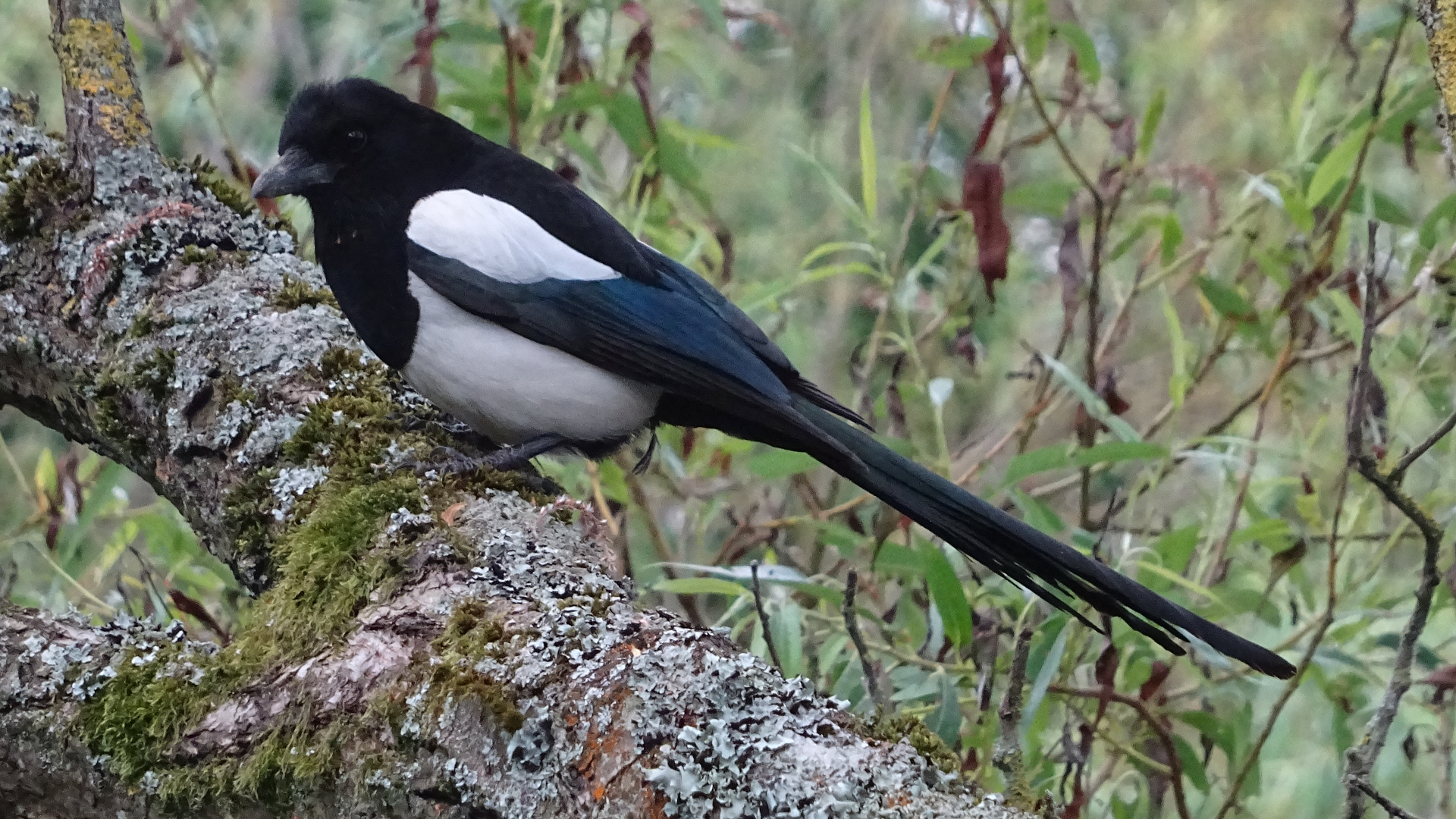
Magpies were rarely seen in Hainault before the 1960s, but are now well established and regularly heard chattering noisily in the treetops. The black and white feathers of the Magpie have a blueish iridescent sheen when viewed close up and the tails may appear greenish.
#
Jay
Garrulus glandarius
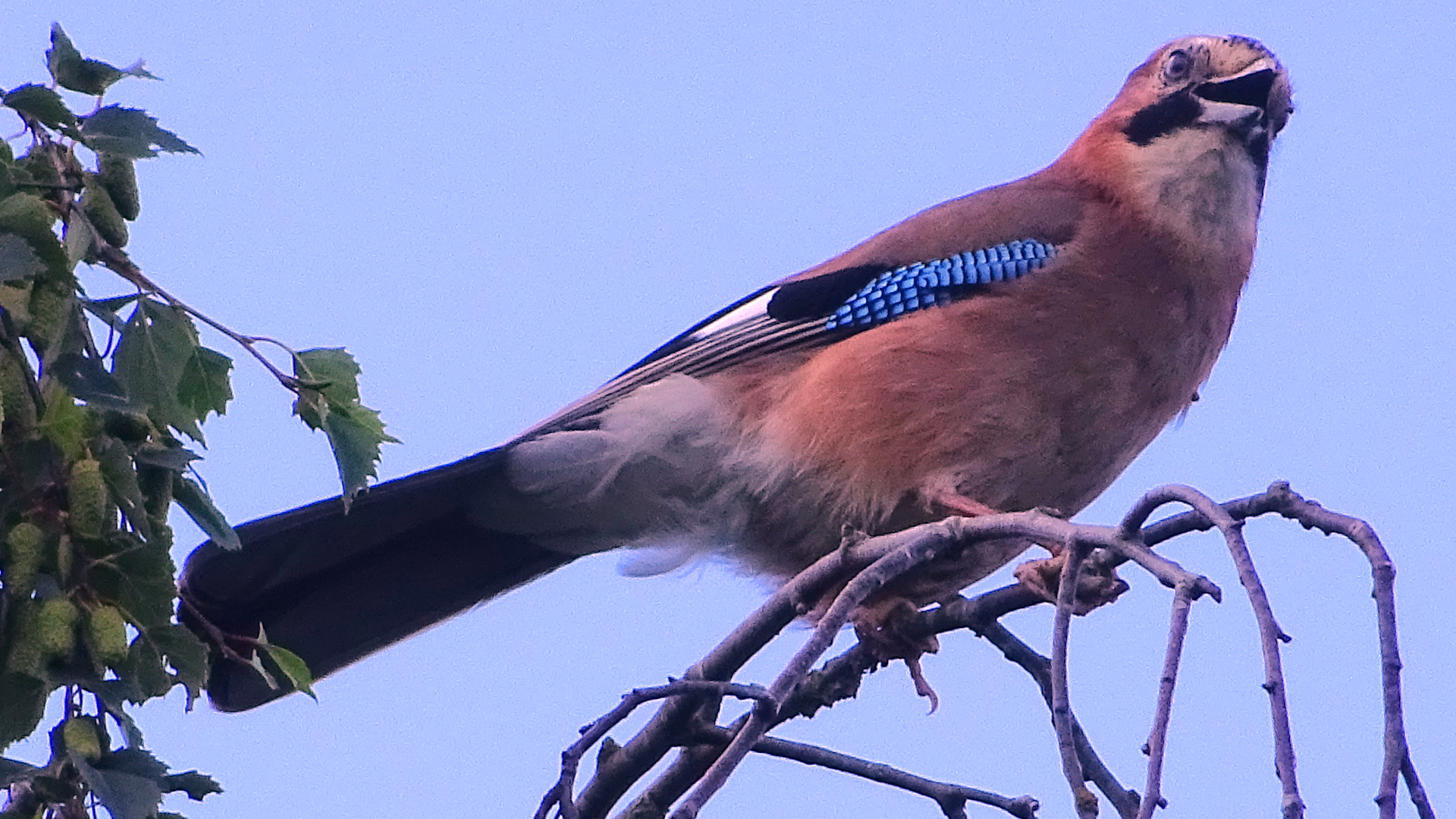
Unlike other corvids the colourful Jay is a rather shy bird. This may be because they were hunted by the Victorians to provide feathers for ladies' hats. During autumn they bury acorns and chestnuts ready for collection when food is scarce. They sometimes forget where their caches have been hidden which assists trees in spreading to other areas.
#
Whitethroat
Sylvia communis
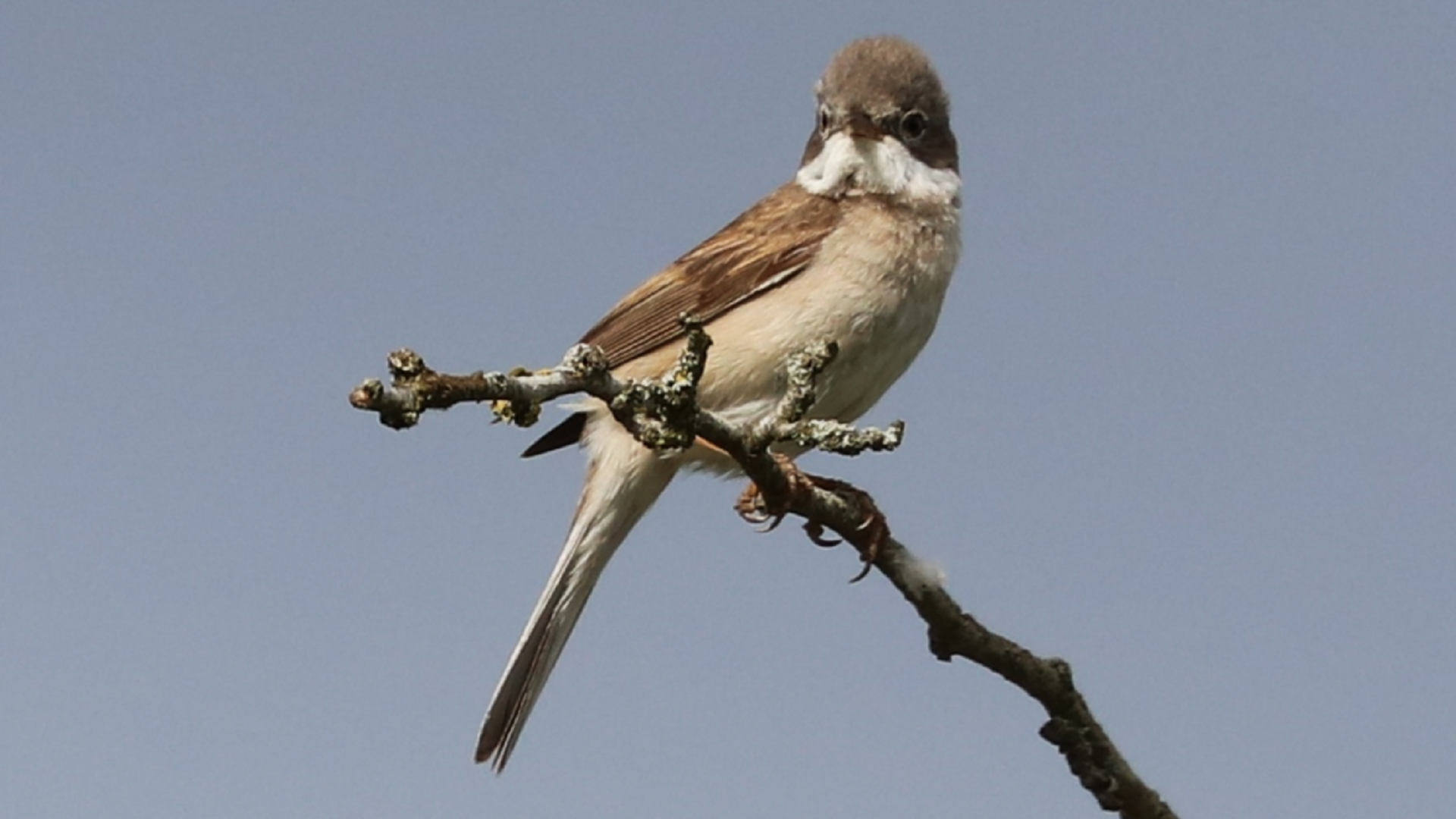
The Whitethroat is a medium-sized warbler that visits from Africa during summer.
#
Woodpigeon
Columba Palumbus
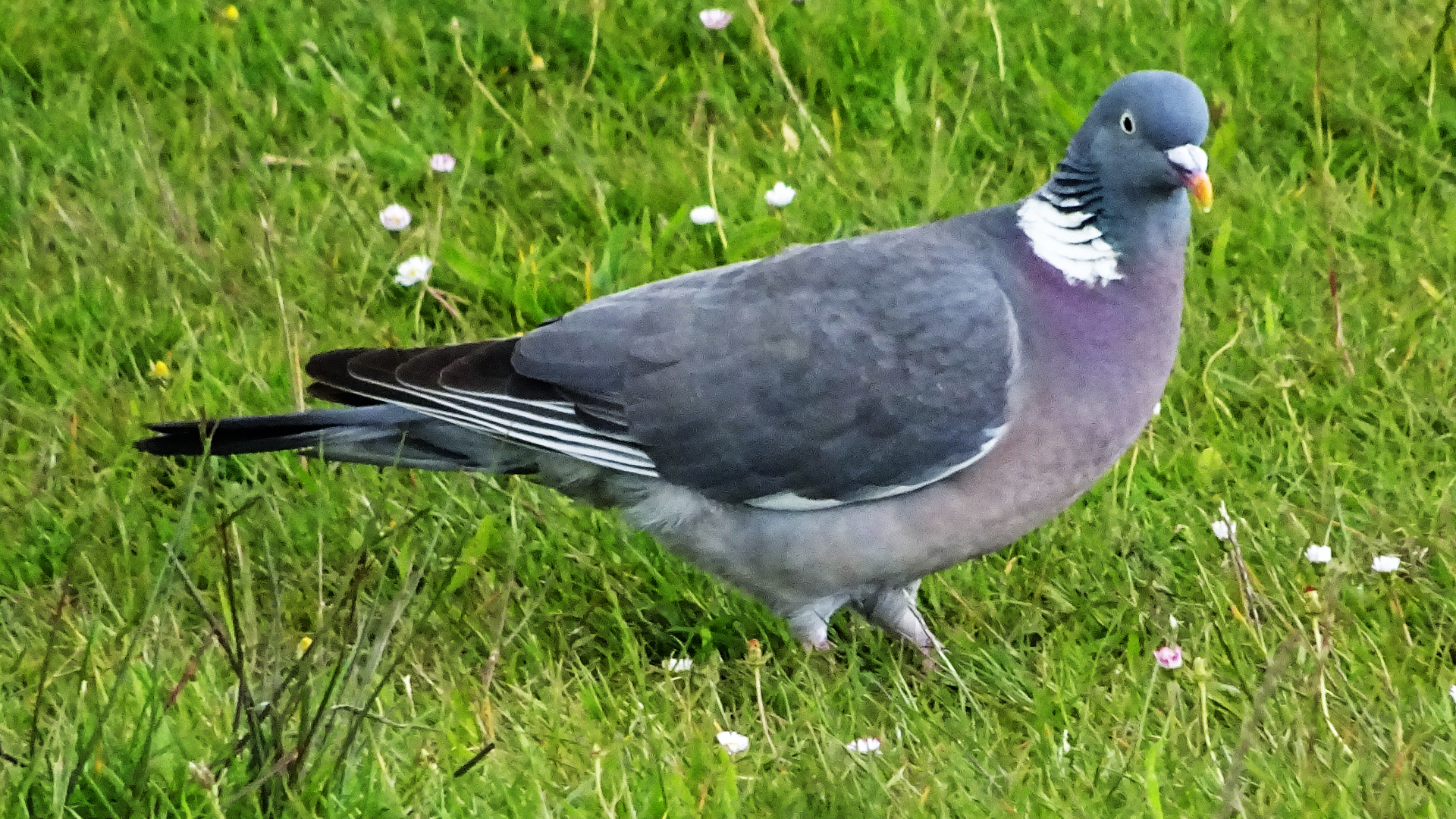
The largest species of Pigeon found in Britain. Although a common resident, large numbers migrate to this country from the continent during autumn and winter. They are generally a lot warier of humans than other types of pigeon although it is possible to gain their trust.
#
Canada Goose
Branta Canadensis
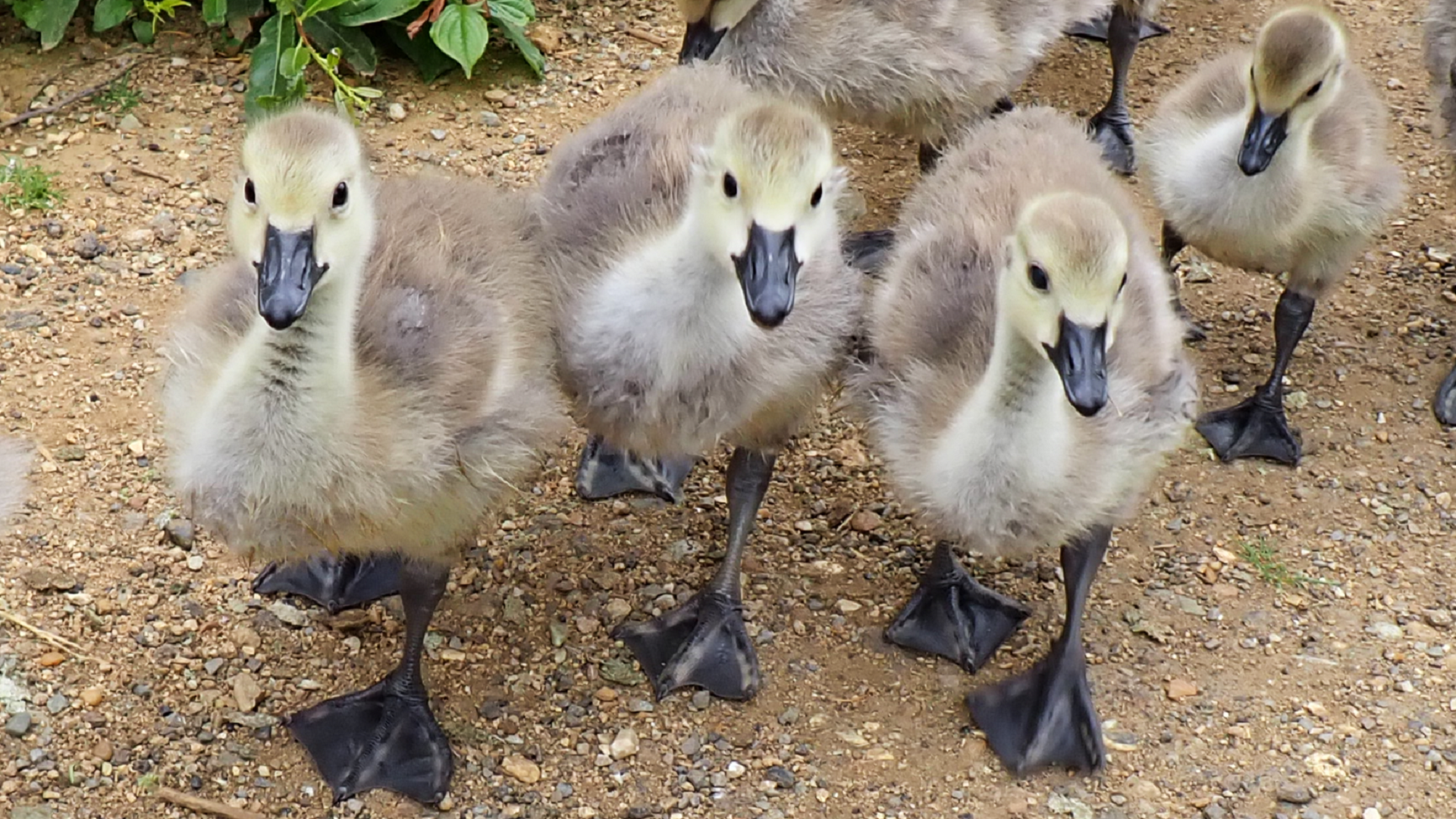
Young Canada goslings often stay with their parents for their first year.
#
Muntjac
Muntiacus
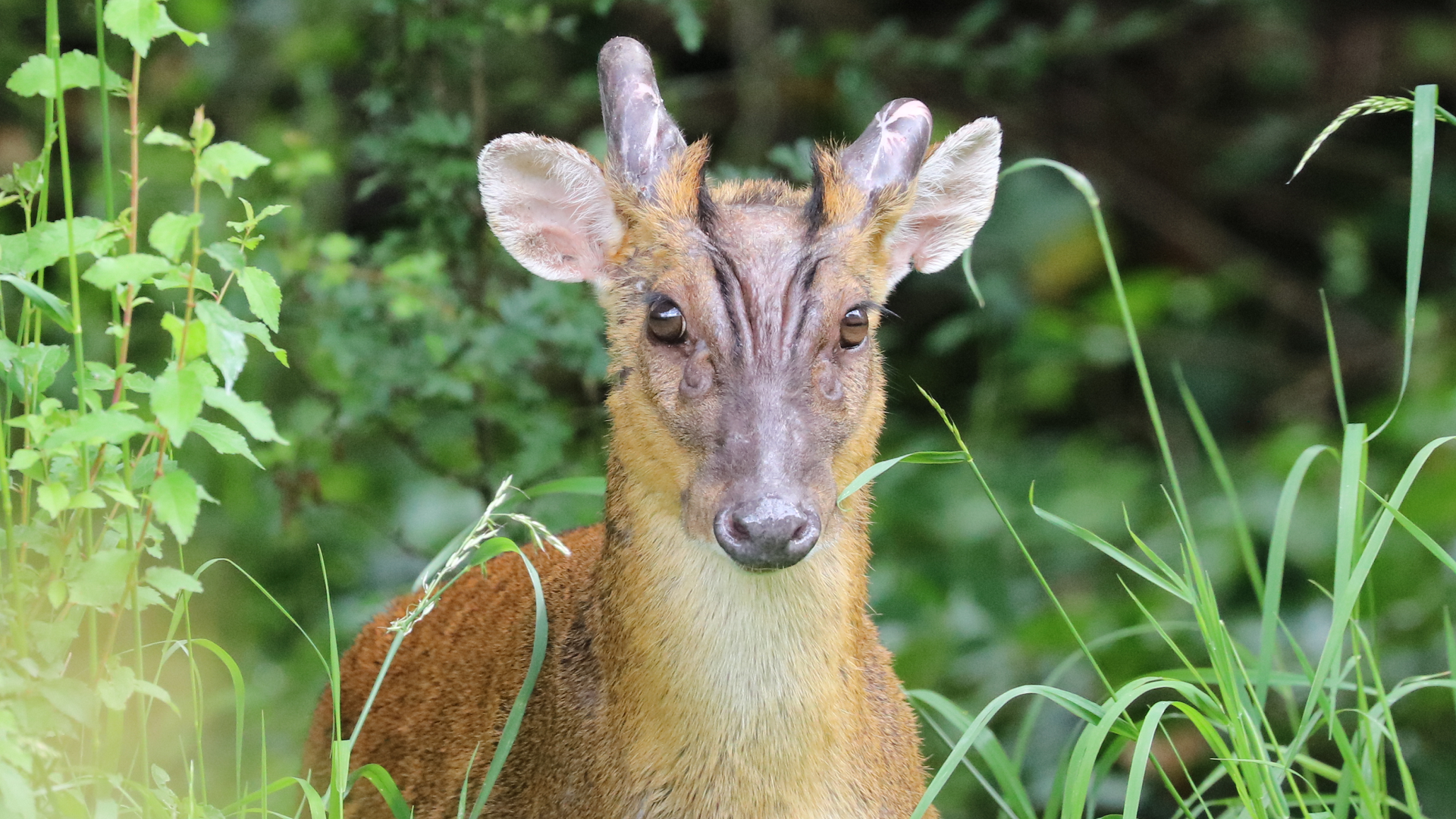
Male muntjacs (Bucks) have short, unbranched antlers that slope backwards. Muntjacs feed on woodland shrubs and herbs including brambles. This can lead to the ground cover vanishing and has been linked to a decline in birds such as nightingales.
#
Wood Mouse
Apodemus sylvaticus
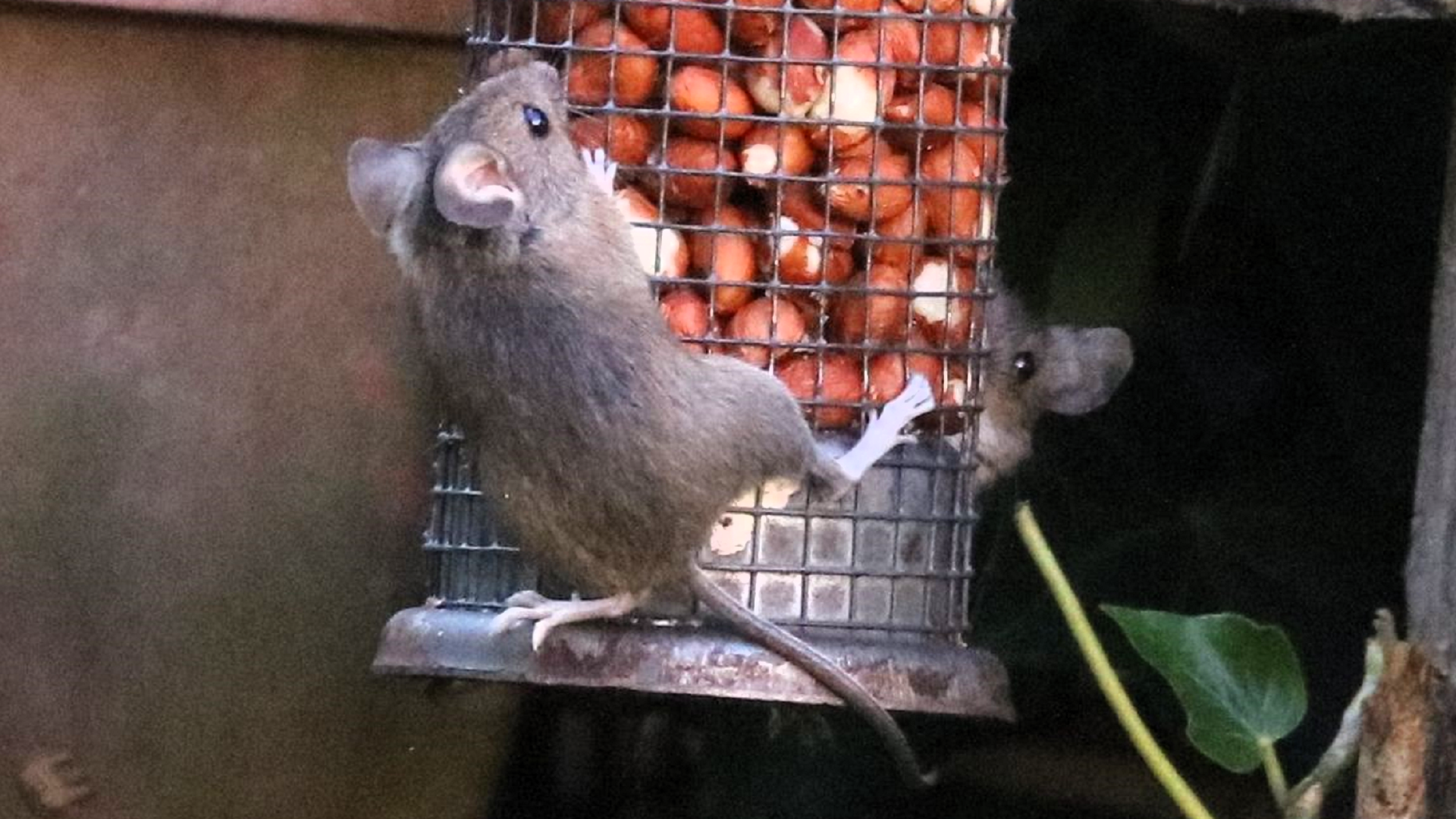
The Wood mouse is one of Britain's most abundant mammals, but being mainly nocturnal they often remain unseen. It has a dark-brown body that is greyish-white underneath. Prominent eyes and ears distinguish it from House mice that is a similar size. Wood Mice feed on a range of foods including seeds, buds, stems, fungi, moss, galls and nuts put out in bird feeders! This picture was taken in a Hainault garden.
#
Grey Squirrel
Sciurus carolinensis
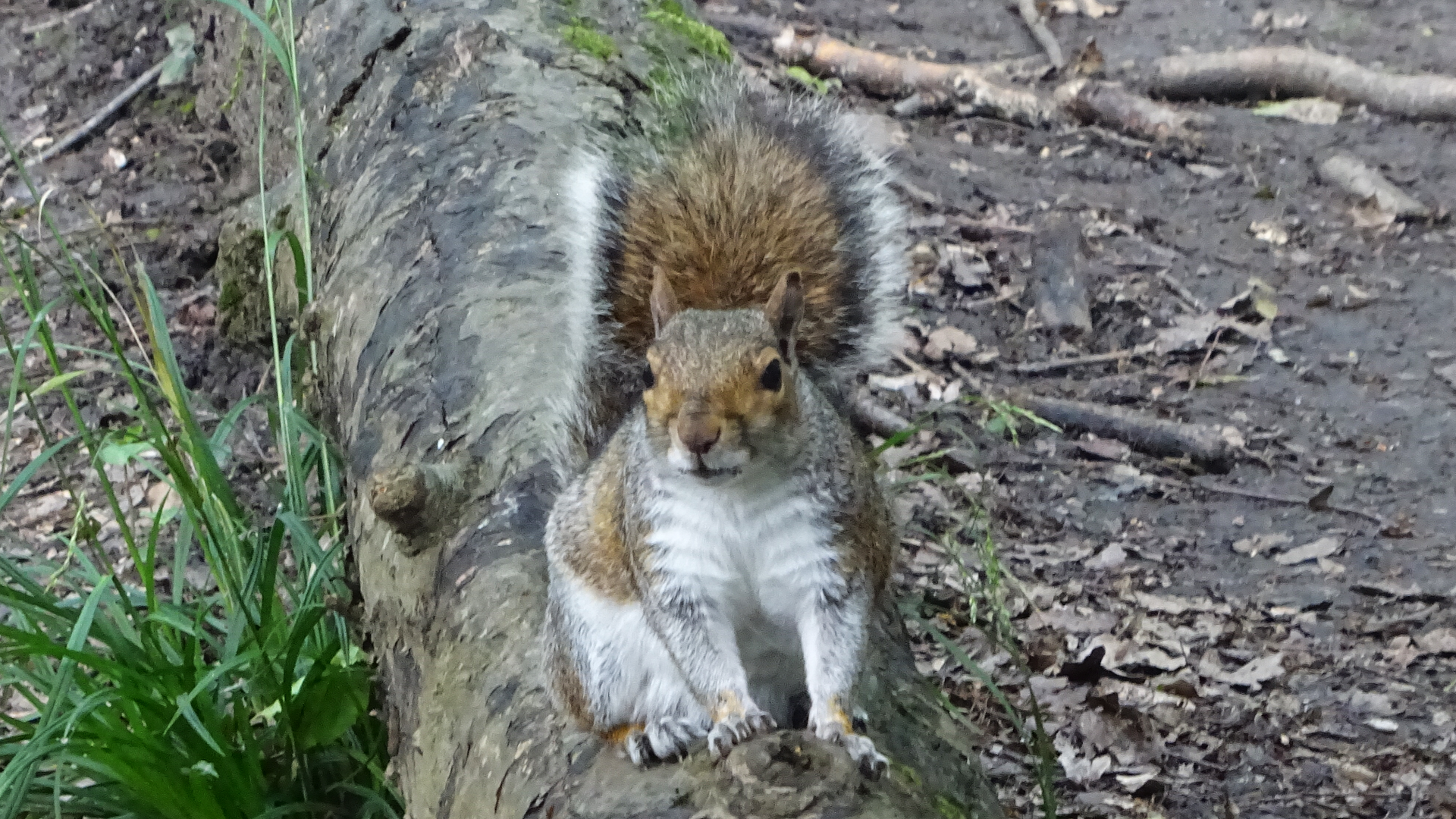
Grey squirrels were introduced to Britain during the 1800s and are now regarded as an invasive species that causes great damage to woodland. Their introduction has also led to a decline of our native Red squirrel. Squirrels make nests called 'dreys' high up in trees, using twigs, leaves and strips of bark. Females can have two litters of three to four young each year.
#
Black-spotted Longhorn
Rhagium mordax
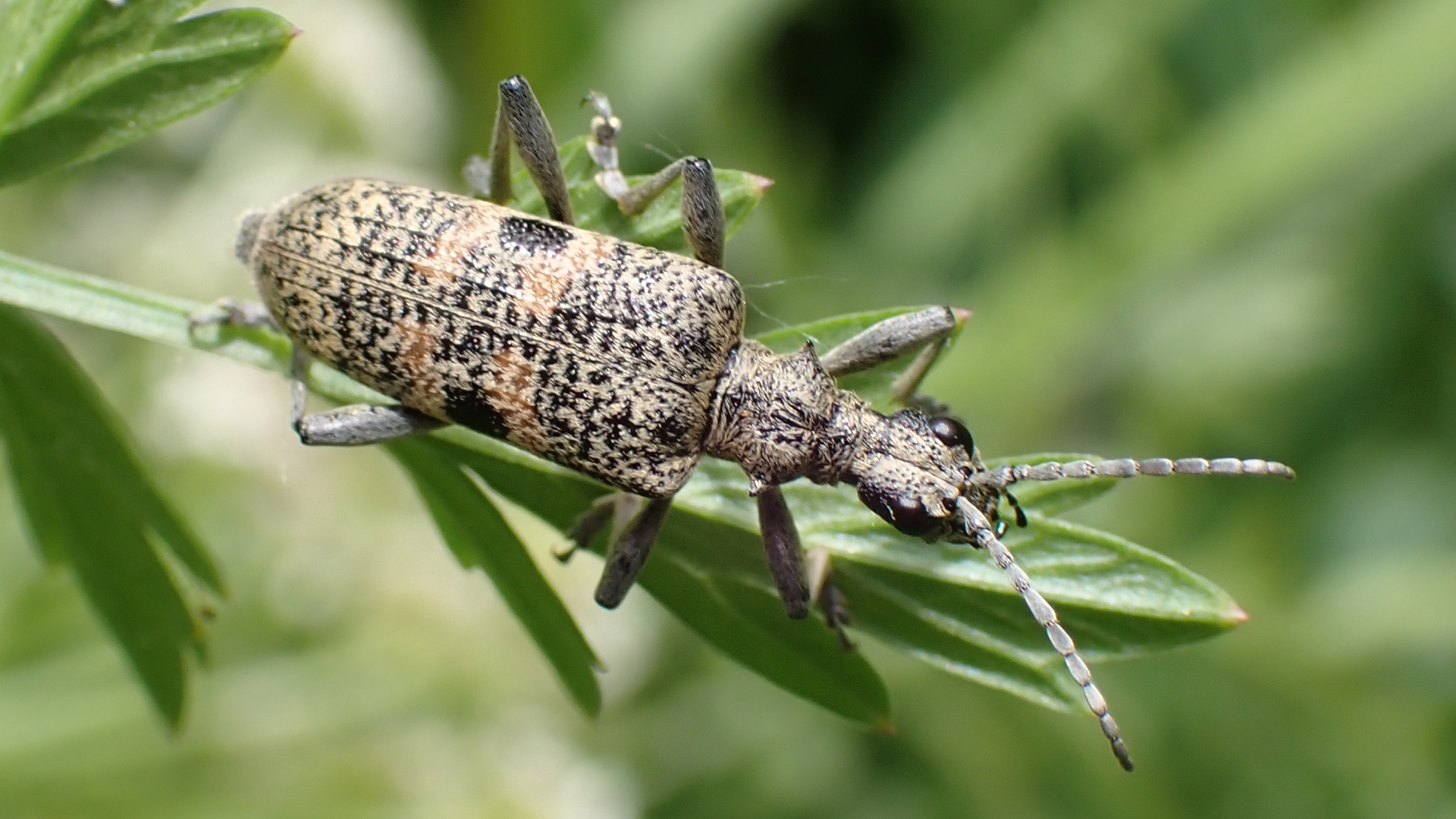
Adults, 13-22mm long, are found from spring until autumn on umbellifers, hawthorn and elder in wooded locations. After mating the females oviposit eggs in cracks of tree bark usually where the wood is soft and starting to rot. The larvae make shallow galleries under the bark seldom entering the tissue that carries water and dissolved minerals upward through the tree. The young take 2-3 years to develop before reaching adulthood.
#
Wasp beetle
Clytus arietus
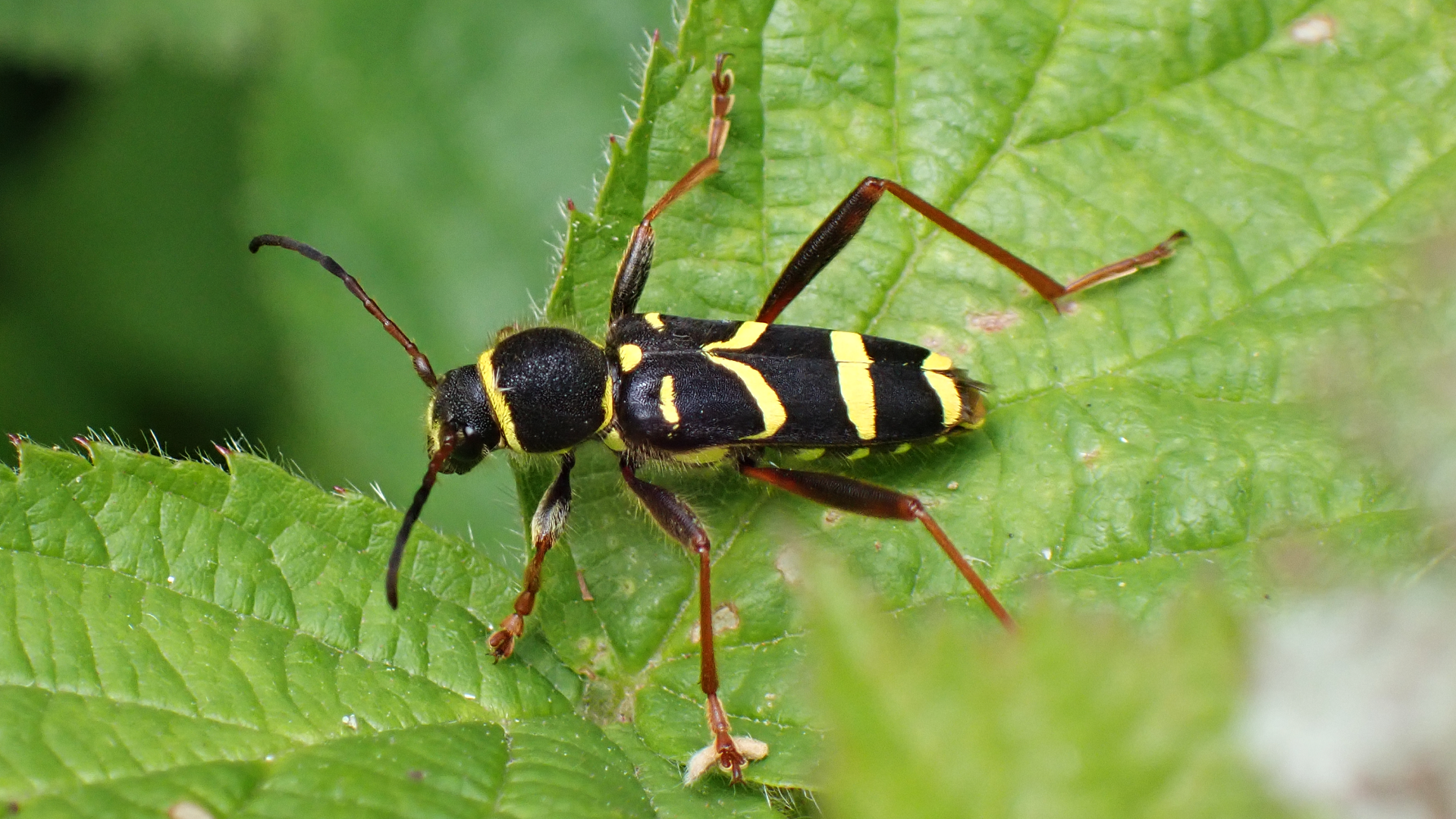
Measuring between 9 and 18 mm in length, this species employs mimicry to evade predators by resembling a common wasp. In addition to its black and yellow colouration, it enhances this deception through erratic flight movements. The species features orange-brown legs and antennae. It is commonly observed resting on hedgerows from May to July. Its larvae typically inhabit warm, dry, decaying wood, showing a preference for willow and birch.
#
Fairy-ring Longhorn Beetle
Pseudovadonia livida
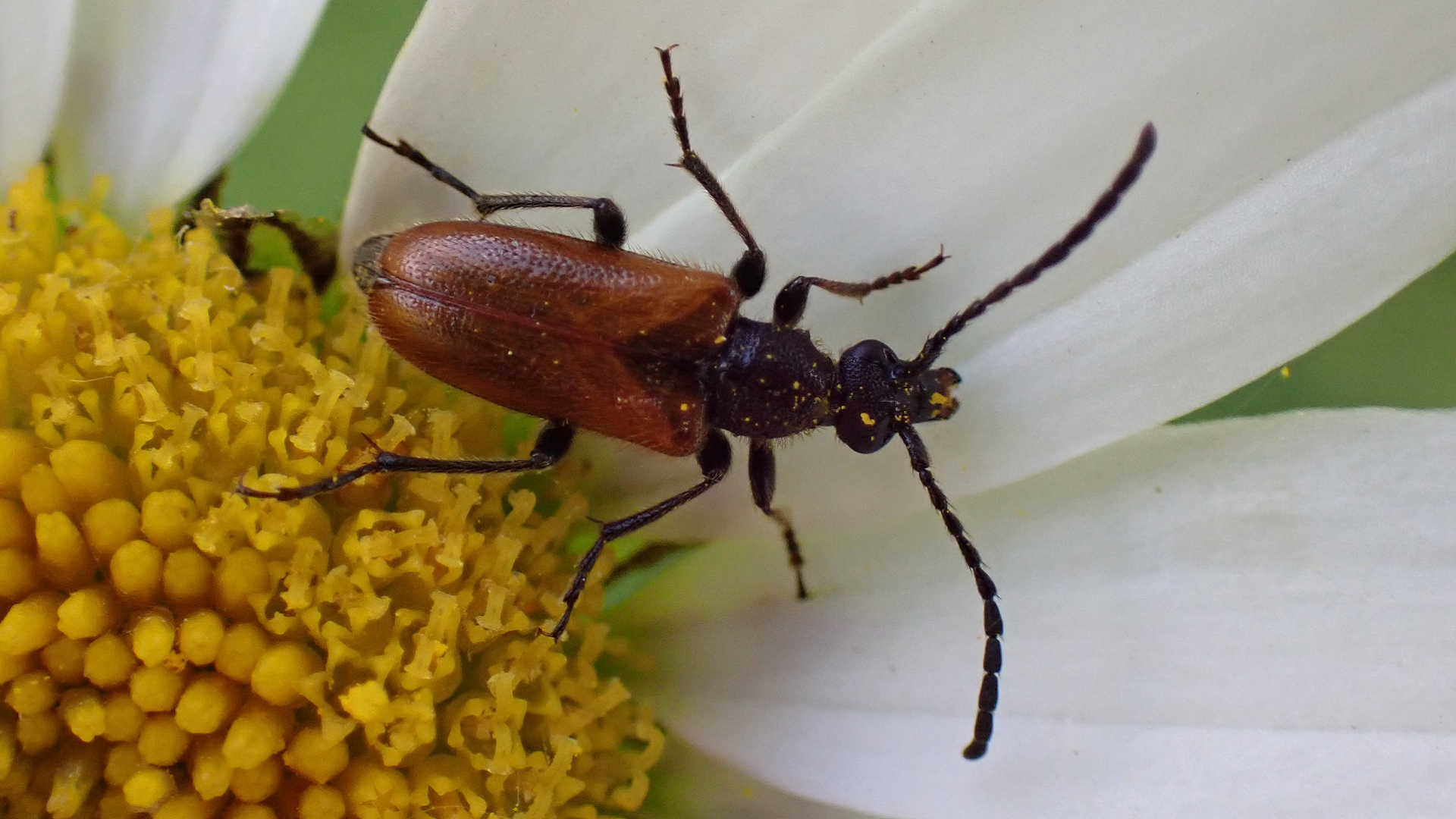
Fairy-ring Longhorns range from 5 to 9mm in length, characterised by brown elytra and dark legs. Females deposit their eggs in soil that is rich in humus, particularly where Fairy-ring mushrooms
Marasmius oreadescan be found. The larvae typically require two years for development. In autumn, the larvae burrow approximately 5 cm into the soil to overwinter and then resume feeding in the spring. Adults are known to visit flower heads of various plants, such as ox-eye daisies, buttercups, umbels, and yarrow, to obtain pollen and nectar.
#
Black-striped Longhorn
Stenurella melanura
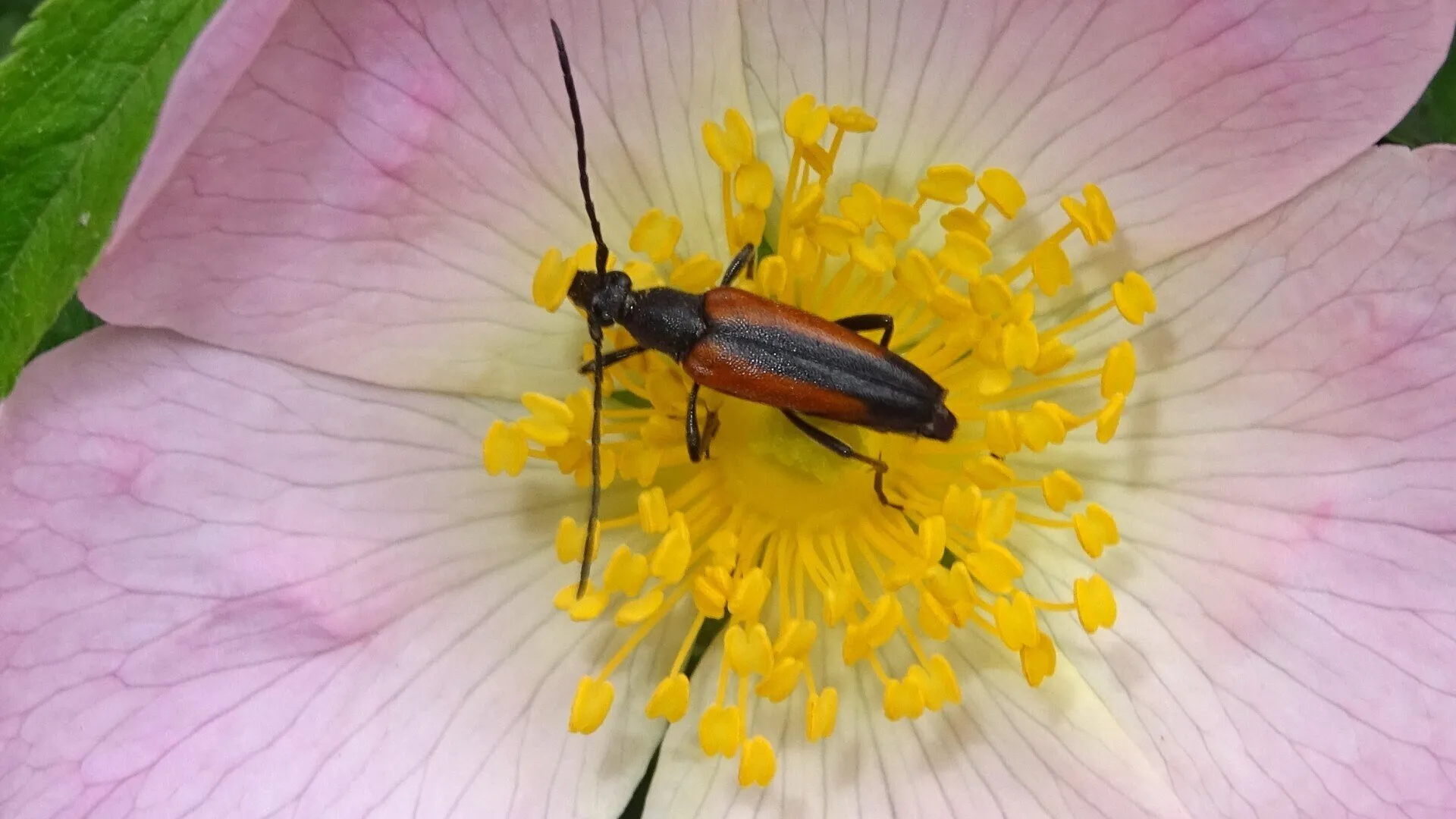
The Black-striped Longhorn is a small insect measuring between 6 and 10 mm. Its brown elytra feature a black stripe, and both the head and legs are black. Adult insects can be found on flower-heads during warm summer days. Females lay their eggs in dead wood and decaying timber. The larvae consume dead twigs, branches, and surface roots.
#
Red-headed Cardinal
Pyrochroa serraticornis
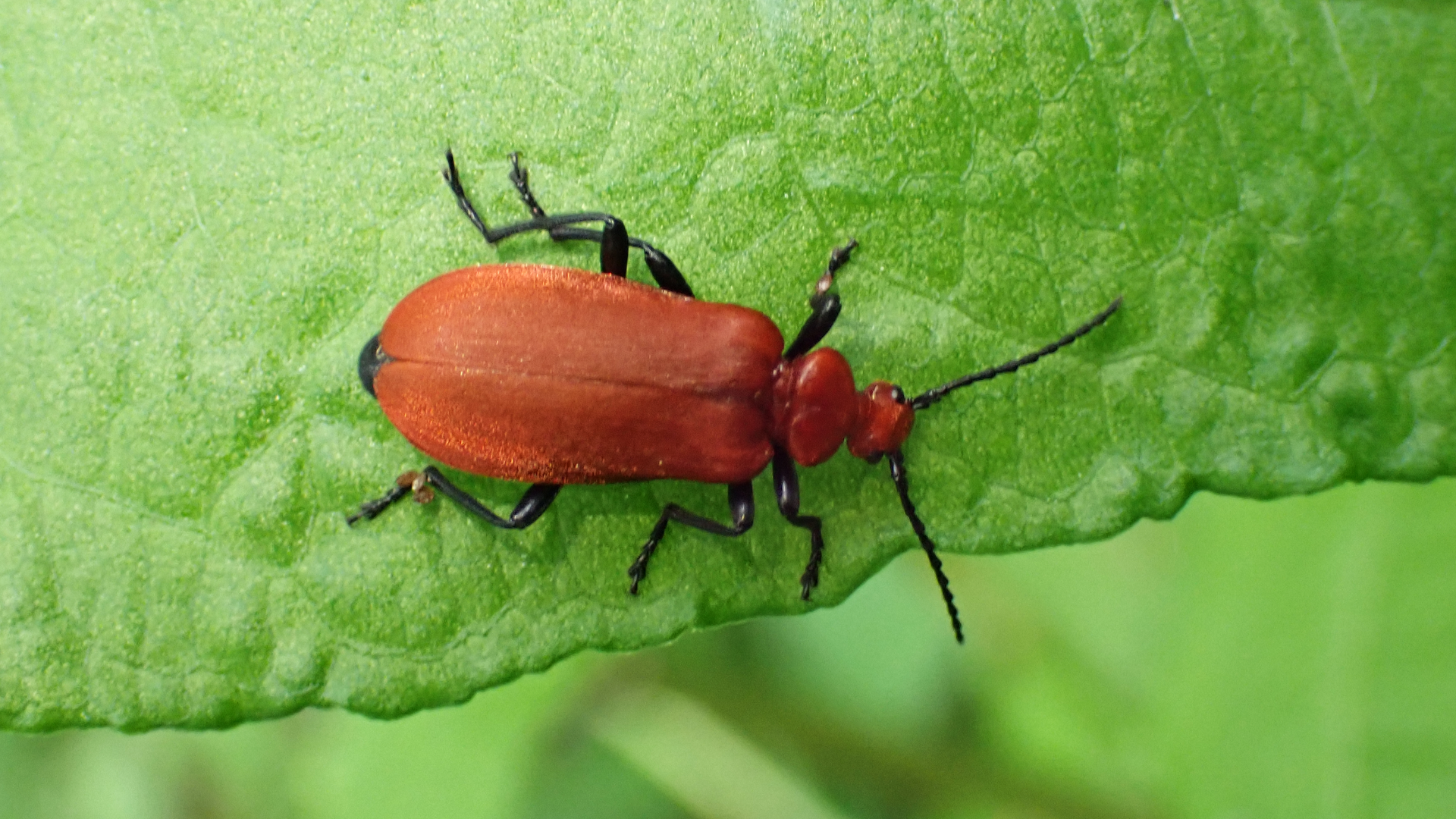
Red-headed Cardinal is a predatory beetle that feeds on insects. The second part of the scientific name is a reference to the serrated antennae.
#
Spotted Lacehopper
Tachycixius pilosus
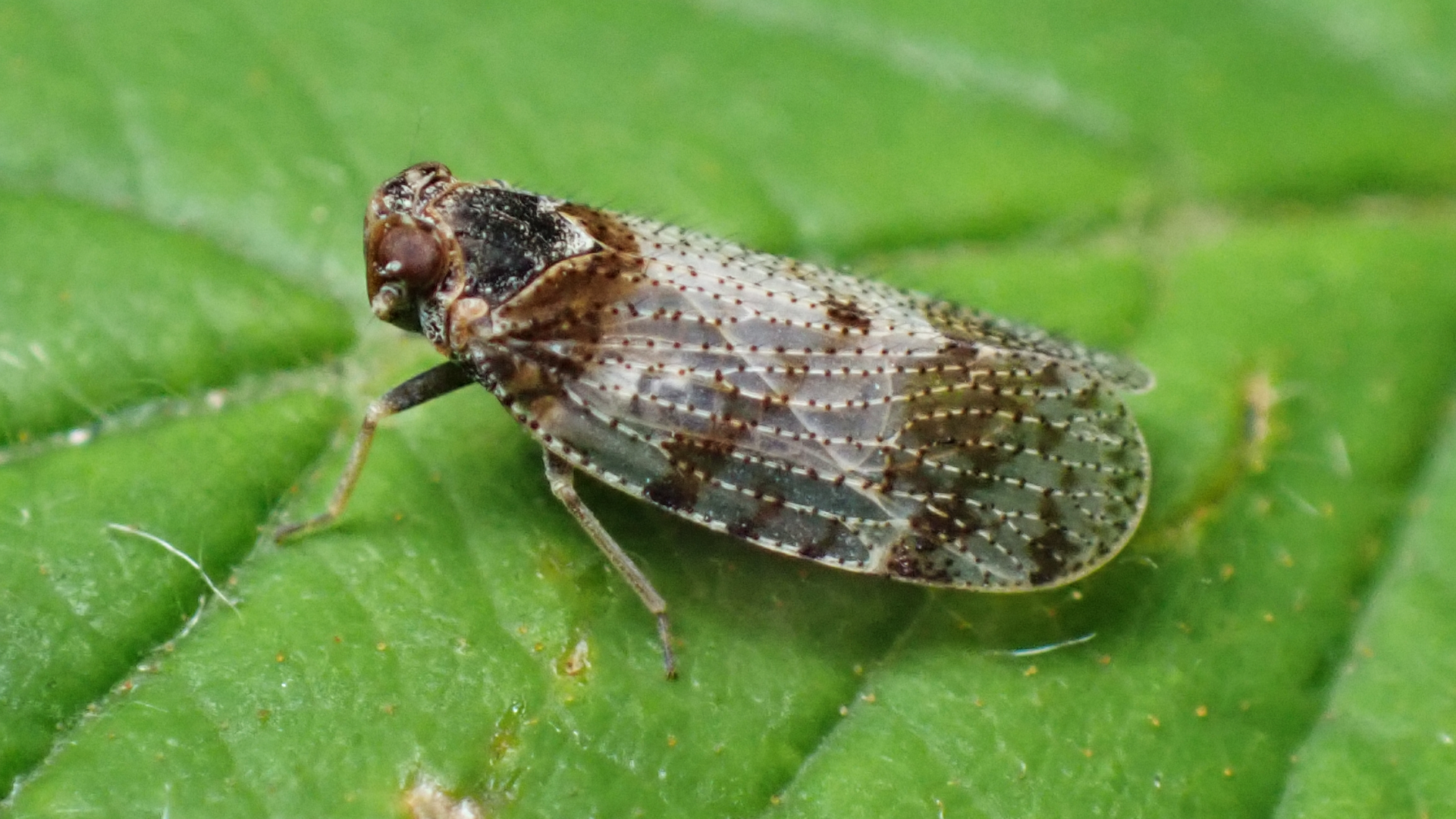
This Lacehopper is found on deciduous trees and shrubs from May until July. It is about 5mm in length, has three keels on the scutellum and dark spots between the veins at the apex of the forewing. There are also usually three short dark stripes along the forewing edge. The forewings range from being fairly plain to nearly totally dark. Its larvae feed at the base of various grasses.
#
Common Froghopper
Philaenus spumarius
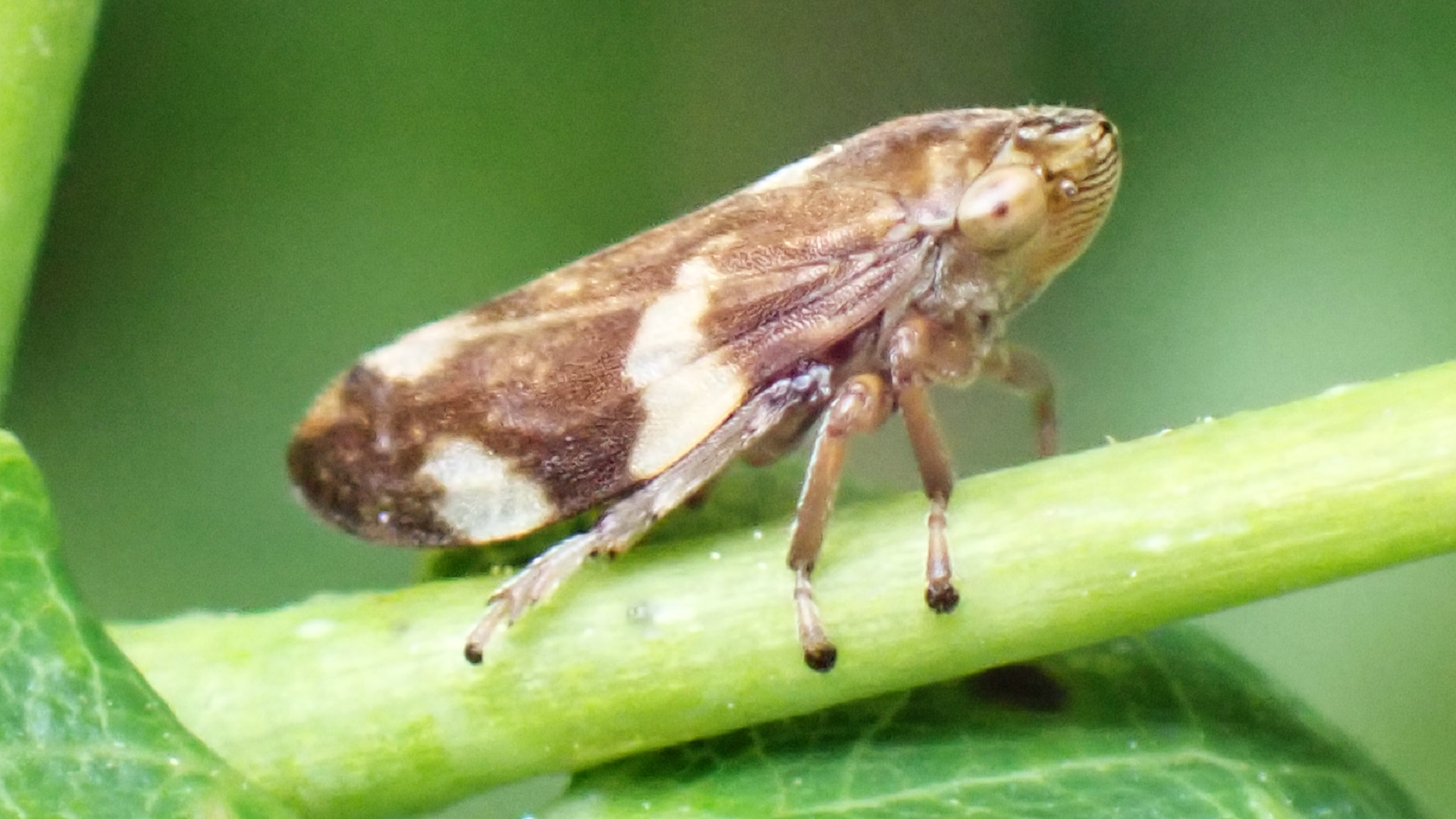
The frothy bubbles known as 'Cuckoo-spit' found on vegetation in grassy areas during spring are caused by tiny green Froghopper larvae. The adults (5-7mm) appear from June until September. Their colouration and markings vary a lot.
#
Black and Red Froghopper
Cercopis vulnerata
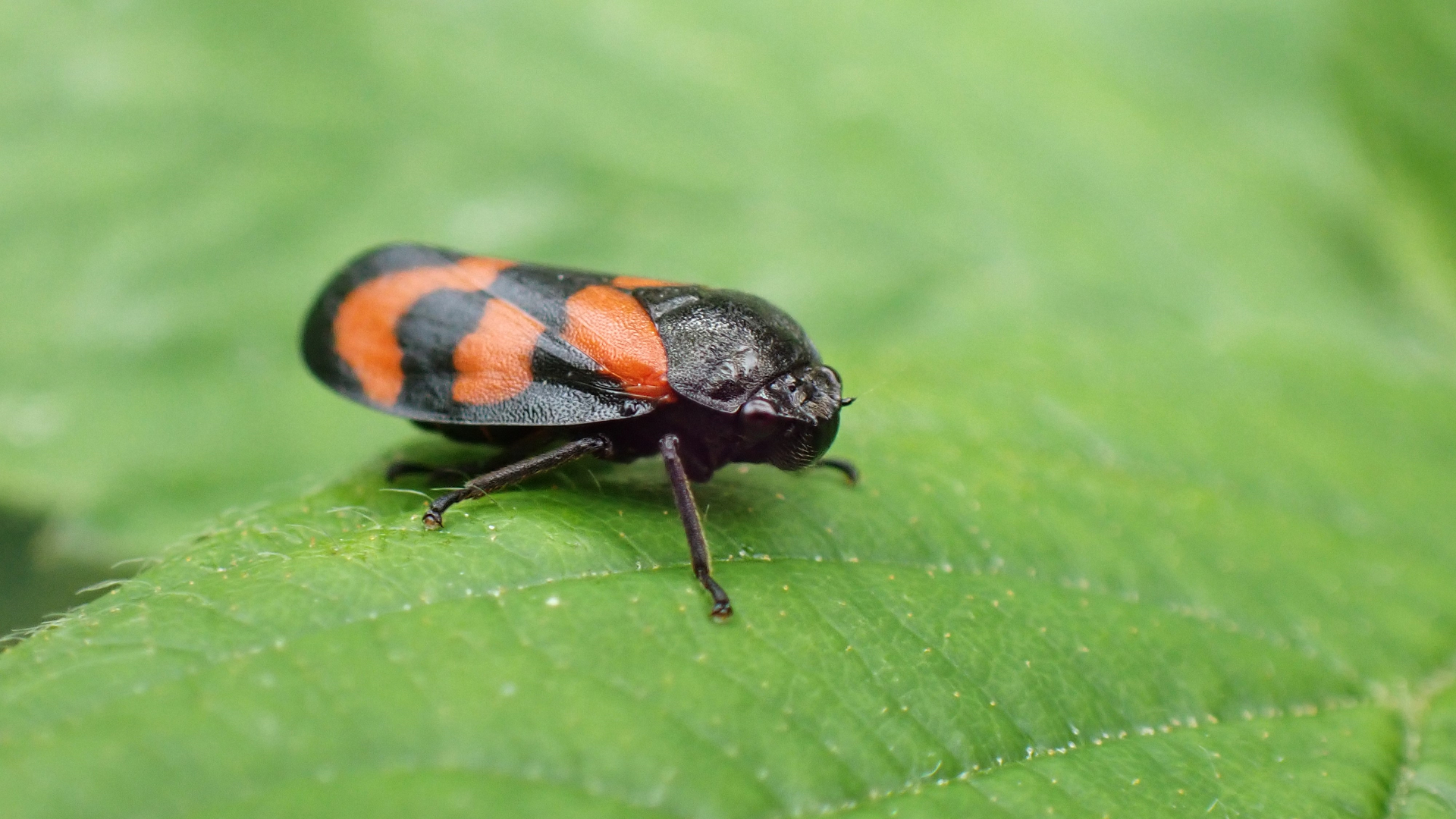
Nymphs of this large conspicuous froghopper are seldom seen because they feed on underground roots. Adults appear from April until August. They can be up to 11mm long.
#
Water Boatman
Corixidae
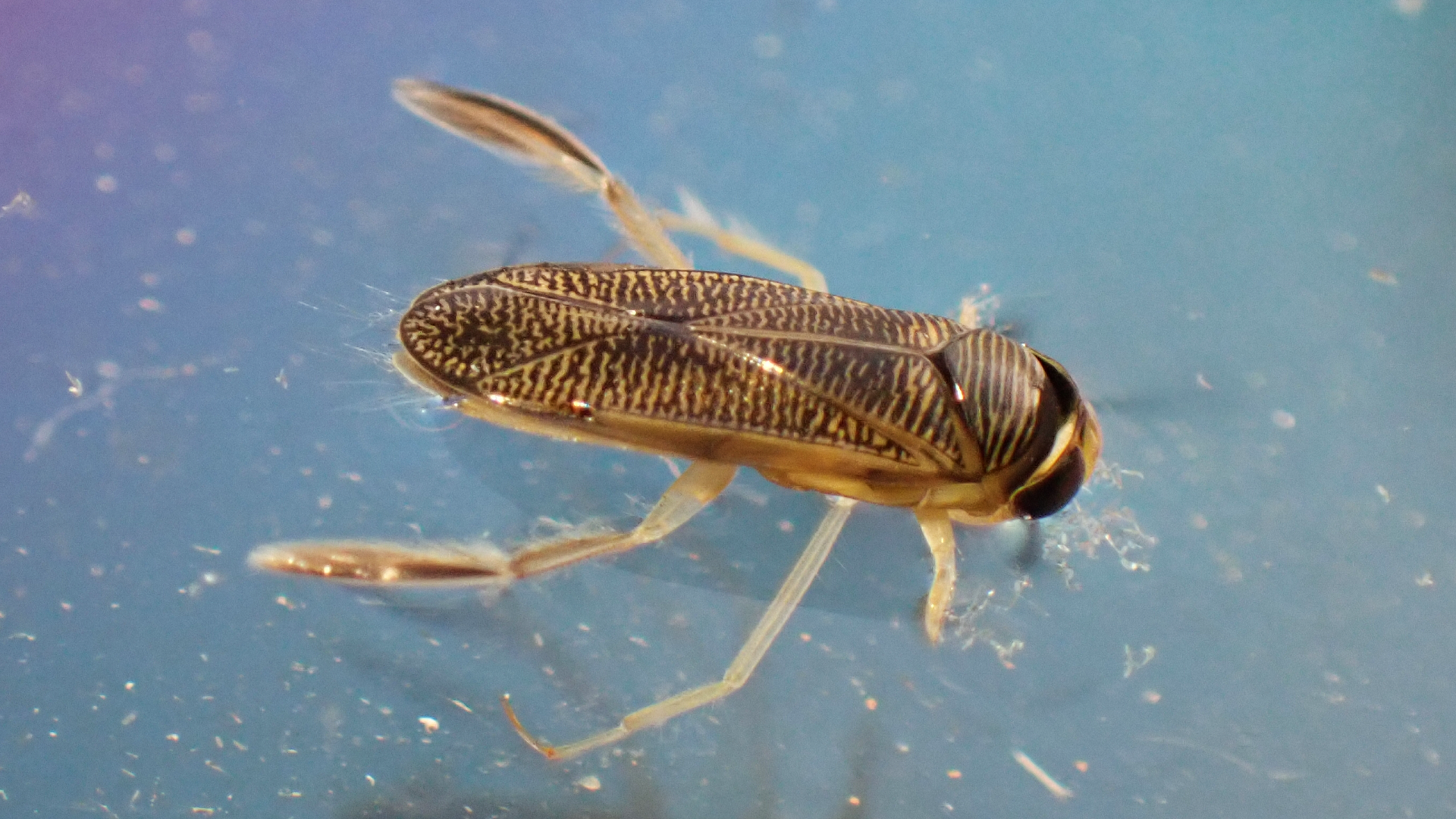
Water boatmen belong to a family of aquatic bugs containing around 500 species worldwide. They tend to have four long rear legs and two short front ones. The forelegs are covered with hairs and shaped like oars. These bugs can fly. This particular specimen was attracted to ultraviolet light being emitted from a moth trap. It was placed in a petri dish containing water to show it swimming right side up. There is another group of insects known as 'Lesser water boatmen' or 'Backswimmers' that usually swim upside down and tend to spend less time at the surface. Water boatman have long spiked mouthparts for puncturing and sucking prey. Their bite is venomous and they have no hesitation in using that spike and venom if handled.
#
Trivial Plant Bug
Closterotomus trivialis
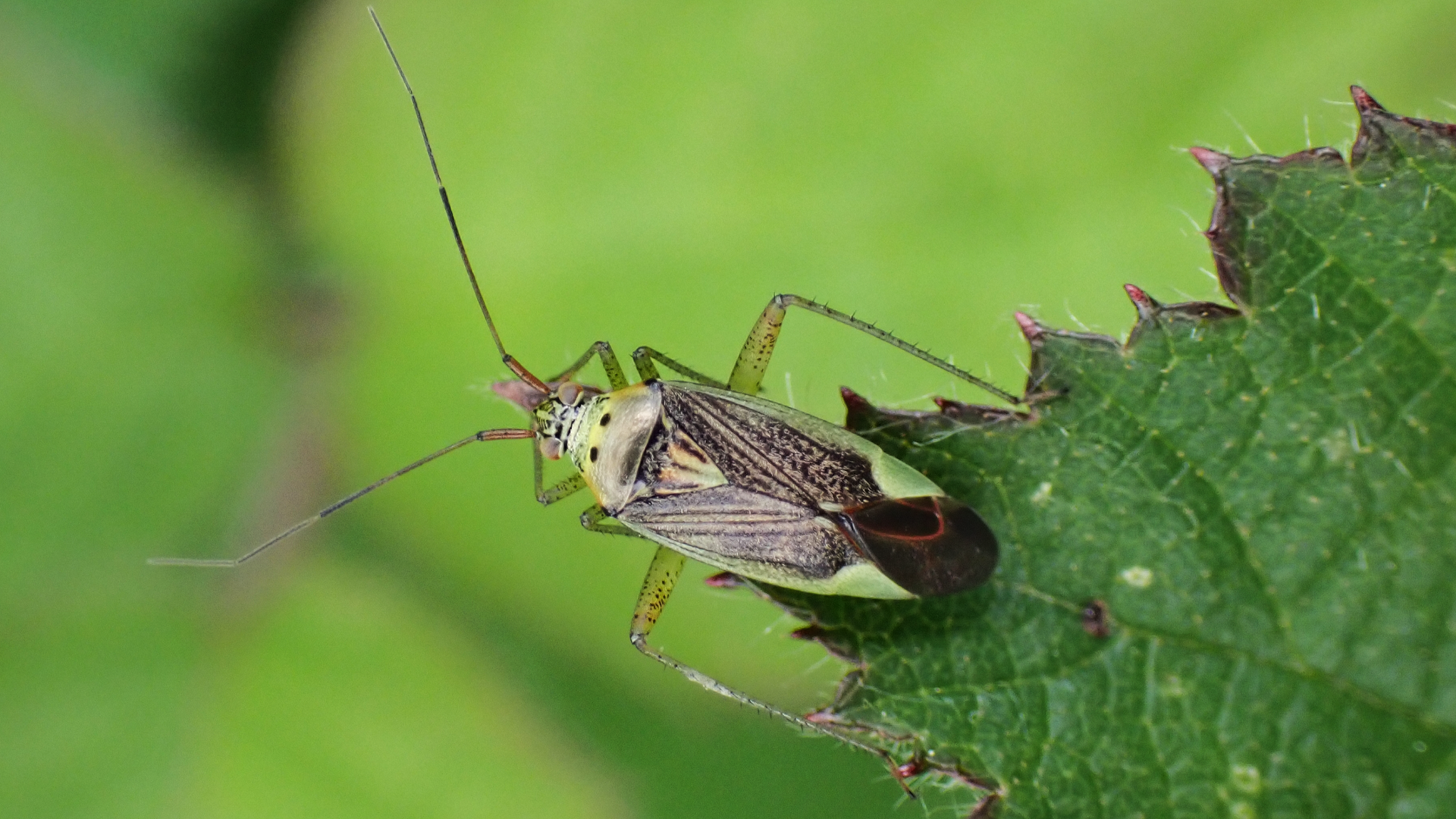
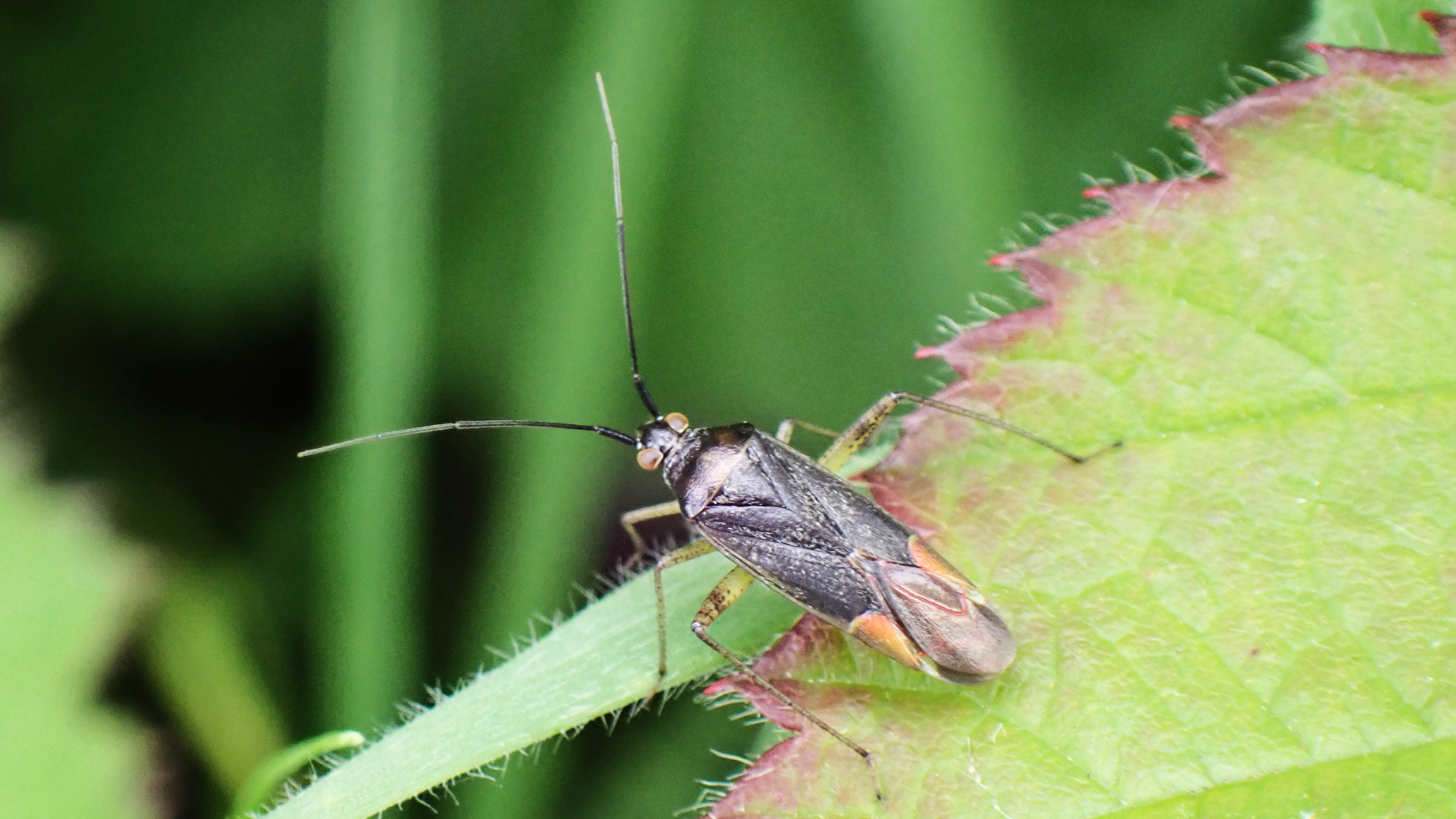
This mirid bug originates from the Mediterranean and the first reported sighting in London occurred in 2009. It is now very common in Hainault Forest. They vary a bit in appearance but females are normally greenish, while males are usually dark with a red wedge-shaped section of the forewing (cuneus). The female's pronotum is usually marked with two dark spots in the centre and dark markings at the hind corners. Adults measure up to 7.5mm in length.
#
Striped Oak Bug
Rhabdomiris striatellus
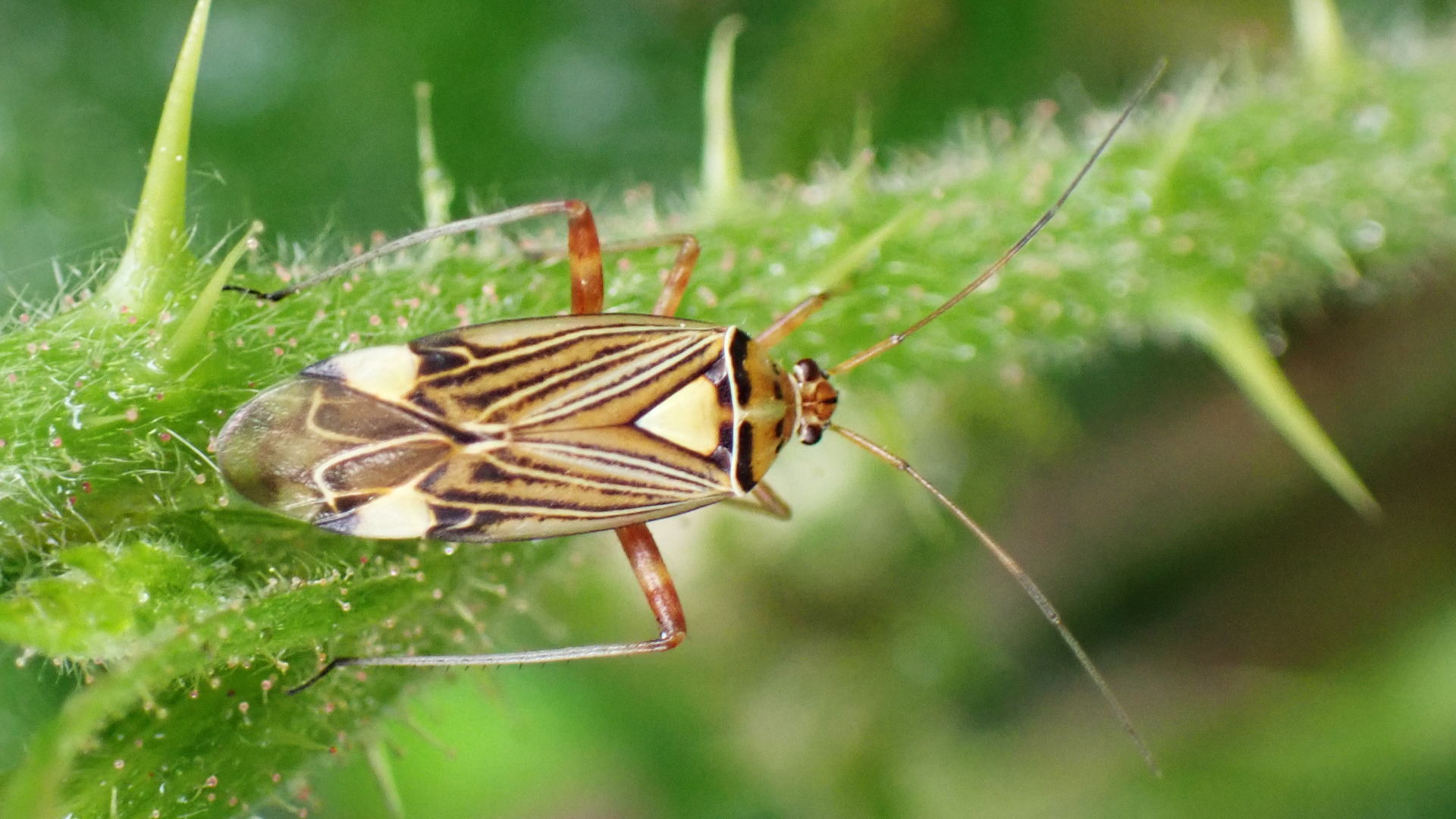
The distinctive adults (7-8mm) are seen from May to July. Males are normally darker than the females. This species is associated with oak.
Handsome Plant Bug
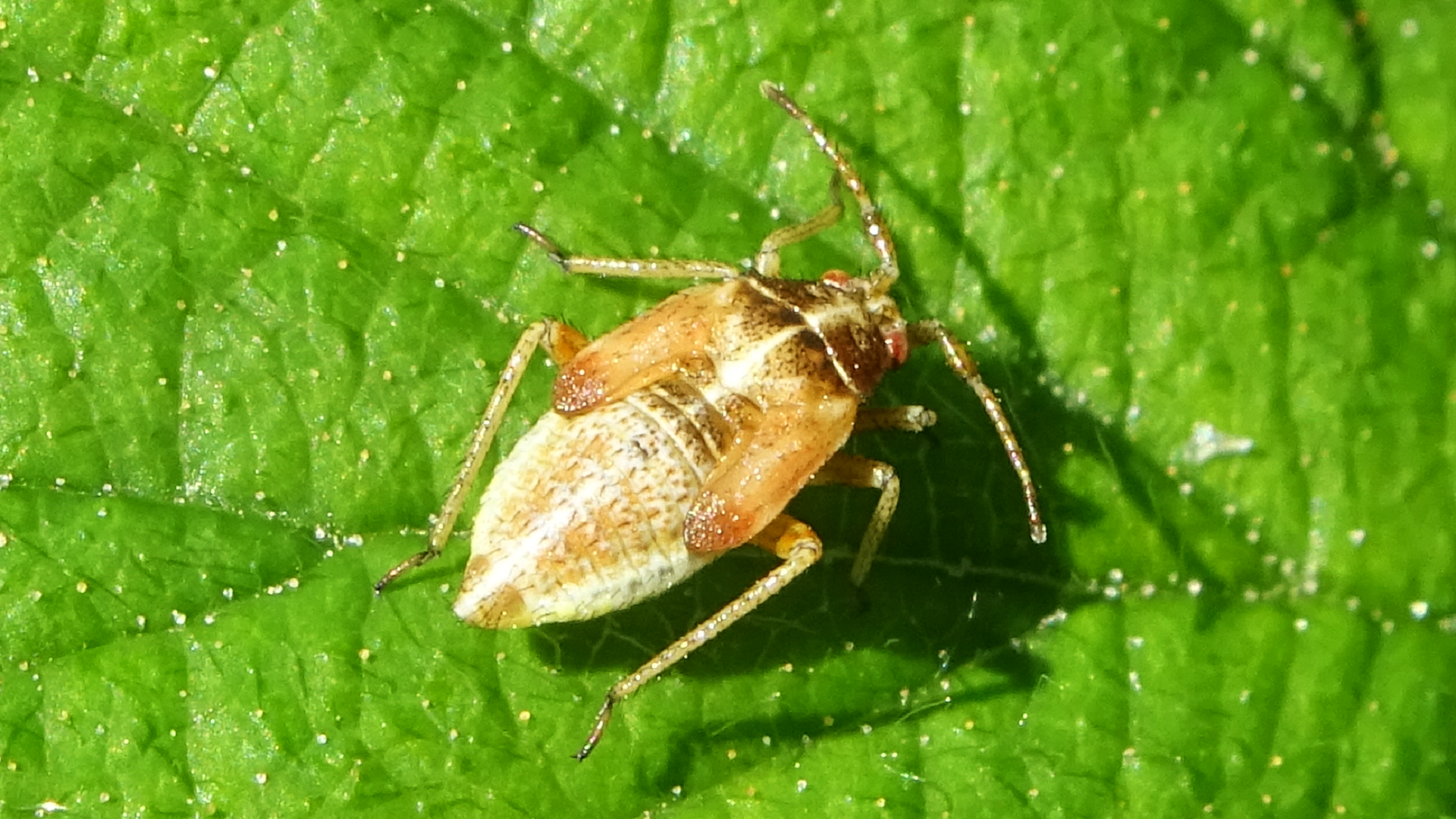
Harpocera thoracica
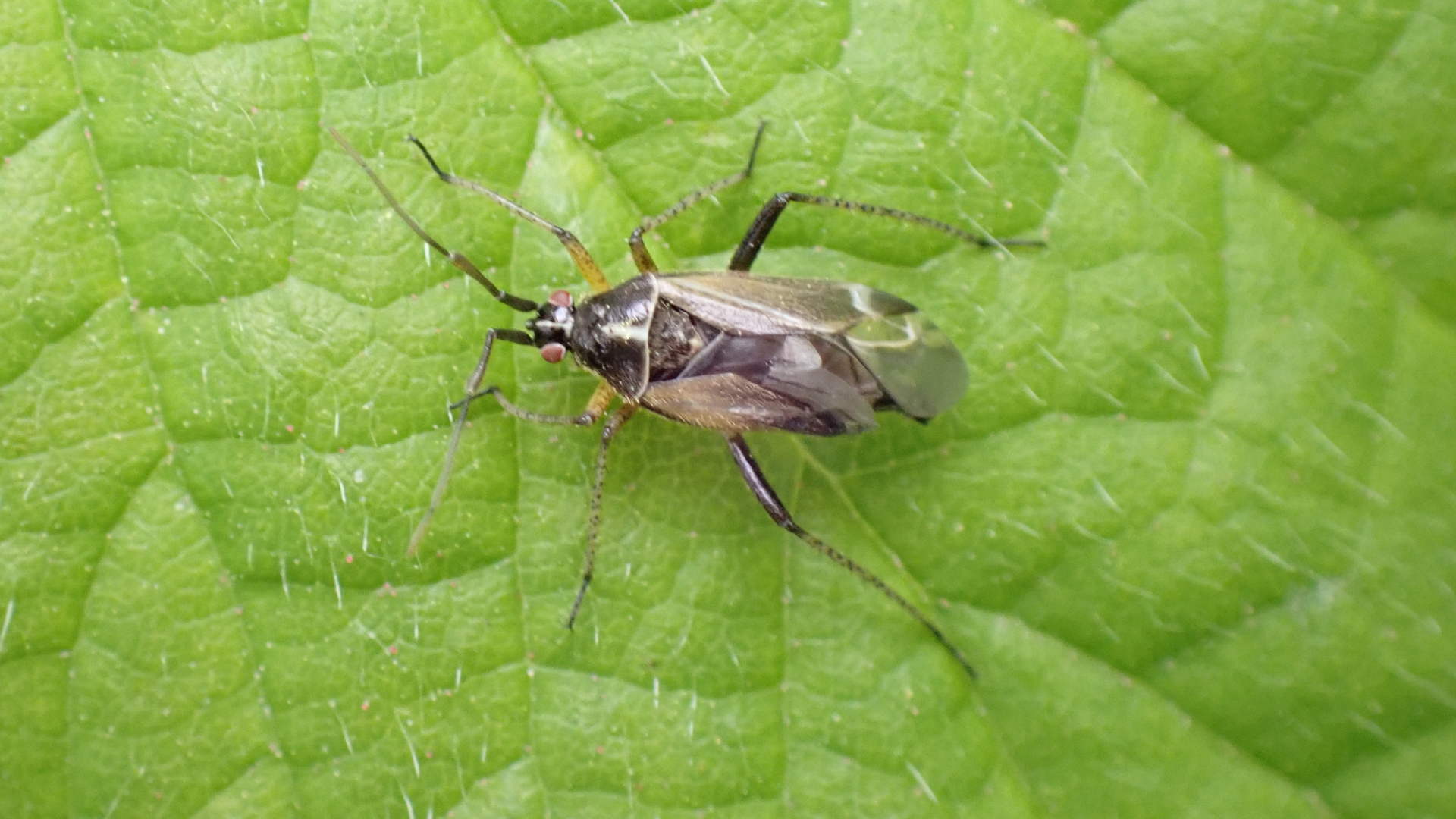
Very common throughout Britain on oak with adults normally appearing in May and June. They are short-lived, especially the males. The sexes are dimorphic; females are browner and have wider bodies than the males. This species spends most of the year at the egg stage. Larval development lasts only two weeks. The nymphs are covered in dark hairs and the two basal antennal segments are thicker than the other segments.
#
White Death Spider
Misumena vatia
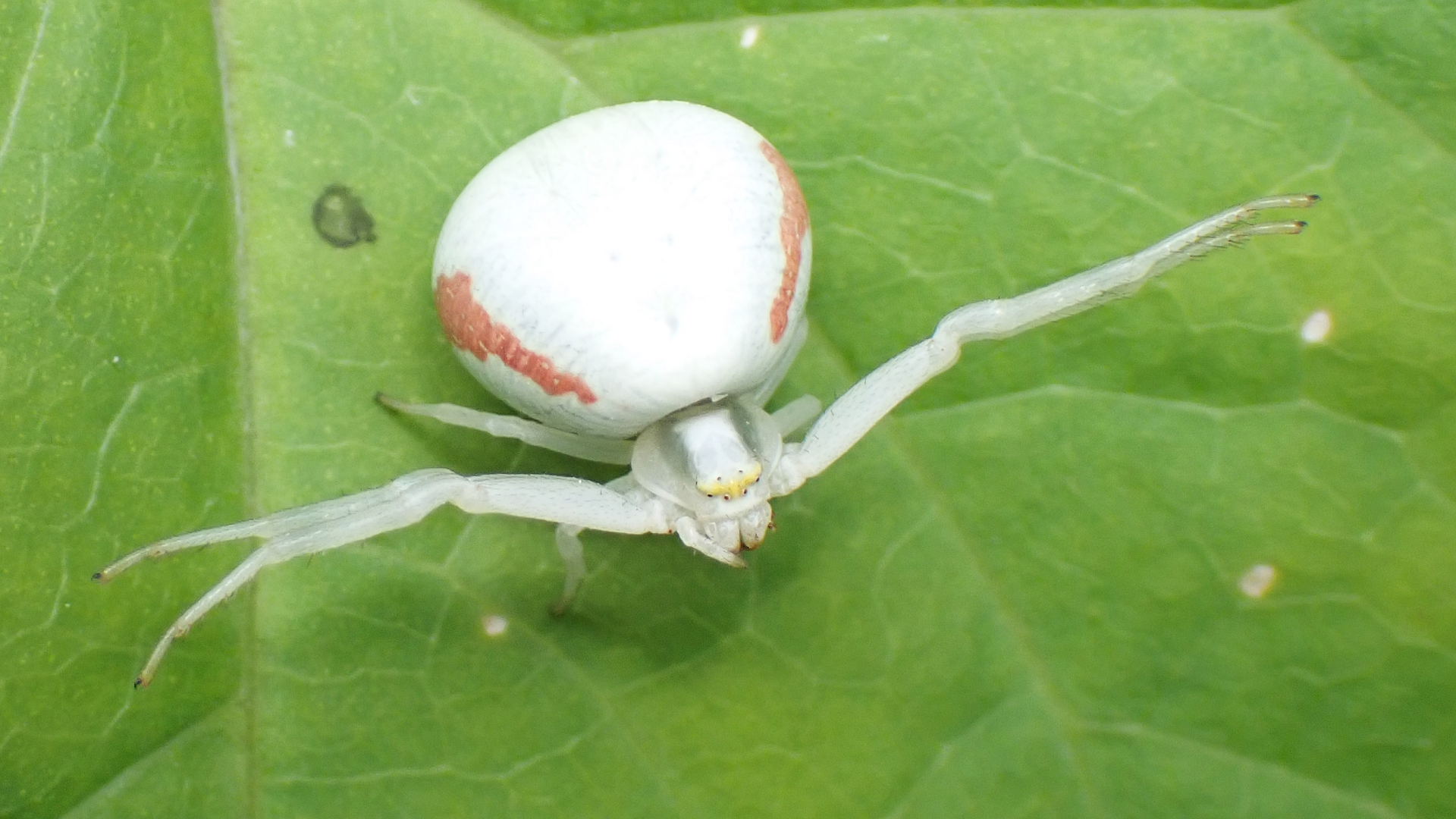
This species is frequently found on flower-heads during summer with front legs apart ready to ambush a passing victim. The spider grabs victims and subdues them with venom; it does not spin webs to catch prey. Mature females have the ability to change colour from white to yellow allowing them to blend in with surroundings. Harmless to humans.
#
Spring Epistrophe
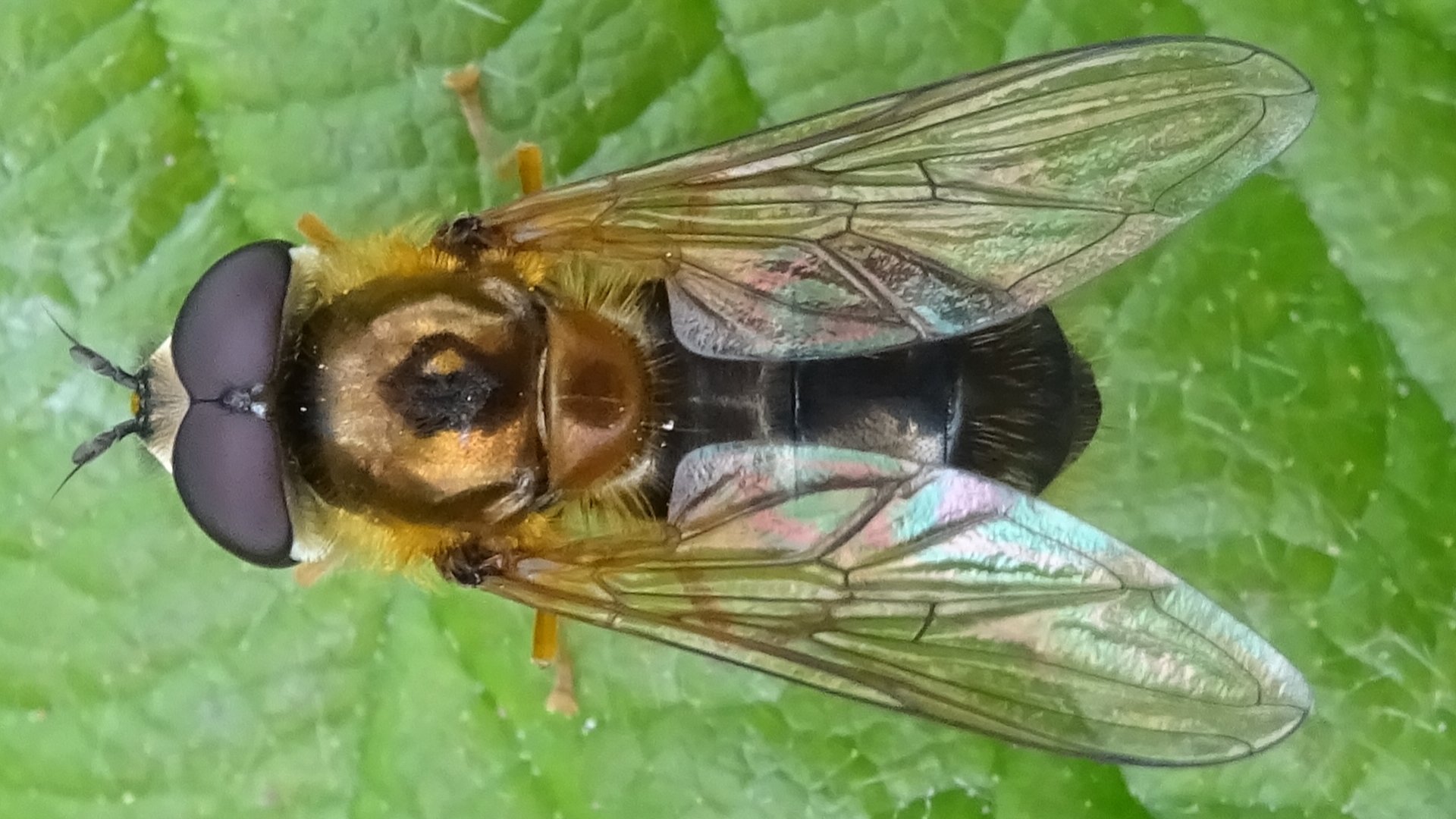
Epistrophe eligans

A species mainly seen in spring which can be rather variable regarding the level of the yellow striping on its abdomen. Some specimens, especially males, can be almost totally black, but the overall pattern is normally similar. This Hoverfly has a preference for sunny woodland rides and hedges where it can be found resting on brambles. Eyes close together indicate a male.
#
Bronze Sap Hoverfly
Ferdinandea cuprea
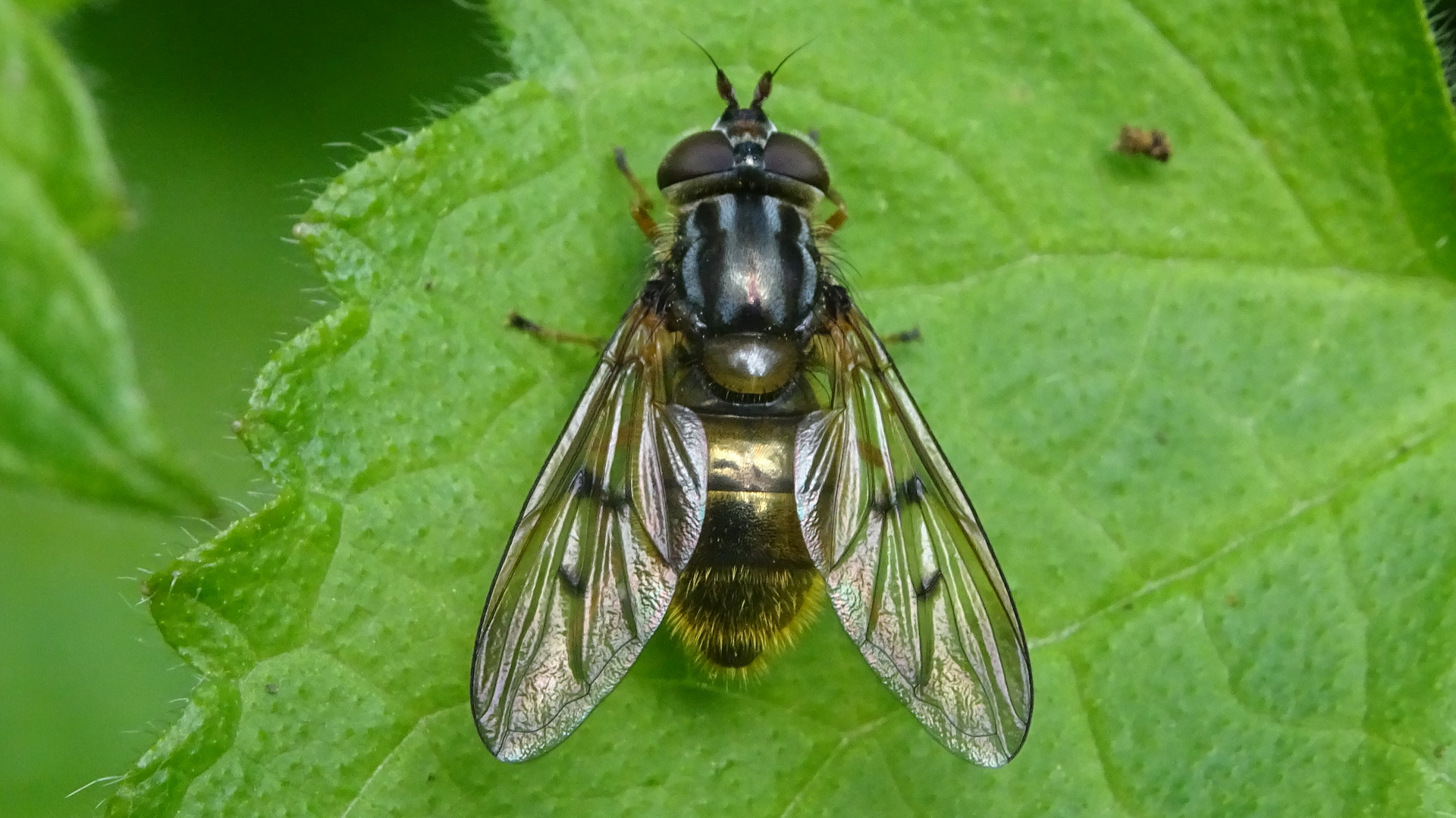
This hoverfly has a brassy coloured abdomen and two dark marks on each wing. It inhabits hedgerows and woodland from March to November where it is sometimes found basking in the sun.
#
Tapered Drone Fly
Eristalis pertinax
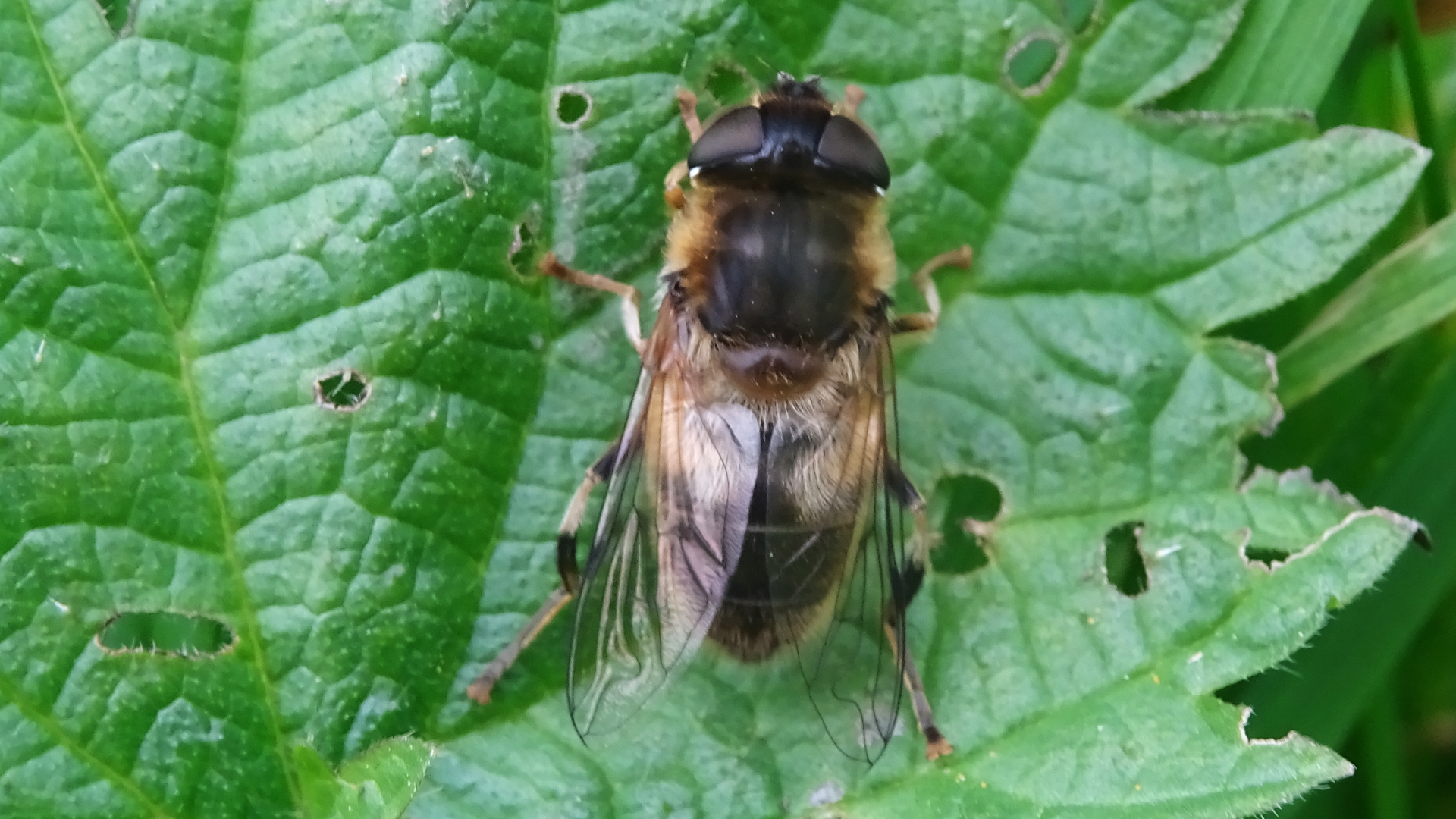
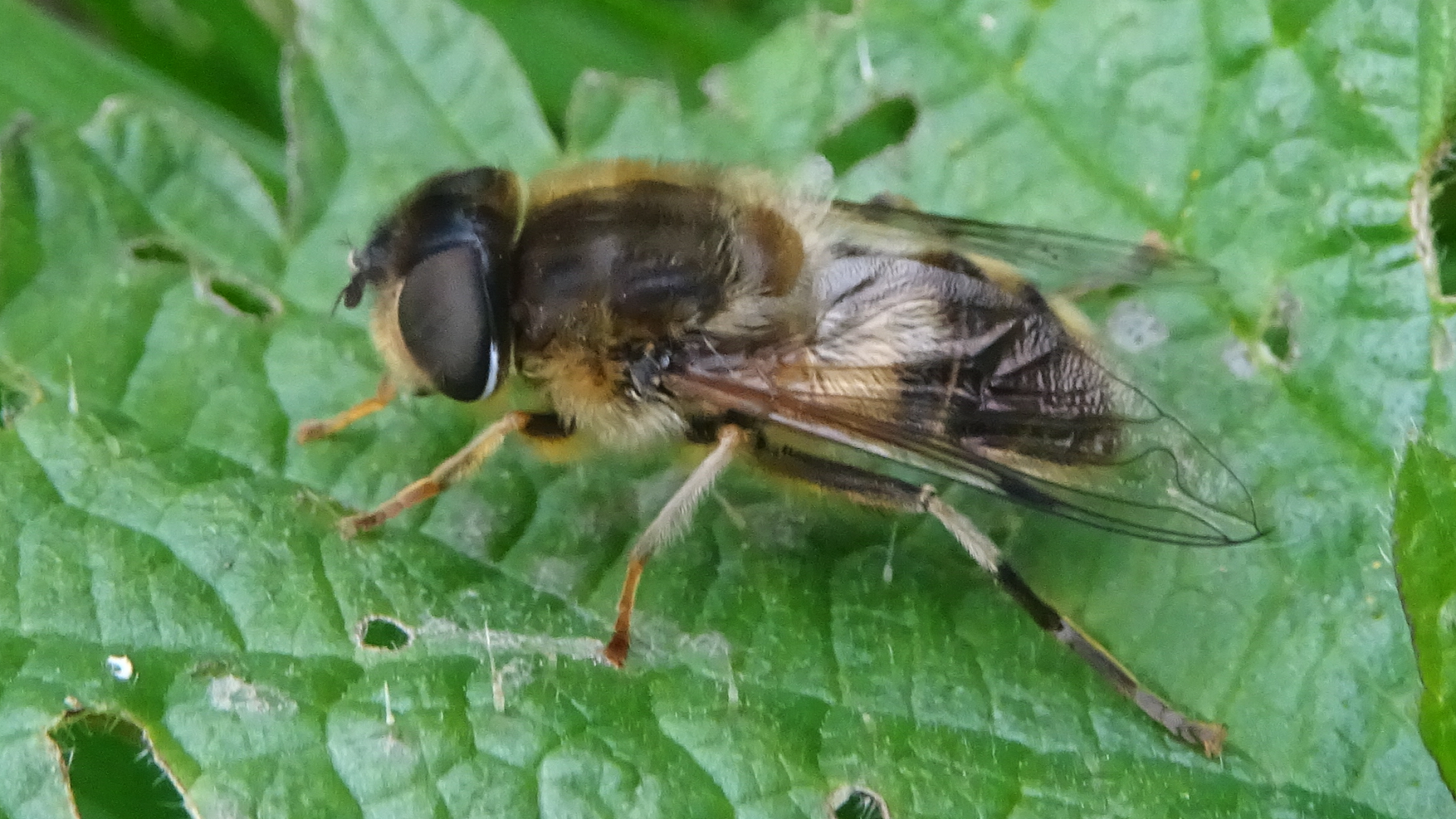
This species flies from April until October, a fairly common sight on hedgerows and along woodland rides. The eyes separated by a gap indicates a female. This species has pale front legs and there are usually orange markings on tergite 2 which are often brighter in summer specimens.
#
Pipiza Hoverfly
Pipiza spp.
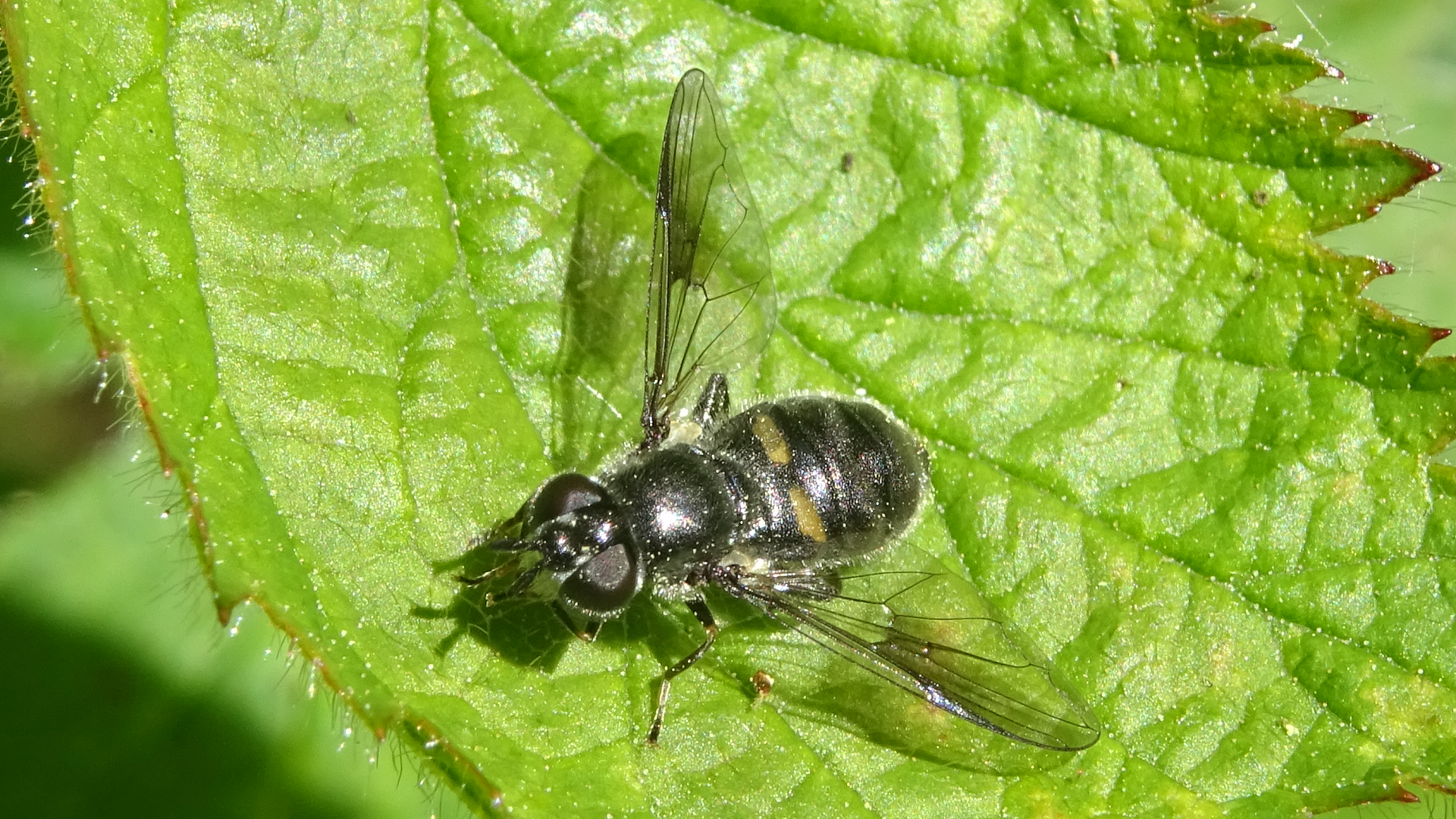
This hoverfly was basking in the sun on a hedgerow near Sheepwater. Due to similarity in species it can only be recorded to genus from a photograph.
#
Cinnabar
Tyria jacobaeae
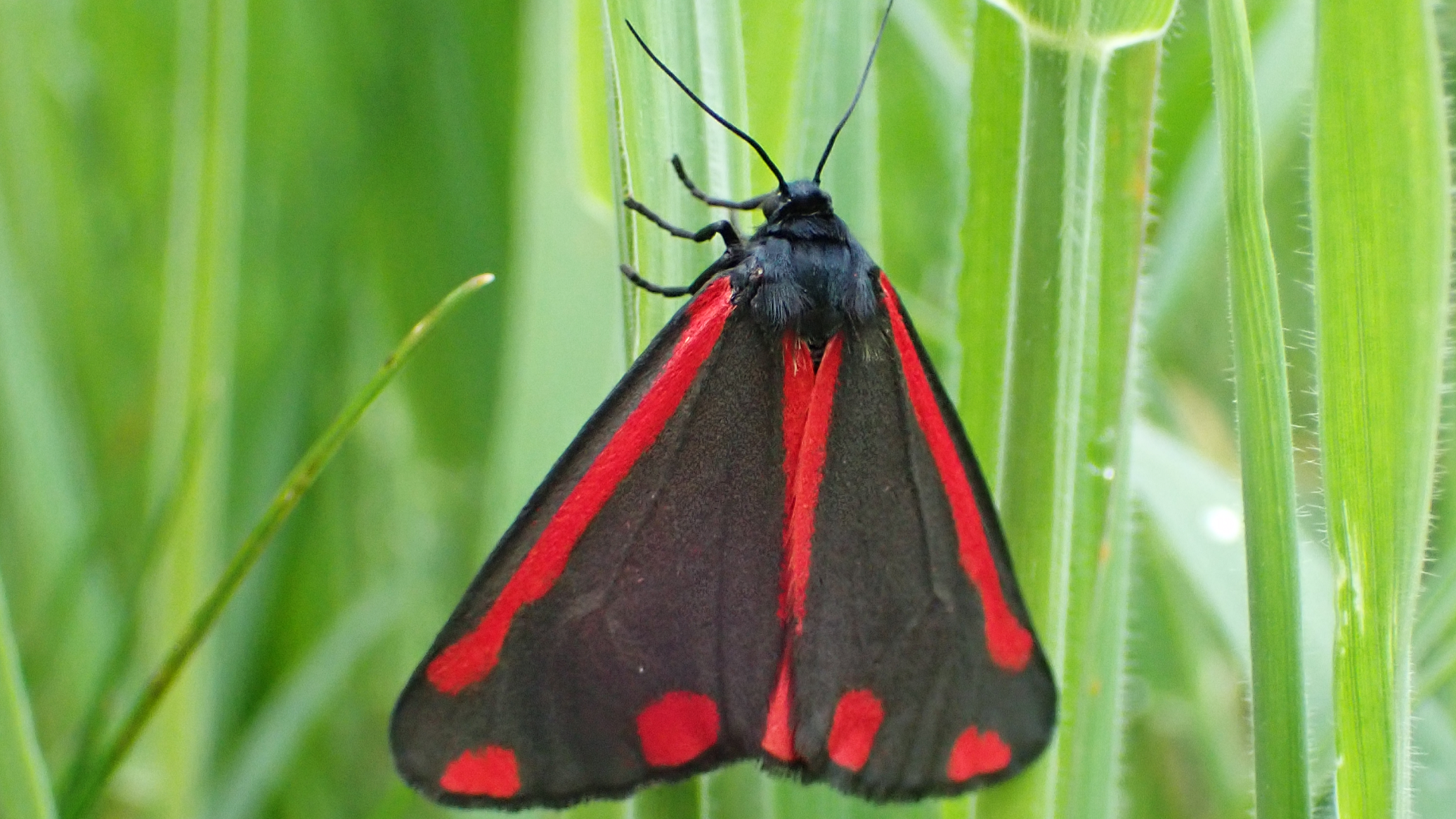
Day-flying species that frequents habitats containing Common Ragwort. Adults are seen from May to August. The striped orange and black larvae are seen in large numbers in the meadows on ragwort during July.
#
Hawthorn Moth
Scythropia crataegella
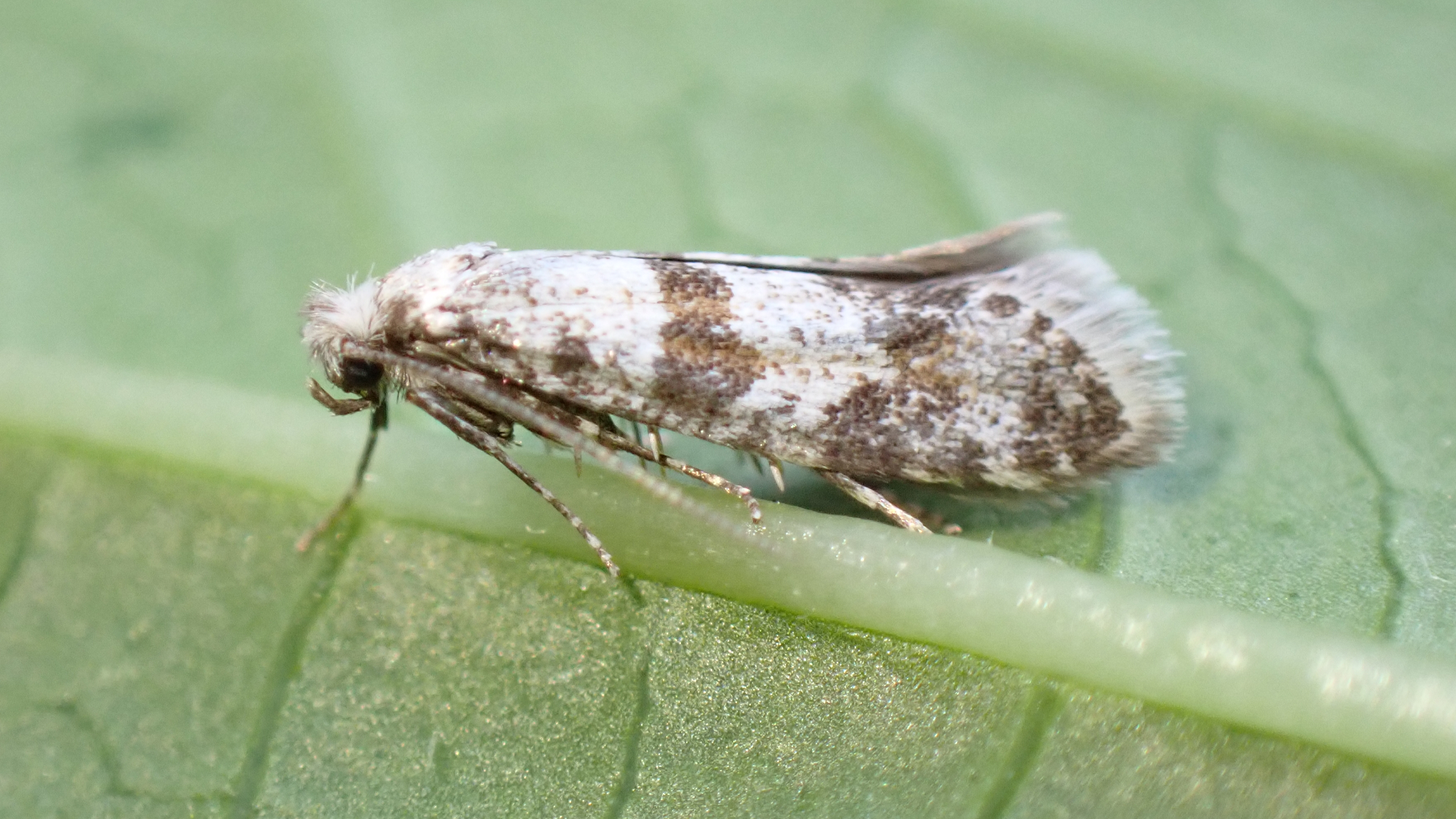
Common species found in woodland, grassland and gardens. The larvae mine hawthorn leaves before feeding communally in a silken web spun on bushes. Adults are seen from May until September.
#
Tawny-fronted Straw
Neocochylis molliculana
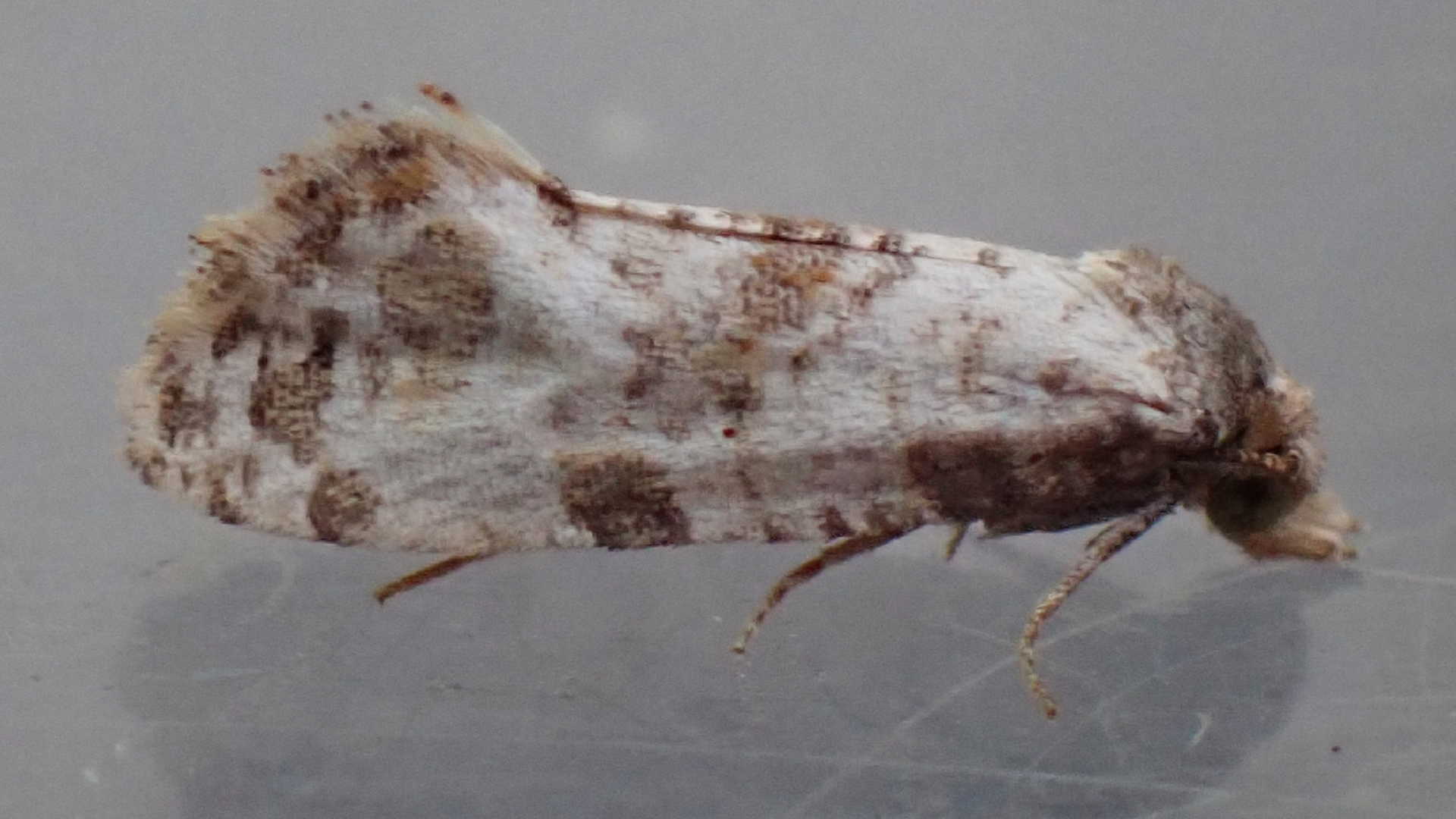
On the wing from June until August. It was previously known as the 'Ox-tongue Conch' and first recorded in Britain during 1993. Bristly oxtongue is its larval foodplant.
#
Silver Ground Carpet
Xanthorhoe montanata
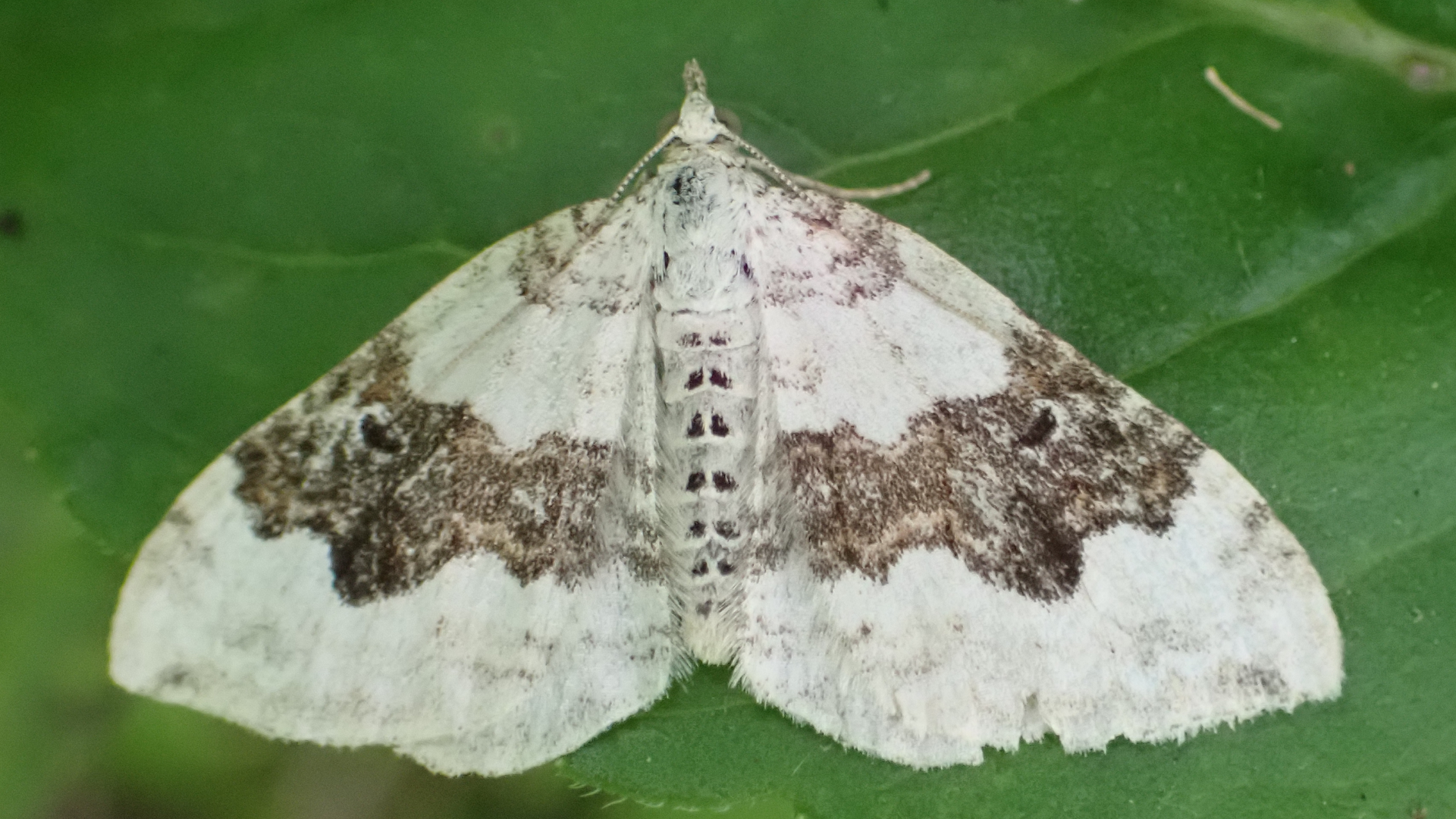
A species that can be rather variable, but all forms have a distinctive whitish ground colour. The central band may vary a lot. This moth visits herbaceous plants from May to July.
#
Common Marbled Carpet
Dysstroma truncata
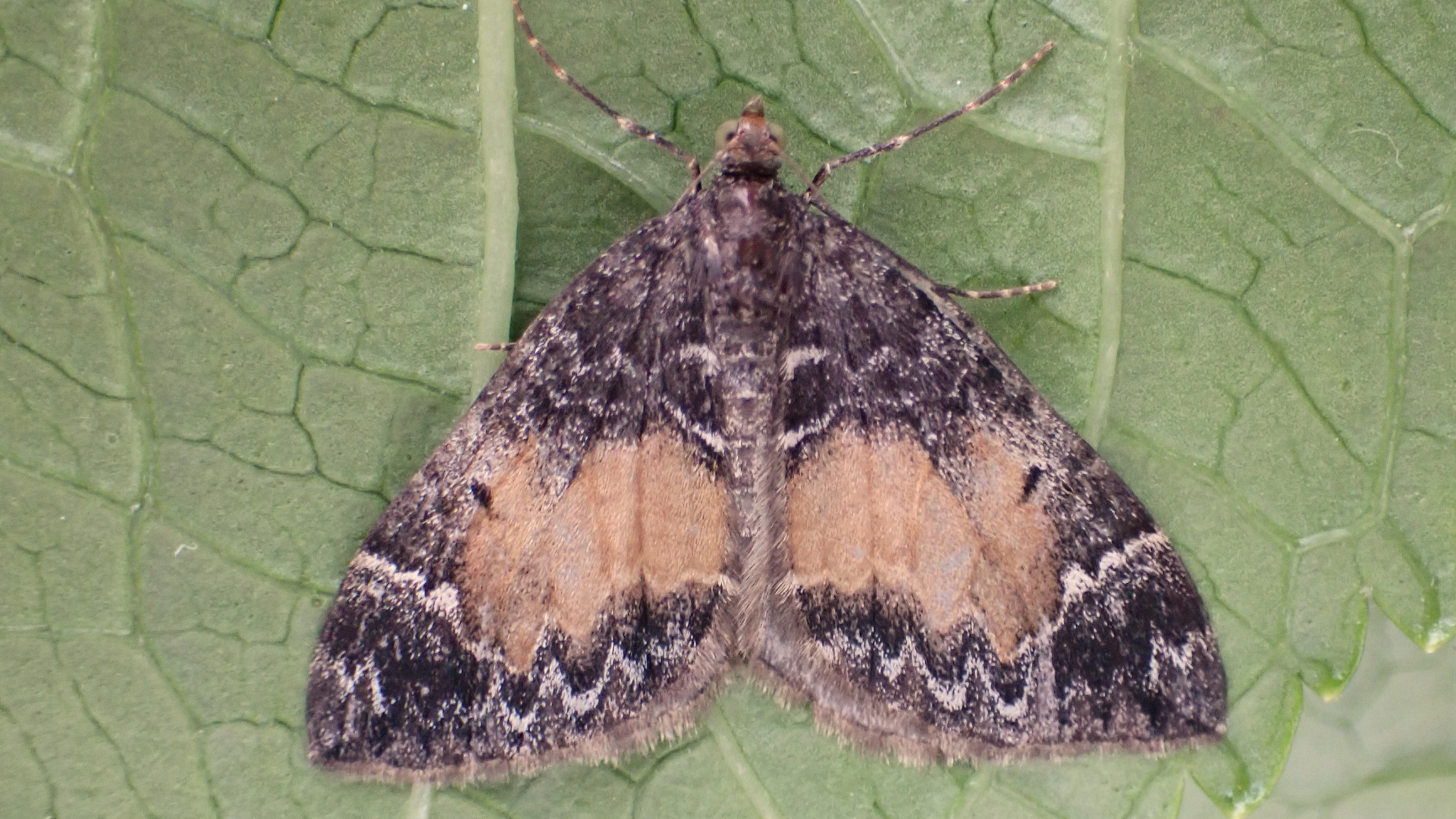
A widespread and common species that comes in a range of colour patterns. Its larvae feed on woody plants. There are two generations, one appears in May and June, and the other from August to October.
#
Yellow Shell
Camptogramma bilineata
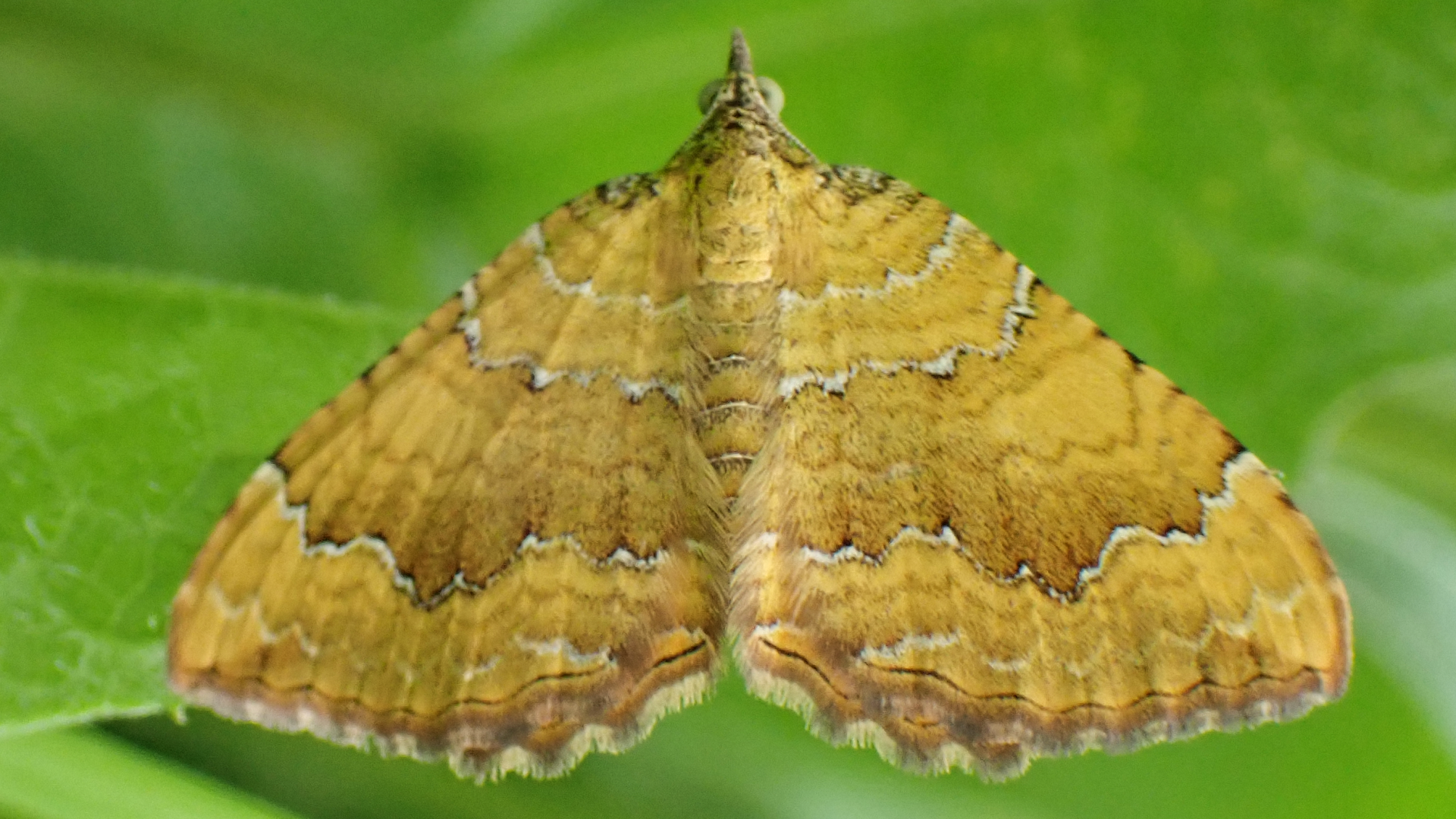
The Yellow Shell is a day-flying moth on the wing from June until August. Colouration and patterning is very variable. Its larvae feed on cleavers and bedstraws.
#
Mother Shipton
Callistege mi
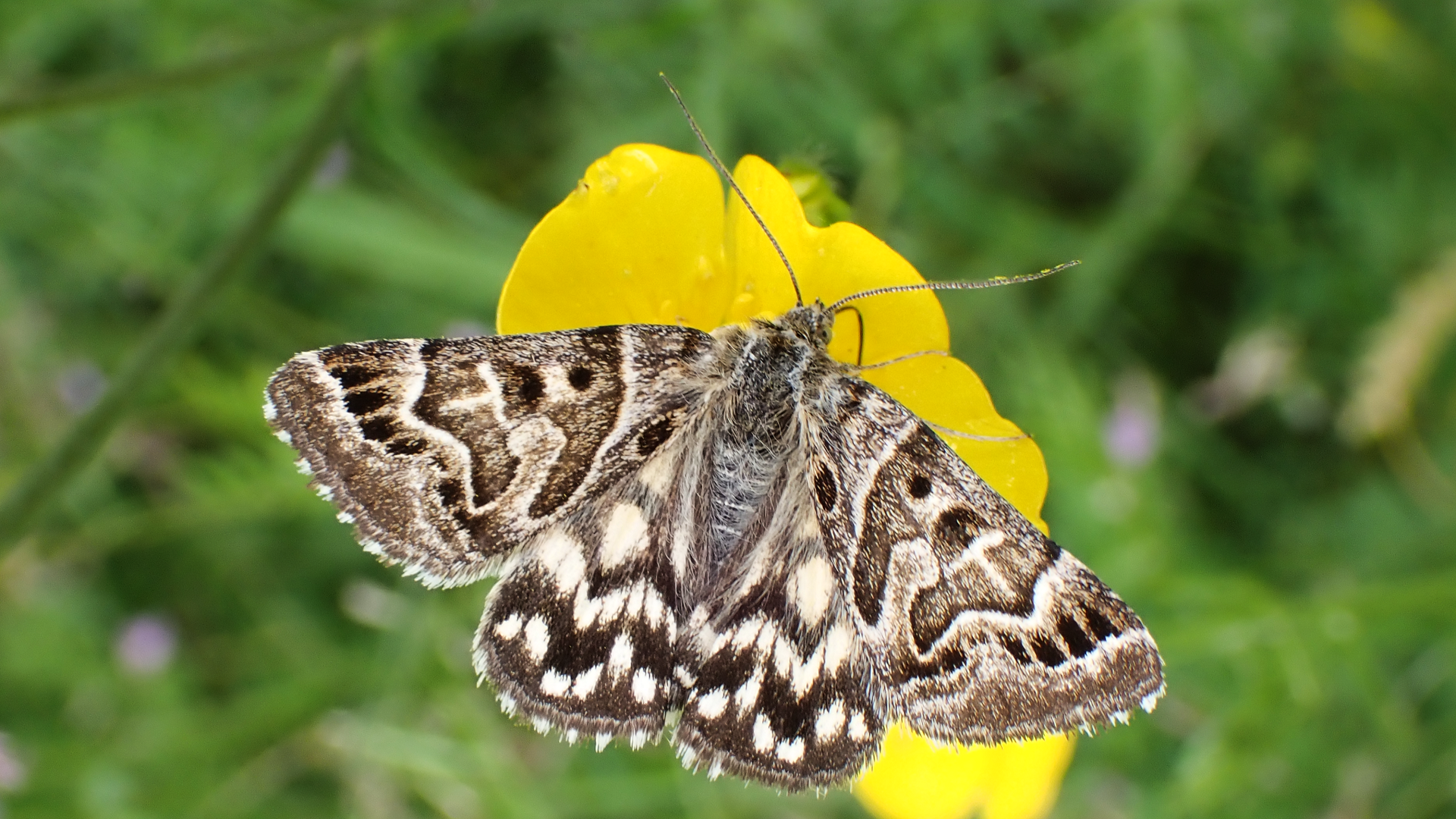
This day-flying moth visits meadow flowers during sunny spells. Its name is a reference to 'Old Mother Shipton', the 16th Century witch whose face can be seen on the wings.
#
White Ermine
Spilosoma lubricipeda
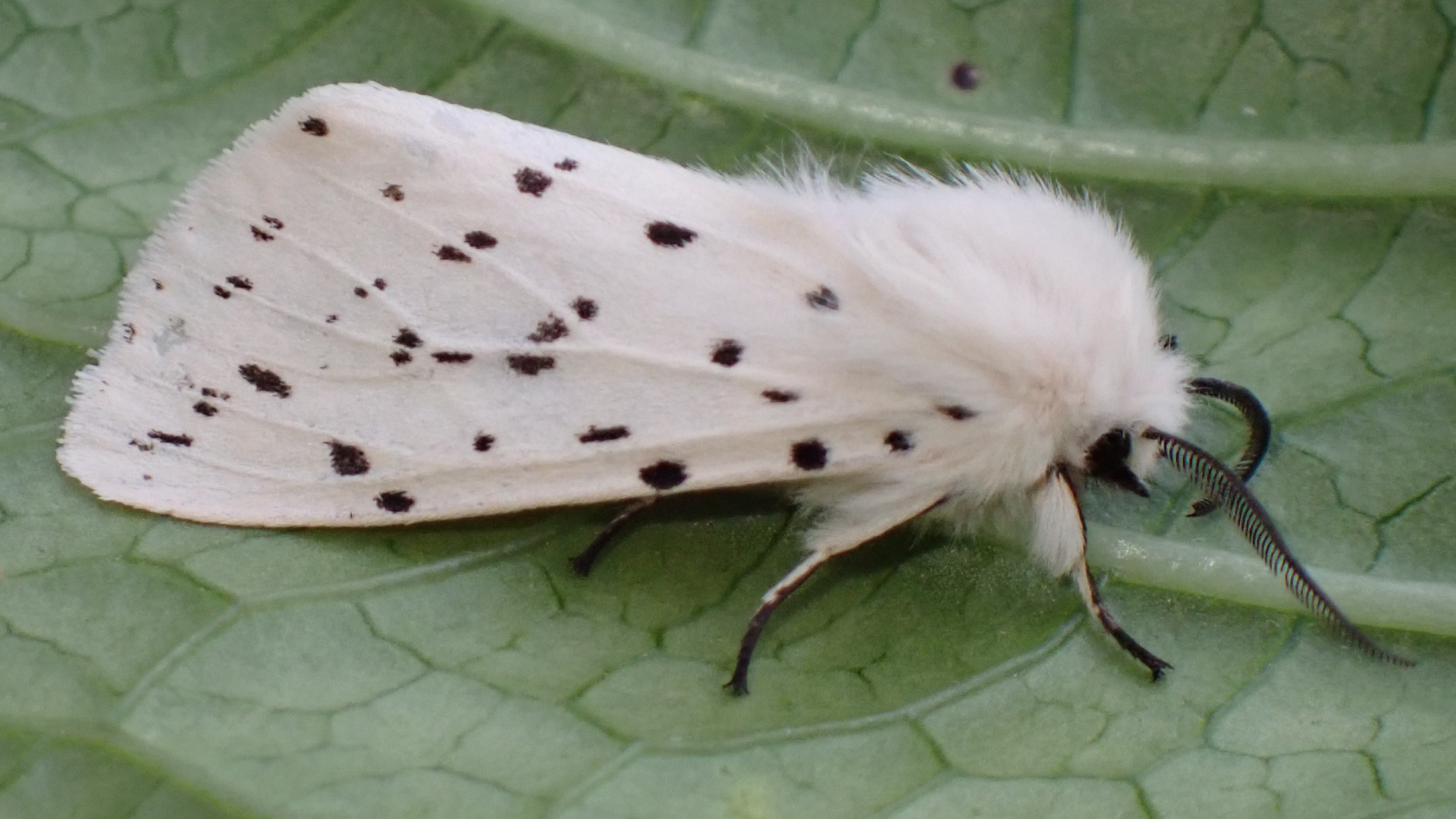
The White ermine flies from May to July. Its larvae feed on Nettles and Dock.
#
Large Yellow Underwing
Noctua pronuba
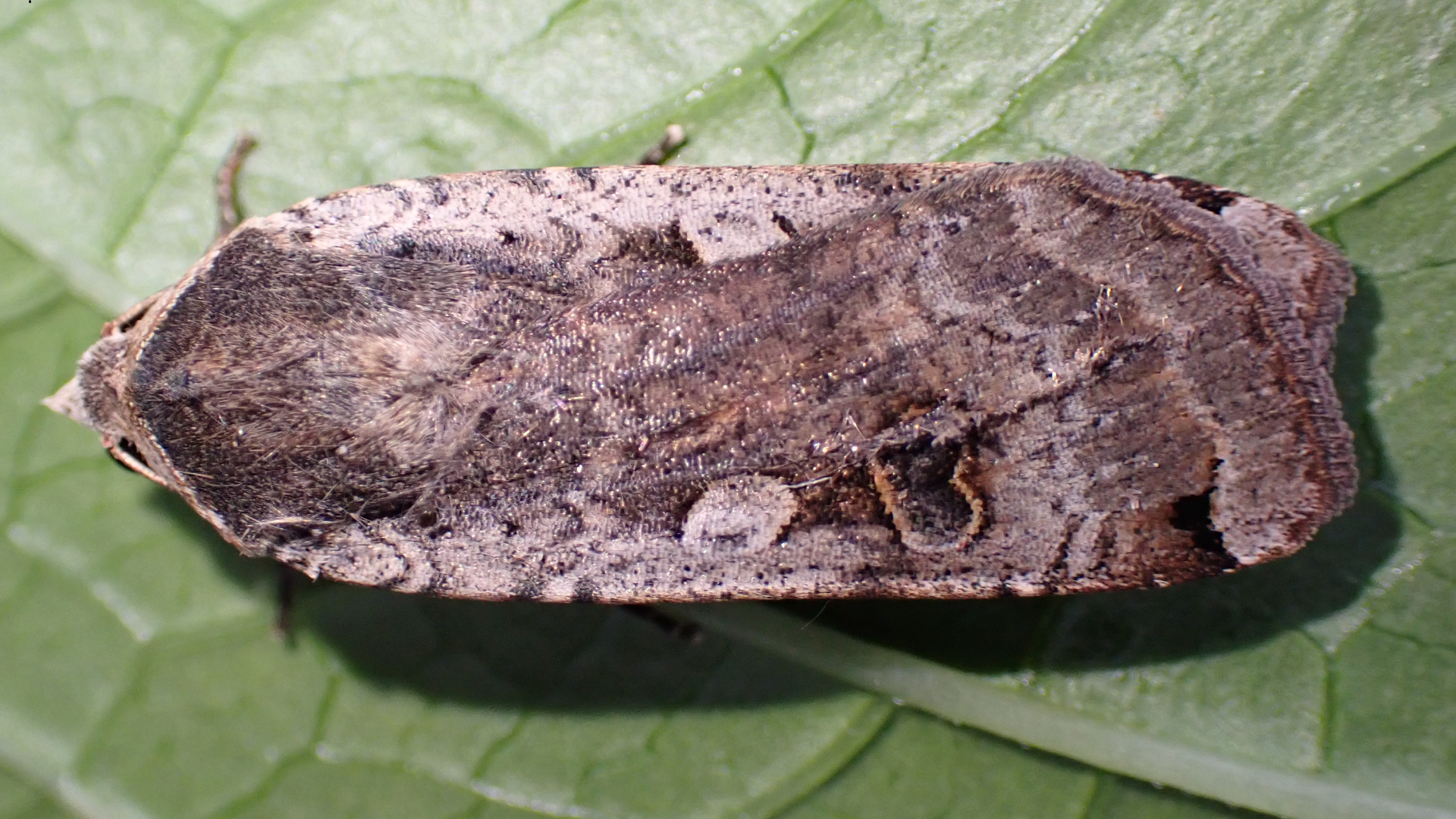
This common species flies from June to November. When at rest the bright yellow underwings are usually hidden. The larvae feed on herbaceous plants and grasses.
#
Buff Footman
Eilema depressa
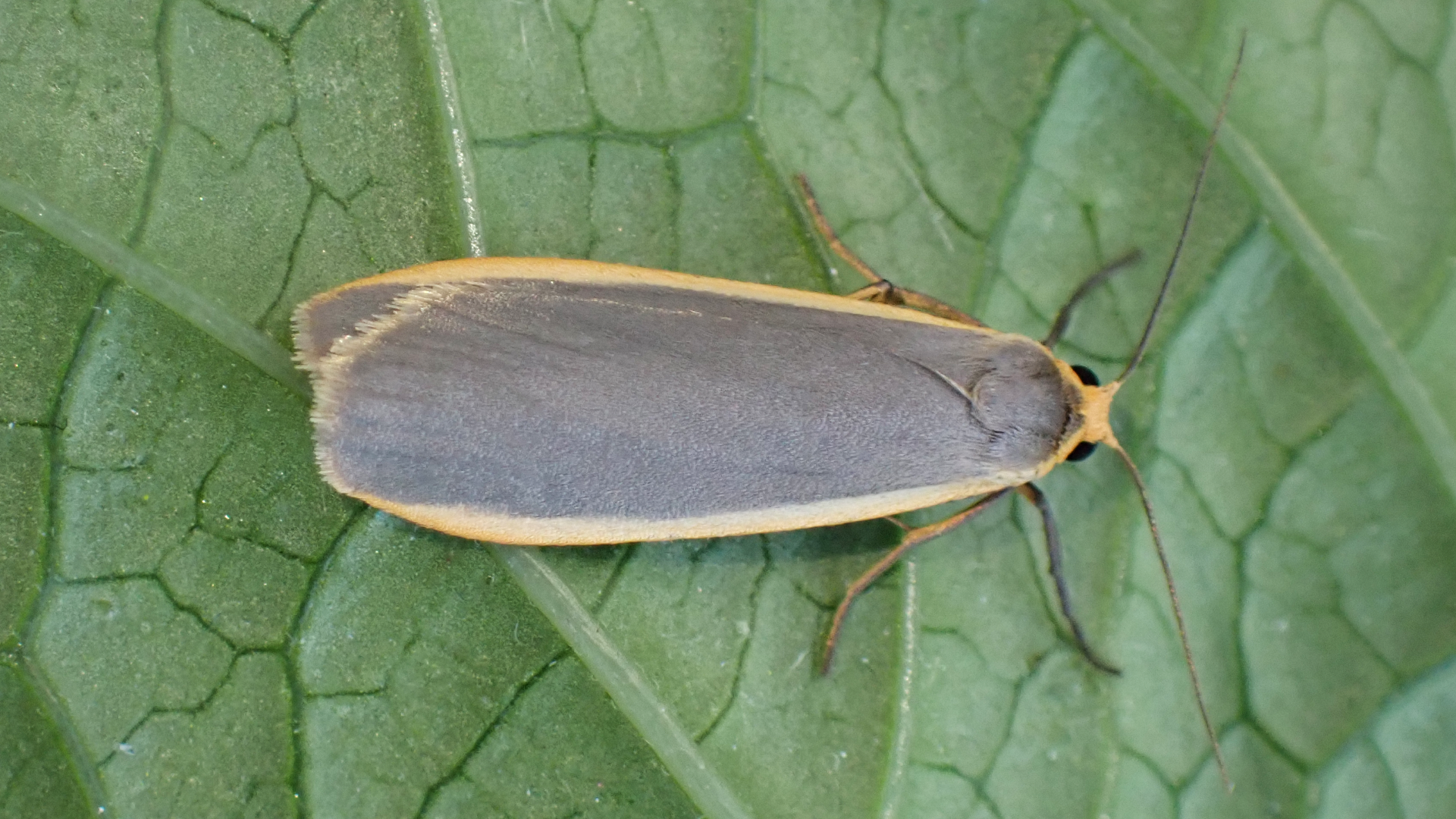
Flies in woodland and scrubland from June until August. It is grey with orange or yellow fringes and leading edge to wings. The female slightly larger and browner than the male. The larvae feed on lichens.
#
Double-striped Pug
Gymnoscelis rufifasciata
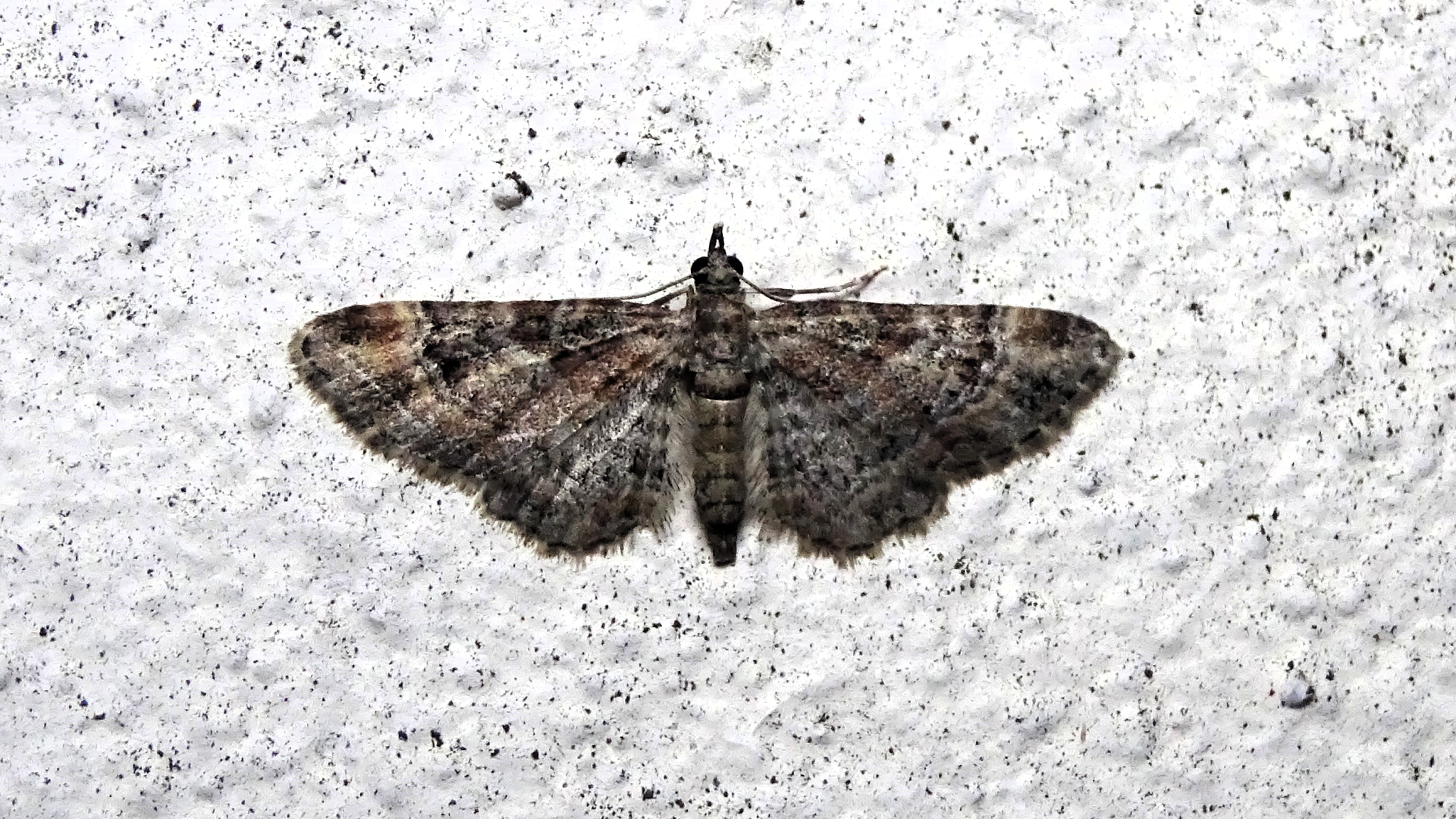
Seen from March to September, this moth flies mainly at dusk and in hot sunshine. Found in a variety of habitats and its larvae feed on a wide range of plants.
#
Early Grey 73.069
Xylocampa areola
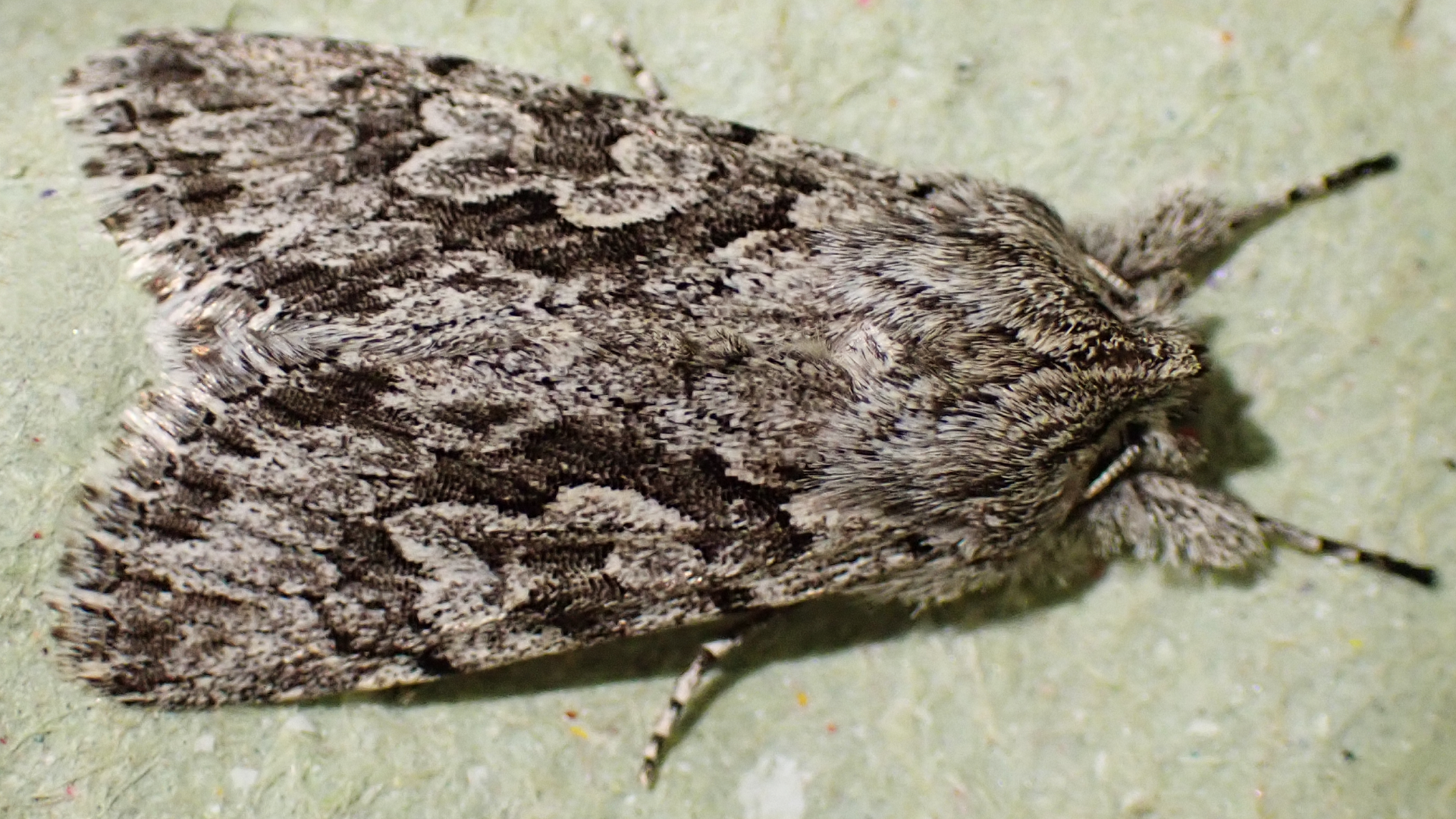
One of the earliest moths to emerge in the year flying from March to May. Honeysuckle is its foodplant.
#
Bramble Shoot Moth
Notocelia uddmanniana
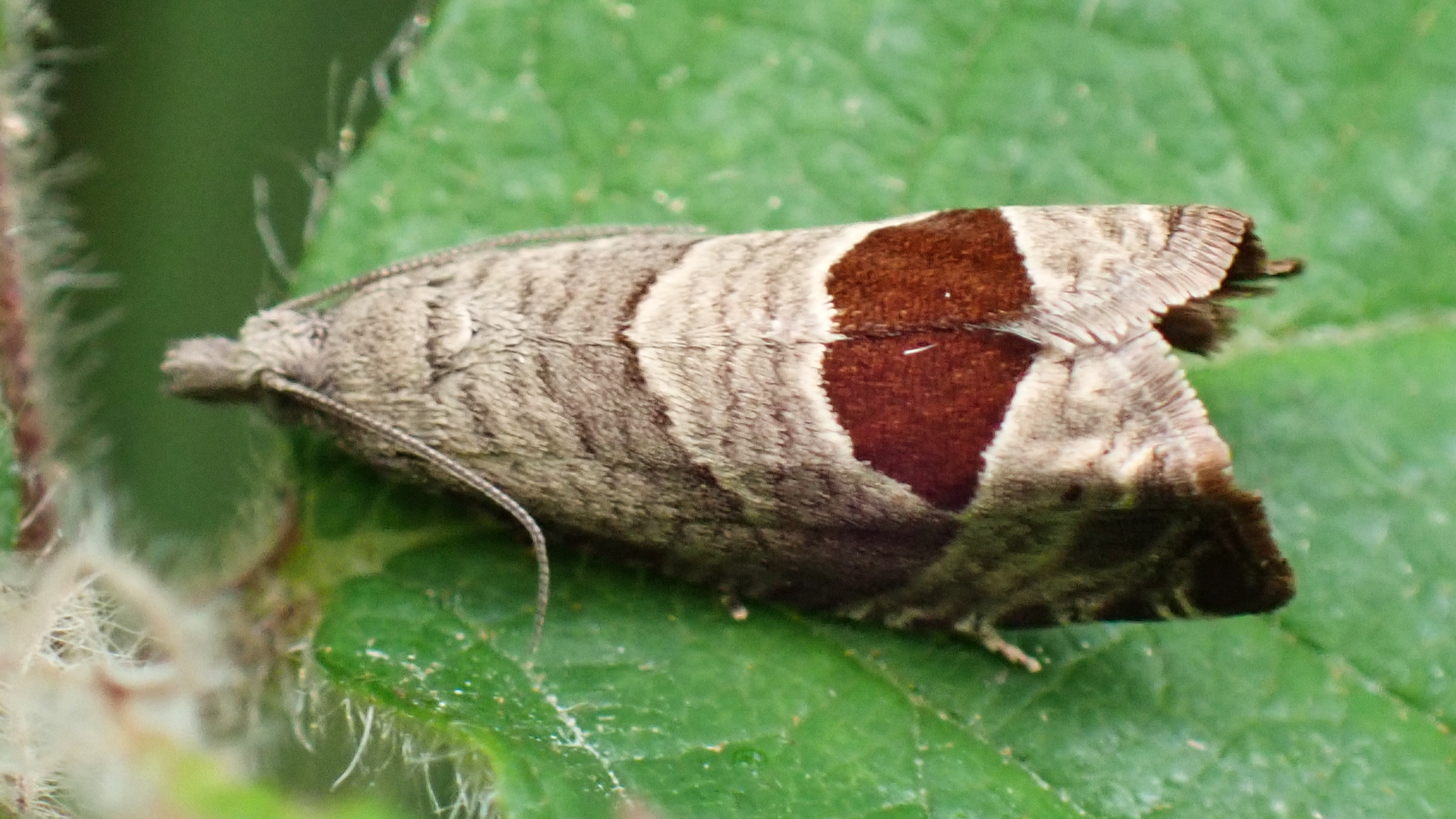
This species was previously known as the 'Bramble shoot', but has recently had its name changed to the 'Bramble shoot moth'. It flies in June and July and is common in woodland and on hedgerows where bramble exists which is the larval foodplant. The large reddish-brown or chocolate-brown marking on the wings makes this a fairly easy species to identify.
#
Yellow Oak Tortrix
Aleimma loeflingiana
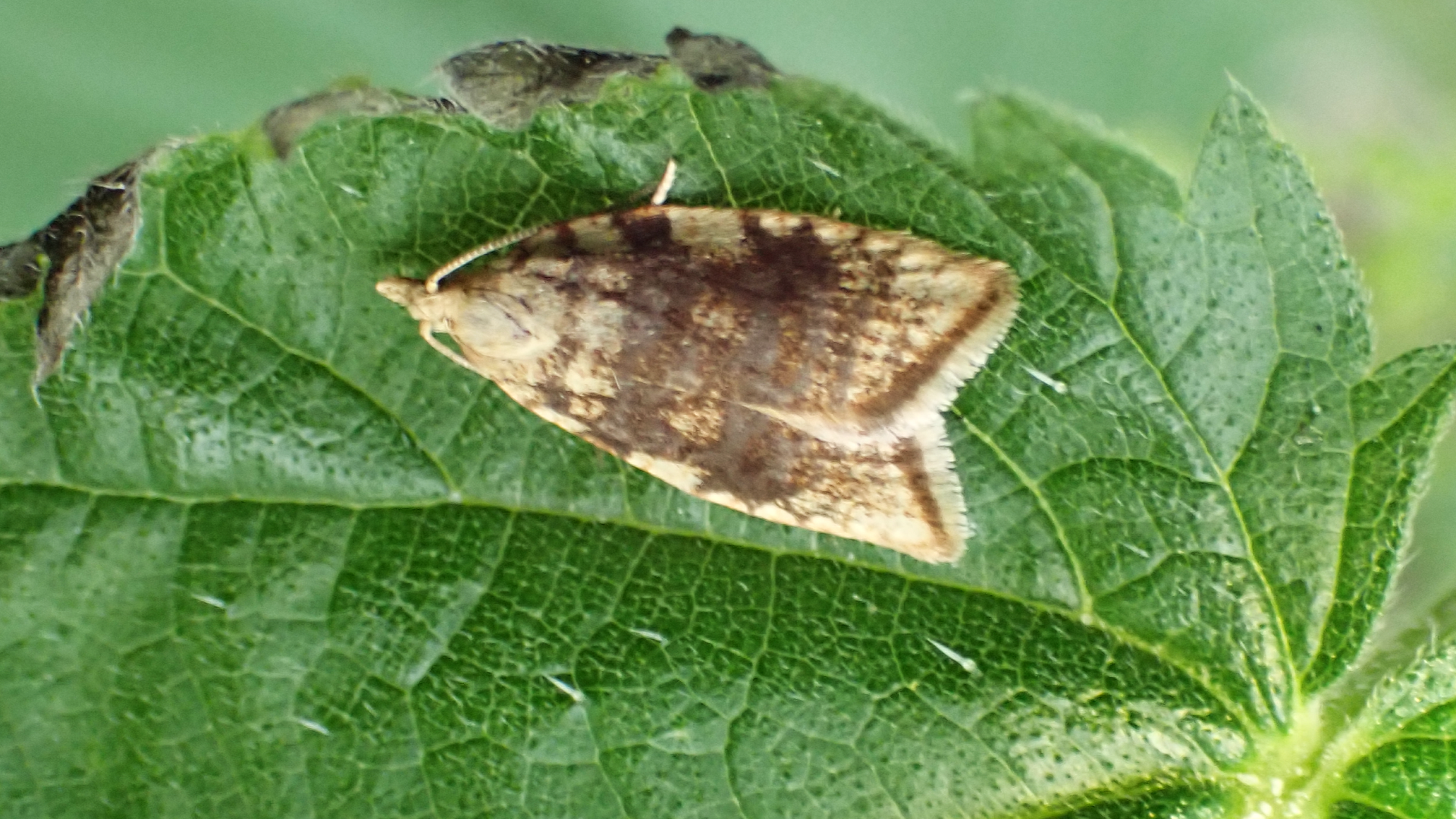
This is a woodland micro-moth that flies from June until August. Its larvae feed on oak. It was originally known as the 'Yellow Oak Button'.
#
Lesser Tawny Crescent 28.015
Batia lunaris
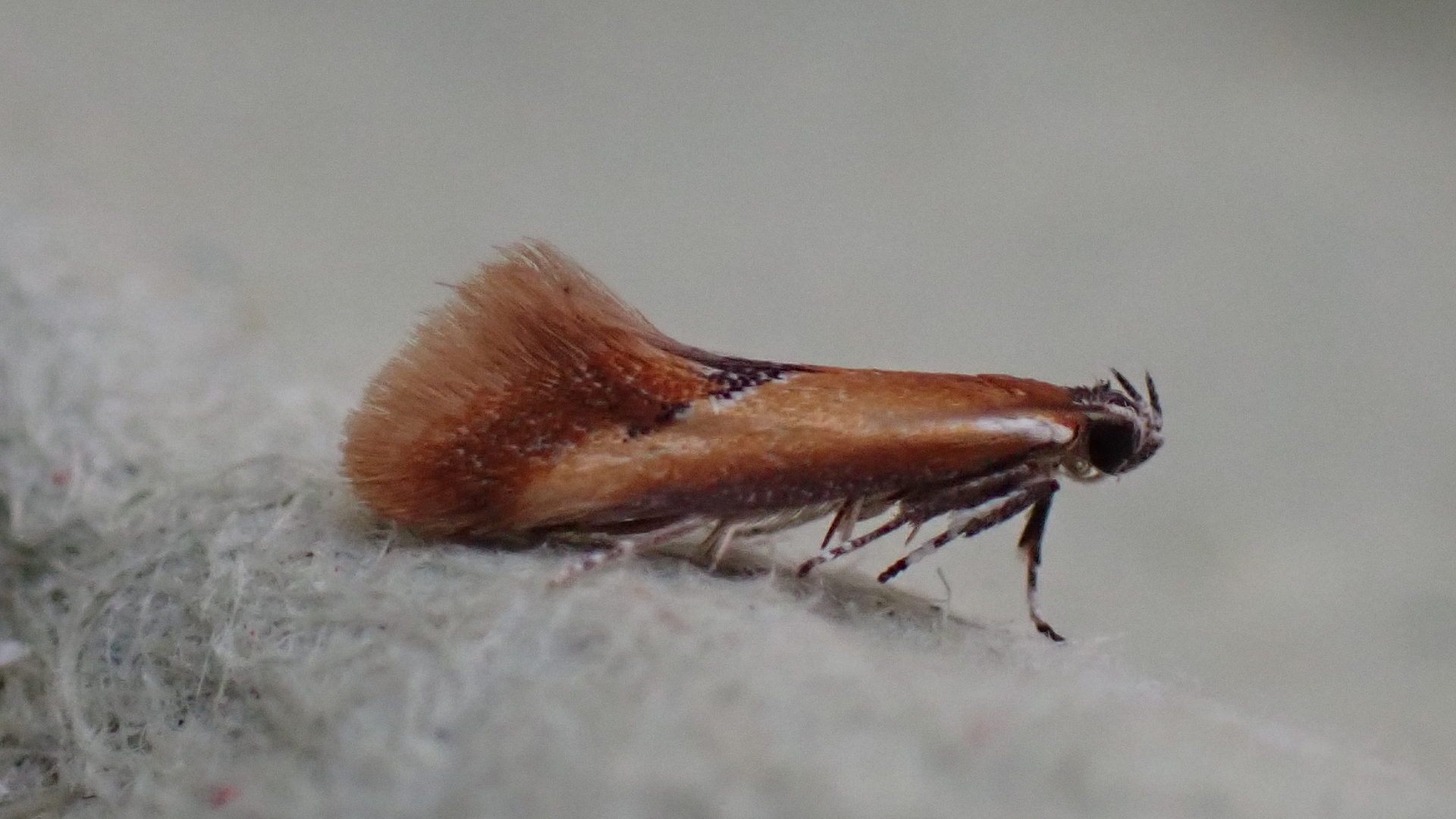
Flies from June to August. It feeds under tree bark possibly on fungi or rotten wood. The larvae feed on lichens.
#
Bee Moth
Aphomia sociella
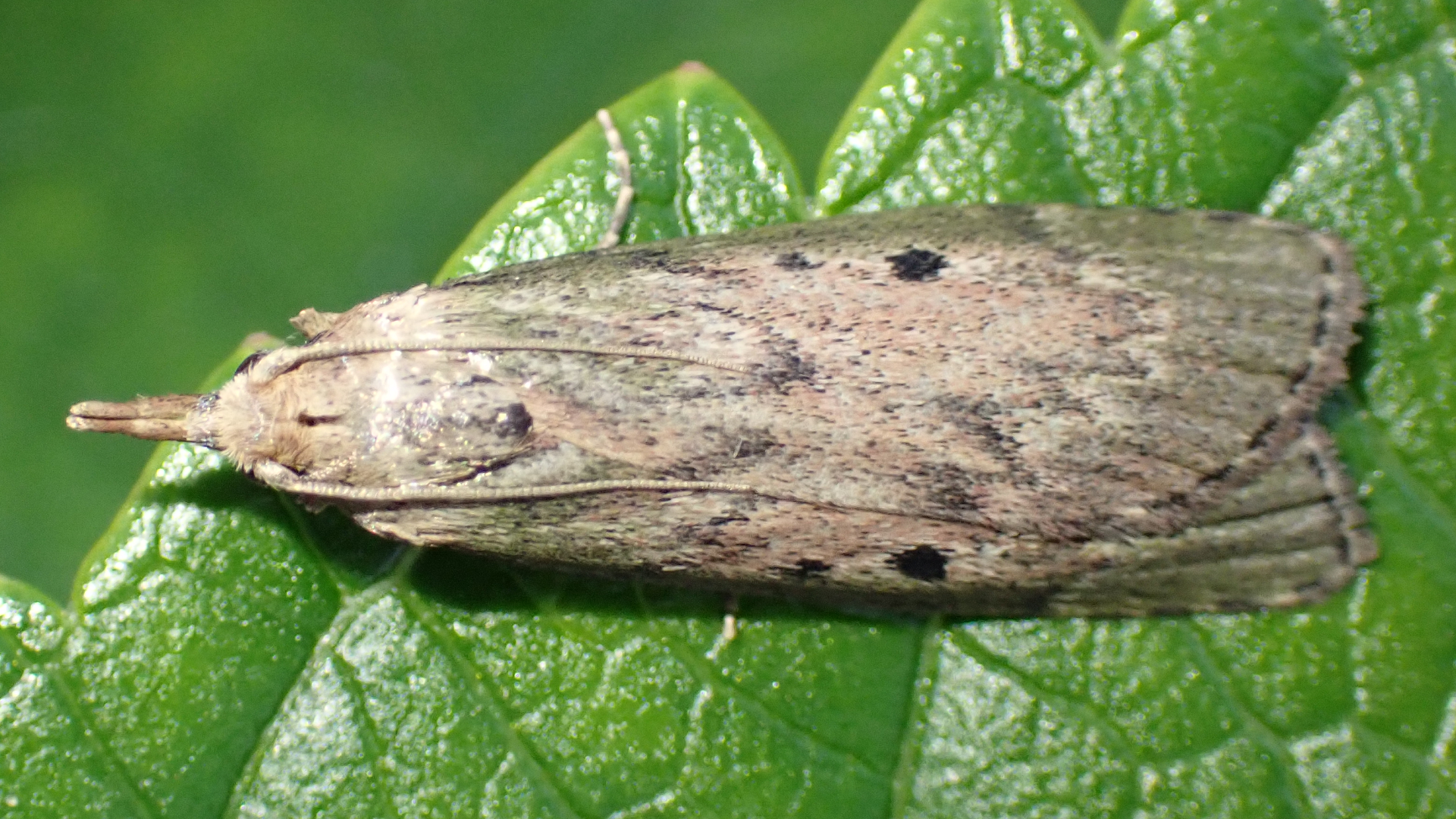
The Bee Moth is a fairly common species that flies from May to August. Males are more brightly coloured and patterned than the females. The larvae feed on comb inside bee and wasp nests.
#
Pine Bark Moth
Cydia coniferana
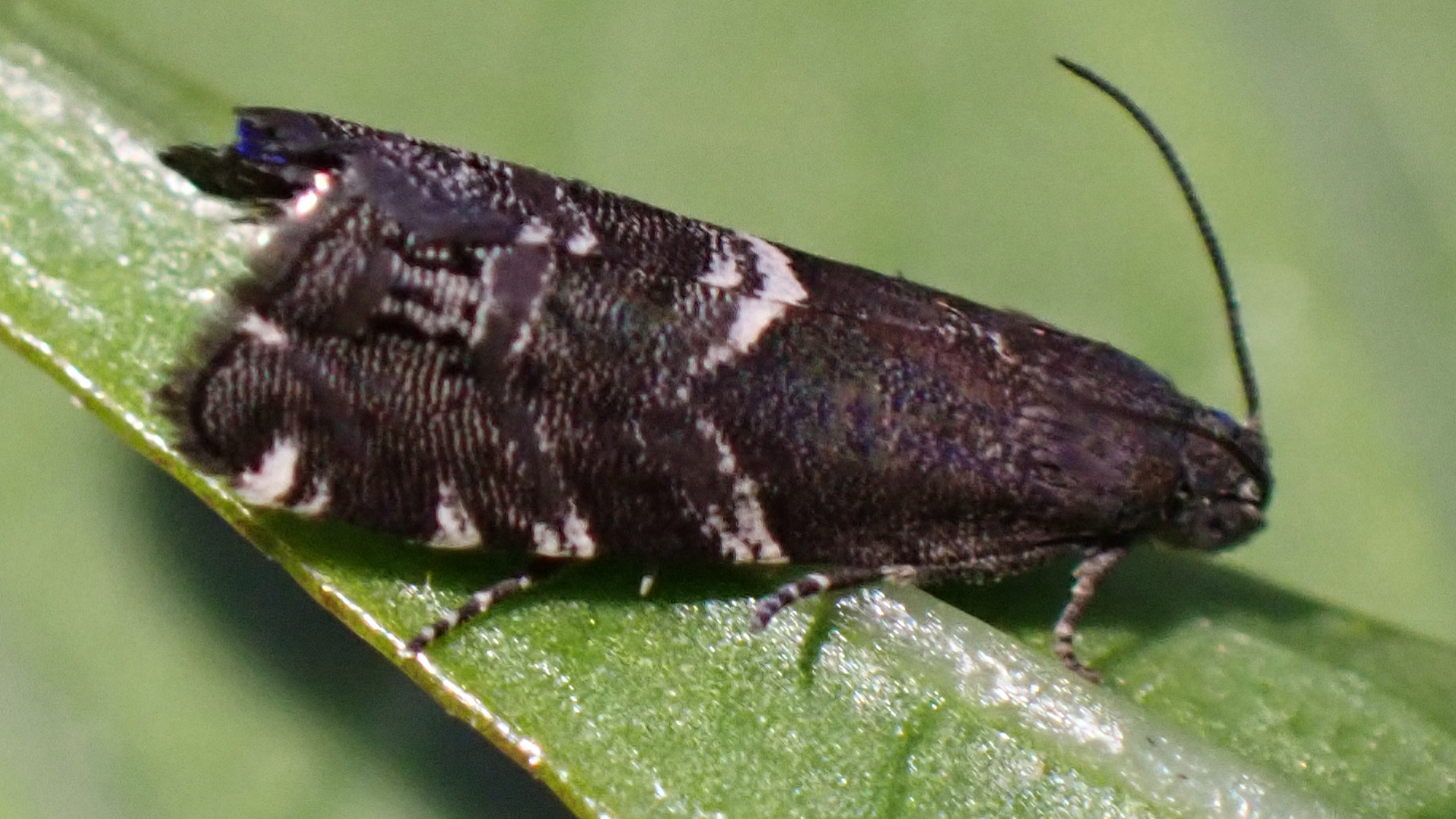
This species is listed as nationally scarce and there are not many records in Essex. It flies around conifers during afternoon sunshine and at dusk from May until August. The larvae live in a silk-lined tunnel under pine bark. Previously known as the 'Pine-bark Piercer'.
#
Sulphur Bark Moth 28.019
Esperia sulphurella
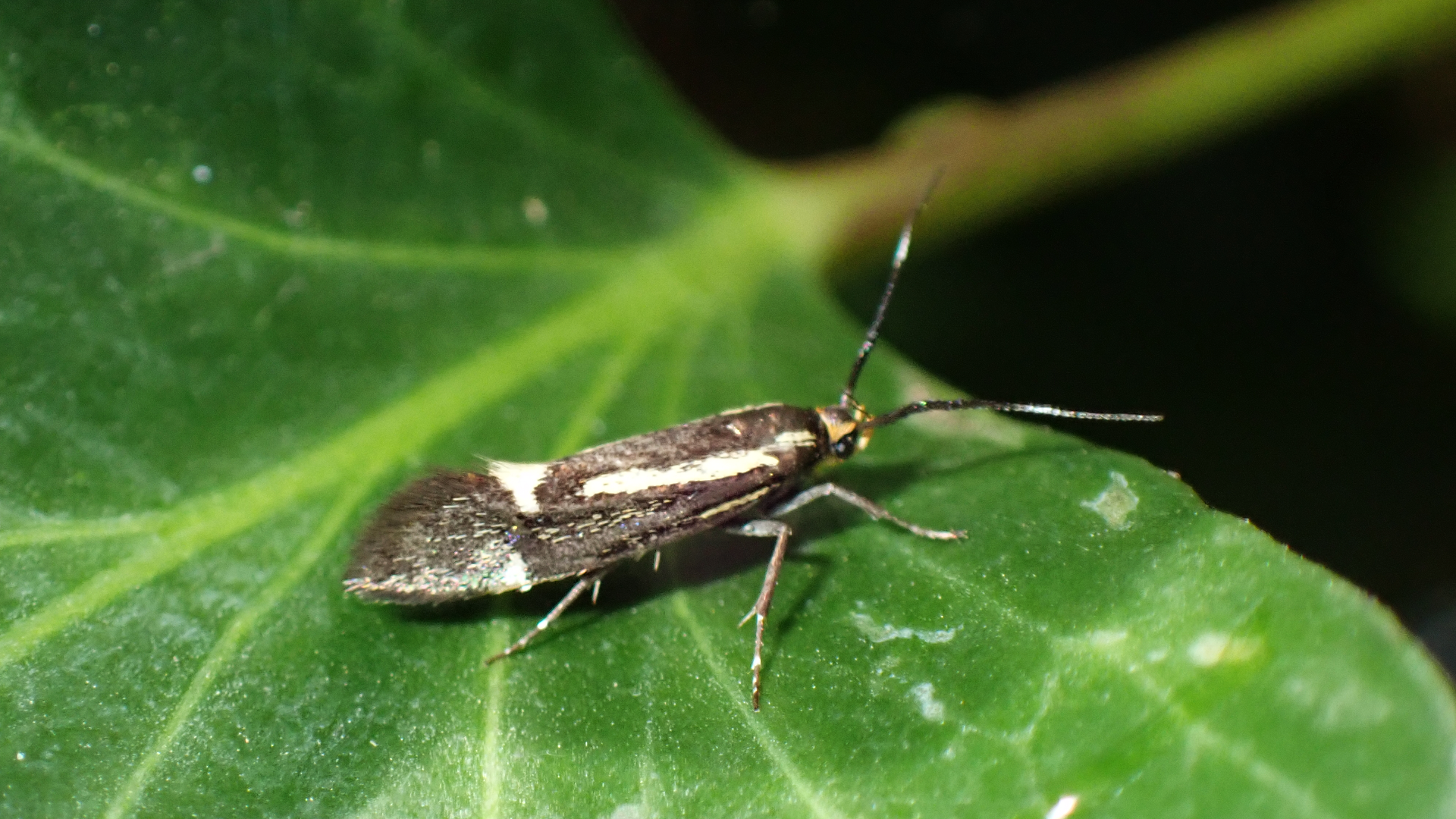
Brown moth seen flying in daytime from April to June. It has pale-yellow markings and whitish marks on the antennae. This species has recently undergone a name change and was previously known as the Sulphur Tubic. It feeds on dead wood.
#
Garden Mompha 40.008
Mompha subbistrigella
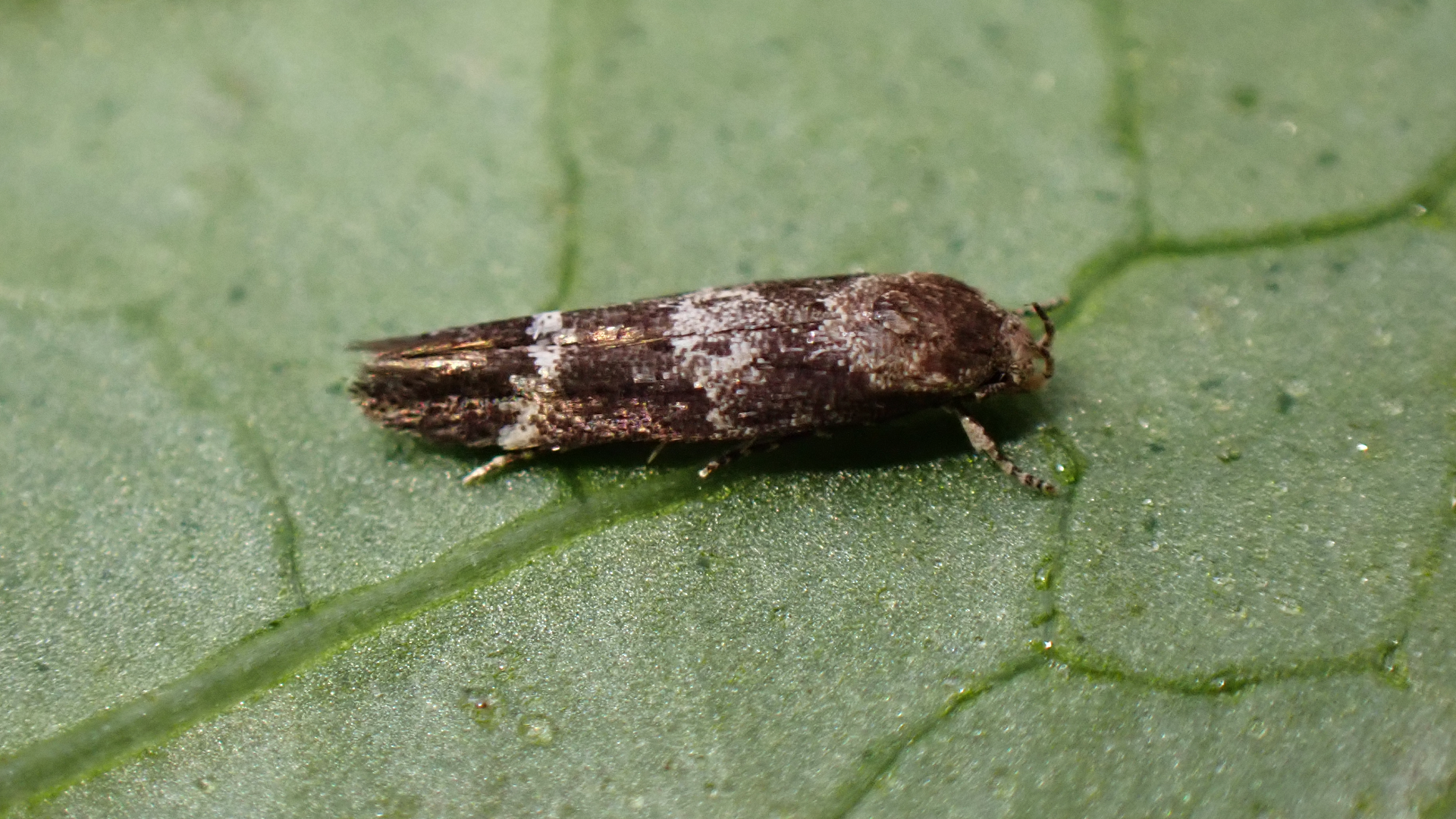
Common micro-moth that can be found most of the year. It has a preference for damp locations and overwintering in garden sheds. Its larvae feed within the seedpods of various willowherbs.
#
Light Brown Apple Moth
Epiphyas postvittana
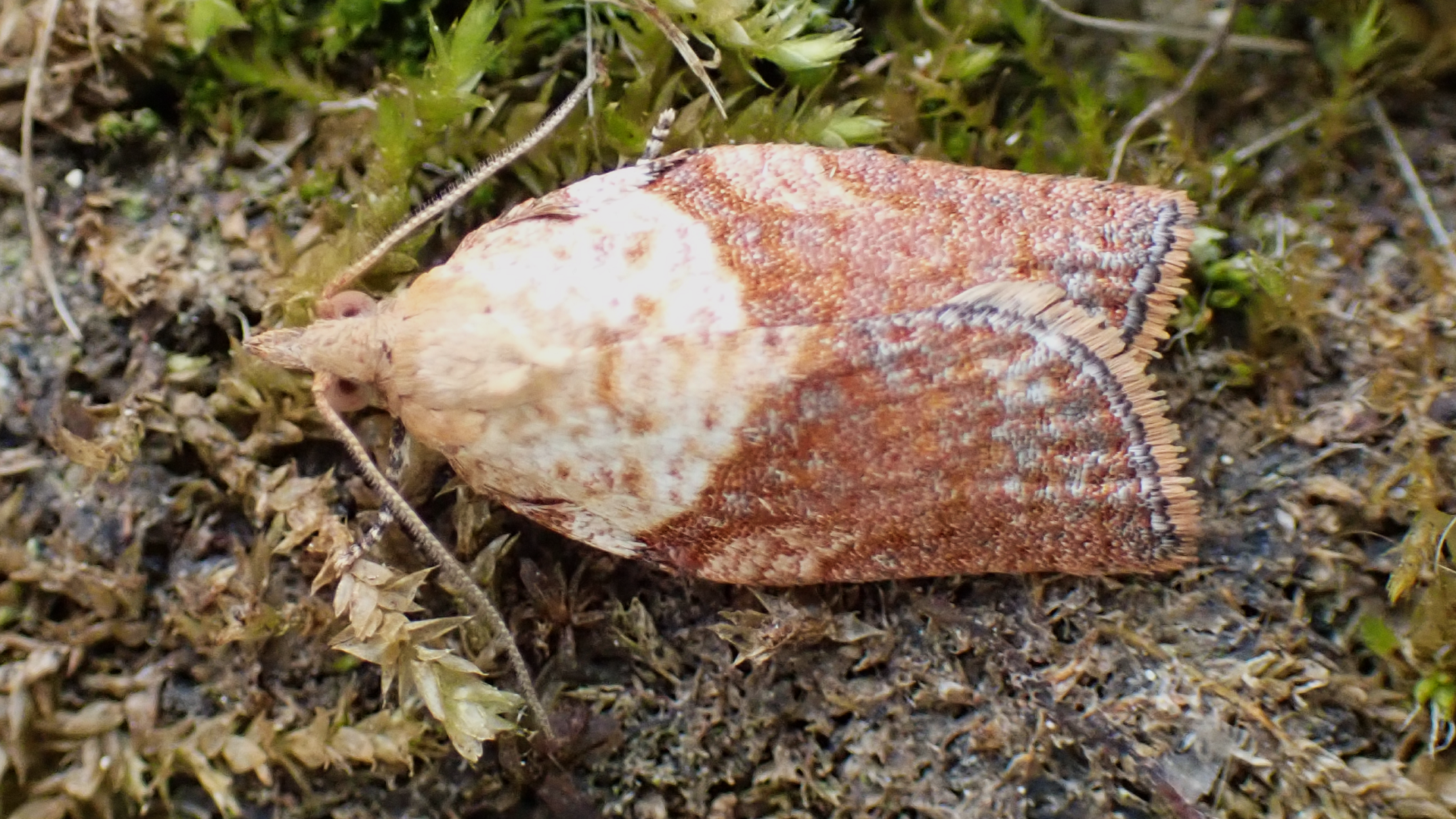
This species was accidentally introduced into Britain from Australia during the 1930s. It is now very common in this country. Females are larger than males of this very variable species. Males are normally distinguished by an abrupt colour division on the forewing.
#
Common Marbled Straw
Aethes smeathmanniana
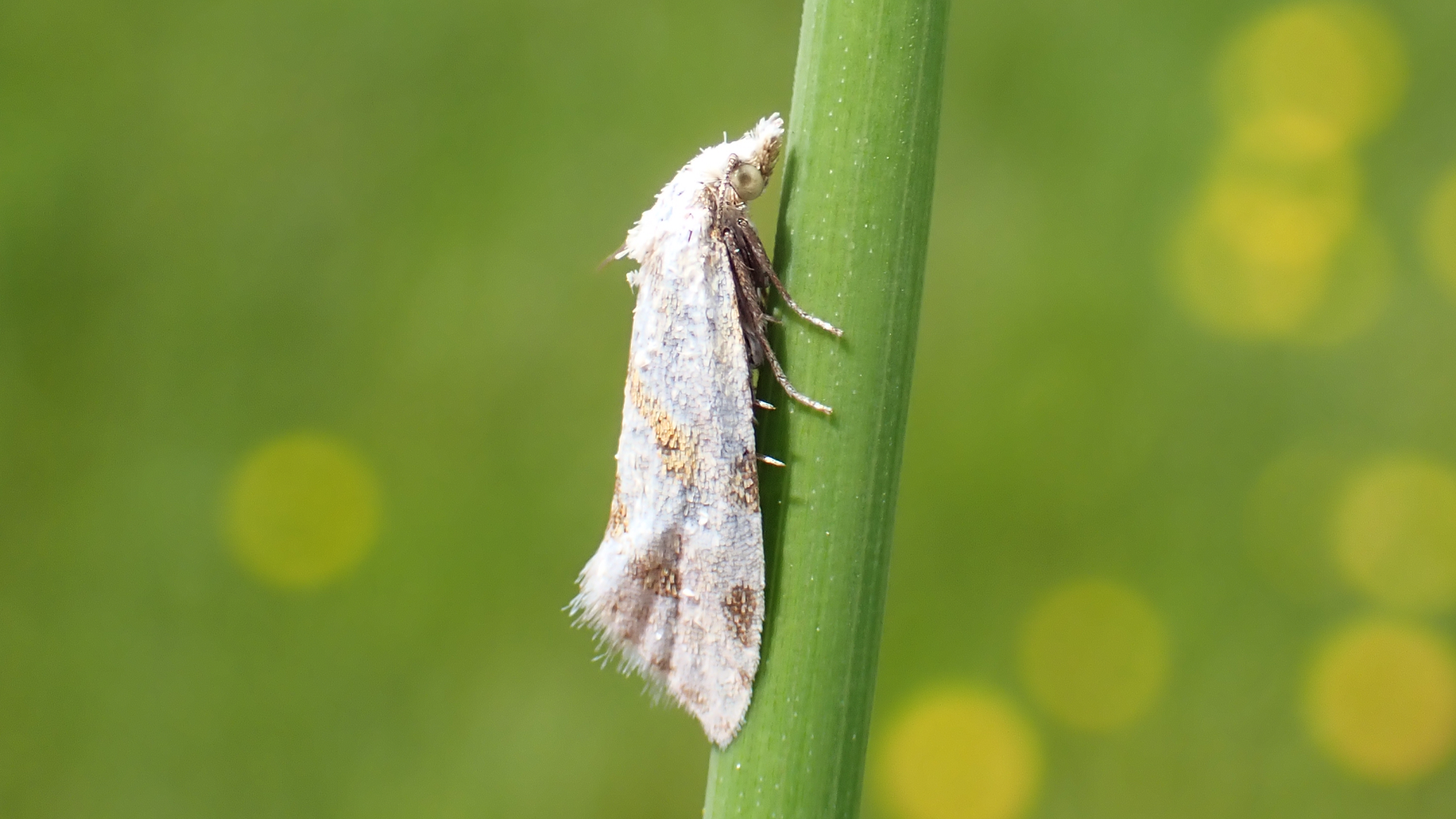
Found on rough grassland and scrub from May until August. Yarrow and Knapweed are its foodplants. Formerly known as the Yarrow Conch.
#
Brown Oak Tortrix
Archips crataegana
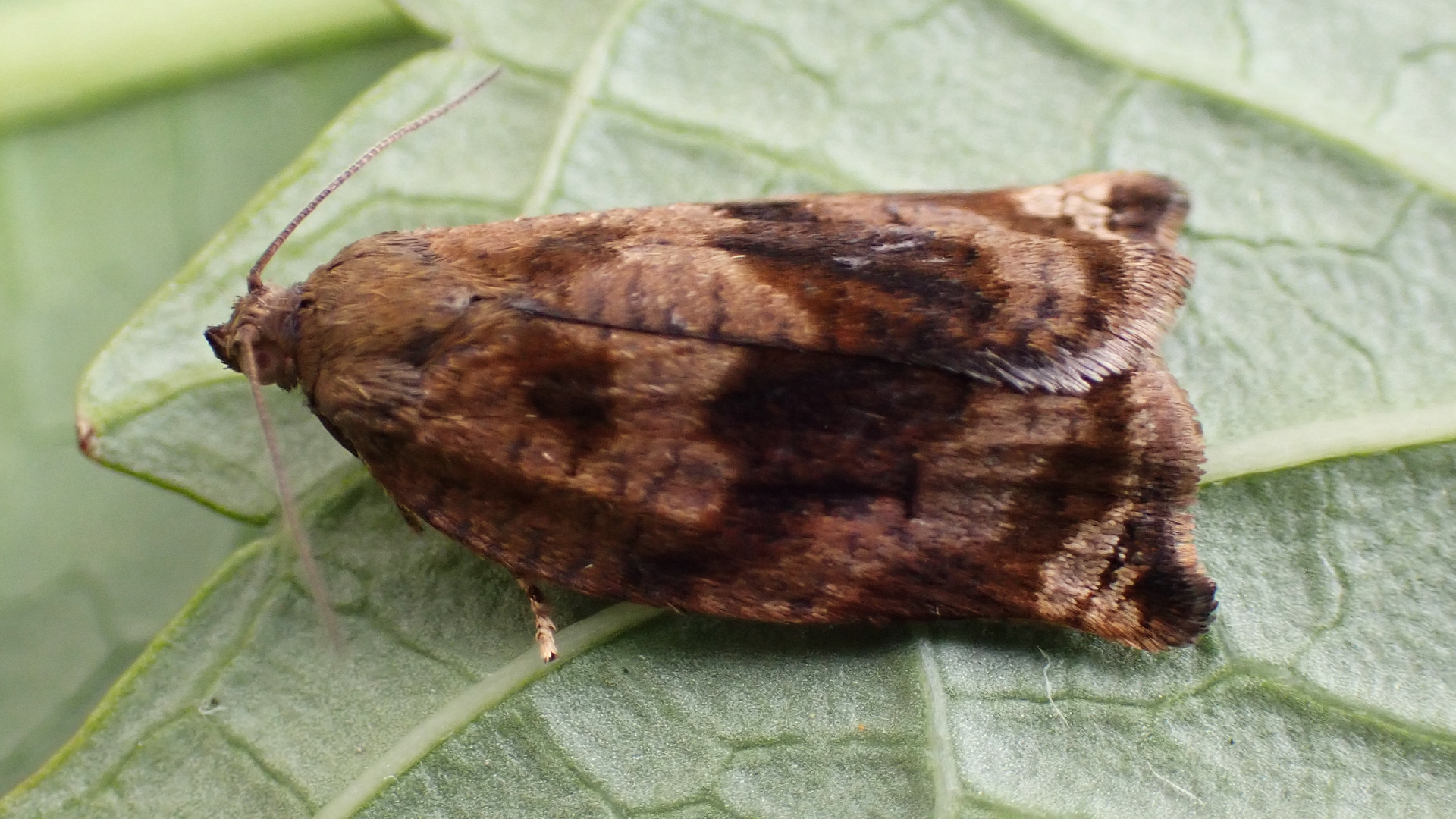
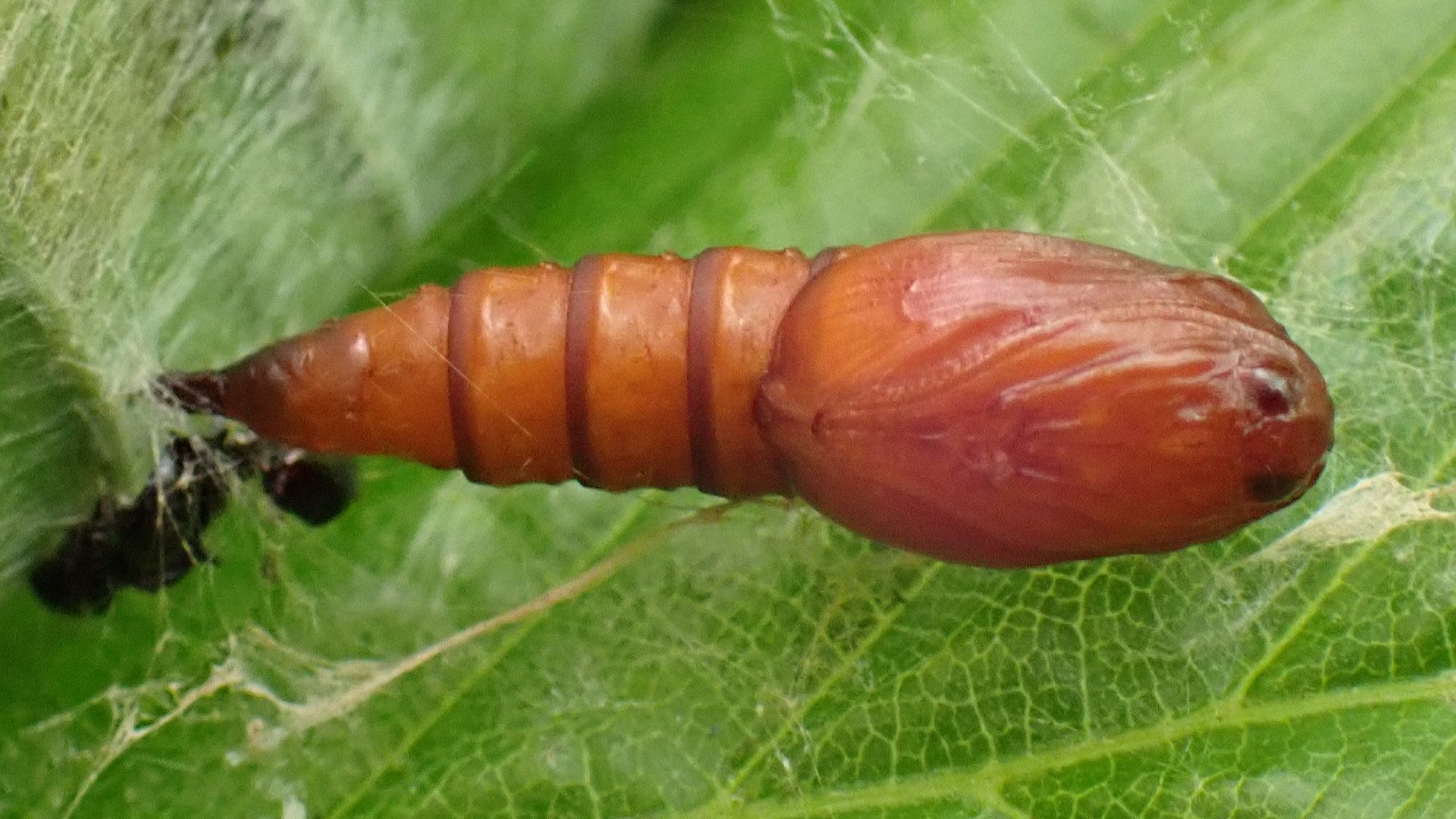
The caterpillar of this species feeds on a range of deciduous trees from inside a tightly-rolled leaf. Its pupa is attached to a leaf by webbing from which an adult will emerge. This moth is widespread across Britain but is not very common. It frequents mainly wooded habitats and flies from June to August. Adult females are larger with a darker ground colour than males and have a much more protruding apex on the forewing.
#
White Plume
Pterophorus pentadactyla
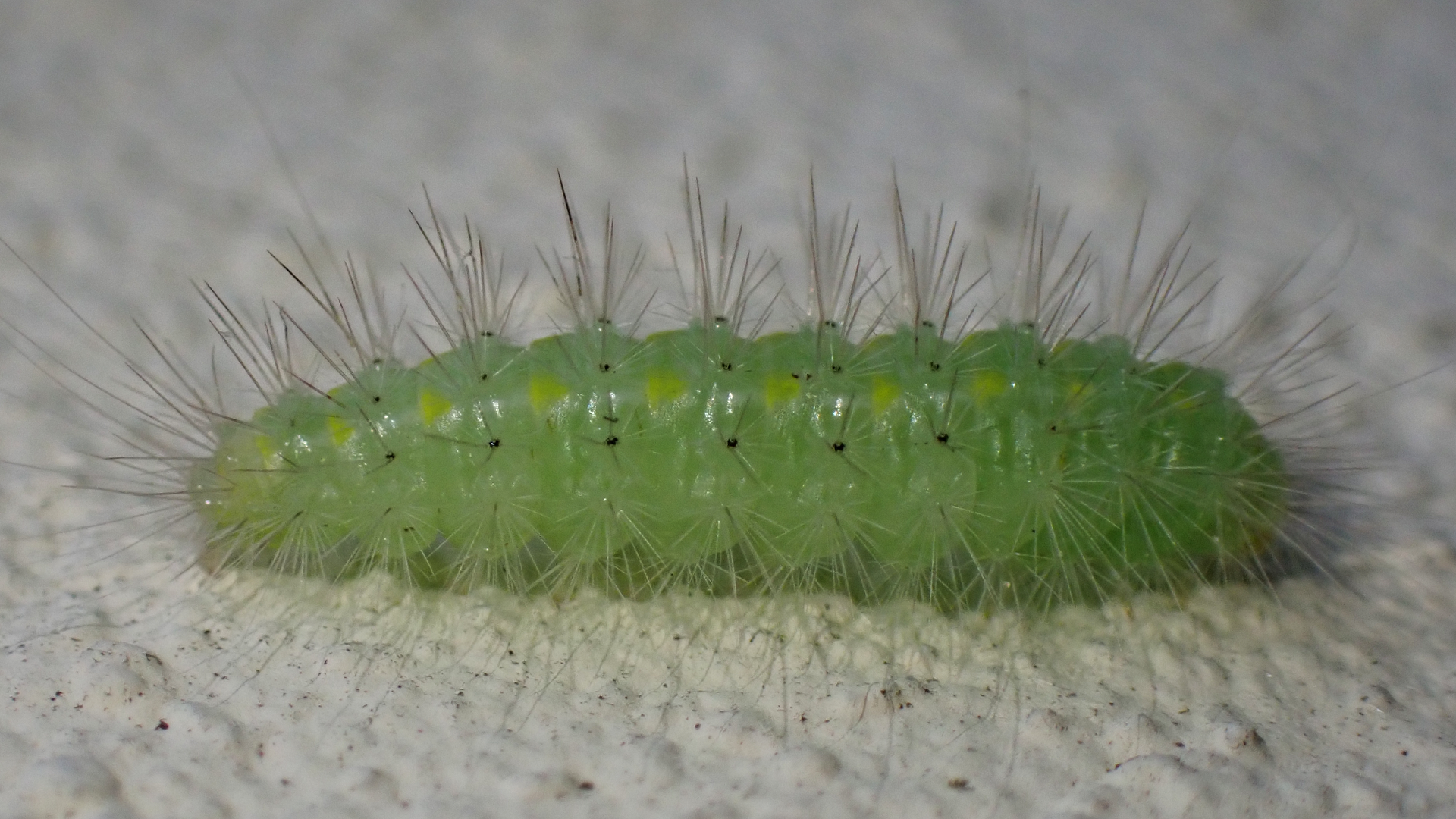
White plume moth larvae feed on bindweed.
#
Water-droplet Brown
Depressaria daucella
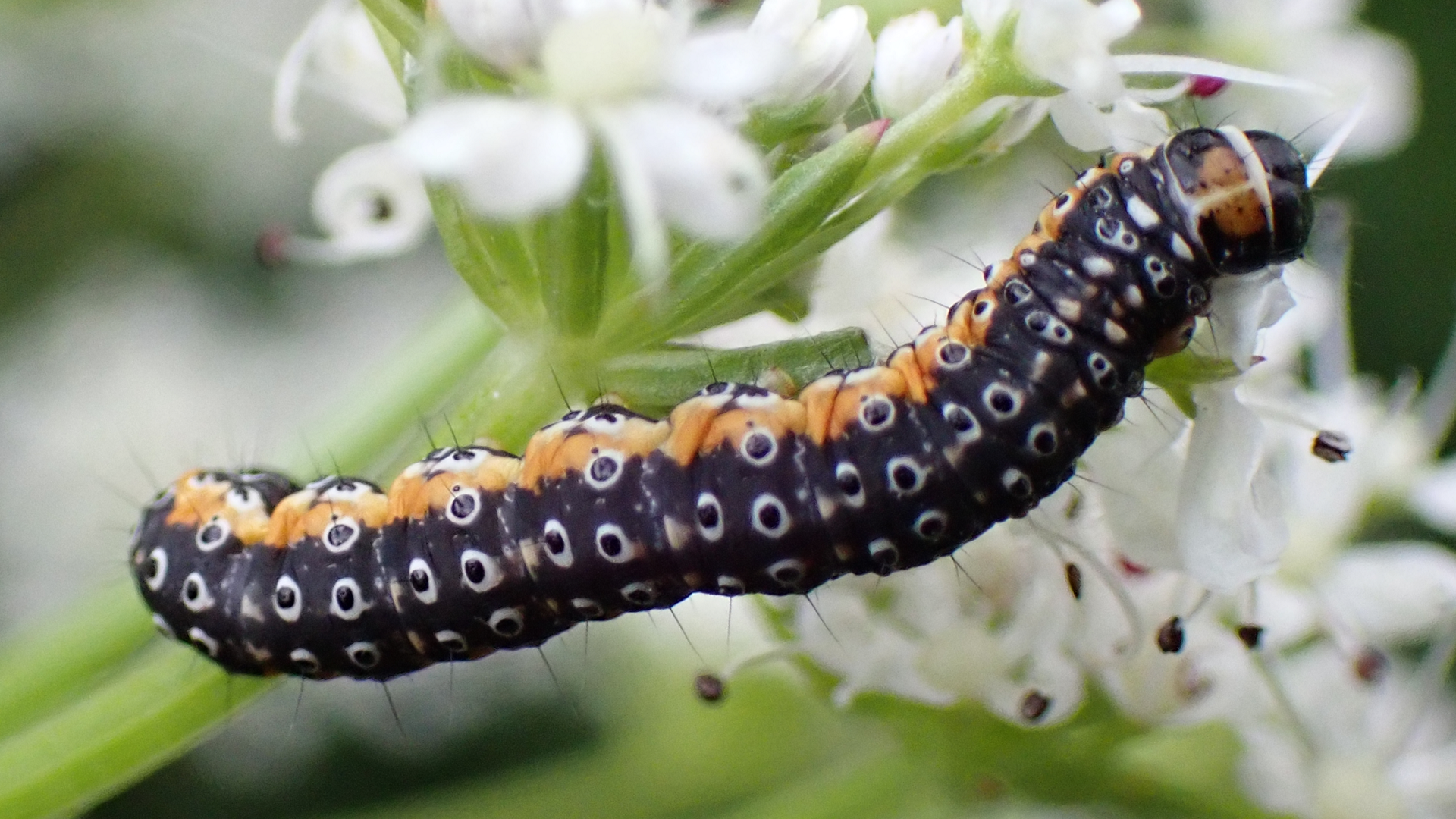
The Water-dropwort brown is a rather plain moth. Its much more attractive larvae feed on flowers and seeds of Hemlock water-dropwort, a highly poisonous plant (to humans) that grows by Hainault Lake. The larvae stitch florets of the umbellifer together with tough silken threads to form a hidden tunnel. They burrow into the stem usually close to a joint and then pop out throughout the day during sunshine. This species was formerly known as the Dingy flat-body.
#
Brown Oak Tortrix
Archips crataegana
The caterpillar of this species feeds on a range of deciduous trees from inside a tightly-rolled leaf. Its pupa is attached to a leaf by webbing from which an adult will emerge. This moth is widespread across Britain but is not very common. It frequents mainly wooded habitats and flies from June to August. Adult females are larger with a darker ground colour than males and have a much more protruding apex on the forewing.
#
Muntjac Deer
Skull
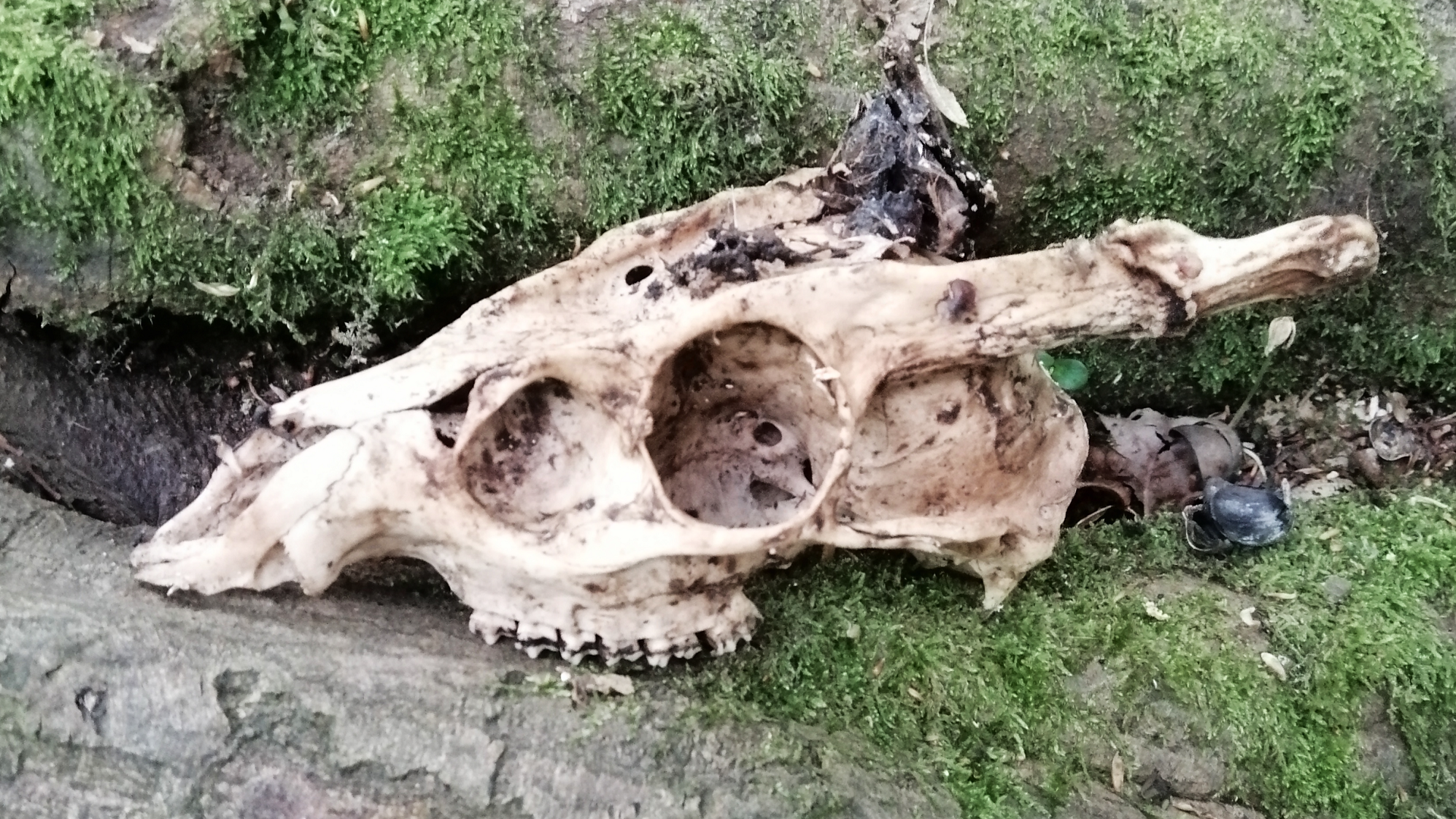
This skull was discovered in woodland near Wedrell's Plain. Muntjac deer skulls can be identified by their large suborbital pits, the bones that sit beneath the eye sockets. Tusks sticking out indicate a male.
#
Giant Cranefly
Tipula maxima
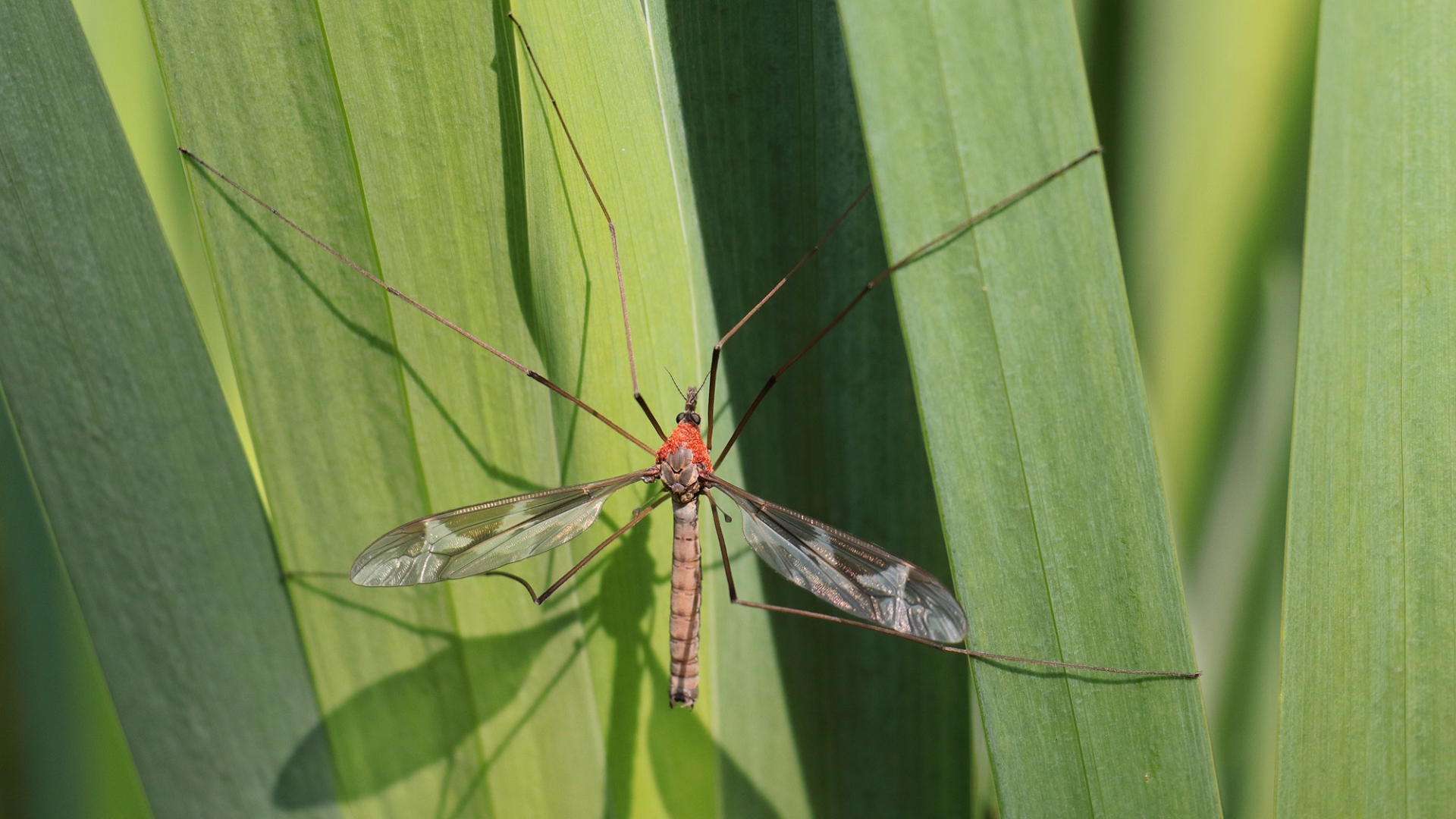
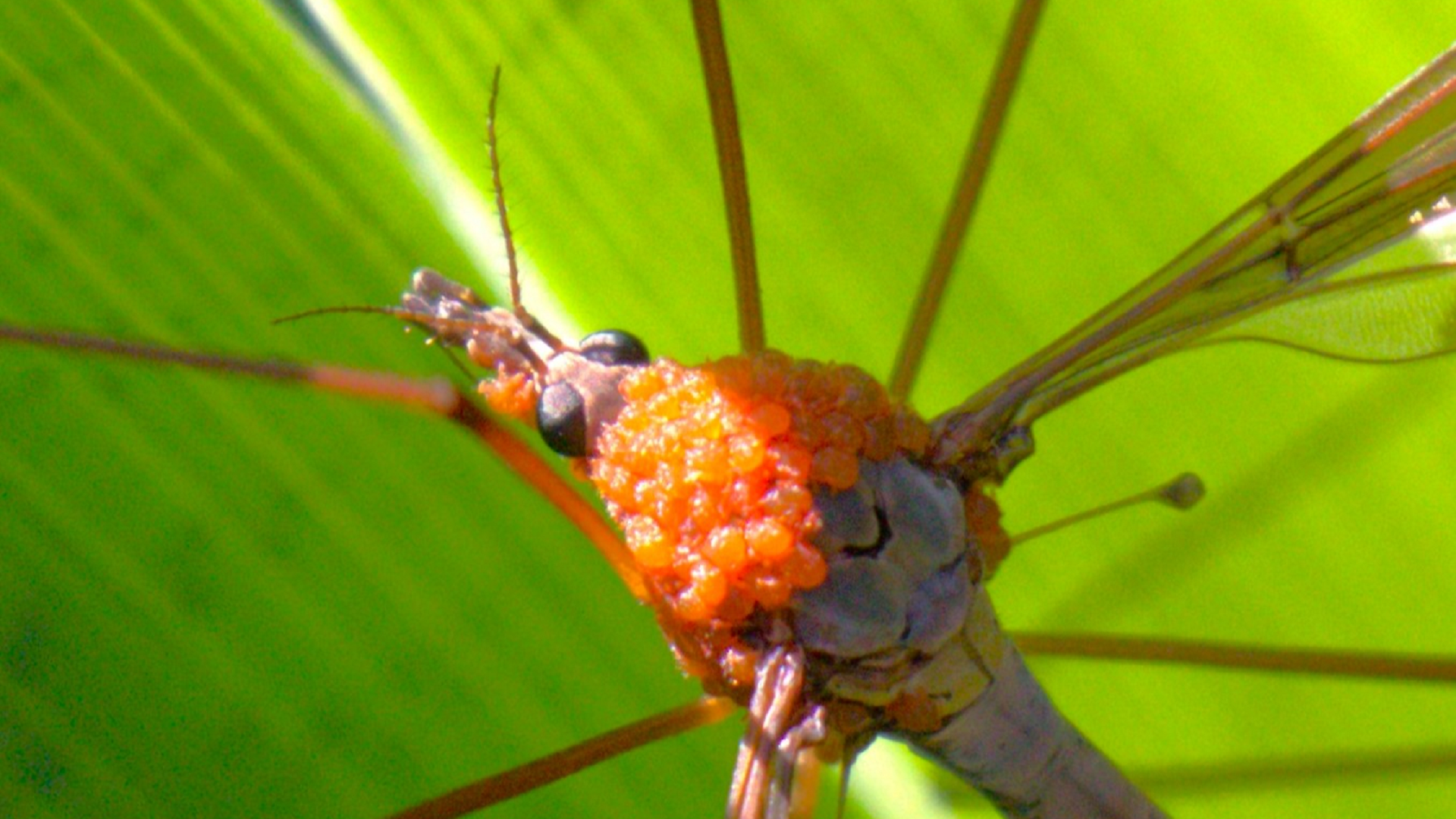
A large Crane fly with patterned wings and long legs. It has a preference for damp and wooded locations. Females lay eggs in mossy edges of ditches, streams and ponds. The larvae live in water just below the water surface and their development takes place in submerged leaf litter. This species is usually seen from April to August. Some mites have a symbiotic relationship which allows them to hitch rides on Crane-flies, others are parasitic and feed on the Crane-fly's body fluid.
#
Mullein moth
Cucullia verbasci
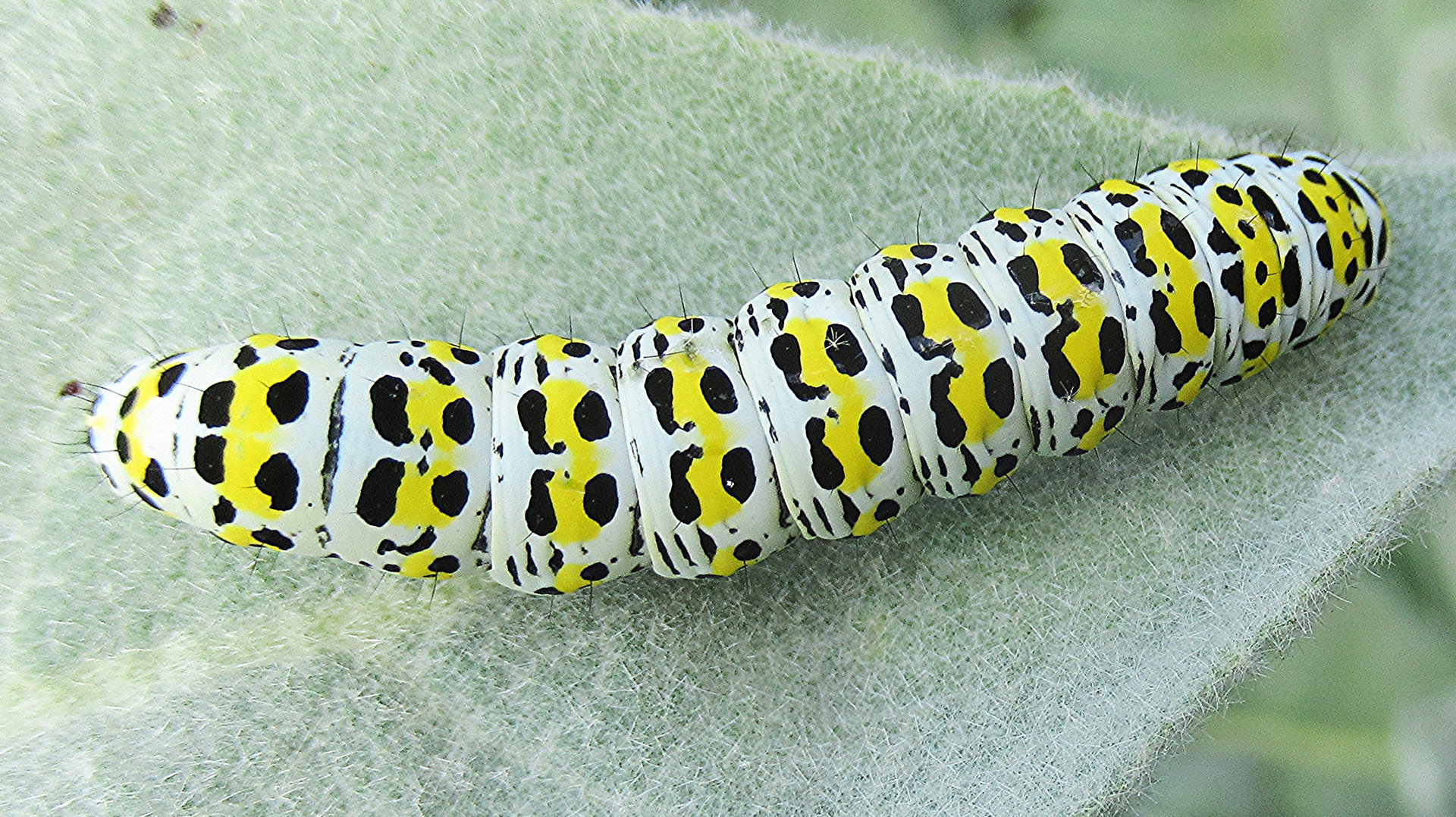
Mullein moth caterpillars feed on Aaron's Rod, Figwort and Buddleia from May to July. This specimen was found in a garden at Lambourne End.
#
Drinker Moth
Euthrix potatoria
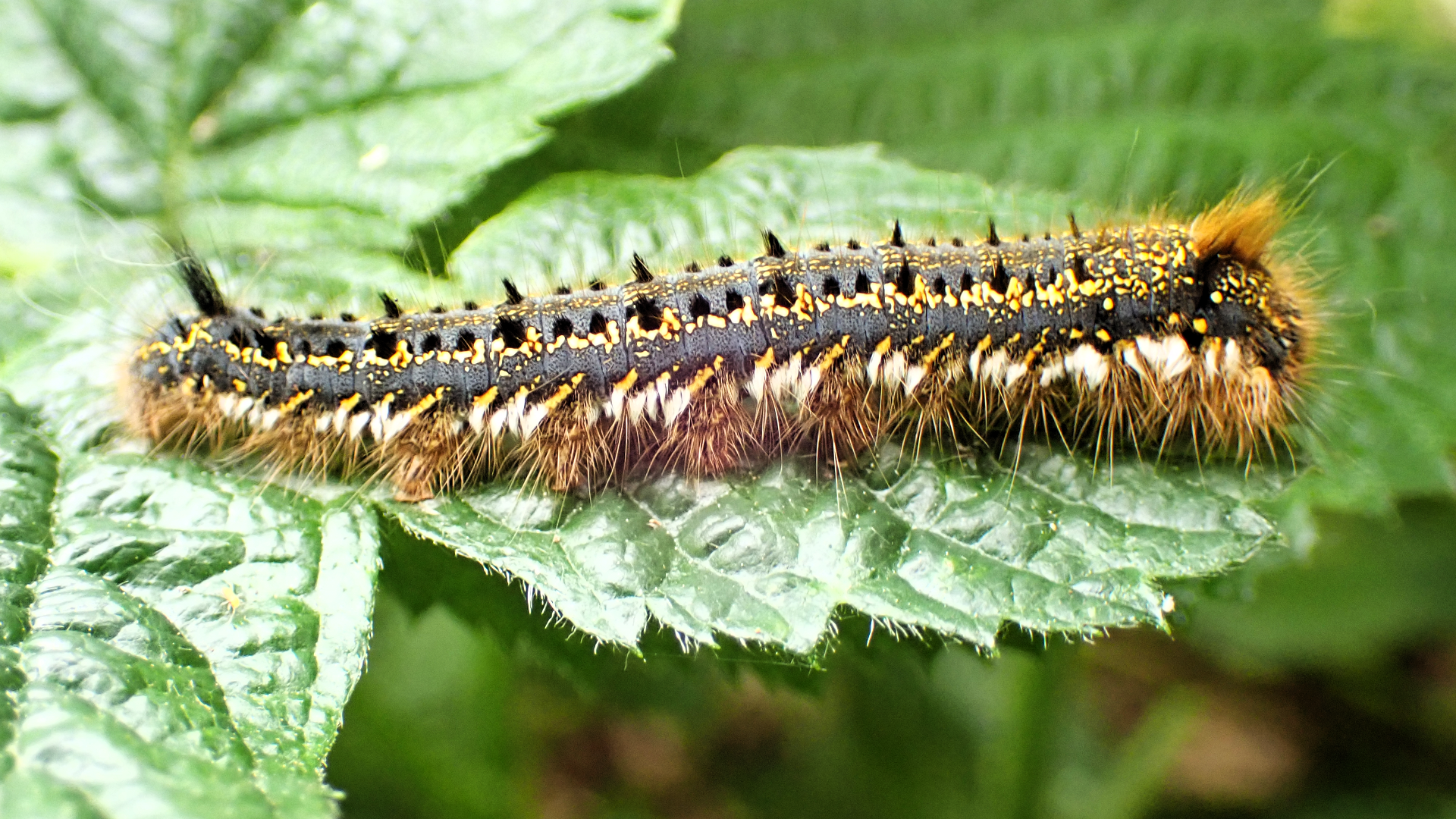
The large distinctive hairy caterpillars of the Drinker moth are seen during August and September before they hibernate. They resume feeding on coarse grasses and reeds from April until June.
#
Ramshorn Bagworm
Luffia lapidella
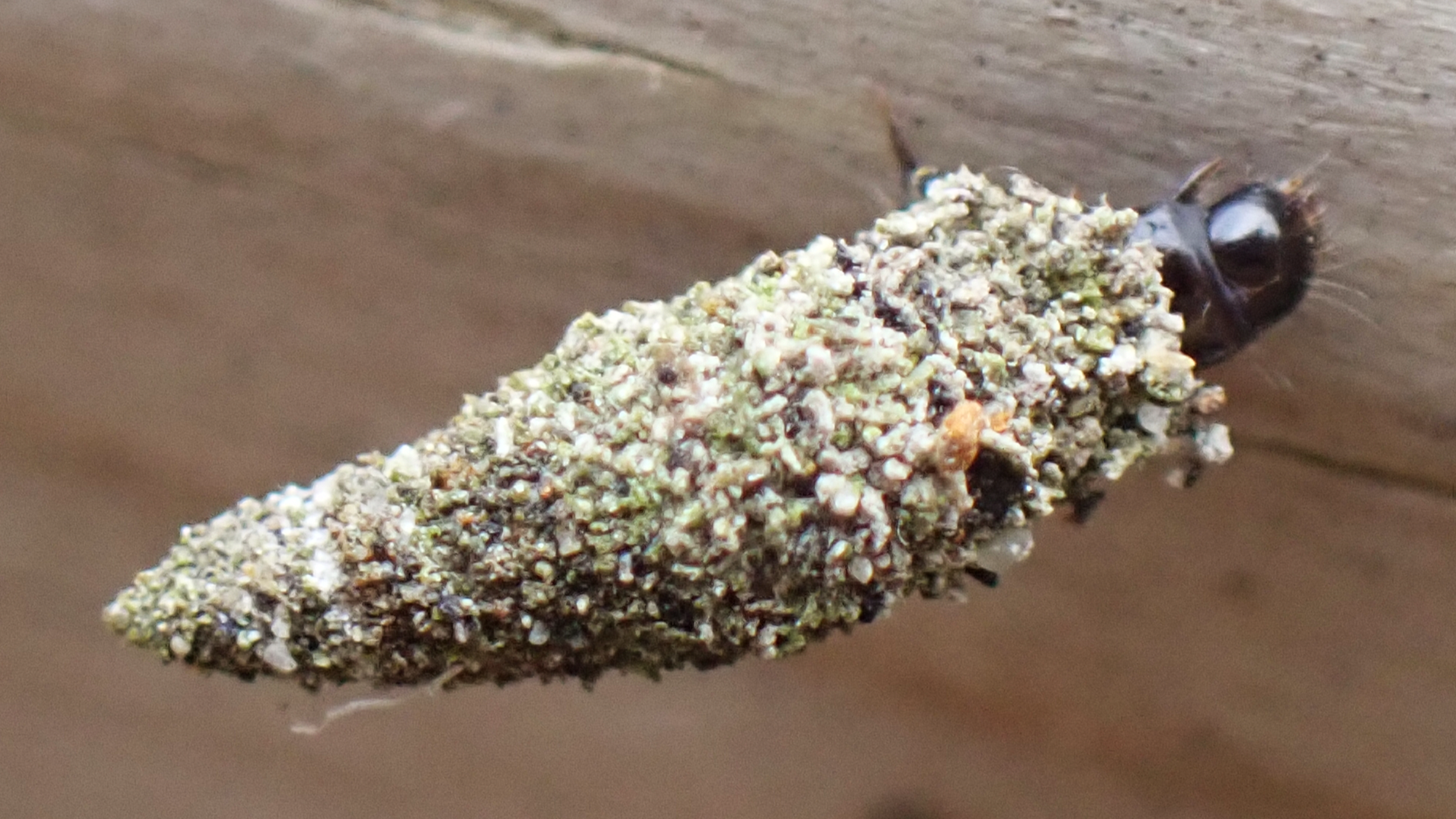
Larvae of the Ramshorn Bagworm moth construct cases from lichens in which they live. Only parthenogenetic (self-fertile) wingless females are known in this species.
#
Mare's-tail
Hippuris vulgaris
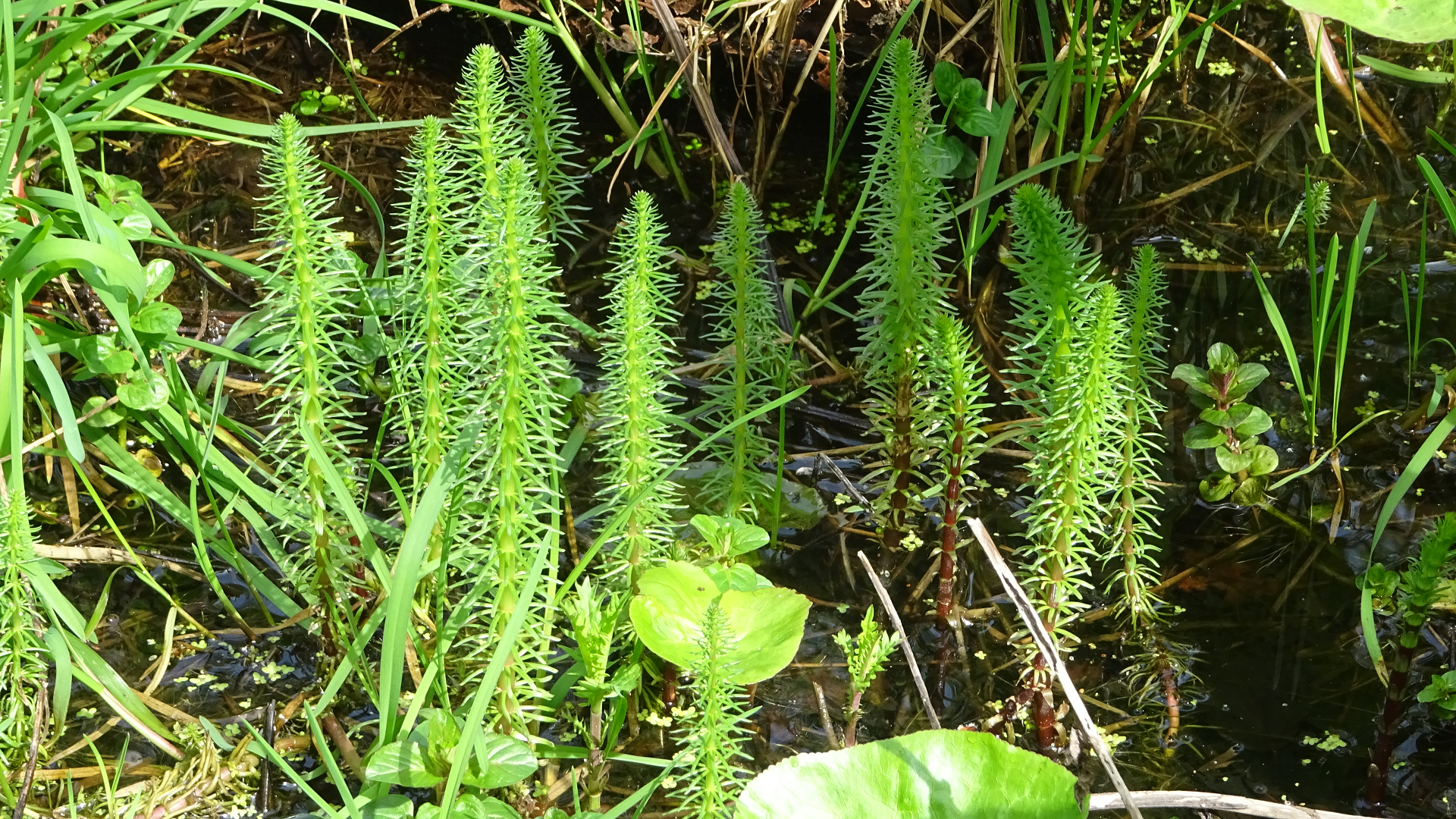
Mare's-tail Hippuris vulgaris is a mud loving flowering plant, not to be confused with Horsetails. Found in Sheepwater near Chigwell Common.
#
Three-cornered Leek
Allium triquetrum
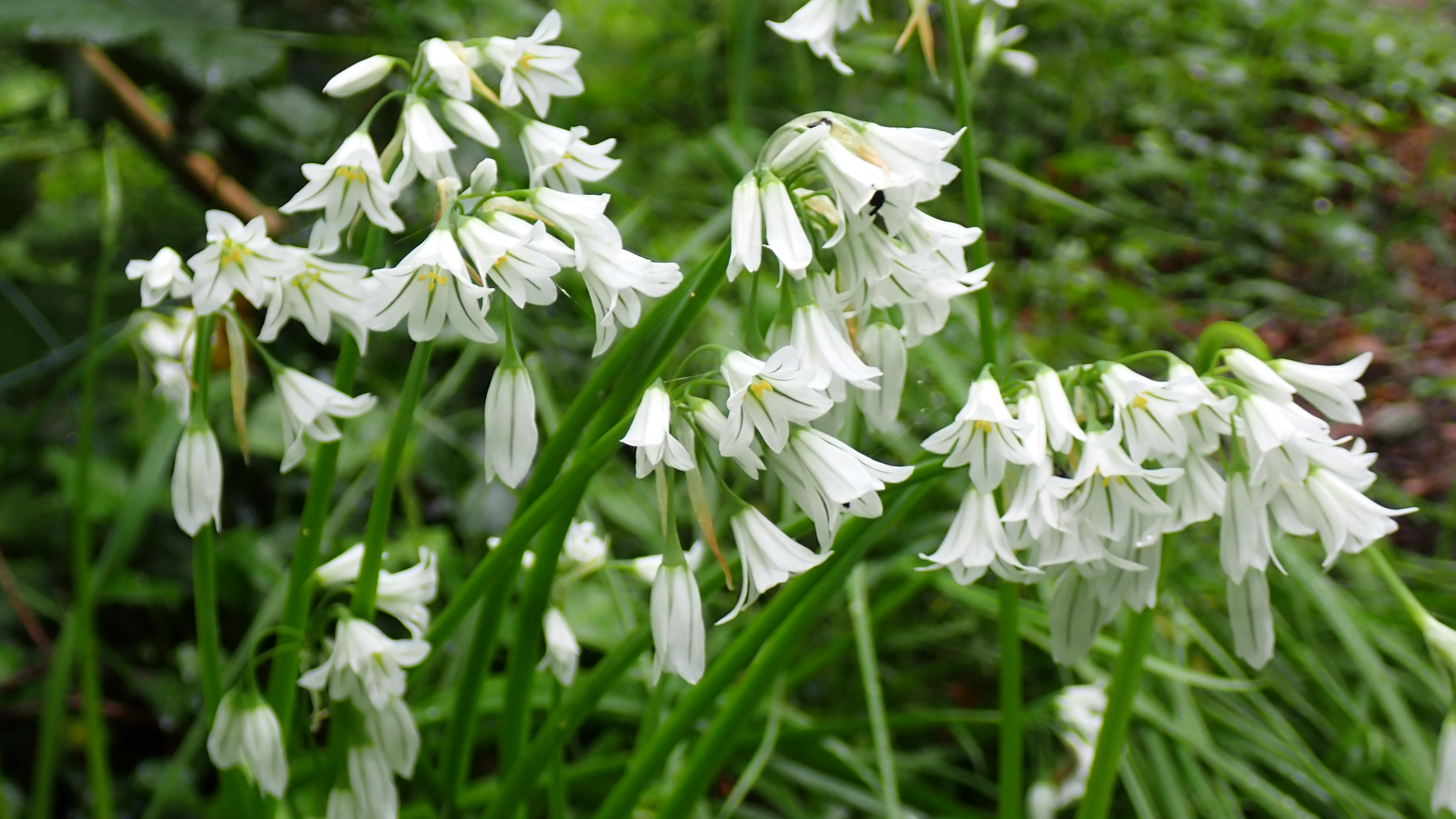
An invasive species originating from the Mediterranean in the 18th Century. Once established the plant forms dense clumps of growth. Pretty white flowers with green lines on the petals grow atop three-sided stems. It smells garlicky. Also known as Three-cornered Garlic.
#
Bronze Shieldbug
Troilus luridus
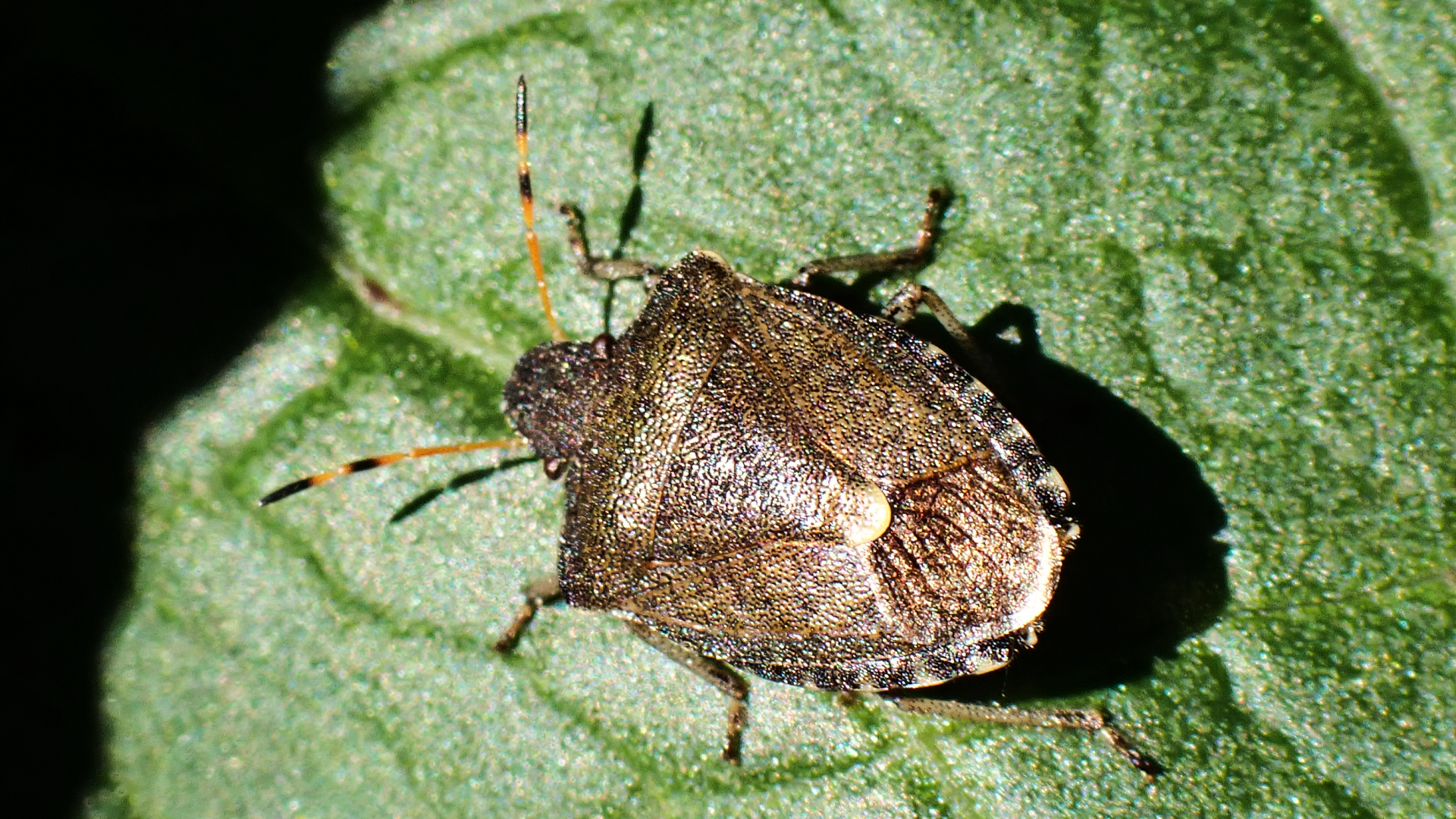
A predatory woodland insect measuring 10-12mm in length. The penultimate antennal segment is orange banded and the legs are brown. Its nymphs feed on insects, especially caterpillars, and also plants.
#
Birch Shieldbug
Elasmostethus interstinctus
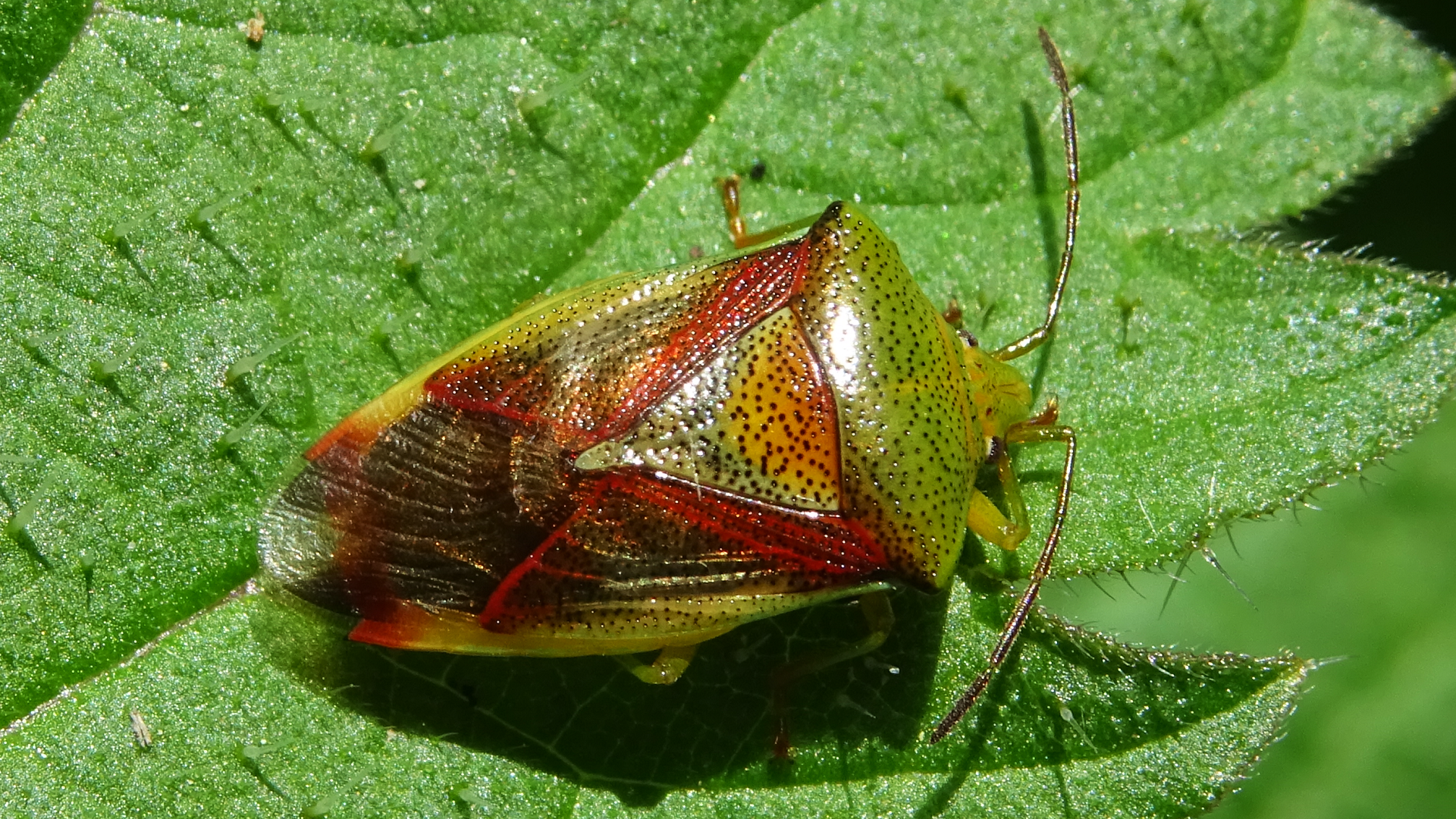
This species (8-11mm) is found in birch woodland. It is smaller than the Hawthorn Shieldbug and the lateral extensions of the pronotum are not marked with red. Adults overwinter and emerge in spring to mate. Birch is the main larval foodplant, but sometimes hazel and aspen are used as food sources instead. The new generation is complete by August.
#
Woundwort Shieldbug
Eysarcoris venustissimus
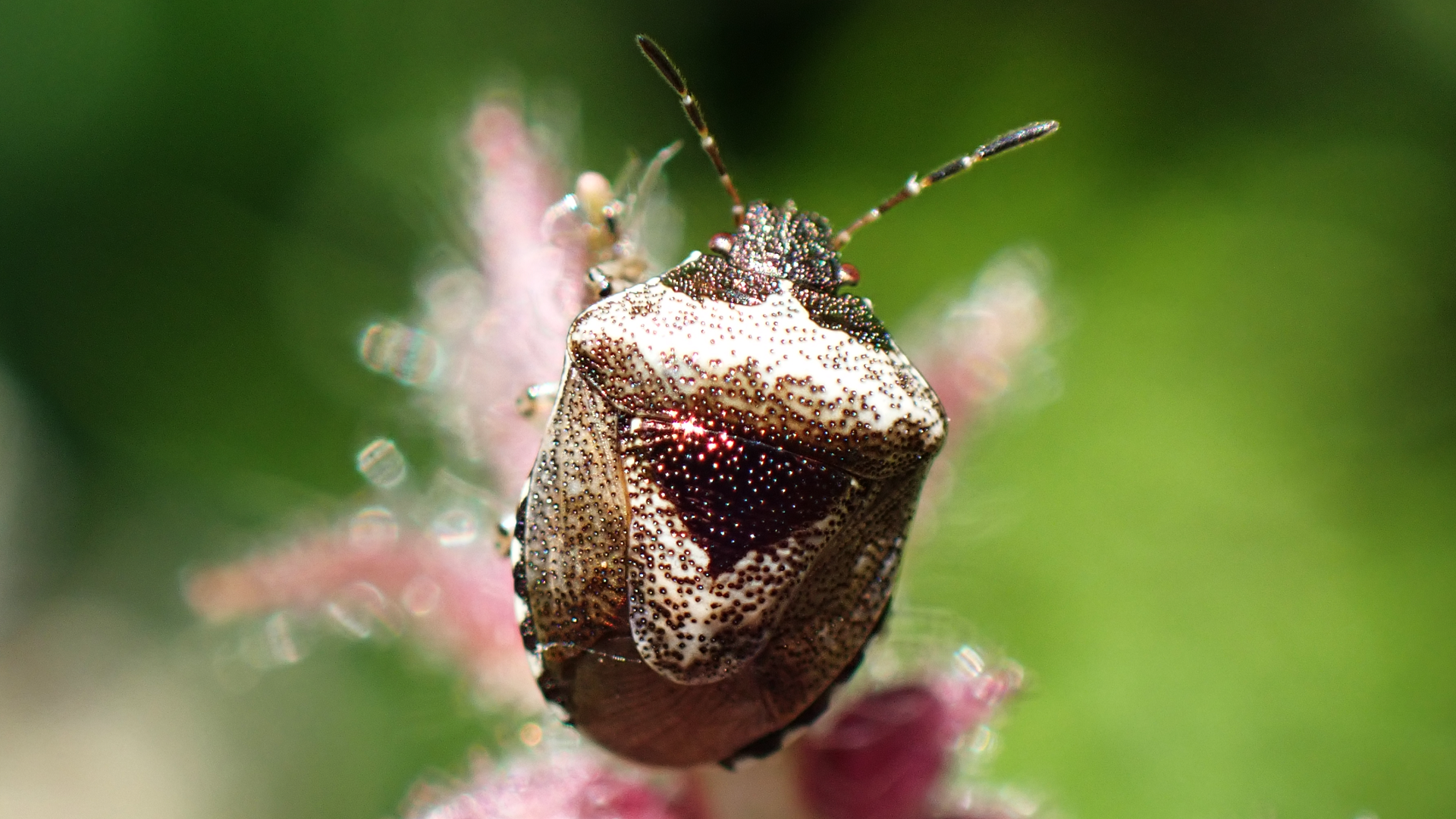
Tiny greyish-bronze species (5-7mm) found on hedge woundwort and occasionally black horehound and nettles. The head, front of the pronotum and scutellum are copper coloured, while the connexivum is decorated with black and white.
#
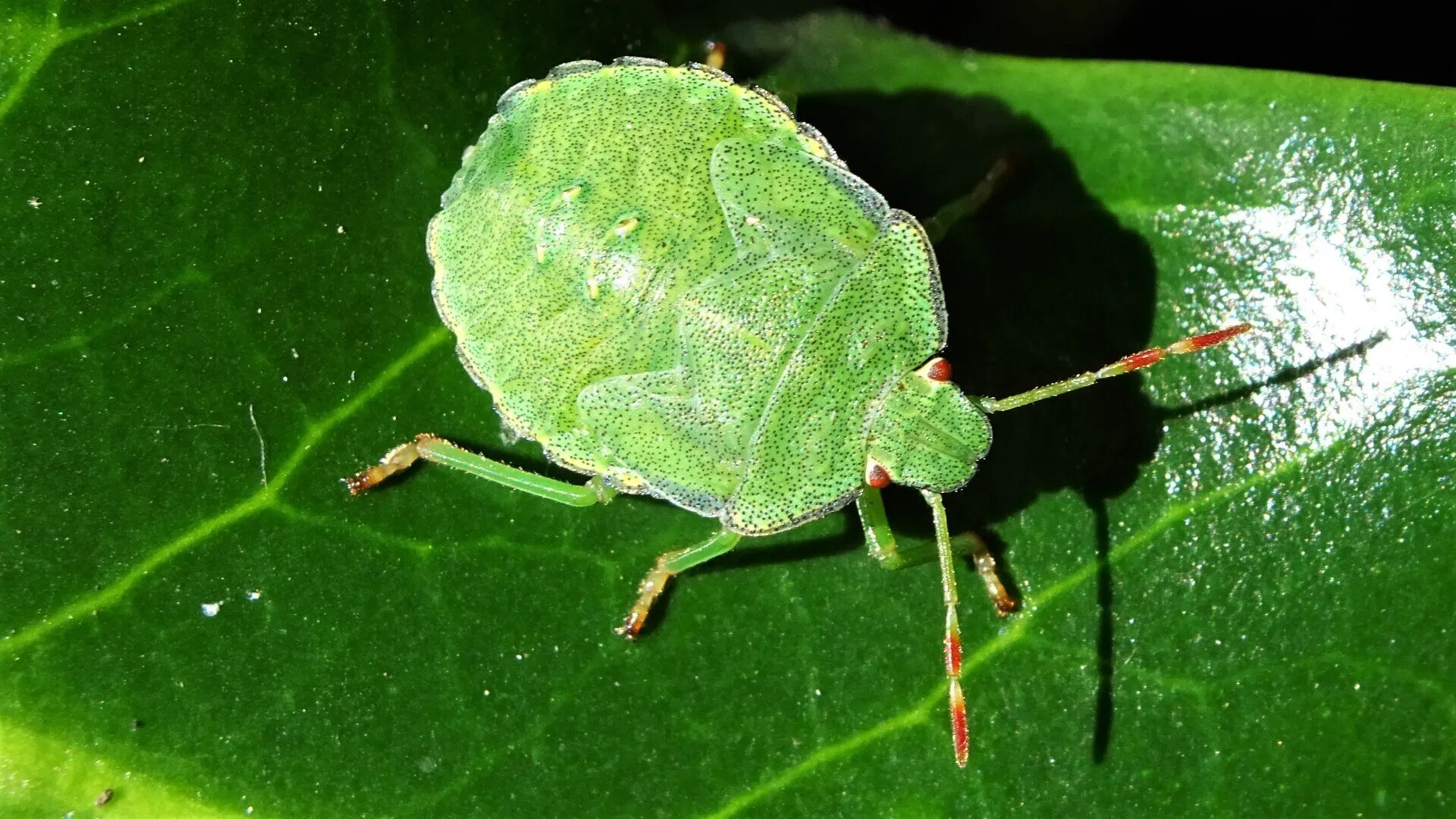
Common Green Shieldbug
Palomena prasina
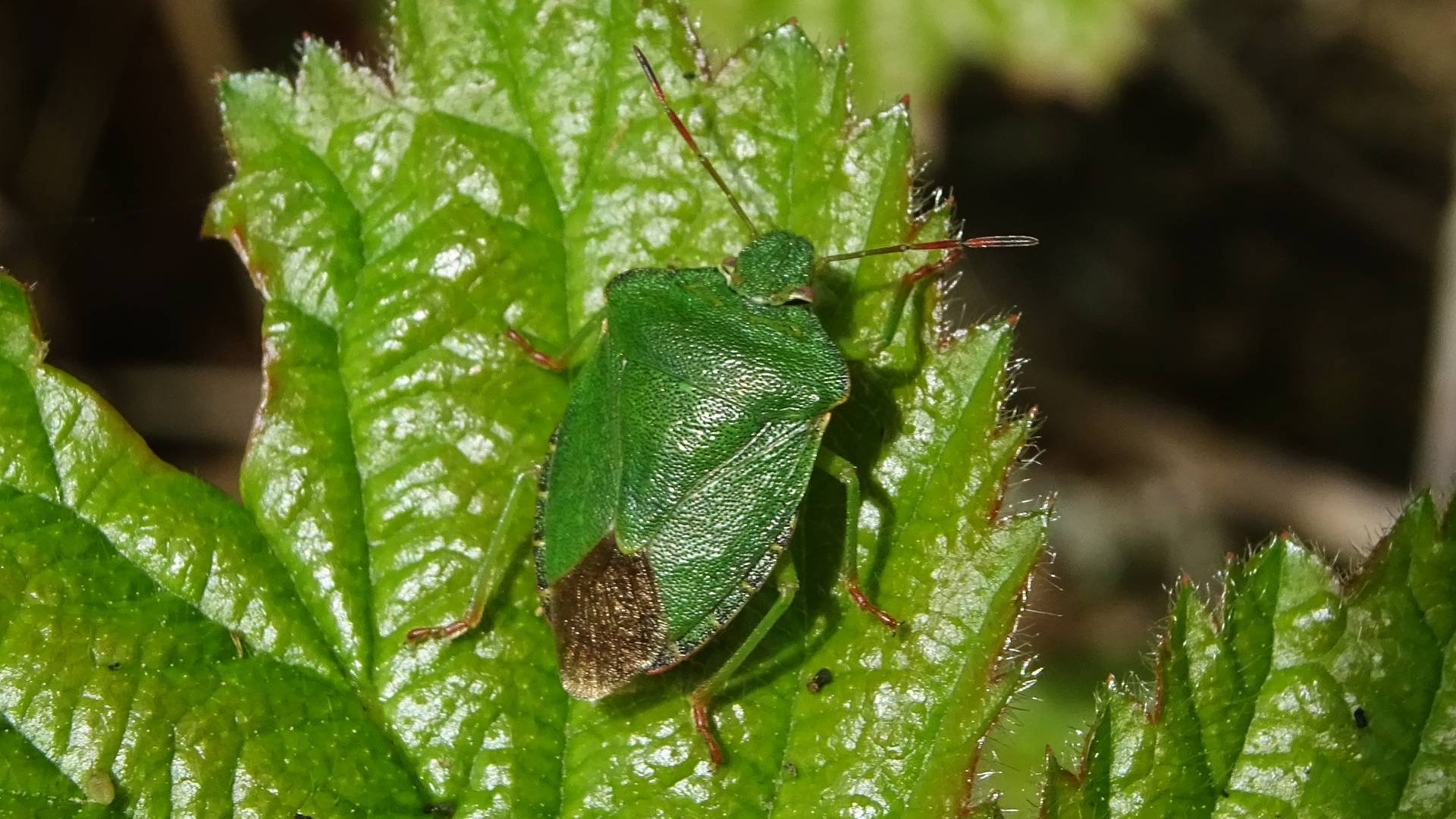
During spring and summer adults (12-13mm) are bright green, finely punctured with dark spots. The antennae has reddish segments and there is a dark wing membrane. As winter approaches this species turns darker. Instars are light-green when they hatch from their eggs. They darken and within an hour or two there is a pattern on the back.
#
Hairy Shieldbug
Dolycoris baccarum
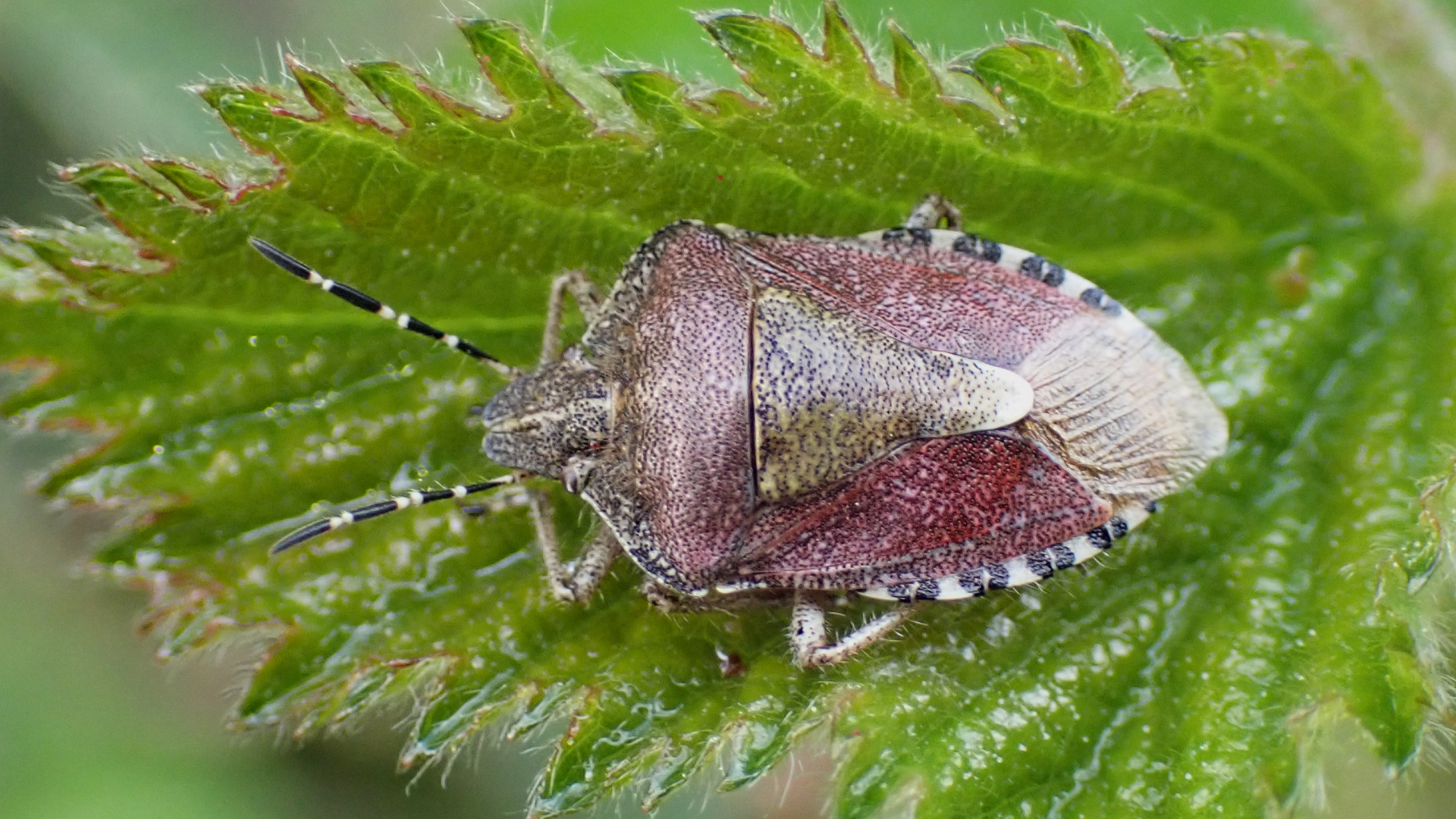
The Hairy Shieldbug is covered in long hairs. It is found throughout the year along woodland rides and on hedgerows. This species overwinters as an adult and emerges during spring to mate. Larval foodplants include Blackthorn and other members of the Roasaceae family. This species is also known as the Sloe Bug.
#
Birch Catkin Bug
Kleidocerys resedae
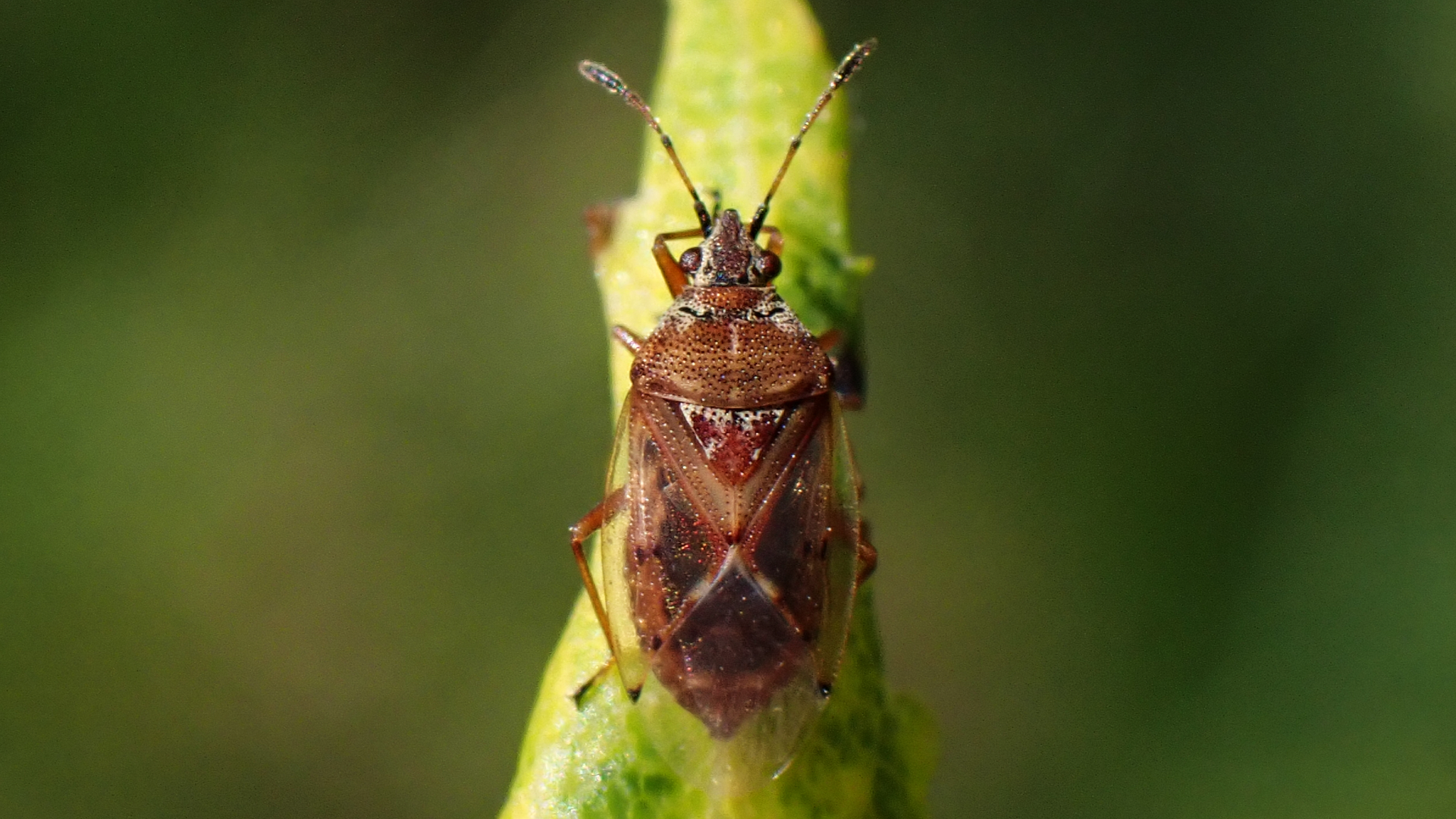
Lives in habitats that contain birch trees. The forewings of this rust-coloured groundbug are patterned and mainly transparent. Adults (5mm) overwinter and there are several generations a year.
#
Fat-thighed Beetle
Oedemera nobilis
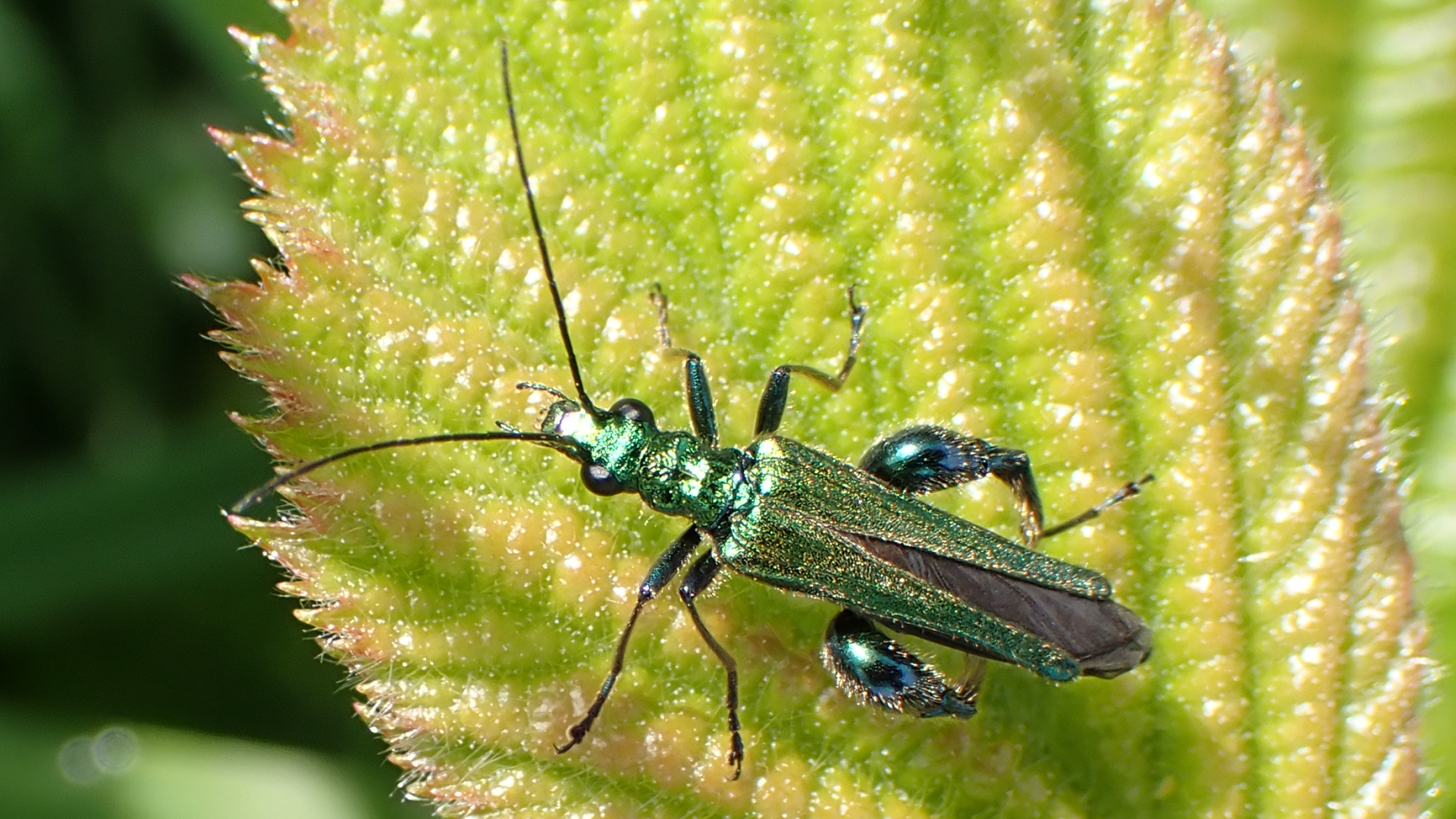
These beetles visit flowers on sunny days during spring, summer and early autumn. Males have bulges on the femora of their hind legs, hence the common name. Adults emerge in spring to feed on pollen. They visit a range of flowers and are excellent pollinators. The larvae are rarely seen as they live inside stems of thistles and other plants. Males are instantly recognisable thanks to the large green bulges on the femora (thighs) of their hind legs. Females don't have fat thighs so can be mistaken for other similar species.
#
Thistle Tortoise Beetle
Cassida rubiginosa
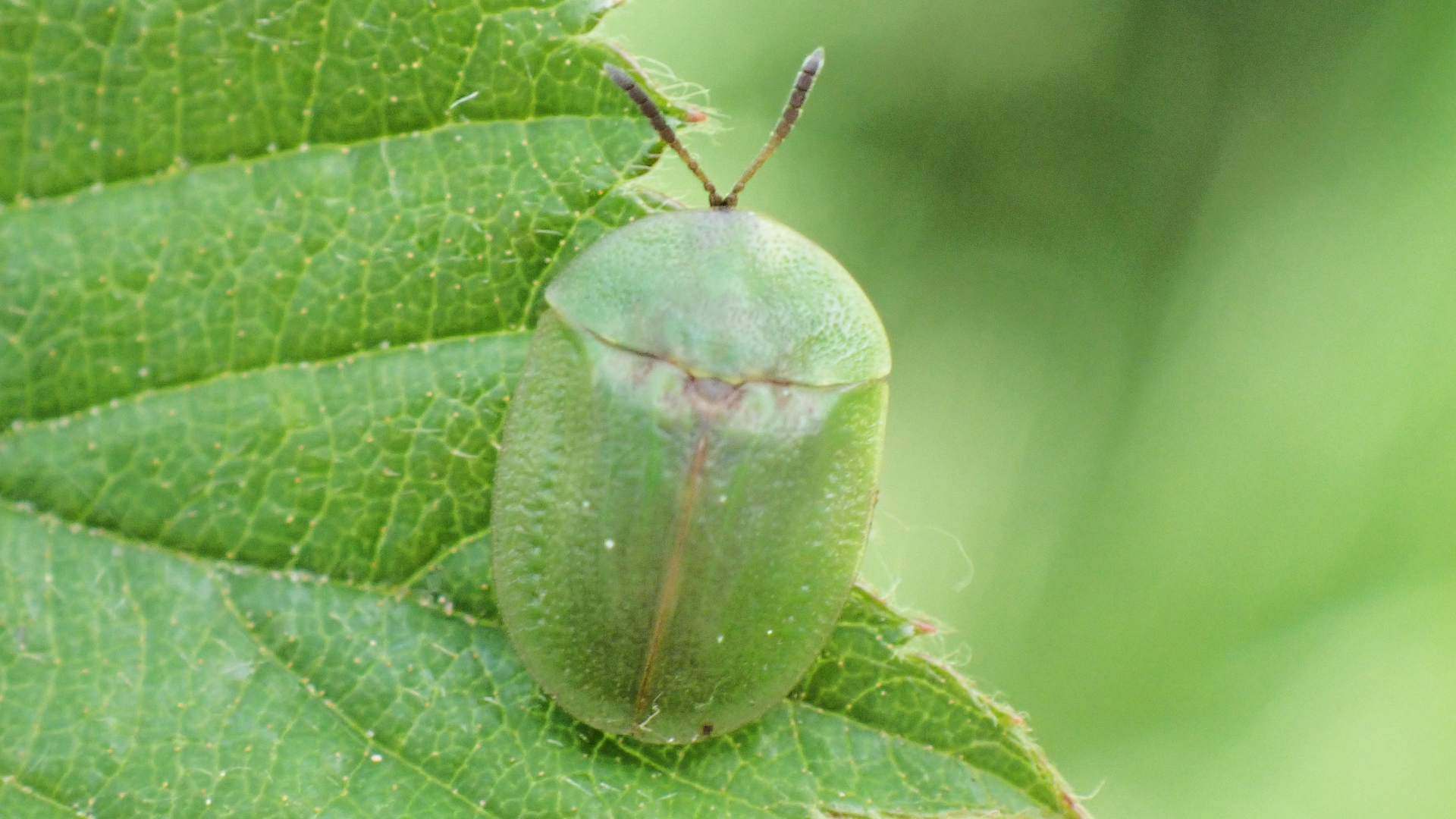
A green-bodied beetle (6-8mm) with brown markings on and around the scutellum. There are similar looking species; this one lives on creeping thistle, but not always easy to see due to its relatively small size and ability to blend in well when sitting flush against a thistle. The specific name
rubiginosa refers to the beetle's ability to produce a red liquid from the head. From egg to adult may take as little as 5 or 6 weeks with the adult lifespan being about 20 months.
#
10-Spot Ladybird
Adalia decempunctata
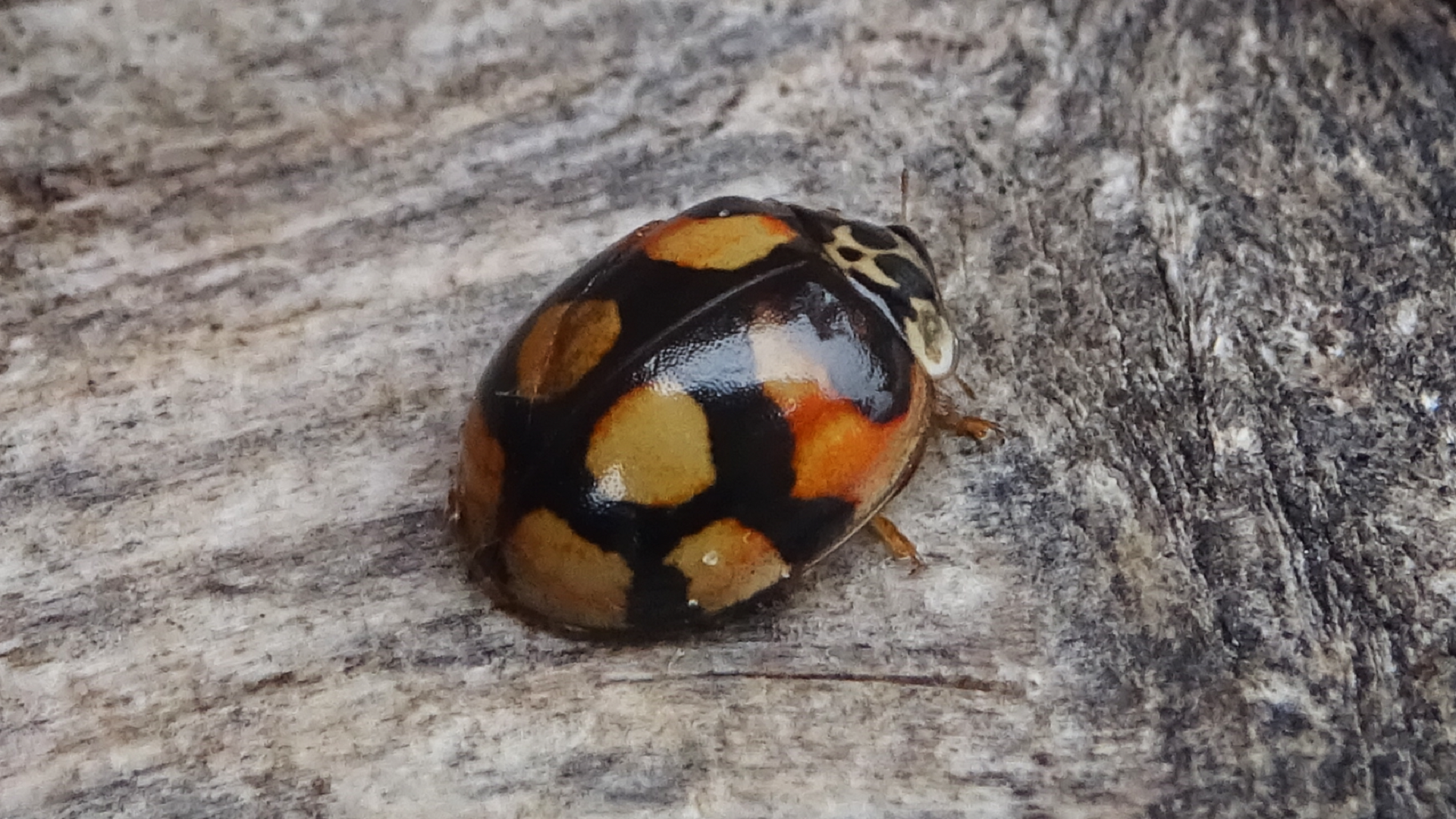
A small ladybird that doesn't always have ten spots. Fresh specimens have light-brown background colouration to begin with. The brown legs can be useful when identifying this Ladybird. They feed on aphids.
#
Iris Weevil
Mononychus punctumalbum
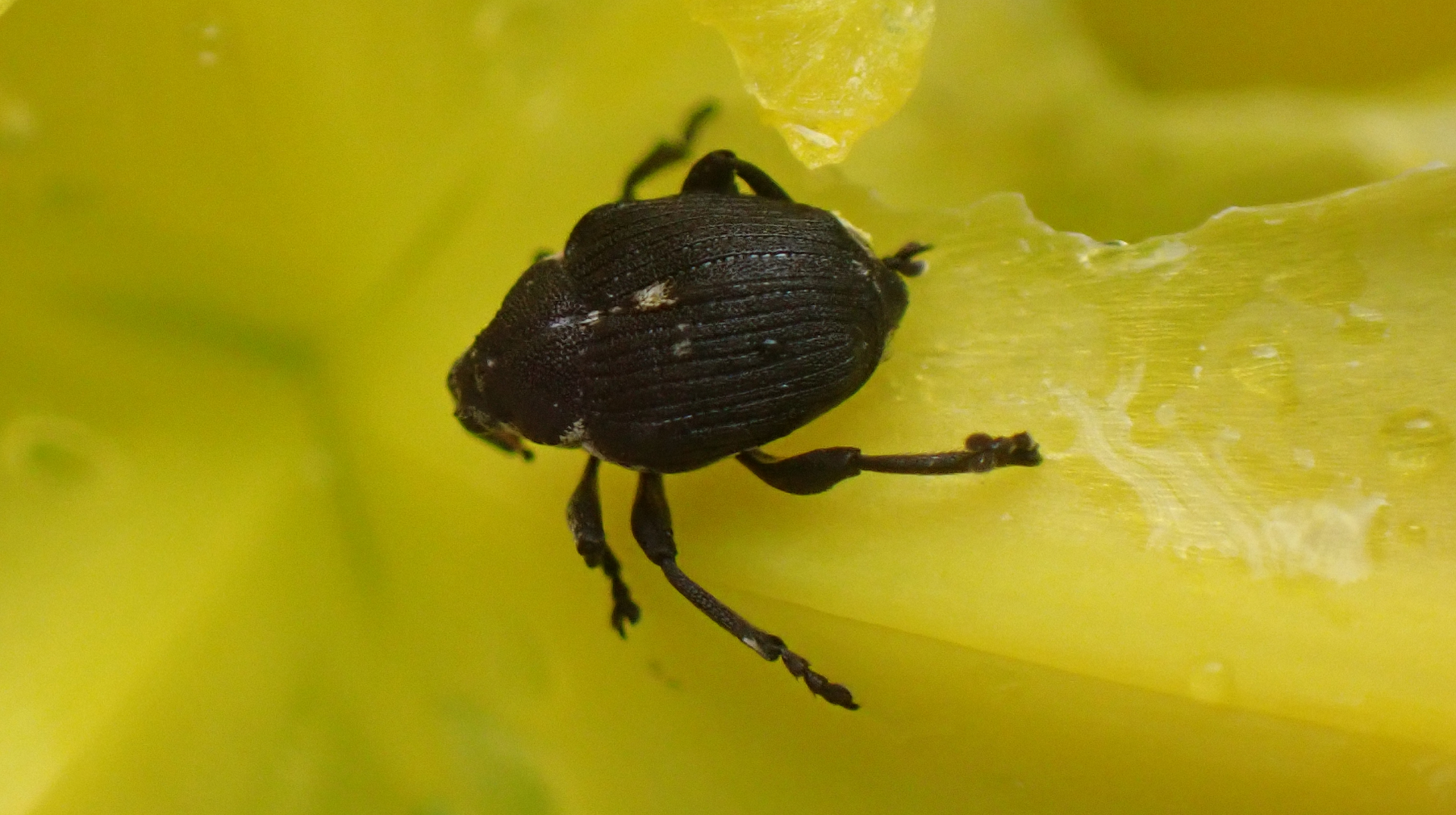
This weevil has a preference for damp locations. Adults appear in May and June to feed on Iris plants. The female bores into developing seed pods and inserts an egg into several of the seeds which the hatched larvae consume. A new generation of adults appears during autumn to feed for a short time before entering leaf litter to overwinter.
#
Broad-bodied Chaser
Libellula depressa
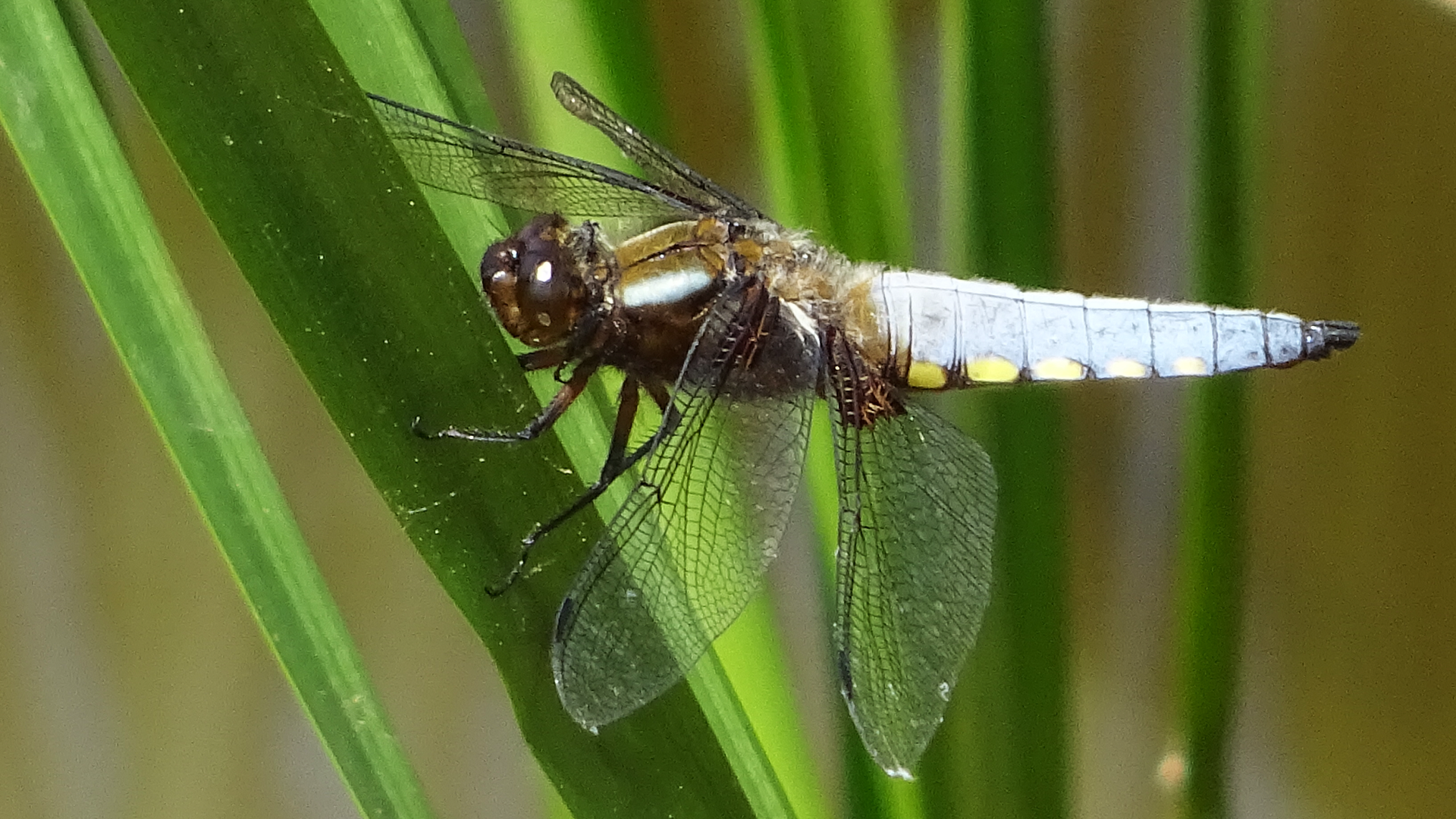
Usually found near ponds and lakes from May to July. Females are golden-brown, whereas males have a blue abdomen. Both sexes have very dark brown wing bases and yellow spots along the side of the body. Immature adults have similar colouration to females.
#
Black-tailed Skimmer
Orthetrum cancellatum
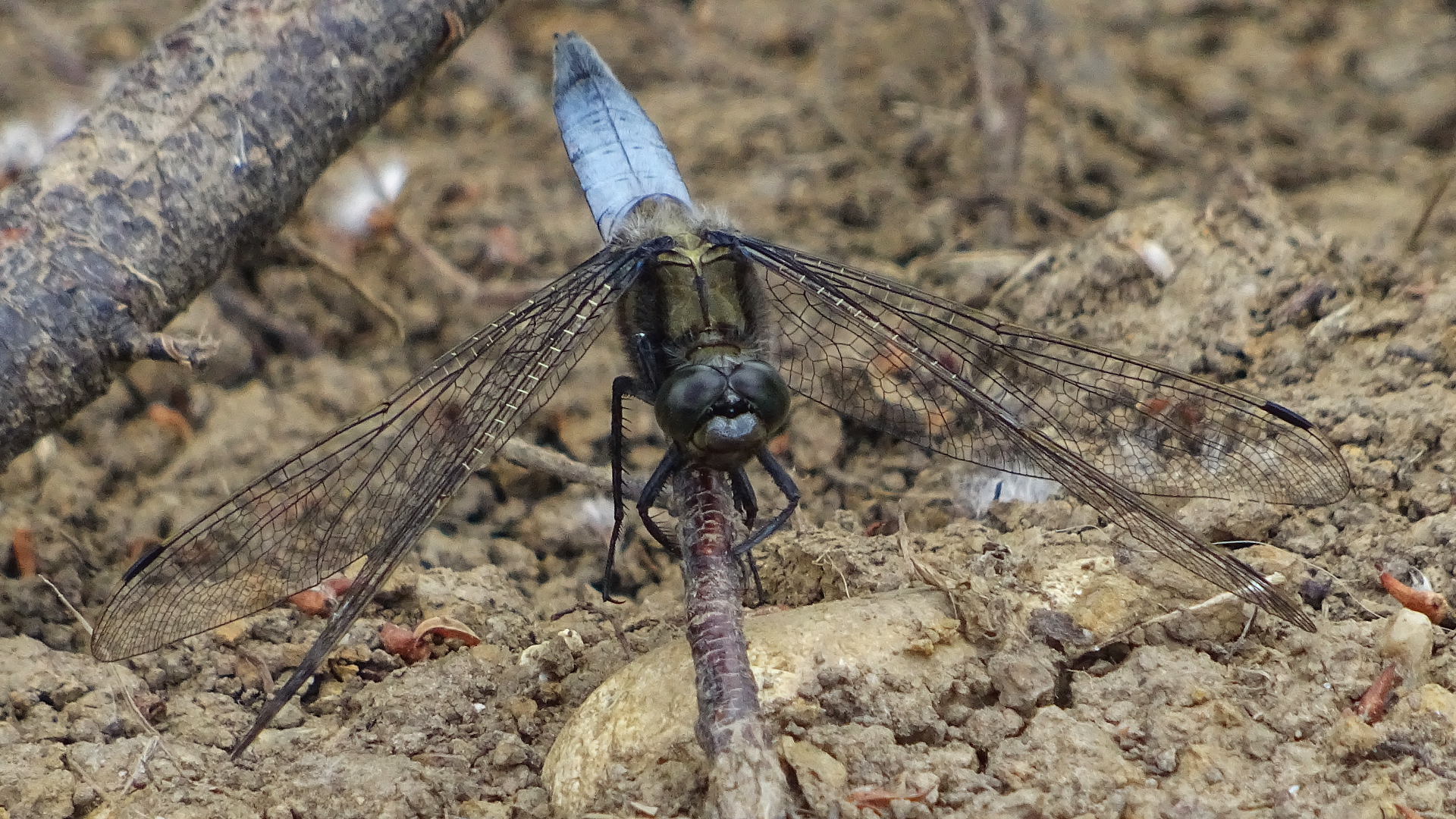
This species is on the wing from May to August. Mature males are blue, females and immatures are yellow.
#
Large Red Damselfly
Pyrrhosoma nymphula
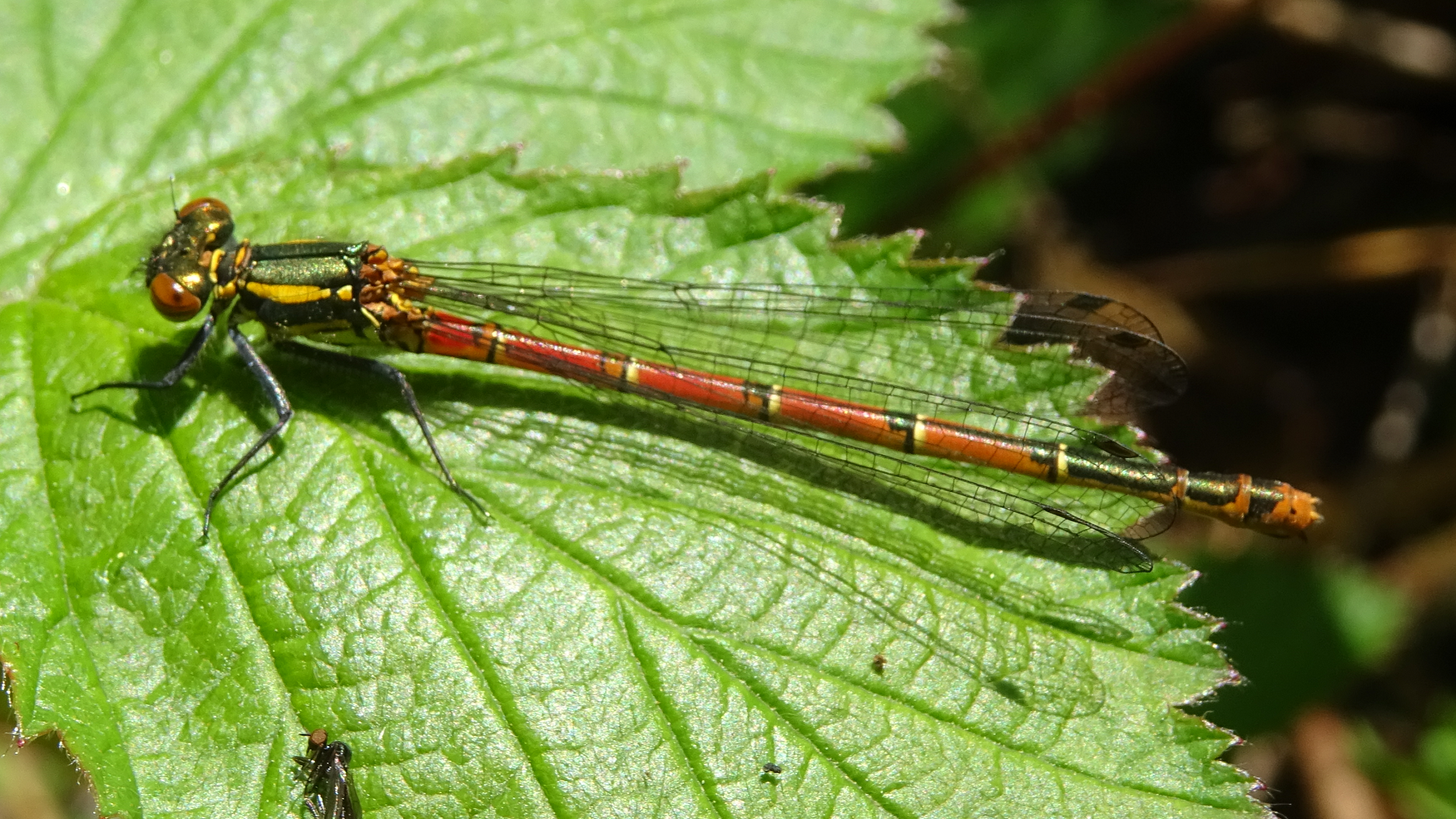
Generally one of the first damselfly species to emerge in spring usually near wetland habitats. Black legs rule this out from being the scarcer Small Red damselfly.
#
Common Marbled Straw
Aethes smeathmanniana
Found on rough grassland and scrub from May until August. Yarrow and Knapweed are its foodplants. This moth has recently undergone a name change and was formerly known as the Yarrow Conch.
#
Garden Mompha
Mompha subbistrigella
A common micro-moth that can be found most of the year. It has a preference for damp locations and overwintering in garden sheds. Its larvae feed within the seedpods of various willowherbs.
#
Light Brown Apple Moth
Epiphyas postvittana
This species is extremely variable with numerous forms. It was accidentally introduced into Cornwall from Australia in the 1930s and has since spread across the country.
Females are larger than the males. Males can usually be identified by an abrupt colour division on the forewing.
#
Green Hairstreak
Callophrys rubi
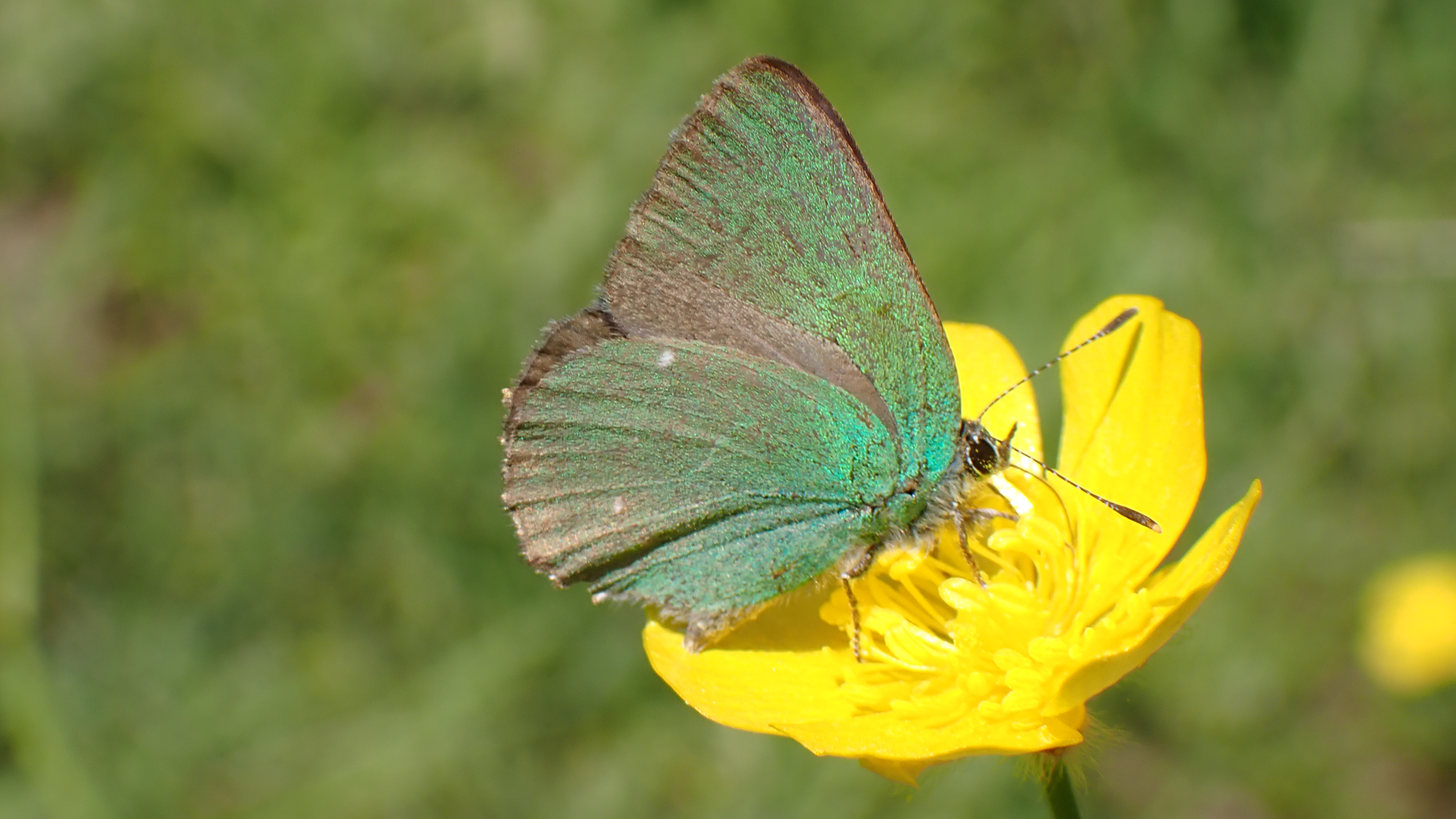
The Green Hairstreak butterfly often rests with its wings closed. In some specimens, the white streak on the wings may be absent.
#
Orange-tip
Anthocharis cardamines
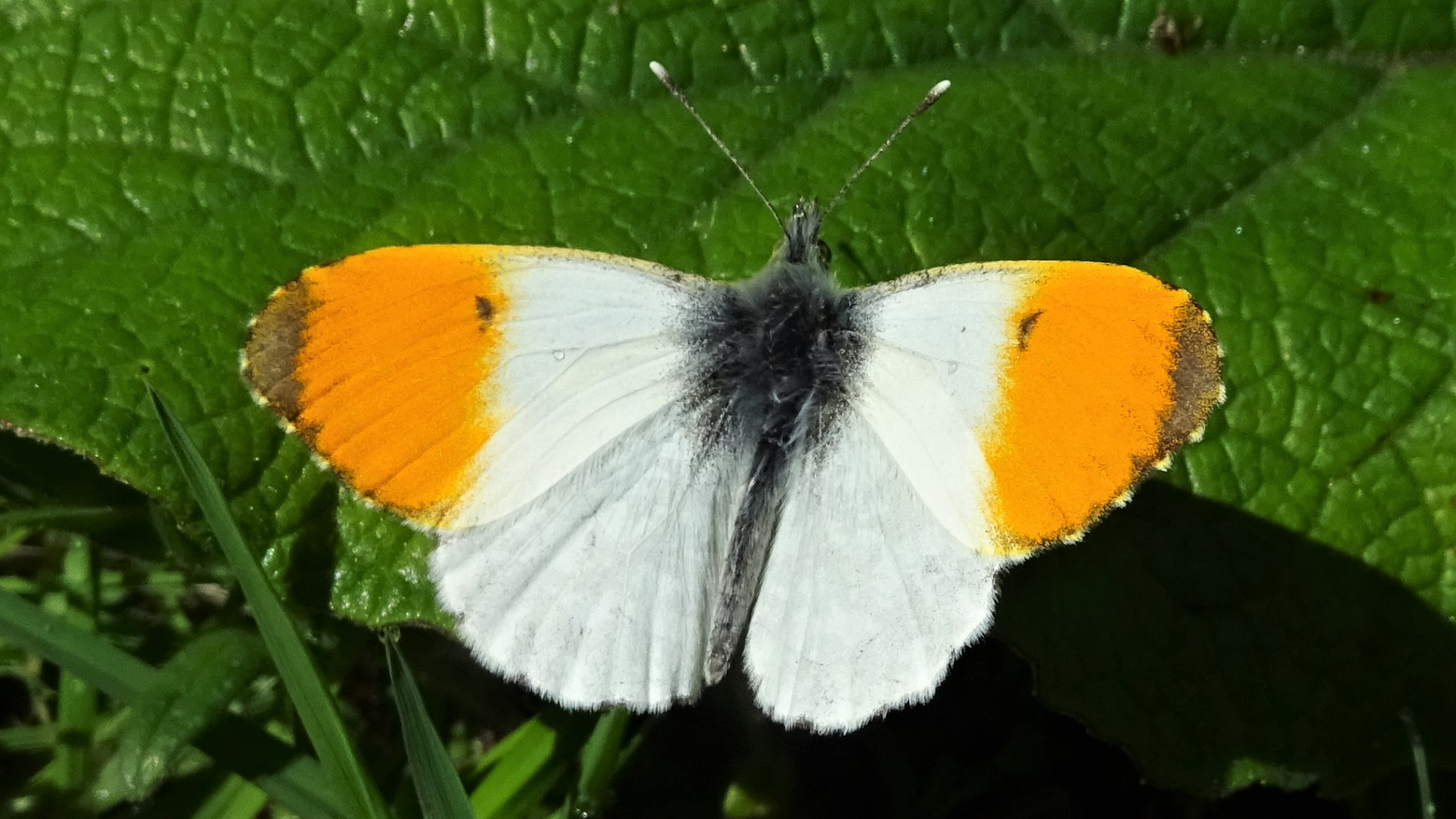
Both males and females have mottled green underwings. Males are distinguished by the orange visible when the wings are open, whilst females have no orange on the wings.
#
Brimstone Butterfly
Gonepteryx rhamni
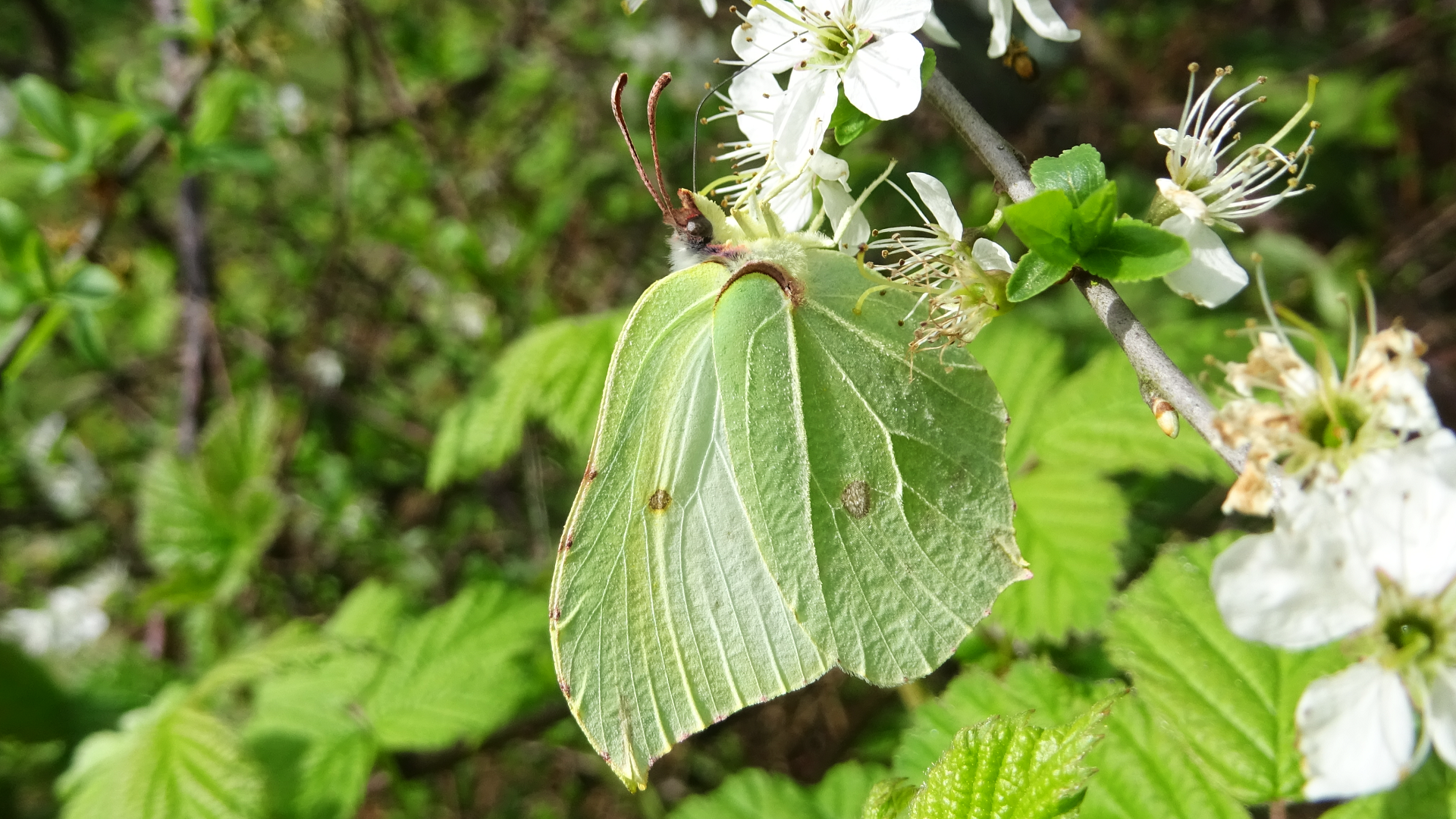
Males have yellowish-green underwings and yellow upper wings, while females have very pale green or nearly white wings. They are known to rest under bramble, making them challenging to see. The caterpillars feed on Buckthorn and Alder Buckthorn.

#
Large Skipper
Ochlodes sylvanus

Usually located in grassy areas, males feature a prominent black line running through the centre of their forewings. A subtle chequered pattern is noticeable on the sides of their wings. Males often rest on bramble in sunny spots while awaiting the arrival of females.
#
Alderfly
Sialis sp.
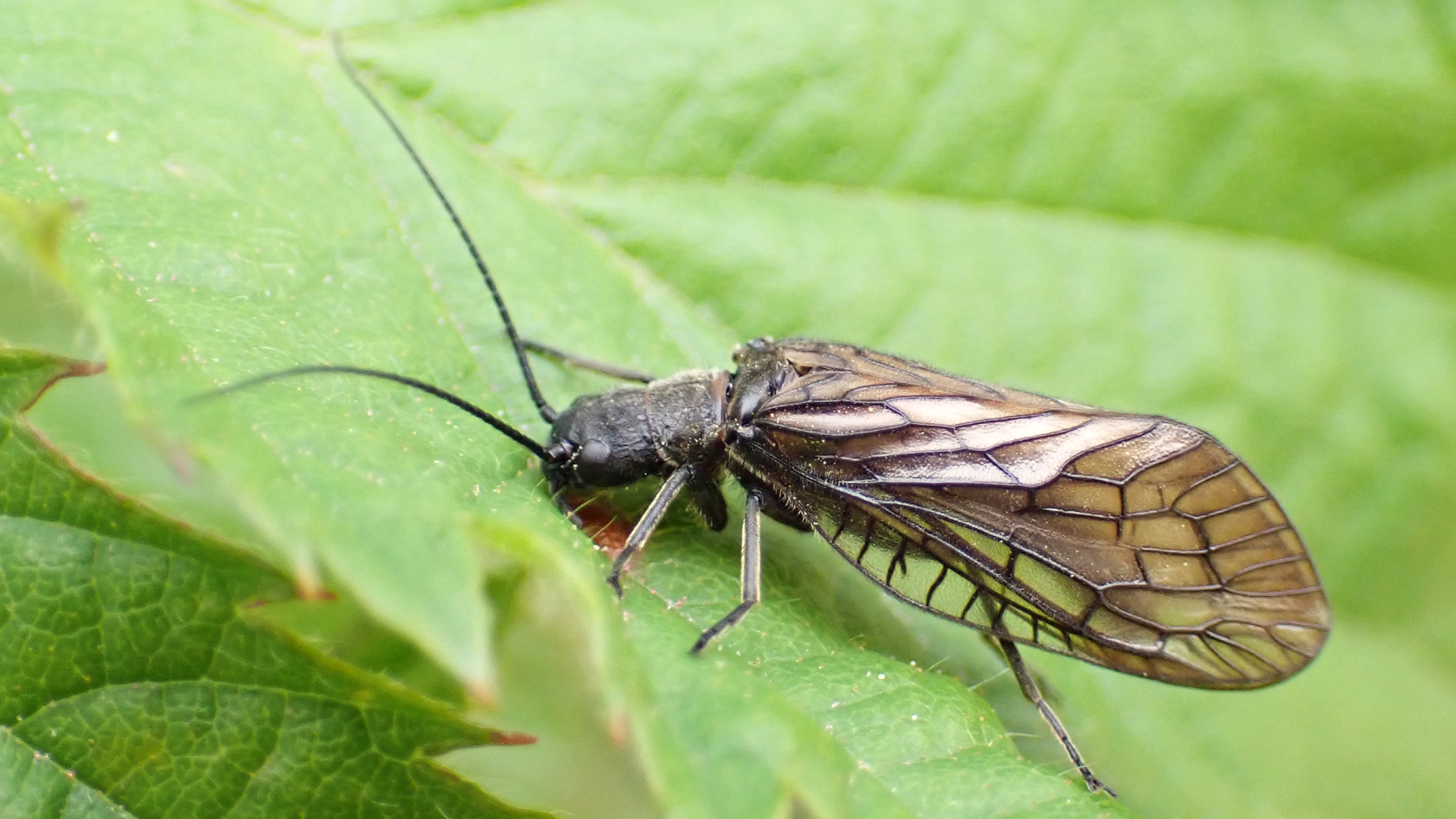
Alderflies have heavily-veined wings that are folded over the body like a tent when at rest. Their larvae live in the silt at the bottom of lakes and ponds. They are often seen in spring and summer. Adults only last long enough to reproduce. Females lay eggs in large quantities on vegetation near water. After hatching the larva drop into the water where they predate on other small invertebrates.
#
Dark-edged Bee Fly
Bombylius major
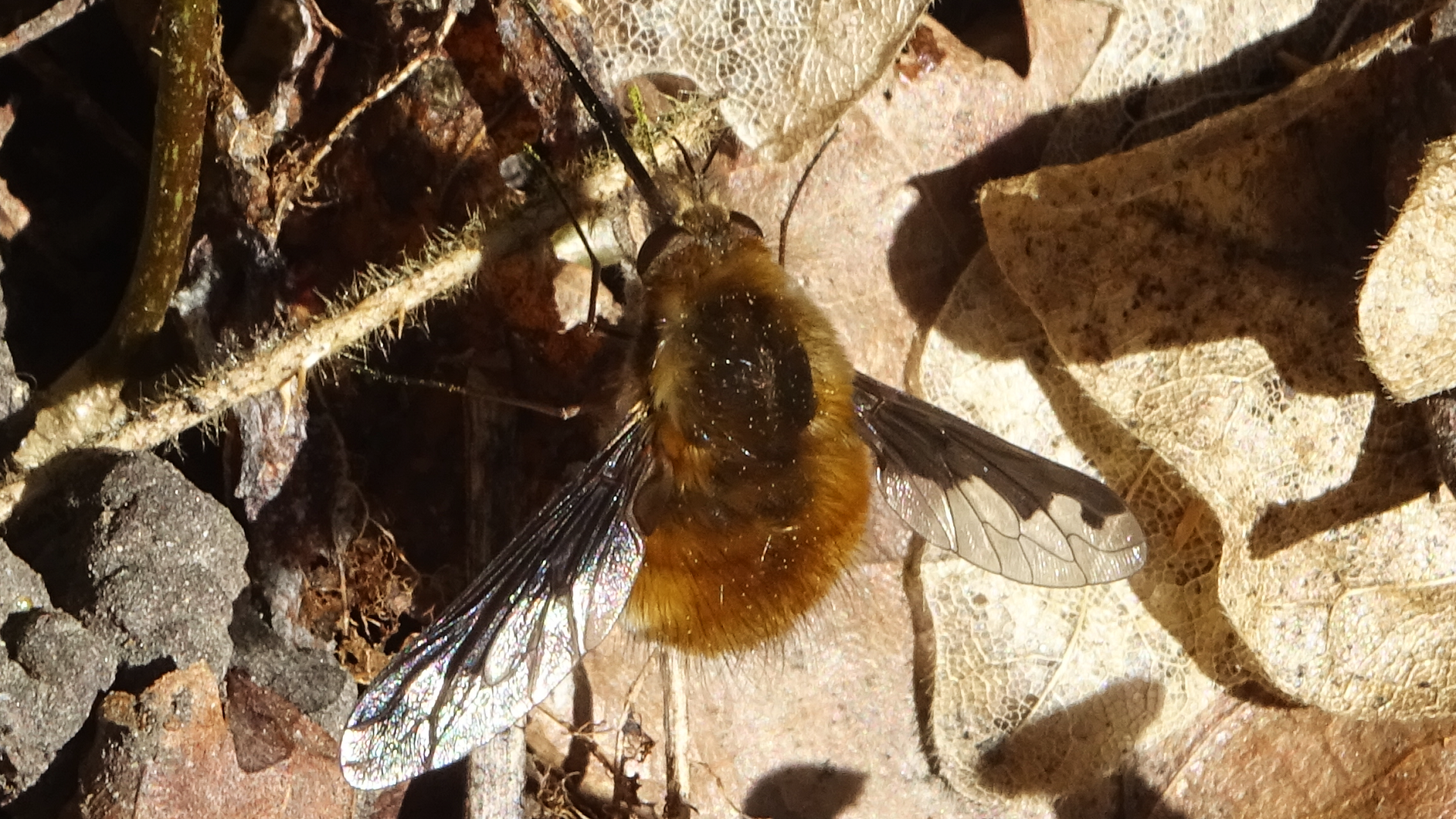
The Bee Fly is a harmless two-winged insect that resembles a small bumblebee about 12mm long. The long proboscis is used for drinking nectar and does not sting. This species is usually seen in spring resting on leaf litter or hovering above flowers. Its larvae eat bee and wasp larvae.
#
Carp
Cyprinus carpio
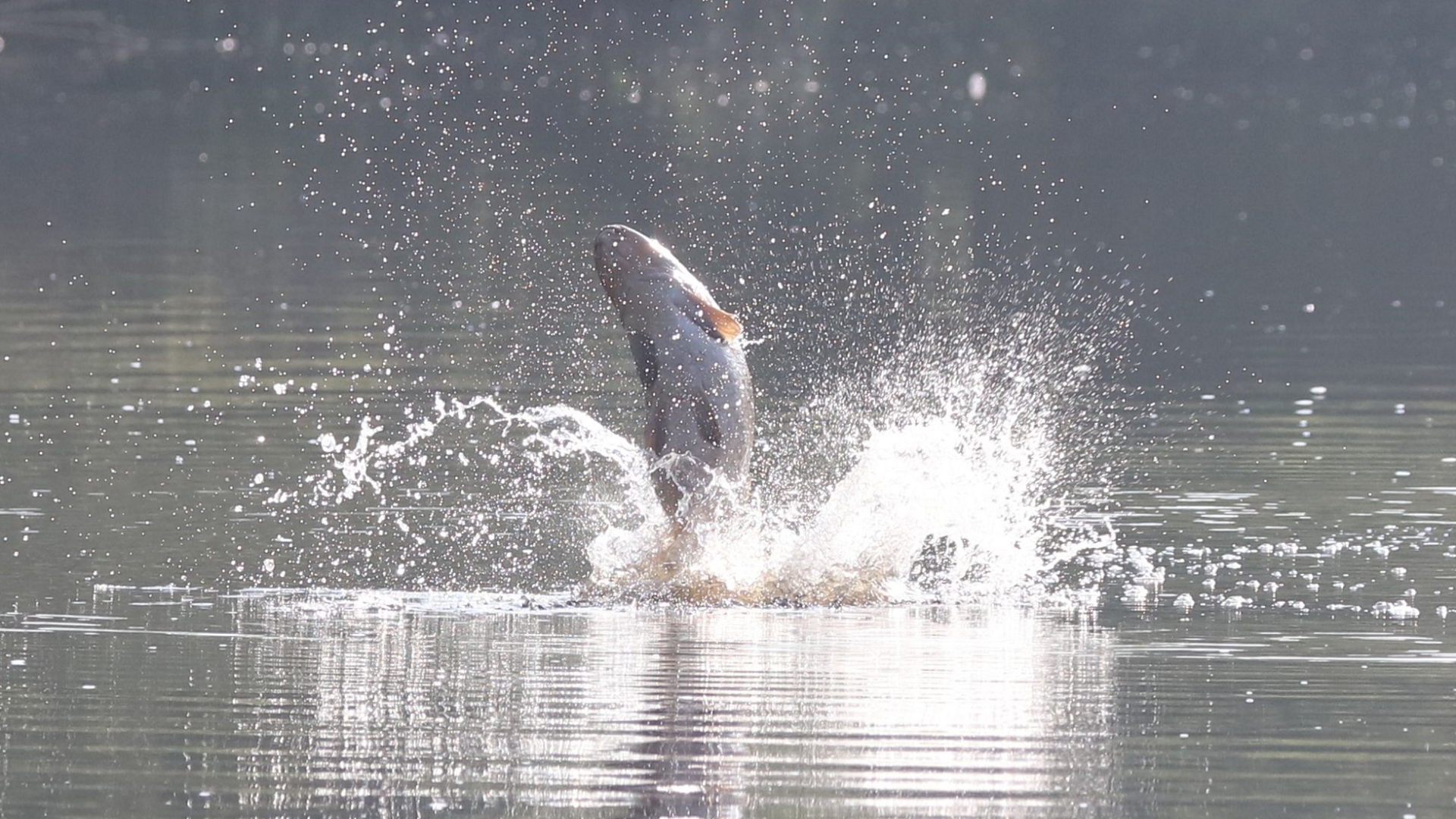
Carp are sometimes seen jumping into the air. They do this to regulate pressure in the swim bladder. Gases contained in the swim bladder assist in controlling buoyancy.
#
Russian Comfrey
Symphytum x uplandicum
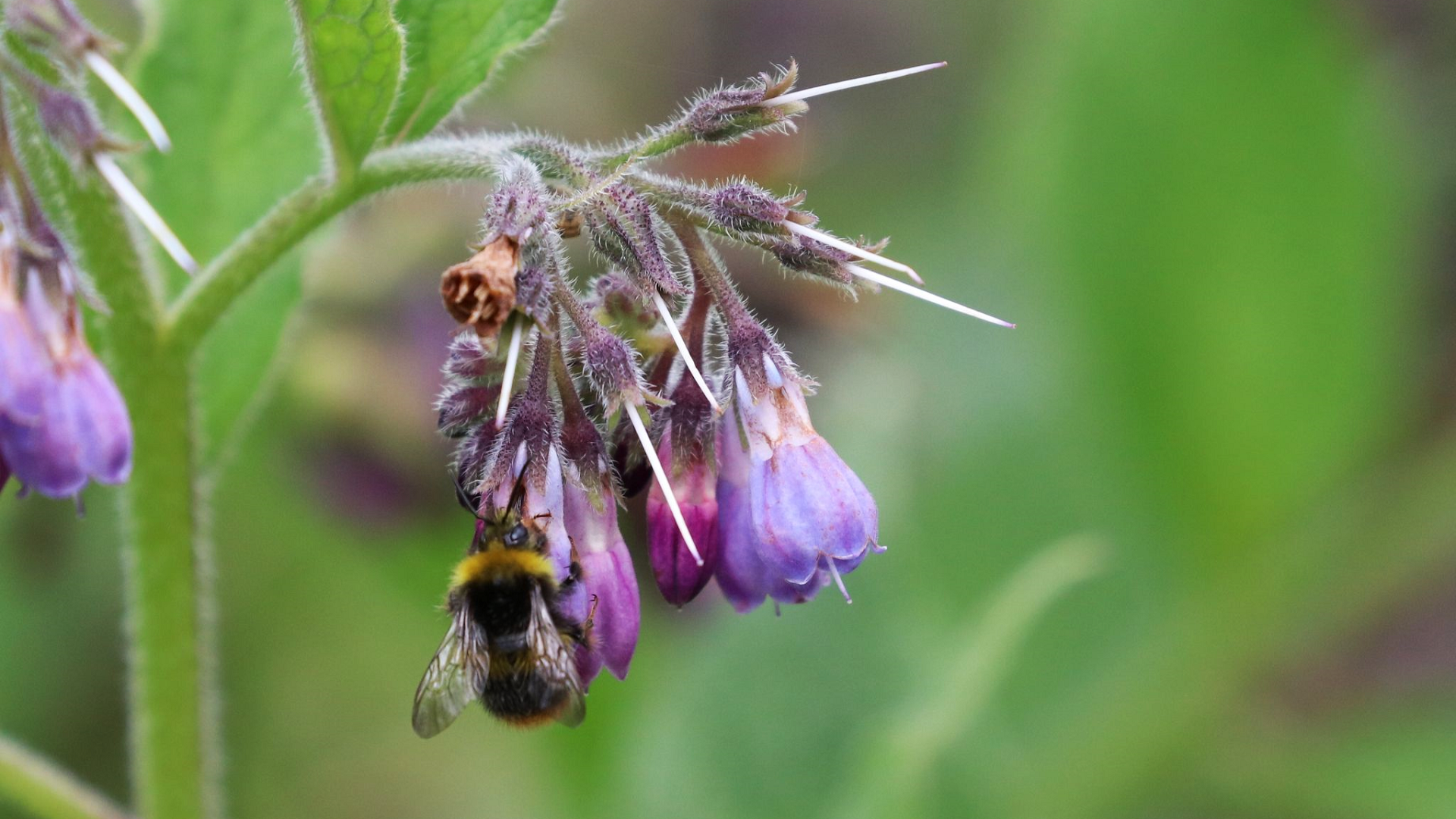
Russian Comfrey grows up to 2 metres tall. The stems are narrowly winged below the leaves. Flowers are initially pink almost always becoming blue, violet, or purple. It appears from May to August. Its flowers attract a wide range on insects including butterflies, beetles and froghoppers.
#
Anemone Gall
Pseudoneuroterus saliens
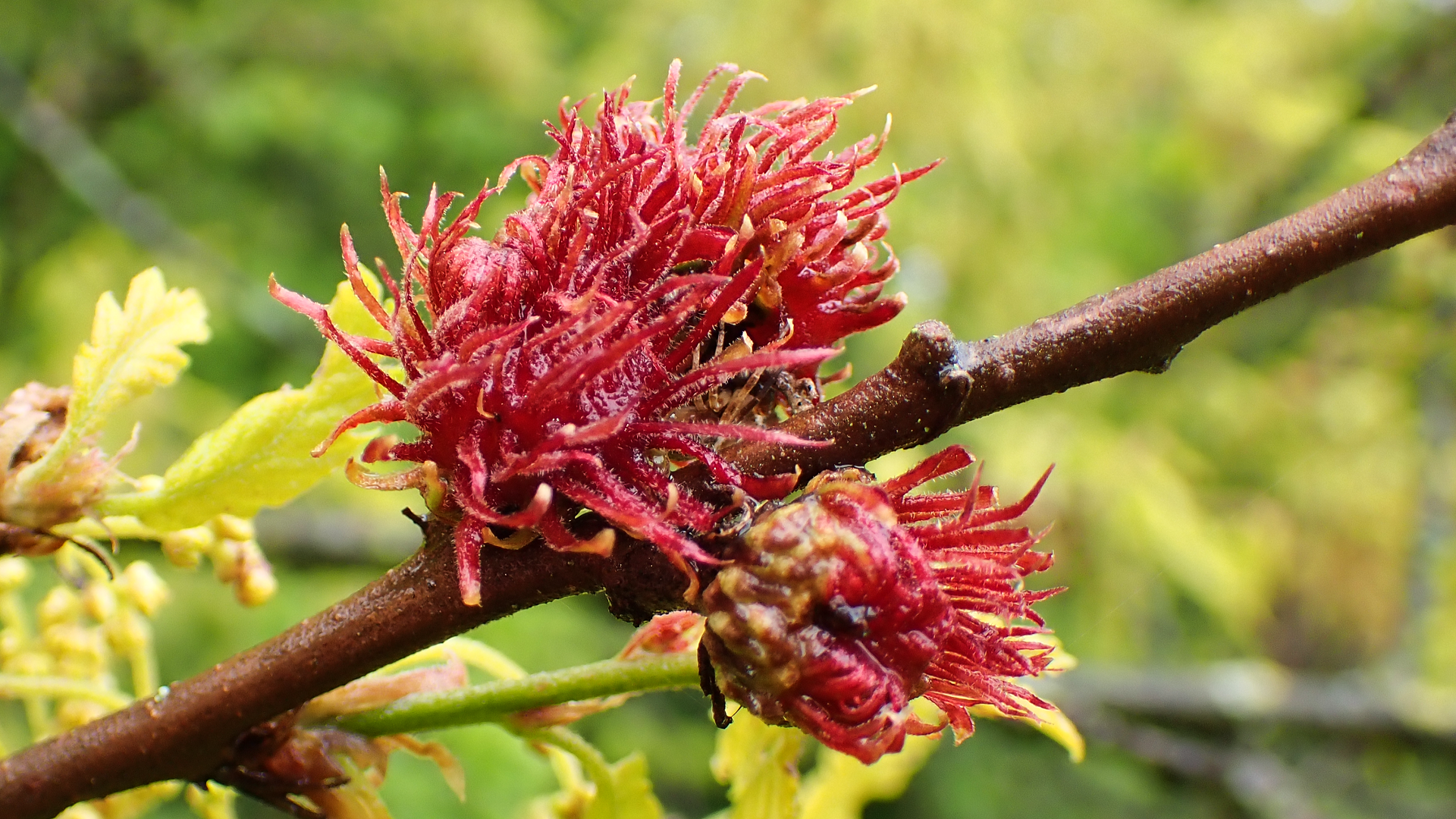
Anemone galls develop on fertilized female flowers of Turkey oak. Their formation is triggered by the sexual generation of a gall wasp. Multiple larvae inhabit each gall and emerge as adults in the summer. The first documented occurrence of this gall in the UK took place in 2004.
#
Oak Apple
Biorhiza pallida
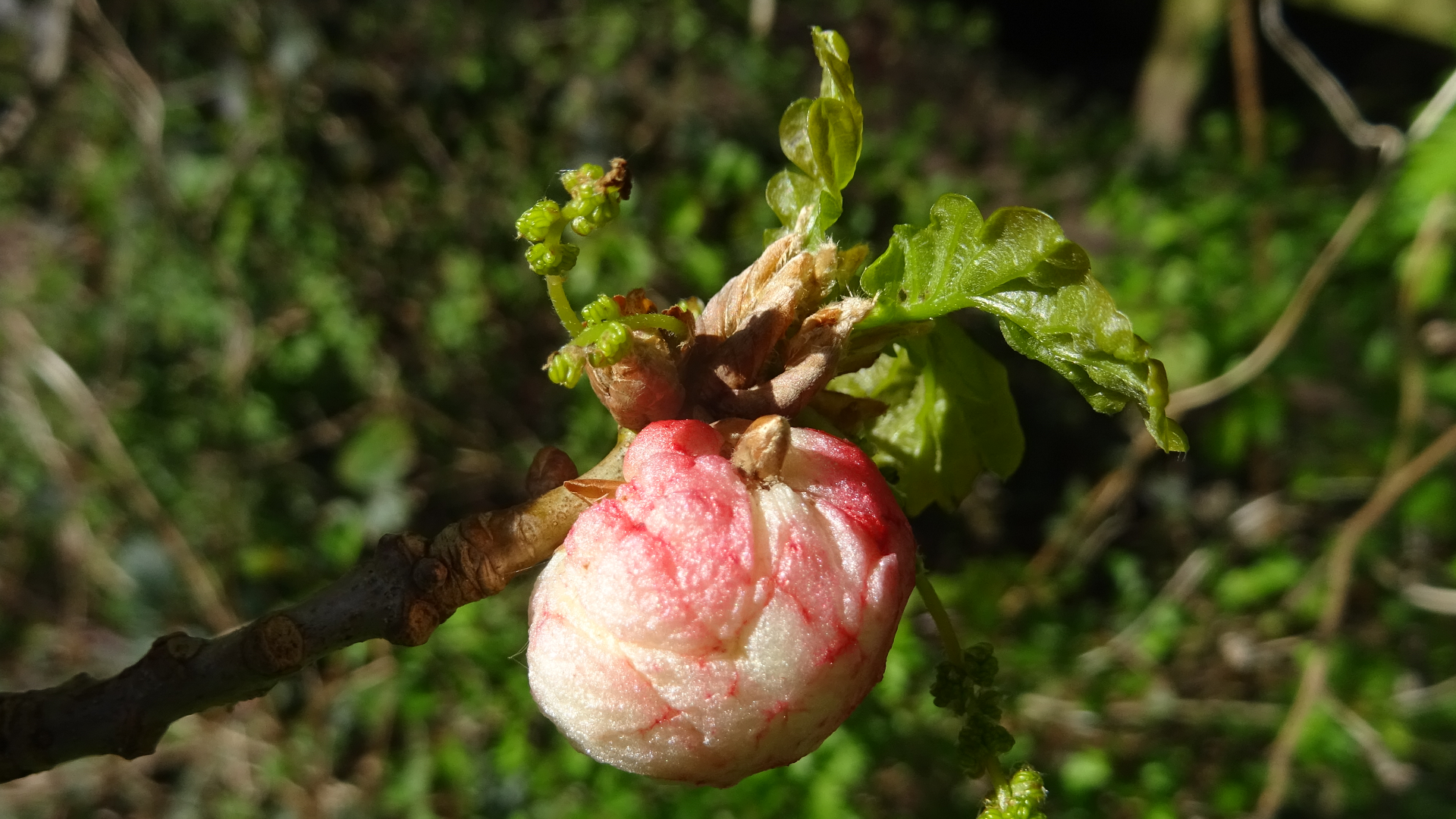
Oak apples on English oak trees result from the larvae of a gall wasp. The eggs laid in oak buds lead to the formation of spongy, apple-like growths. Each 'apple' contains multiple chambers, each housing a larva. These growths are not suitable for consumption.
#
Greylag Goose
Anser anser
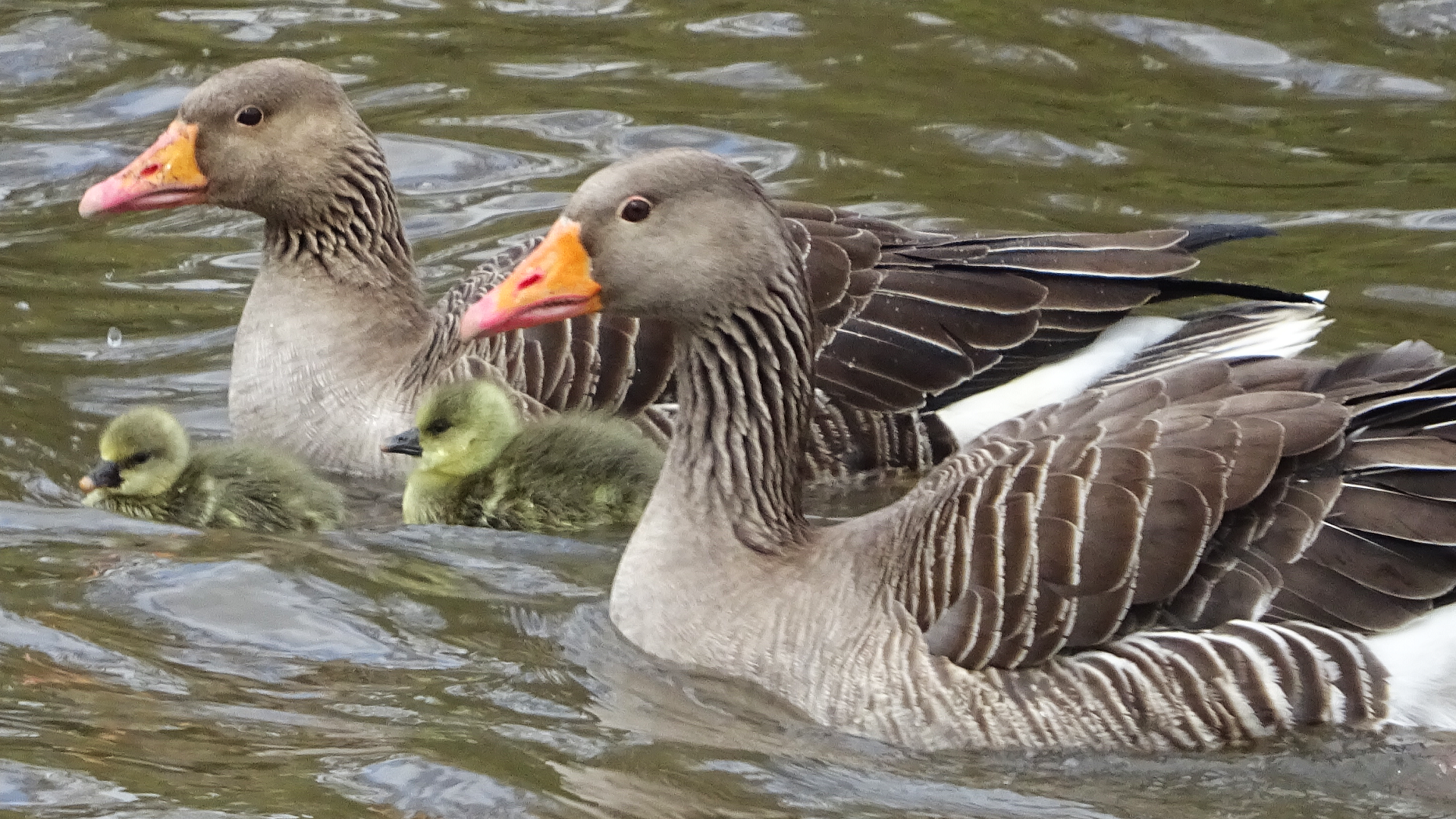
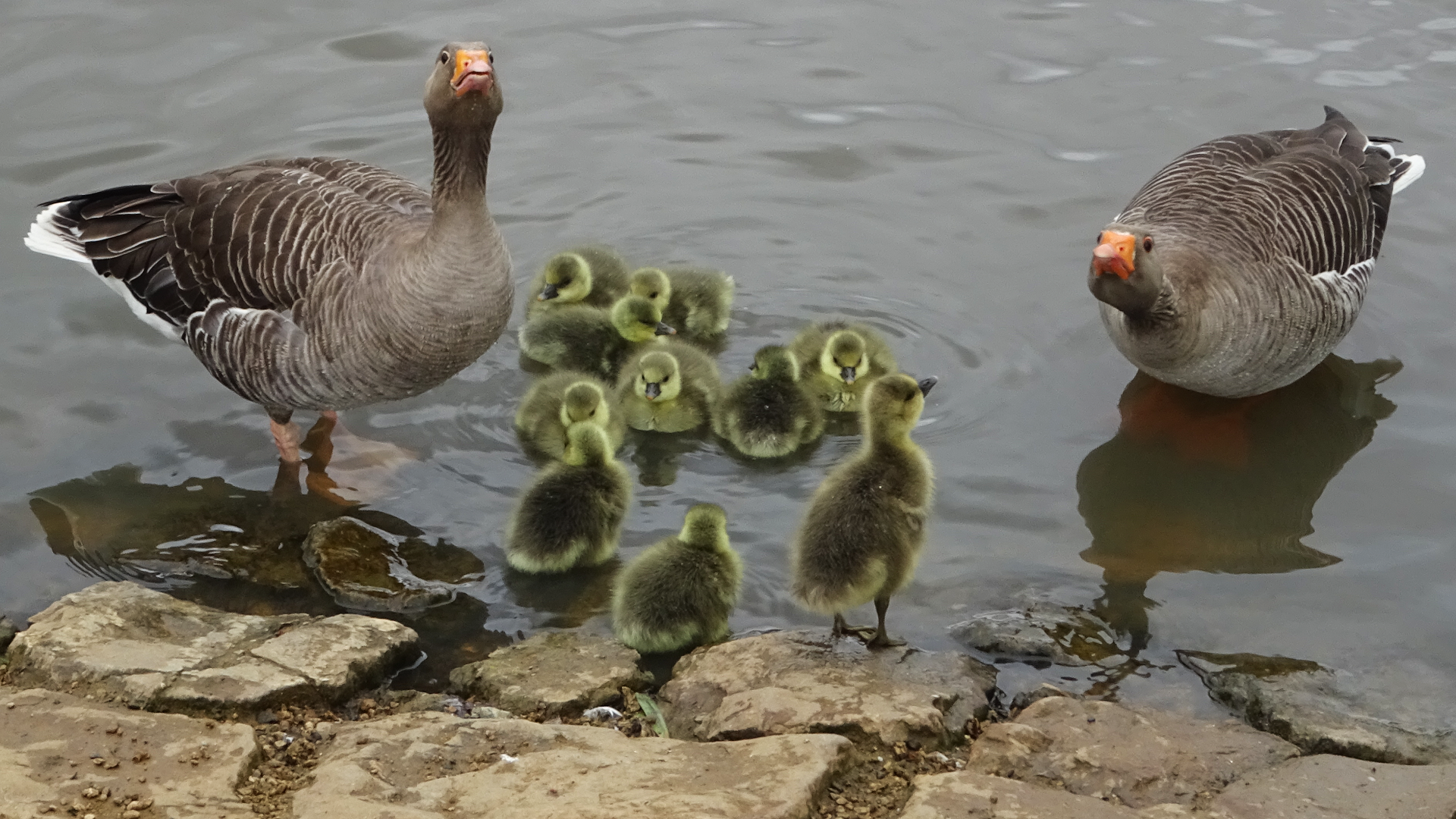
Greylag goslings normally emerge around mid-April at Hainault Lake. Both parents care for the goslings, which are prepared for flight in approximately eight weeks. The parents exhibit protective behavior and participate actively in the nurturing of their young. The goslings reach full maturity at 8 to 9 weeks of age.
#
Cootling
Fulica atra
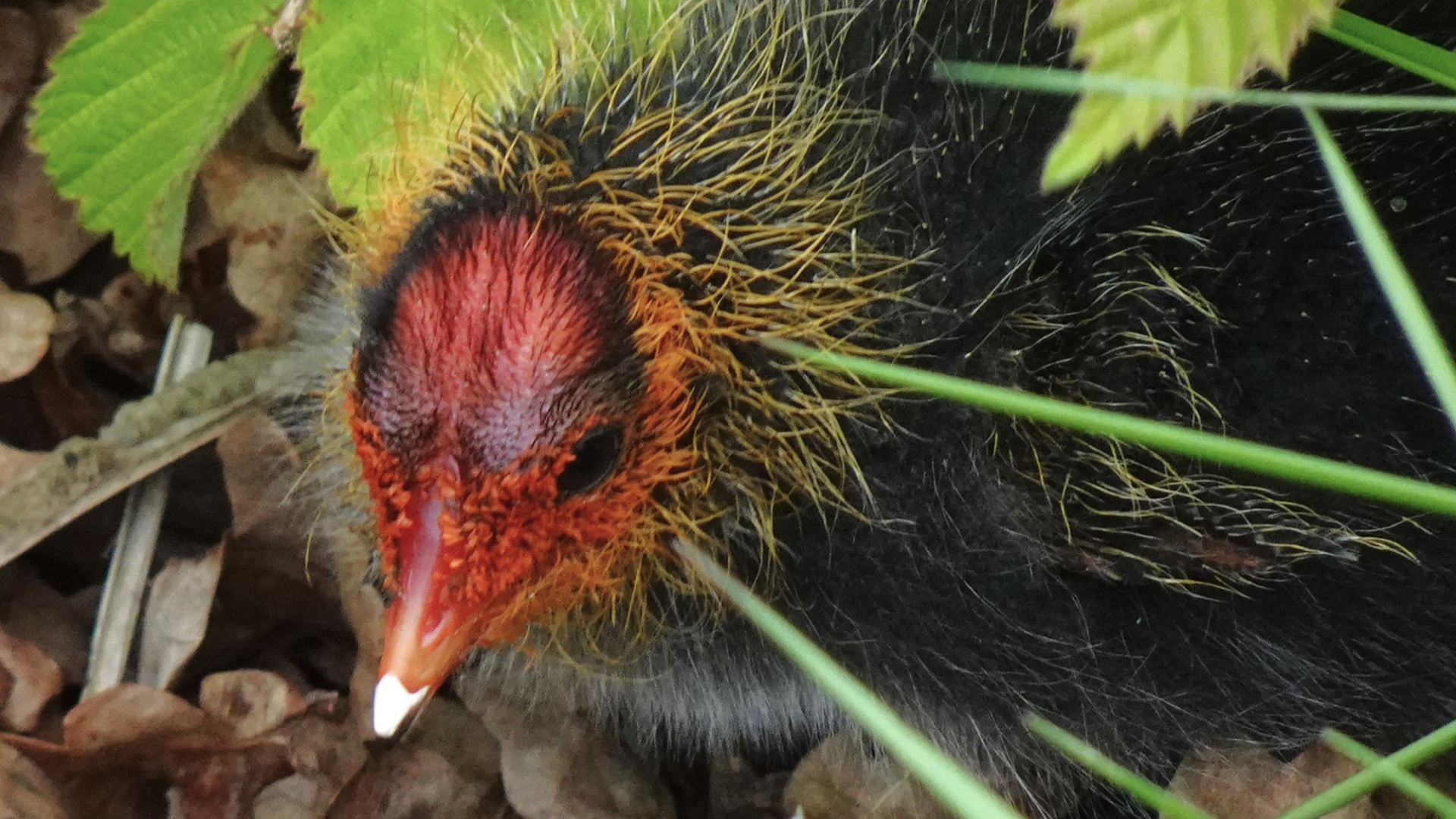
Cootlings are cared for by both parents and depart from the nest after 3 or 4 days. They become fully independent in approximately 8 weeks.
#
Common Shrew
Sorex araneus
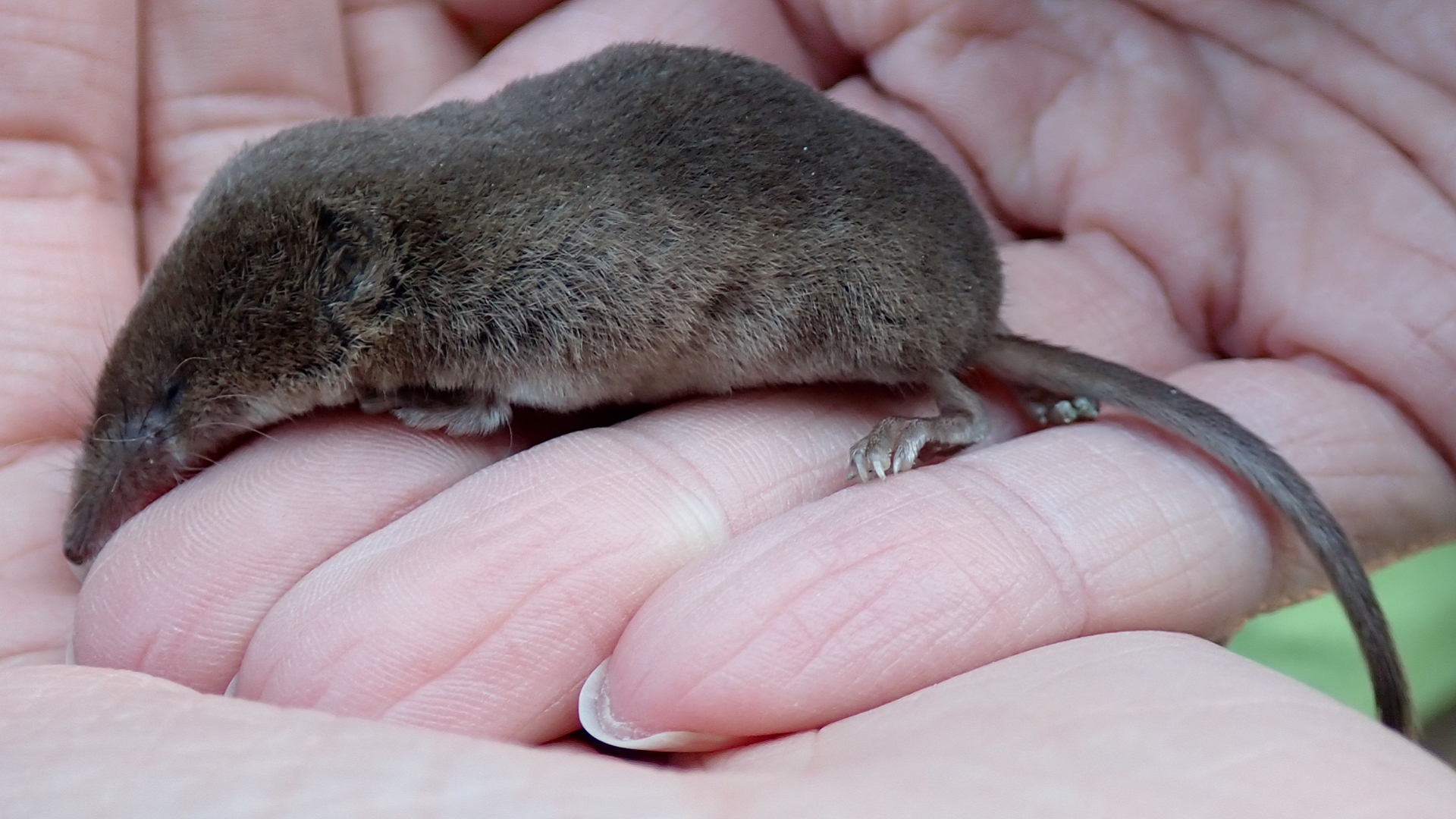
Common Shrews are insectivores that have distinctive pointed noses, tiny eyes and are up to about 75mm long. The tail is only half as long as the head and body combined. They must feed every two-three hours to survive and generally only live for about a year. Habitats include scrub, grassland and woodland.
#
Pigeon
Columba Palumbus
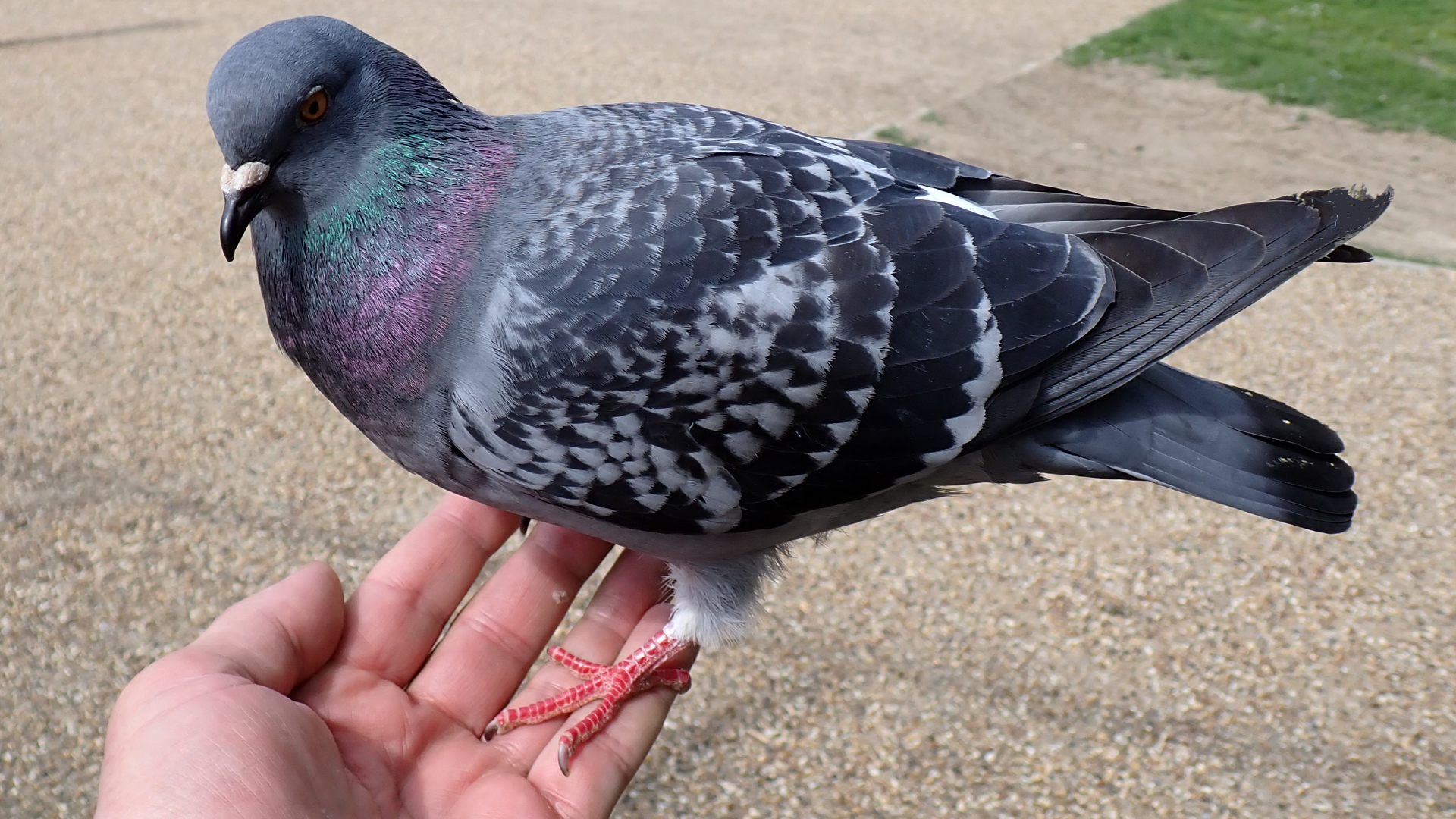
This well-groomed pigeon appeared at the Global Cafe for a few days during May. Pigeons are a lot cleaner than many people imagine. It wasn't long before it was resting on my hand. Later when going for a walk it kept landing nearby and cooing loudly. A new friend!
#
Thank you to everyone that have contributed to this Journal.
© hainaultforest.net. All rights reserved.
This website uses necessary cookies. It does not use targeting or advertising cookies.