

Crustaceans are invertebrate animals characterised by a hard exoskeleton, a segmented body, and jointed limbs.
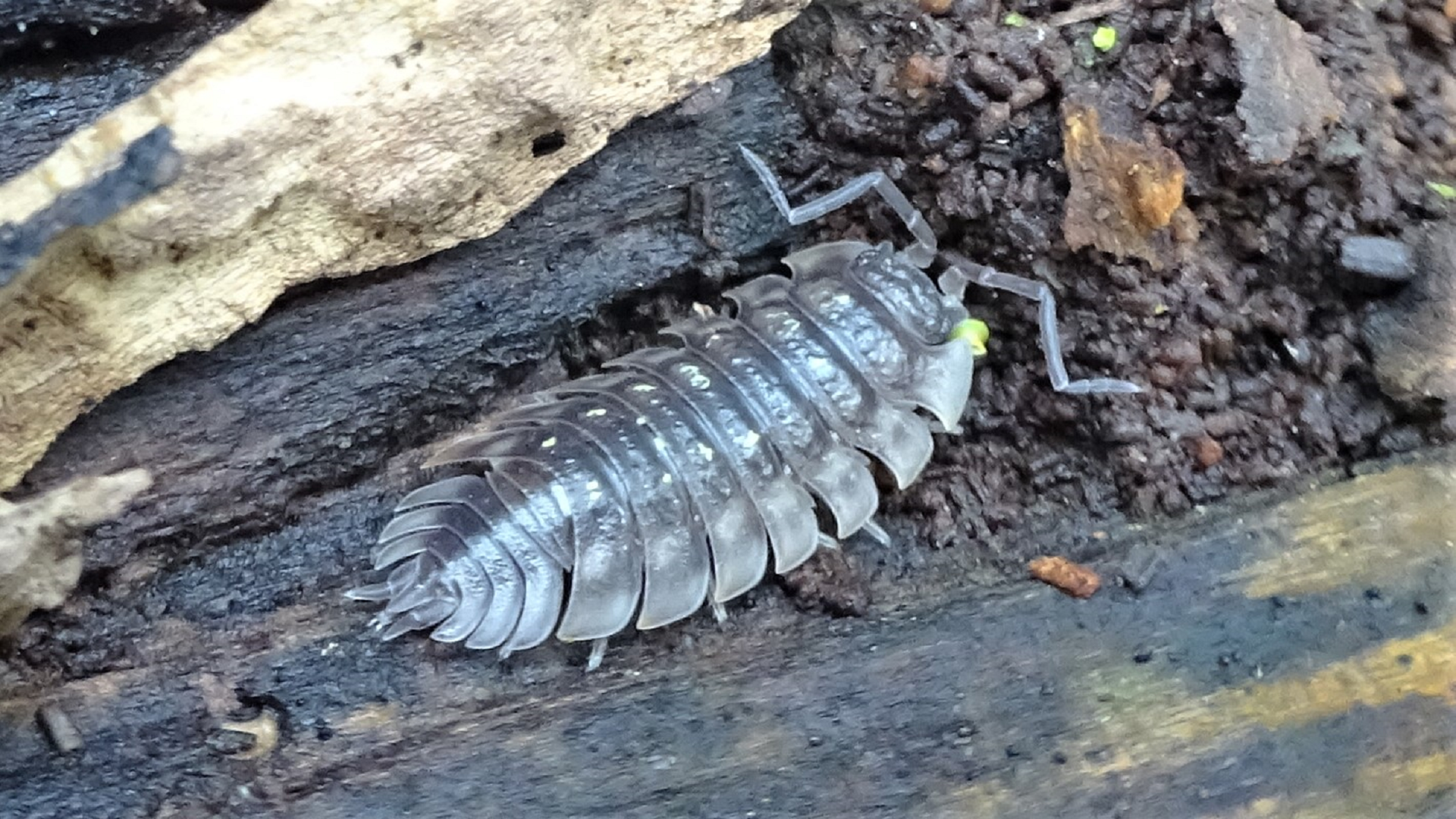
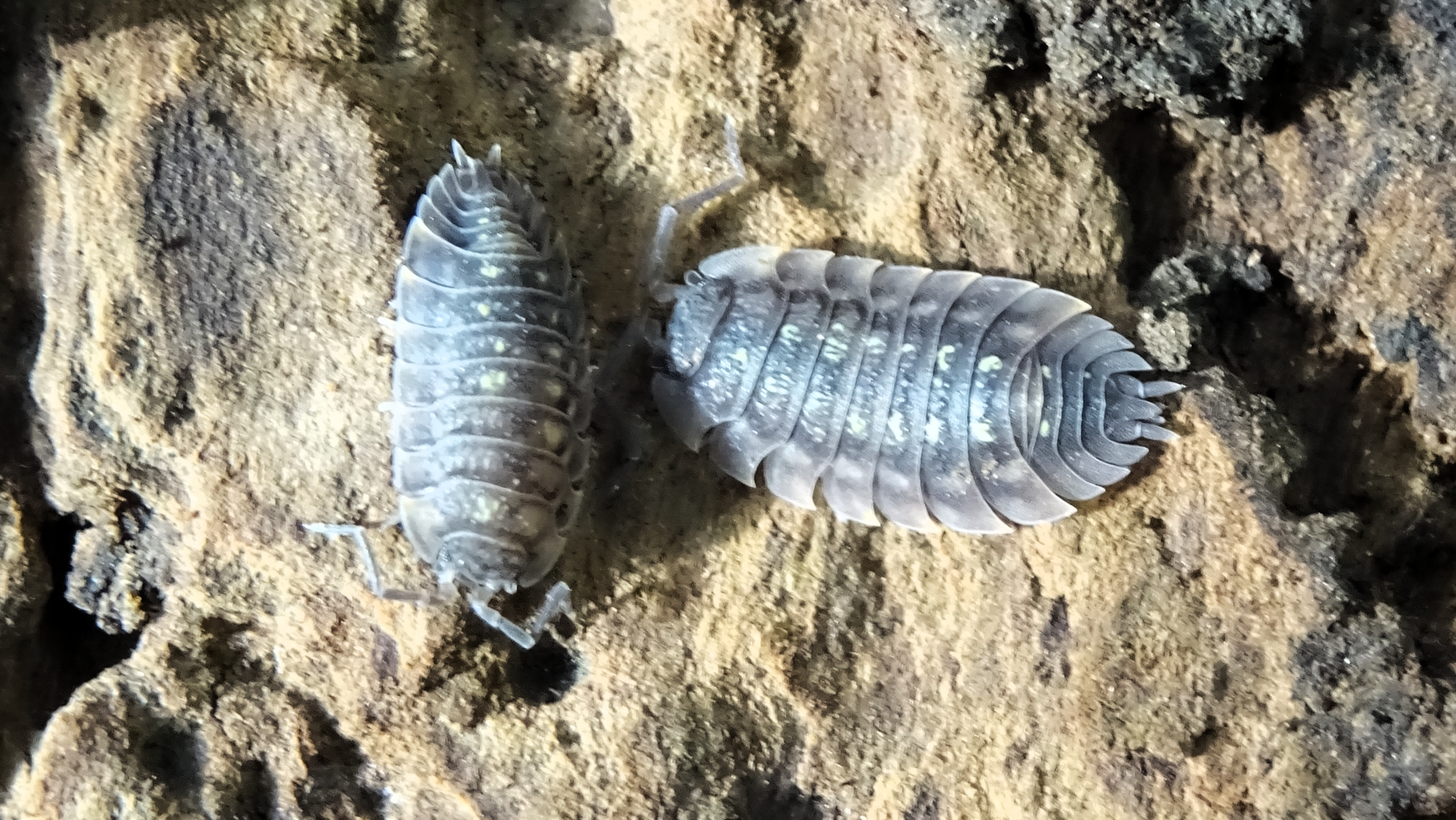
Common Shiny Woodlouse
Oniscus asellu
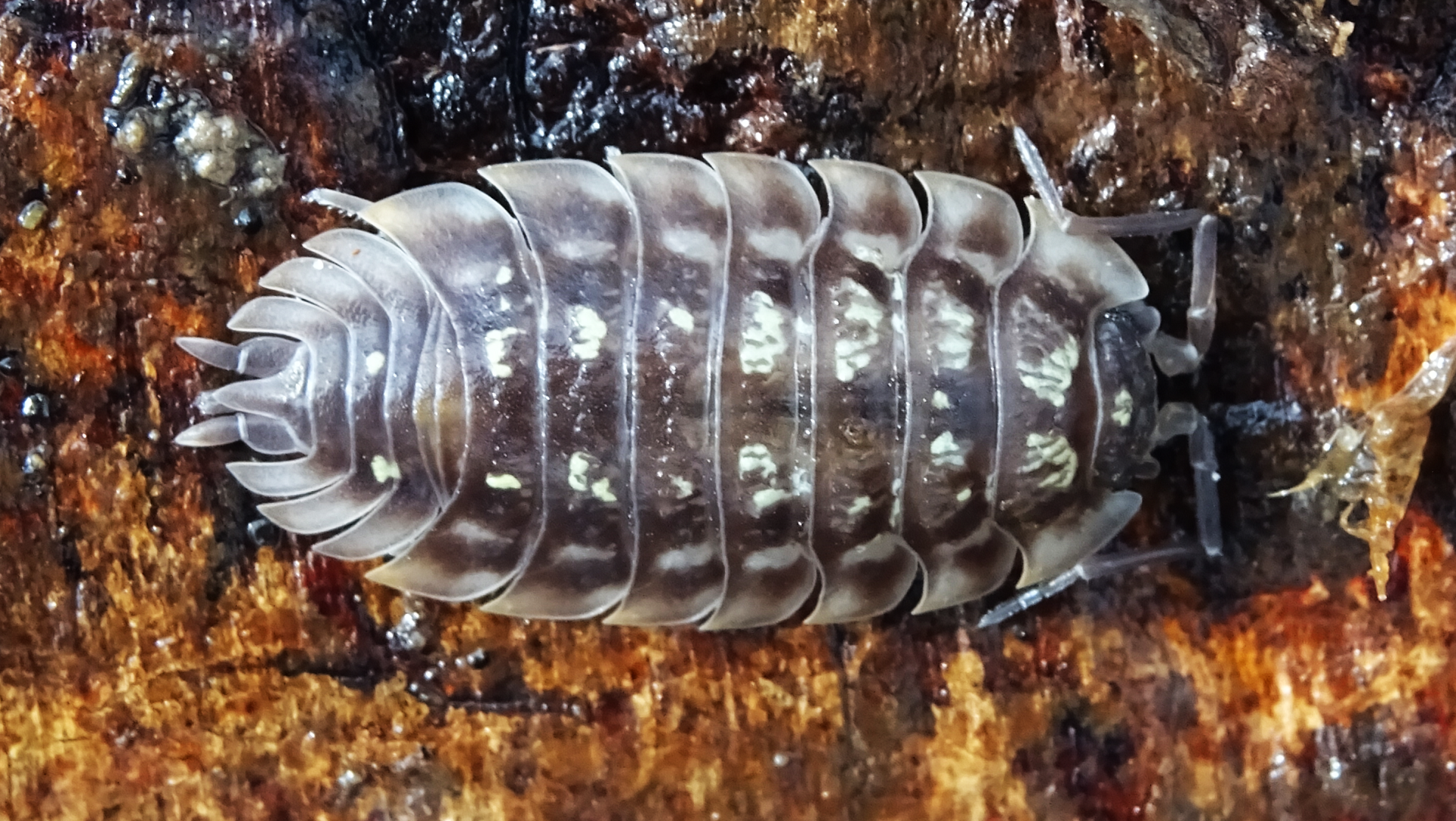
A large species typically located under logs and in leaf litter. It has a brown, glossy appearance with pale markings and can reach lengths of up to 16mm. Woodlice primarily consume decomposing plant material. Due to their susceptibility to drying out, they usually seek shelter in moist environments during the day and are more active at night. They possess seven pairs of legs.
#
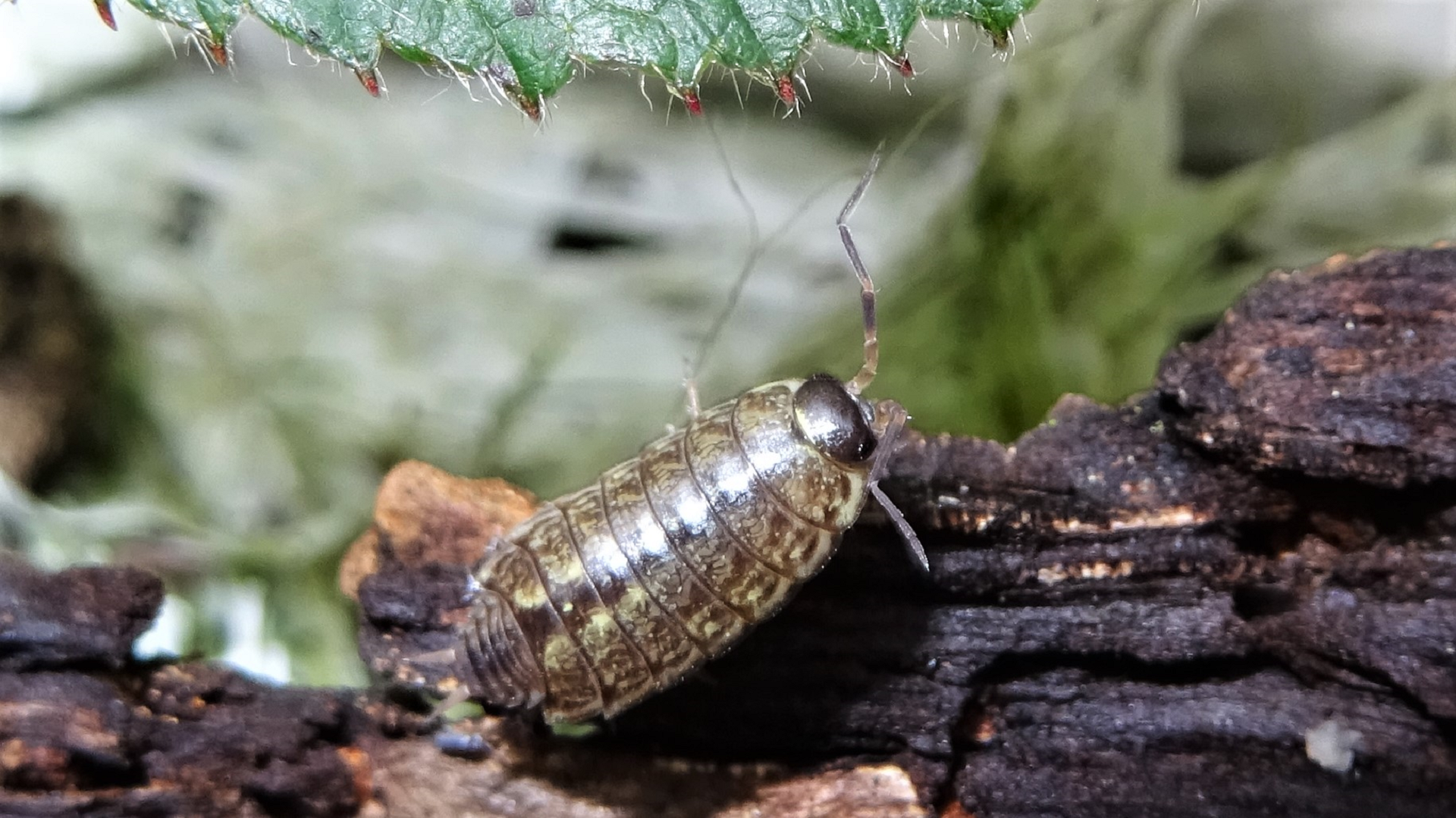
Common Striped Woodlouse
Philoscia muscorum
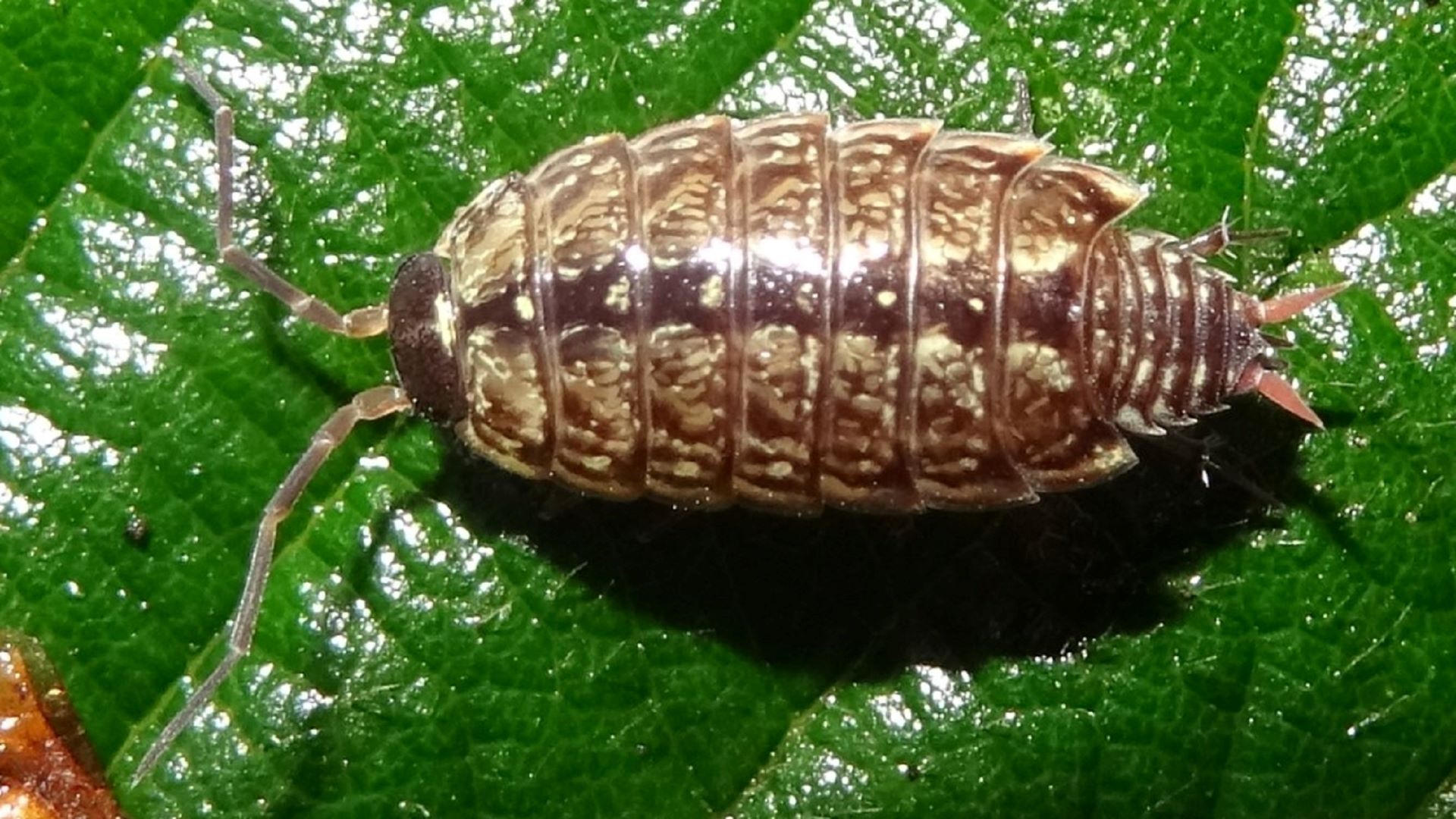
Sometimes referred to as the 'Fast Woodlouse' due to its capacity to move more quickly than many other common species when disturbed. This brownish mottled woodlouse features a dark stripe along its back and has a black head. It can reach a maximum length of 11mm and is typically observed from early spring to late autumn. Mating usually takes place at night. When a female is prepared to mate, a male climbs onto her back and licks her head while tapping against her with his front legs.
#
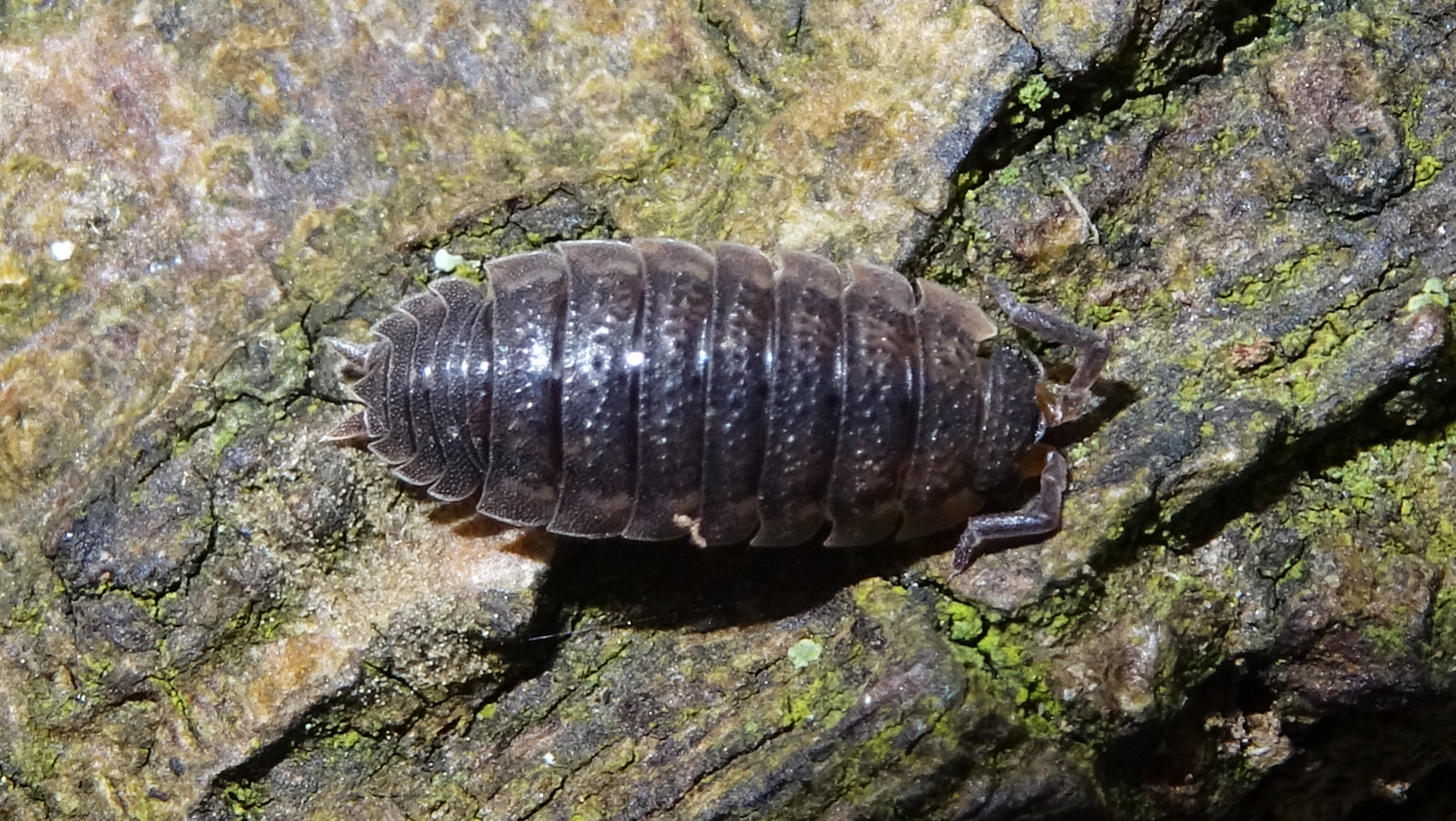
Common Rough Woodlouse
Porcellio scaber
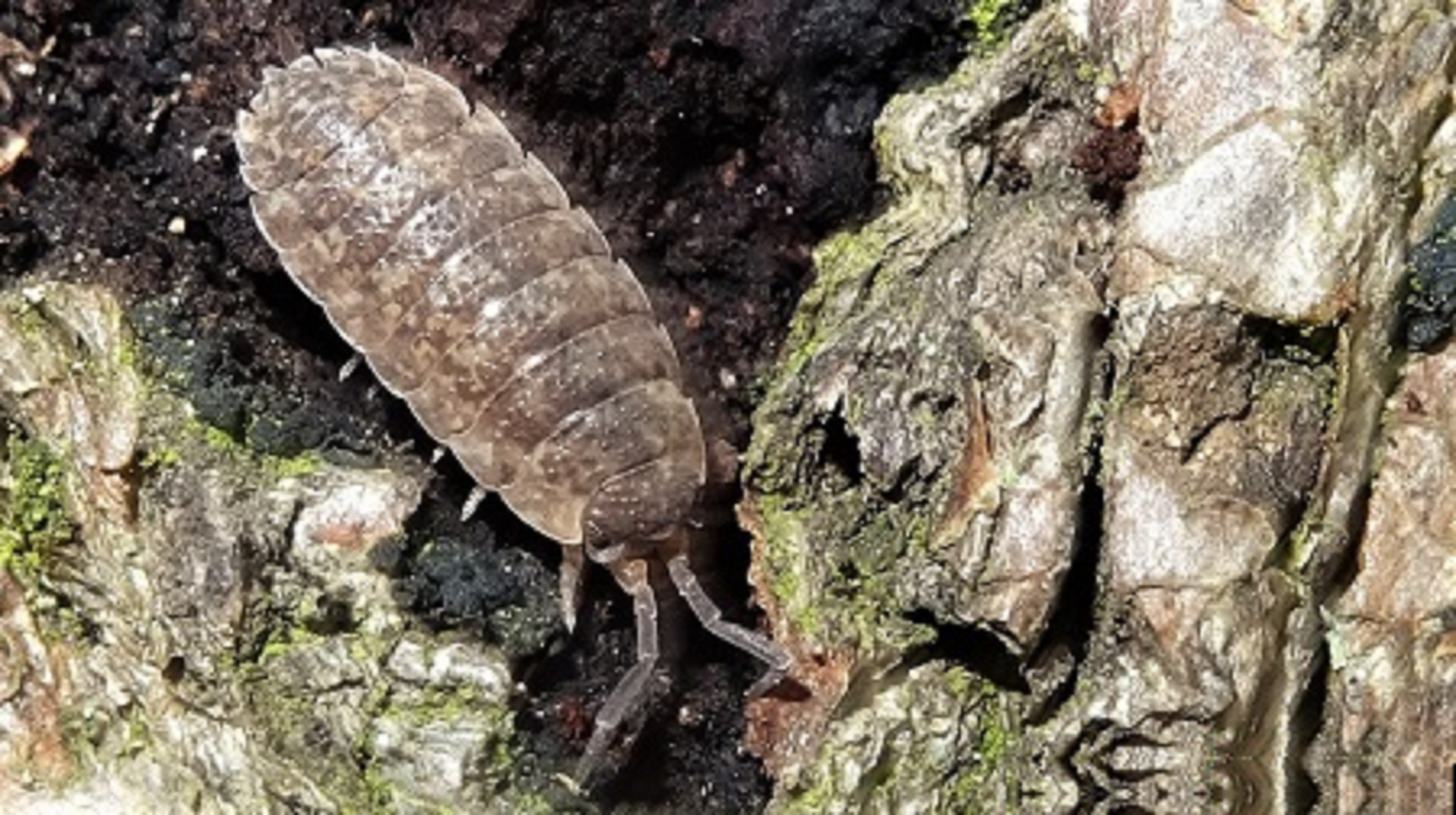
This species is typically grey, oval-bodied, and can reach up to 12mm in length, occasionally exhibiting tints of orange, yellow, or red. It has two pairs of antennae on its head, with the inner pair being quite small. At the rear, the small final segment (telson) is accompanied by a pair of appendages known as uropods. This species is frequently found in gardens.
#
Pygmy Woodlouse
Trichoniscus pusillus agg.
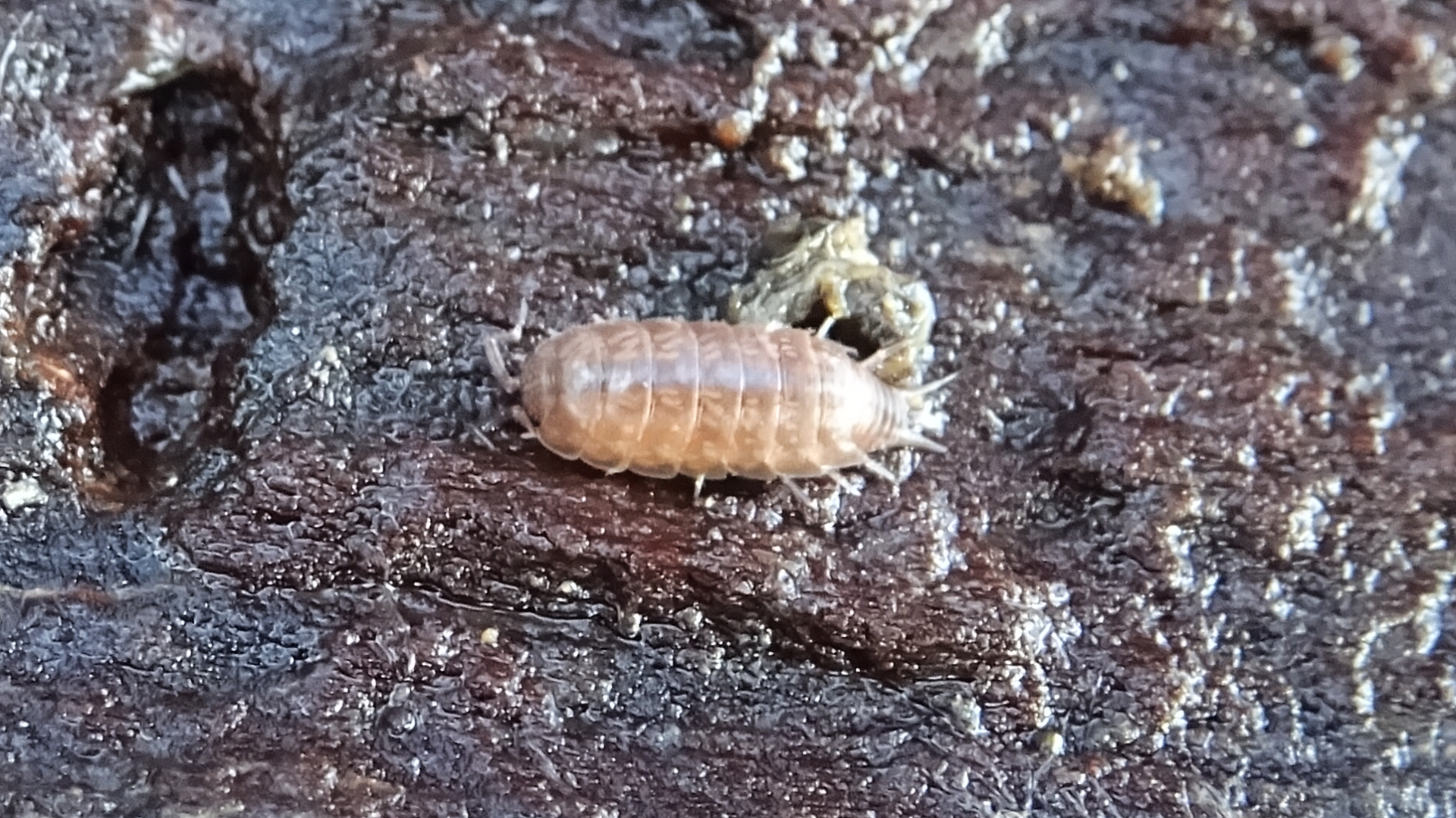
The Pygmy Woodlouse is small, measuring up to 5mm in length. It has a mottled reddish-brown body with a smooth texture. There are two similar species which are normally recorded as an aggregate group.
#
Common Pill Woodlouse
Armadillidium vulgare
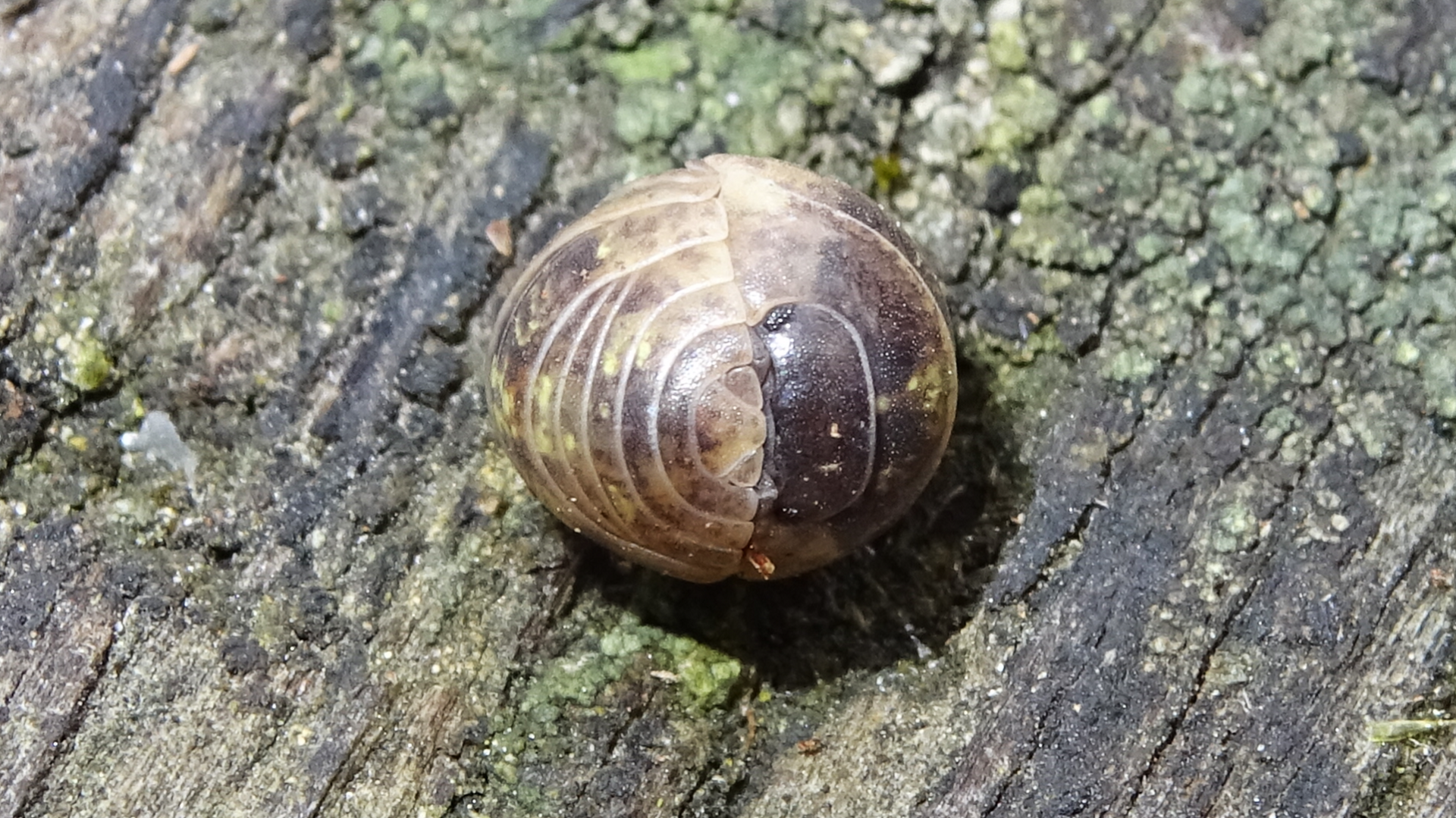
The Common Pill Woodlouse rolls into a ball when it is disturbed. It is slate grey, often with lighter patches, and can measure up to 18mm in length.
#
Nosy Pill-woodlouse
Armadillidium nasatum
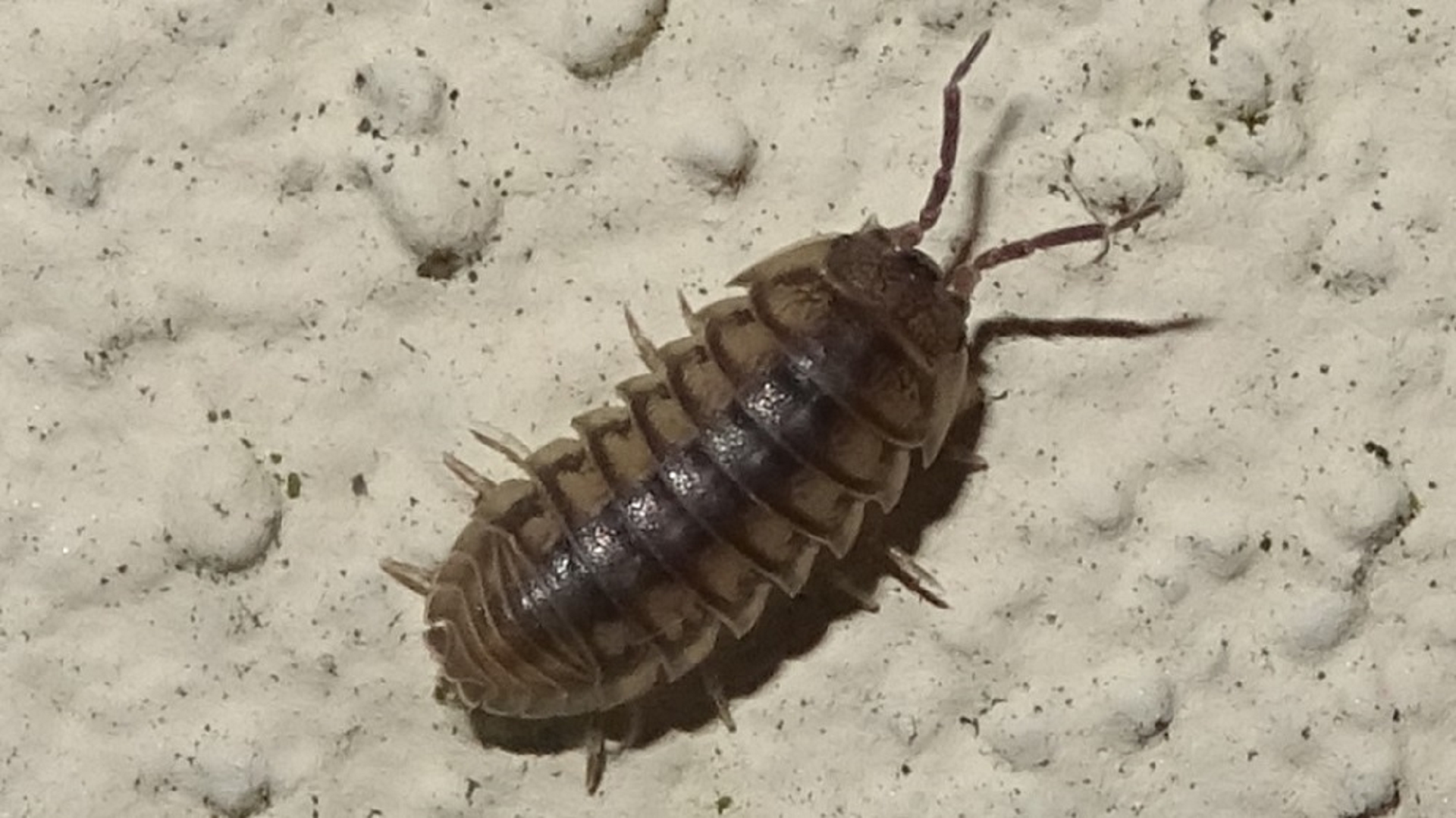
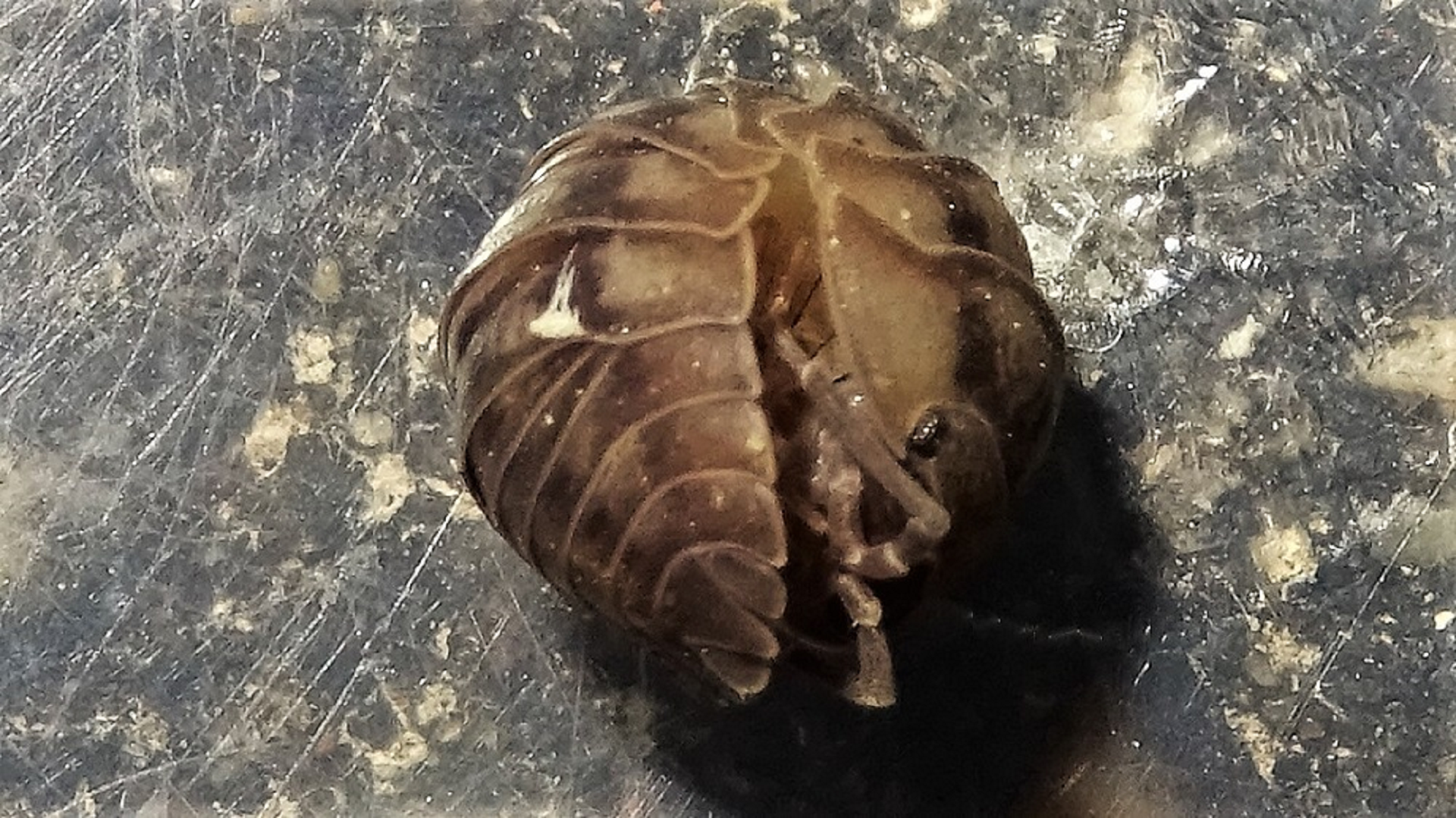
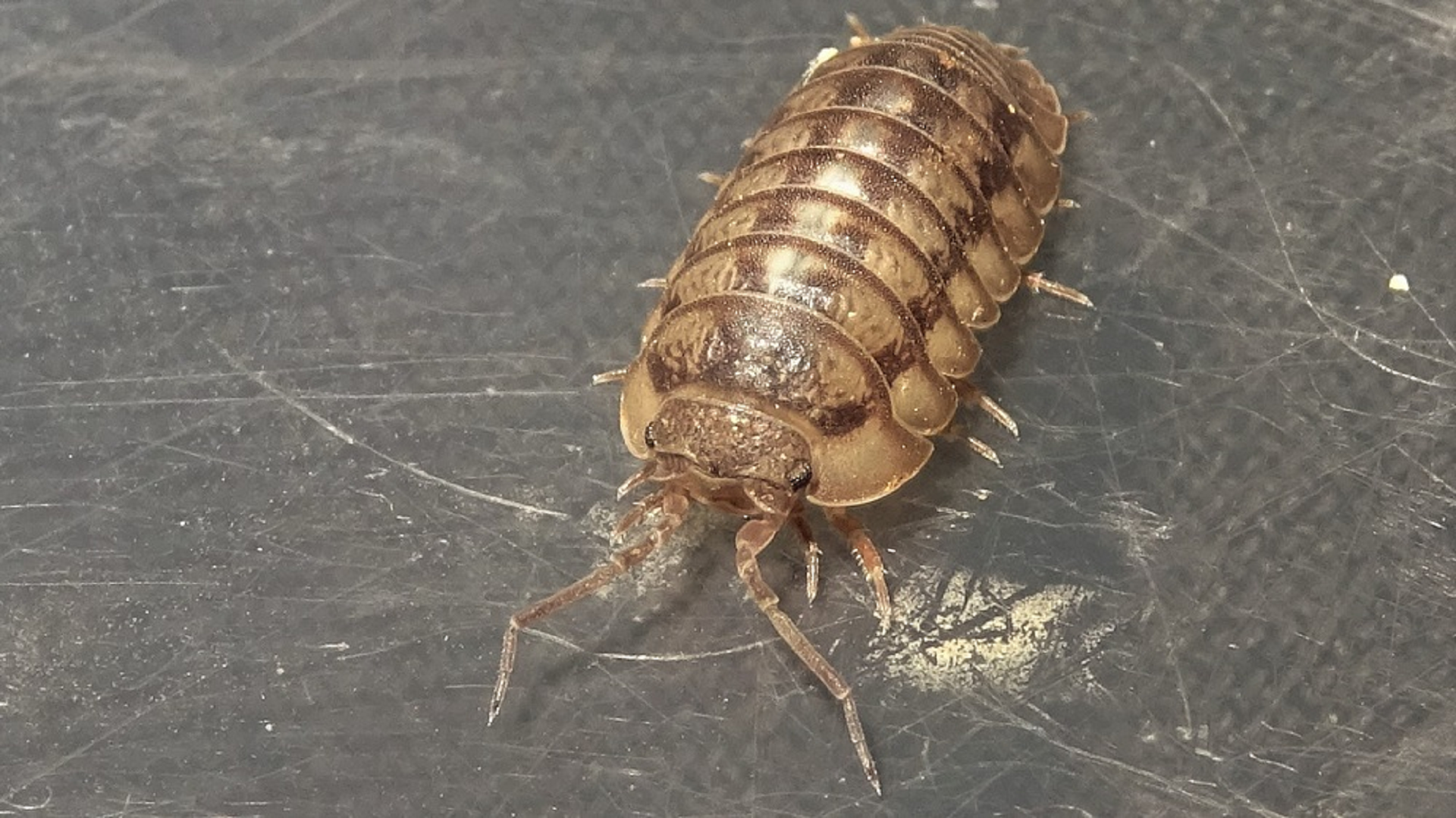
The Nosy Pill-woodlouse rolls up when disturbed, but does not form a complete ball like the Common Pill Woodlouse. A key distinguishing feature is a rectangular protrusion, referred to as a "nose," at the tip of the head. This species can reach a length of 21mm.
#
Two-spotted Water Hog-louse
Asellus aquaticus
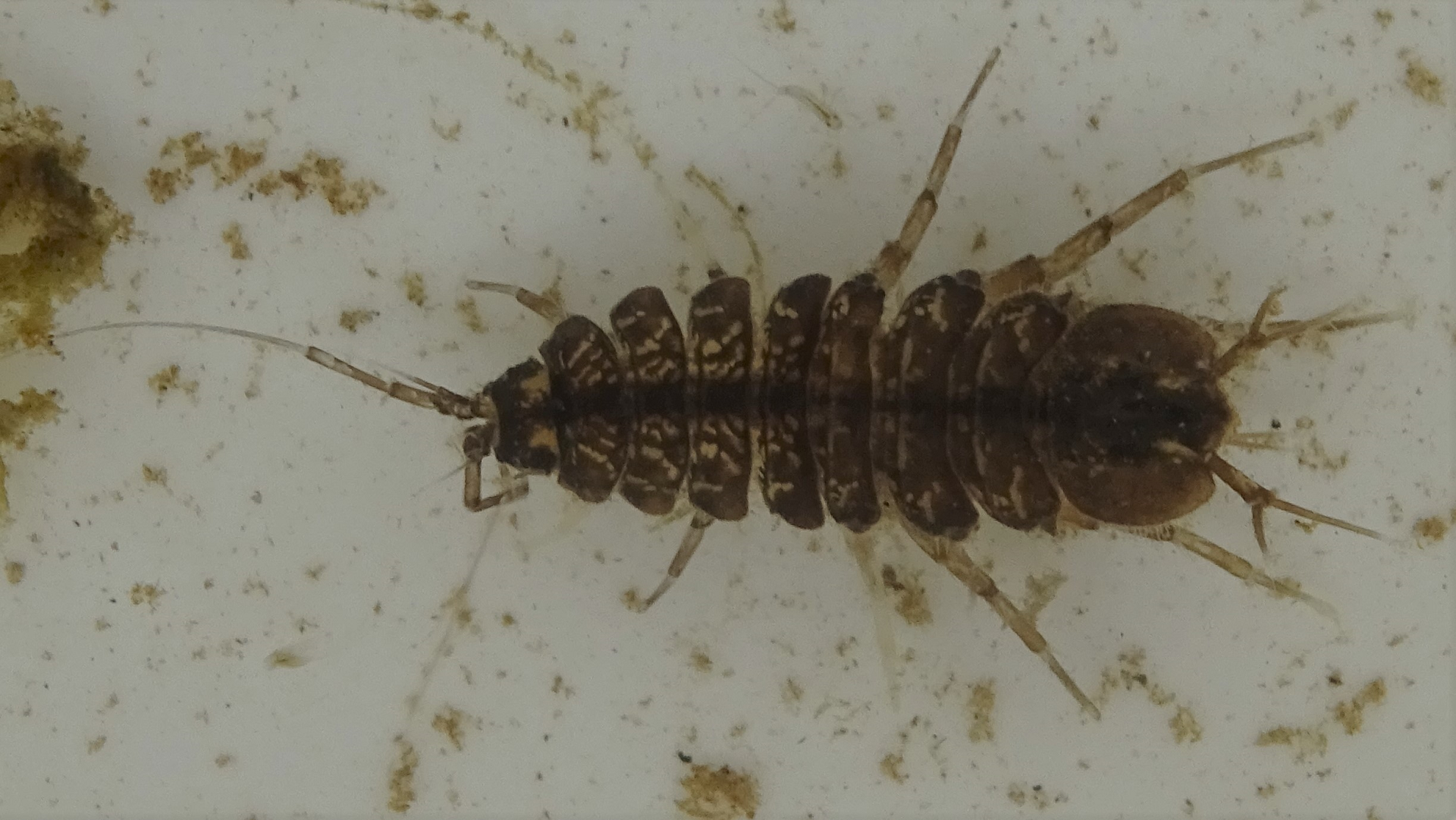
A species closely related to woodlice that resides entirely in water. They are not strong swimmers and typically move through vegetation and mud in stagnant environments to feed on decomposing organic material. Two light spots on the head differentiate them from other species. Female individuals possess brood pouches beneath their bodies that contain eggs.
#
© hainaultforest.net. All rights reserved.