

Galls are unusual growths found on plants. They are caused by organisms such as insects, mites, fungi, or bacteria that stimulate the plant's cells to generate excess tissue. This process creates a shelter and food source for the invader. Generally, they do not cause significant harm to the plant.
OAK GALLS
Jumping Bean Gall
Pseudoneuroterus saliens
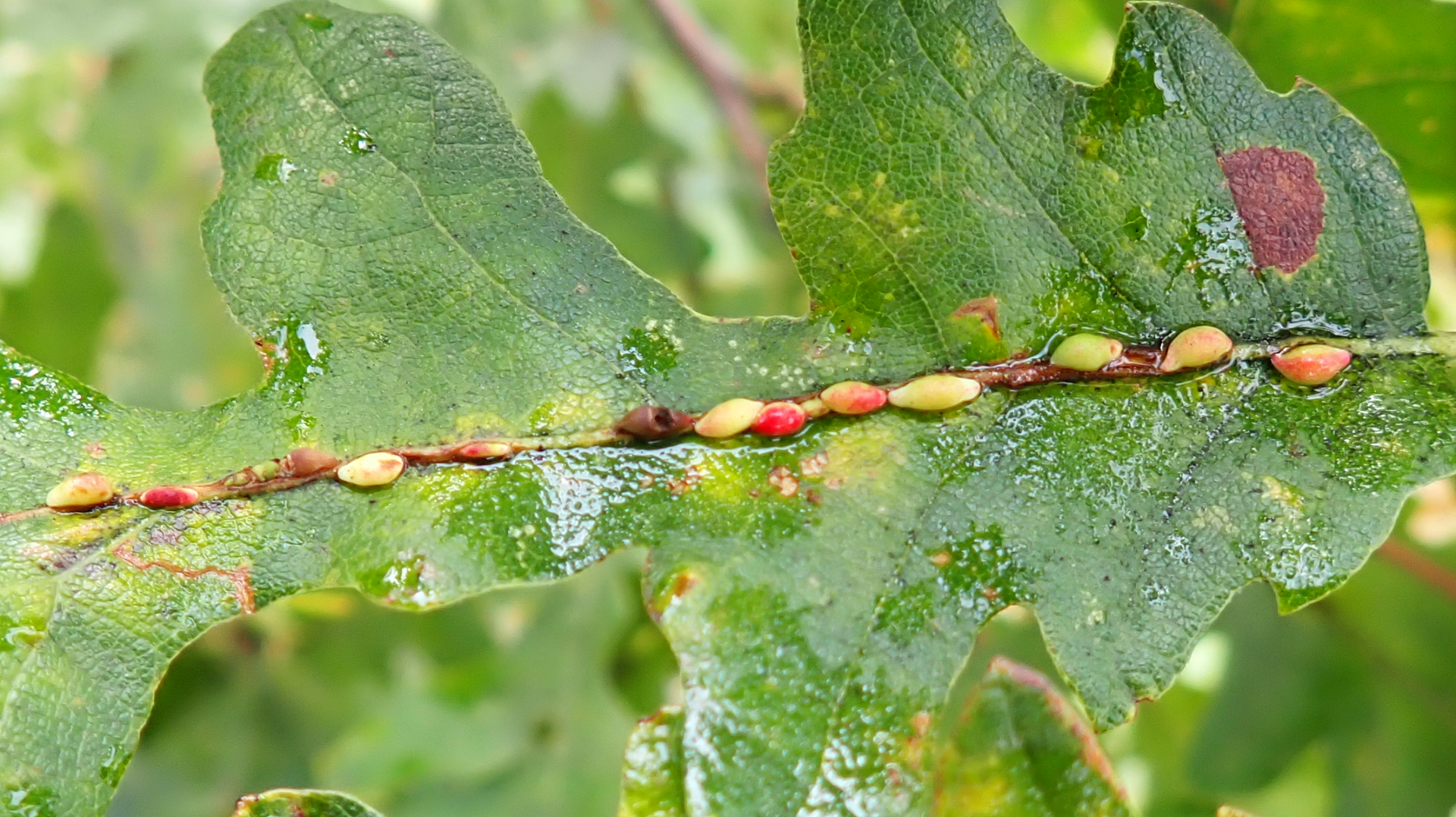
TQ4792 28/10/2023 ©Raymond Small
The asexual reproduction of a Gall Wasp on Turkey Oak occurs in autumn, affecting young shoots, mid-ribs, or leaf petioles. Each gall measures 3-4mm in length and houses a single larva. These galls transition in colour from lemon yellow to red. Upon maturing, they drop to the ground and can sometimes be observed jumping. The term 'Saliens' is derived from Latin, meaning 'jumping.' Adult wasps emerge in spring to lay eggs on flowers, which subsequently produce Anemone galls.
#
Anemone Gall
Pseudoneuroterus saliens
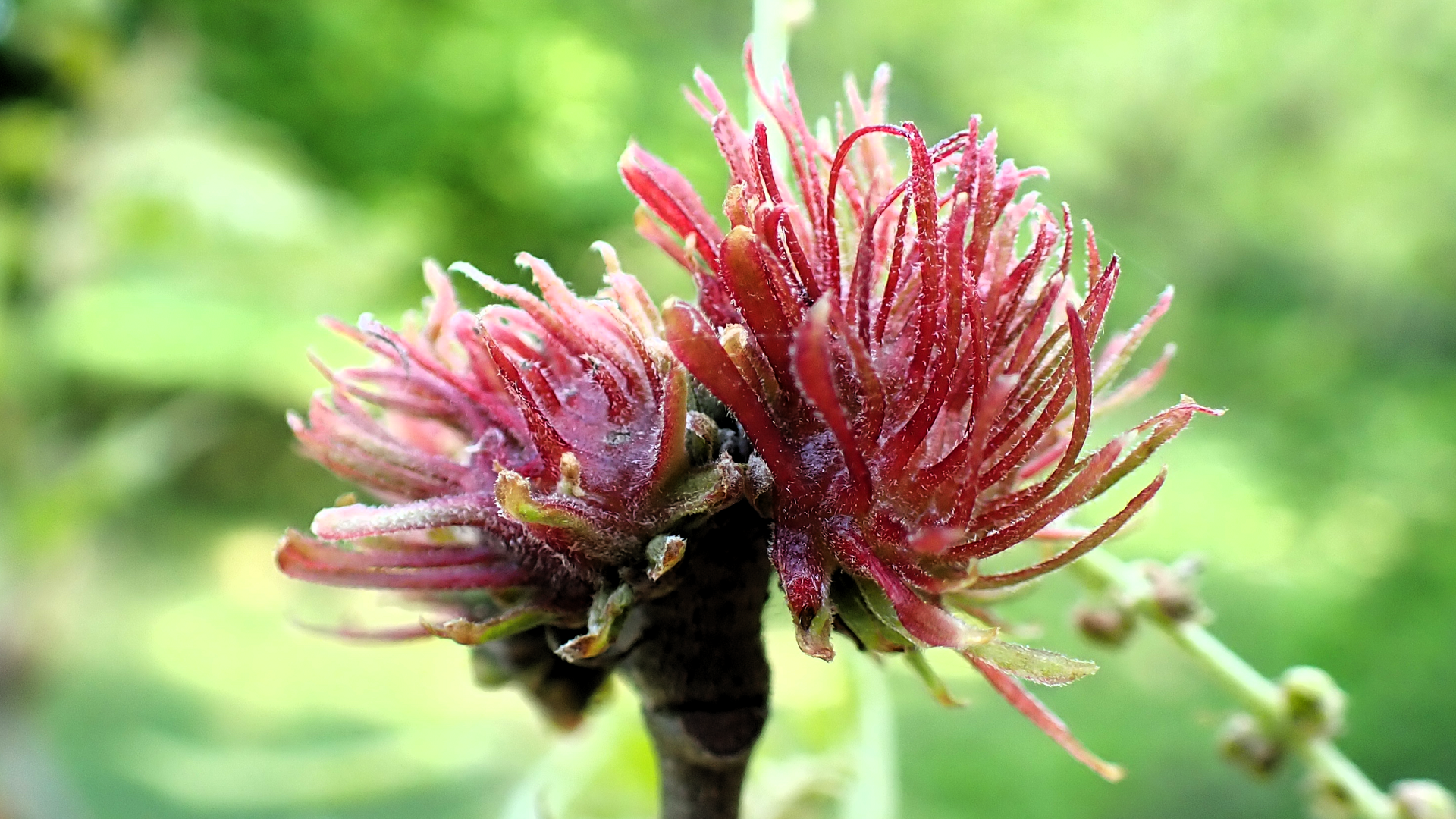
Anemone galls develop on fertilized female flowers of Turkey oak. Their formation is triggered by the sexual generation of a gall wasp. Multiple larvae inhabit each gall and emerge as adults in the summer. The first documented occurrence of this gall in the UK took place in 2004.
#
Cluster Gall
Andricus lucidus
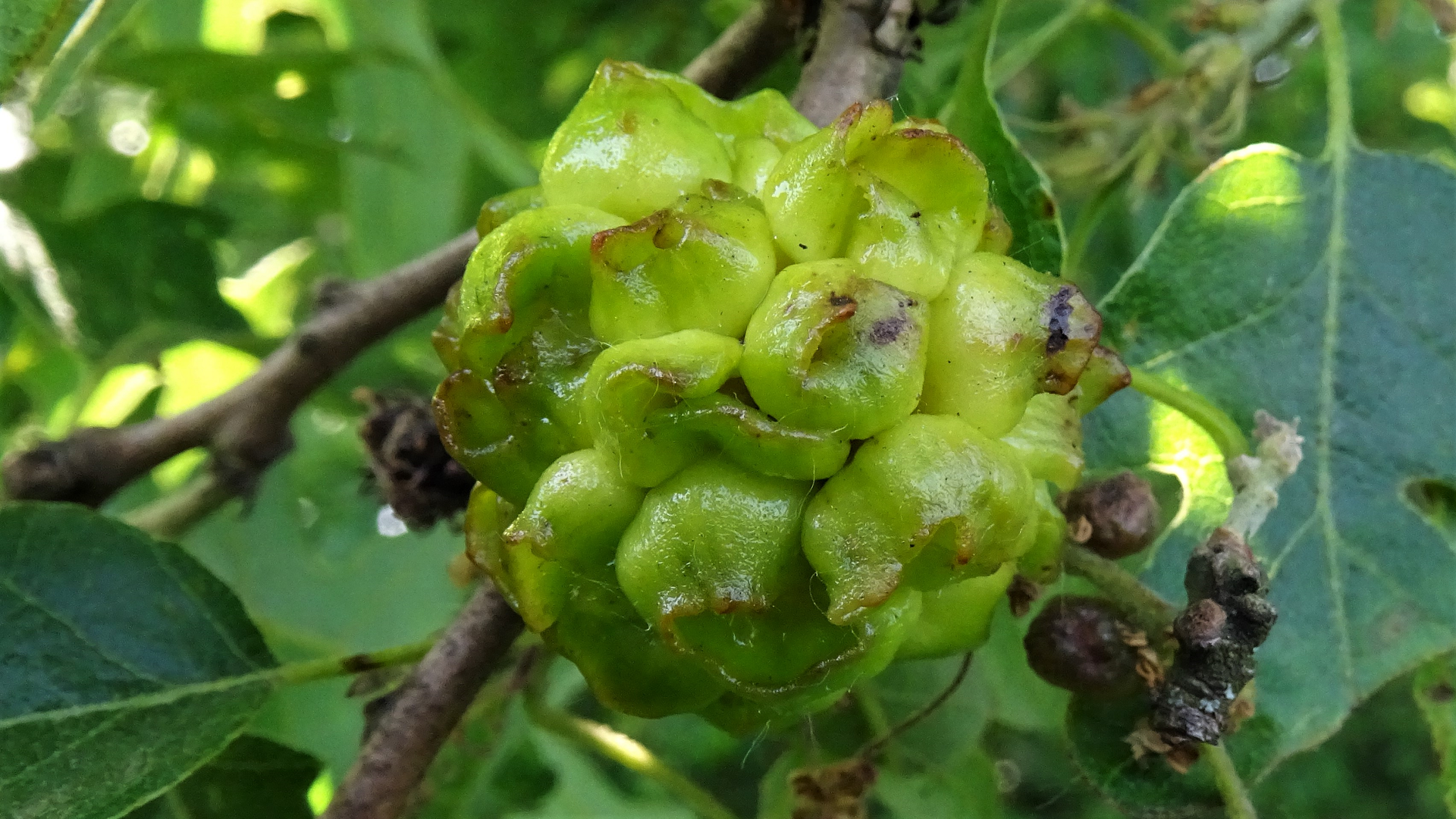
Cluster Galls were first recorded in the UK in the 1990s, having originated from the Mediterranean region. These galls result from the sexual generation of a gall-wasp. The flower-like clusters can reach sizes of up to 35mm across and consist of dish-shaped galls that interlock. Initially, the galls are green with a shiny, waxy surface, later turning reddish-brown and hard. The asexual generation of this gall-wasp produces Hedgehog Galls.
#
Oak Apple
Biorhiza pallida
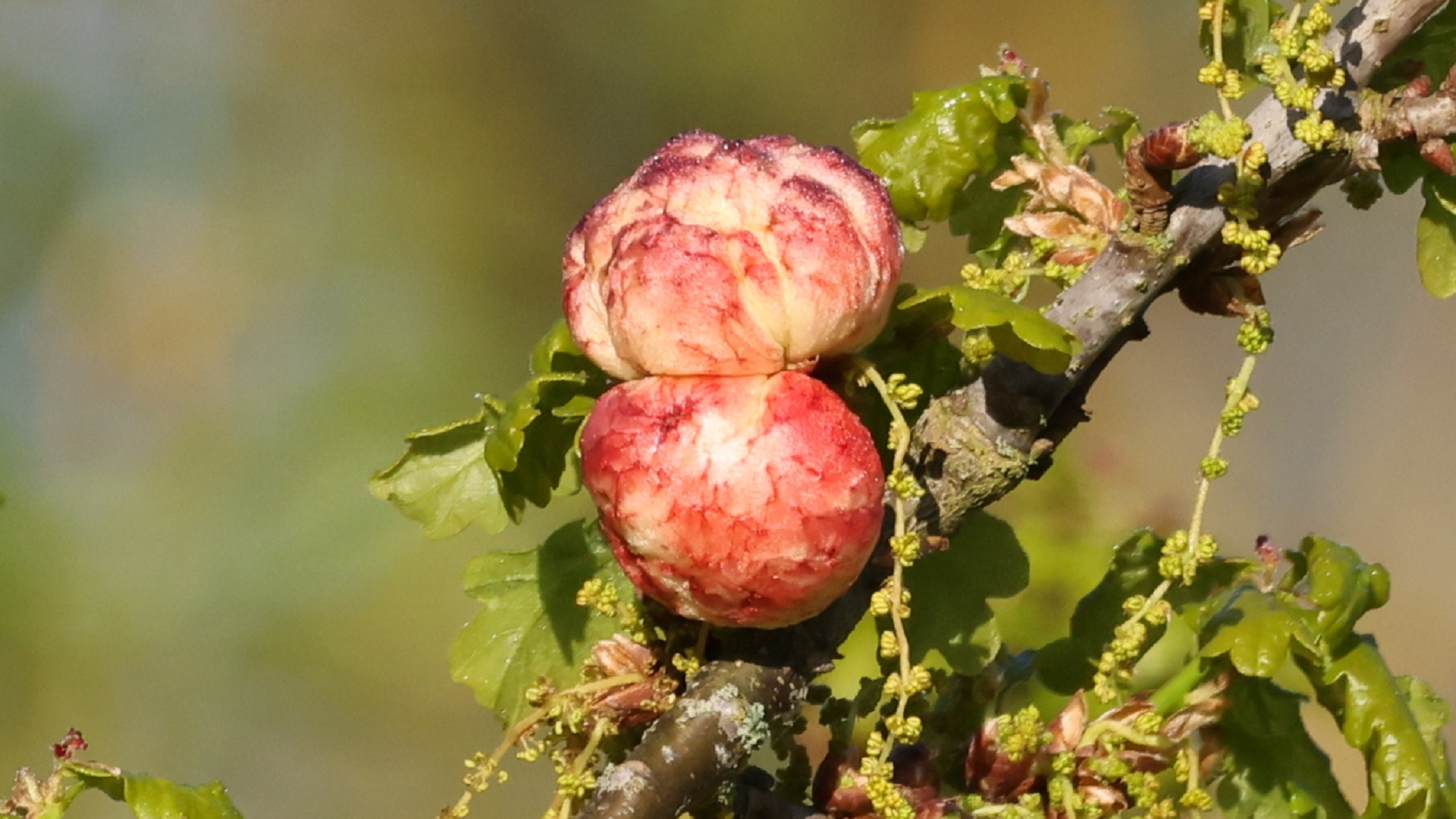
Oak apples on English oak trees result from the larvae of a gall wasp. The eggs laid in oak buds lead to the formation of spongy, apple-like growths. Each 'apple' contains multiple chambers, each housing a larva. These growths are not suitable for consumption.
#
Silk Button Gall
Neuroterus numismalis
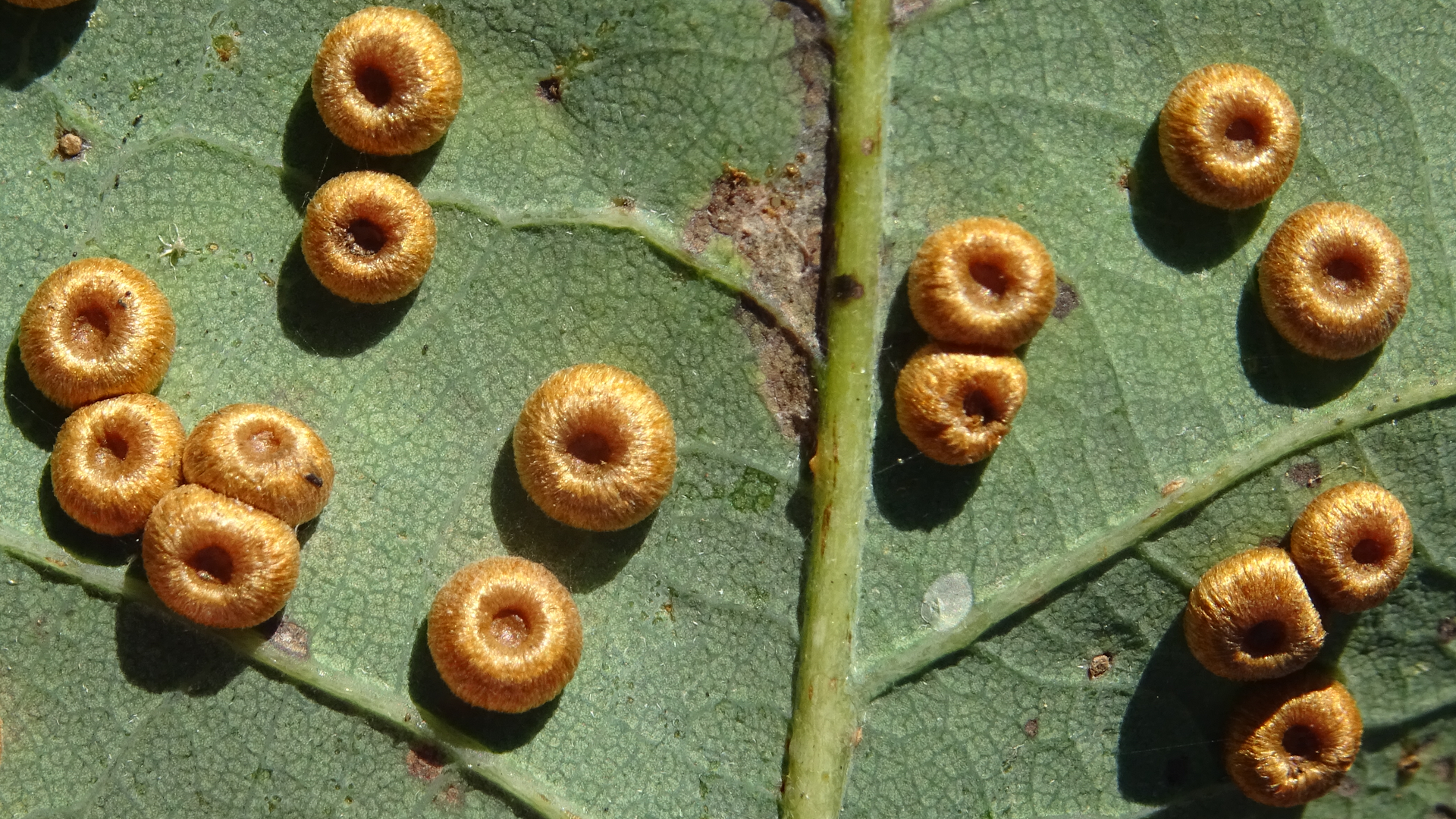
The agamic generation of a gall wasp produces Silk Button Galls on the underside of oak leaves. These galls are round, thick, and are up to 3mm in diameter. They typically appear in large quantities during the autumn season.
#
Common Spangle Gall
Neuroterus quercusbaccarum
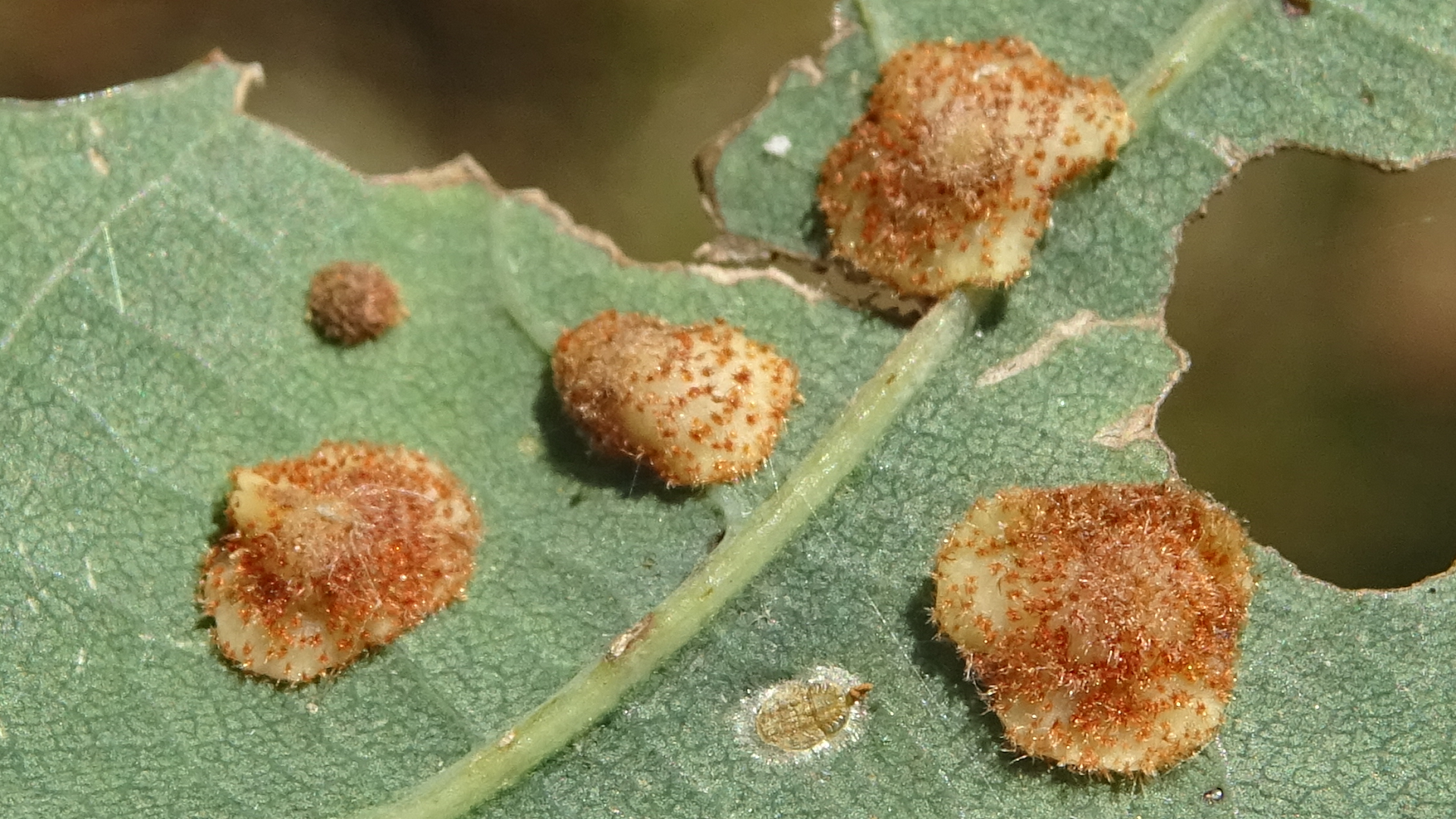
Common Spangle Galls found on oak leaves are produced by the asexual generation of a gall wasp, which is the same species responsible for the currant galls. These disc-shaped galls are topped with tufts of reddish hairs. In autumn, they detach from the leaf, and the larvae remain in the leaf litter to overwinter.
#
Marble Gall
Andricus kollari
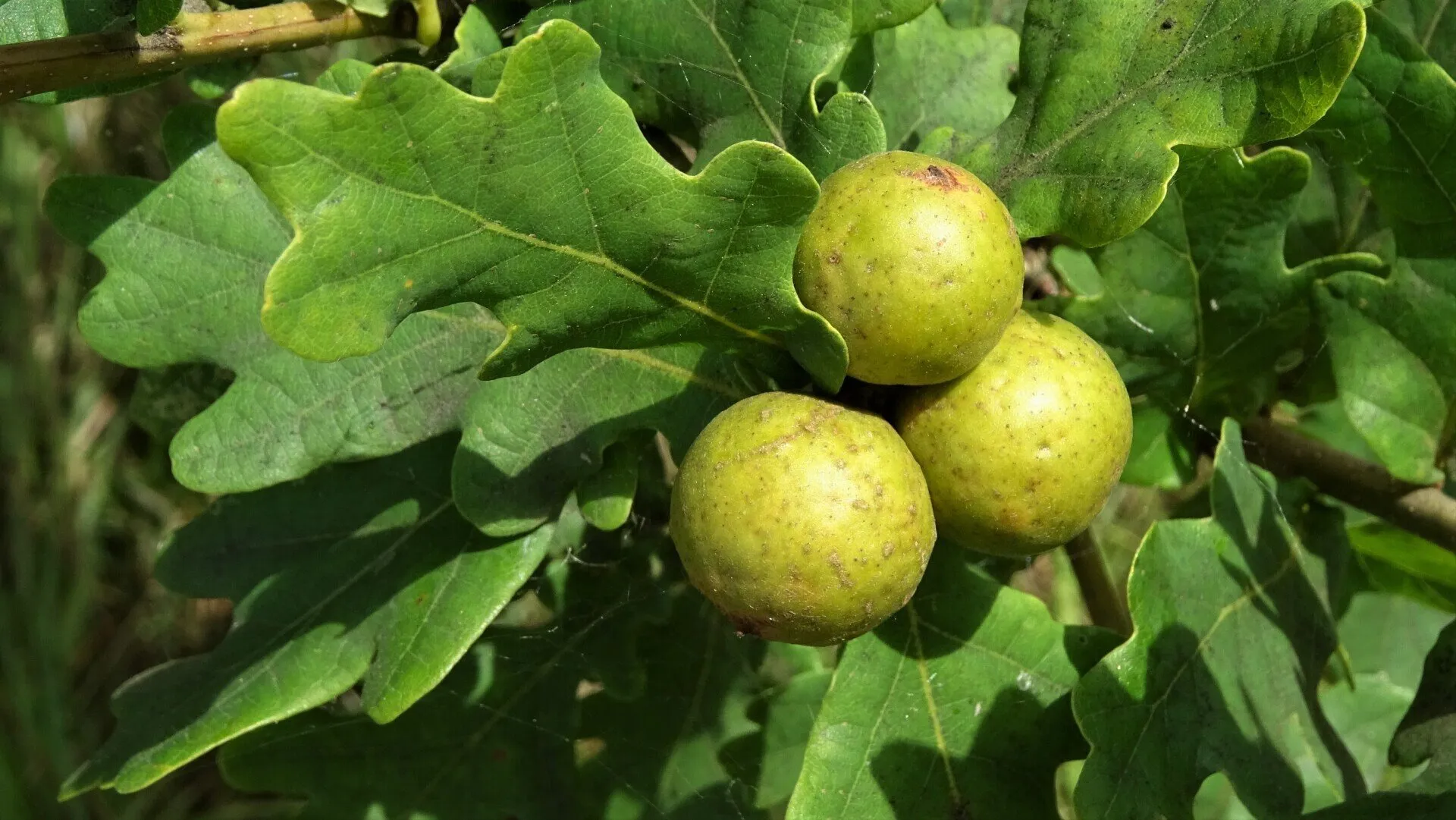
Marble Galls on English Oak are formed by the asexual generation of the Gall wasp Andricus kollari on leaf buds. Each gall, which can grow up to 25mm in diameter, contains a single larva. The galls start off green and change to brown in the autumn. They are rich in tannin and may have been brought to Britain in the 19th century as a source of tannin for the ink-making and dyeing industries. Typically, there is one prominent opening through which newly developed adults emerge after transitioning from the larval stage. Smaller openings are often created by inquiline insects that utilize the living space of other organisms. Inquilines are not always parasitic, and they may not cause any harm to the host species.
#
Cottonwool Gall
Andricus quercusramuli

Cottonwool galls are produced by the gall wasp Andricus quercusramuli on English and Sessile Oak trees. The white hairs cover up to 20 chambers, with each chamber containing a single larva.
#
Rosebud Gall
Andricus gemmeus

Originally discovered in the UK in 2008 at Colchester, Essex, the galls (3-4mm in diameter) are produced by the asexual generation of the gall wasp Andricus gemmeus. They are commonly observed on oak trunks in September.
#
Oyster Gall
Neuroterus anthracinus
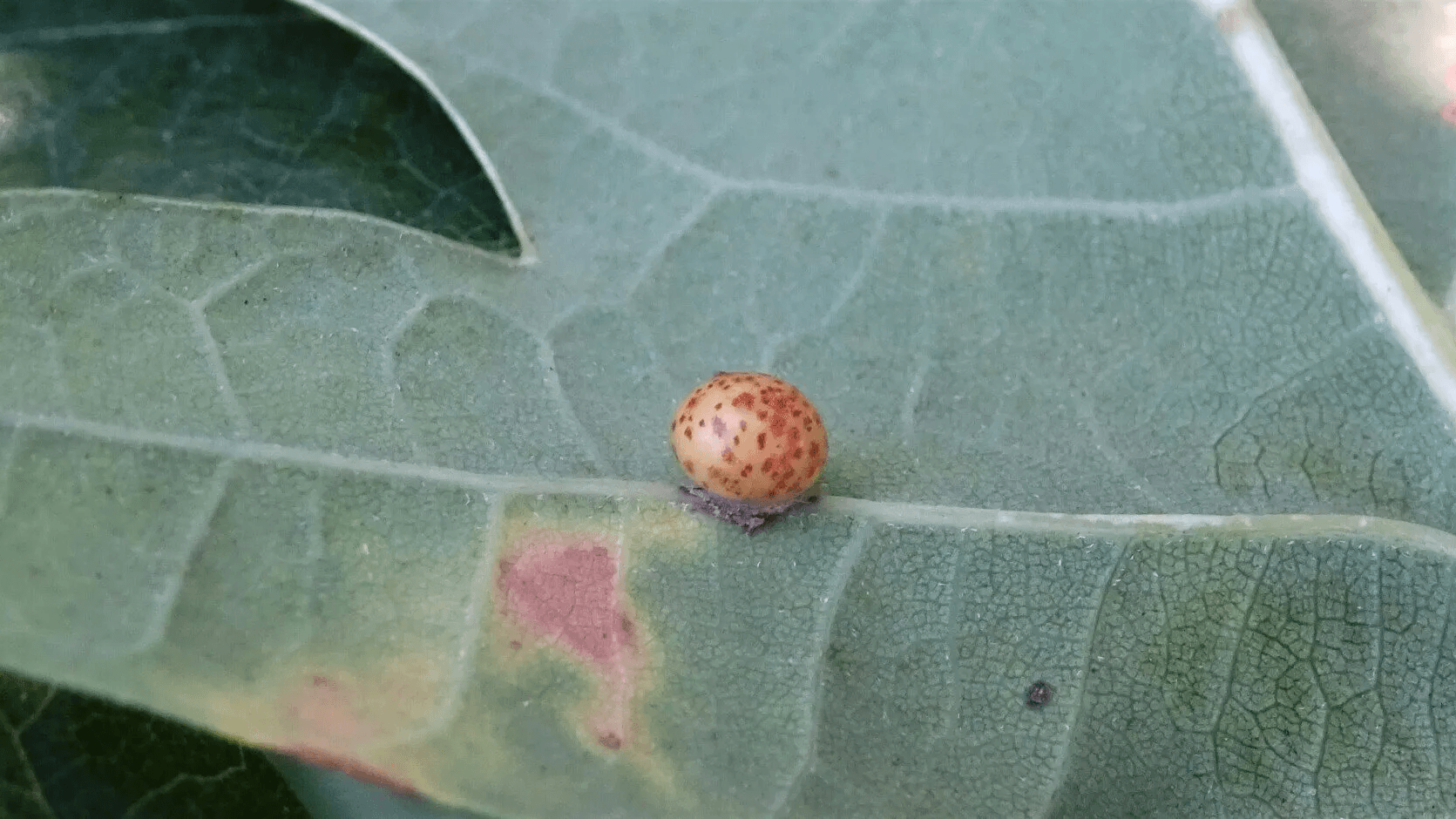
The asexual generation of the gall wasp Neuroterus anthracinus leads to the formation of small, egg-shaped galls approximately 3mm in diameter on the midrib of oak leaves. Each gall has a small flap of tissue protruding from each side of the base, which is a key feature for identification to differentiate it from similar species. The galls start as cream or green in colour, develop reddish-brown spots before maturing, and eventually fall from the leaves in autumn. Adult wasps emerge in winter and spring to lay eggs in buds, which will develop into the sexual generation.
#
Gooseberry Gall
Andricus grossulariae
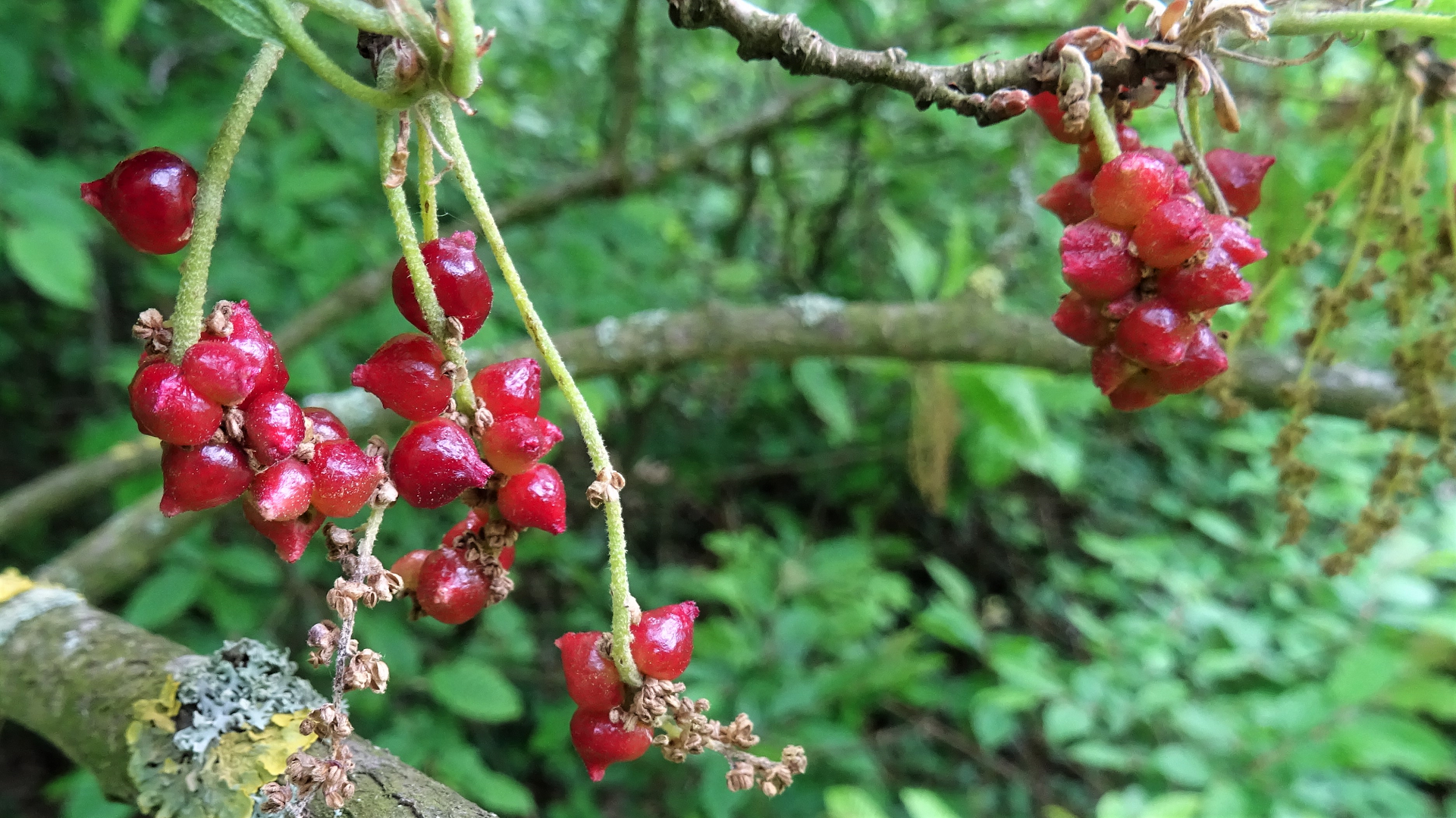
The initial observation of this gall in Essex took place in 2004, four years after its discovery in Berkshire. These galls, which are round with a pointed end, develop in large clusters on male catkins of Turkey Oak. They are caused by the sexual generation of a gall wasp. Immature galls have a slightly hairy, waxy appearance and are bright green. By late spring, they mature into small, shiny maroon structures before becoming hard and woody. Fallen galls have also been noticed at the base of a Lucombe Oak.
#
Knopper Gall
Andricus quercuscalicis
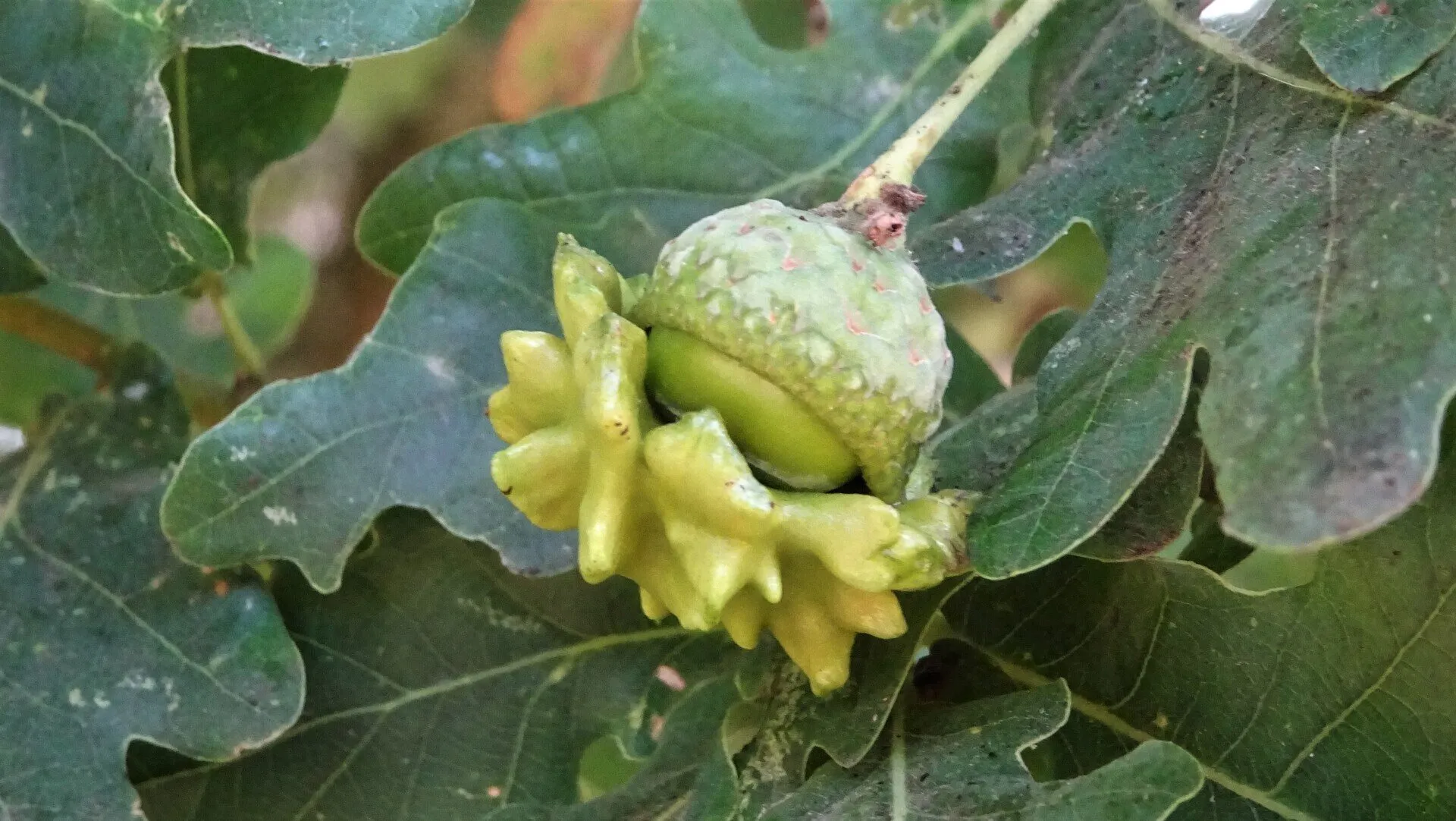
Caused by the asexual reproduction of a gall wasp on English Oak, the galls enclose acorns and raised significant concerns when they were introduced to Britain in the 1960s, as it was believed that the impact on acorns could reduce future generations of oak trees. Initially, knoppers are green, sticky, and develop a reddish hue. Once mature, they turn brown and woody. They fall to the ground in late summer, and gall wasps typically emerge the following spring.
#
Striped Pea Gall
Cynips longiventris
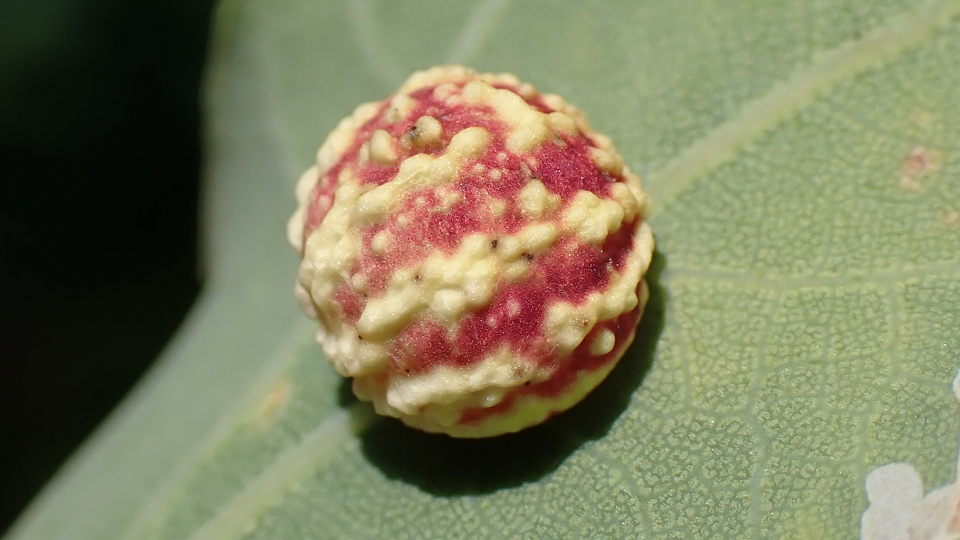
Striped Pea Galls occur on oak leaves due to the asexual generation of a gall wasp.
#
Cherry Gall
Cynips quercusfolii
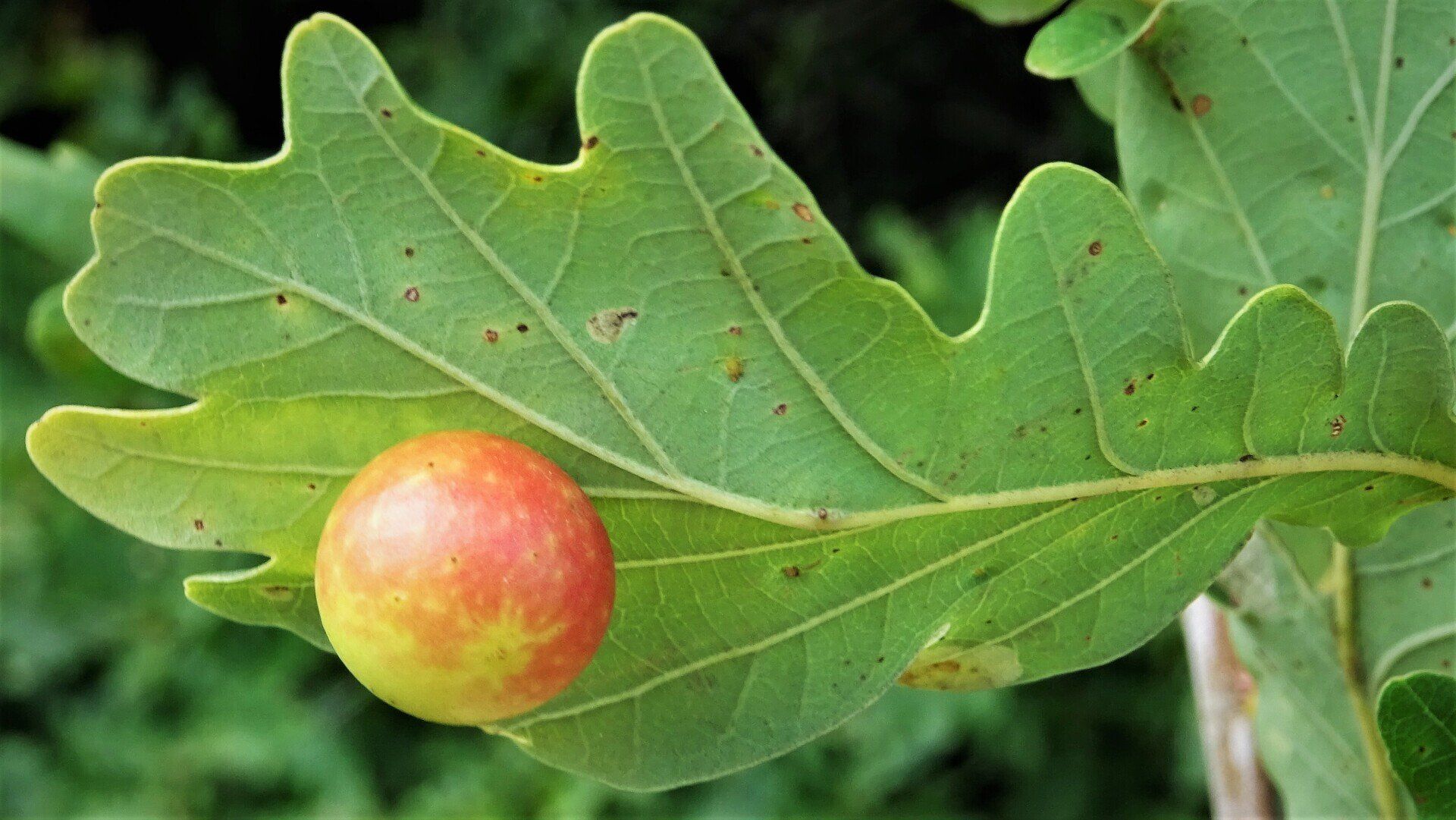
Cherry Galls are abnormal growths that occur on the underside of English Oak leaves in autumn. They are caused by the asexual reproduction of a gall wasp. Initially green, the galls change to red. Typically, there is one gall per leaf, although there may be more in some instances. Later in the season, the galls can be found on fallen leaves on the forest floor.
#
Ramshorn Gall
Andricus aries
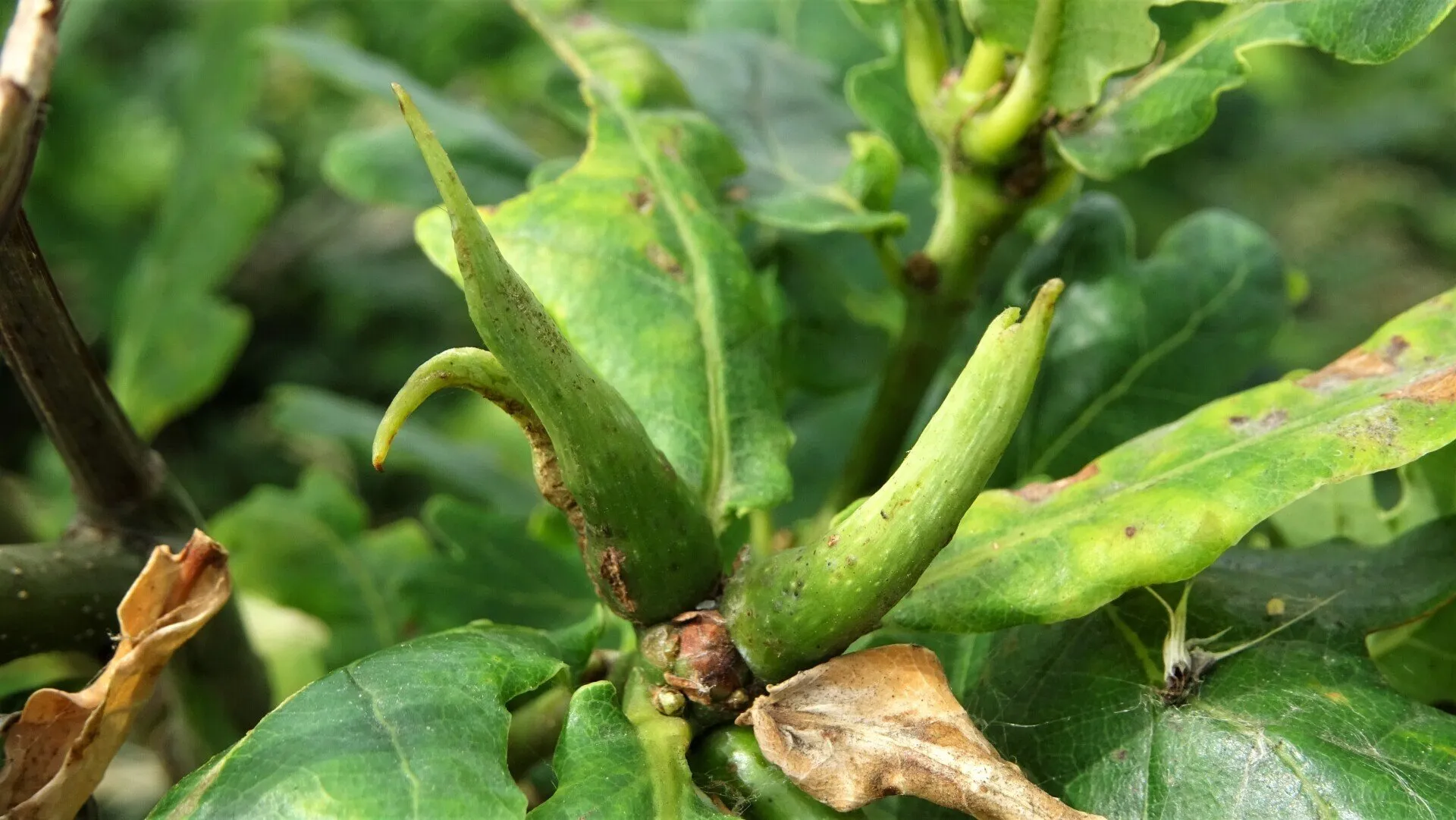
First documented in Britain in 1997, this gall on English Oak features a rounded base with protrusions referred to as 'horns,' typically measuring 20-30 mm. In summer, the green gall develops from a bud that matures into a woody-brown colour over time.
#
Artichoke Gall
Andricus foecundatrix
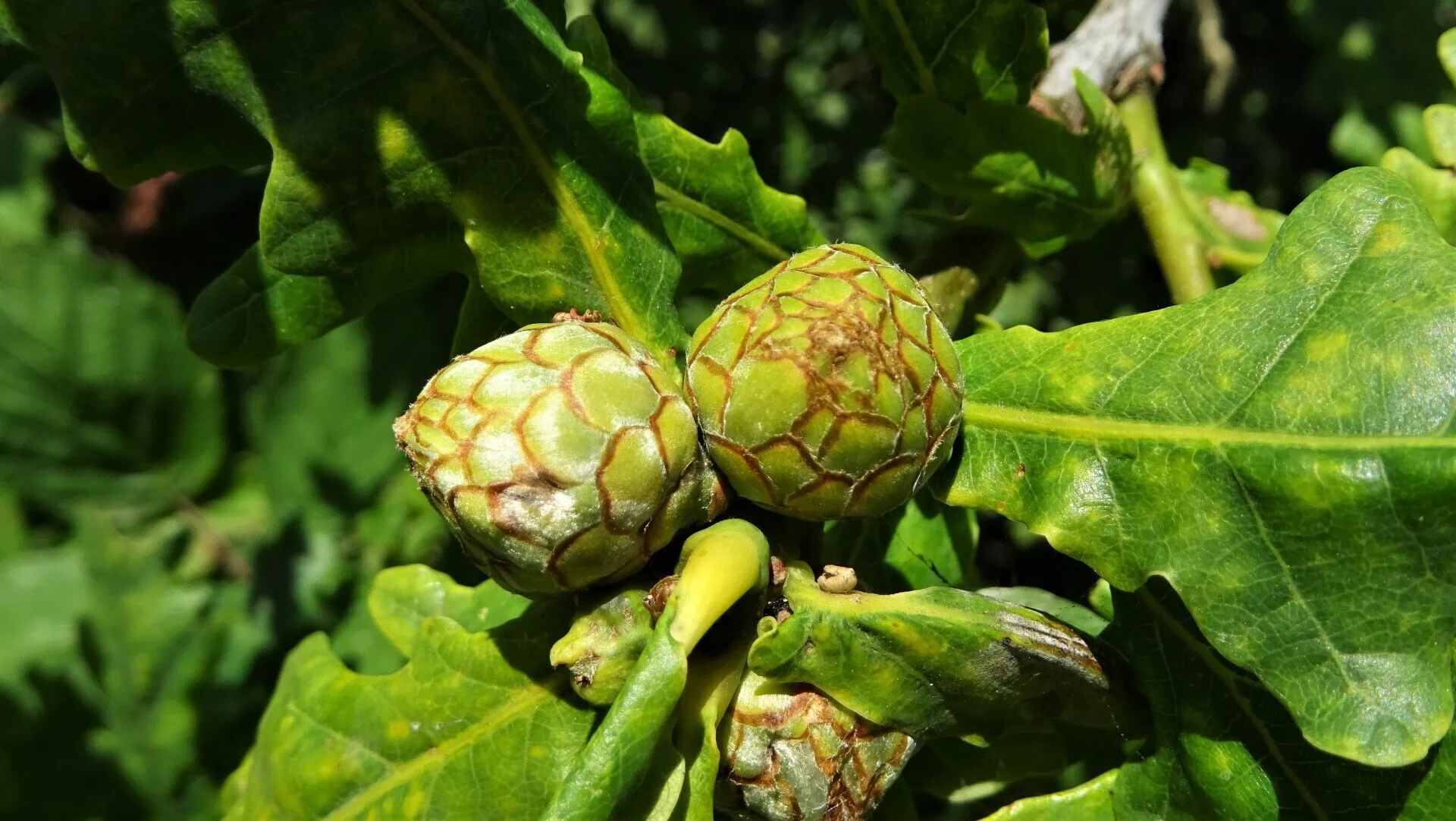
Artichoke Galls on English Oak are caused by the asexual generation of a gall wasp. They begin to appear around June. The enlarged buds can grow up to 30mm in length, with each gall containing one larva. The mature gall falls to the ground in August, leaving dried scales on the twig. Also known as the Hop Gall.
#
Holm Oak Leaf Gall
Aceria ilicis

Present on Holm Oak year-round, these are caused by mites. An unusual felty brown growth of hairs, known as erineum, develops on the underside of the leaf from the leaf epidermis.
#
WILLOW/SALLOW GALLS
Camellia Gall
Rabdophaga rosaria

The Camellia gall, also known as the Rosette Gall, is an abnormality caused by the midge
Rabdophaga rosaria. The galls comprise 30 or more short leaves, each containing a single pinkish larva in the centre that overwinters inside the gall on the tree. As they mature, the galls change colour to brown.
#
Pustule Gall
Aculus tetanothrix
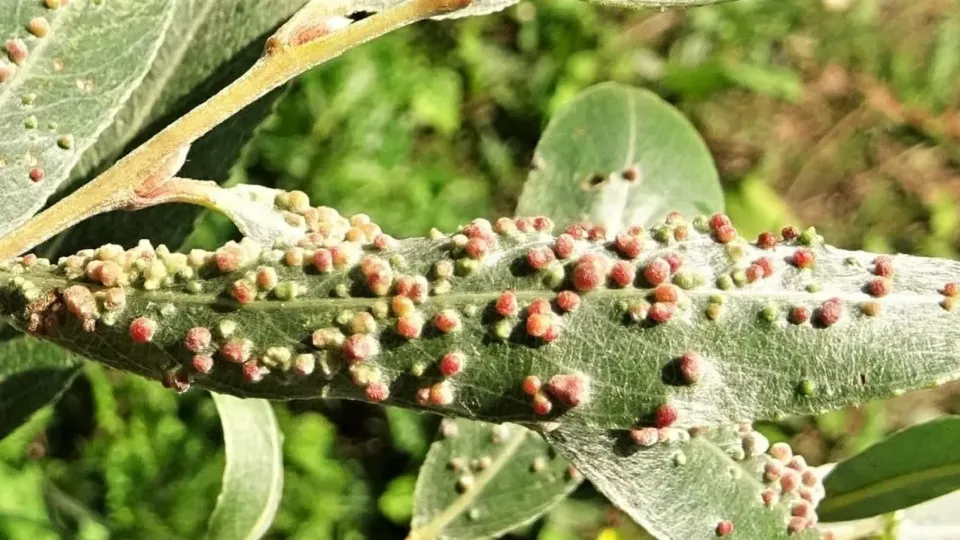
Pustule galls on willow leaves are produced by the mite
Aculus tetanothrix, particularly on White willow. The galls, which can be green or reddish, are found on the upper surface of the leaf. A slit on the underside of the leaf has hairs inside.
#
Hairy Pea Gall
Eupontania pedunculi
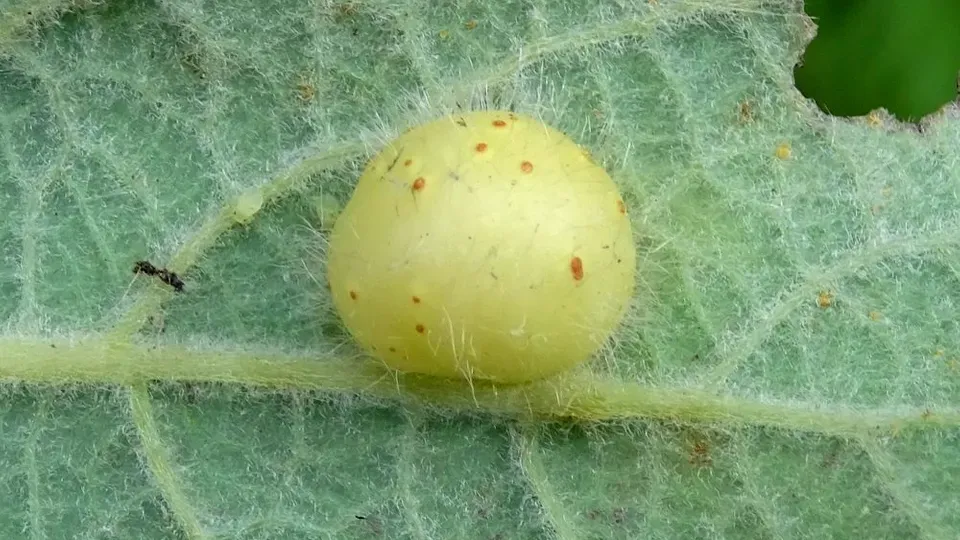
Hairy pea galls on the underside of sallow leaves are produced by the Willow Gall Sawfly,
Eupontania pedunculi. A small circular shiny yellowish patch can be seen on the upper surface of the leaf, which may be flush or only slightly raised.
#
Leaf Gall
Iteomyia major
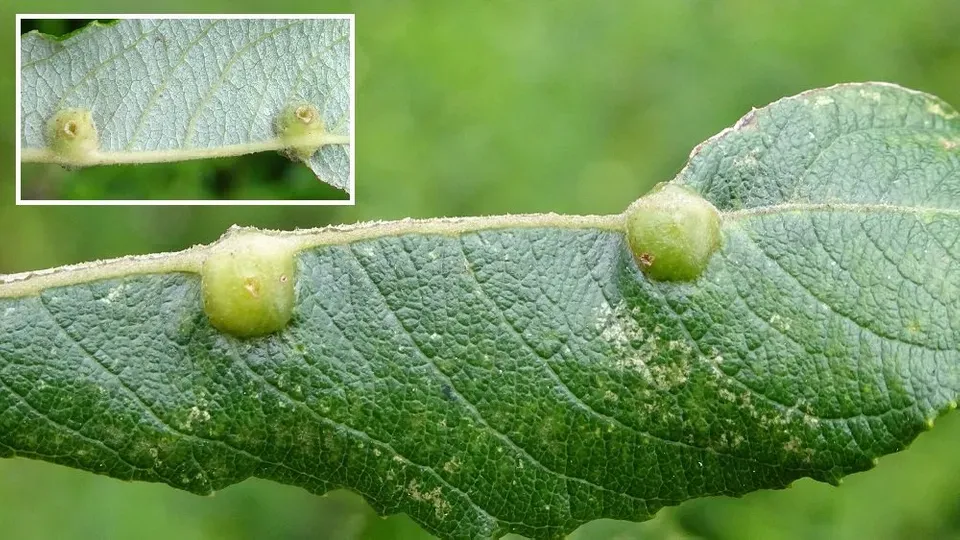
Leaf galls on sallow and willow are caused by the midge
Iteomyia major. They can be found on both the upper and lower surfaces of the leaf.
#
BLACKTHORN GALLS
Leaf Hairy Leaf Gall
Eriophyes homophyllus
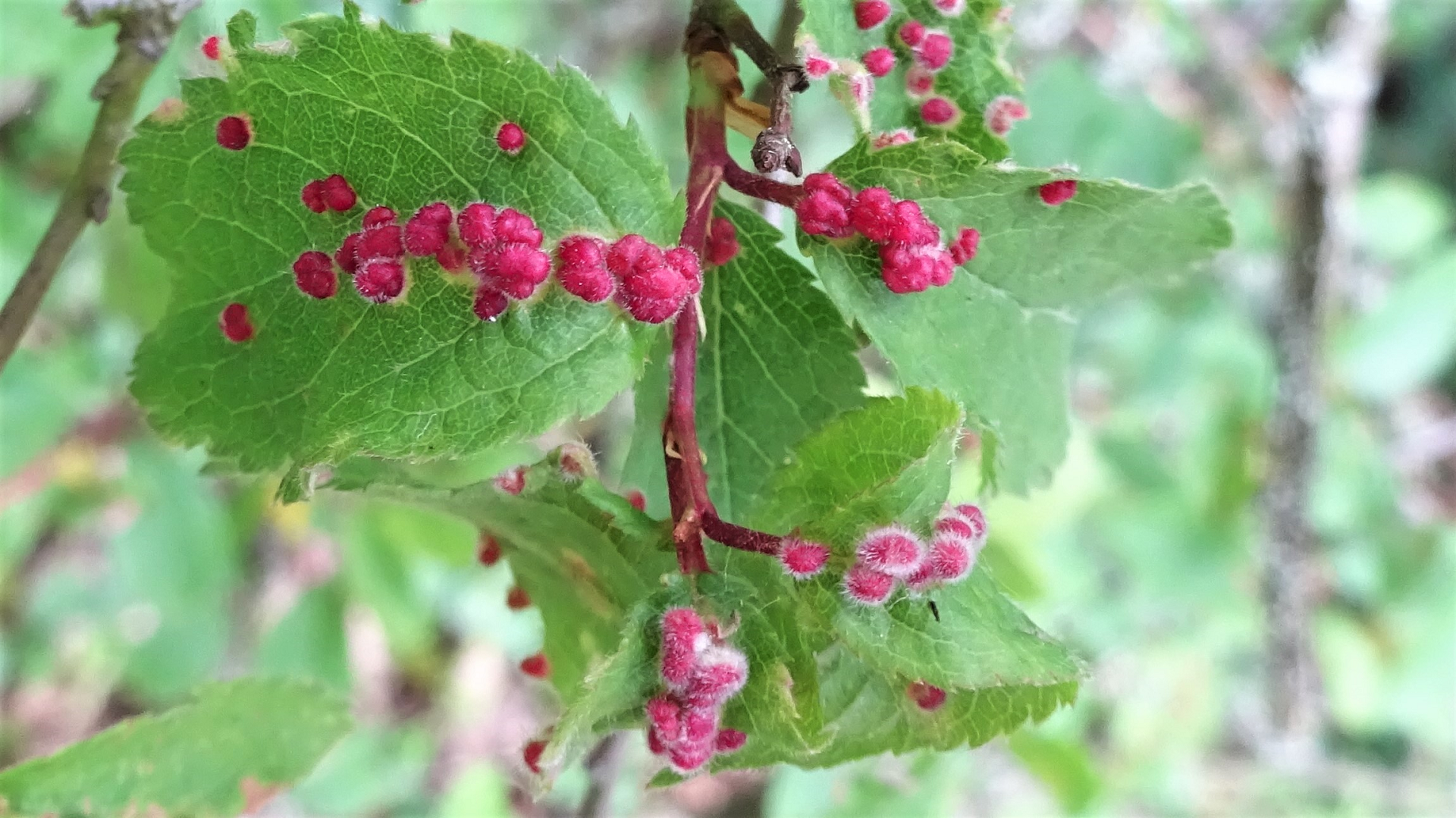
This gall is caused by the mite Eriophyes homophyllus on Blackthorn leaves, typically along the central vein with a small opening on the underside of the leaf.
#
Pocket Plum
Taphrina pruni

Pocket Plums are blackthorn fruits (sloes) that have been deformed by the ascomycete fungus
Taphrina pruni. They are called 'Pocket Plums' because the fungus destroys the developing stone and seed, creating a small pocket in each fruit. Initially green, the galls change to brown or grey as the spore-bearing asci develop on the exterior.
#
POPLAR GALLS
Club-shaped Poplar Gall
Pemphigus populi
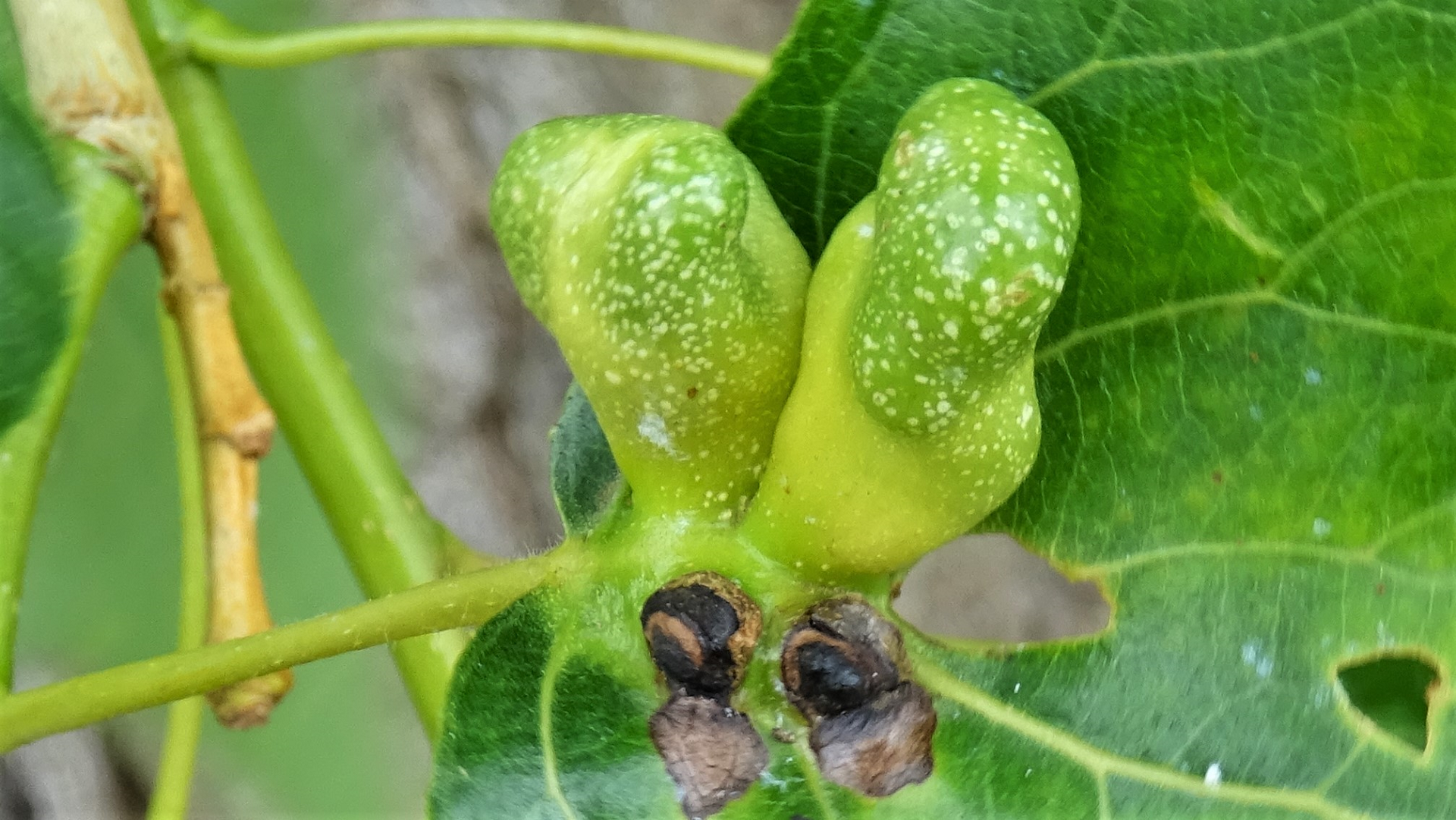
The aphid
Pemphigus populi is responsible for the formation of greenish-yellow globular galls on the mid-rib of Black Poplar leaves, close to the base of the leaf. As they age, the galls take on a club shape. Fundatrices, which are females that emerge from overwintering fertilized eggs, induce the galls to create a habitat for their offspring to grow.
#
Poplar-buttercup Aphid Gall
Thecabius affinis
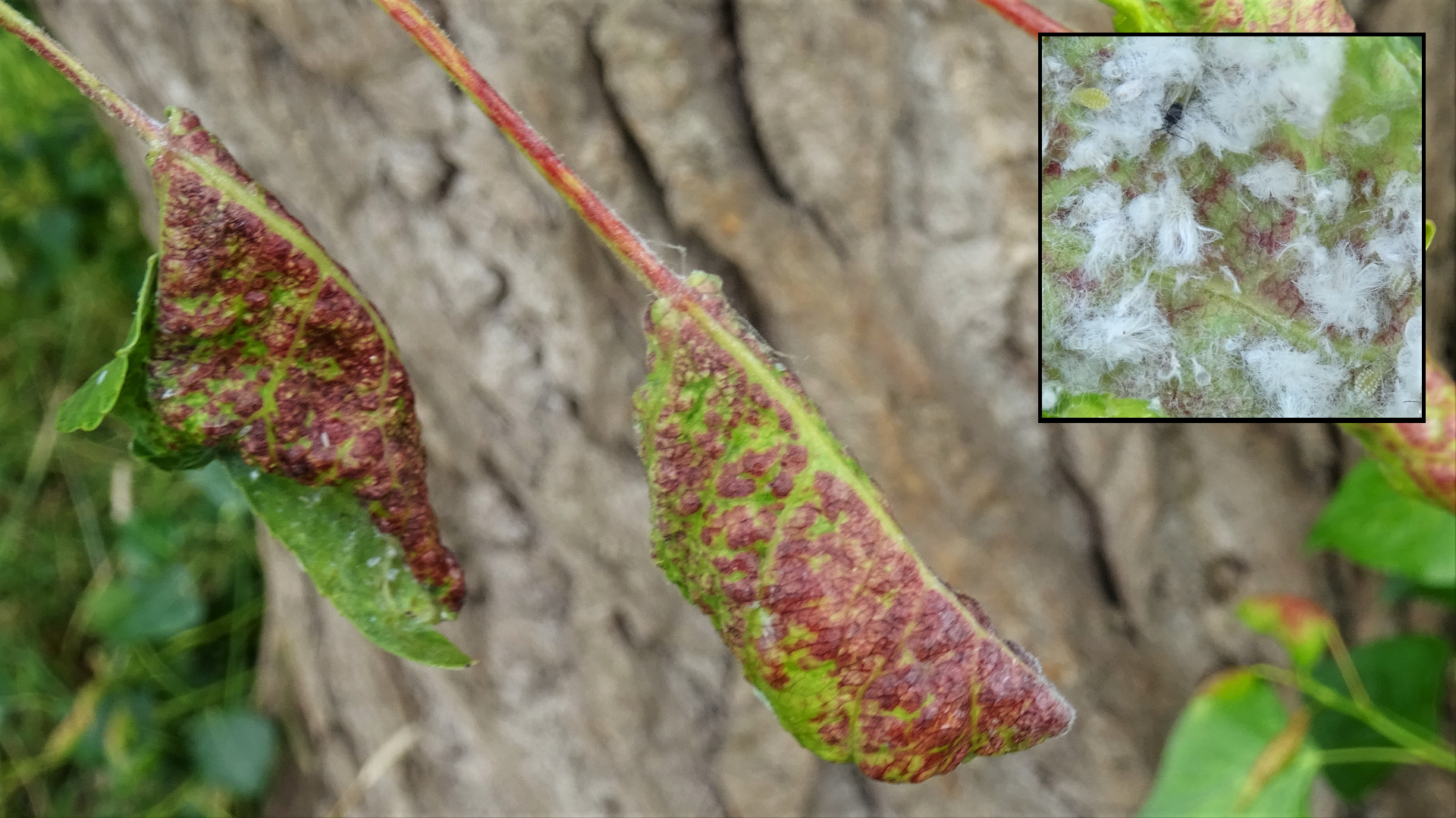
These galls are caused by the aphid
Thecabius affinis. The aphids, which also inhabit buttercups, cause the leaves to curl and subsequently turn reddish. The aphids are covered in a shiny waxy substance.
#
Blister Gall
Taphrina populina
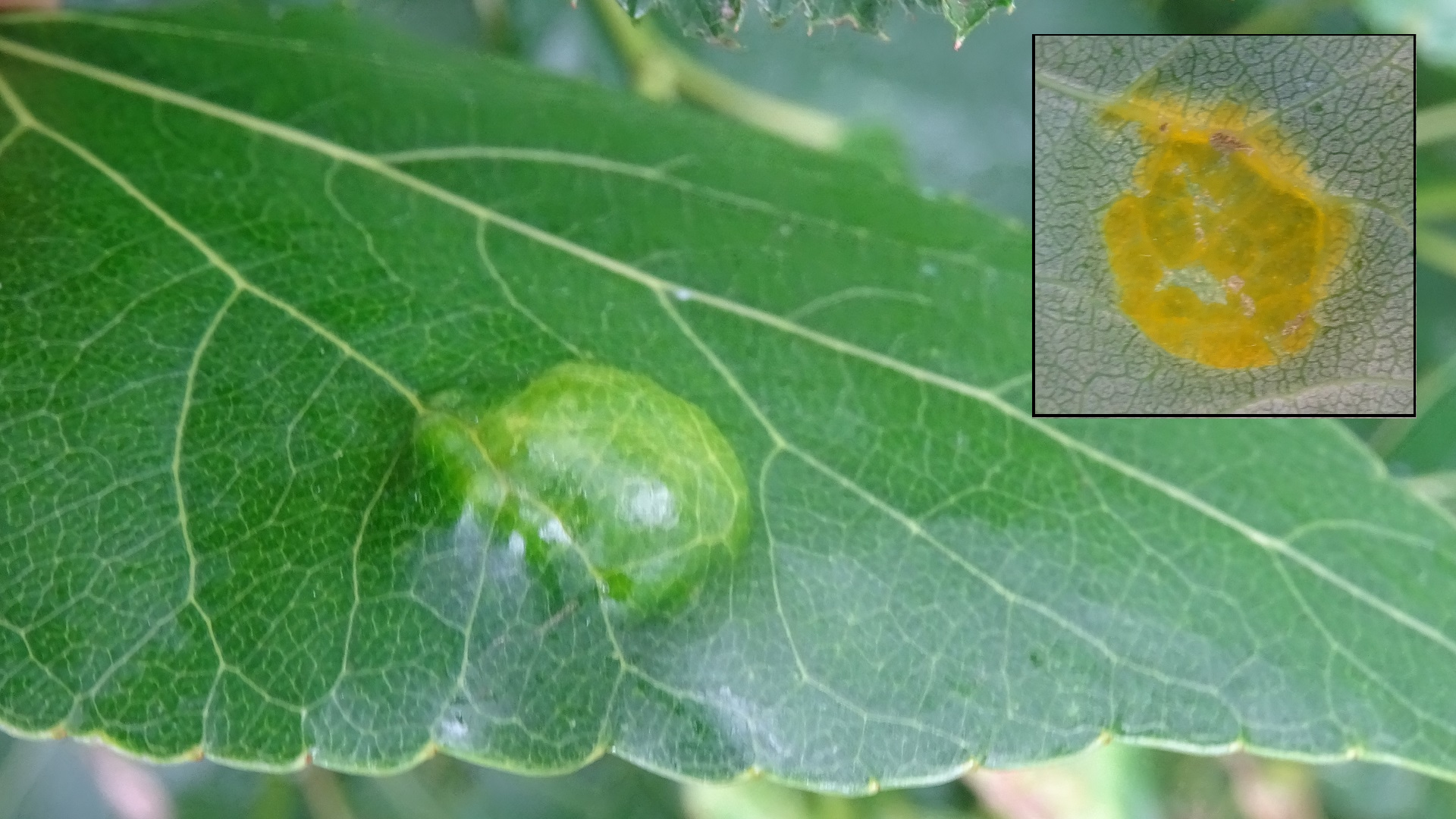
These galls are caused by the aphid
Thecabius affinis. The aphids, which also inhabit buttercups, cause the leaves to curl and subsequently turn reddish. The aphids are covered in a shiny waxy substance.
#
Spiral Gall
Pemphigus spyrothecae
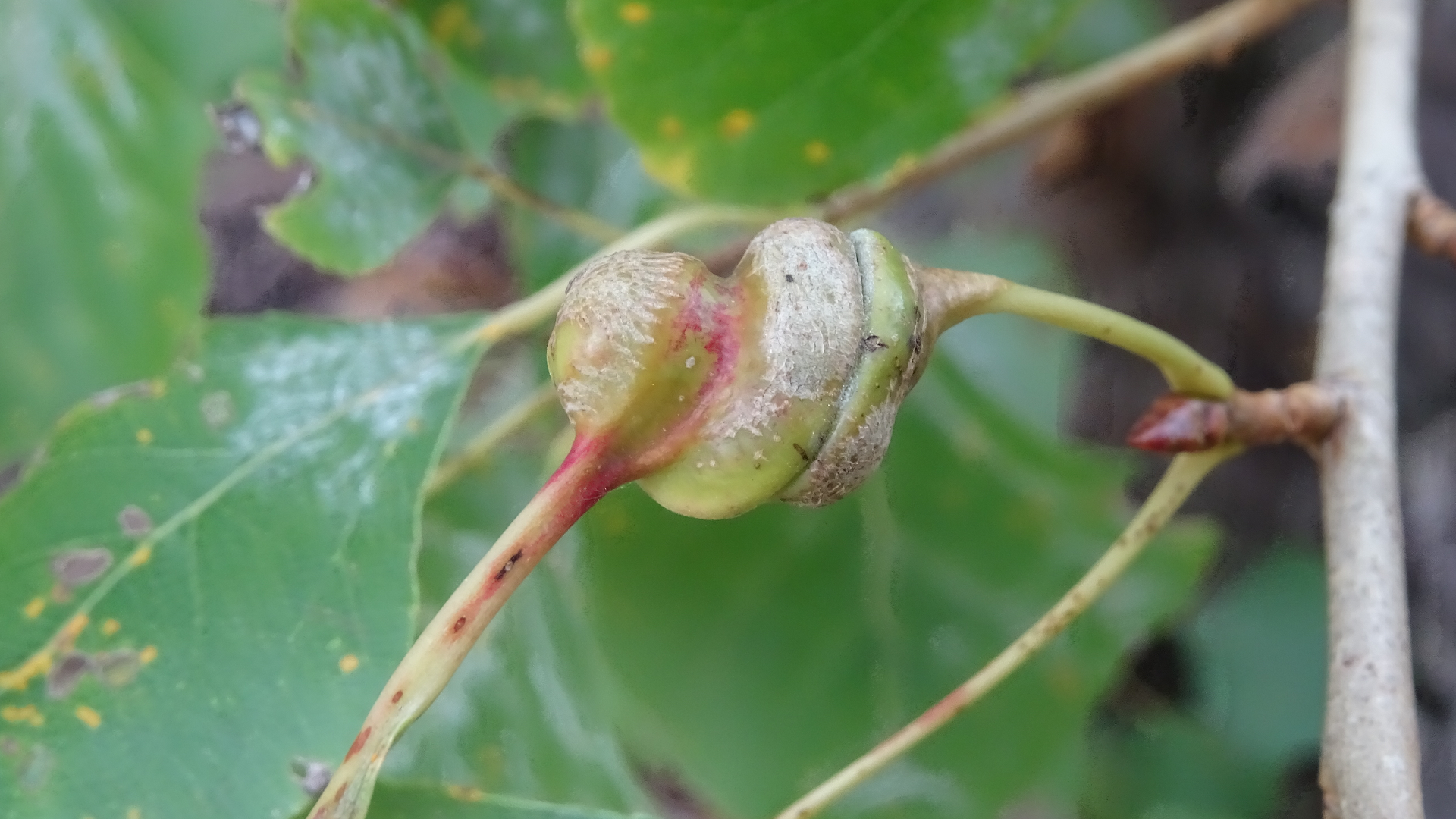
Spiral galls on the leaf stems of black poplar are produced by the aphid
Pemphigus spyrothecae.
#
DOG ROSE GALLS
Sputnik Gall
Diplolepis nervosa
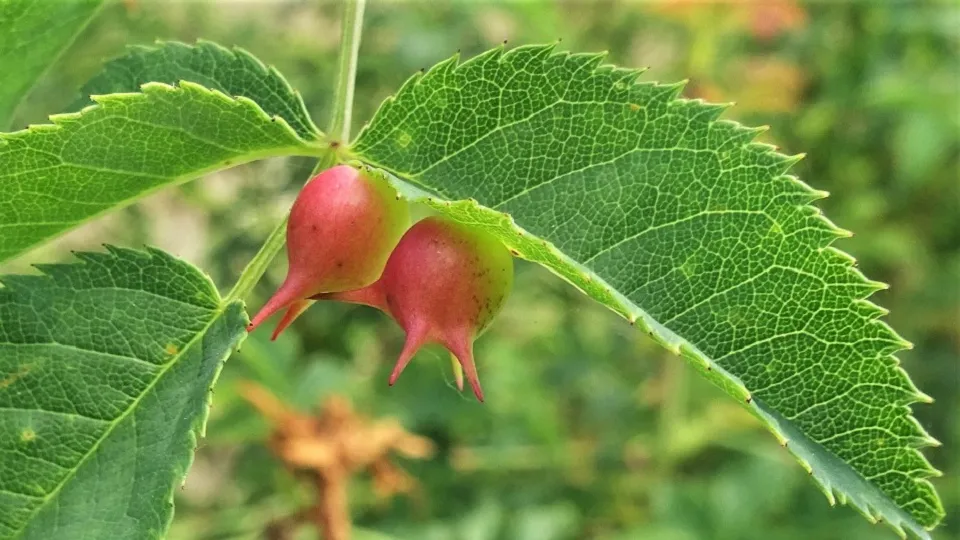
Sputnik galls, measuring up to 5mm, are formed by the gall wasp
Diplolepis nervosa. Each gall houses a single larva. Typically, the galls are found on the underside of leaves, although they can occasionally be located on the upper surface or on the flower stalk, appearing individually or in small clusters. They can exhibit a combination of green, pink, and yellow hues; when exposed to sunlight, they may turn deep red. Over time, the galls become brown, and once they mature, they drop from the leaves. After undergoing pupation within the gall, a new adult wasp emerges during the spring or summer.
#
Robin's Pincushion
Diplolepis rosae
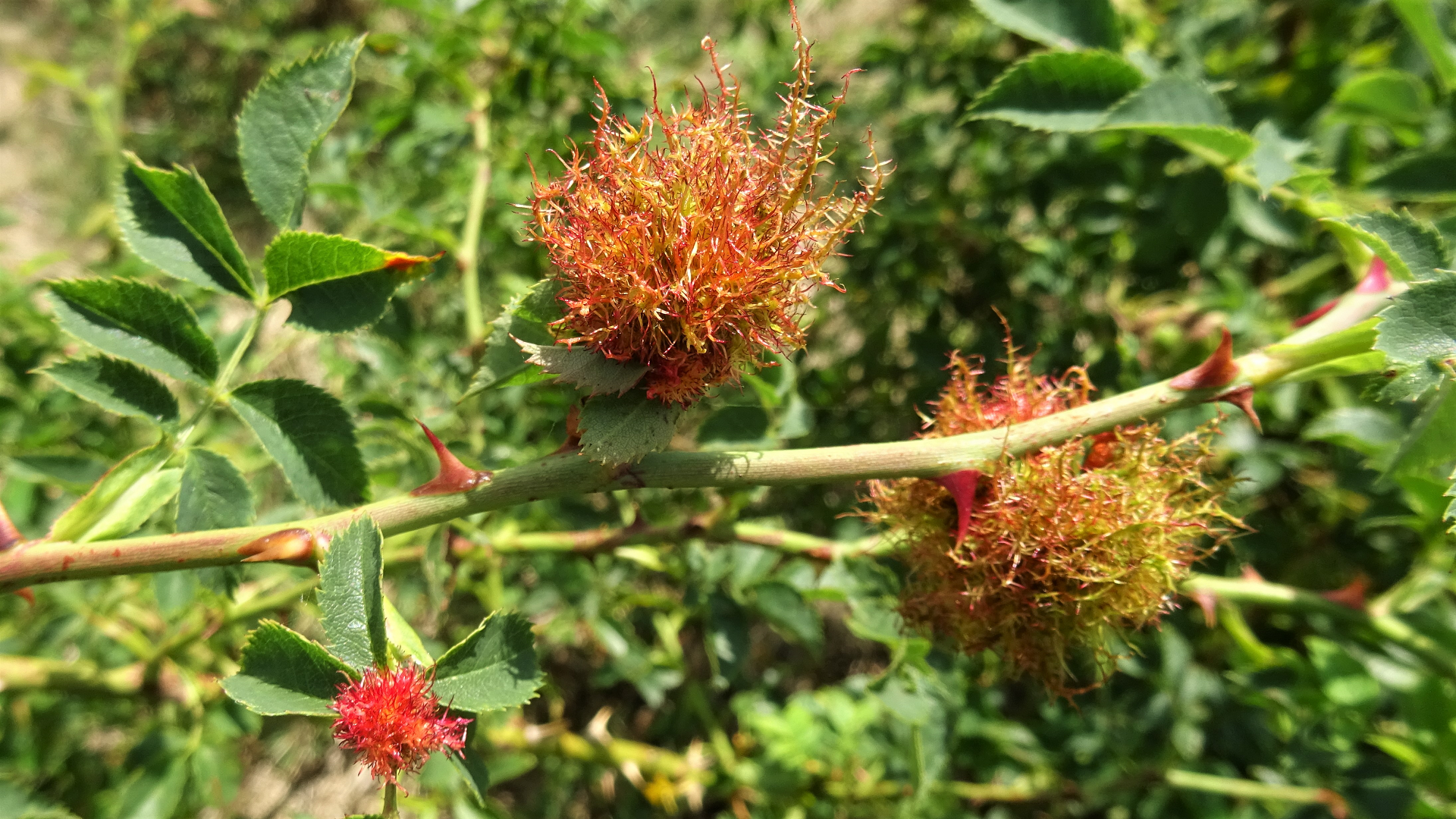
Caused by the gall wasp
Diplolepis rosae, the structure contains multiple chambers that are occupied by developing gall wasps. The galls become brown and woody during the overwintering period.
#
Pod Gall
Dasineura rosae
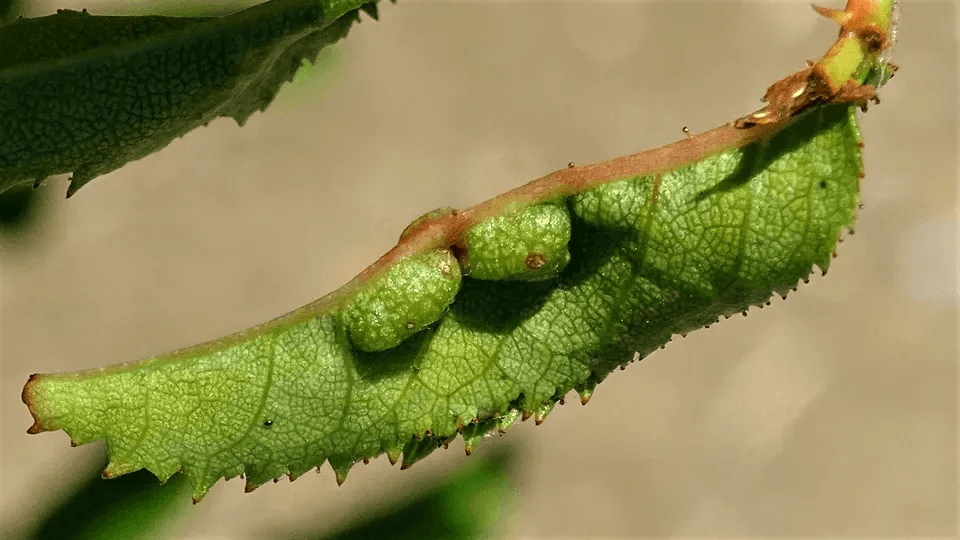
The midge
Dasineura rosae causes the leaflets to fold and develop pod-like swellings, which often appear pink or red. Each pod holds numerous white larvae that turn orange as they age. Once they mature, the larvae leave the gall and burrow into the soil to pupate.
#
BRAMBLE GALLS
Swollen Stem Gall
Lasioptera rubi
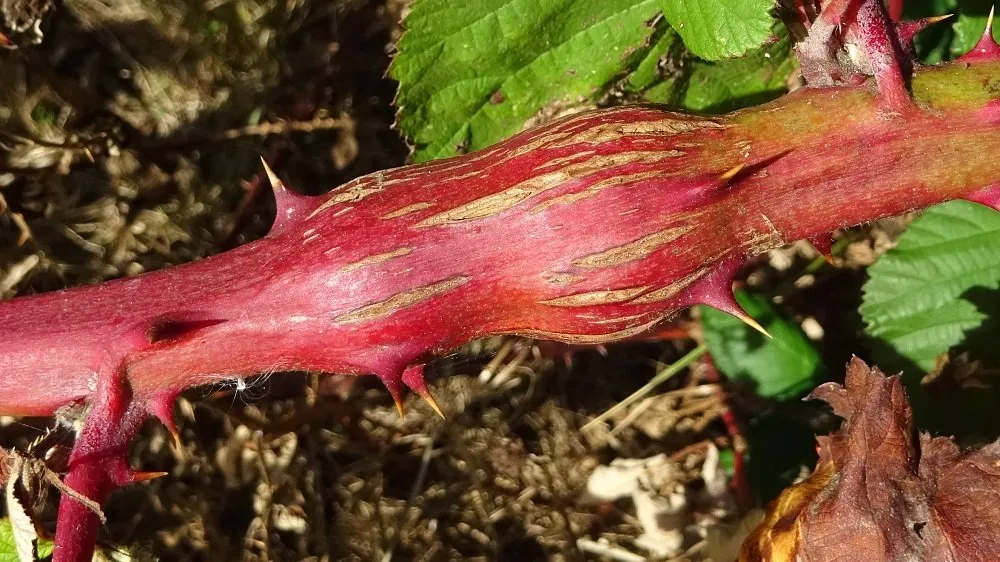
Swollen Stem Galls are abnormal bulges seen on Bramble stems caused by the midge Lasioptera rubi.
#
BROAD BUCKER FERN GALLS
Mophead Gall
Chirosia betuleti
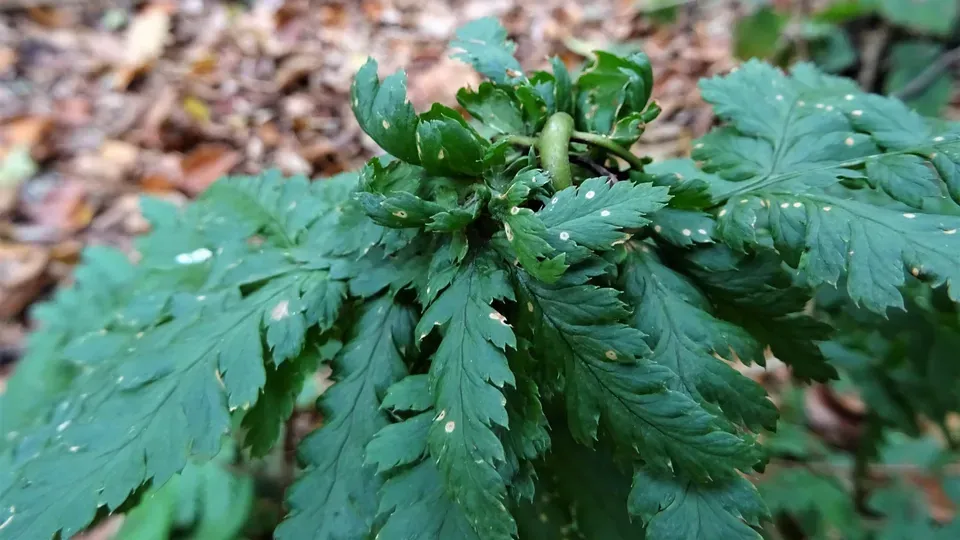
Mophead galls are found as knots on the tops of Broad Buckler ferns. They are caused by the midge
Chirosia betuleti.
#
HERB BENNET GALLS
Leaf Gall
Cecidophyes nudus
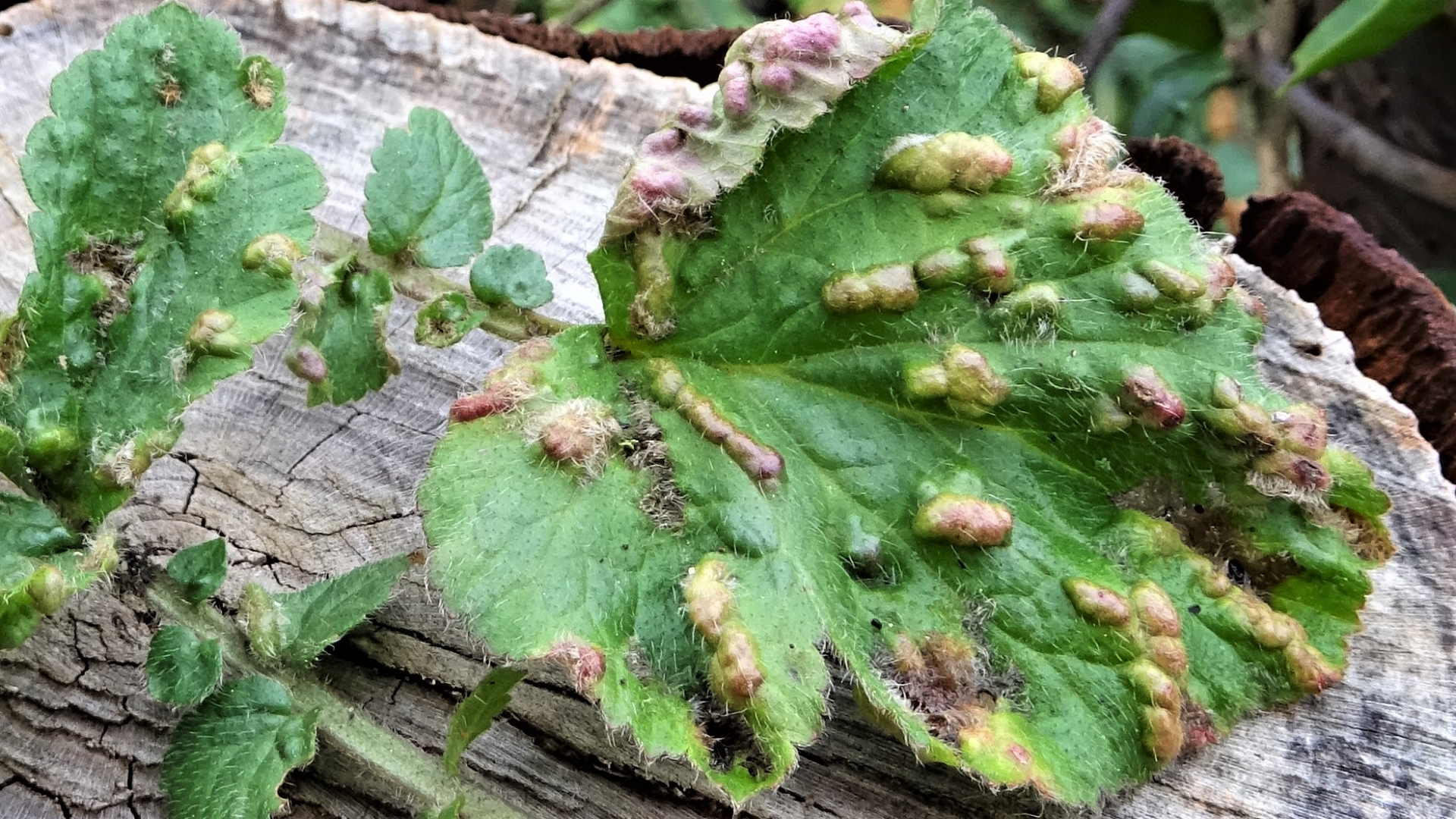
Leaf galls that manifest as bulges on the upper side of Herb Bennet leaves are the result of white mites, which are present throughout the year. These mites inhabit the undersides of the leaves, forming abnormal hair growth called erineum, and enter a dormant state during winter. Thank you to Enid Barrie for her help with the identification.
#
IVY GALLS
Ivy Leaf Spot
Colletotrichum trichellum
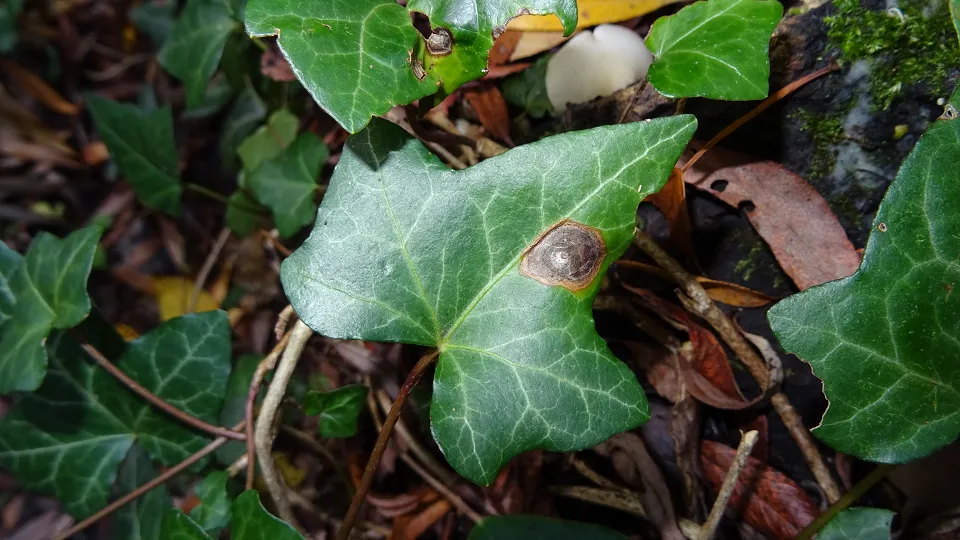
Ivy Leaf Spot is caused by the fungus
Colletotrichum trichellum affecting Ivy leaves. The infection leads to the formation of large dark spots on the leaves, which can result in leaf loss.
#
© hainaultforest.net. All rights reserved.