

Ladybirds are small beetles that belong to the family Coccinellidae. They are typically round or oval in shape and often have bright colours with spots. These beetles are recognised as being beneficial, as many of them feed on aphids and other pests that can harm plants.
Two-spot Ladybird
Adalia bipunctata
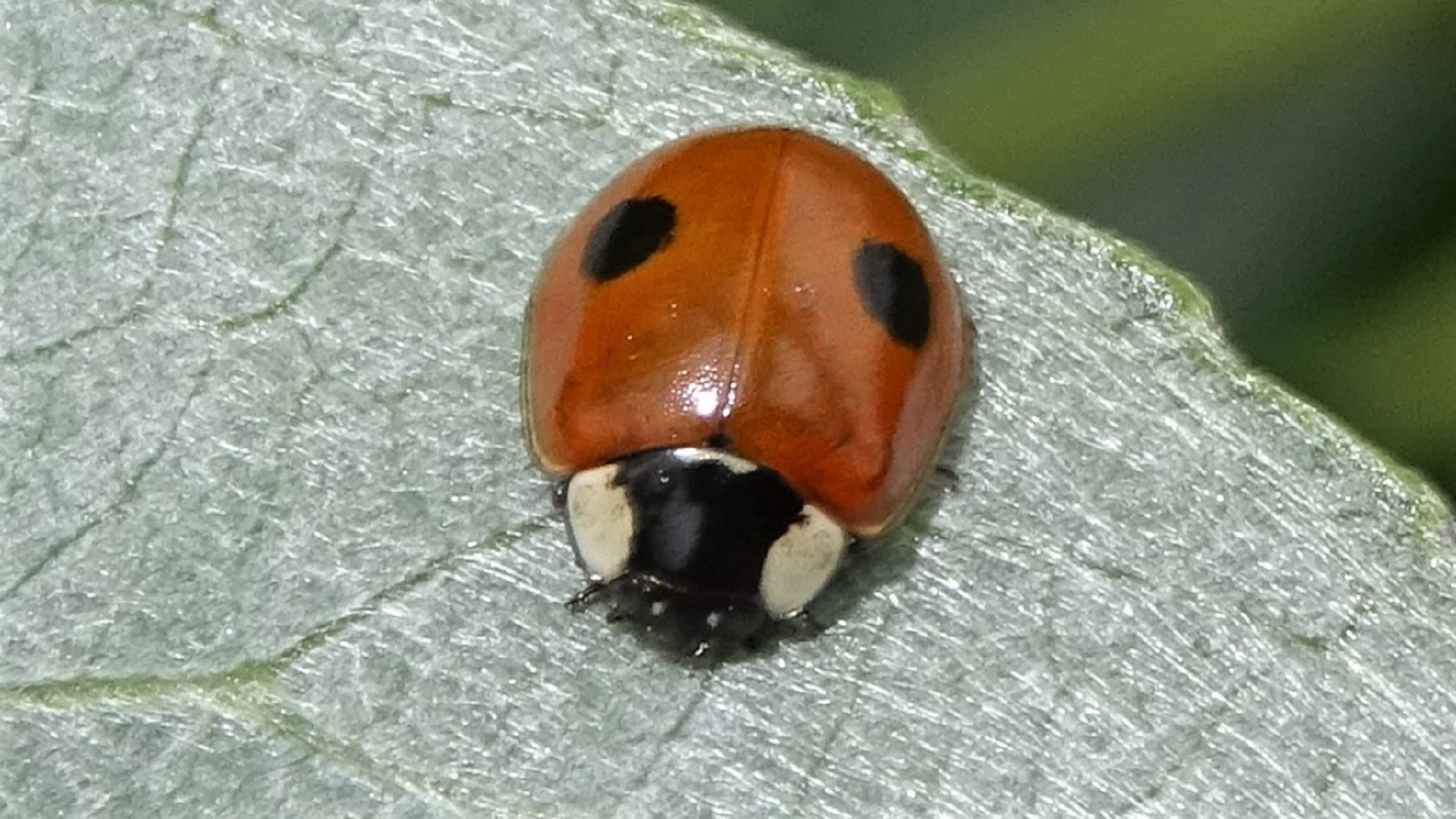
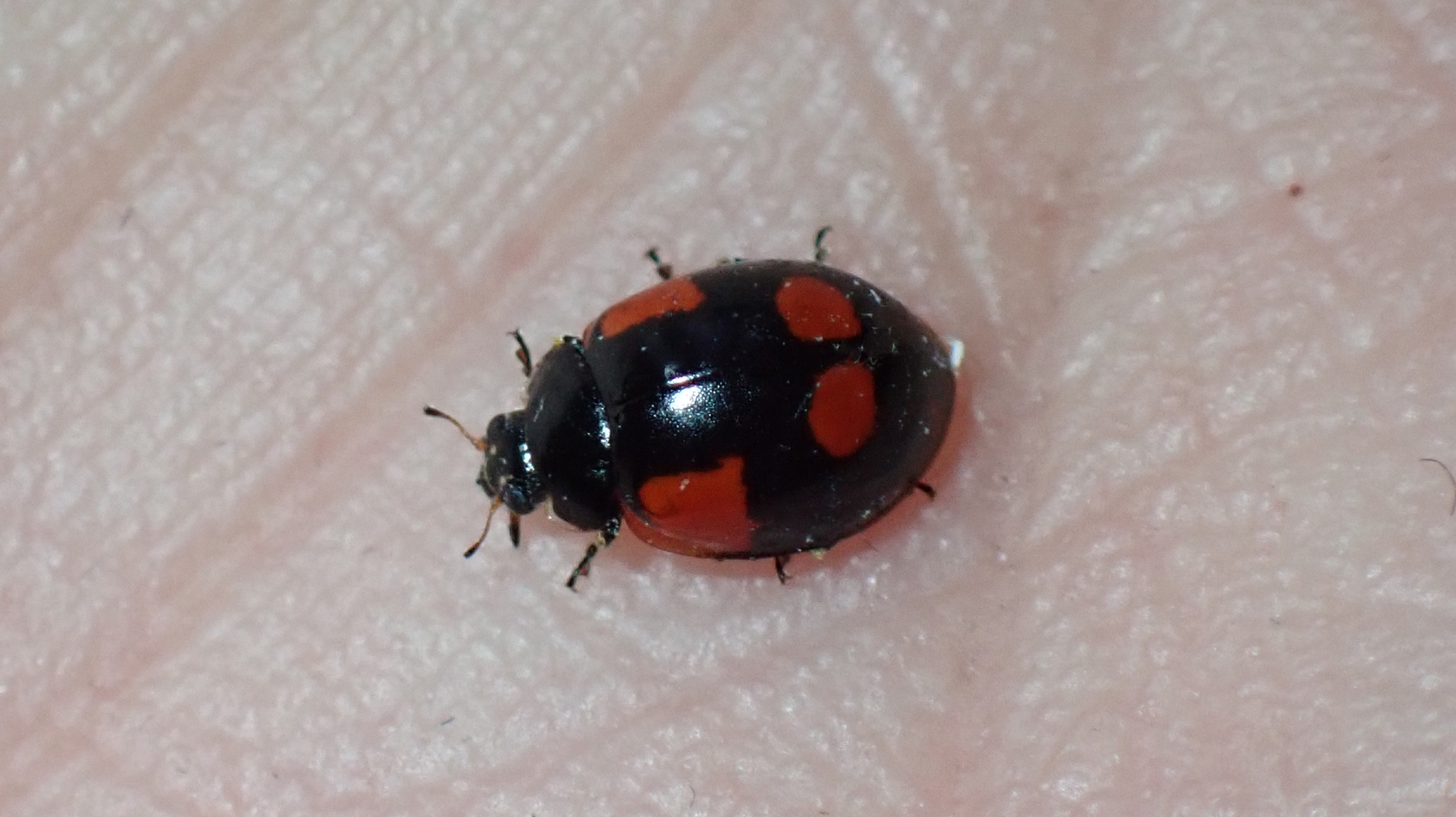
The 2-spot Ladybird is typically red with two black spots on its wing covers, but it can also appear in other color variations, including black with two red spots. Occasionally, these ladybirds may have multiple spots. Their legs are black, helping to distinguish them from the 10-spot Ladybird, which has brown legs. They hibernate during the winter and generally become active in late February or March. Their diet consists of aphids, small insects, insect eggs, and mites.
#
Seven-spot Ladybird
Coccinella septempunctata
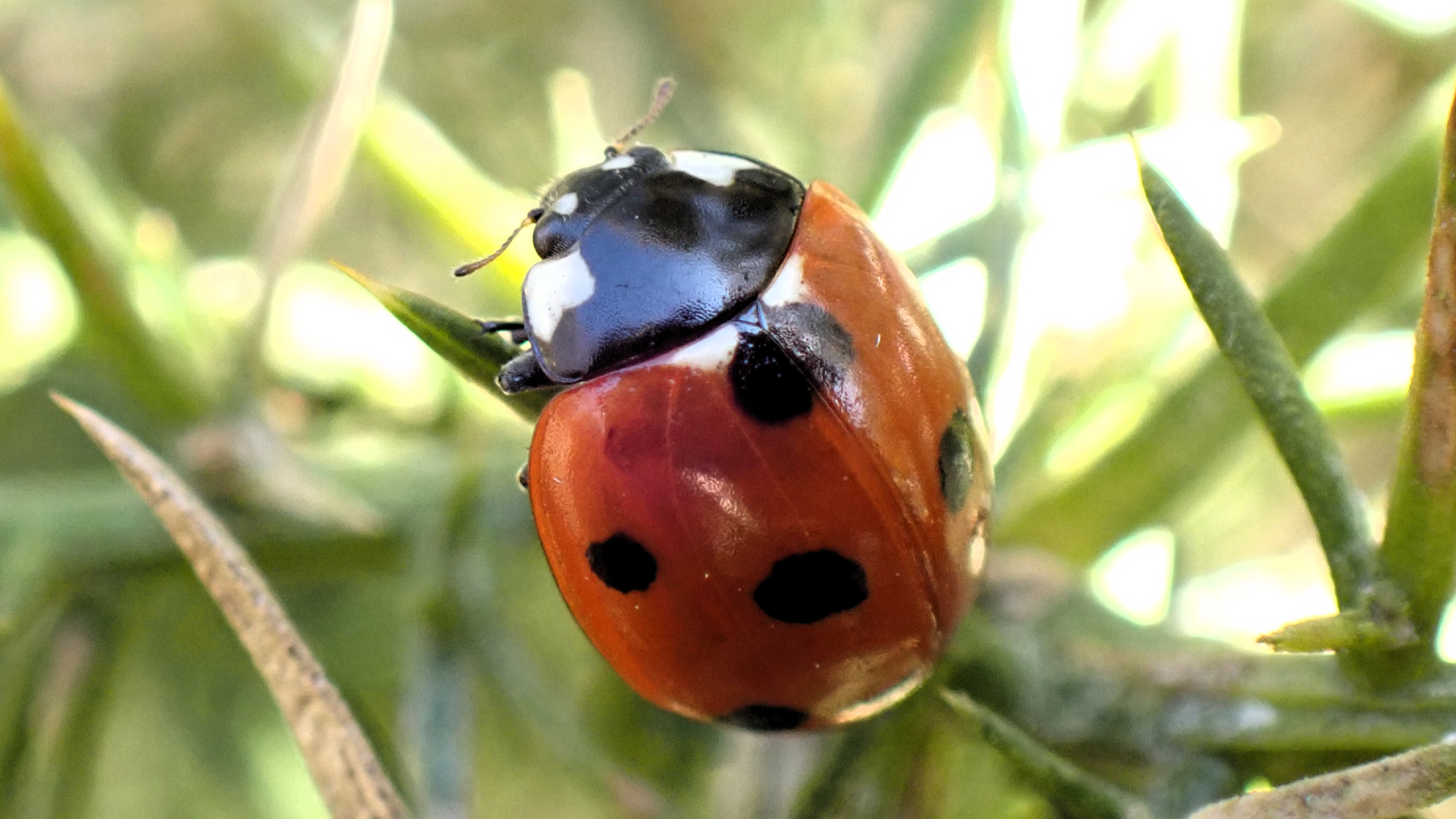
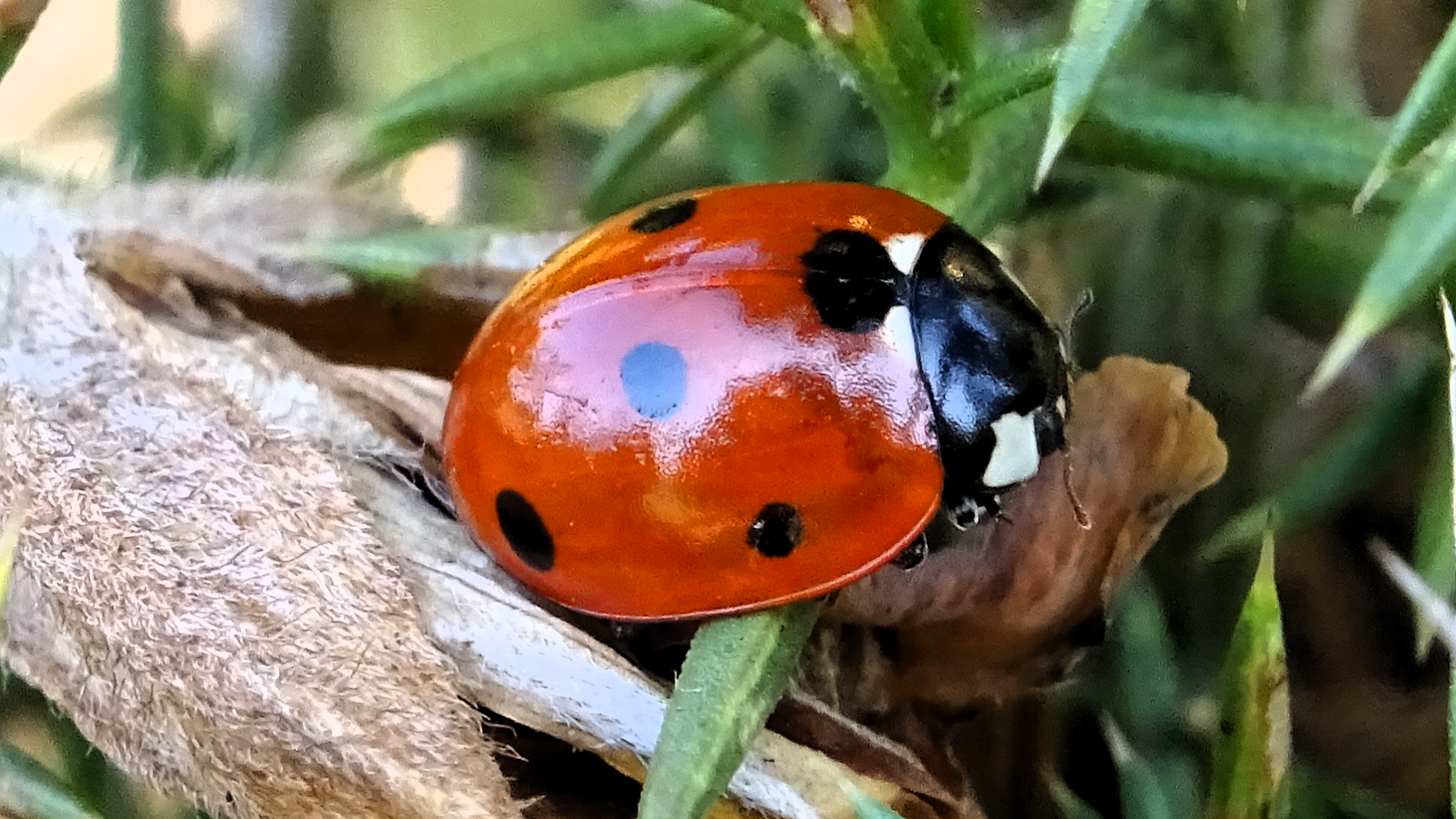
Each wing case features three black spots, with an additional spot located across both elytra behind the pronotum, resulting in a total of seven spots. These insects are known to actively prey on aphids. Adults typically overwinter under rocks, in leaf litter, and beneath tree bark. This species is among the most common ladybirds found in Europe.
#
10-Spot Ladybird
Adalia decempunctata
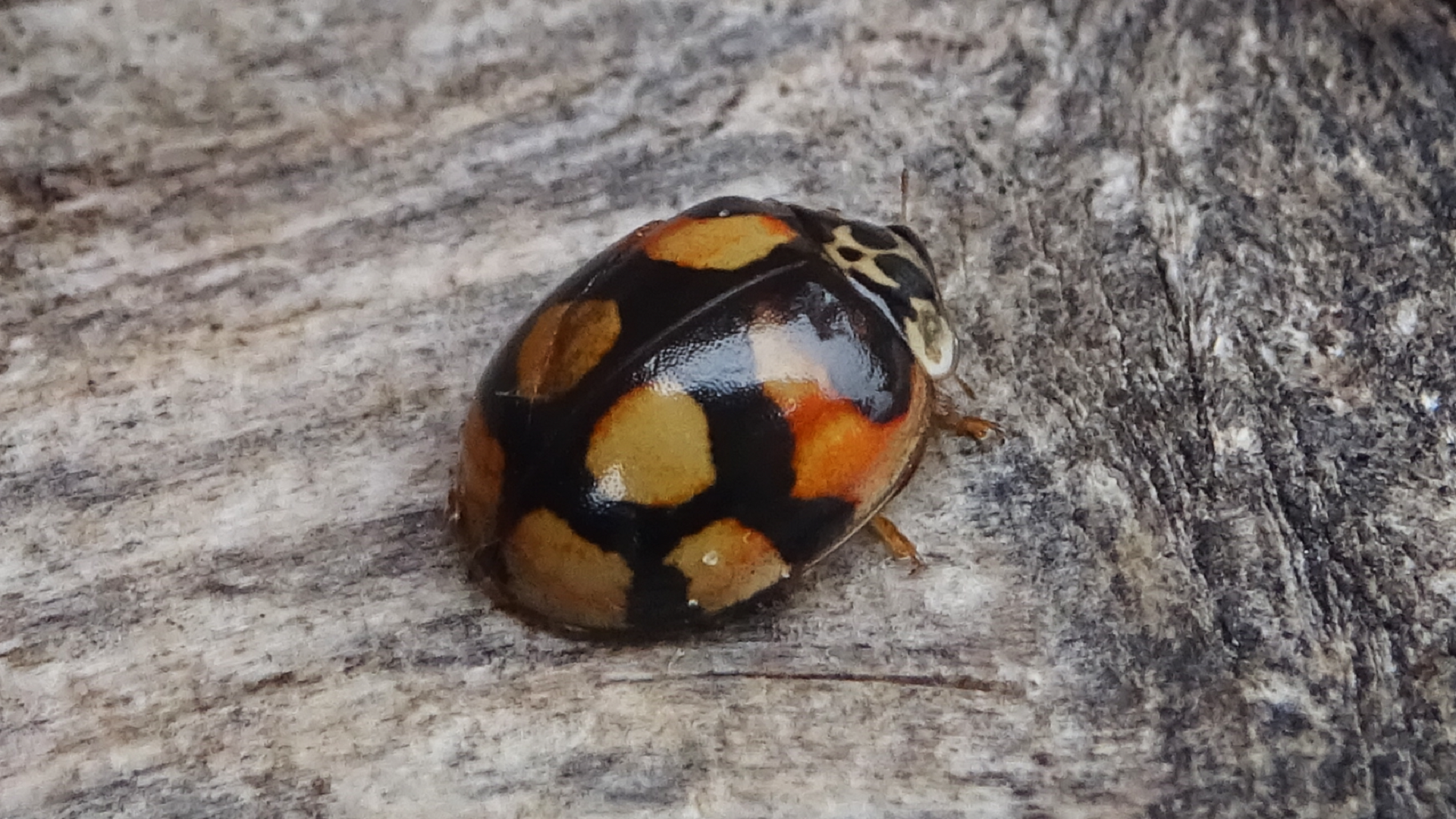
Small ladybird that does not consistently display ten spots. Fresh specimens initially have a light-brown background colouration. The brown legs can aid in identifying this species. It feeds on aphids and is typically found in hedgerows.
#
Fourteen-spot Ladybird
Propylea quattuordecimpunctata
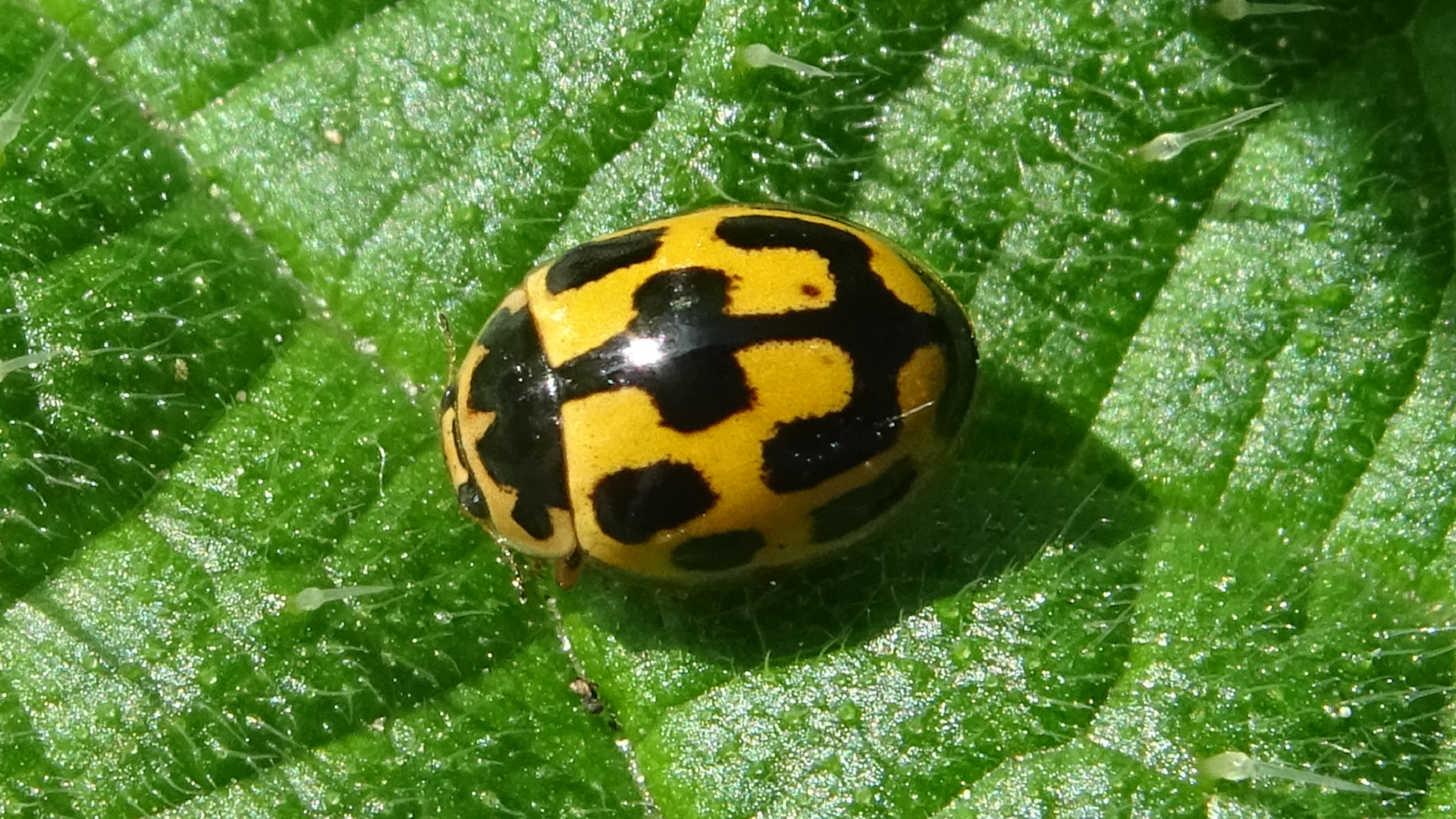
This common ladybird typically measures 4 to 5 mm in length. The spots on the elytra frequently merge to create an anchor shape. This beetle can be found in various habitats, particularly on hedgerows and along woodland paths. Both adults and larvae feed on aphids.
#
Sixteen-spot Ladybird
Tytthaspis sedecimpunctata
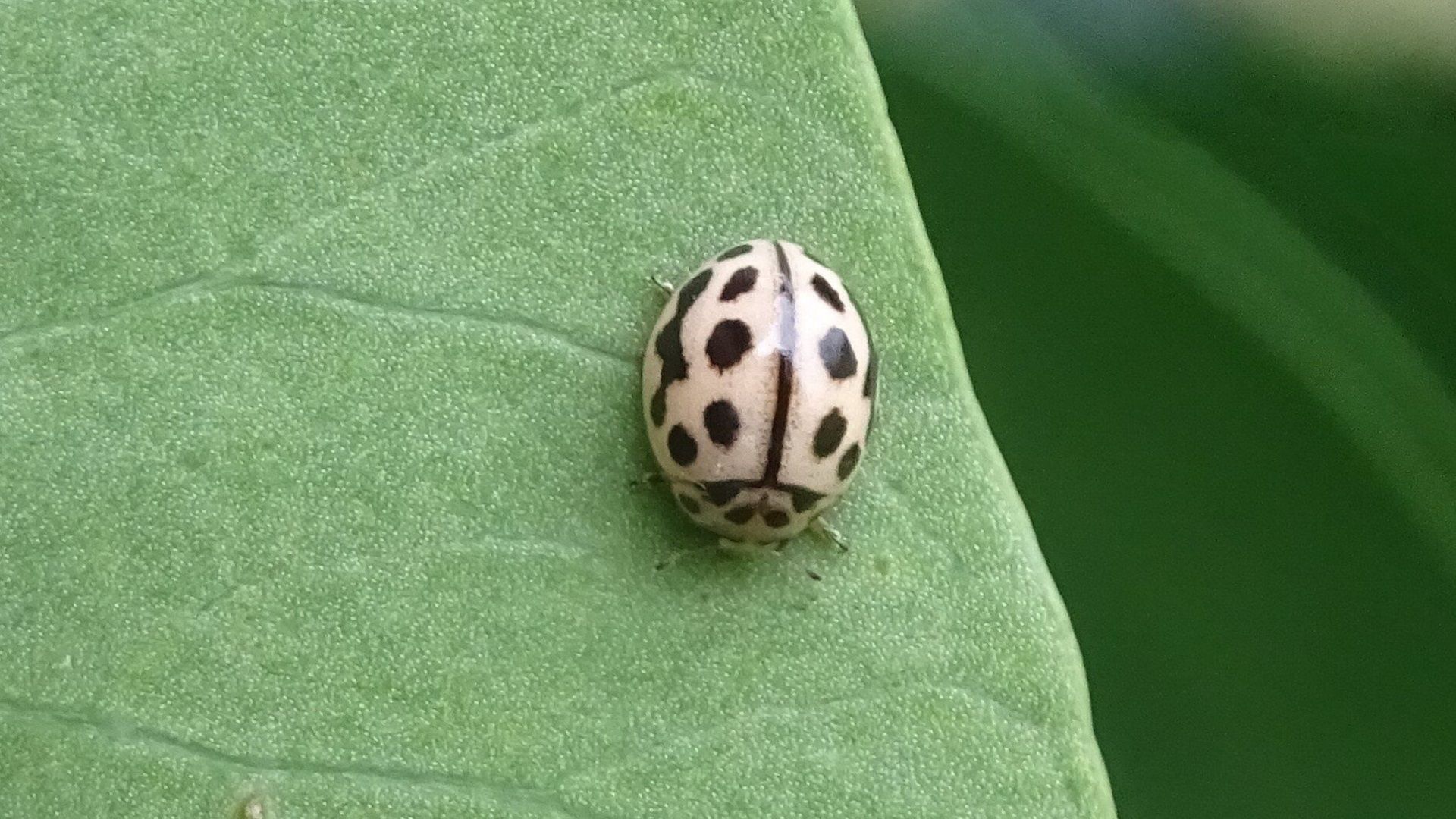
A small, yellowish ladybird measuring approximately 3mm in length, which has between 13 and 18 black spots. Some of these spots may be fused, and there is a black line running down the center of the wing cases. This species is typically found in grasslands and is more commonly observed in summer. Its diet consists of pollen, fungi, and nectar. In winter, it hibernates in low vegetation, gorse, leaf litter, on fence posts, and walls, often in large clusters.
#
Twenty-two Spot Ladybird
Psyllobora vigintiduopunctata
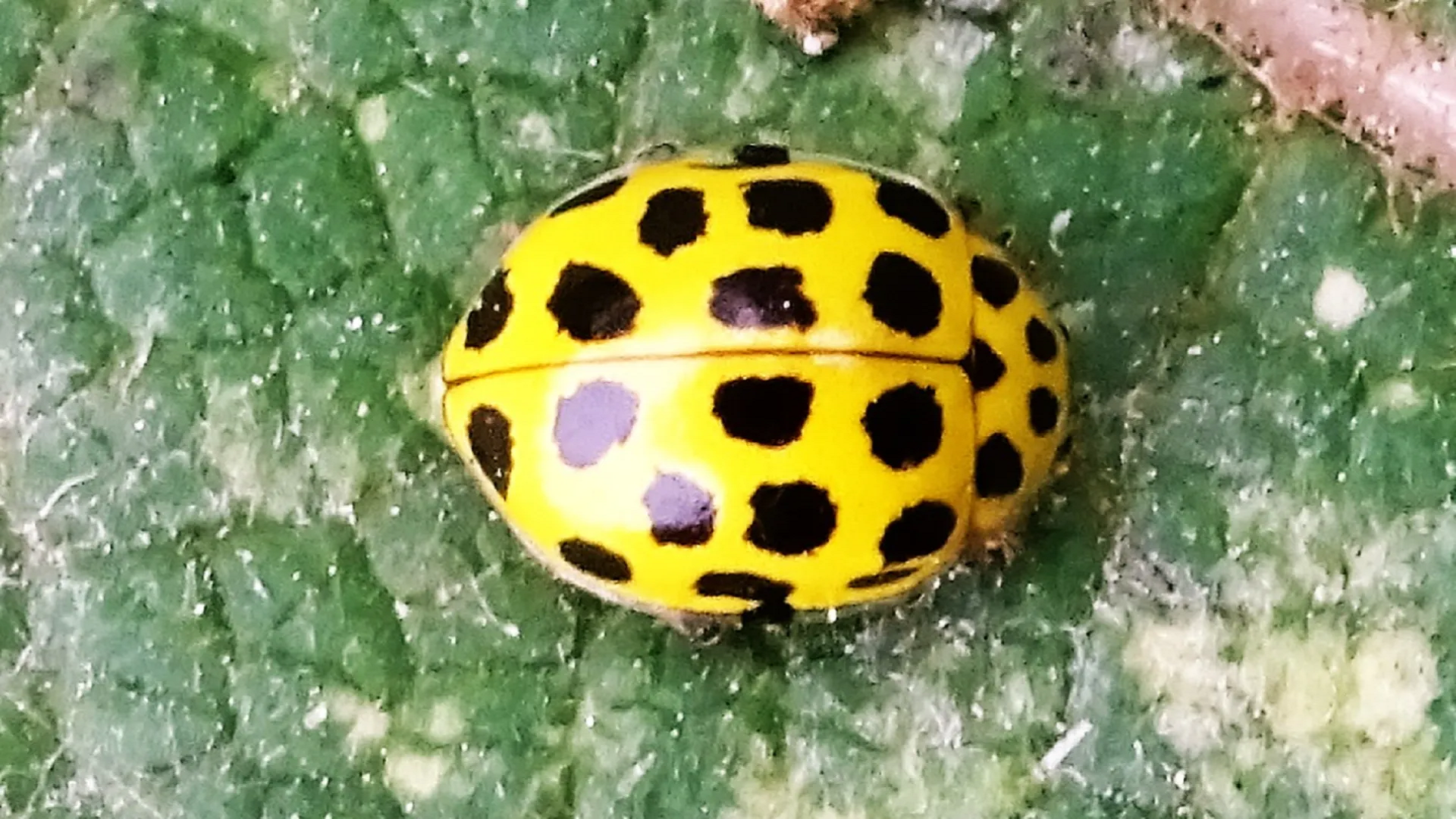
A small, bright yellow ladybird measuring approximately 4mm in length. It is found in grasslands and along woodland edges from April to September. Its diet consists of mildew.
#
Twenty-four Spot Ladybird
Subcoccinella vigintiquattuorpunctata
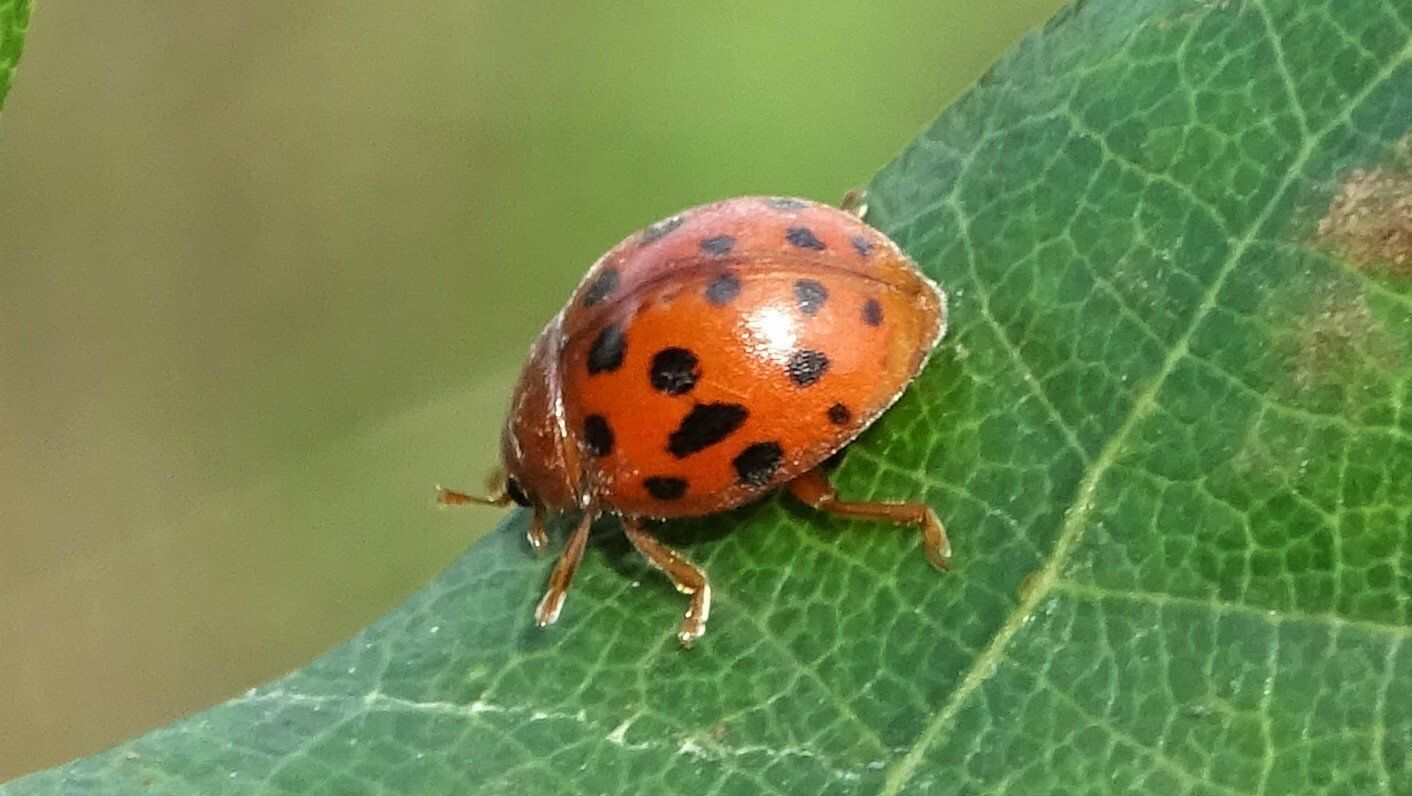
A small ladybird, measuring approximately 3 to 4 mm in length, with orange-red colouration. Its elytra appear dusty because they are covered in hairs. The number of black spots can vary, and the legs are orange. This ladybird is typically found on grass, thistle, nettle, mugwort, knapweed, and other low-growing vegetation. It feeds on fungal moulds.
#
Adonis Ladybird
Hippodamia variegata
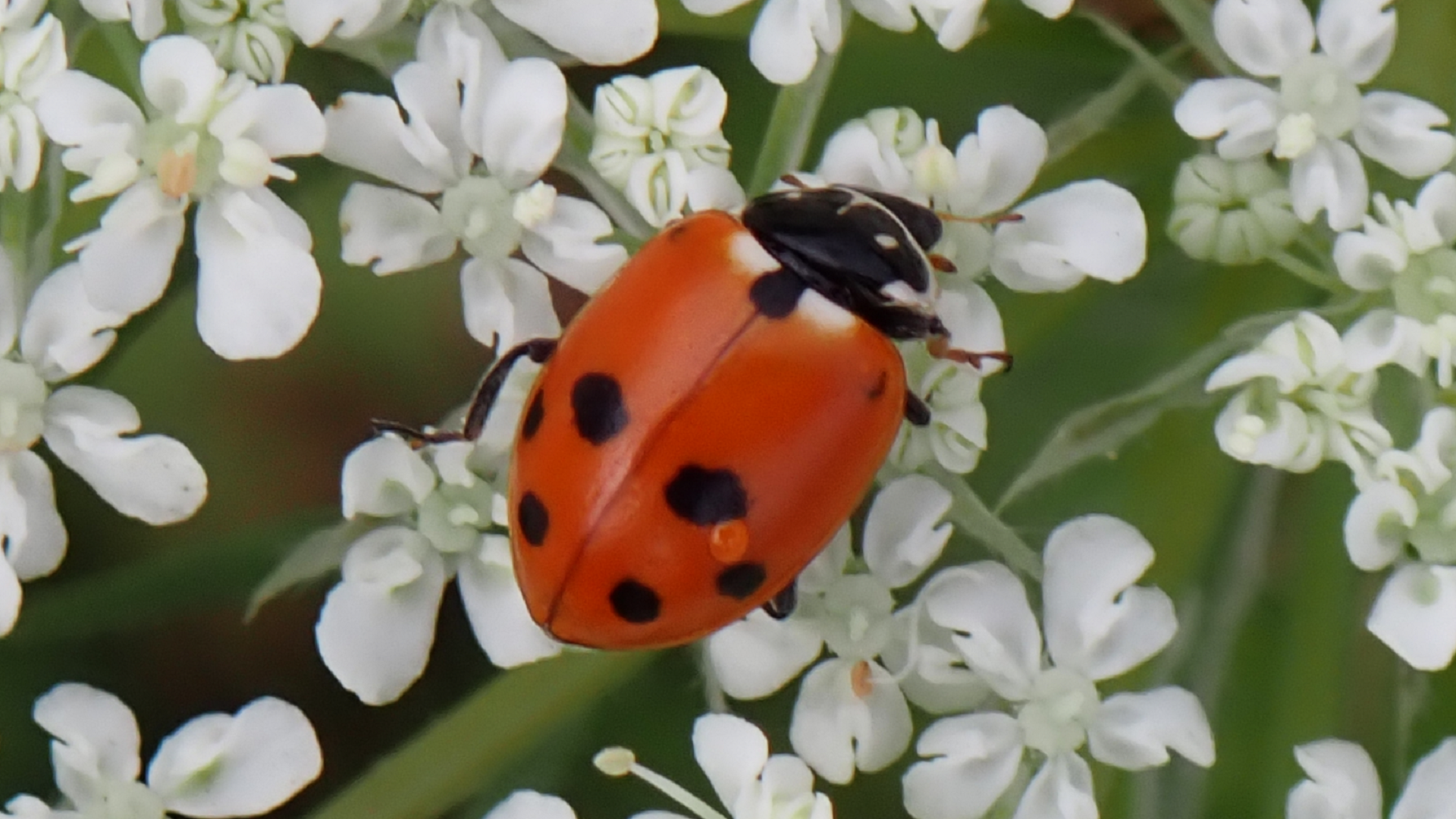
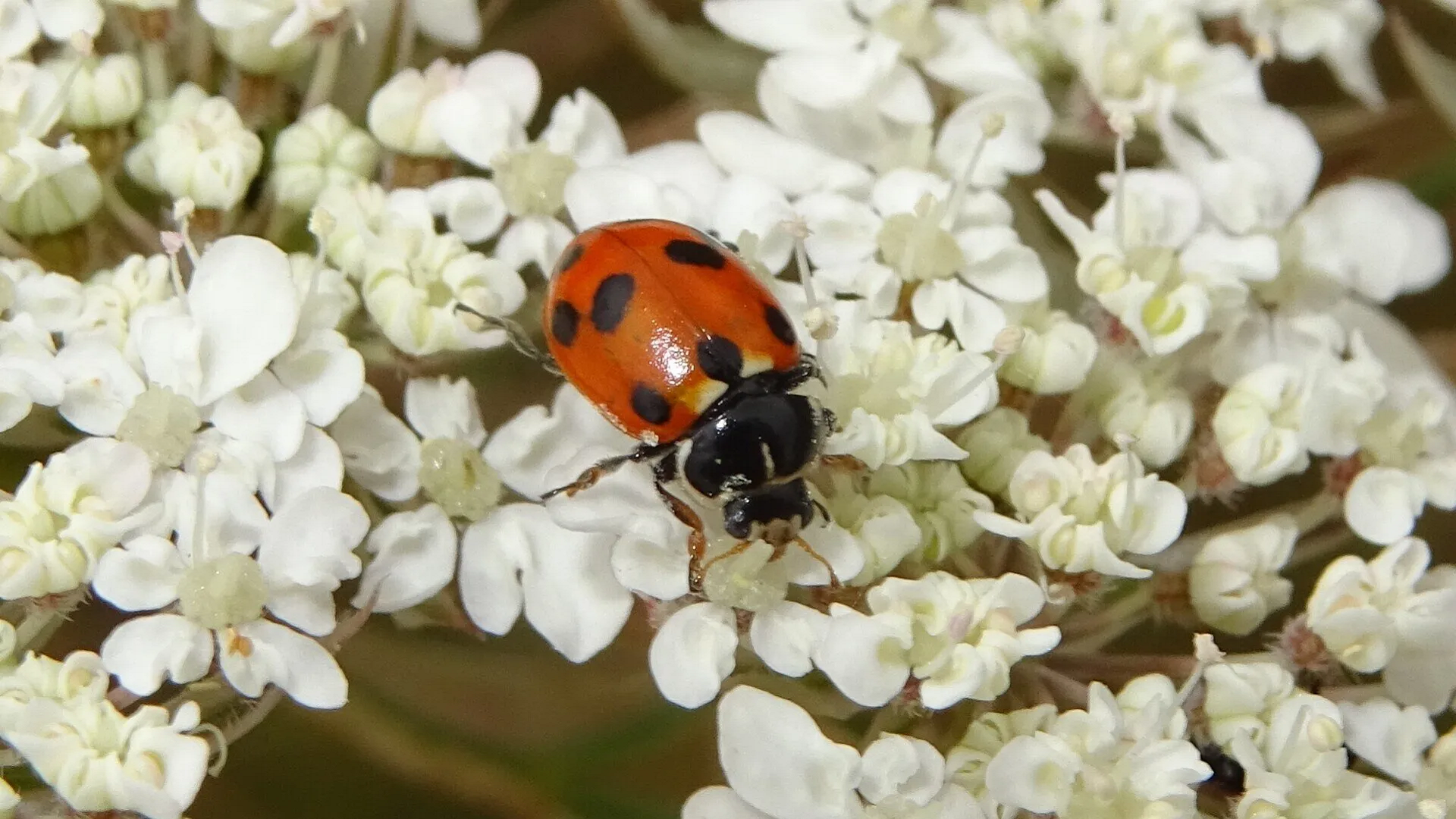
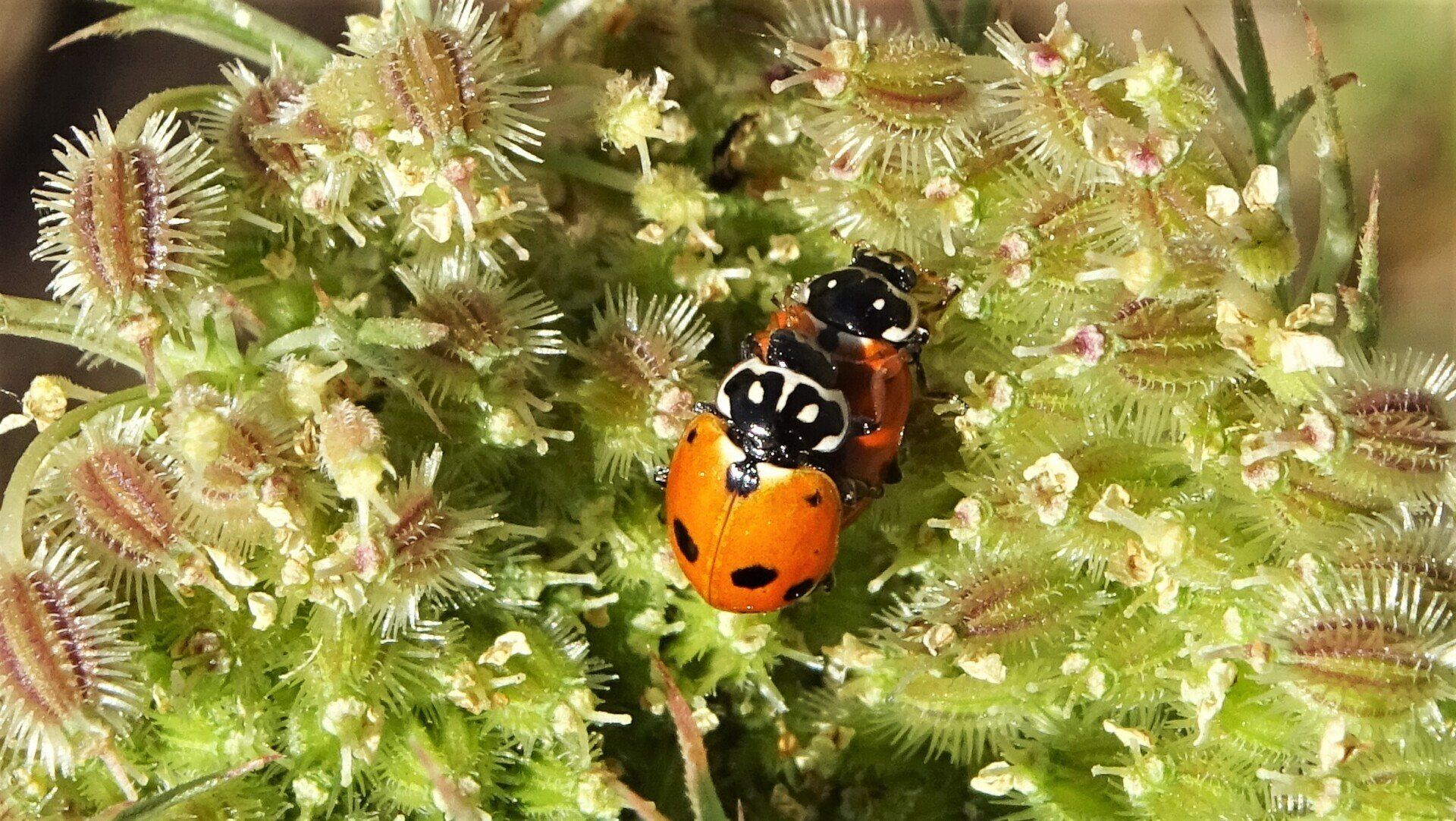
The length ranges from 4 to 5 mm. The body is more elongated than that of other ladybirds, and the number of spots varies from 3 to 15, with the majority positioned towards the rear. These ladybirds are often found on wild carrot and other low vegetation during warm summer days.
#
Cream-streaked Ladybird
Harmonia quadripunctata
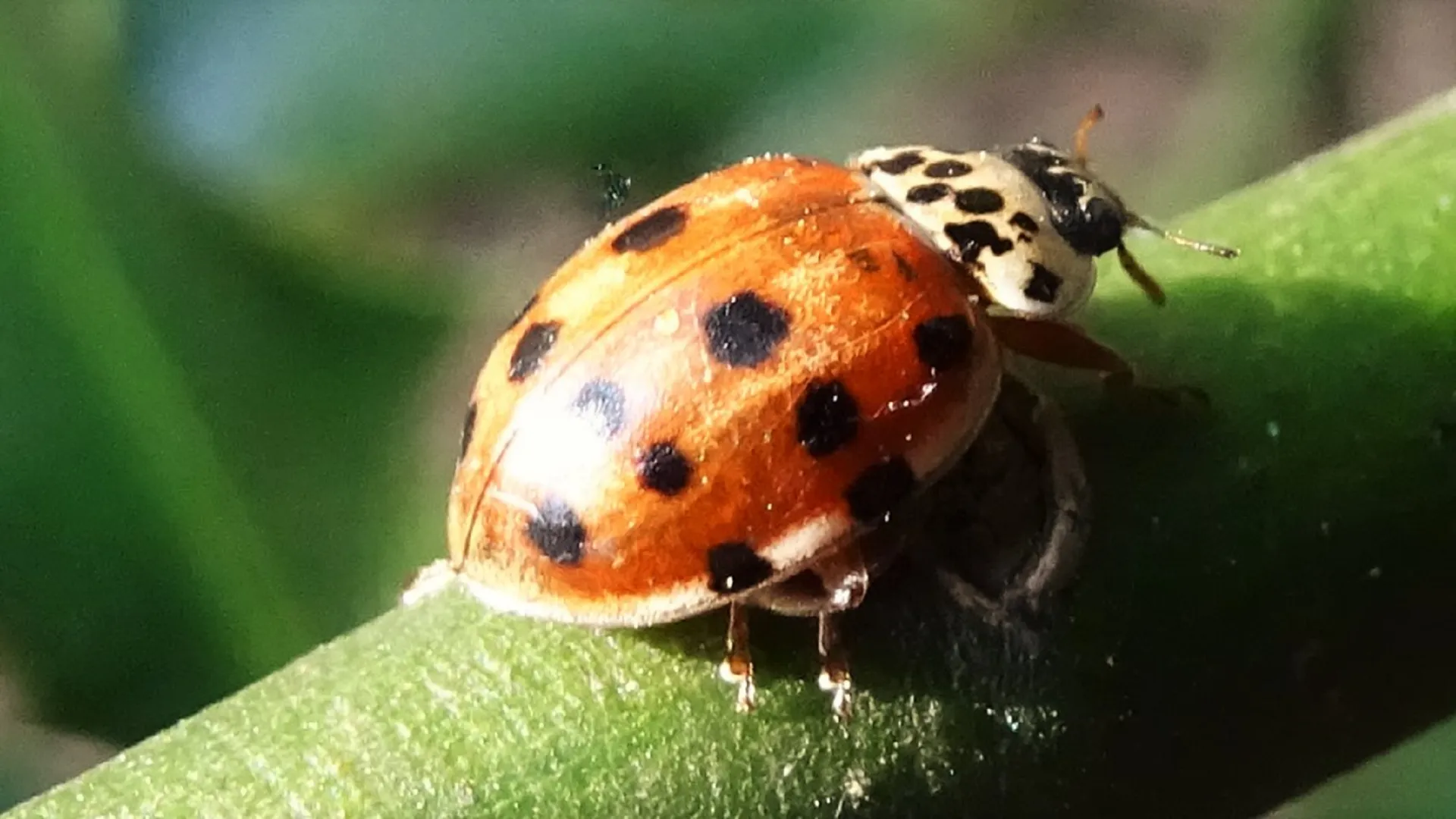
The length of this species measures approximately 5 to 6 mm. The colouration varies, featuring bright red, brown, and yellow forms, while some individuals may appear nearly entirely black. Many possess pale streaks on their wing cases. Up to 18 black spots may be present, although some individuals may lack spots. Due to typically having two spots on the edge of each wing case, it is sometimes referred to as the "Four-spot ladybird." This species preys on aphids found on trees and overwinters in groups beneath the bark.
#
Cream-spot Ladybird
Calvia quattuordecimguttata
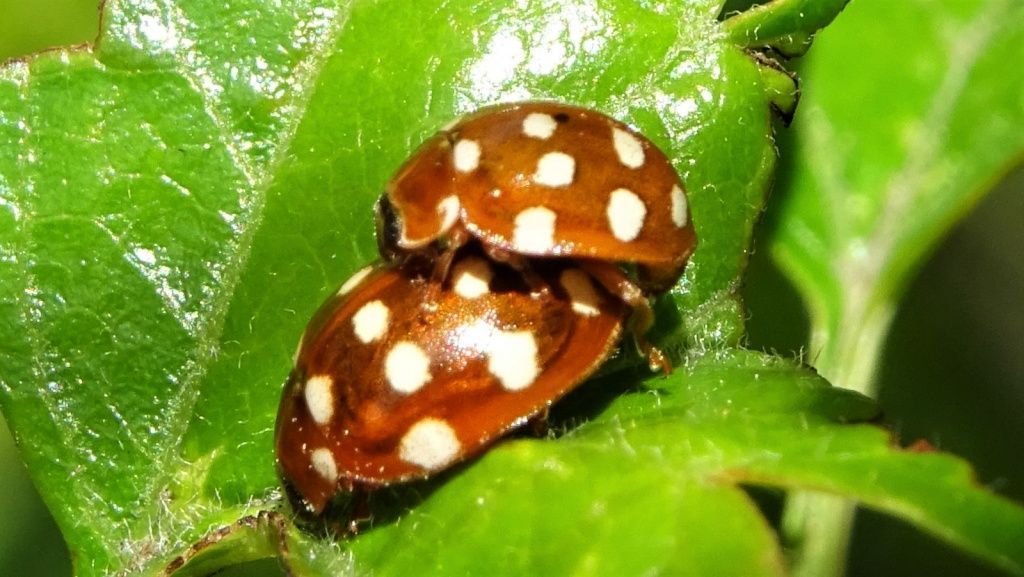
This species can be identified by its maroon-brown elytra, creamy-white spots, and brown legs. It inhabits hedgerows and deciduous trees, feeding on aphids and psyllids. This species is observed from April to October and overwinters in leaf litter, bark crevices, and beech nuts.
#
Orange Ladybird
Halyzia sedecimguttata
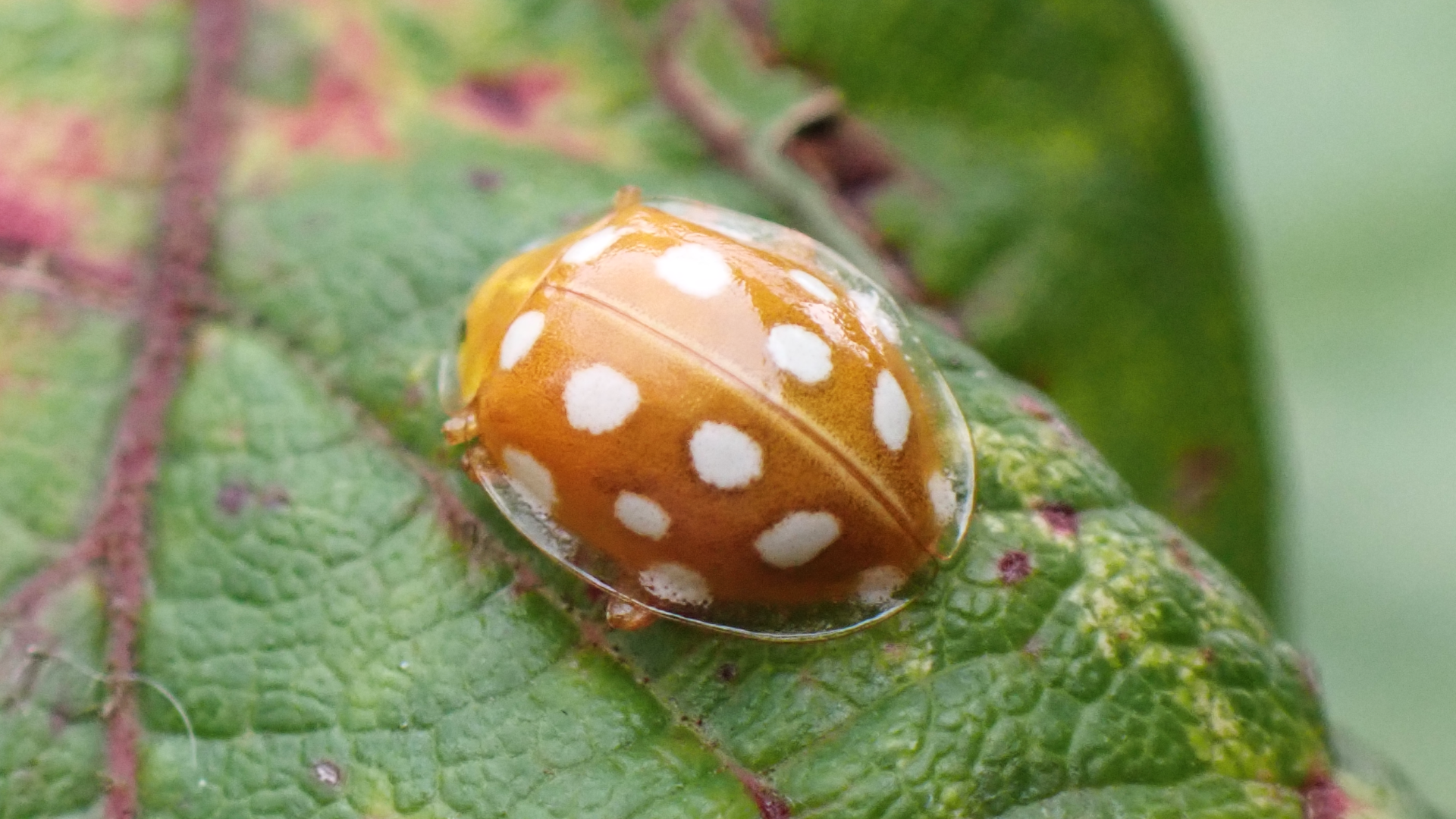
The Orange Ladybird measures 6mm in length and is characterized by up to 16 whitish spots. Its wing cases feature transparent edges. This species feeds on mildew found on trees like sycamore, ash, and beech, and it hibernates in leaf litter.
#
Pine Ladybird
Exochomus quadripustulatus
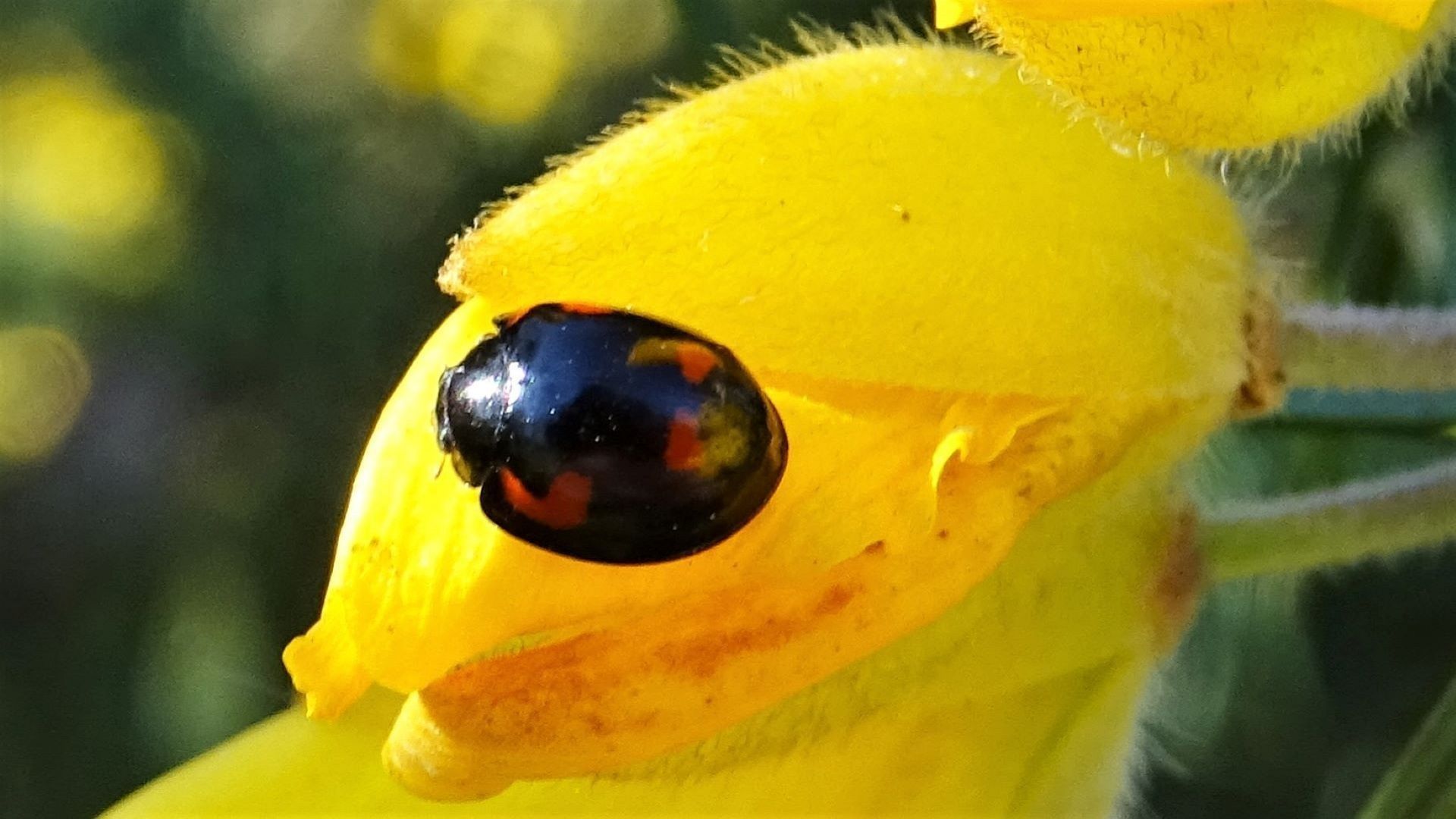
The small black ladybird measures 3-4mm and has four red spots, two of which are comma-shaped. Its legs are black. Despite its common name implying a connection to pine trees, this species is also prevalent on various deciduous trees, including lime, oak, and beech.
#
Kidney-spot Ladybird
Chilocorus renipustulatus
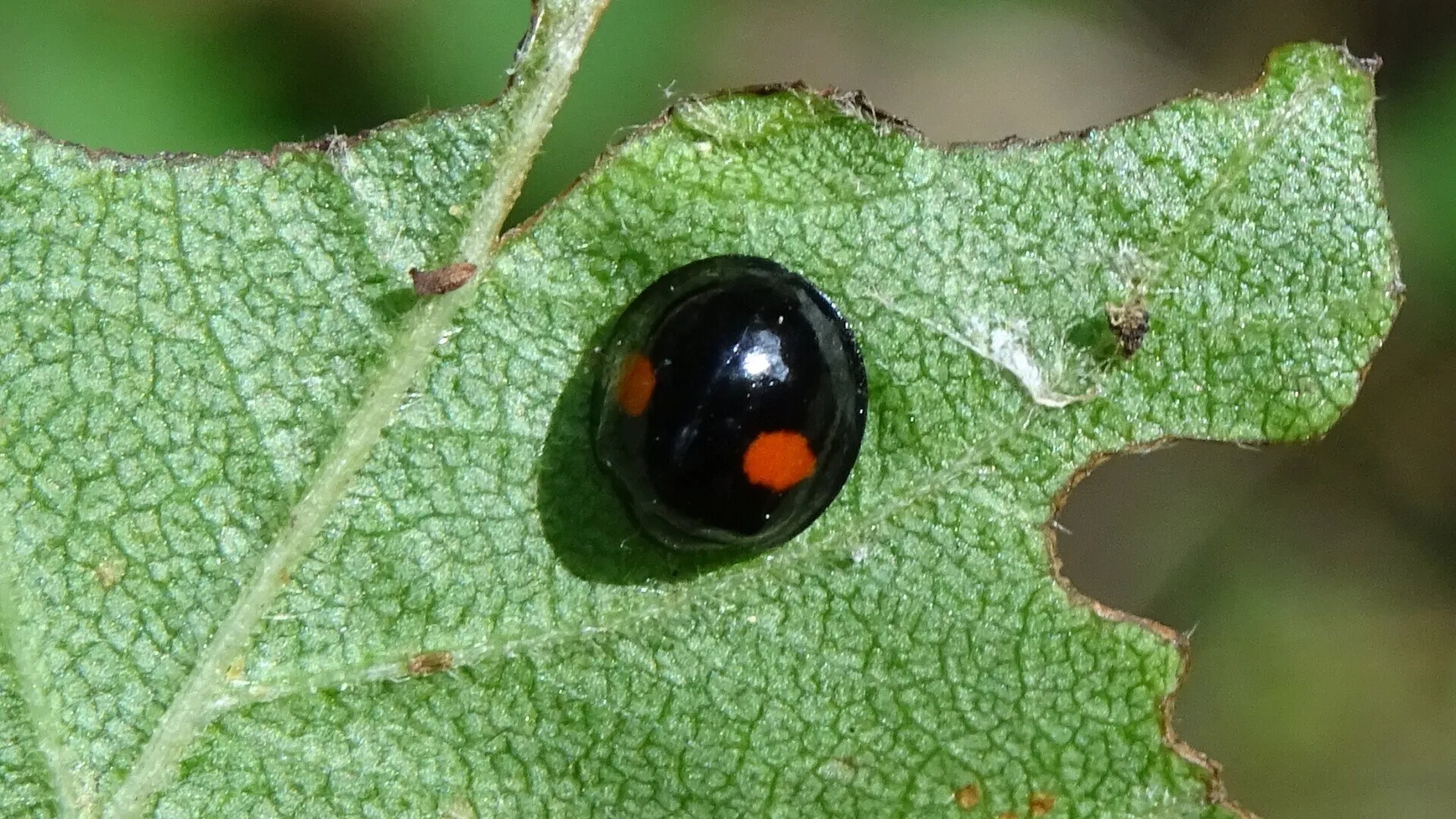
Rounded ladybird that measures about 5mm in size. Its black body features a rim around the base that resembles a bowler hat. Each wing case has a prominent red spot, and the legs are black. This species is typically found in well-wooded areas from April to October, where it feeds on scale insects located on tree bark.
#
Harlequin Ladybird
Harmonia axyridis

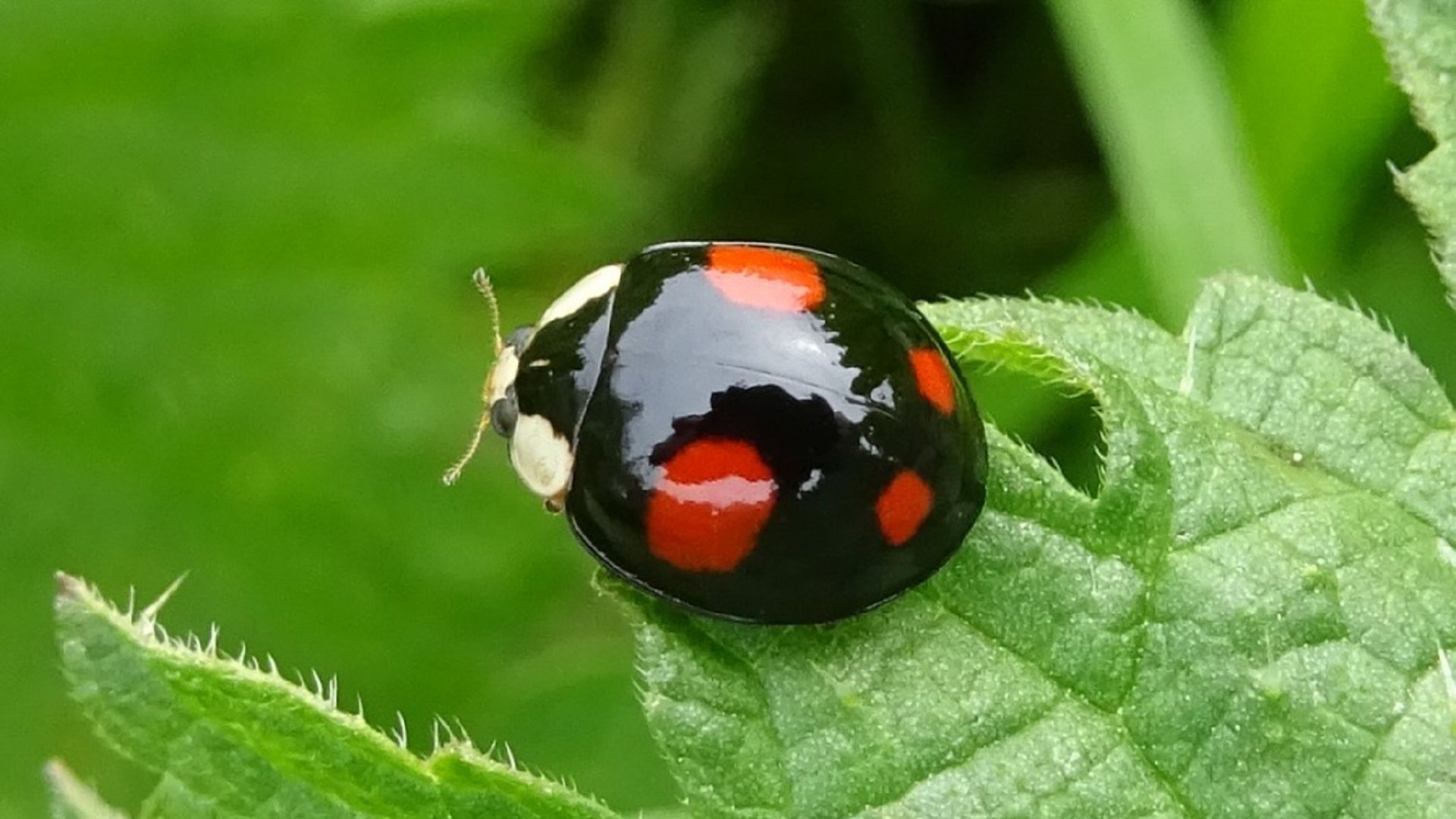
An invasive species originating from Eastern Asia, measuring 8 to 10 mm in length, exhibits highly variable markings. It is commonly found on oak as well as various other trees and shrubs. This species became established in Britain in 2004 and has since spread throughout south-east England. It has several forms...
The succinea form typically appears in orange or red and features 0 to 21 black spots on its elytra (wing cases).
The conspicua form is characterized by a black background with two prominent red, orange, or yellow spots or patches, one on each wing case.
The spectabilis form has a black background with four red or orange spots or patches, two on each wing case.


#
© hainaultforest.net. All rights reserved.