

FIRST QUARTER 2017
This journal chronicles the first quarter of 2017, spanning the months of January through March, and is comprised of two pages. A button is located at the bottom of this page, which will guide you to the second page.
JANUARY
Welcome to the Website
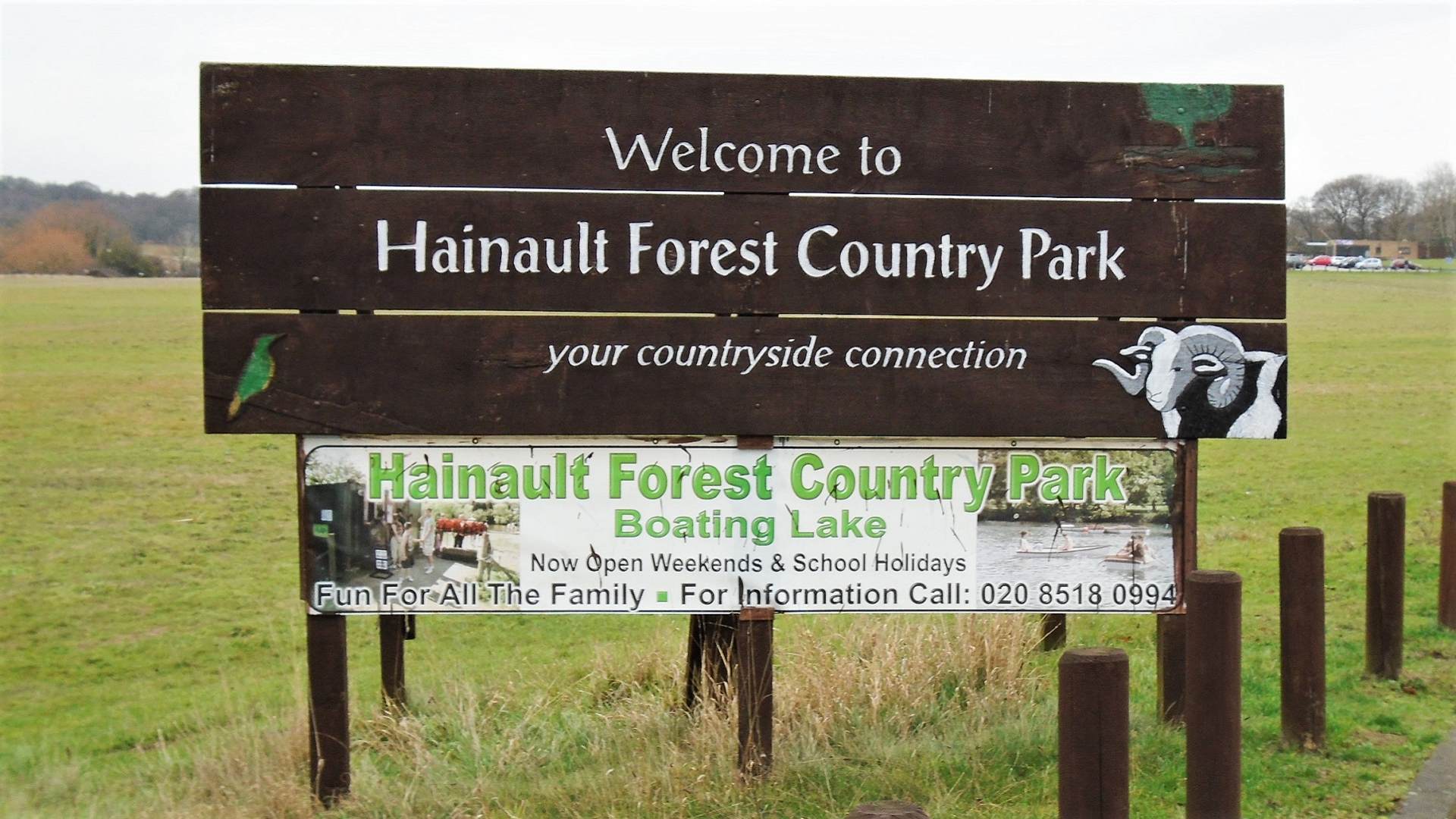
Welcome to the website's first Journal. Hainault Forest has some marvellous fauna and flora which many visitors overlook. The website hopes to show you many of the wonders that you may possibly see on your visit.
#
Dawn
7.14am
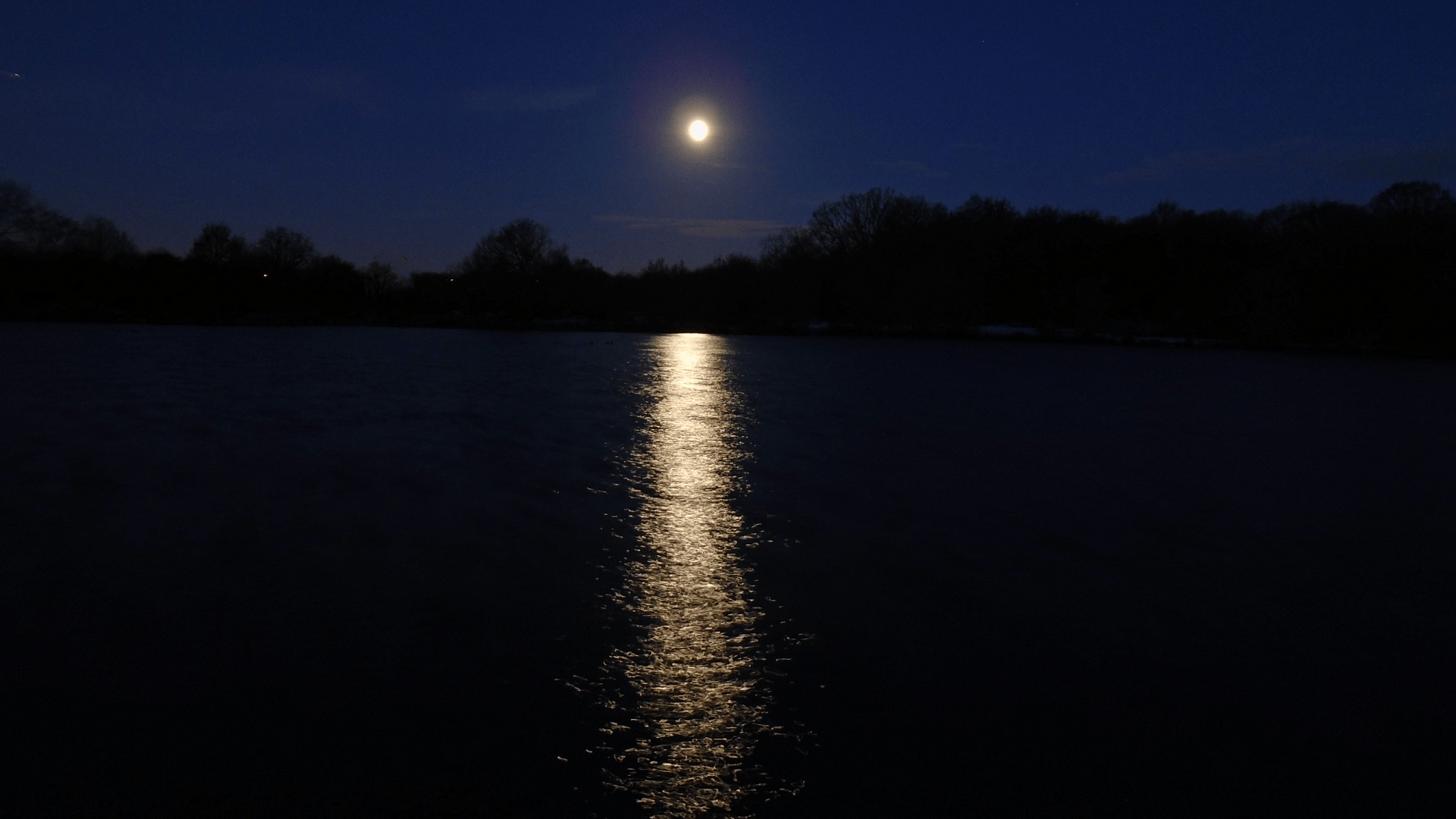
Hainault Lake with the full moon casting its reflection over the water.
#
Foxburrow Farm
Snow
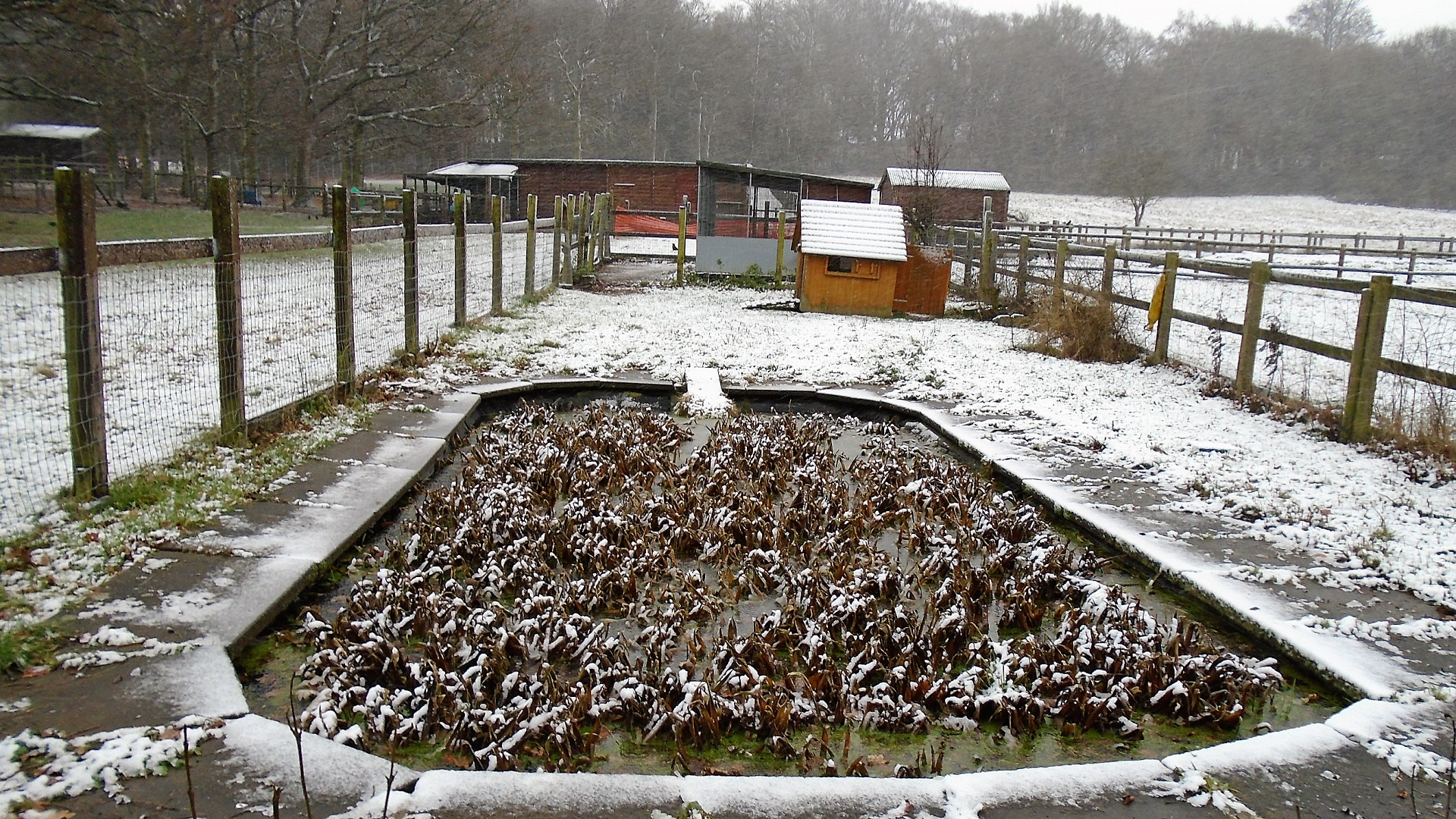
Mid-morning snow fell and settled on the 13th. Foxburrows Farm did not open due to the icy conditions. All the animals were locked away in their sheds.
#
Hainault Lake
Icy Waters
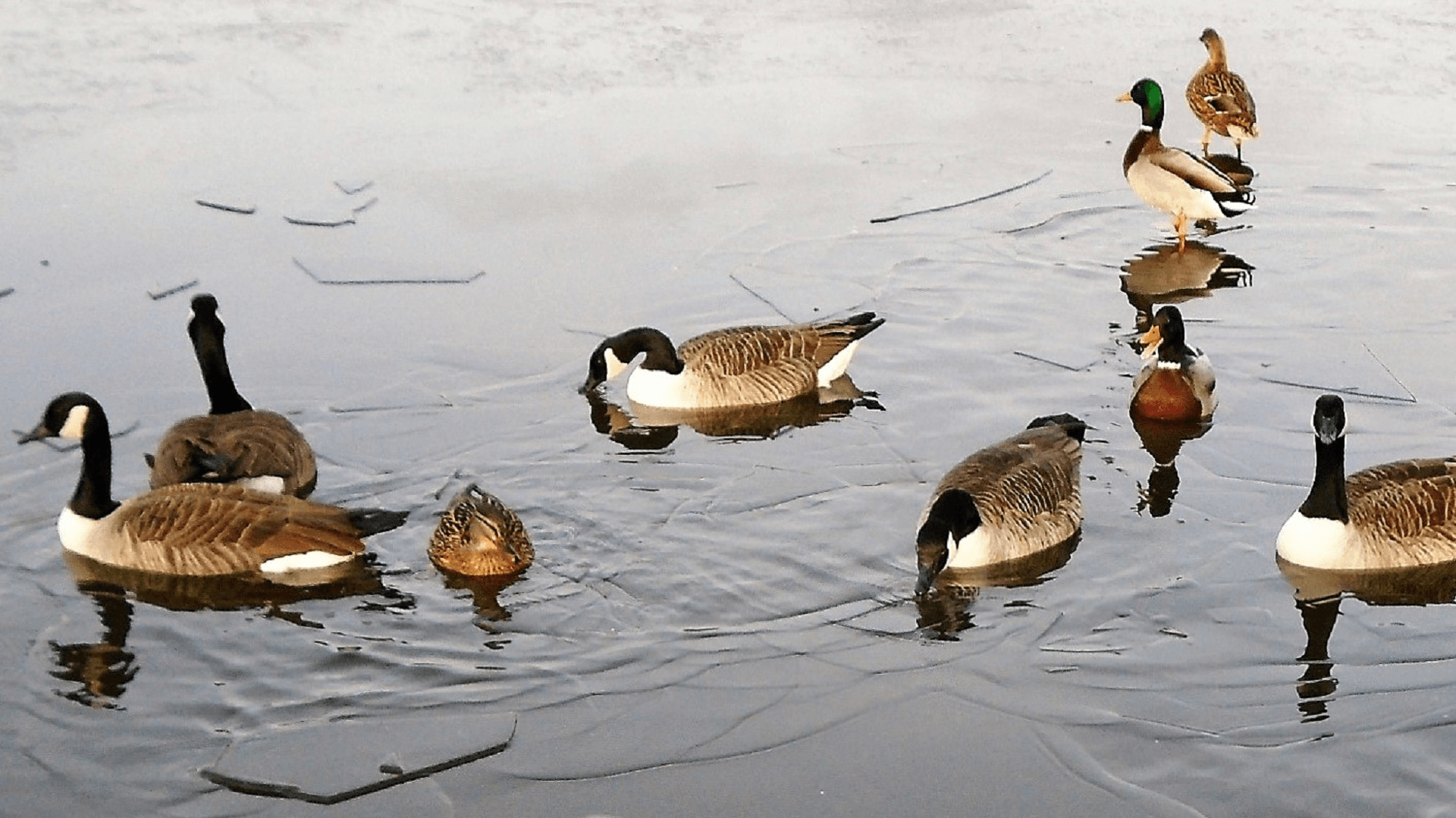
A cold start to 2017 with Geese and Mallards having to cope with icy waters.
#
Hairy Bracket
Trametes hirsuta
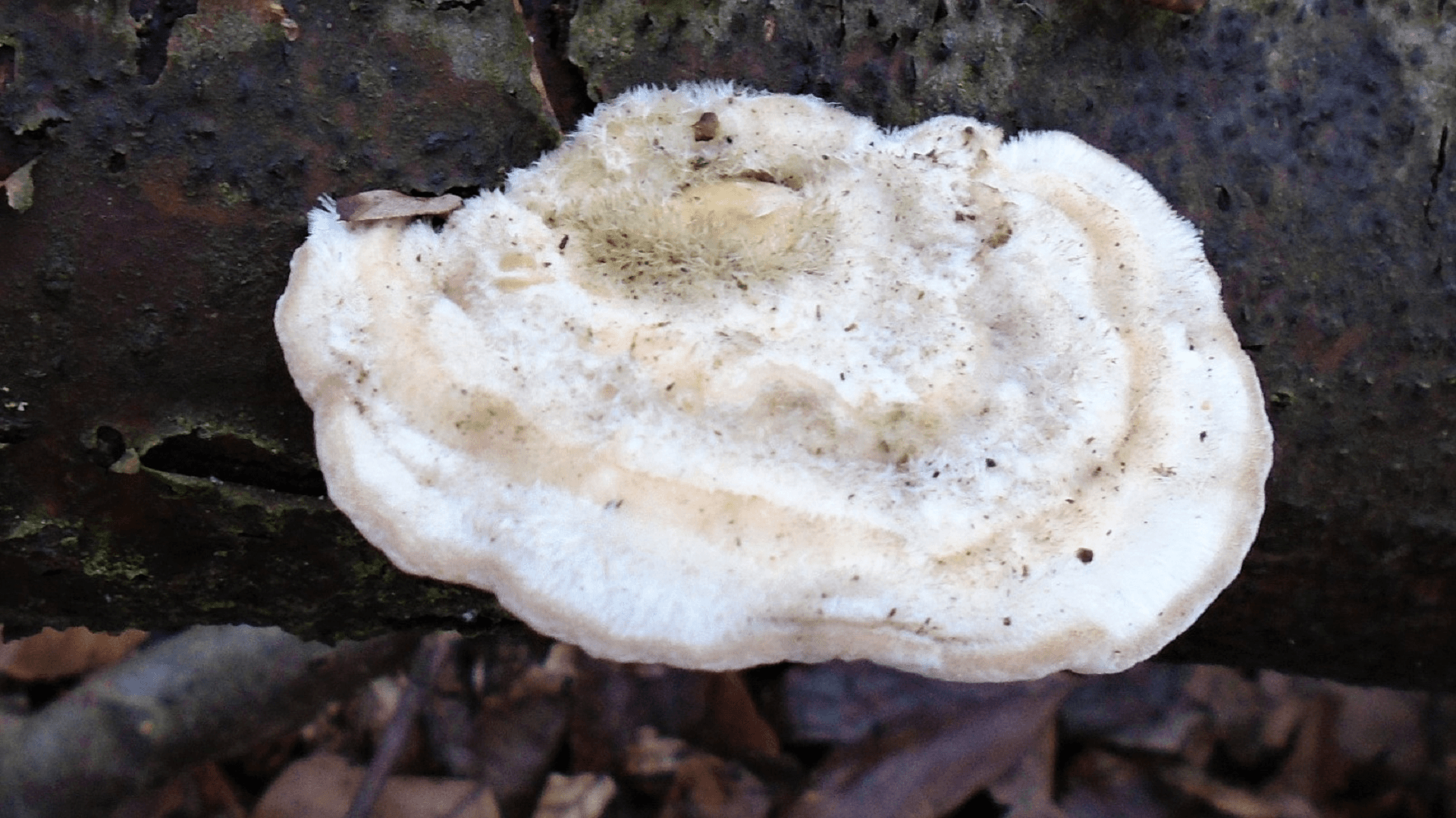
The brackets of this fungus are 40-100mm across when fully grown. They are initially white or creamy with the upper surface covered in hairs. It develops concentric ridged colour zones. The area near the outer edge usually has brown or ochre coloration. The fruiting bodies gradually turn greyer before decaying.
#
Poplar Bell
Schizophyllum amplum
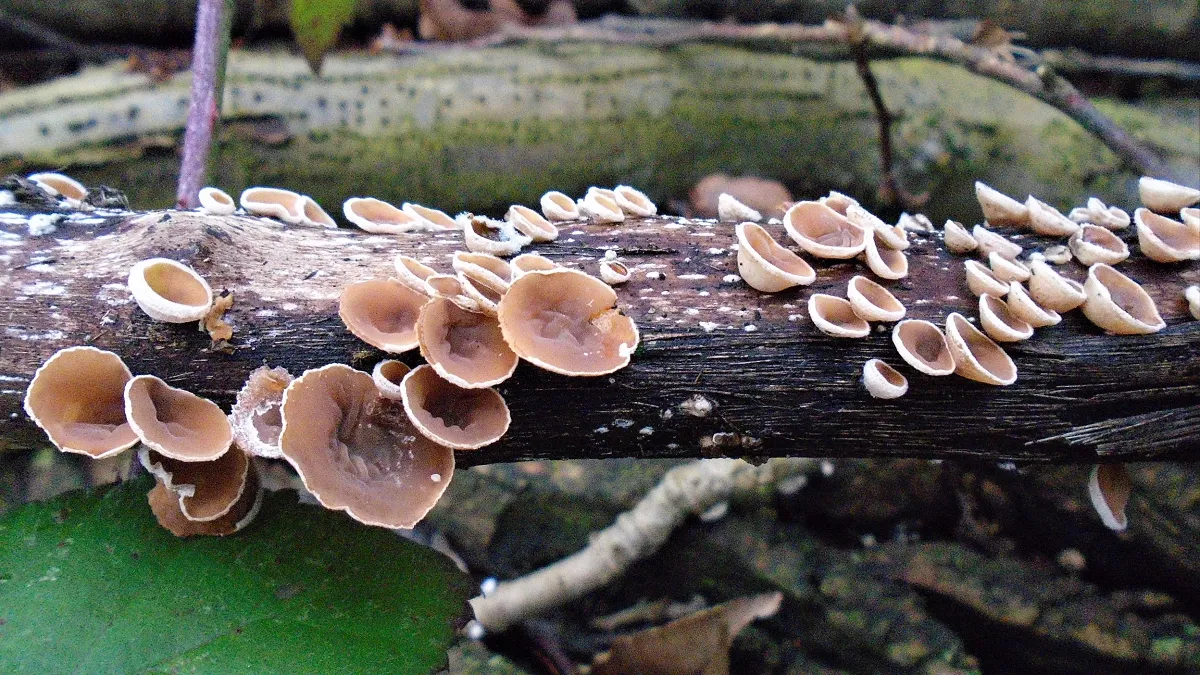
This fungus is mostly associated with growing on Poplar trees during wet spells, often seen after high winds when small branches have fallen from trees. It has no gills and dehydrates quickly and can vanish quite fast.
#
Yellow Brain
Tremella mesenterica

These bright yellow fruiting bodies mainly appear during autumn and winter on fallen deciduous branches. The fruiting body turns hard and orange when dried out.
#
Jelly Ear
Auricularia auricula-judae

A fungus found on tree trunks and branches all year round, especially during autumn and winter. Initially very soft with a velvet-like texture, becoming smoother with age. Grows on deciduous trees, particularly Elder.
#
Witch's Butter
Exidia glandulosa
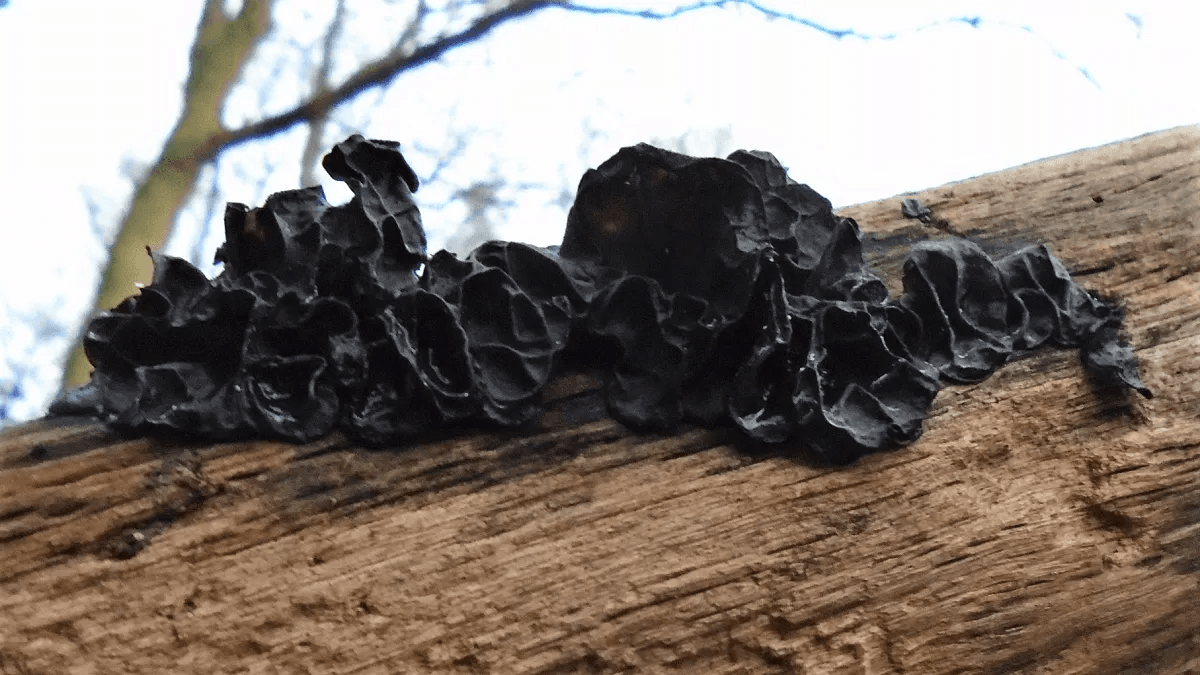
Found on deciduous dead wood during autumn and winter. The fruiting bodies attach to the wood using tiny stems. More noticeable after prolonged wet weather when they become plump and fleshy
#
White Brain
Exidia thuretiana

This Jelly fungus is found on rotten hardwood, particularly beech, during autumn and winter. In dry weather the fruiting bodies shrink becoming hard and leaving just a transparent rubbery spot on the host wood.
#
Cap-thread Moss
Orthodontium lineare
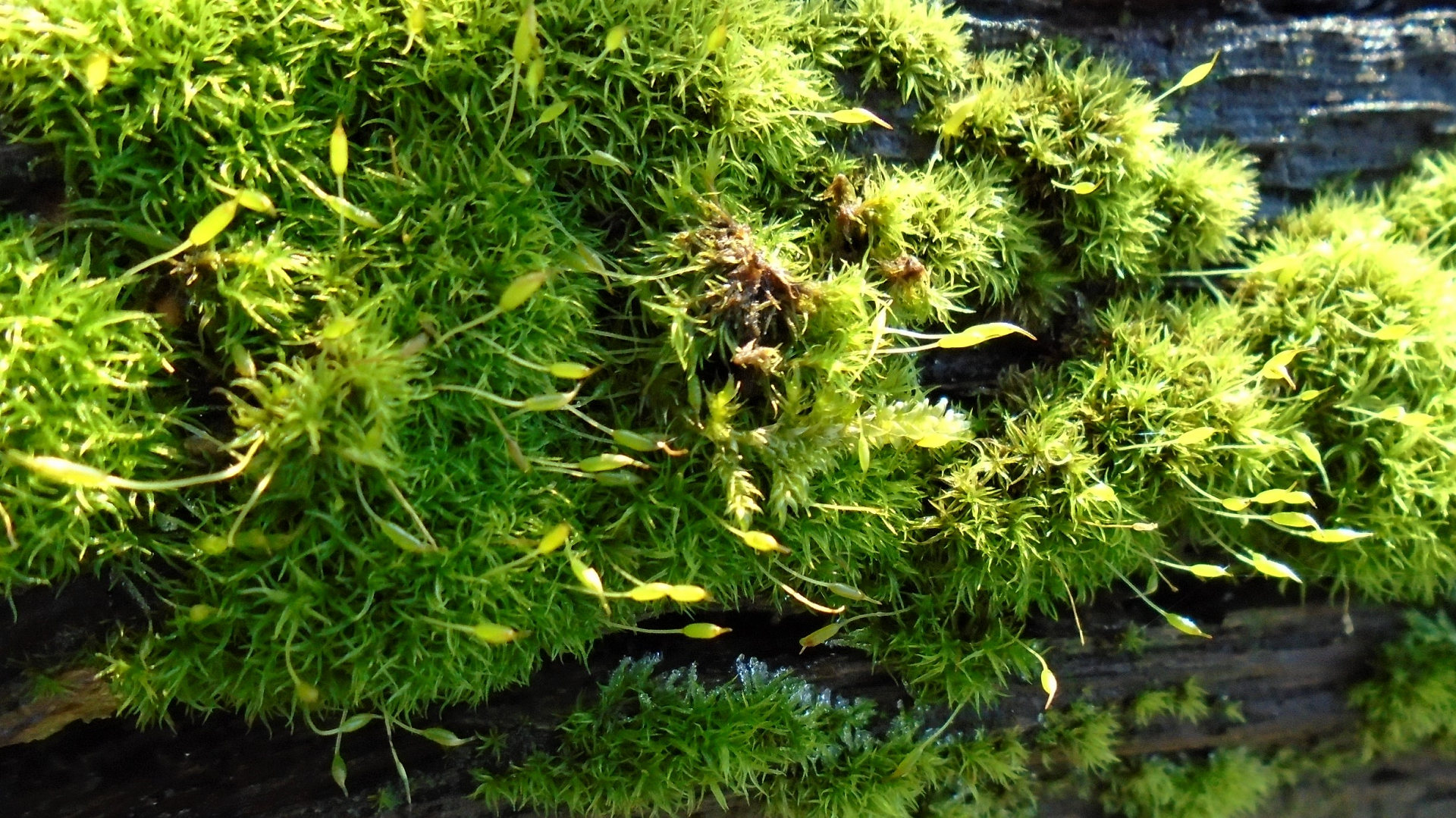
A silky, narrow-leaved moss, with leaves that curl in several directions. It froms dense growth on tree trunks. This was introduced from southern hemisphere in early 20th century and has spread.
#
Foliose Lichen
Parmelia subaurifera
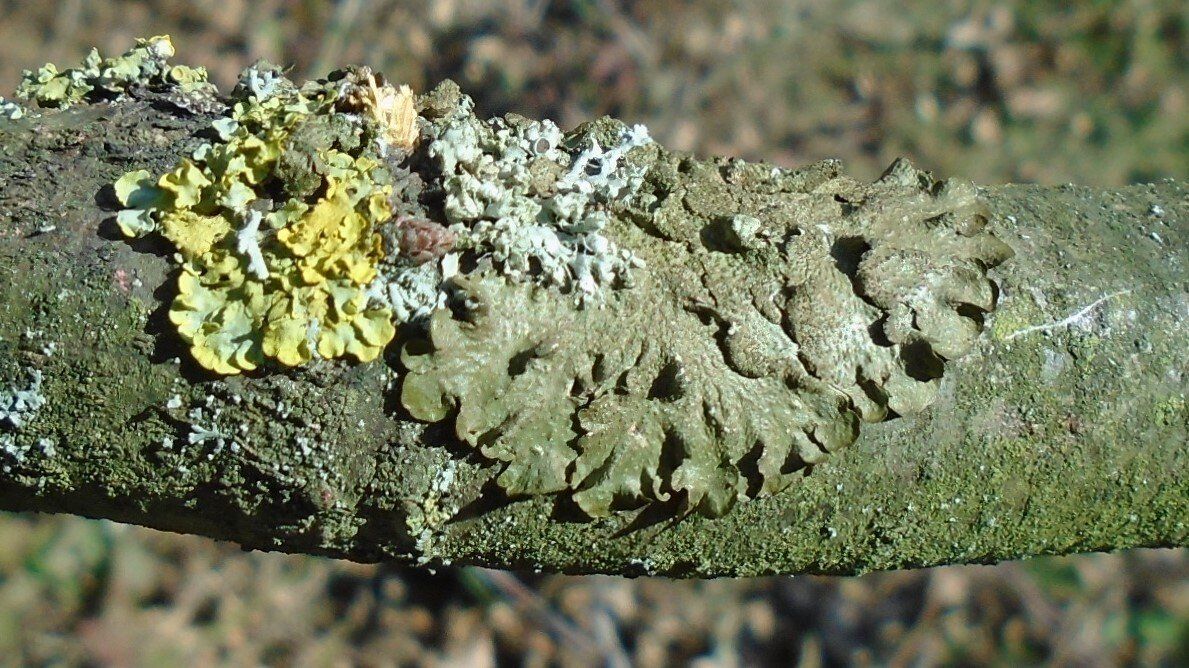
An olive-green leafy foliose lichen. Synonym: Melanelia subaurifera.
#
Birch Besom
Taphrina betulina
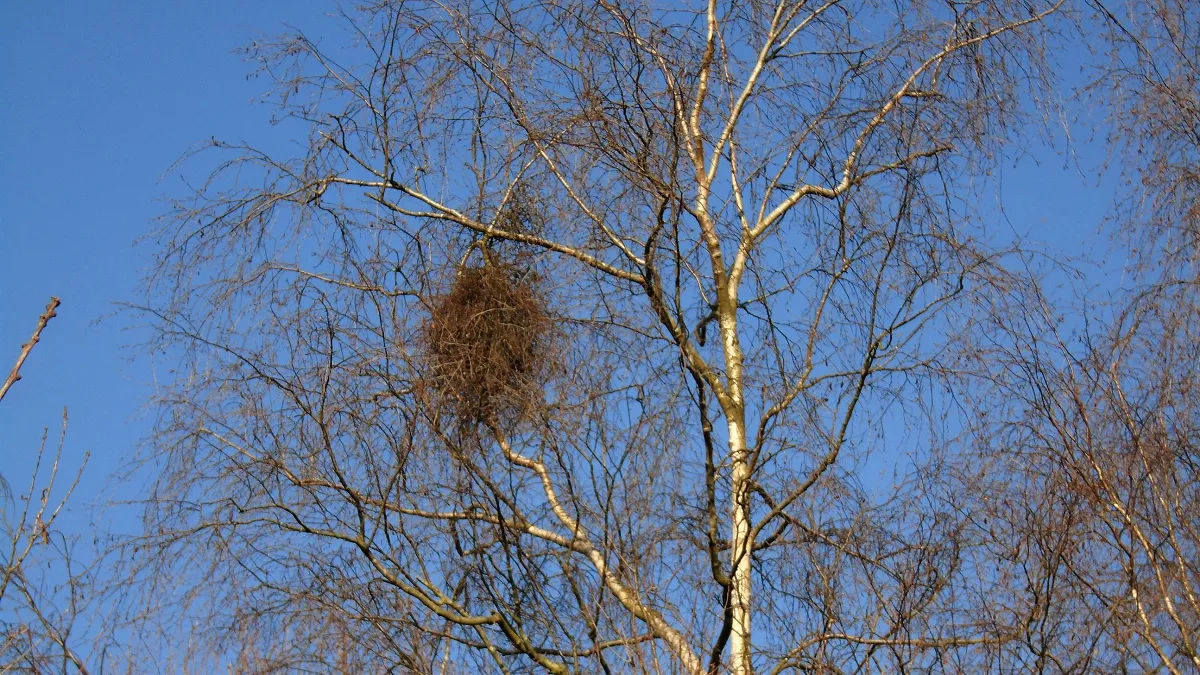
Birch Besom, also known as Witch's Broom, is a deformity caused by the fungus
Taphrina betulina affecting Silver Birch trees. It results in a dense growth of shoots from a single point, creating a structure that resembles a witch's broom or a bird's nest. This gall can occur at any time of the year, but it is more noticeable in winter when the trees are leafless.
#
FEBRUARY
Kestrel
Falco tinnunculus
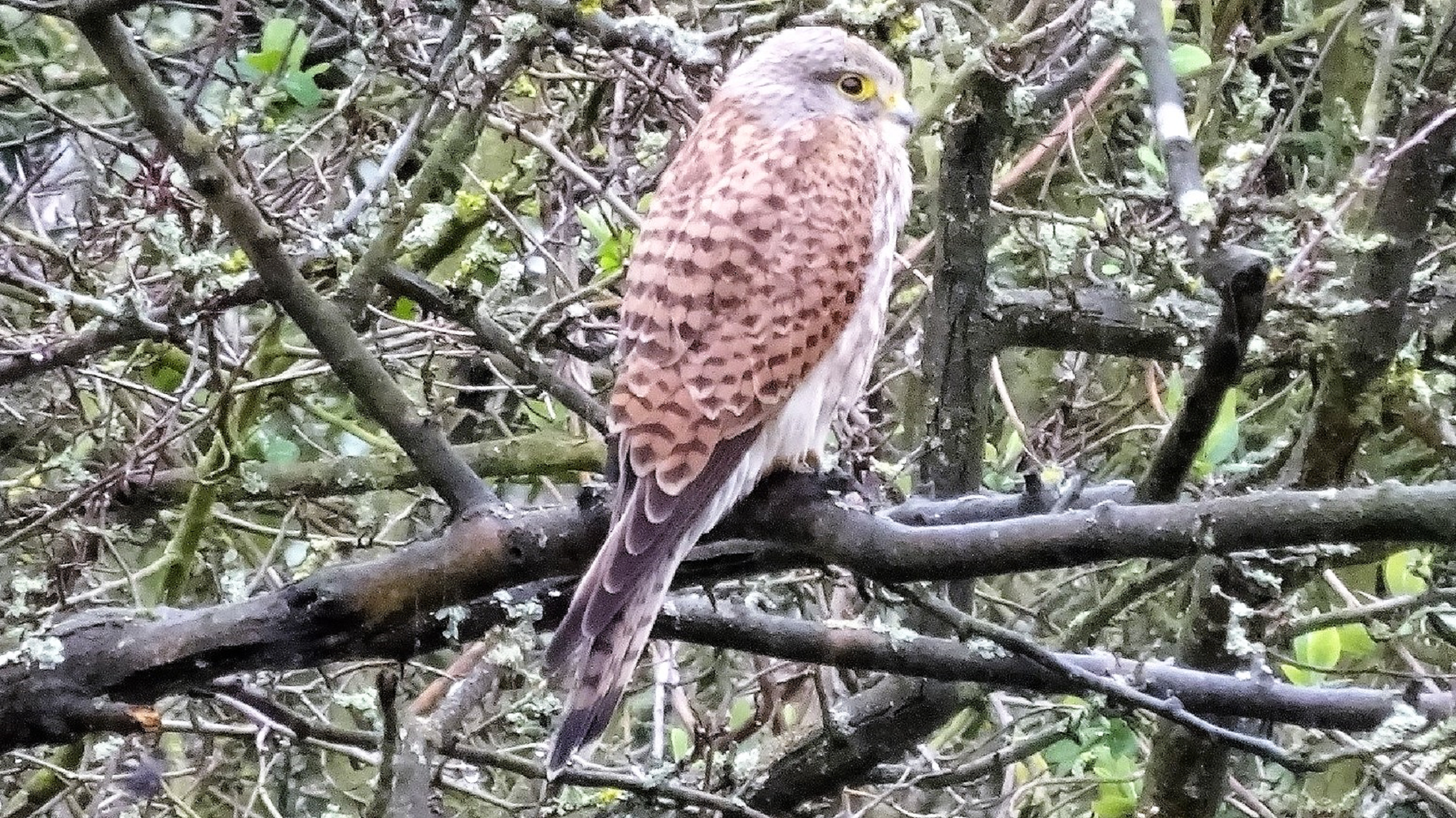
Kestrels are often seen flying over grassland areas and near Hainault Lake.
#
Willow Bracket
Phellinus igniarius
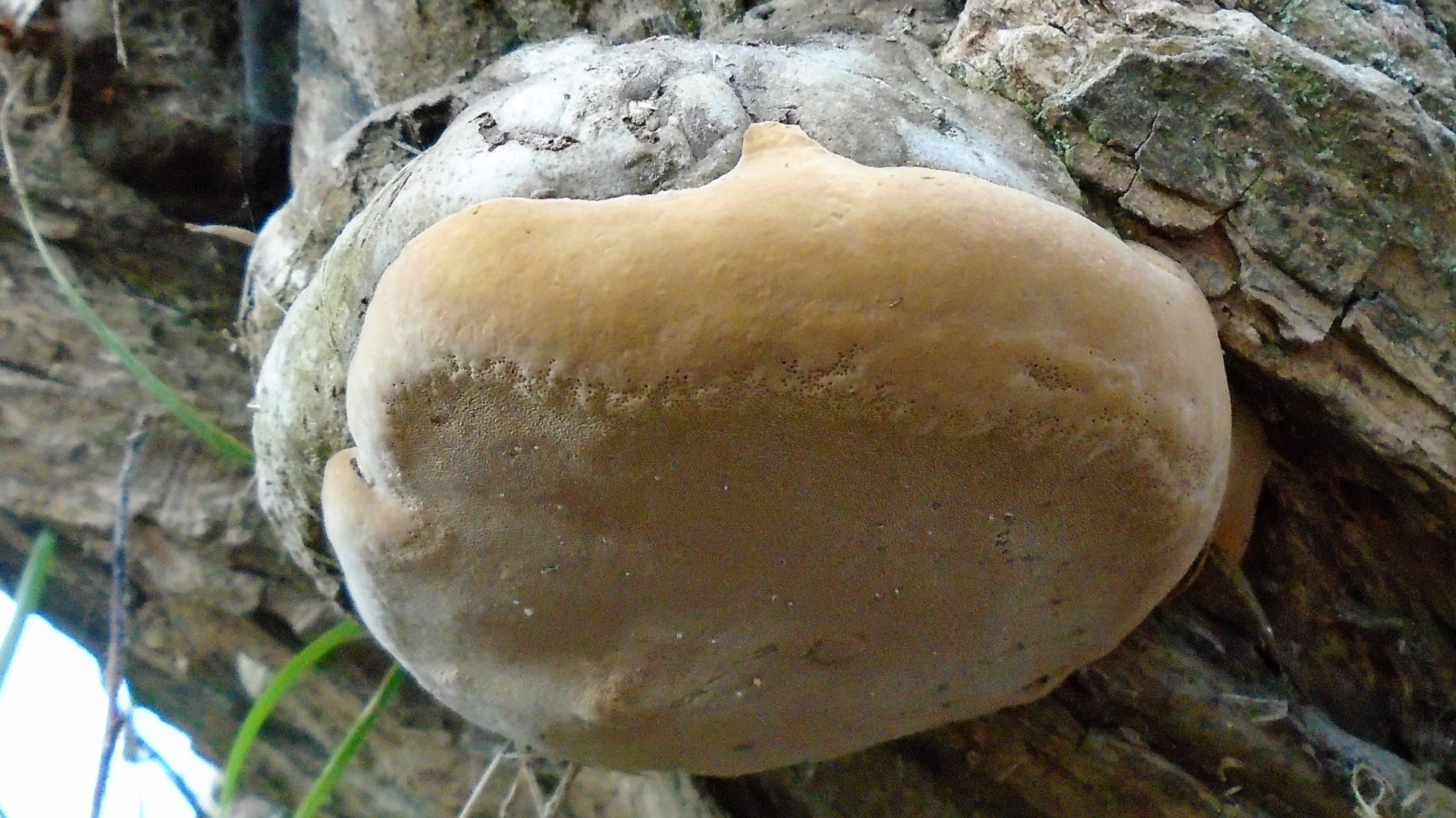
Very tough fungus associated with willow trees. Seen all year round on lower trunks of older trees. It grows in concentrically ridged layers; with a fresh layer forming each year. The new layers are light-brown and feel like velvet. Older layers turn grey, then blacken and often develop cracks. The largest ones at Hainault Forest are about 20cm across.
#
Common Jelly Ear
Dacrymyces stilatus
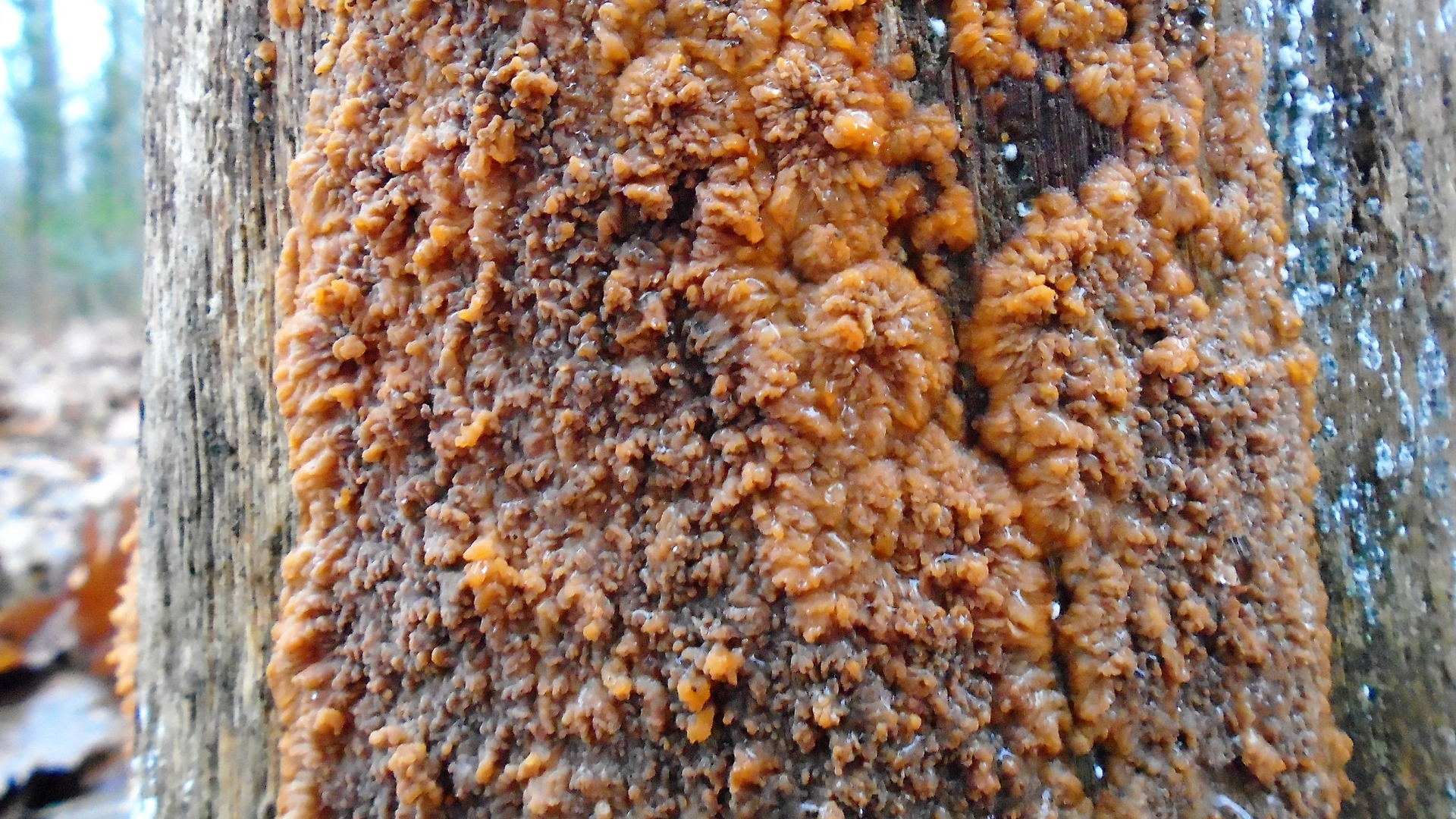
Found on all kinds of damp and decaying wood. The fruiting bodies are normally orangy-yellow and 2-5mm across. Dries out with maturity becoming darker and marginally tougher.
#
King Alfred's Cakes
Daldinia concentrica
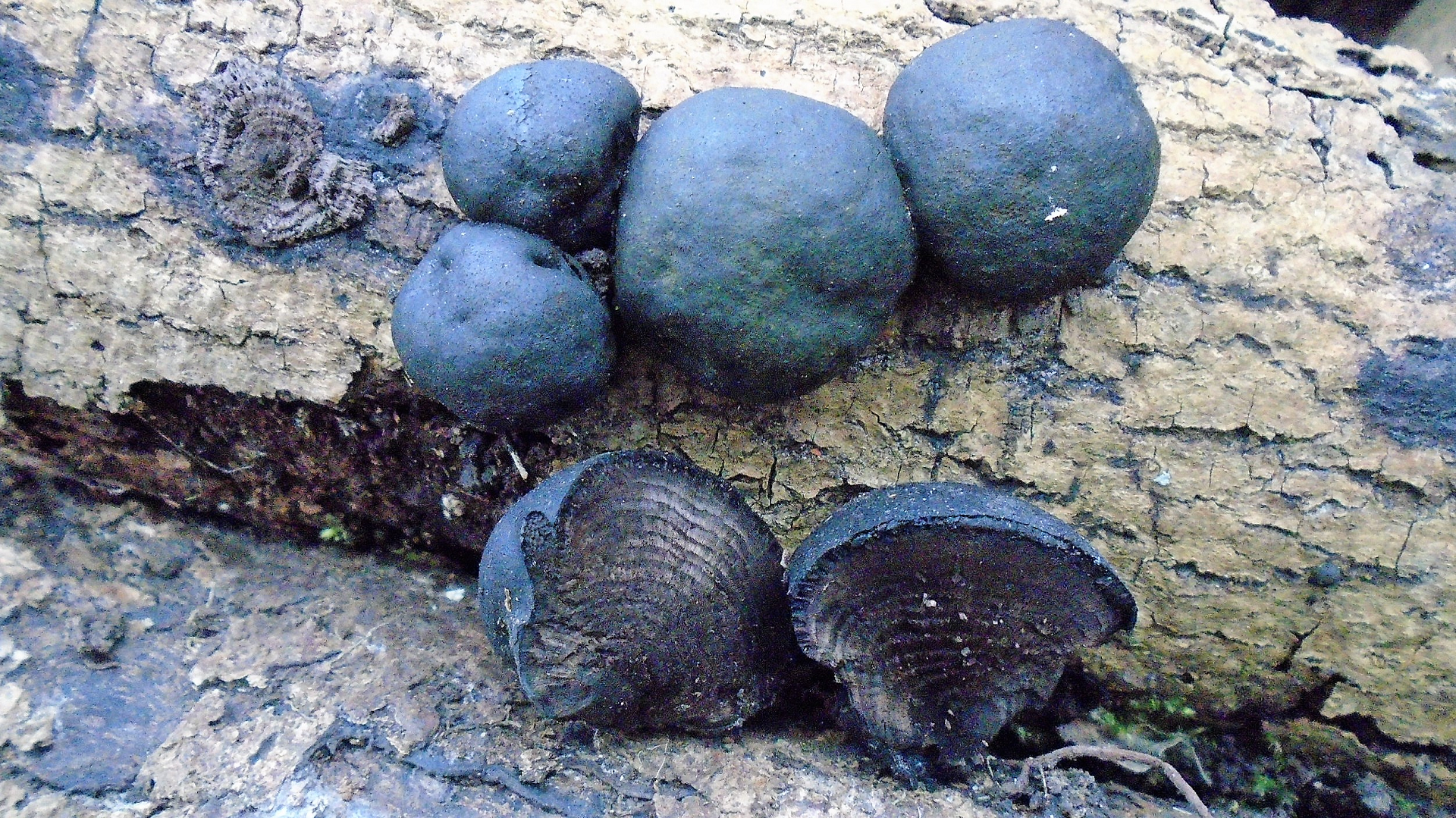
Initially pinkish-brown, this fungus aka 'Crampballs' blackens with age. When cut in half concentric growth rings are revealed, hence 'concentrica' in its Latin name.
#
Scarlet Elfcup
Sarcoscypha austriaca
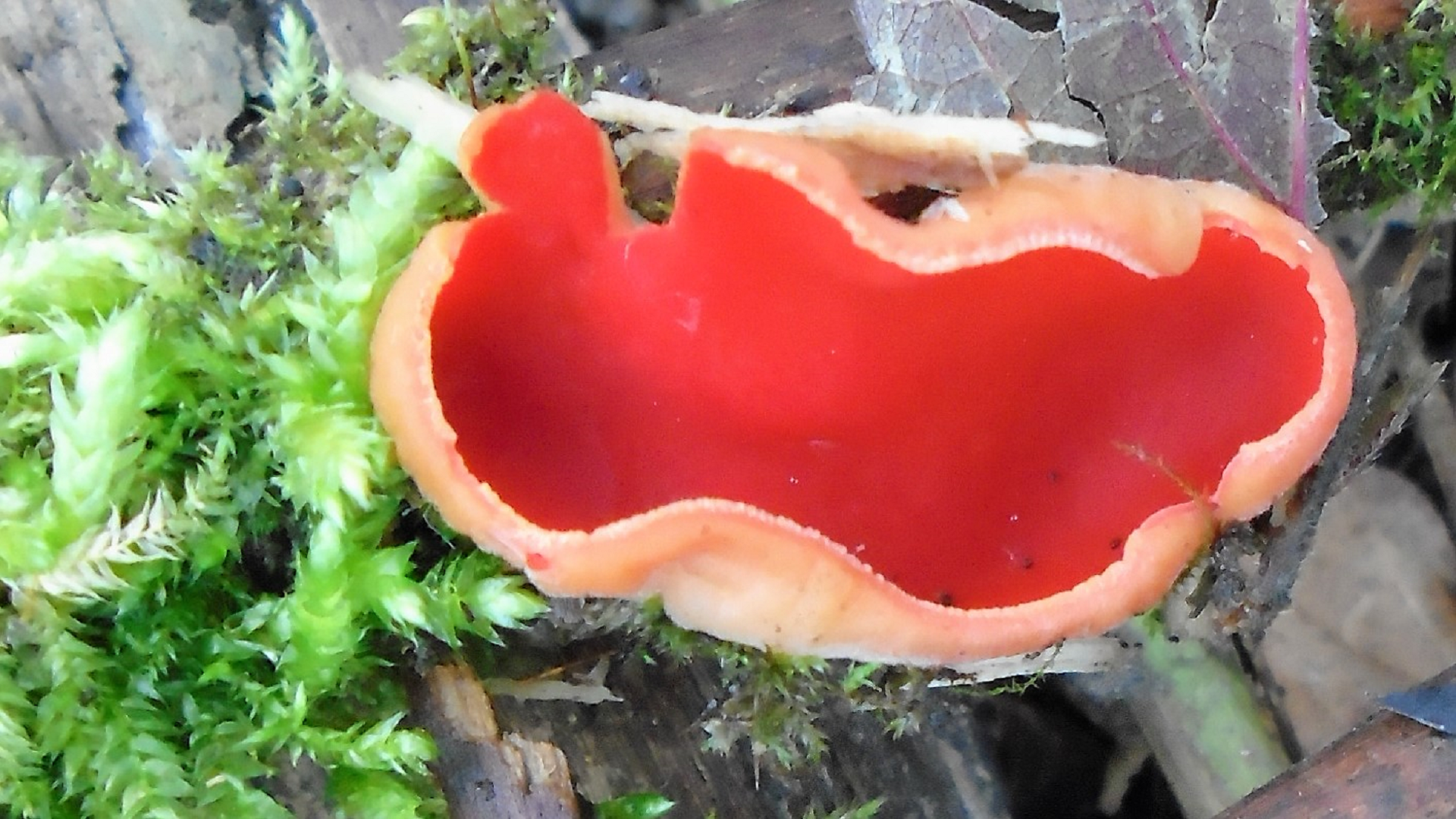
Typically appears during winter months on dead twigs, this fungus has a preference for damp shaded locations where it is usually found partially buried in moss.
#
Velvet Shank
Flammulina velutipes
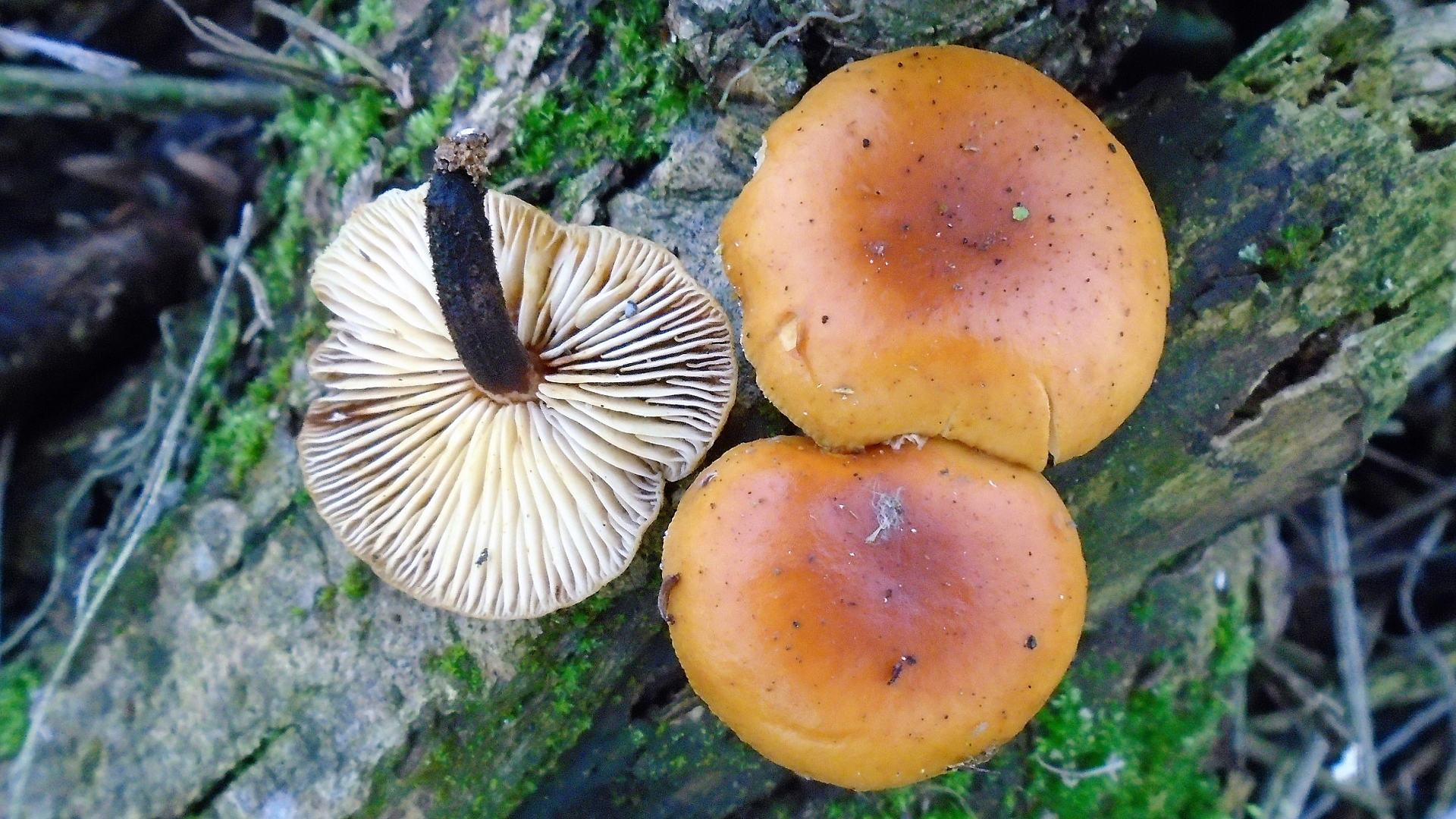
Often seen during January and February, normally appearing on deadwood after frosty weather. This fungus has orange-brown caps that measure 40-120mm across. The dark stipe is velvety at the base and grows up to 100mm long.
#
Spurge Laurel
Daphne laureola
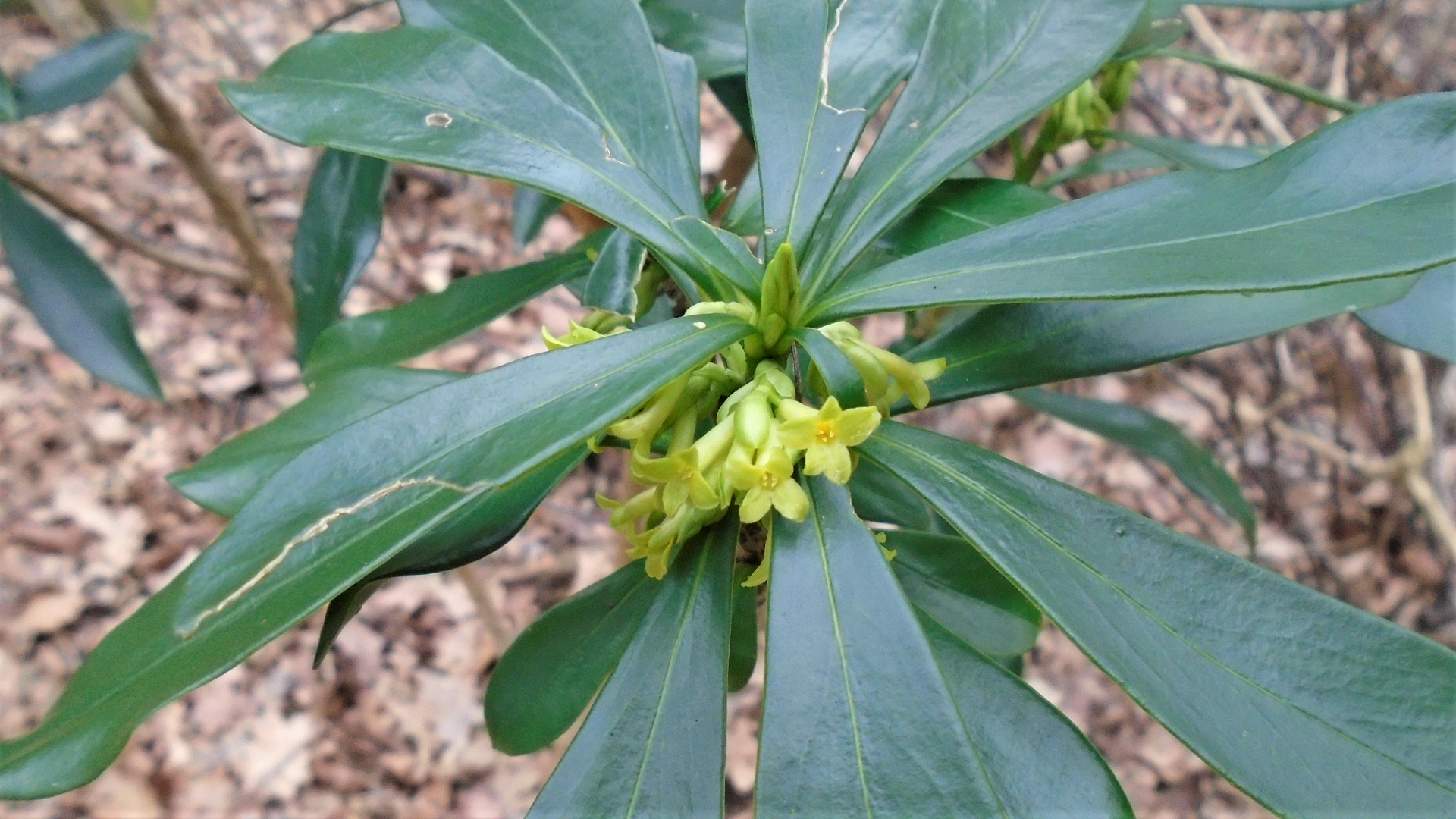
Spurge Laurel is an evergreen woodland shrub with branched stems that has a preference for chalky soil. Its yellowish-green flowers grow in clusters at the top of the stems early in the year; normally from January until April. Poisonous black berries develop after the flowers. The dark. narrow, leathery, glossy green leaves of Spurge Laurel grow on woody stems. Despite the name, it is not a Spurge or a Laurel, but instead belongs to the Daphne family.
#
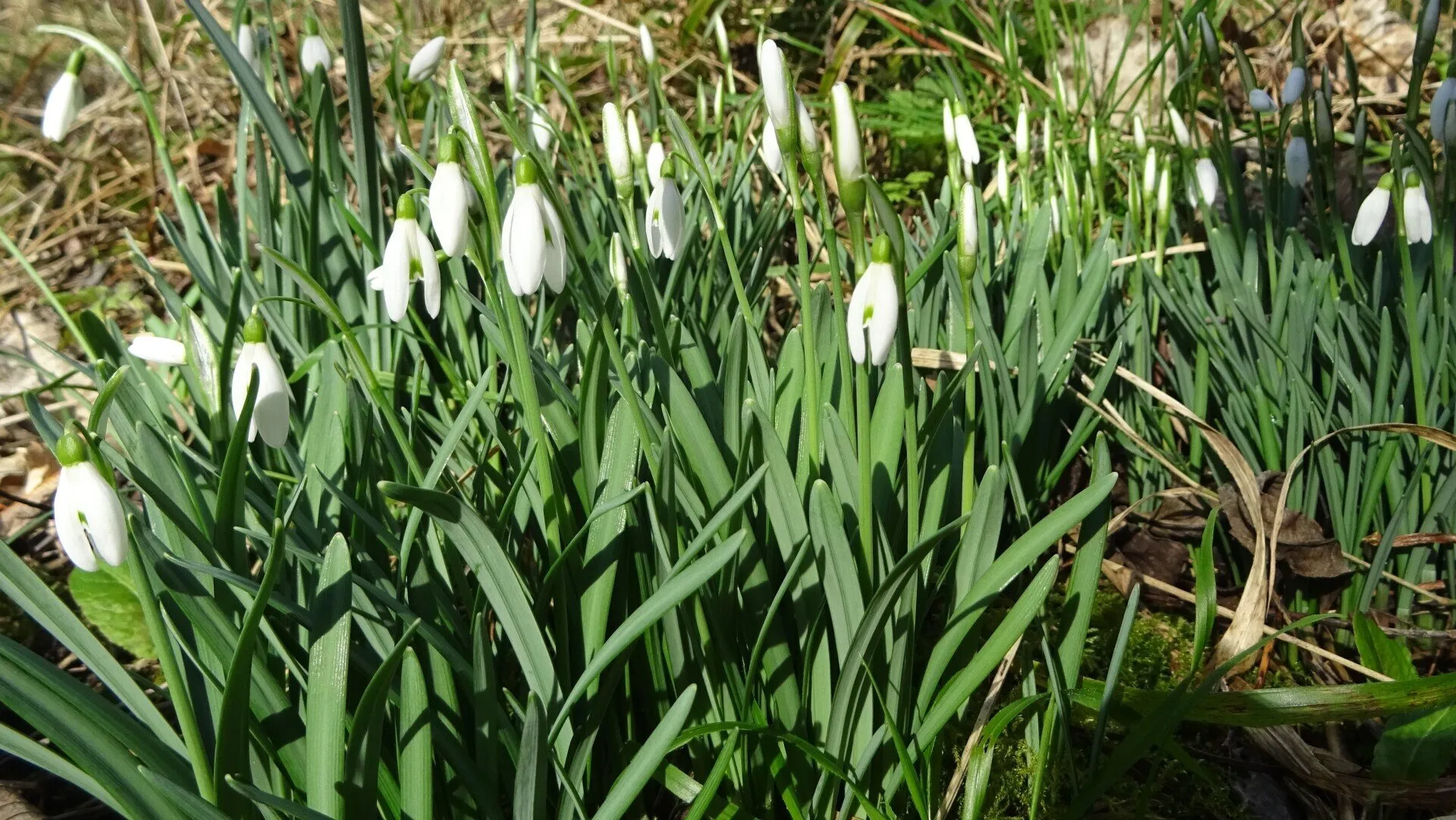
Snowdrops
Galanthus nivalis
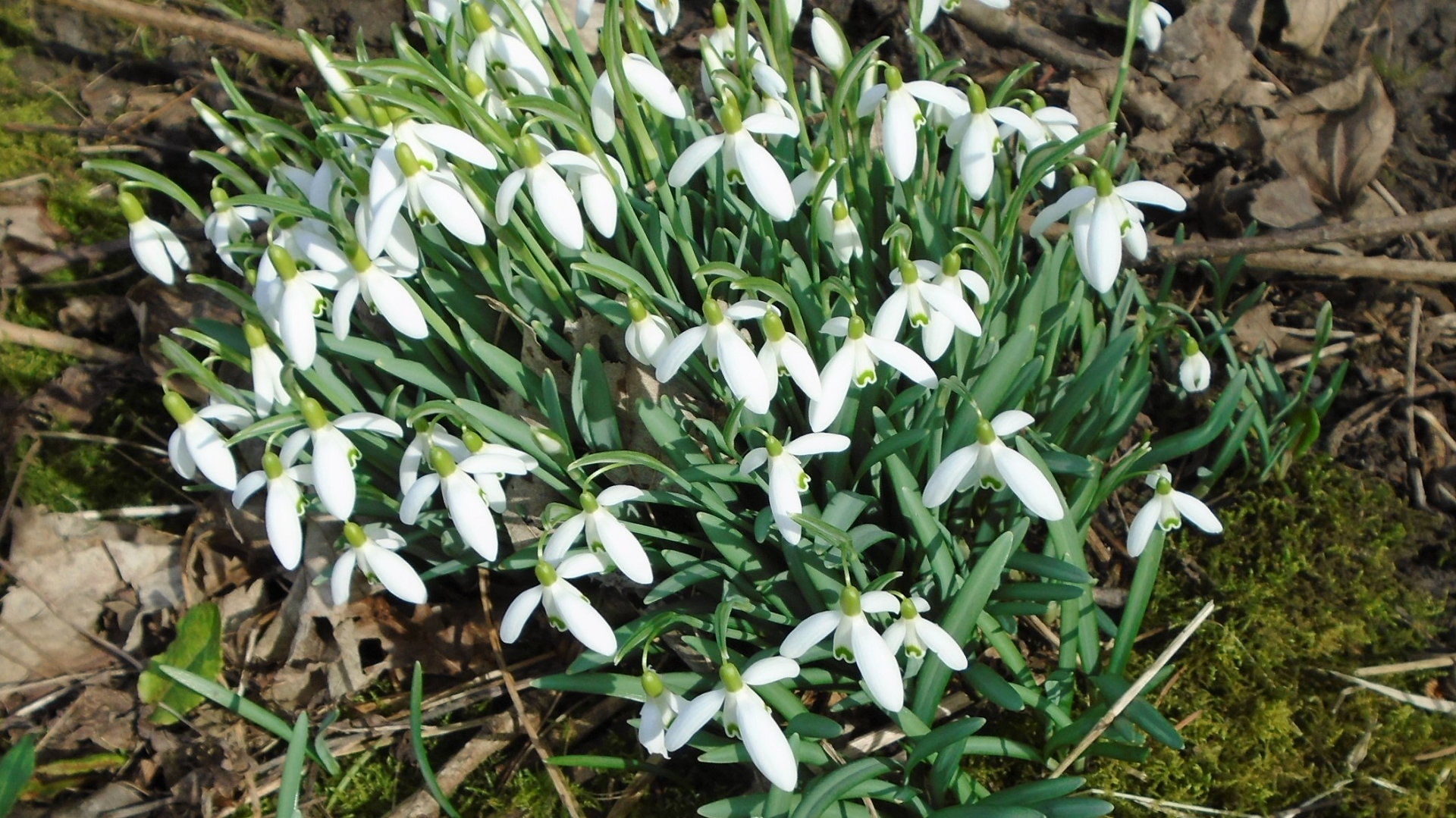
One of the first flowers to appear in damp woods and hedgerows as springtime approaches. Not common in Hainault Forest.
#
Storm Doris
Fallen Tree
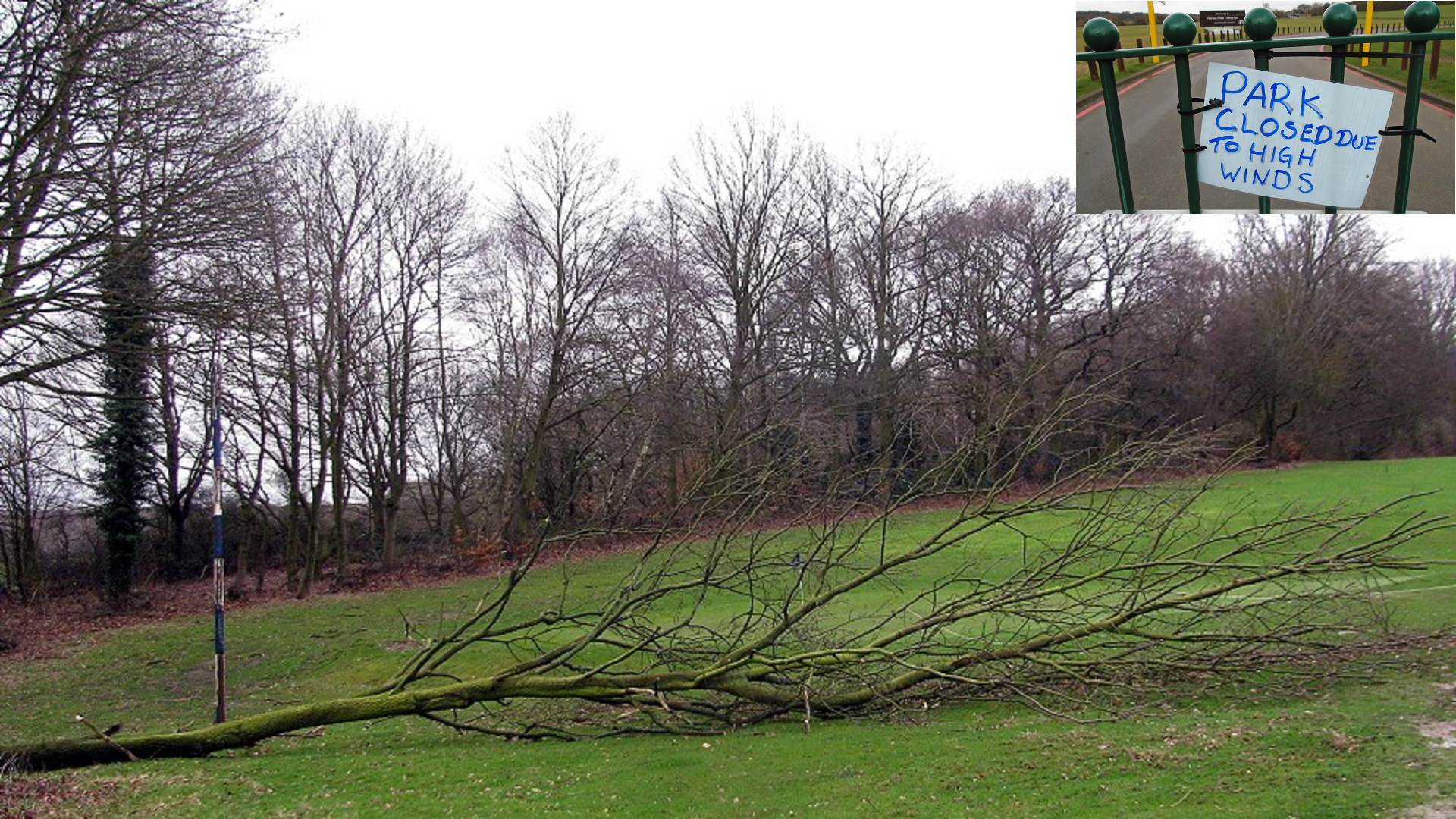
Storm Doris hit Britain on 23rd February 2017. Severe weather warnings were issued because of high winds. Hainault Forest entrance closed just before noon to safeguard visitors. This tree was blown down on Hainault Golf Course.
#
MARCH
Great Crested Grebe
Podiceps cristatus

Great Crested Grebes are the largest grebe species in Britain. They dive beneath the surface to catch fish and avoid predators. Courtship behaviour usually starts in mid-winter and includes synchronized swimming, diving, head shaking, and the presentation of vegetation, as well as running on water. If a pair bonds, they will build a floating nest. While feeding, parents give their chicks feathers to ingest. The purpose of this behavior is not entirely clear, but it is thought to assist the young in regurgitating fish bones and minimizing their risk of gastric parasites.
#
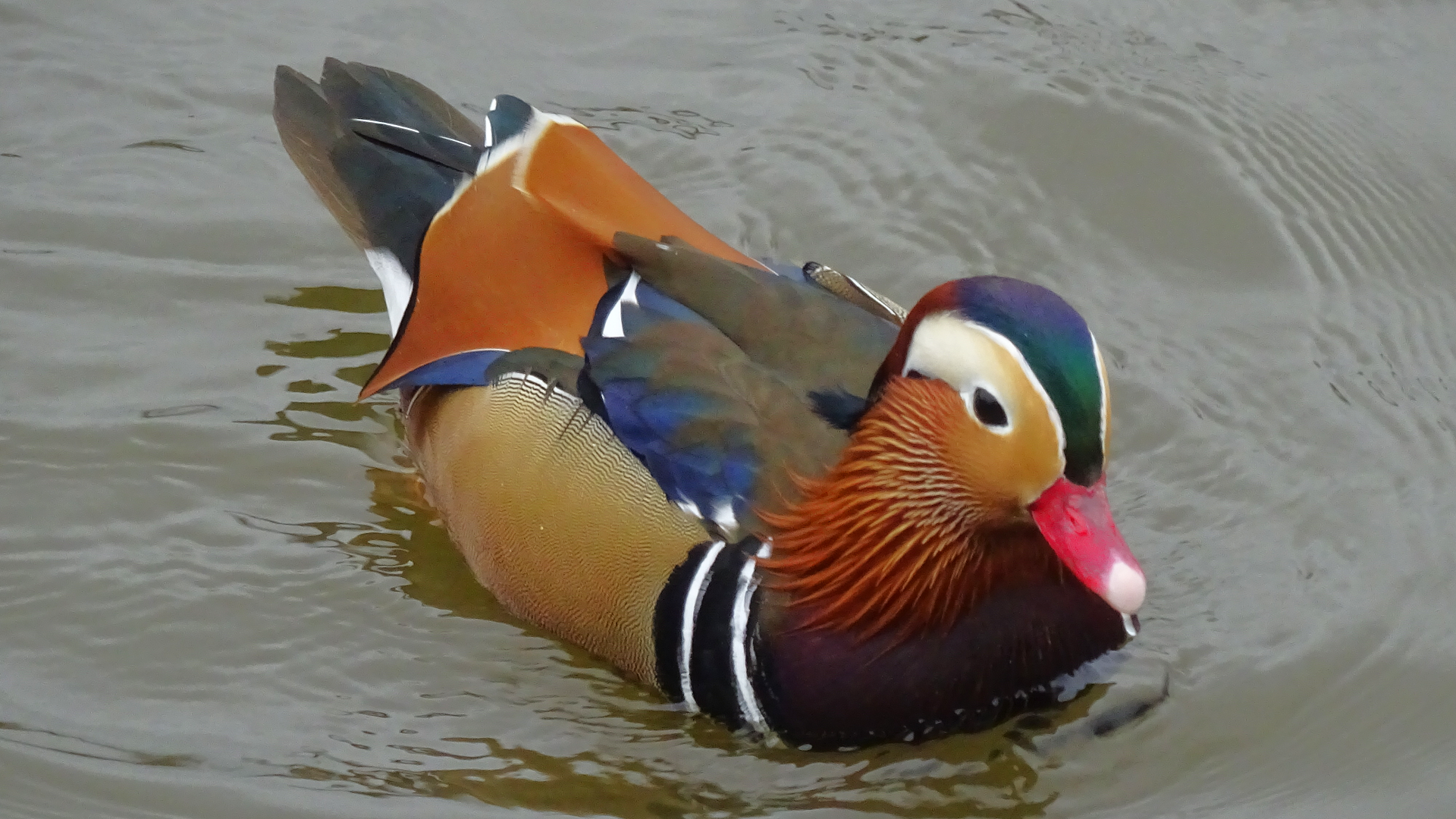
Mandarin Duck
Aix galericulata
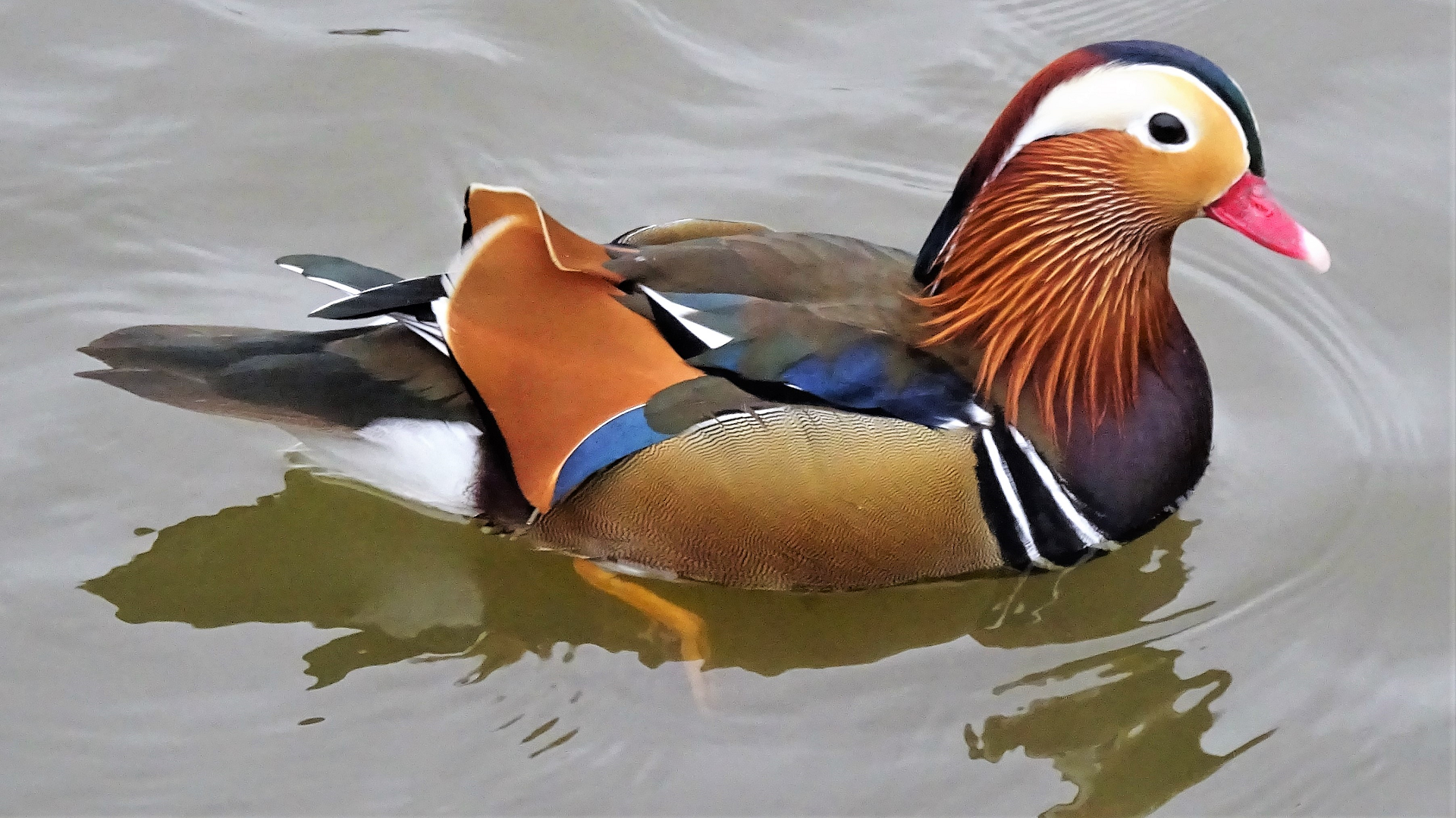
Males exhibit vibrant plumage, while females are less colourful. Introduced to Britain from Asia, the global population is estimated to be around 65,000, with a decreasing trend observed in recent years. Mandarins primarily feed on plants, seeds, and insects. In China, their native habitat, they have been viewed as symbols of fidelity and were traditionally given to brides as wedding gifts. However, in practice, Mandarins typically form pairs during the mating season and often find new partners the following autumn.
#
Tufted Duck
Aythya fuligula
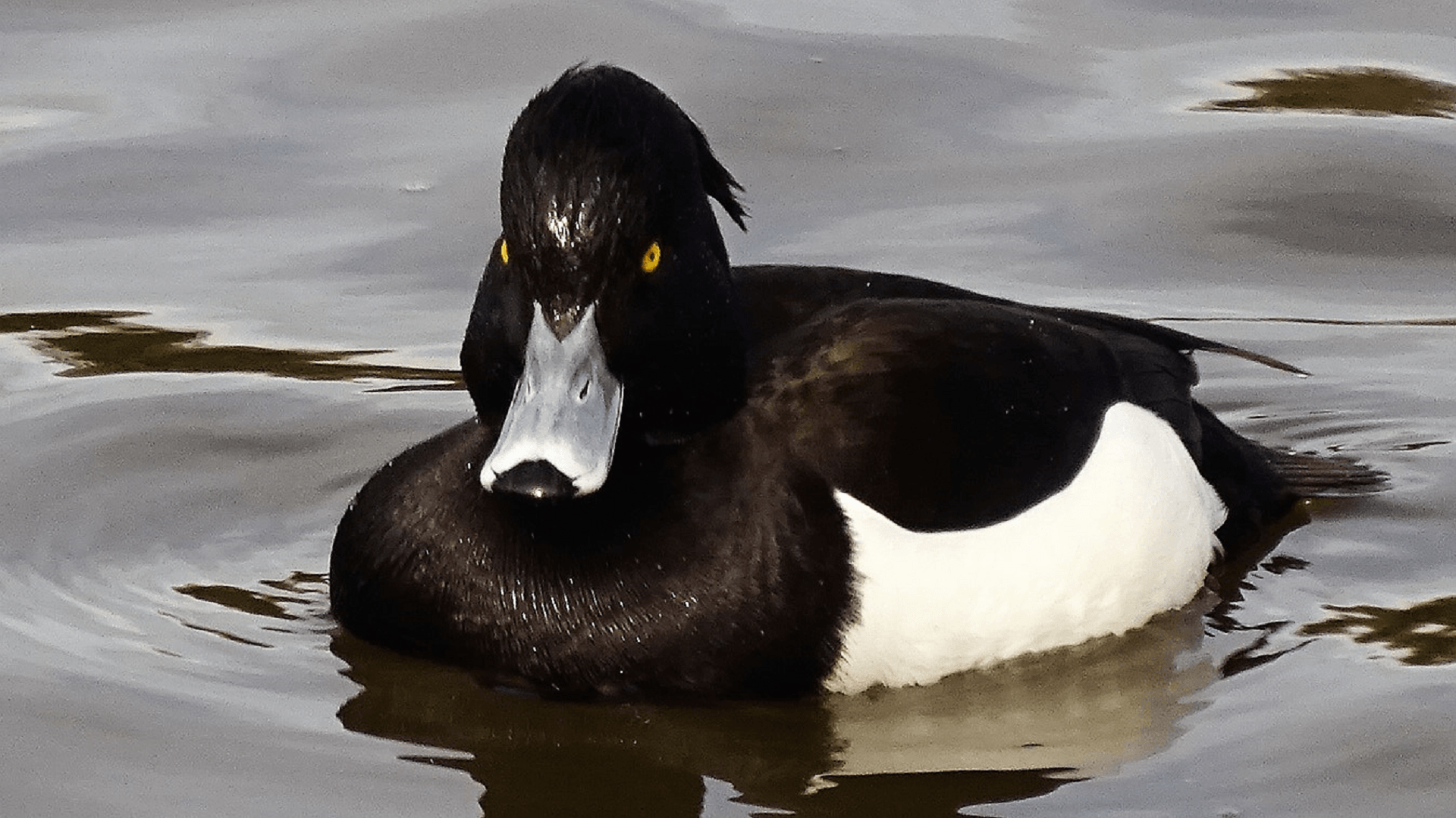
The commonest type of diving duck found on Hainault Lake. Both sexes have distinctive yellow eyes. Male shown, females are brown. They feed on vegetation, insects and molluscs.
#
Ducks
Anas platyrhynchos
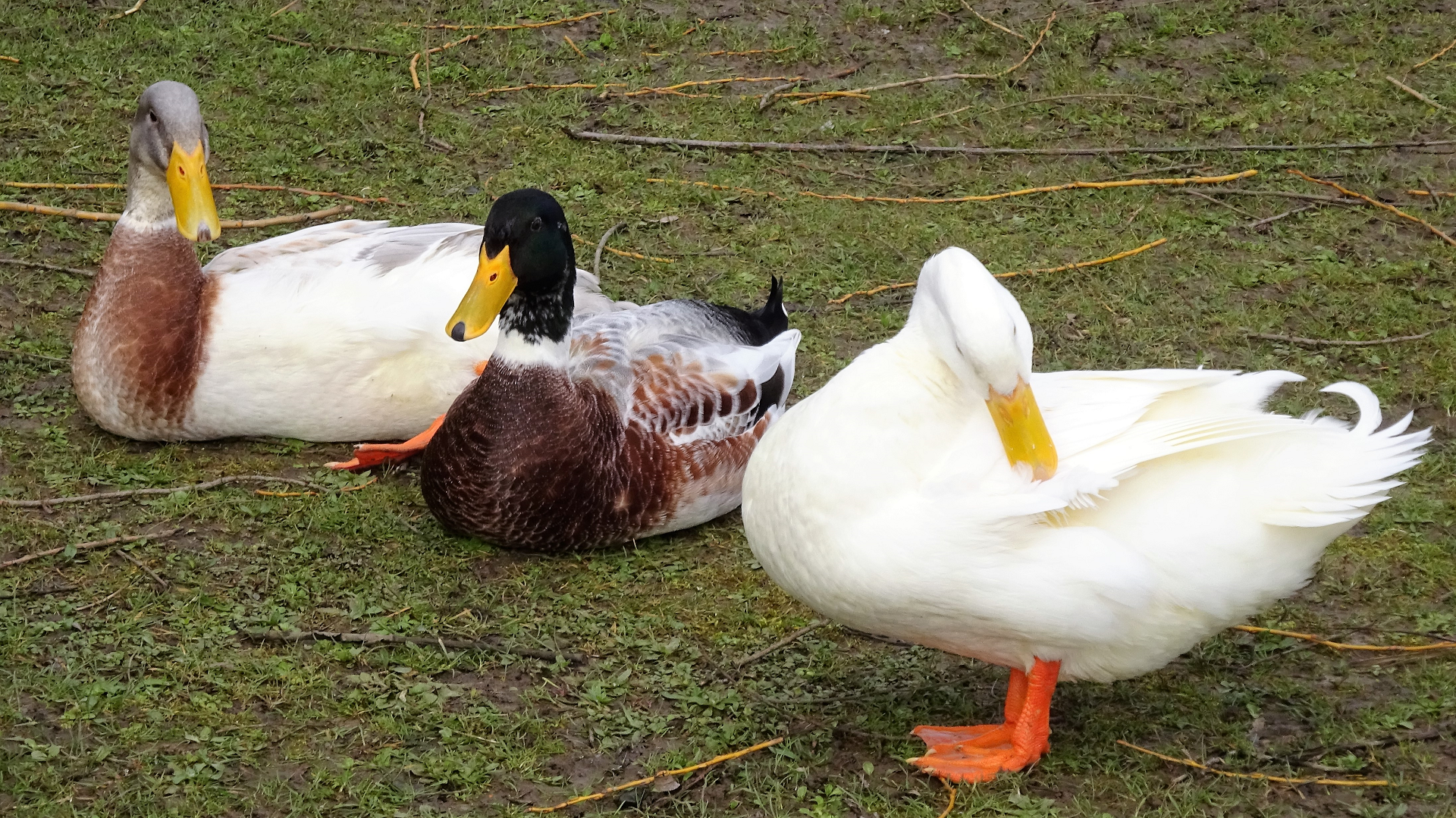
Indian Runner Ducks (two on left) stand erect and run rather than waddling. There is no evidence to support that they originate from India. Pekin ducks (right) originate from China and are sometimes mistaken for Aylesbury ducks. Most Pekins in the UK have been imported from Germany. They are pure white with orange legs.
#
Coot
Fulica atra
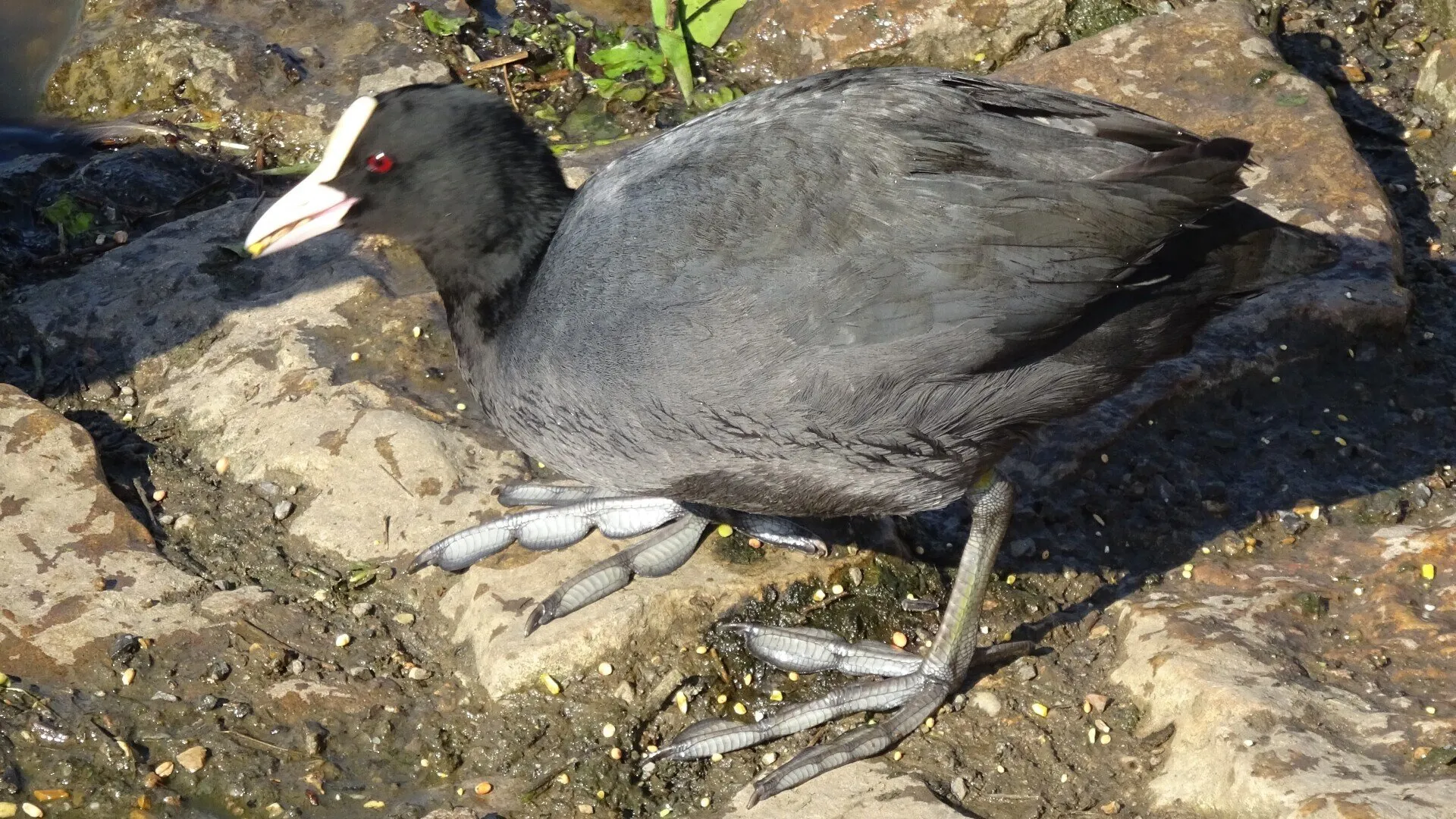
Coots are related to moorhens, but are larger, all-black with a white head patch and beak. Coots are renowned for having an aggressive nature. Resident Coots defend their territories when visitors arrive and fierce battles take place. Coots have flaps of skin on the toes which act like webbed feet when swimming.
#
Moorhen
Gallinula chloropus

The Moorhen is characterised by a red and yellow beak, a dark brown back and wings, and a blackish belly with white stripes on the flanks. They are known for being promiscuous and frequently change partners during the breeding season. Females appear to have a preference for smaller, plumper mates. Nests are constructed using dead vegetation and are typically placed among floating plants or near the water. Eggs are occasionally laid in the nests of other birds, which enables a female to increase her total egg production. Moorhens have a varied diet that includes plants, seeds, worms, insects, molluscs, and fish.
#
Grey Heron
Ardea cinerea
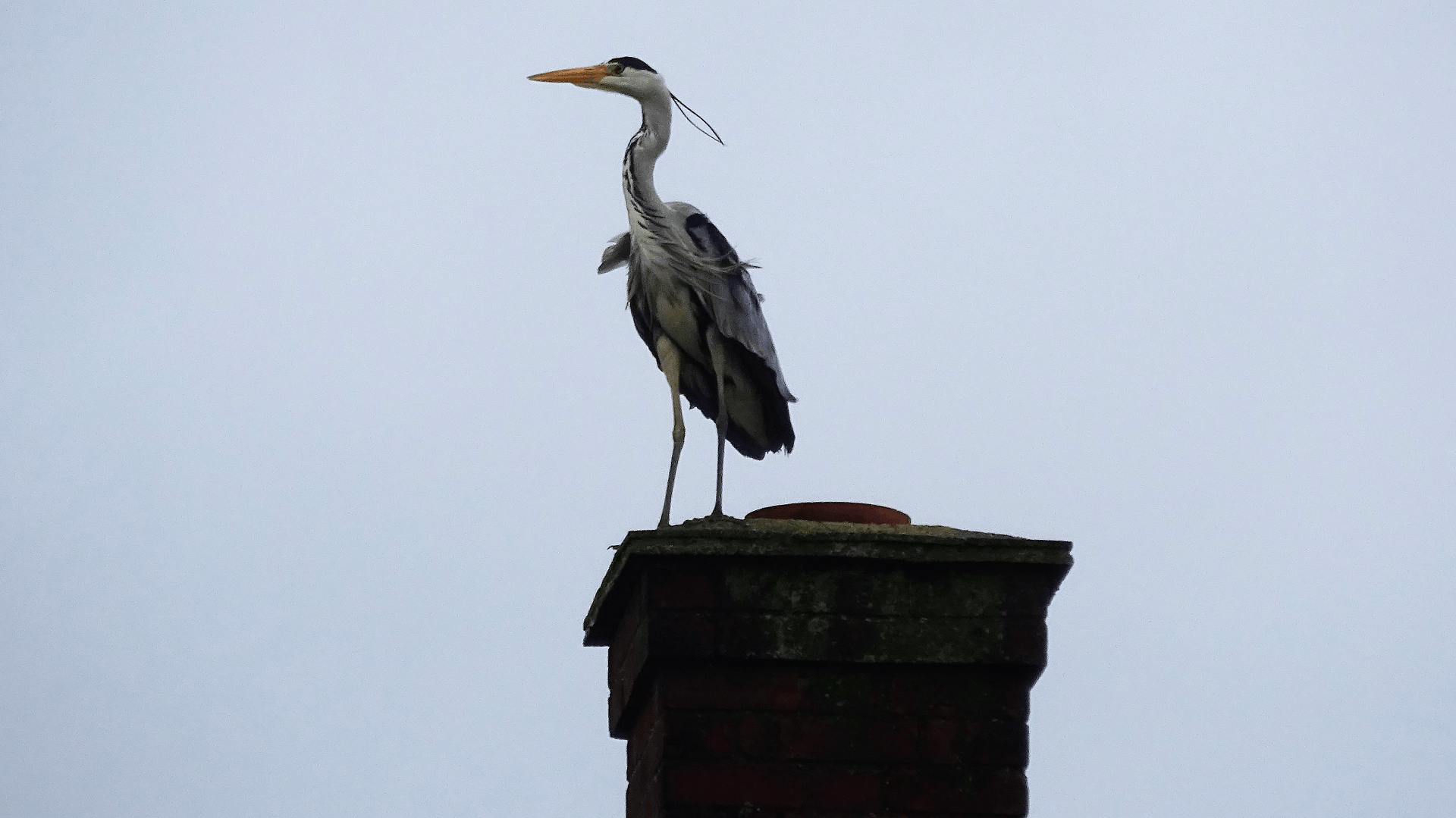
This Heron stood on a chimney in Marlyon Road for nearly ten minutes possibly looking for a garden pond to raid. Gulls upset by the Heron's presence started dive bombing until it got fed up with their attacks and flew away.
#
Common Gull
Larus canus
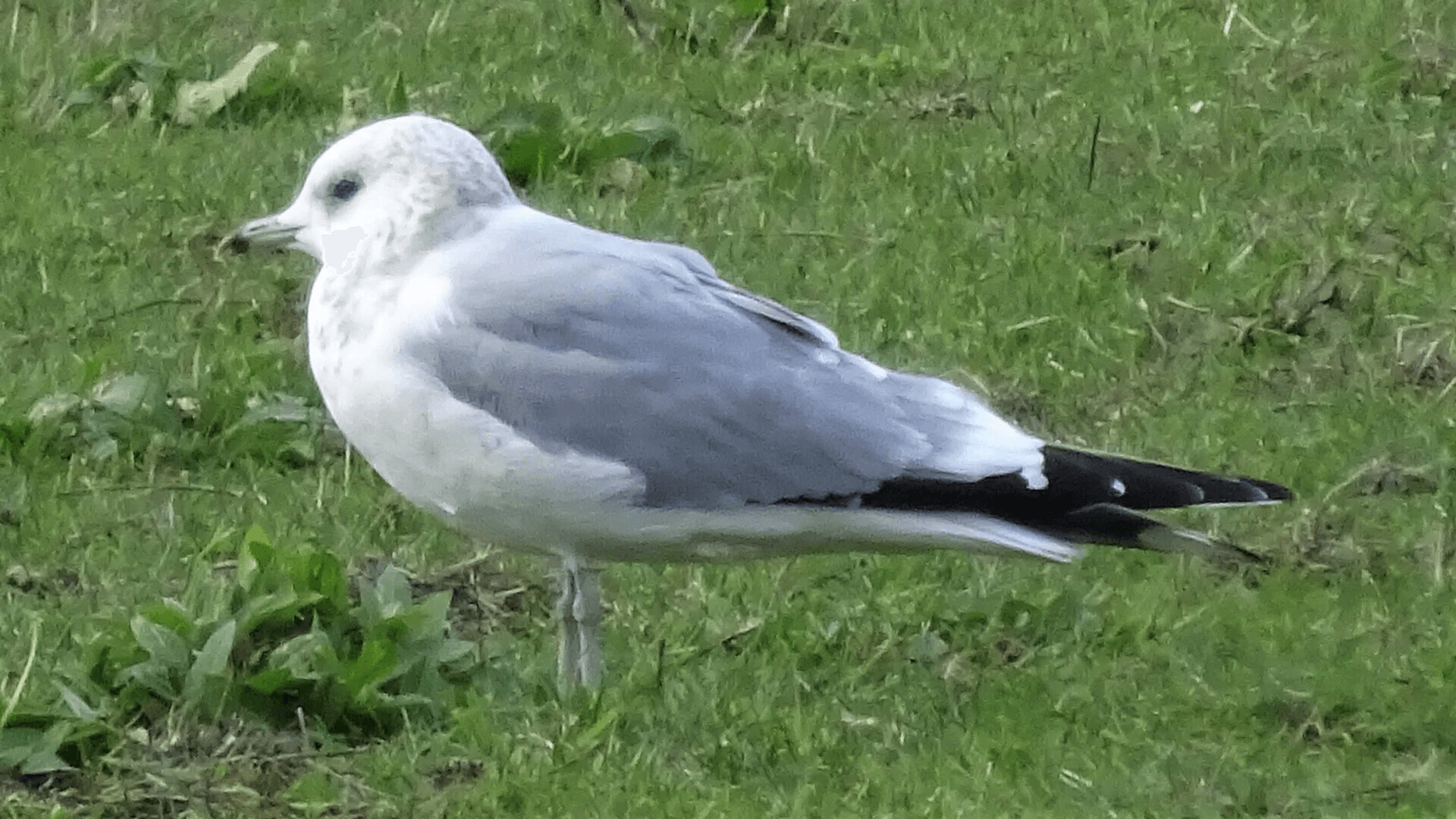
The Common Gull has greenish legs. It is not very common inland despite the name. Occasional visitors to Hainault Lake normally only turning up in very small groups. Their diet consists on worms, insects, carron, fish and scraps.
#
© hainaultforest.net. All rights reserved.
This website uses necessary cookies. It does not use targeting or advertising cookies.