

THIRD QUARTER 2017
This Journal covers the third quarter of 2017 from July to September and consists of two pages. There is a button at the bottom of this page that will direct you to page 2. The second page mainly features fungi, plants and galls.
Small Tortoiseshell
Aglais urticae
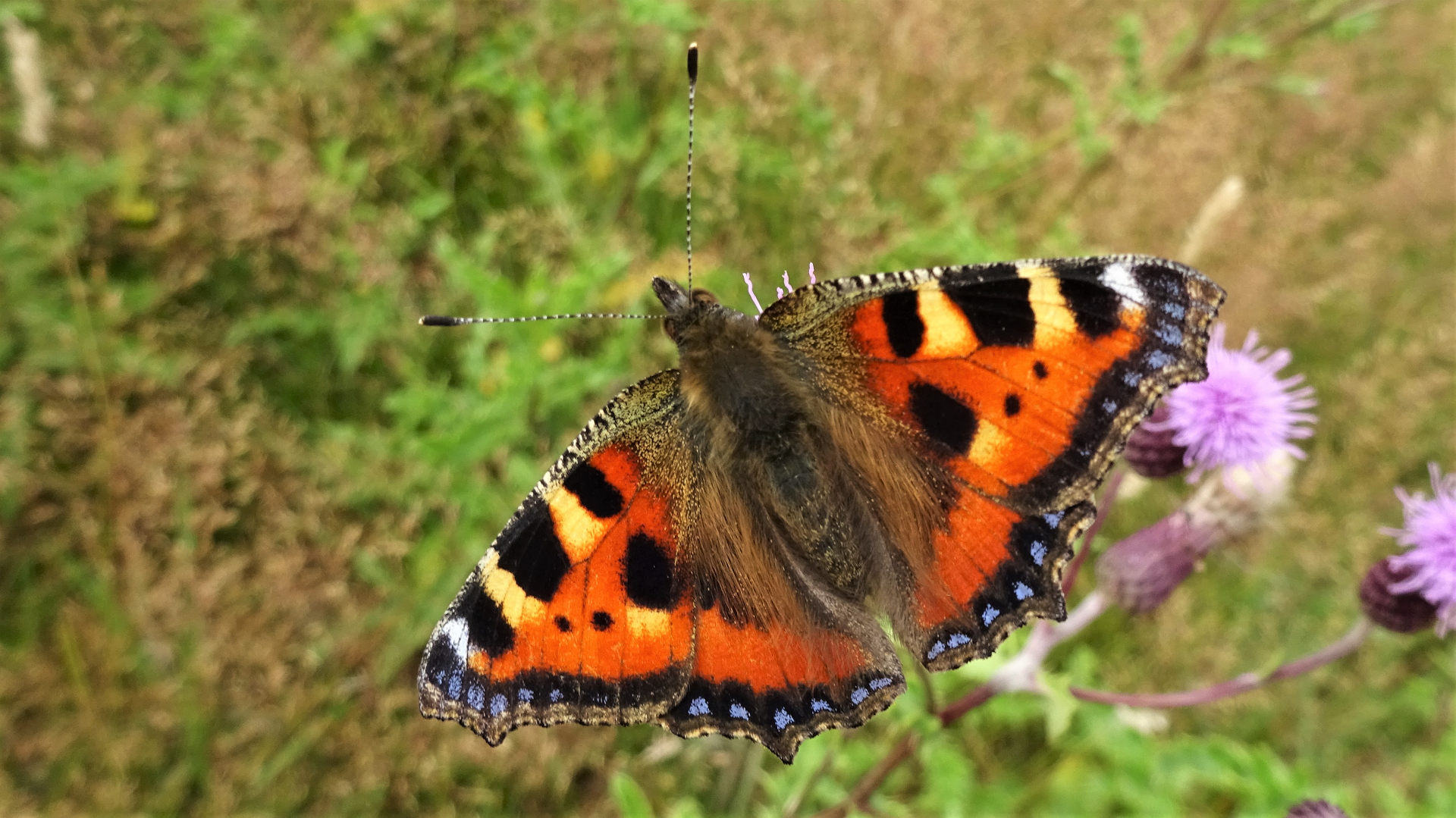
This attractive butterfly is found in the meadows during summer, however in recent years it has been suffering a steady decline. Its caterpillars consume nettles, so the removal of this food source significantly impacts its population.
#
Gatekeeper
Pyronia tithonus
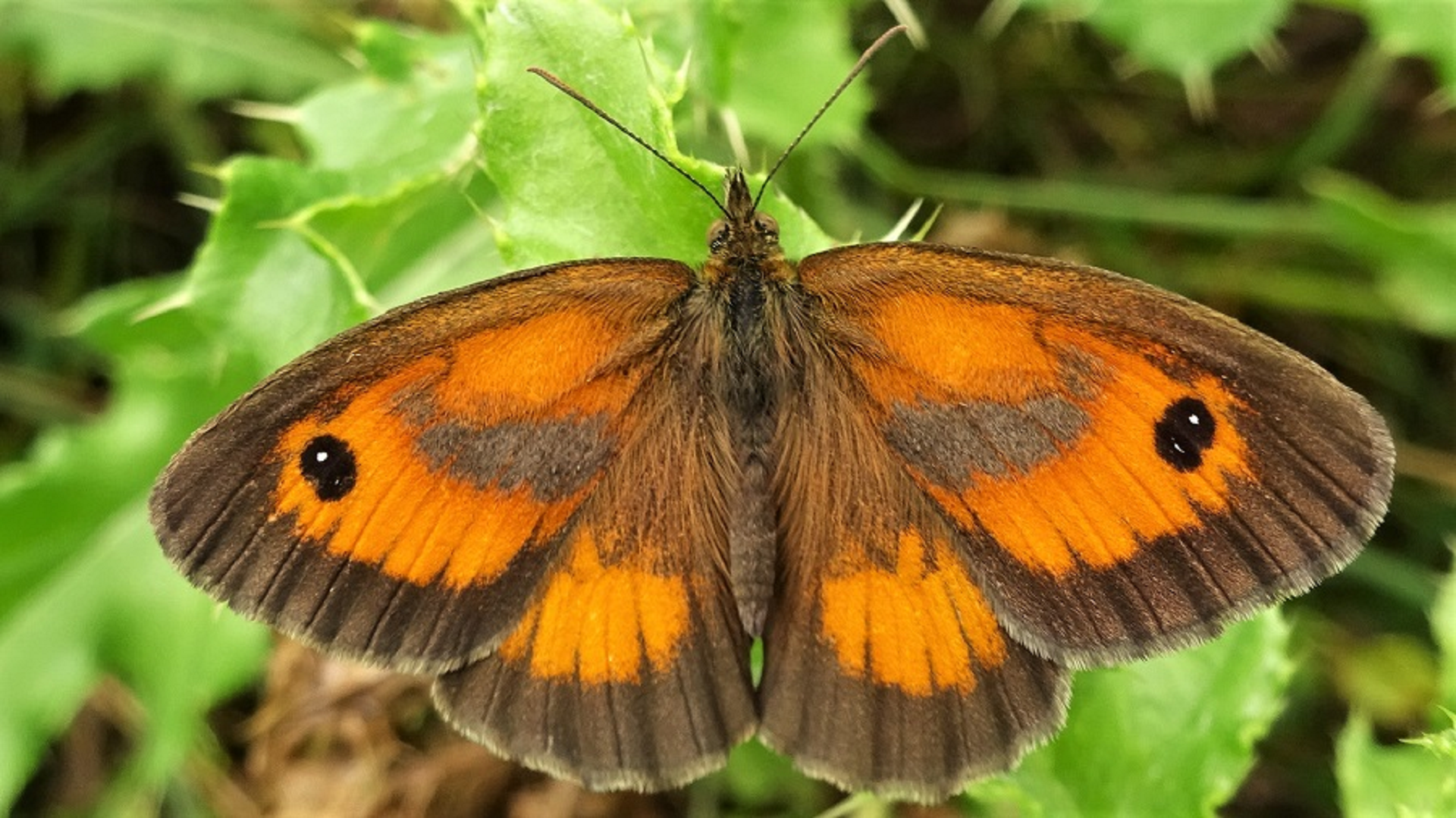
Also called 'Hedge Brown', sexes are easy to tell apart because this butterfly spends a lot of time basking with wings open. Males have distinctive dark bars on the forewings. The larger female is usually lighter in colour.
#
Small Skipper
Thymelicus sylvestris
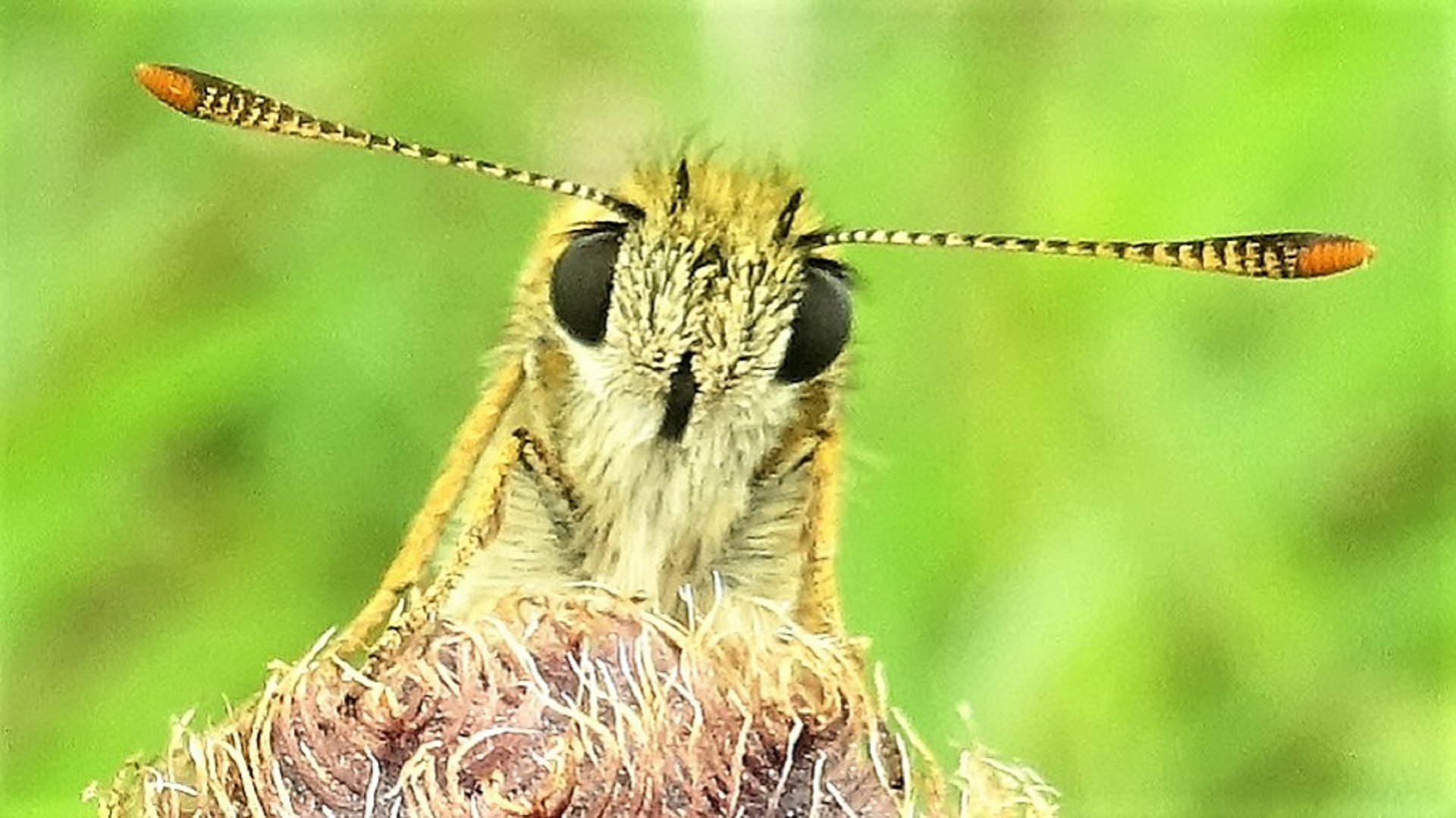
Small Skippers and Essex Skippers have a similar appearance. To differentiate between the two species, it is necessary to view the antennae from the front. If the antennae do not appear to be dipped in black ink, then the butterfly is a Small Skipper.
#
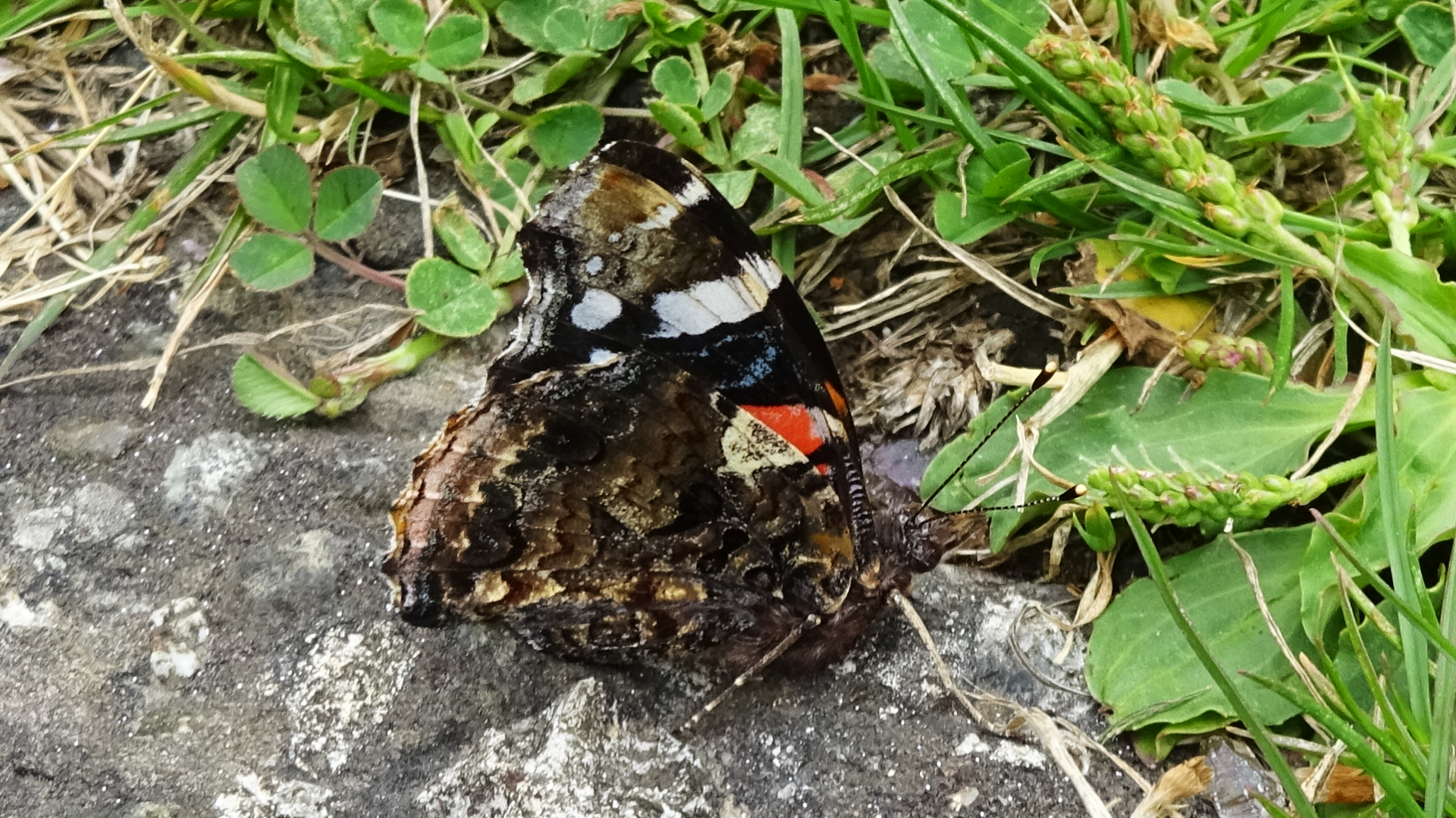
Red Admiral
Vanessa atalanta
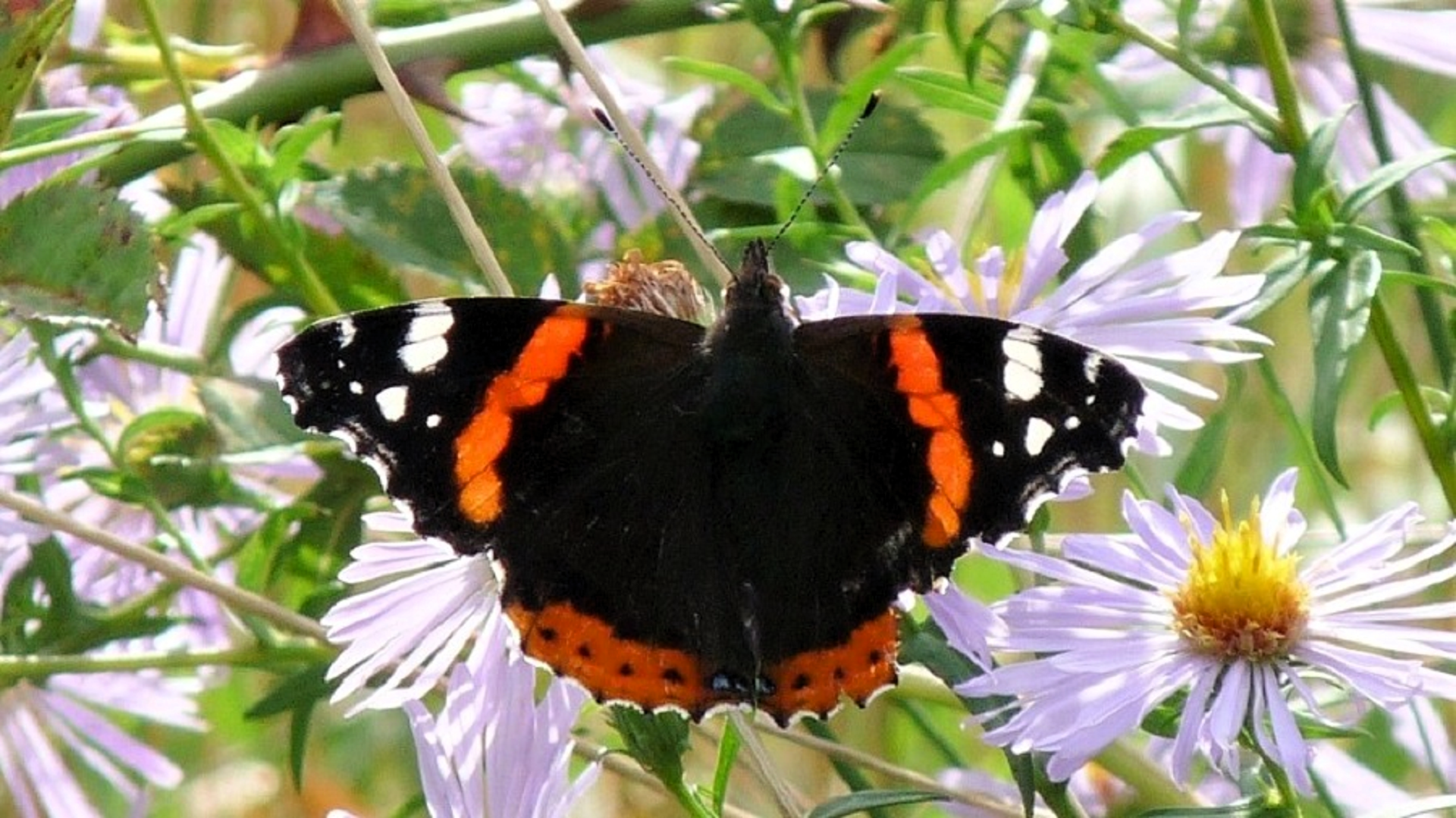
The Red Admiral is a medium-sized butterfly characterised by black wings, red bands, and white spots. It has a wingspan of approximately 5 cm and was previously referred to as the Red Admirable.
#
Small Copper
Lycaena phlaeas
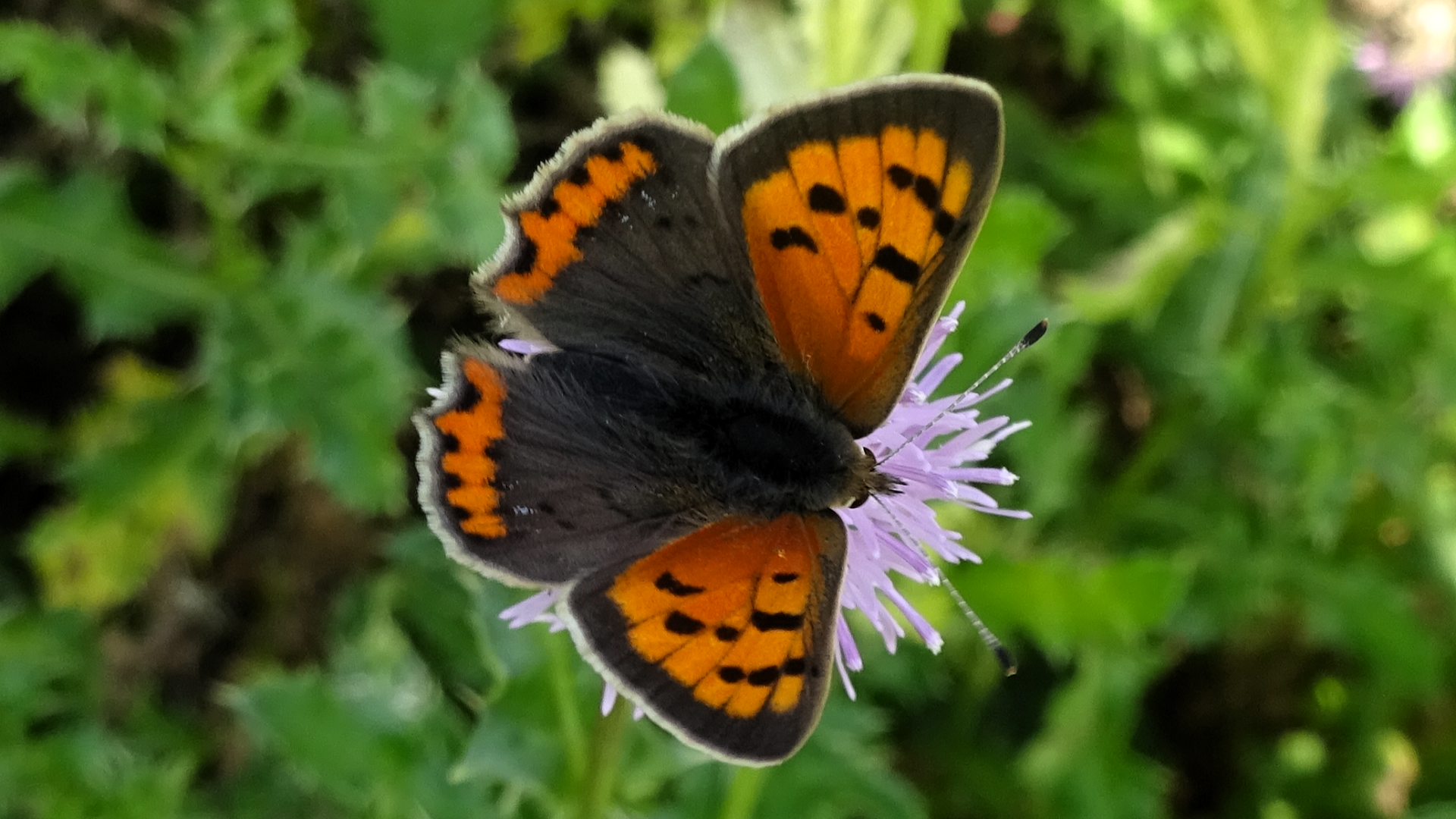
Normally observed from July to September in meadows, particularly in areas with short grass. Males sunbathe on bare ground while waiting for females to pass by. They fend off rivals and other insects to protect their territory. The caterpillars primarily feed on Sheep's sorrel.
#
Six-spot Burnet
Zygaena filipendulae

Six-spot Burnet moths are seen from June until August. They have six red (occasionally yellow) spots on each wing which are sometimes fused together. They are attracted to common knapweed and thistles.
#
Cinnabar
Tyria jacobaeae
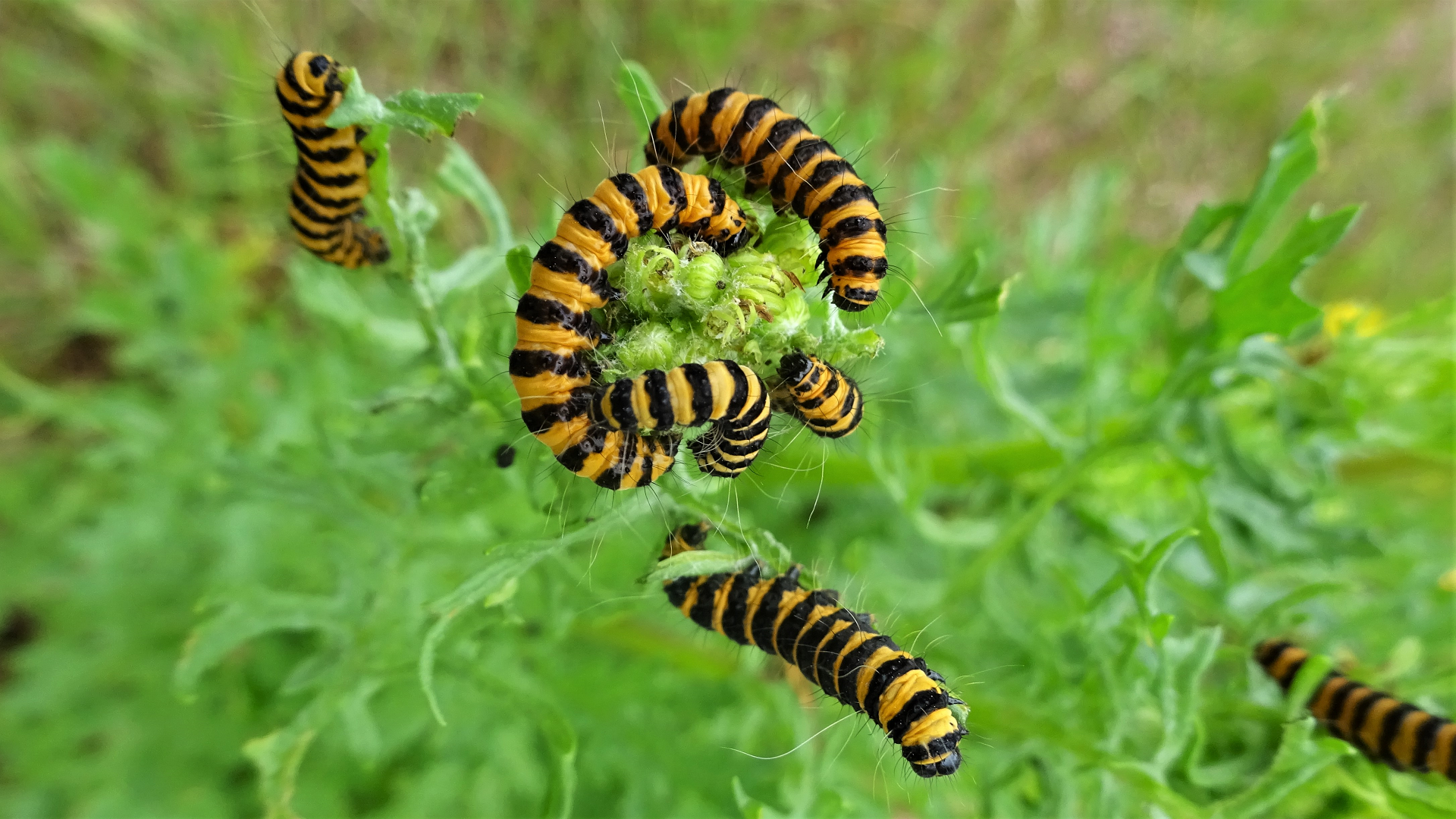
Cinnabar moth caterpillars feed on ragwort. Once a plant is eaten down to the ground they move on to the next. Some countries use this species to control Ragwort. The striped coloration acts as a warning to predators to stay away. Poison from ragwort is stored in the caterpillars' bodies. Humans should avoid touching because the tiny spines can release toxins into the skin.
#
Antler Moth
Cerapteryx graminis
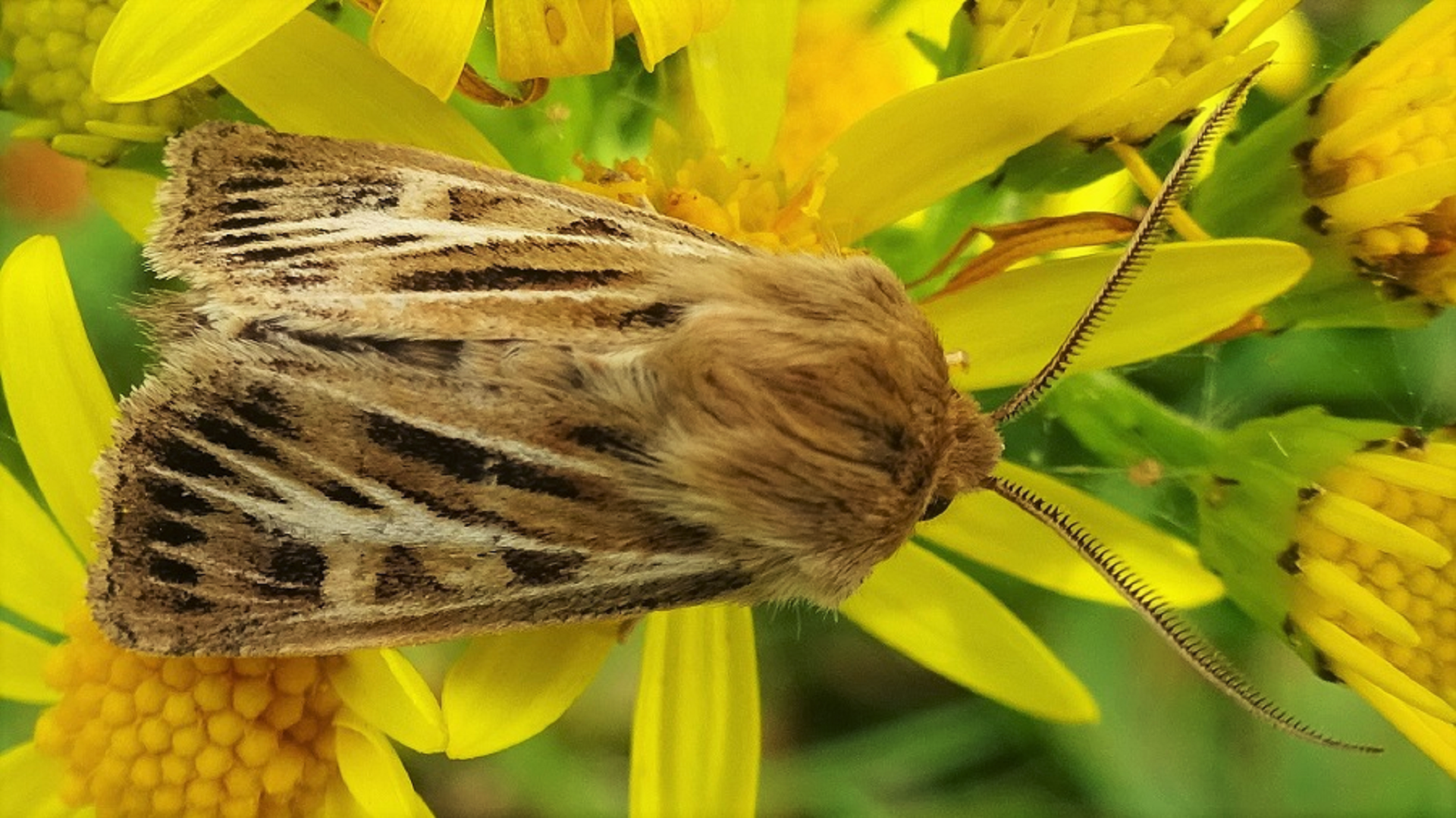
Morning is the best time to catch sight of an Antler moth. These moths are typically located in areas rich in ragwort and thistle, which serve as their food sources. Their forewings feature a creamy antler mark.
#
Small Spotty-eyed Dronefly
Eristalinus sepulchralis
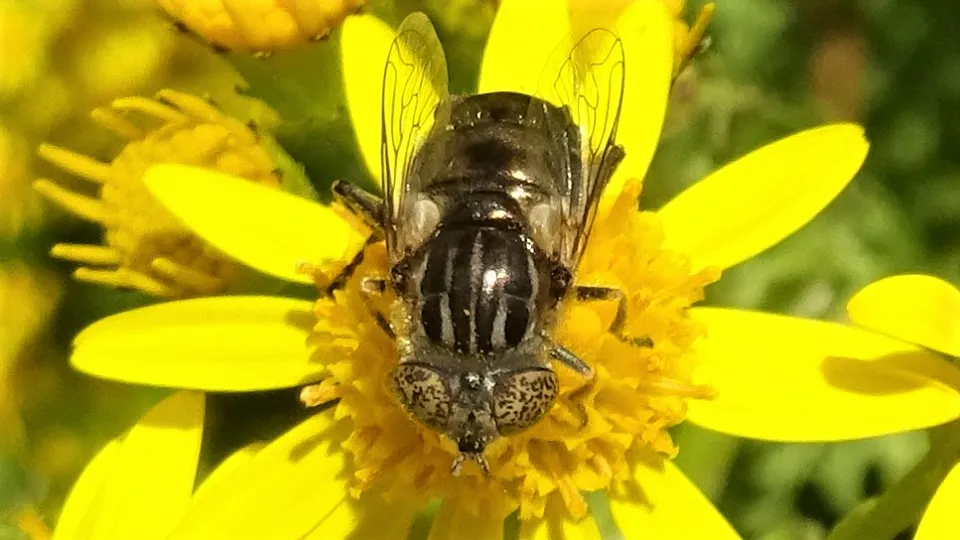
This species of Hoverfly has speckled eyes and a mesonotum with five grey stripes. It was photographed on Ragwort near Hainault Lake.
#
Greenbottle
Lucilia sp.
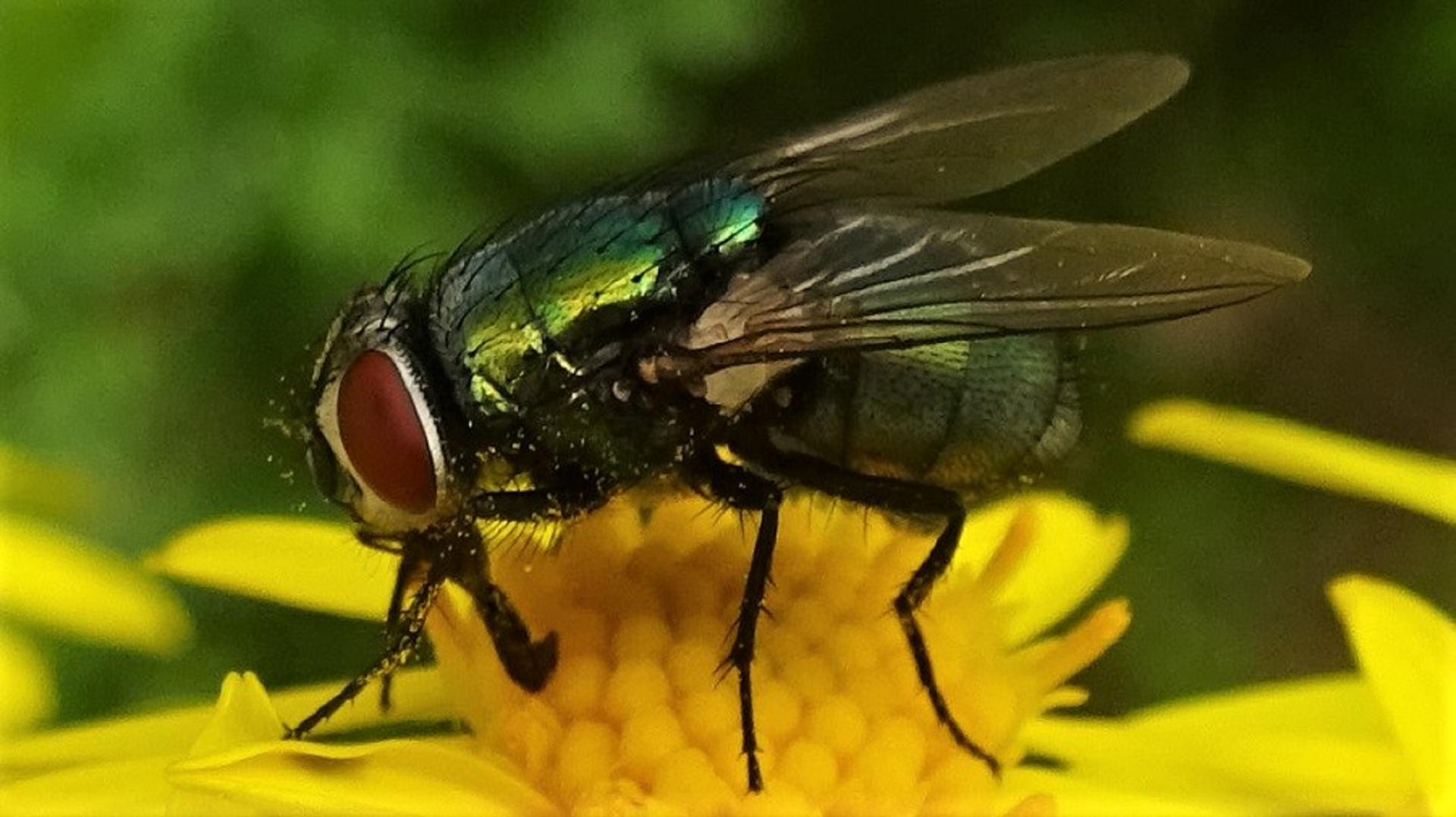
Greenbottles are metallic green two-winged flies. Adult flies typically feed on pollen and nectar of flowers. Their larvae feed on dead animals and excrement serving a useful purpose because they clear up a lot of undesirable waste.
#
Tachinid Fly
Nowickia ferox
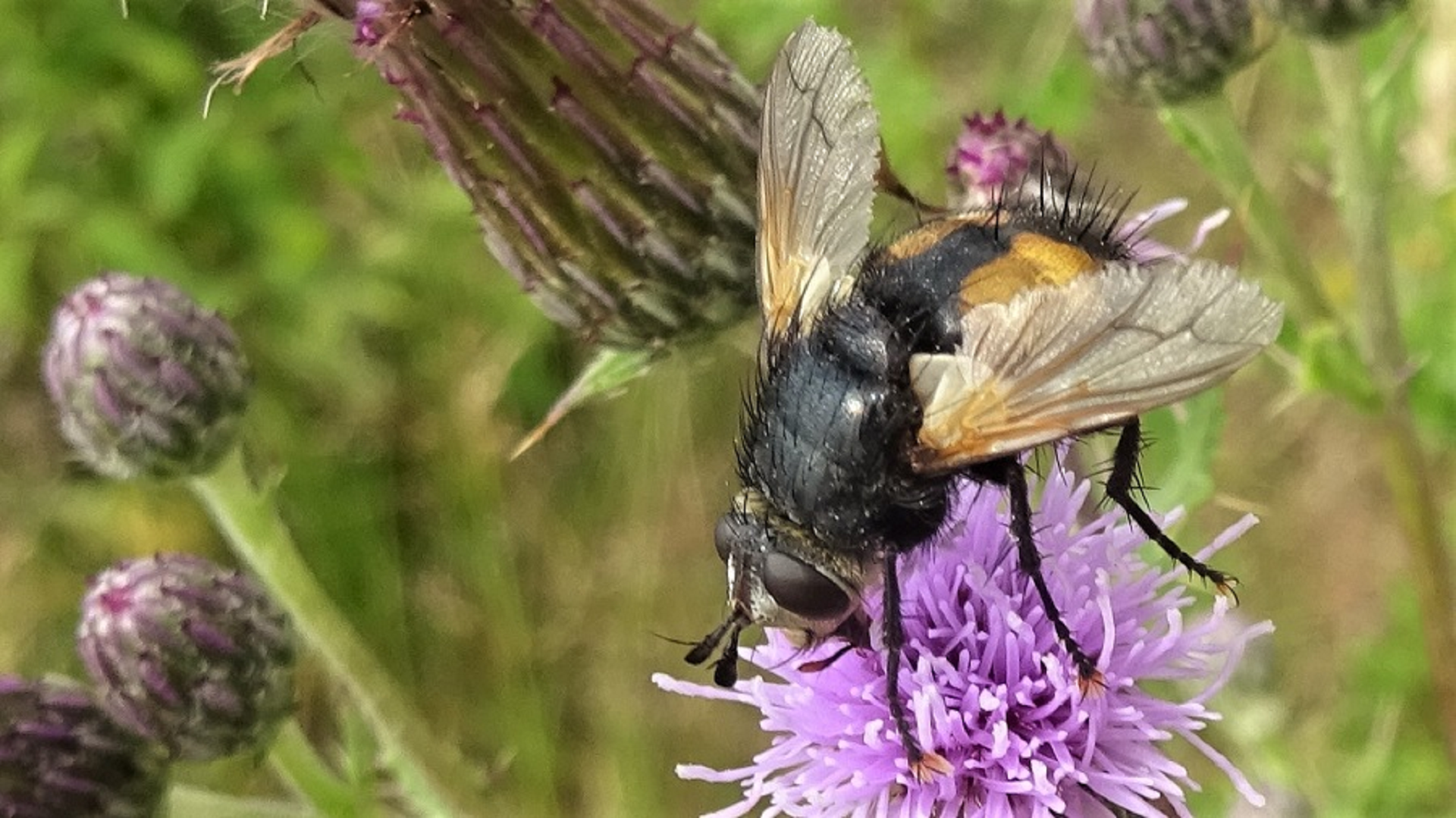
This Bluebottle-sized fly has yellowish sides to the abdomen and a zig-zagging central band. There are bristly hairs on the abdomen. It inhabits a range of locations for June until August. At the maggot stage this species preys on the Dark Arches moth from the inside before emerging to pupate.
#
Four-barred Major
Oxycera rara
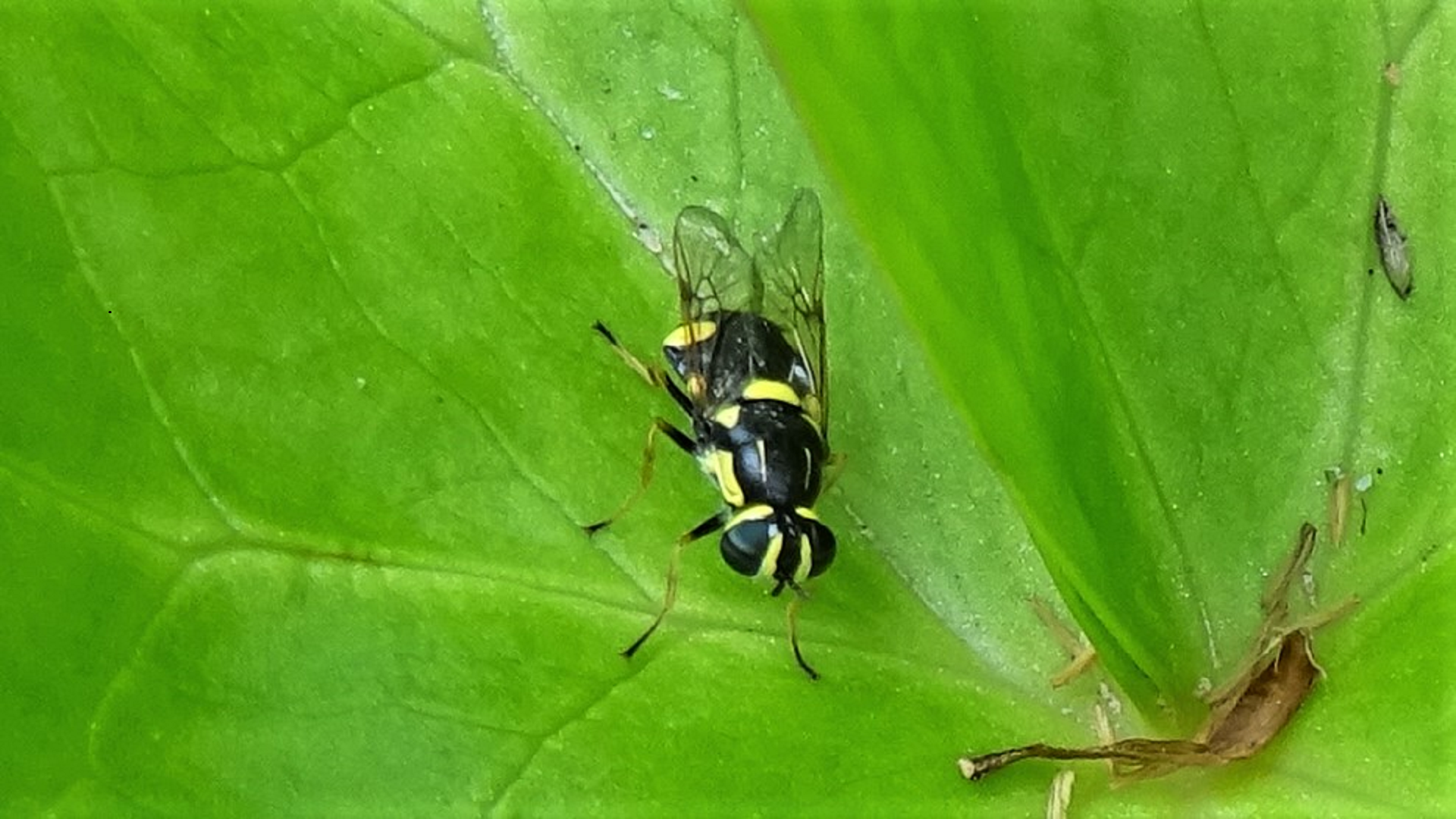
The Four-barred Major is a Soldier Fly usually found near water and wet meadows from June until August. Its larvae inhabit damp moss. Adults are 7mm long.
#
European Hornet
Vespa crabro

Hornets chew wood to make papery pulp for building nests. Despite having a bad reputation the Hornet will not normally sting unless attacked. I stood about 3 metres from a nest taking photographs and did not encounter any problems.

#
Social Pear Spinner
Neurotoma saltuum
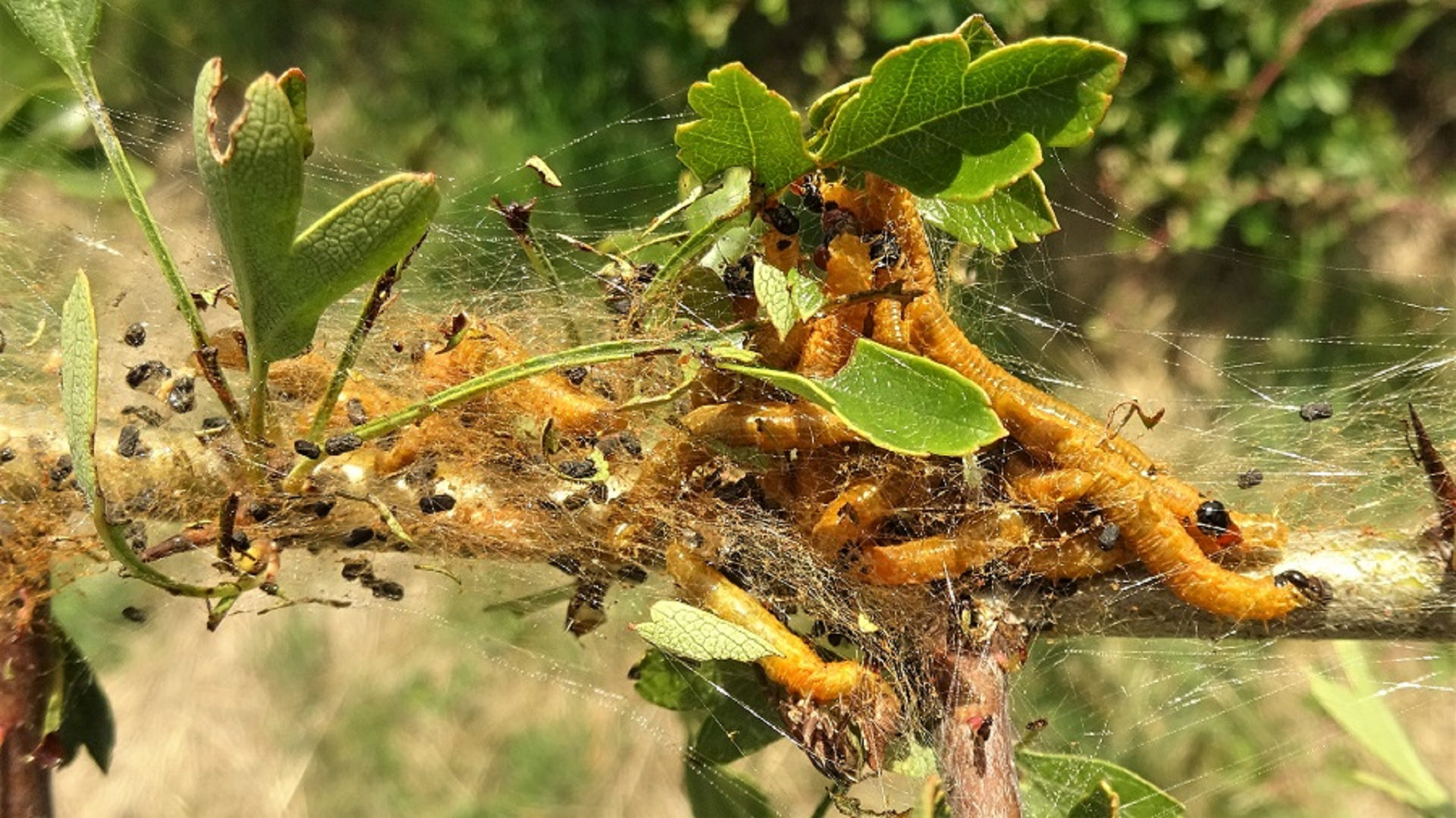
Not caterpillars, but Sawfly larvae that hatch in batches from large white-threaded cocoons which coat branches of apple, pear and hawthorn trees in the summer. The larvae (up to 25mm long) feed on leaves and can totally defoliate plants.
#
Dock Bug
Coreus marginatus
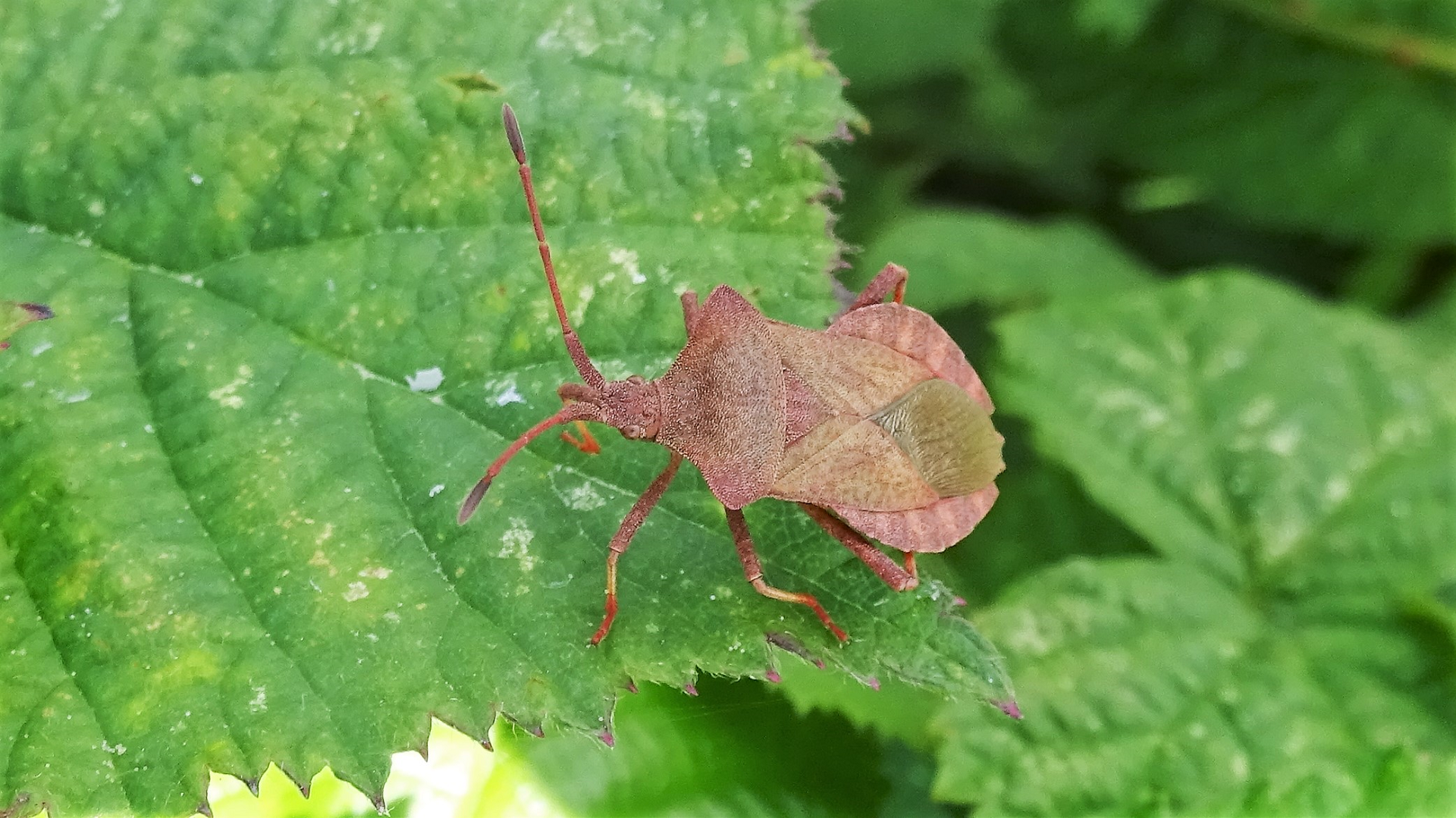
These herbivores feed on leaves and seeds of docks and sorrels. They are up to 15mm long and can be found in a variety of damp and dry locations. Scent glands in the middle of the thorax can release strong-smelling and irritating chemicals when disturbed. The two small projections between the antennae are helpful when identifying this bug. Adults mate and lay eggs in spring and produce one generation per year.
#
Ruddy Darter
Sympetrum sanguineum
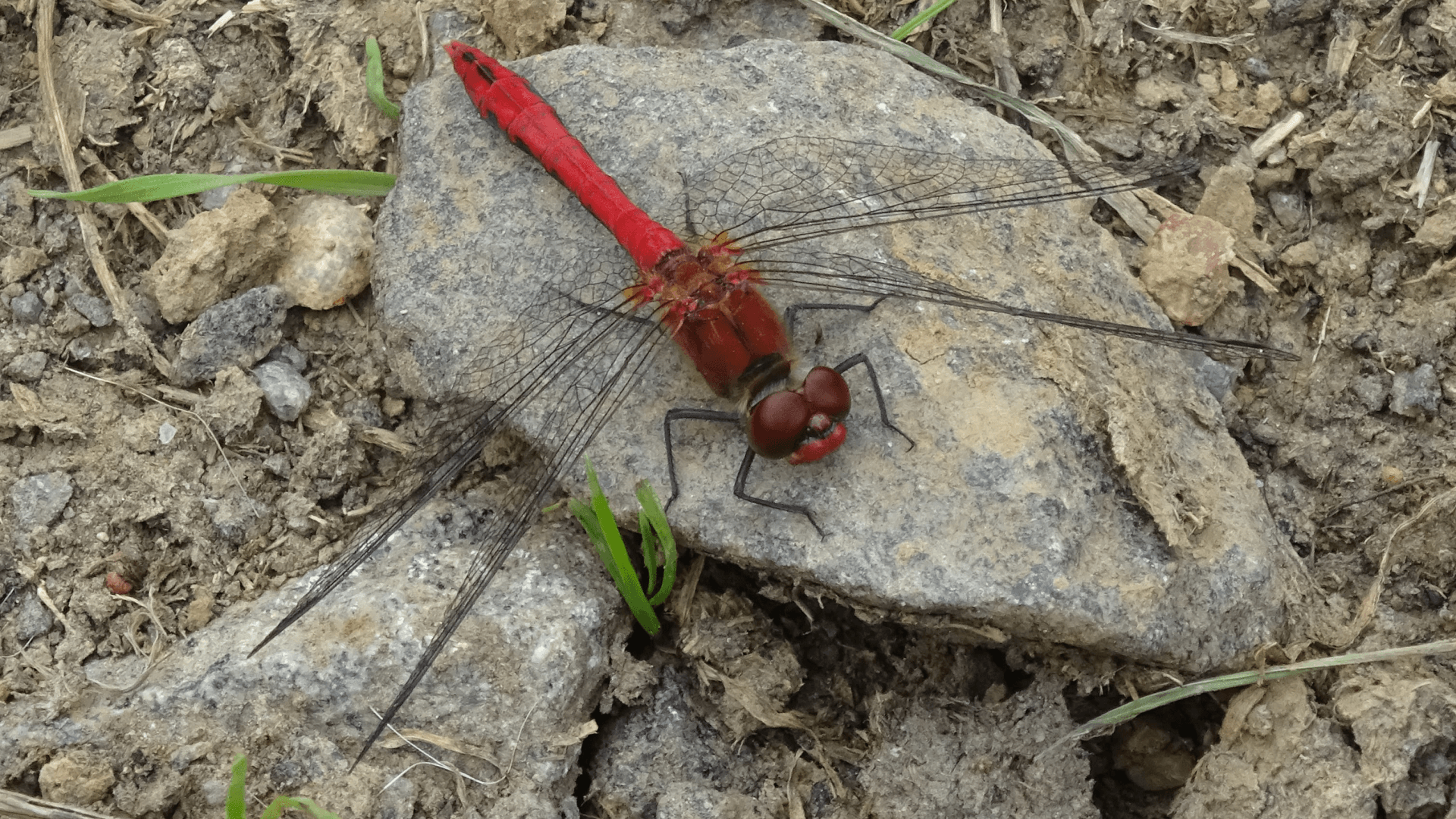
These dragonflies are common around well vegetated ponds. Males are red and have club-shaped abdomens. Females have ochre-yellow abdomens with black markings and are not club-shaped.
#
Southern Hawker
Aeshna cyanea
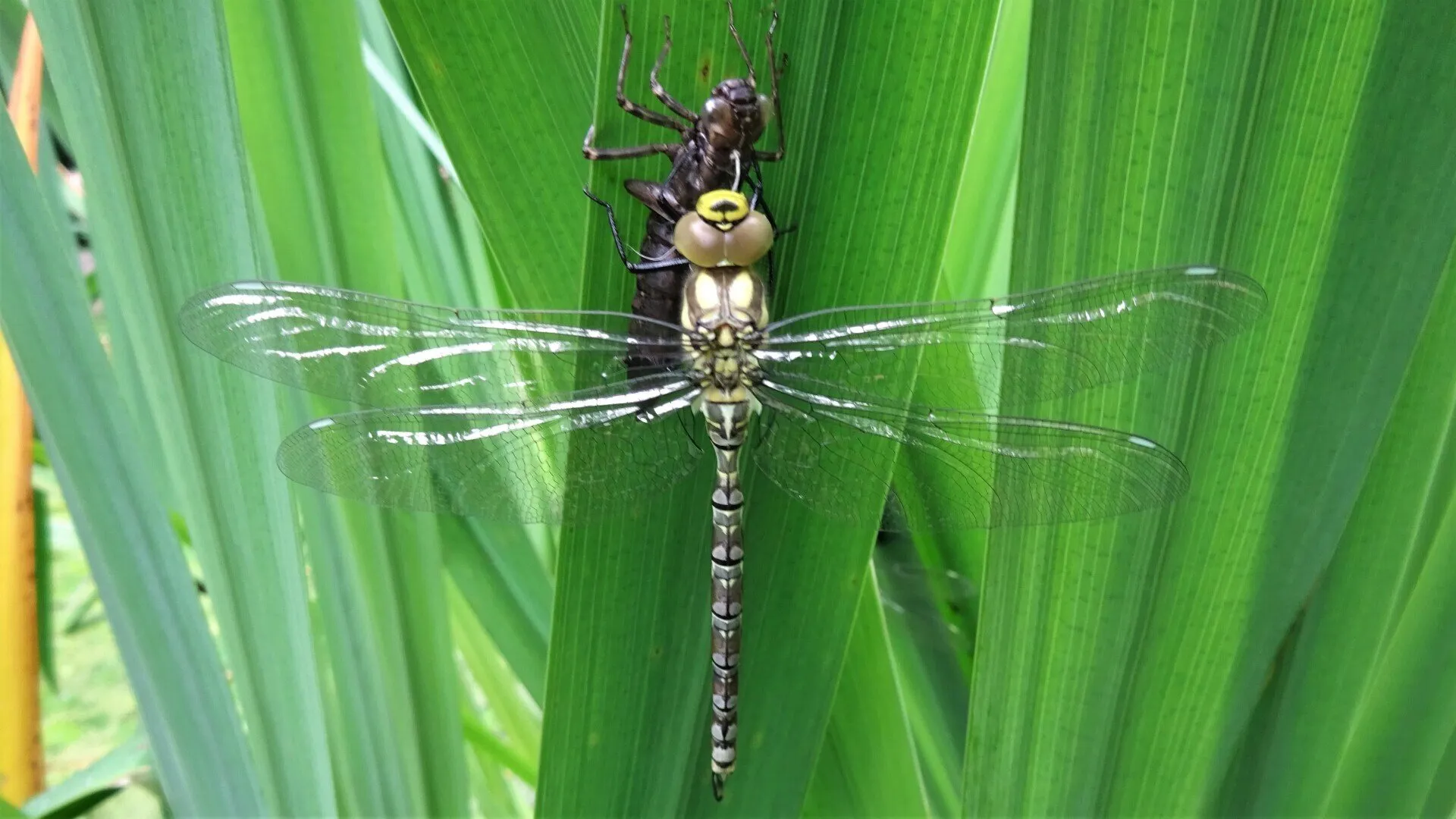
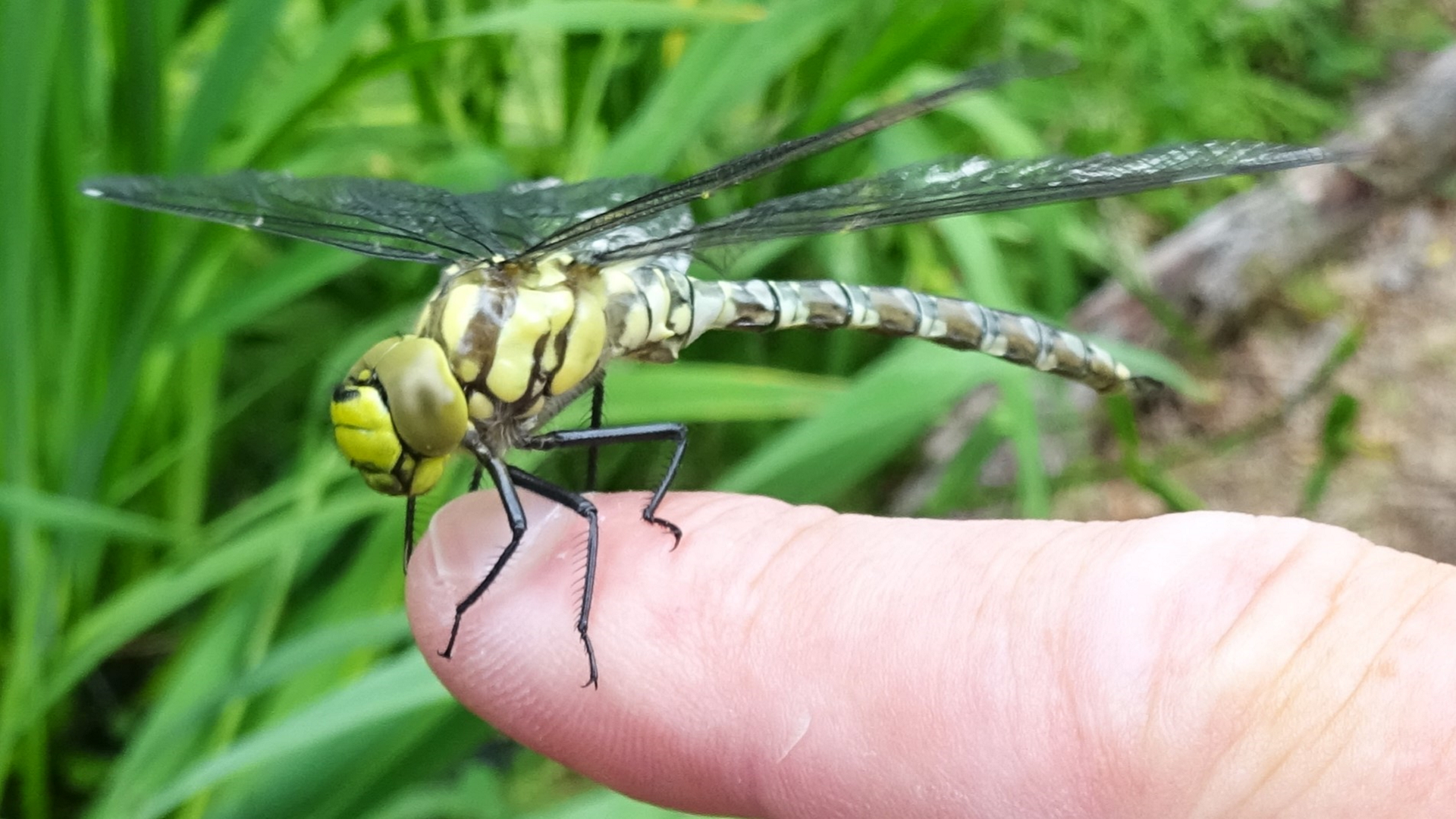
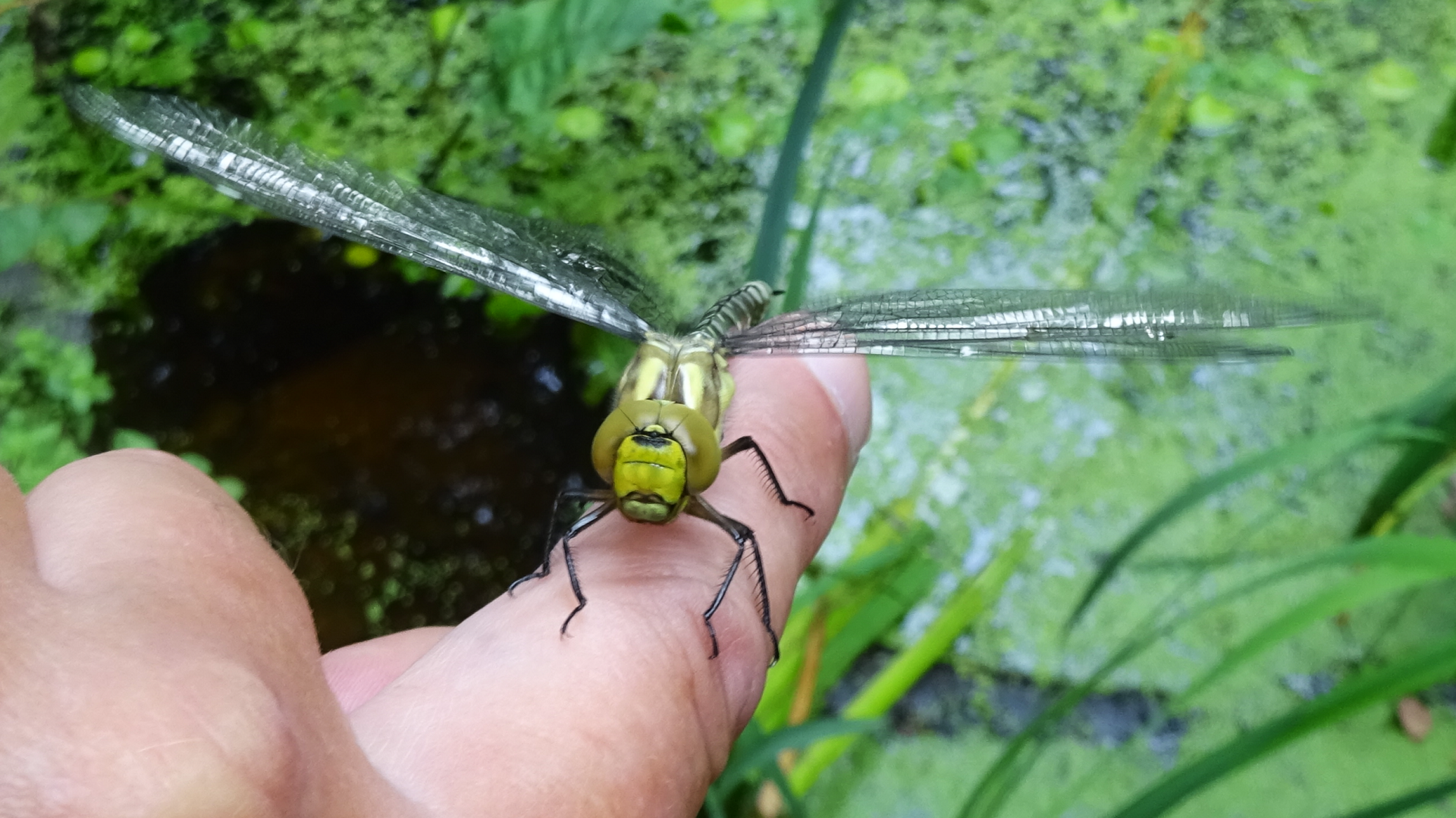
Large, solitary, and inquisitive. This hawker hunts along woodland paths often late into warm evenings and often away from water. Breeding takes place in well-vegetated ponds. Males are dark with bright blue and green markings. Occasionally males with all-blue markings occur. Females are brown with bright green markings. Immatures of both sexes have brown eyes and their bodies are brown with light yellow markings.
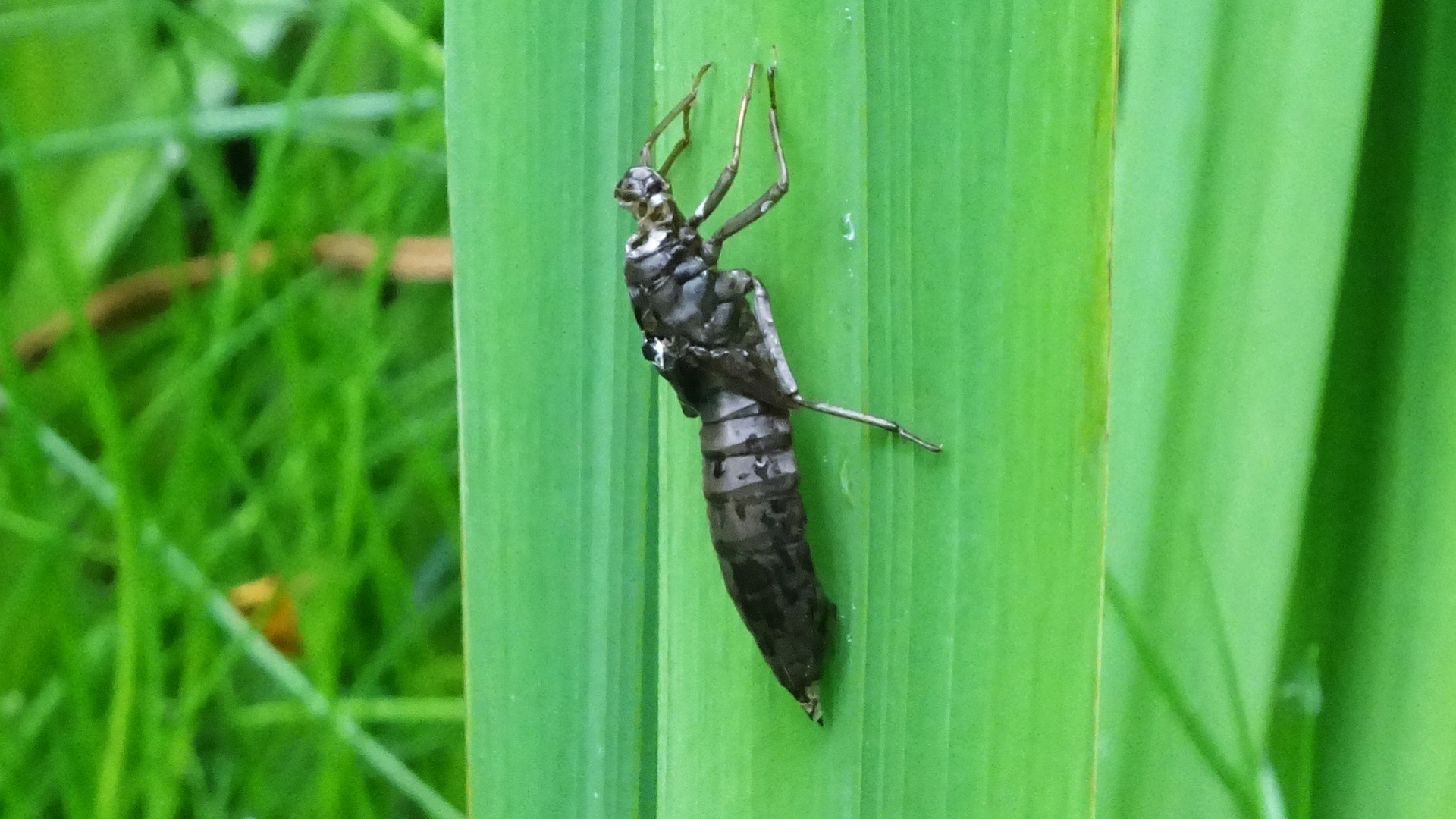
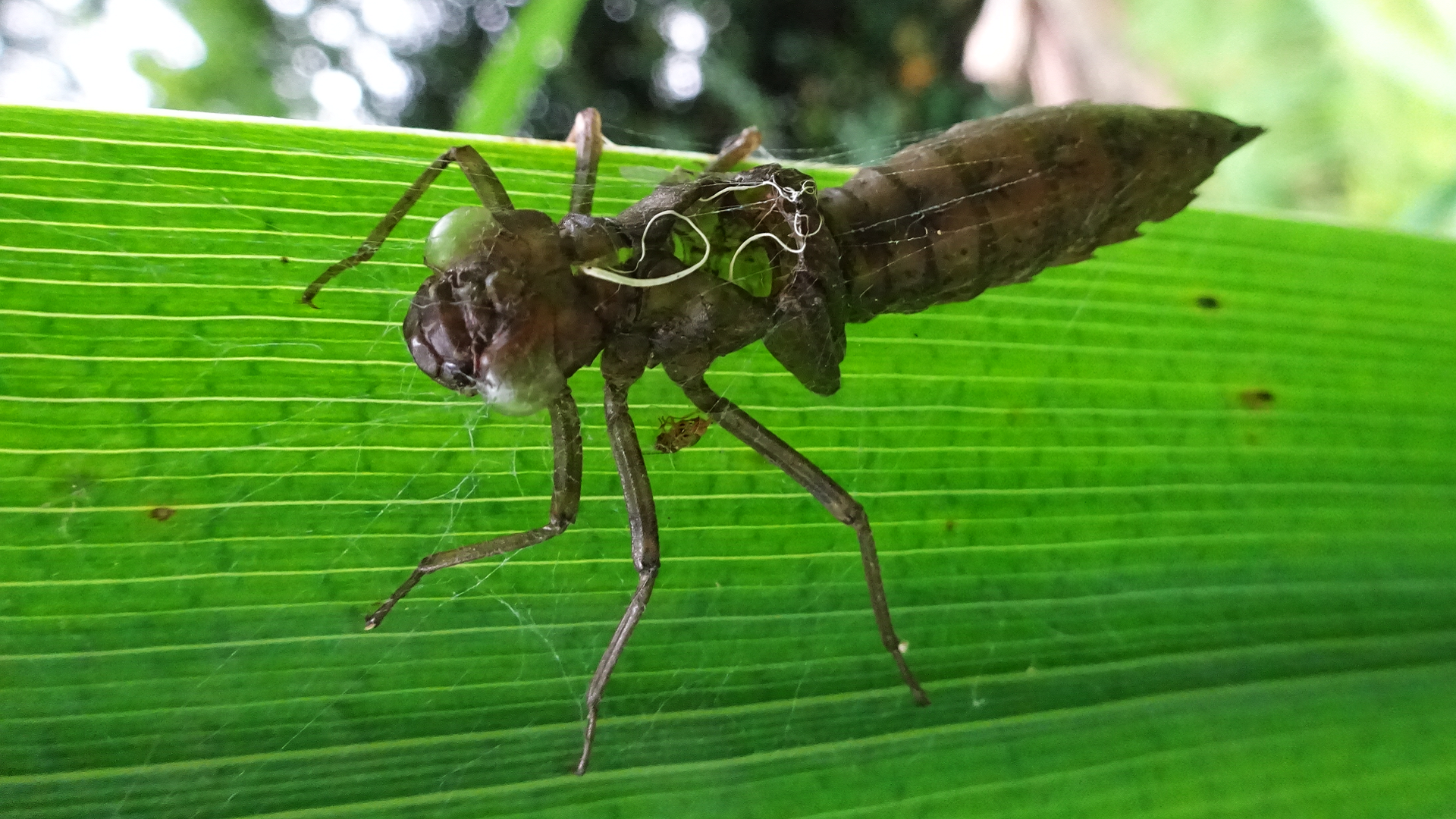
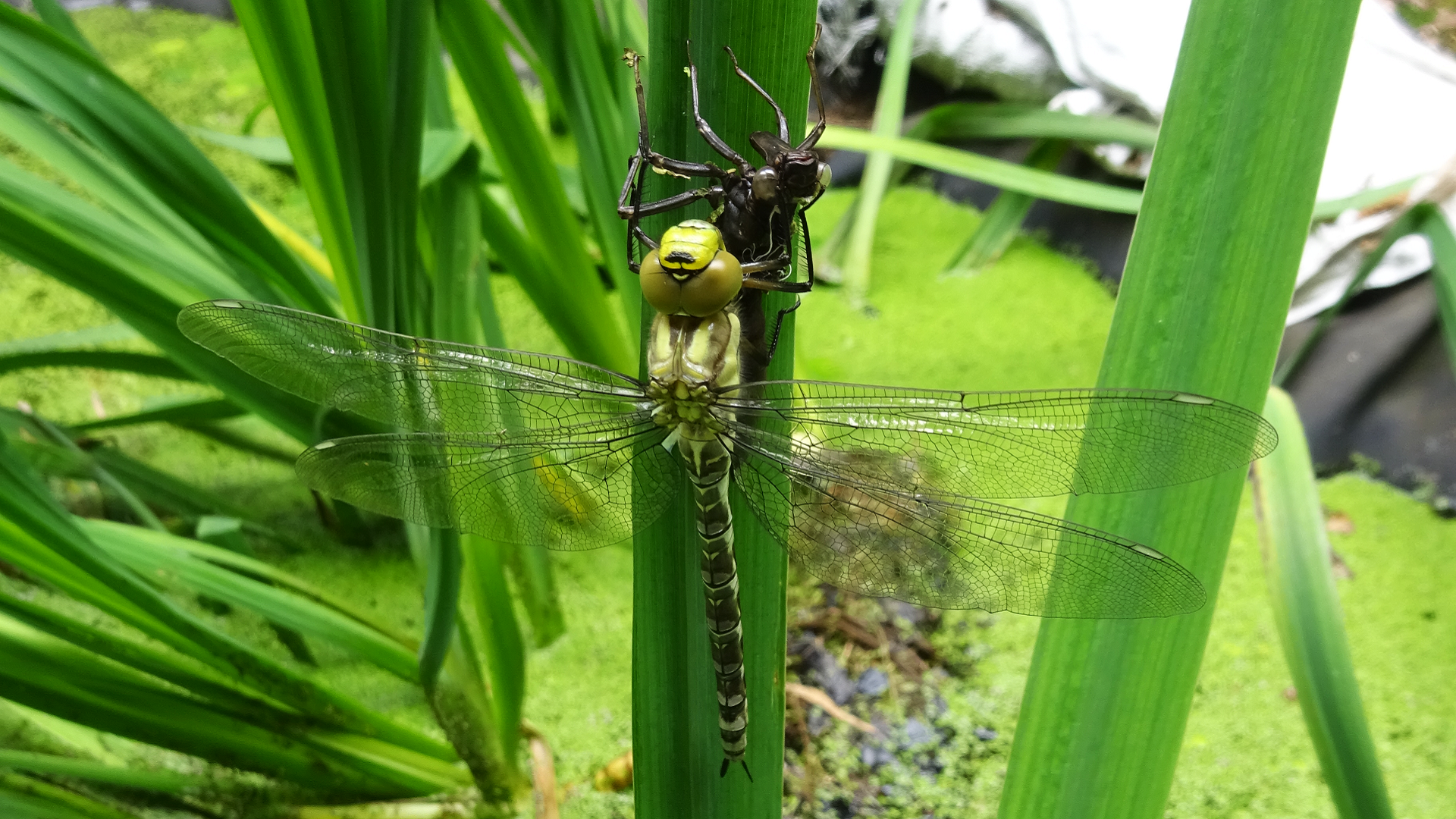
Dragonflies begin life as eggs and hatch into larvae (nymphs). Skins(exuvia) get shed up to 15 times before nymphs emerge as adults. Transition from nymph to adult is known as incomplete metamorphosis, unlike most insects they have no pupal stage. Nymphs can spend over a year under water before climbing out to become adults. This immature male is a Southern Hawker drying wings before making its maiden flight. Adults rarely last more than a couple of weeks in Britain. Colour becomes fuller with maturity.

#
Dragonfly
Nymph
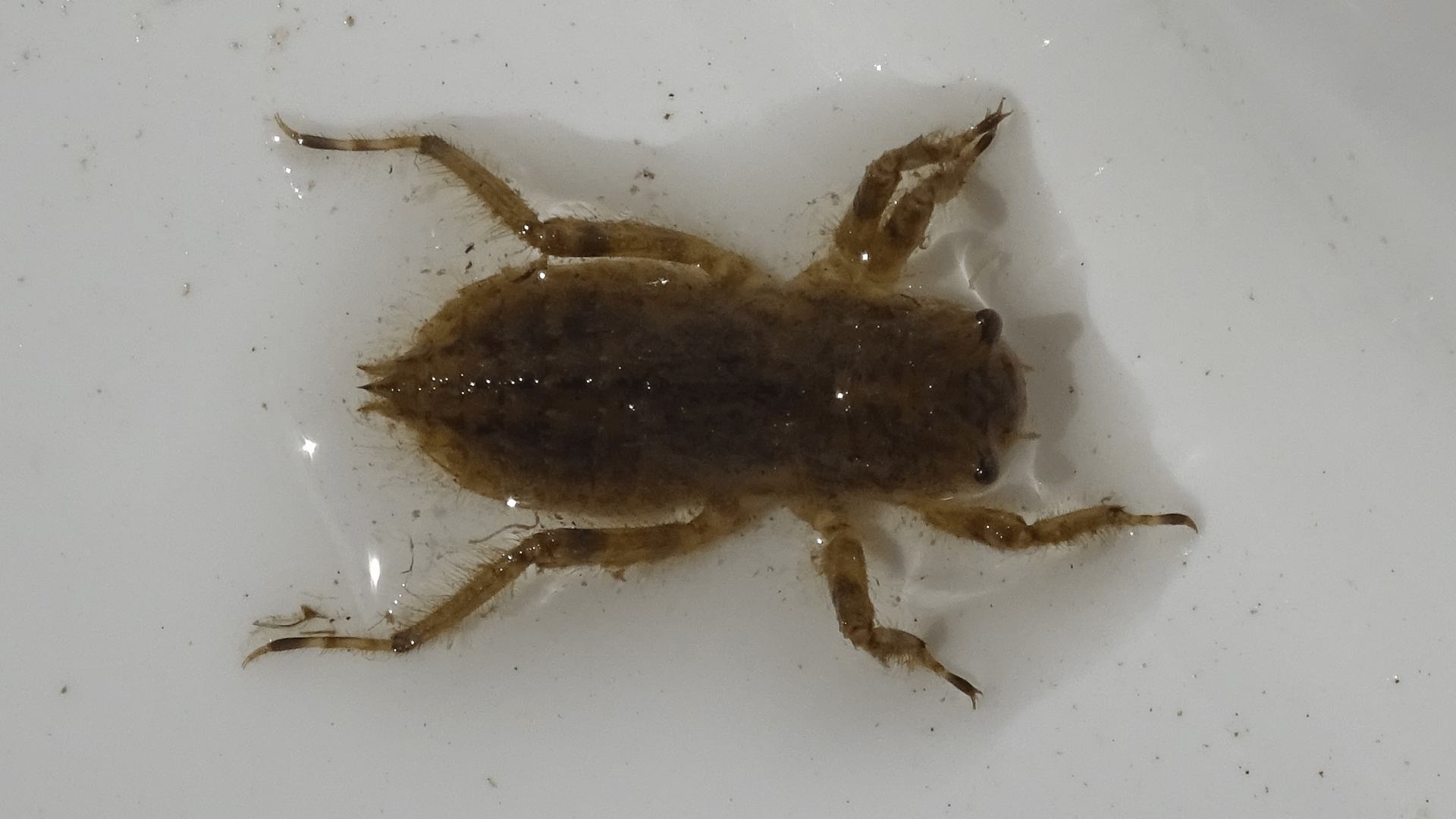
A Dragonfly nymph netted from a pond in the Havering Park Farm area. This has the shape of a Chaser larvae. Broad-bodied Chaser adults are often seen here.
#
Willow Emerald Damselfly
Chalcolestes viridis
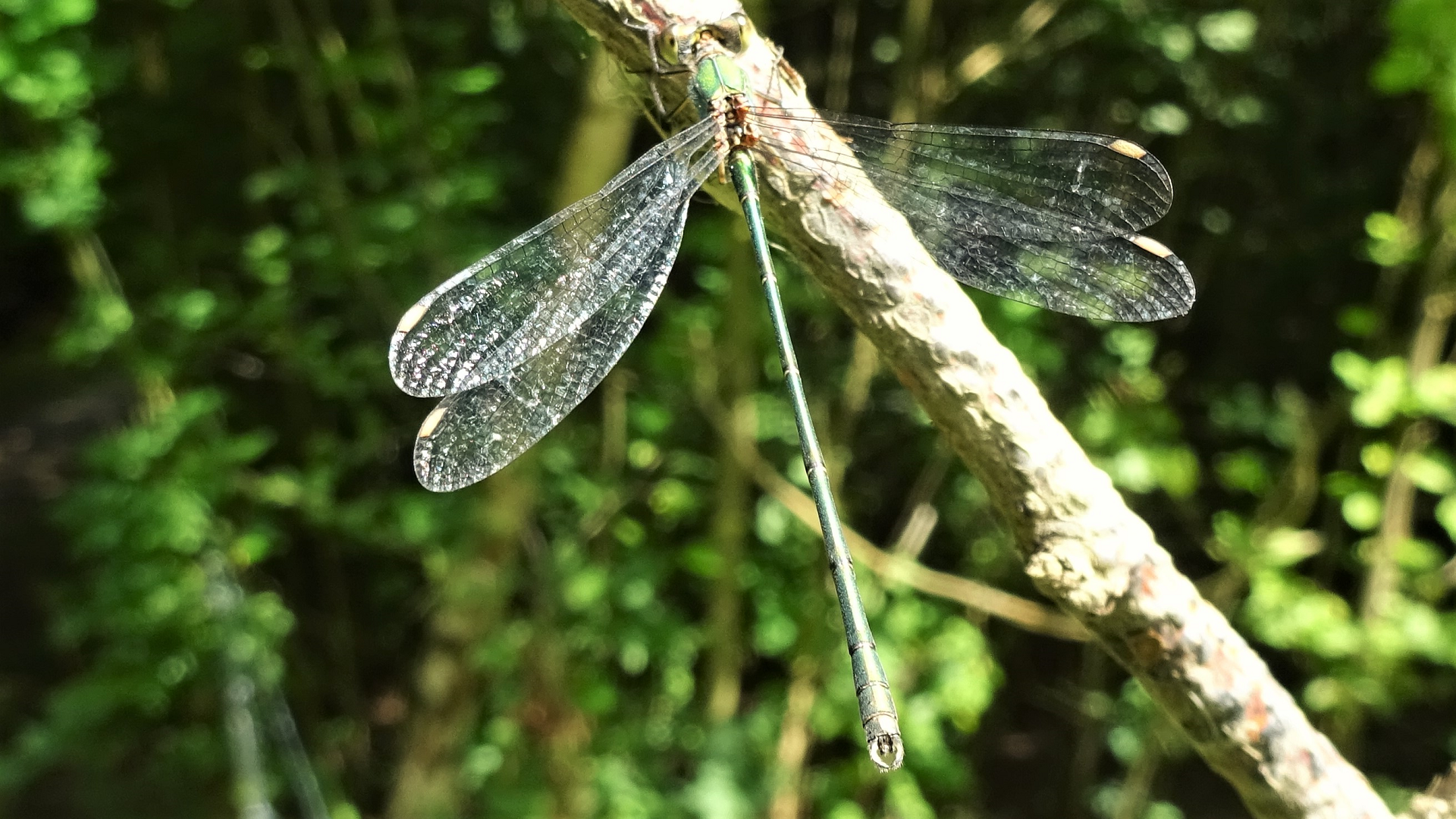
Usually seen from July to October on trees near water where eggs are deposited in bark of willow or alder. Distinguishing features of the Willow Emerald from other Emeralds are large pale wingspots and a prominent green spur on the side of the thorax.
#
Newtpole
Triturus vulgaris

This is a juvenile Smooth Newt. It has frilly gills that are kept throughout the newtpole stage and reabsorbed during metamorphosis along with the tail fin. The head and body shape changes as the newt matures.
#
Common Toad
Bufo bufo
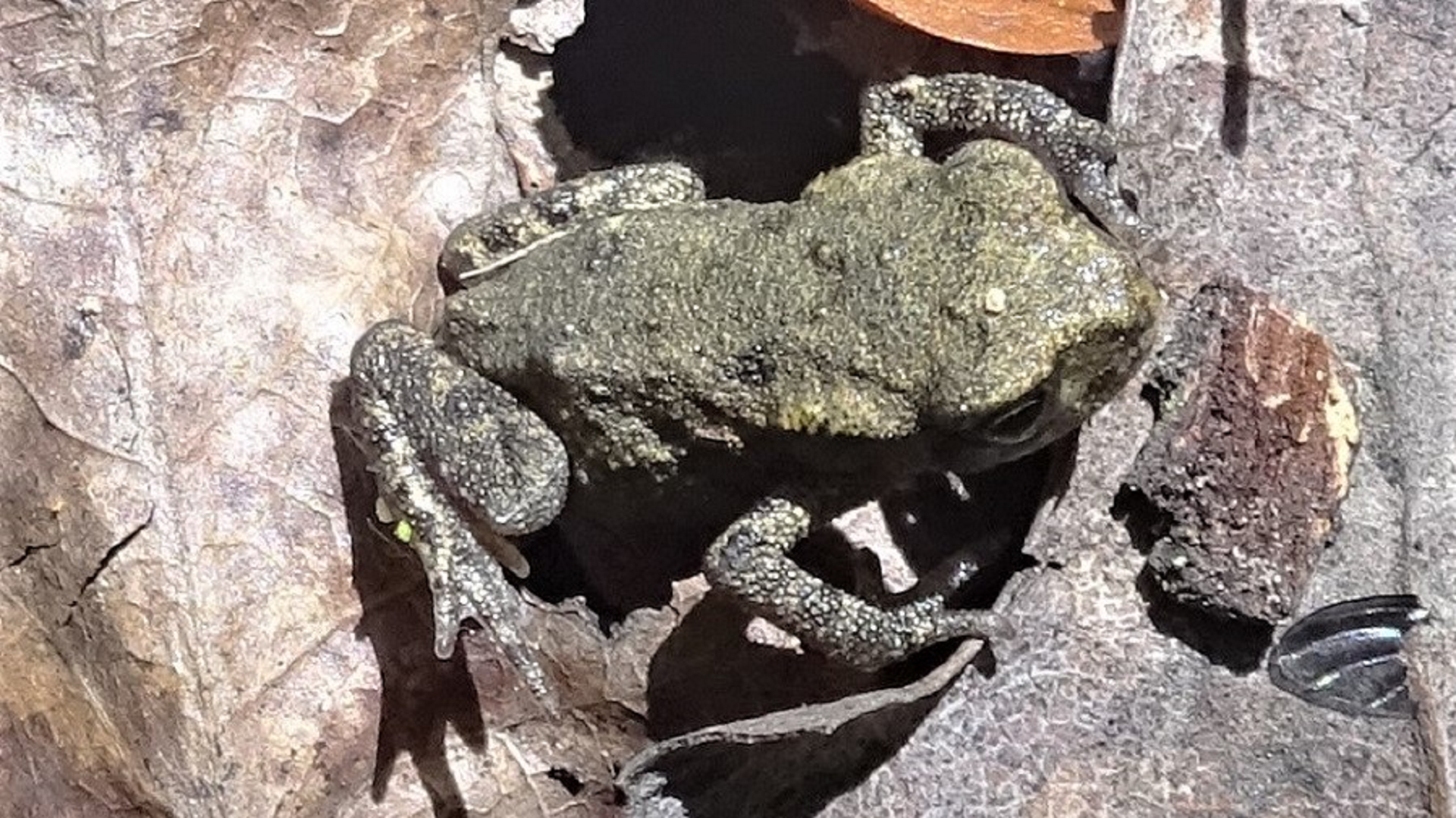
This young toad about 20mm long was discovered on a path near the Grasshopper Bridge in Hainault Forest.
#
Hainault Lake
Terrapin
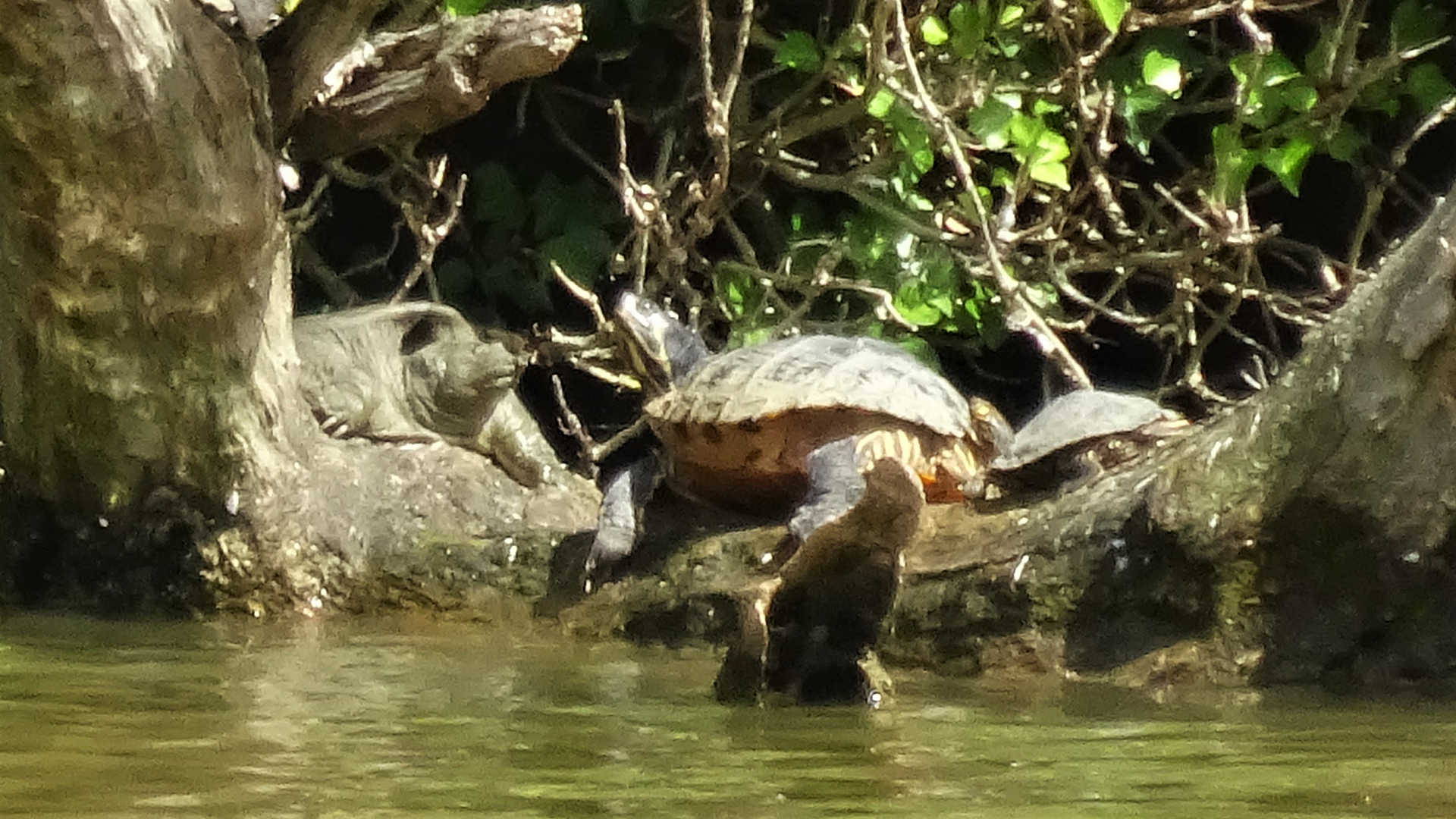
During the 1980s pet shops started importing Terrapins from America to cash in on the success of the cartoon 'Teenage Mutant Ninja Turtles'. Many owners were ignorant and unaware that their tiny pets could grow to the size of large dinner plates and develop strength to break out of tanks. This lead to irresponsible dumping despite Terrapins being ill-equipped to cope with Britain's climate. On sunny days they are seen basking on logs, however most of their time is spent in the water. They are omnivores that eat plants, fishes, snails, worms, insect larvae and bird eggs. This picture shows two species; a Soft Shell Terrapin (left) and Yellow-bellied Sliders.
#
Wandering Pond Snail
Lymnaea
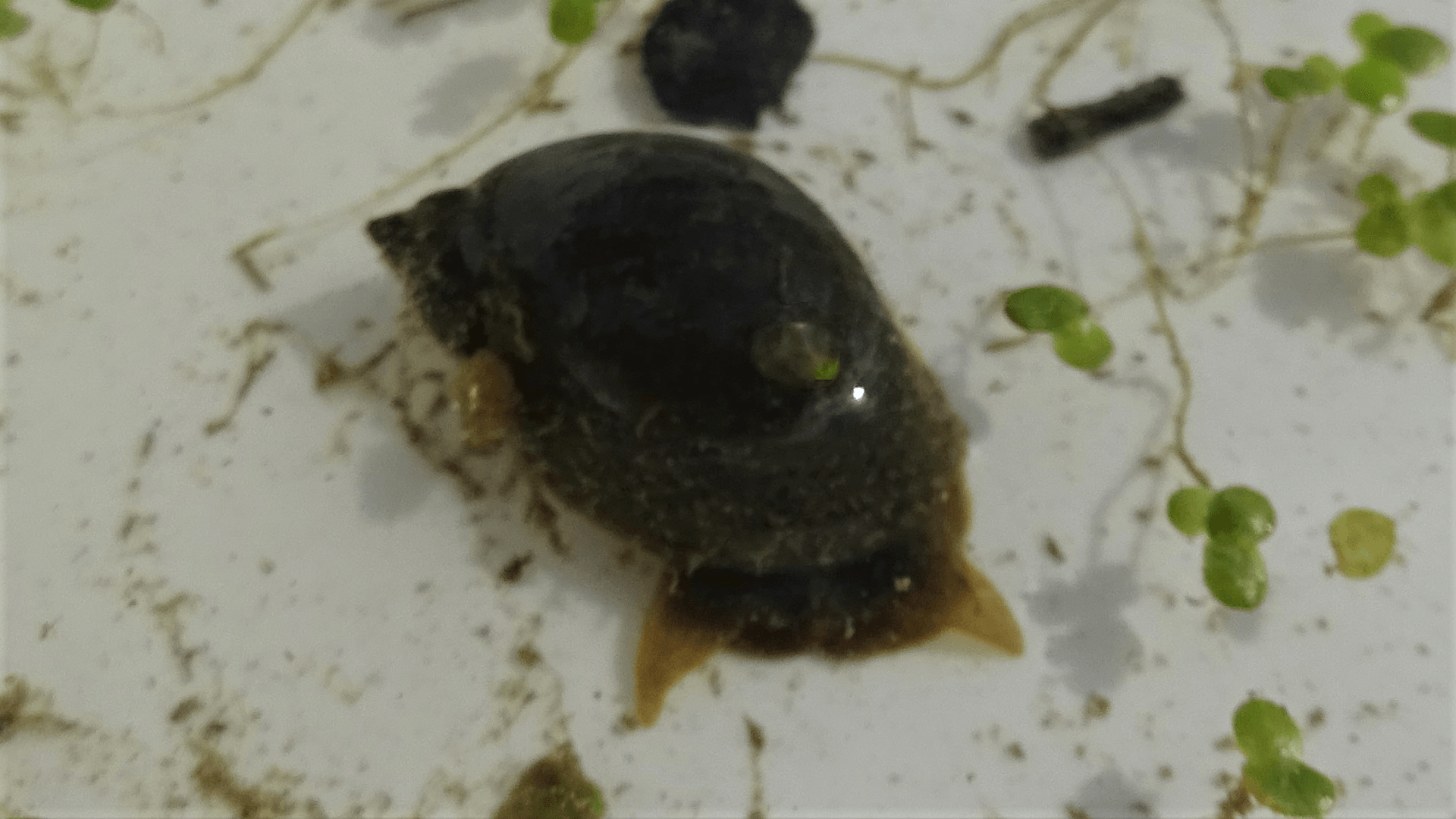
Wandering Pond Snails are small air-breathing freshwater pond snails. Their brownish shells are tall-spired with a very large opening. They do not stray far from water.
#
Large Red Slug
Arion ater rufus
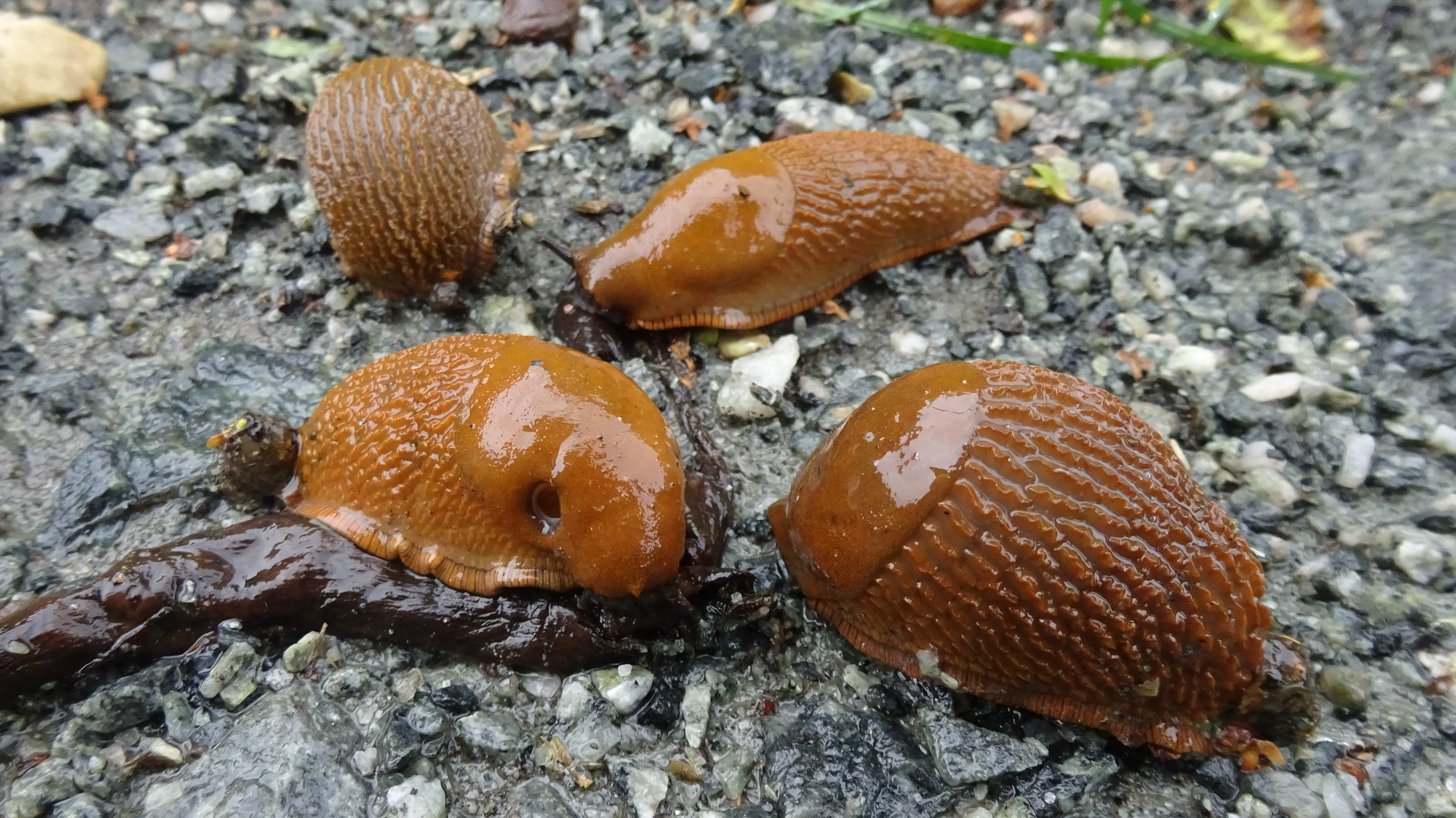
Slugs on a Chigwell Row path during a period of heavy rainfall.
#
© hainaultforest.net. All rights reserved.
This website uses necessary cookies. It does not use targeting or advertising cookies.